
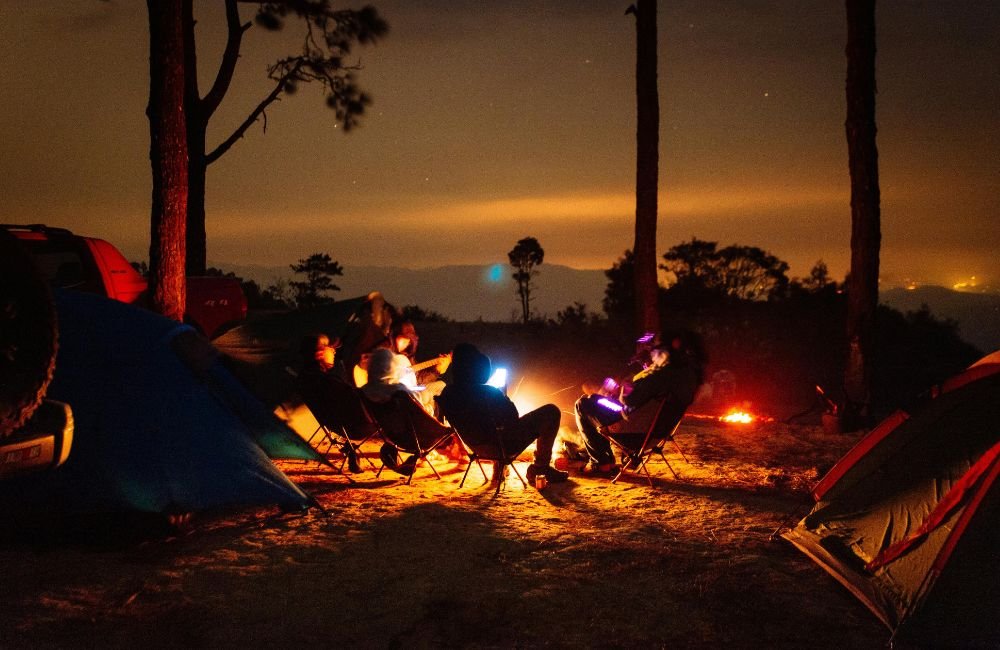
Campers enjoy a peaceful evening surrounded by tents, trees and warm firelight, capturing the outdoor adventure and companionship of a camping holiday.
West Coast Camping: 5 Scenic Spots and Booking Tips
West Coast camping offers some of North America’s most memorable outdoor experiences. Imagine waking beneath towering California redwoods, watching Pacific waves crash against Oregon’s rugged cliffs or spending a peaceful evening surrounded by the mountains and forests of Washington.
From ancient coastal forests to volcanic landscapes and scenic waterfronts, the western United States and British Columbia provide camping opportunities for families, couples, hikers and road-trip enthusiasts.
However, choosing the right campground matters. Some destinations offer developed sites with showers and RV facilities, while others provide a more rustic wilderness experience. Seasonal closures, vehicle restrictions and reservation requirements can also affect your plans.
This guide explores five beautiful camping destinations in western North America, including four Pacific Coast-region locations and an optional inland detour to Idaho. You’ll discover where to camp, what to see, the best seasons to visit and essential tips for planning your trip.
5 Best West Coast Camping Destinations at a Glance
| Destination | Best for | Recommended camping area |
|---|---|---|
| California Redwoods | Ancient forests, hiking and nature photography | Jedediah Smith Redwoods State Park |
| Cape Blanco, Oregon | Rugged beaches, coastal walks and lighthouse scenery | Cape Blanco State Park |
| Mount Rainier, Washington | Mountain landscapes, forests and alpine hiking | Cougar Rock Campground |
| Lake Coeur d’Alene, Idaho | Lakes, boating and forest recreation | Beauty Creek Campground |
| Vancouver Region, British Columbia | Oceanfront camping and mountain views | Porteau Cove Provincial Park |
Each destination offers a different outdoor experience. The right choice depends on your preferred scenery, travel dates, camping equipment and activities.
1. California Redwoods – Camp Among the World’s Tallest Trees
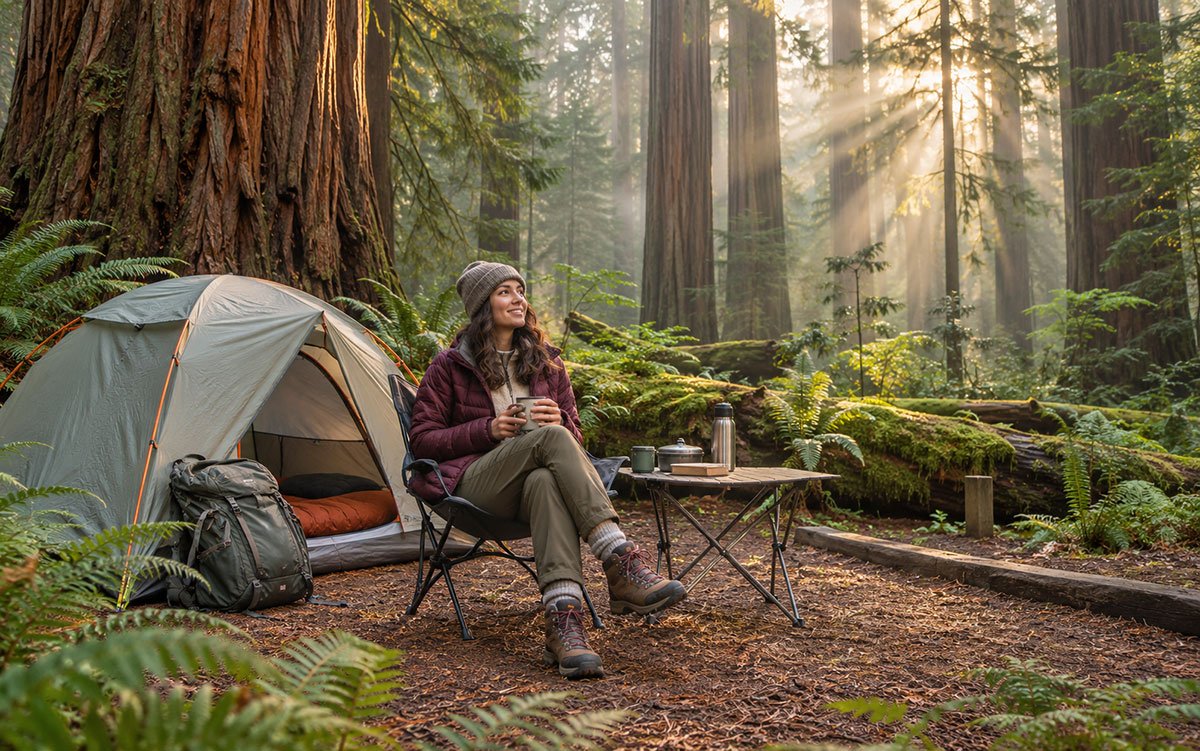
A traveller enjoys a peaceful morning at a redwood forest campsite in Northern California, surrounded by towering ancient trees, lush greenery and golden sunlight.
Northern California is home to some of the most extraordinary forests in the world.
The towering coast redwoods found within Redwood National and State Parks create a remarkable setting for camping. These ancient trees can reach extraordinary heights, while the surrounding landscape features ferns, moss-covered logs, winding rivers and forest trails.
The parks protect an important part of the remaining old-growth coast redwood ecosystem.
Camping here is particularly appealing to nature lovers who prefer quiet forest surroundings and opportunities for hiking, photography and wildlife observation.
Where to Camp in the California Redwoods
Redwood National and State Parks offer four developed campgrounds managed by California State Parks.
Jedediah Smith Campground
Located within Jedediah Smith Redwoods State Park near the Smith River, this campground provides a classic redwood forest experience.
Its forested setting and access to nearby trails make it a strong choice for campers interested in exploring ancient trees.
Elk Prairie Campground
Situated in Prairie Creek Redwoods State Park, Elk Prairie offers opportunities to enjoy old-growth forest scenery and observe wildlife, including Roosevelt elk.
Mill Creek Campground
This seasonal campground lies within Del Norte Coast Redwoods State Park and provides a wooded setting for visitors exploring the northern redwood region.
Gold Bluffs Beach Campground
For a different experience, Gold Bluffs Beach offers camping near the Pacific Ocean, with access to the surrounding coastal landscape.
However, its access road is narrow, unpaved and unsuitable for many larger vehicles. Trailers are prohibited, and RV access is restricted.
Campers using motorhomes should check vehicle-length limits carefully before booking.
Best Things to Do in the Redwoods
- Walk among old-growth redwoods on designated trails.
- Explore the scenic Smith River region.
- Visit Prairie Creek Redwoods State Park and look for Roosevelt elk.
- Discover coastal landscapes around Gold Bluffs Beach.
- Explore Fern Canyon, where steep walls are covered in lush vegetation.
Some popular areas require additional access permits or reservations.
For example, the Tall Trees Trailhead requires a free reservation. Vehicle access to the Gold Bluffs Beach and Fern Canyon day-use area also requires advance reservations during a designated seasonal period.
Campground reservations do not automatically grant access to every restricted location, so check the applicable rules.
Best Time to Camp in the California Redwoods
Late spring through early autumn offers a useful combination of milder conditions and longer daylight hours.
Summer attracts many visitors, so advance campground reservations are strongly recommended.
Autumn and winter can bring heavy rainfall, muddy trails and cooler camping conditions, although some developed campgrounds operate outside the main summer season.
Important Camping Tips
Redwood trees have delicate bark and surrounding root systems. Avoid climbing trees, attaching hammocks or ropes to trunks, and leaving designated trails.
The famous Hyperion redwood is located within a protected area that is closed to public access. Visitors should not attempt to reach it.
Why choose the California Redwoods? Few places offer the experience of sleeping among ancient trees in one of the world’s most distinctive forest ecosystems.
2. Cape Blanco State Park, Oregon – Rugged Coastal Camping
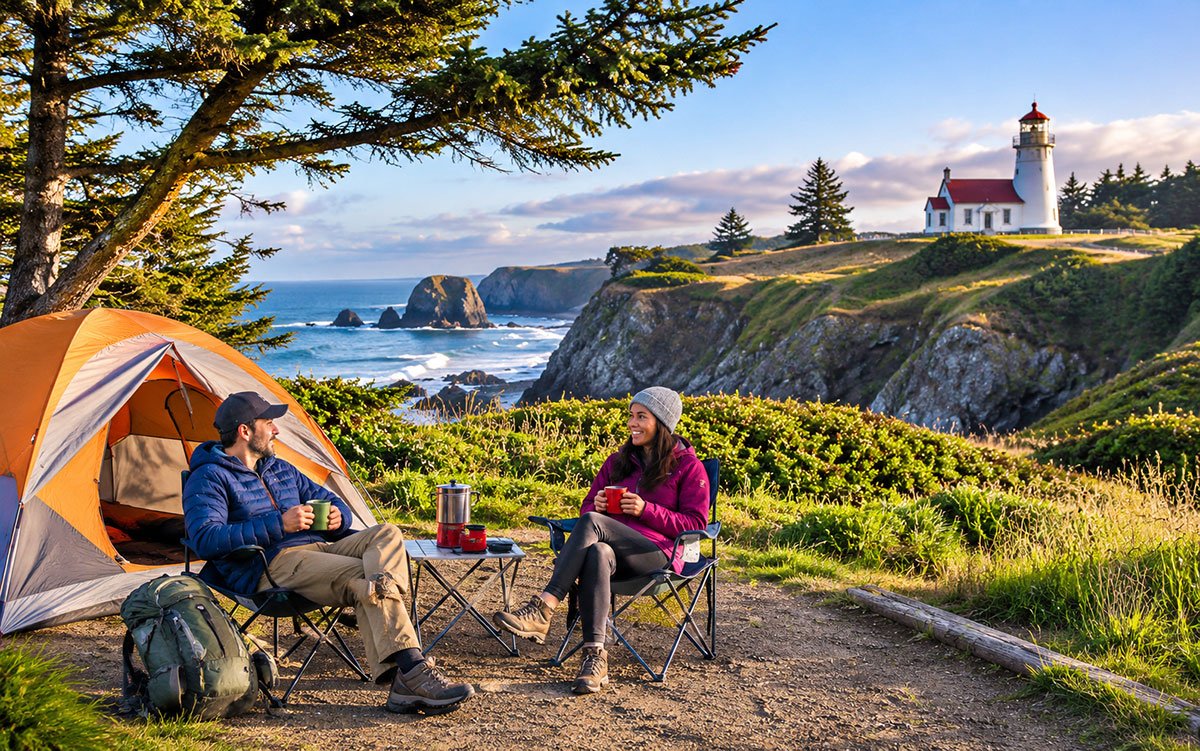
A scenic camping experience inspired by Cape Blanco State Park, where Oregon’s rugged coastline, dramatic cliffs and historic lighthouse create a beautiful outdoor setting.
Oregon’s Pacific coastline is famous for dramatic headlands, windswept beaches and panoramic ocean views.
Cape Blanco State Park, near Port Orford, is an especially rewarding destination for campers who appreciate rugged coastal landscapes.
The park sits on Oregon’s westernmost headland and features a historic lighthouse, open coastal scenery, forested areas and trails leading towards the ocean.
Compared with busy beach towns, Cape Blanco offers an appealing setting for travellers who want to spend time outdoors.
Where to Camp at Cape Blanco
Cape Blanco State Park has a developed campground with several types of accommodation.
Depending on the site selected, options include electrical campsites, limited full-hookup sites, reservable cabins, designated horse camping and hiker-biker camping.
Facilities include toilets and showers.
However, Cape Blanco does not provide an RV dump station, which is important for motorhome travellers.
The sheltered campground setting makes a useful base for exploring the coast, although visitors should not assume every campsite has an ocean view.
Reservations can be made through the Oregon State Parks booking system.
Best Things to Do at Cape Blanco
Visit Cape Blanco Lighthouse
The historic lighthouse is one of the park’s best-known landmarks.
Visitors can enjoy views of the lighthouse and surrounding coastal landscape. However, access arrangements may restrict entry to the tower or other facilities.
Check the official Oregon State Parks information before visiting rather than assuming interior tours are available.
Explore the Coastal Hiking Trails
The park has trails leading through coastal landscapes to ocean viewpoints and surrounding natural areas.
Walking routes offer opportunities to admire cliffs, beaches and the vegetation that characterises the southern Oregon Coast.
Discover the Historic Hughes House
Cape Blanco is also home to the historic Hughes House, which provides an interesting glimpse into the region’s settlement history.
Check current visiting arrangements before planning your day around the property.
Enjoy Beach Photography
The coastline provides beautiful photographic opportunities, especially when shifting clouds and ocean mist create dramatic light.
Best Time to Camp at Cape Blanco
Summer generally provides more comfortable conditions for camping and coastal sightseeing.
However, the Oregon Coast can remain cool, windy and damp even during warmer months.
Spring and autumn can also be rewarding, but visitors should prepare for changing weather.
Important Camping Tips
- Bring waterproof outerwear and secure your tent against strong winds.
- Check trail conditions after heavy rain.
- Follow posted signs around cliffs and unstable coastal areas.
- Never turn your back on the ocean or approach the surf without understanding local hazards.
- Check any restrictions affecting horse-riding areas if that activity is part of your visit.
Why choose Cape Blanco? It combines sheltered camping with access to some of Oregon’s most dramatic coastal scenery and historic landmarks.
3. Mount Rainier National Park, Washington – Camp Beneath a Volcano
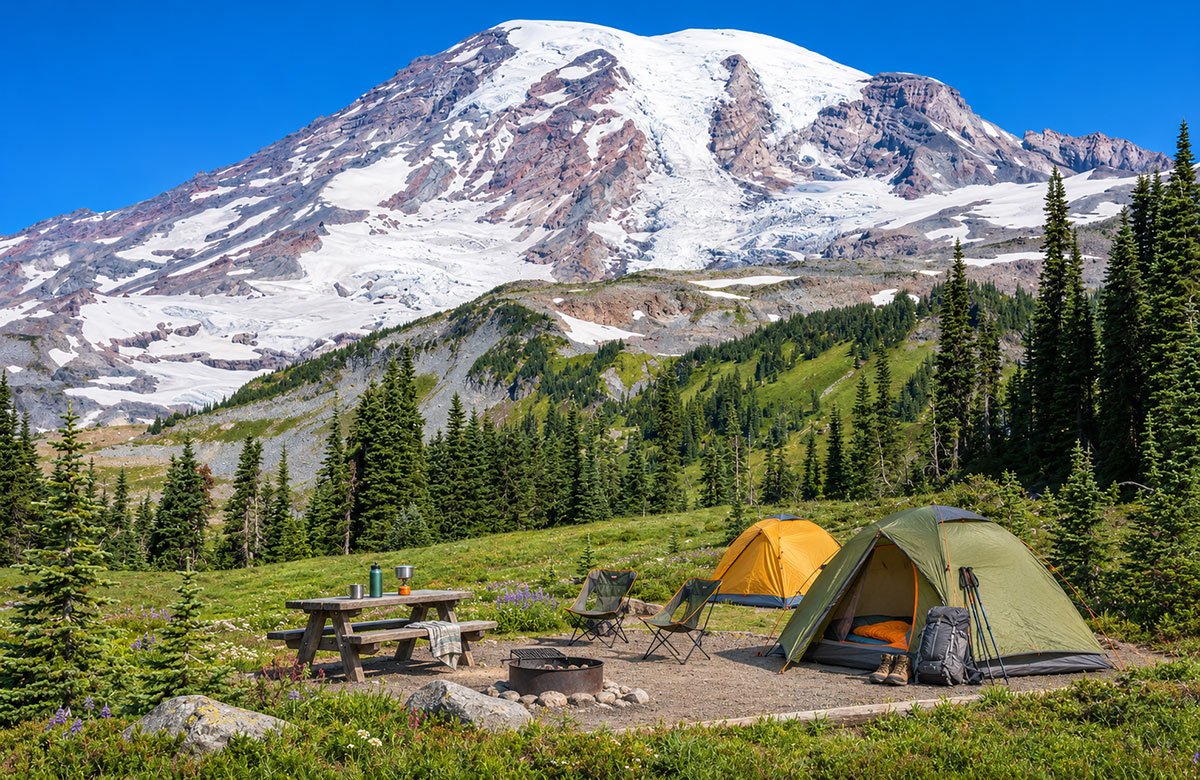
A scenic camping illustration inspired by Mount Rainier National Park, featuring tents, alpine meadows and spectacular views of Washington’s snow-covered volcanic peak.
Mount Rainier National Park offers a completely different camping experience.
The park surrounds Mount Rainier, an active stratovolcano and the highest mountain in Washington State.
Its landscape includes forests, rivers, waterfalls, glaciers and high-elevation meadows that become especially beautiful during the summer growing season.
For hikers and outdoor enthusiasts, camping near Mount Rainier offers opportunities to explore a landscape shaped by volcanic activity and mountain weather.
Where to Camp at Mount Rainier
The park has several established camping areas, but their accessibility and operating seasons vary.
Cougar Rock Campground
Located in the southwest section of the park, Cougar Rock is a convenient base for exploring the Longmire and Paradise areas.
It accommodates tents and certain RVs, although vehicle-length restrictions apply.
Reservations are available through Recreation.gov, with some first-come, first-served opportunities depending on current operations.
White River Campground
White River lies in the northeastern part of the park and provides access to mountain scenery and hiking areas.
It generally operates during the shorter summer camping season and uses a first-come, first-served system.
Ohanapecosh Campground
This campground is known for its forested surroundings in the southeastern part of the park.
However, rehabilitation work has affected its availability, including a full closure during the 2026 camping season.
Check the National Park Service’s campground-status page before including it in your plans.
Best Things to Do at Mount Rainier
Explore Paradise
The Paradise area is famous for mountain views, seasonal wildflowers and hiking trails.
Snow can remain on higher trails well into summer, so check conditions before setting out.
Visit Sunrise
Sunrise provides striking views of Mount Rainier and the surrounding mountain landscape.
Road access is seasonal and may be affected by weather, maintenance or other closures.
Discover Forests and Waterfalls
Lower-elevation trails offer opportunities to explore forests, rivers and waterfalls without undertaking demanding alpine hikes.
Choose routes that match your experience and the current conditions.
Best Time to Camp at Mount Rainier
Summer is generally the most practical season for camping.
July through September often provides broader access to mountain roads and hiking areas, although conditions vary.
Snowfall can affect high-elevation trails even when lower campgrounds are open.
Outside the main camping season, many facilities and roads may close.
Important Camping Tips
Mount Rainier requires more preparation than a typical coastal campsite.
Bring warm clothing, waterproof equipment and suitable footwear, even in summer.
Monitor official road conditions and park alerts before travelling.
Campground reservations do not guarantee that every attraction, road or trail will be accessible.
Campfire restrictions may also apply during dry weather.
Why choose Mount Rainier? It offers spectacular mountain camping and access to one of Washington’s most remarkable natural landscapes.
4. Lake Coeur d’Alene, Idaho – A Scenic Inland Camping Detour
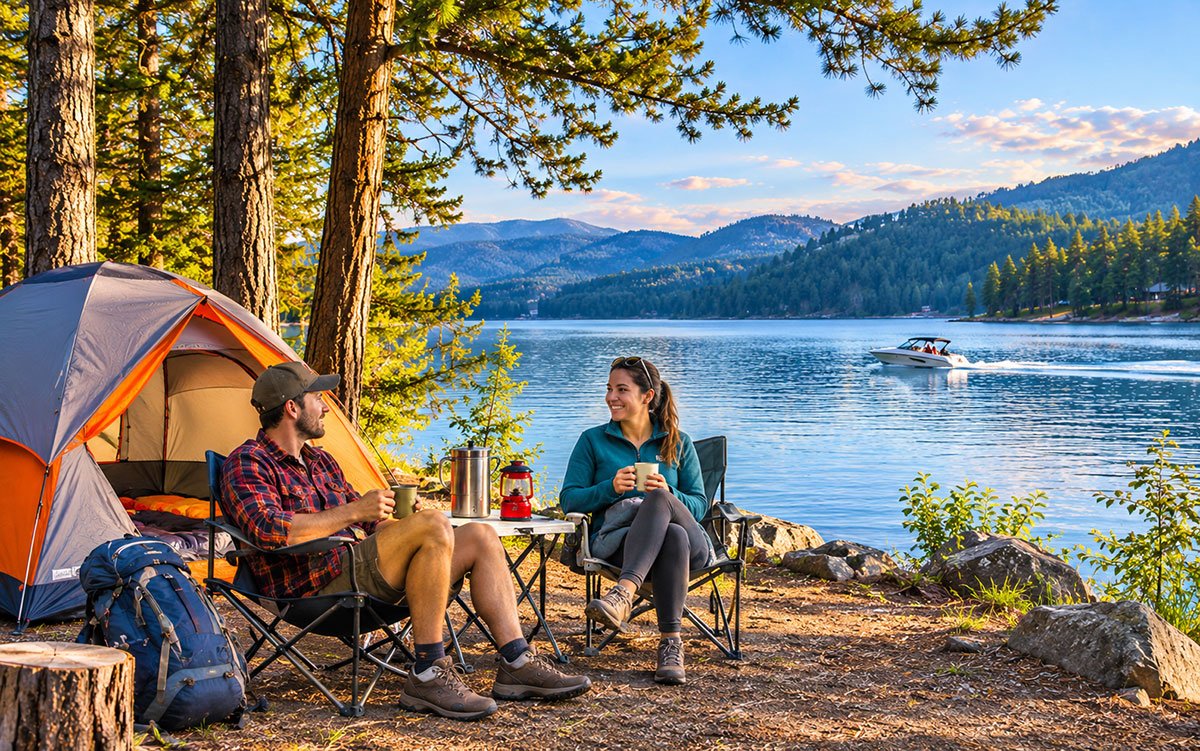
A peaceful lakeside camping scene inspired by Lake Coeur d’Alene, where forested hills, calm waters and outdoor recreation create a scenic Idaho getaway.
Although Idaho is not on the Pacific Coast, it makes an appealing inland extension for travellers exploring the western United States.
Lake Coeur d’Alene, in northern Idaho, is surrounded by wooded hills and offers opportunities for boating, kayaking, fishing, hiking and relaxed lakeside recreation.
The wider region combines developed visitor facilities with quieter forested recreation areas.
It is particularly attractive to travellers who enjoy freshwater landscapes.
Where to Camp Near Lake Coeur d’Alene
Beauty Creek Campground
Located in the Idaho Panhandle National Forests, Beauty Creek Campground provides a convenient base for exploring the lake region.
The campground sits along Beauty Creek, roughly half a mile from Lake Coeur d’Alene.
Its wooded surroundings and access to nearby hiking trails make it suitable for visitors seeking a more traditional camping experience.
Facilities include basic camping amenities, although visitors should not expect full-service RV resort facilities.
Check the current campground listing for operating dates, booking arrangements, vehicle suitability and availability.
Heyburn State Park
Another option in the broader Lake Coeur d’Alene region is Heyburn State Park, where the connected Chatcolet and Benewah lakes provide opportunities for boating and outdoor recreation.
The park offers designated camping areas and trails.
Because storms, construction and seasonal operations can affect facilities, confirm campground availability directly with Idaho State Parks.
Best Things to Do Around Lake Coeur d’Alene
- Explore the lake by kayak or other suitable watercraft.
- Enjoy lakeside walks and scenic viewpoints.
- Discover forest hiking trails around Beauty Creek and Mineral Ridge.
- Visit the city of Coeur d’Alene for restaurants and visitor services.
- Explore suitable cycling routes in the surrounding region.
Beauty Creek offers access to the Caribou Ridge National Recreation Trail, which leads towards elevated views of Lake Coeur d’Alene.
Best Time to Camp Near Coeur d’Alene
Late spring through early autumn is generally the most convenient period for outdoor recreation.
Summer is particularly popular for boating and lakeside activities.
Spring and autumn may offer cooler conditions and fewer visitors, but seasonal campground arrangements should be checked before departure.
Important Camping Tips
Lake and river conditions can change, and not every swimming location has lifeguards.
Wear a suitable personal flotation device when boating, check local water conditions and follow applicable regulations.
Bears also inhabit parts of the surrounding region, so store food securely and keep campsites clean.
Why choose Lake Coeur d’Alene? It offers a relaxing freshwater camping experience and an appealing change from the Pacific Coast’s forests and ocean scenery.
5. Porteau Cove, British Columbia – Waterfront Camping Near Vancouver
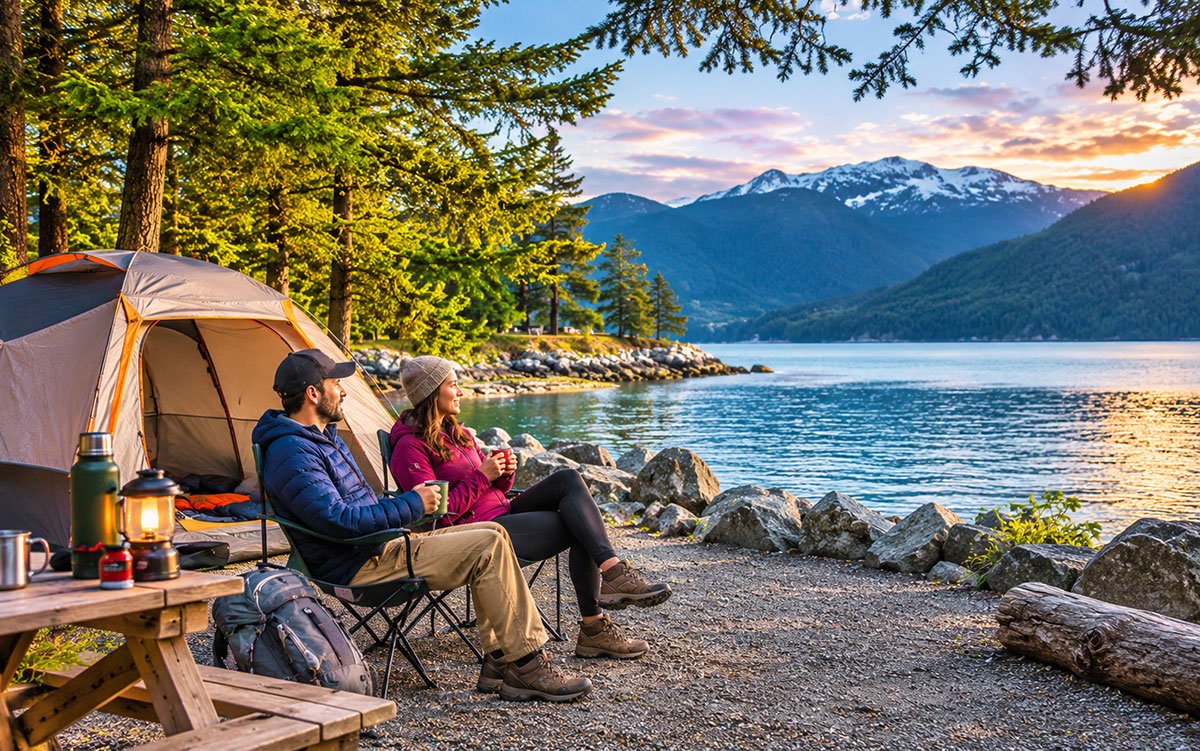
A peaceful waterfront camping scene inspired by Porteau Cove Provincial Park, where the calm waters of Howe Sound meet the spectacular coastal mountains of British Columbia.
British Columbia extends the Pacific Coast camping experience into Canada, where forested mountains rise above sheltered ocean inlets.
For visitors exploring the Vancouver region, Porteau Cove Provincial Park offers one of the area’s distinctive waterfront camping experiences.
Located beside Howe Sound on the Sea-to-Sky corridor, the park combines mountain views, marine scenery and access to outdoor activities.
It is particularly appealing to travellers who want to experience British Columbia’s coastal landscapes.
Where to Camp at Porteau Cove
Porteau Cove Provincial Park offers vehicle-accessible campsites, walk-in camping areas and a small selection of cabin accommodation.
Some campsites offer attractive ocean views, while others are situated farther from the waterfront.
The park provides facilities such as toilets, showers and designated RV services, although availability may vary by season.
Reservations are strongly recommended during busy periods.
Because the campground is relatively small and popular, visitors should not assume they can secure a site simply by arriving.
Porteau Cove also has a limit on the number of nights an individual may camp there annually. Review the official BC Parks booking rules before making plans.
Best Things to Do at Porteau Cove
Enjoy the Howe Sound Views
The park’s waterfront is its main attraction.
Mountains rise above the surrounding waters, creating scenic views that are particularly beautiful during calm mornings and evenings.
Explore Coastal Walking Areas
Short walking routes and viewpoints allow visitors to enjoy the park’s natural setting.
Stay on designated paths and respect protected coastal habitats.
Discover Marine Wildlife
Howe Sound supports marine life, including seabirds and marine mammals.
Wildlife sightings are unpredictable, so bring binoculars and observe animals from a respectful distance.
Explore the Sea-to-Sky Corridor
Porteau Cove can also serve as a base for visiting other destinations along the Sea-to-Sky Highway.
However, it is better suited to a scenic coastal camping holiday than as a public-transport base for daily sightseeing in downtown Vancouver.
Visitors planning regular city excursions should account for driving, traffic and parking.
Best Time to Camp Near Vancouver
Late spring through early autumn usually offers the widest range of comfortable outdoor experiences.
Summer is popular because of the longer daylight hours and opportunities for waterfront recreation.
Rain is possible throughout the year, and coastal weather can change quickly.
Winter camping may also be available, but services can be limited.
Important Camping Tips
The park borders active railway tracks, so occasional train noise is possible.
Tides and wind can also change suddenly around Howe Sound.
Use appropriate safety equipment for kayaking or boating, supervise children near the shore and follow local marine conservation rules.
If travelling from the United States into Canada, check passports, visa or other entry requirements, vehicle insurance and border regulations well before departure.
Why choose Porteau Cove? Few camping destinations combine sheltered ocean views, forested mountains and proximity to the Vancouver region so effectively.
How to Plan a West Coast Camping Road Trip
The most enjoyable camping road trips combine scenic drives with enough time to explore each destination.
For this itinerary, the four Pacific Coast-region destinations create a broad northbound journey:
- Northern California: Begin in Redwood National and State Parks.
- Southern Oregon: Continue towards Cape Blanco State Park.
- Washington: Travel inland to Mount Rainier National Park.
- British Columbia: Cross into Canada and explore Porteau Cove and the Vancouver region.
Lake Coeur d’Alene is best treated as a separate inland extension rather than a stop on the direct coastal route.
Do not assume all five destinations can be comfortably visited during a short holiday. Travel distances are substantial, and mountain or coastal conditions can affect driving time.
A longer trip allows more flexibility for hiking, weather delays and rest days.
Best Time for West Coast Camping
Western North America has several distinct climates, so the ideal camping season varies by destination.
| Season | What to expect |
|---|---|
| Spring | Green landscapes, some coastal rain and continuing mountain snow |
| Summer | Broadest access to many developed campgrounds and higher-elevation recreation |
| Autumn | Cooler weather, changing foliage and some seasonal campground closures |
| Winter | Rainy coastal conditions, snow in mountain areas and limited facilities at many sites |
For a multi-destination trip that includes Mount Rainier, summer generally provides the most practical starting point.
However, popular campgrounds may book well in advance.
Always check official reservation windows and park conditions before choosing travel dates.
Essential West Coast Camping Tips
Reserve Campsites Before Travelling
Many popular campgrounds use official reservation systems, including ReserveCalifornia, Recreation.gov, Oregon State Parks and BC Parks.
Booking windows vary.
Some sites use advance reservations, while others retain first-come, first-served camping.
Check each campground individually rather than assuming every park follows the same rules.
Choose the Right Camping Equipment
For tent camping, consider:
- A weather-resistant tent and appropriate ground protection.
- A sleeping bag suitable for the expected temperatures.
- A comfortable sleeping pad.
- Waterproof clothing and sturdy footwear.
- Drinking water and suitable food-storage equipment.
- A headlamp, first-aid kit and essential personal supplies.
- Offline maps or another reliable navigation option.
If travelling by campervan or RV, also check vehicle dimensions, fuel availability, campsite length limits and access-road restrictions.
A campground that accommodates tents may not be suitable for larger motorhomes.
Understand Campfire Restrictions
Wildfire risk is a major consideration across western North America.
Restrictions can change with weather and fire conditions.
A campsite with a fire ring does not necessarily permit campfires at all times.
Check the applicable federal, state, provincial and local fire restrictions before lighting a fire.
Never leave a permitted campfire unattended.
Respect Wildlife and Protect Food
Forest and mountain campsites may be home to bears, elk, deer and other wild animals.
Keep food, rubbish and scented products properly secured.
Use designated food lockers or approved storage methods where required.
Never feed wildlife or approach animals for photographs.
Follow Leave No Trace Principles
Responsible camping protects the natural places travellers come to enjoy.
Stay in designated camping areas, dispose of waste properly and leave plants, rocks and wildlife undisturbed.
Avoid damaging sensitive coastal vegetation or attaching equipment to protected trees.
Keep noise low and respect neighbouring campers.
Check Your Travel Documents
Travellers crossing between the United States and Canada must meet the entry requirements that apply to their nationality and immigration status.
Carry appropriate travel documents and confirm any necessary visas or authorisations.
If using a rental vehicle, obtain confirmation that cross-border travel is permitted.
Frequently Asked Questions About West Coast Camping
Where is the best place to camp on the West Coast?
The best destination depends on your interests. California’s redwoods suit forest lovers, Cape Blanco offers rugged coastal scenery, Mount Rainier appeals to hikers, and Porteau Cove provides oceanfront camping near Vancouver.
Can you camp in Redwood National Park?
Yes, but camping is restricted to designated developed campgrounds and permitted backcountry areas. Developed sites are managed by California State Parks, and camping outside authorised areas is generally prohibited.
Is West Coast camping suitable for beginners?
Yes. Developed campgrounds often provide toilets, drinking water and other basic services. Beginners should choose accessible sites with suitable facilities rather than remote wilderness camping.
Do you need to book campsites in advance?
Reservations are strongly recommended at popular destinations, especially during summer, weekends and holidays. Some campgrounds operate on a first-come, first-served basis, so always verify individual booking arrangements.
Can you explore the West Coast by campervan?
Yes. A campervan can be a practical option for a road trip, but not all campgrounds accommodate large vehicles. Check maximum RV lengths, road access and facilities before booking.
Is wild camping allowed everywhere on the West Coast?
No. Dispersed camping is permitted only in certain areas and under specific regulations. National parks, state parks and provincial parks often restrict overnight camping to designated sites.
Is camping cheaper than staying in hotels?
Camping can reduce accommodation expenses, but the final cost depends on campground fees, equipment, vehicle rental, fuel and supplies. Some waterfront or full-service campsites may be relatively expensive.
Discover the Natural Beauty of the West Coast
West Coast camping provides an opportunity to explore landscapes that are dramatically different yet equally memorable.
California’s redwood forests offer peaceful surroundings beneath towering trees. Oregon’s Cape Blanco reveals the wild Pacific coastline, while Mount Rainier introduces travellers to Washington’s spectacular mountain scenery.
For a different experience, Lake Coeur d’Alene offers an inland lakeside escape, and Porteau Cove combines British Columbia’s coastal mountains with beautiful waterfront camping.
Choose destinations that suit your interests, reserve campsites early and allow enough time to enjoy the journey.
With thoughtful planning and respect for nature, a camping holiday across western North America can become one of the most rewarding ways to experience the region.
