
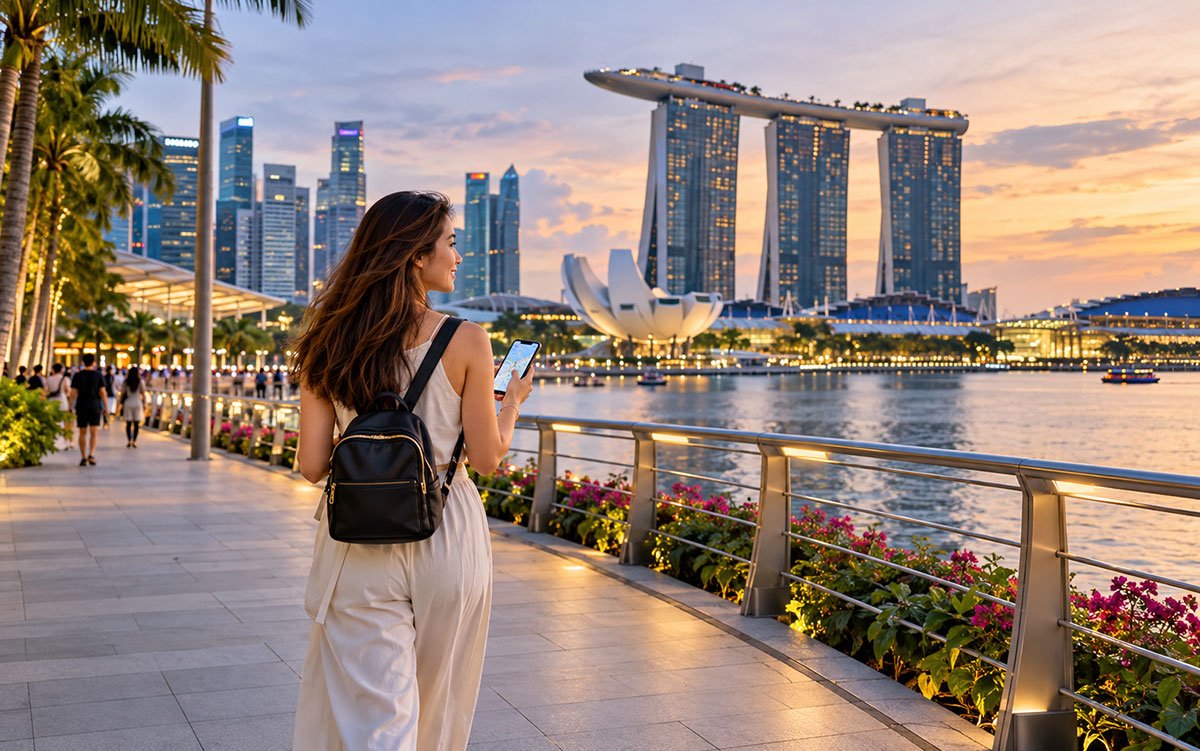
Exploring Singapore’s Marina Bay waterfront independently is easier with a little preparation. Follow these solo female travel safety tips to plan your journeys and enjoy greater confidence while discovering the city.
Solo Female Travel Singapore Safety Tips: A Practical Guide
Singapore is generally considered a low-crime destination, making it a practical option for women planning to travel alone. The UK government’s travel advice describes violent crime and theft as rare, and the city has an extensive public-transport network that helps visitors move around independently. However, no destination is entirely risk-free, and preparation remains important.
The most useful solo female travel Singapore safety tips are straightforward: choose accommodation with convenient access and reliable guest reviews, plan your journeys before heading out, stay aware of your surroundings in crowded places, use reputable transport after a late night and know how to contact the authorities.
This guide explains how to put those precautions into practice, from arriving at Changi Airport to exploring the city independently and handling an unexpected situation.
Is Singapore safe for solo female travellers?
Yes, Singapore is generally a practical destination for solo female travellers, provided they take ordinary precautions and remain alert to their surroundings. Its low levels of reported violent crime and theft are reassuring, but they should not be interpreted as a guarantee against harassment or other incidents.
Singapore Police Force figures offer useful context. Reported cases of outrage of modesty, the term used in Singapore for molestation, increased from 1,427 in 2024 to 1,531 in 2025. Public transport networks and public entertainment outlets were among the locations where these offences occurred. These figures cover reported cases nationally, not just incidents involving tourists, and do not establish an individual visitor’s likelihood of experiencing an offence.
For a solo traveller, the sensible approach is neither to be unnecessarily fearful nor to assume that a destination’s reputation eliminates risk.
You can explore independently while making informed choices about accommodation, transport, socialising and personal belongings.
1. Choose accommodation with safety and convenience in mind
Where you stay affects how comfortably you can move around Singapore, particularly when arriving late or returning from an evening out.
Before booking a hotel, hostel or guesthouse, assess more than its nightly rate or photographs.
What to check before making a reservation
- Location: Check the exact address on a map and identify the nearest MRT station or bus stop. Consider the walk between the station and the entrance, not just the advertised distance.
- Late-night access: Confirm the check-in arrangements if your flight arrives late. For independently operated accommodation, establish how you will enter the property if reception is unavailable.
- Recent reviews: Look for consistent comments about room security, property access, staff responsiveness, noise and the surrounding area.
- Room security: Check whether the accommodation provides a secure entrance, a functioning door lock and an appropriate place to store valuables.
- Return route: Look for a practical route that you can follow easily after dark, particularly if you are unfamiliar with the neighbourhood.
Do not assume that the cheapest accommodation is the best value if getting back to it requires an inconvenient or unfamiliar journey.
For a first visit, a well-connected property that fits your budget and offers clear check-in arrangements may make the entire trip easier to manage.
On arrival, familiarise yourself with the entrance, reception arrangements, emergency exits and the route to the nearest transport connection.
2. Use Singapore’s MRT and buses confidently
Singapore’s public-transport system is useful for independent sightseeing. The Land Transport Authority provides an official journey planner, while its MyTransport app offers information about train operating times, station exits, bus services and arrivals.
Using public transport can also help you avoid having to negotiate unfamiliar journeys on the street. However, crowded vehicles and busy stations still require ordinary personal-safety awareness.
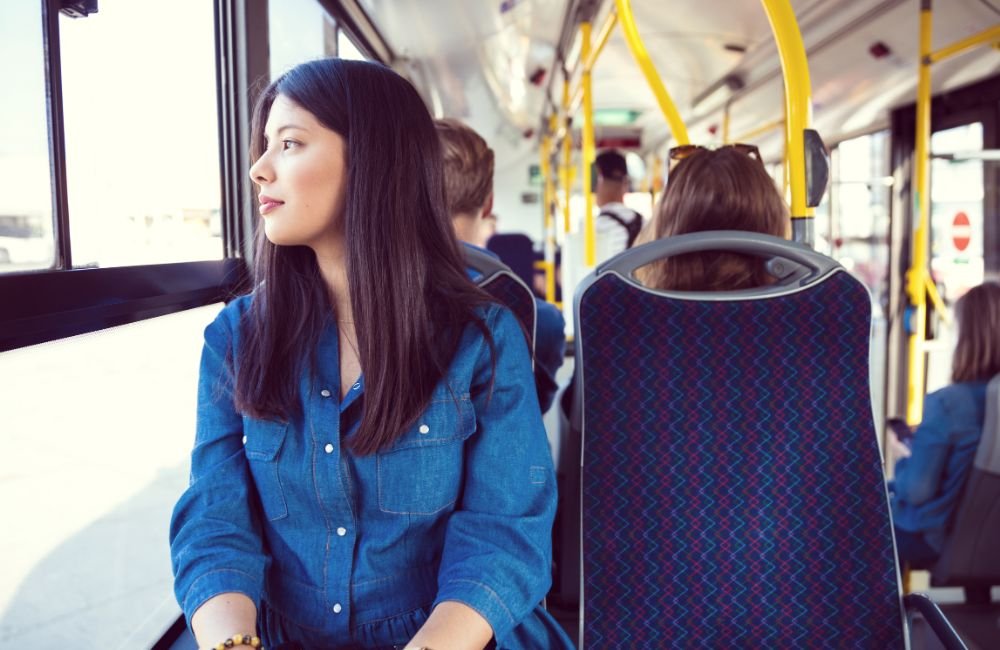
Practical MRT and bus safety tips
- Check your route and destination before boarding, particularly when changing lines.
- Keep your phone and valuables secure instead of leaving them exposed in a crowded carriage.
- Stay aware of the people around you, even when using headphones.
- If another passenger behaves inappropriately or deliberately moves uncomfortably close, change seats or move away if possible.
- Seek help from transport staff, the bus driver or other passengers if you feel threatened.
- Avoid becoming so absorbed in your phone that you miss your stop or lose awareness of your surroundings.
Singapore Police Force guidance specifically recommends moving away from someone who is behaving inappropriately on the MRT or a bus and seeking assistance when necessary.
How to pay for public transport
Contactless bank cards, supported mobile wallets and transport cards are among the available payment options. Check the Land Transport Authority’s current payment guidance to confirm whether your particular card is supported and whether foreign-card fees apply.
One detail worth remembering: when using a bank card or device for contactless journeys, use the same card or device to tap in and out. Switching between a physical card and a mobile wallet can cause payment problems.
Before a late outing, check the relevant service’s operating times. Do not assume that trains will be available throughout the night.
3. Plan your evenings and late-night journeys
Solo travel should not mean giving up evening sightseeing, restaurants or cultural experiences. The key is to consider how you will get back before committing to plans.
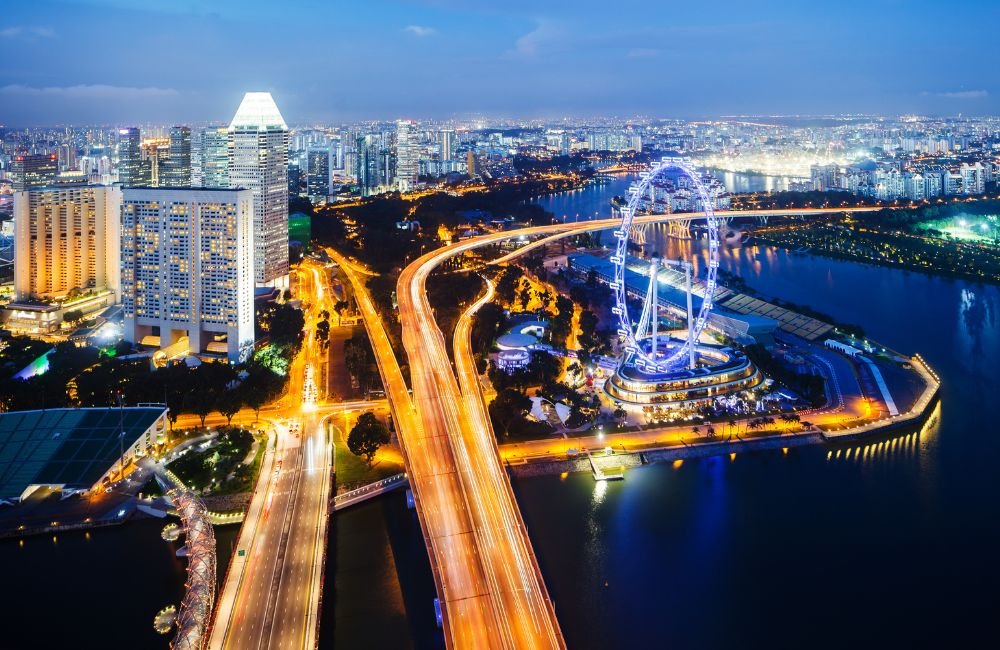
Before going out
Save your accommodation address on your phone and keep it somewhere accessible offline. Check the route home, identify the expected transport options and consider what you will do if your preferred service is unavailable.
Tell a trusted person your plans when appropriate, particularly if you expect to return late. Keep your phone charged and carry a suitable power bank if you rely on it for navigation and transport.
When returning after dark
Choose a familiar, practical route rather than taking an unfamiliar shortcut simply because it appears faster.
If you use a taxi or ride-hailing service:
- Book through a reputable provider or use an authorised taxi facility.
- Confirm the vehicle registration and driver details before getting in.
- Check that the destination shown in the app or booking matches your accommodation.
- Share trip details with a trusted contact when practical.
- If the vehicle, driver or pickup arrangement does not match your booking, do not board.
You do not need to avoid all evening activities. Instead, choose your transport based on the actual circumstances, especially if you are tired, carrying shopping or travelling somewhere unfamiliar.
If someone appears to be following you
Do not continue towards your accommodation if doing so would reveal where you are staying or leave you more isolated.
Move towards a staffed establishment, a busy public area or a place where you can ask for help. Avoid confronting the person if you believe that could escalate the situation.
Singapore Police Force advice recommends moving towards a crowded area and seeking help when someone is following you.
If you feel in immediate danger, contact the police using the emergency details provided later in this guide.
4. Be prepared for unwanted attention or harassment
A solo female traveller may encounter anything from persistent conversation to inappropriate touching. It is useful to decide in advance how you would respond, rather than feeling obliged to be polite in an uncomfortable situation.
You do not owe a stranger a conversation, an explanation or your contact details.
If someone makes you uncomfortable, you can move away, decline the interaction firmly or approach a member of staff. Choose the response that feels safest in the circumstances.
If harassment happens on public transport
Singapore Police Force guidance recommends moving away from a person whose behaviour makes you uncomfortable, changing seats where possible and seeking assistance from the bus driver or other commuters.
If someone touches you inappropriately, follows you or threatens you:
- Move towards a place where other people or staff can assist.
- Make your objection clear if doing so is safe.
- Contact the police if the incident is serious or you require immediate help.
- Once safe, note the time, location and relevant details of the incident.
- Seek medical or other appropriate support if required.
You do not need to gather evidence before asking for help. Your immediate safety comes first.
Trust your judgement
A person who ignores a clear refusal, insists on accompanying you or tries to redirect you somewhere unexpected deserves caution.
You can end an interaction at any point. You do not need to establish that someone has bad intentions before choosing to leave.
5. Watch out for scams targeting travellers
Scam awareness is an important part of Singapore travel safety. Some scams rely on urgency, fear or the appearance of official authority rather than an in-person threat.
Singapore’s ScamShield service specifically warns about impersonation scams in which callers pretend to represent government agencies or financial institutions. Scammers may accuse someone of being involved in a crime and then demand money or confidential information.
Warning signs to recognise
Be cautious if someone:
- Claims you must urgently transfer money to avoid arrest or other legal consequences.
- Requests your bank login details or verification codes.
- Tells you to install an application from an unofficial app store.
- Demands payment into a supposed government or investigation account.
- Pressures you to share sensitive personal information before you can verify their identity.
The Singapore government explicitly states that government officials will not ask people to transfer money or disclose bank login details over a phone call. If you are uncertain about a suspicious approach, independently verify the claim instead of relying on the caller’s instructions.
Protect your belongings and documents
Keep your passport, cards and cash secure. Carry only what you reasonably need for the day’s activities, and keep a digital copy of important travel documents in a secure location separate from the originals.
Avoid leaving your phone or bag unattended at a café, food court or other public venue. When using your phone to pay, navigate or access bookings, remain aware of your surroundings.
If you lose a bank card, contact your bank through its official channels. If a transaction appears suspicious, report it promptly.
6. Understand local laws before you travel
Singapore has specific laws governing public behaviour and prohibited items. A little preparation can help you avoid legal problems that have nothing to do with personal safety.
The UK government’s Singapore travel advice highlights several rules that visitors should understand, including restrictions on vaping and public alcohol consumption.
Pay particular attention to the following:
Vaping and e-cigarettes: Vapes and e-cigarettes are banned in Singapore, and bringing them into the country is illegal. Do not assume that an item permitted in your home country is permitted in Singapore.
Alcohol in public places: Public drinking restrictions generally apply between 10:30 p.m. and 7 a.m., subject to the rules governing licensed premises and designated areas. Check the current official guidance before planning a late-night outing.
Drug laws: Singapore imposes severe penalties for drug-related offences. Check the rules before travelling with any medication or substance that may be subject to restrictions.
Religious and cultural sites: Follow posted instructions on appropriate dress, footwear and photography when visiting places of worship. Ask permission before photographing people in sensitive settings.
For any item with uncertain legal status, consult the relevant Singapore government authority before departure rather than relying on social media advice.
7. Prepare your phone, documents and emergency contacts
A few preparations before departure can make it considerably easier to deal with an unexpected problem.
Before leaving home
- Save your accommodation address, flight details and booking confirmations.
- Confirm how you will access mobile data in Singapore, including any roaming or eSIM arrangements.
- Download an offline map if your navigation app supports one.
- Share your itinerary and arrival details with someone you trust.
- Make sure your travel insurance covers the activities you plan to undertake and keep the emergency assistance details accessible.
- Store the local emergency contacts below in your phone.
Verify Singapore’s entry requirements
The Immigration & Checkpoints Authority states that foreign visitors generally need a passport with at least six months of validity and may require a visa depending on their nationality and travel document. Most arriving visitors must also submit the SG Arrival Card within three days before arrival, including the day of arrival, subject to official exemptions.
The SG Arrival Card is not a visa, and its official submission service is free. Use the official ICA SG Arrival Card service instead of an unofficial website charging a submission fee.
Always check the latest requirements for your passport before travelling.
8. Singapore emergency numbers every solo traveller should save
Knowing how to contact the authorities is useful even if you never need to use the numbers.
| Service | Contact | When to use it |
|---|---|---|
| Police emergency | 999 | Immediate police assistance |
| Police emergency SMS | 70999 | Emergency assistance when it is unsafe to speak or you cannot speak |
| Ambulance and fire service | 995 | Medical or fire emergencies |
| ScamShield helpline | 1799 | Advice about a suspected scam |
These contacts are published by Singapore’s official police and government services. The police emergency SMS service is specifically intended for situations where calling 999 is unsafe or speaking is not possible. It is not a substitute for an ordinary phone call when you can safely call.
Save the numbers before your trip instead of searching for them in the middle of an emergency.
If something goes wrong, prioritise getting to a safe place and contacting the appropriate service. You do not have to resolve the situation alone.
9. A practical safety checklist for your first day
Your first day in an unfamiliar destination can involve airport formalities, luggage, phone connectivity and navigating public transport. Keeping the schedule simple reduces the number of unfamiliar decisions you need to make at once.
A sensible arrival plan looks like this:
On arrival: Complete the required arrival formalities, confirm your transport and keep your accommodation address accessible.
At the accommodation: Check the room and entry arrangements, learn the route to the nearest transport connection and charge your phone.
Before sightseeing: Review your route, check the weather and transport information, and carry the essentials you need for the day.
During the evening: Choose a dining or sightseeing plan that leaves enough time for a comfortable return journey.
Before sleeping: Charge your phone, review your next day’s plans and update a trusted person if that is part of your normal travel routine.
This is a planning framework rather than a rigid itinerary. You can adjust it to your arrival time, interests and comfort level.
Frequently asked questions
Is Singapore safe for a woman travelling alone at night?
Singapore is generally considered a low-crime destination, and violent crime and theft are described as rare in official UK travel advice. However, incidents can still occur. Plan your return journey, use reputable transport when needed, stay aware of your surroundings and seek help if you feel threatened.
Is the MRT safe for solo female travellers?
The MRT is a practical way to travel around Singapore, but passengers should remain alert in crowded spaces. Keep your belongings secure, move away from inappropriate behaviour and approach transport staff or other passengers for help if necessary. Singapore Police Force guidance specifically addresses harassment on public transport.
What should I do if someone harasses me in Singapore?
Move towards a safer, populated or staffed location. Ask transport staff or other people for assistance where appropriate. If you need immediate police help, call 999; if speaking is unsafe, Singapore Police Force provides emergency SMS at 70999.
Should I book accommodation near an MRT station?
Staying within convenient reach of public transport can simplify sightseeing and reduce the effort involved in returning at the end of the day. Check the actual walking route, the property’s entrance arrangements, recent guest reviews and your late-arrival options before booking.
What are the most important safety items to carry?
Keep your phone, a reliable way to pay, your accommodation address, essential medication if required and access to important travel documents. A power bank can also be useful when you rely on your phone for maps and bookings.
Is Singapore suitable for a first solo international trip?
Singapore can be a practical option because visitors can plan journeys using official transport information and public transport is widely available. A successful first solo trip still depends on preparation, a suitable accommodation choice and a realistic schedule. Check entry requirements and make sure you know how to get help before departure.
Final thoughts
Solo female travel in Singapore can be rewarding without requiring elaborate safety routines. The most useful precautions are the everyday ones: choose accommodation carefully, plan late-night transport, keep your belongings secure, recognise suspicious requests for money and know where to seek assistance.
Take official advice seriously, but do not let safety planning consume the experience. With a practical arrival plan and a clear idea of what to do if something feels wrong, you can explore Singapore independently while making sensible decisions along the way.
Travel information checked against official guidance available on 22 October 2026. Entry rules, transport arrangements and government advice can change; verify them again before departure.
