
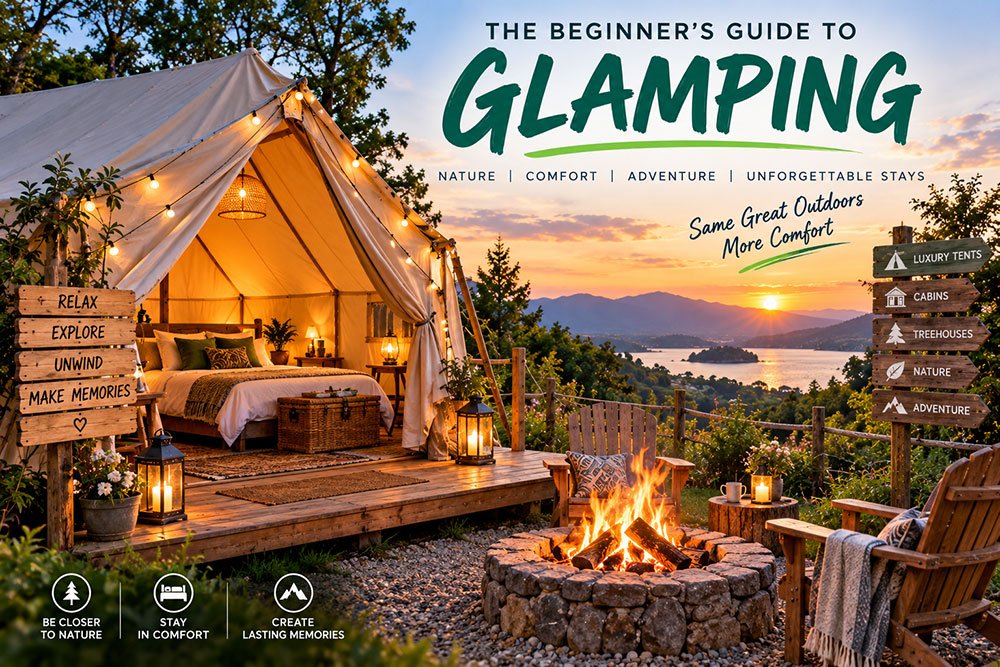
The Beginner’s Guide to Glamping: Everything You Need to Know
If you love the idea of sleeping under the stars but do not enjoy pitching a tent or sleeping on hard ground, glamping could be the perfect alternative.
The word combines glamour and camping. It describes outdoor accommodation that combines the experience of being close to nature with greater comfort than traditional camping. Depending on the property, you might sleep in a safari tent, yurt, pod, cabin, shepherd’s hut, lodge or treehouse.
Today, glamping is available in many destinations around the world. It can suit couples, families, groups and first-time campers who want an outdoor experience without giving up everyday comforts.
What Is Glamping?
Glamping is a more comfortable form of outdoor accommodation. Instead of carrying a tent, sleeping bag, camping stove and other equipment, guests usually arrive at a furnished accommodation unit.
Facilities vary considerably. Some basic glamping sites offer a comfortable bed and simple cooking facilities. More luxurious properties may include private bathrooms, electricity, heating, kitchens, outdoor seating, fire pits and even hot tubs.
VisitScotland, for example, lists pods, yurts, luxury tents and treehouses among the different types of glamping accommodation available. Visit Wales also highlights cabins, lodges, pods, yurts, tipis, safari tents and treehouses.
Therefore, always check exactly what a property includes before booking.
Why Choose Glamping?
Glamping offers a middle ground between traditional camping and a hotel or holiday cottage.
You can spend the day hiking, cycling, swimming or exploring the surrounding countryside. Then, you can return to a comfortable bed instead of sleeping on a thin camping mat.
Some of the main reasons people choose glamping holidays include:
- Comfortable beds
- Protection from changing weather
- Access to electricity
- Private or shared bathrooms
- Cooking facilities
- Scenic outdoor locations
- More privacy than traditional campsites
- Easy access to nature
- Family-friendly accommodation
- Unique stays such as treehouses and yurts
For couples, glamping can also provide a peaceful countryside retreat. Families can enjoy outdoor activities without needing to transport a complete camping setup.
Where Can You Go Glamping?
You can find glamping accommodation in many parts of the world. Options range from countryside farms and forests to coastal areas, mountains and national parks.
Glamping in the UK
The UK has a wide choice of glamping accommodation. Wales, Scotland and England offer everything from traditional canvas tents to modern pods and luxury cabins.
Visit Wales currently promotes glamping options including eco-cabins, shepherd’s huts, yurts, tipis, pods, safari tents and treehouses. Many properties also offer features such as hot tubs, private bathrooms and cooking facilities.
Scotland also offers a wide range of glamping experiences. VisitScotland highlights eco pods, luxury tents and treehouses, with options ranging from simple stays to highly equipped accommodation.
For a first glamping trip, look for a location that matches the type of experience you want. A forest retreat may suit someone looking for peace and hiking, while a coastal site may work better for a beach holiday.
Popular Types of Glamping Accommodation
One of the most exciting things about glamping is the variety of places where you can stay.
Safari Tents
Safari tents provide more space than traditional camping tents. Many have real beds, furniture, electricity and kitchen facilities.
They work particularly well for families and groups who want a traditional outdoor atmosphere with additional comfort.
Glamping Pods
Glamping pods are compact cabins that usually provide a sheltered sleeping area. Some include heating, electricity, kitchen facilities and private bathrooms.
They are a practical option for couples and small families. Visit Wales describes pods as a way to enjoy the outdoors without the need to pitch a traditional tent.
Yurts
Yurts offer a distinctive circular accommodation style. Modern versions can include beds, furniture, heating and cooking facilities.
They are particularly popular at woodland and countryside sites.
Shepherd’s Huts
Shepherd’s huts provide a cosy alternative to conventional camping. Modern versions can include beds, small kitchens, bathrooms and heating.
They are often located on farms or in quiet countryside settings.
Treehouses
Treehouses combine accommodation with a unique elevated setting. Some offer simple interiors, while luxury versions can include kitchens, bathrooms, large beds and outdoor terraces.
For example, Visit Wales currently features treehouse accommodation among its unusual glamping options.
Cabins and Lodges
Cabins and lodges provide a more conventional accommodation experience while still placing you close to nature.
They can be especially useful for travellers who want more indoor space and better protection from cold or wet weather.
What Should You Take Glamping?
One major advantage of glamping is that you usually do not need to carry all the equipment required for traditional camping.
However, do not assume that every site provides the same facilities.
Before travelling, check whether your accommodation includes:
- Bedding and towels
- Kitchen equipment
- Cooking facilities
- Toiletries
- Heating
- Electricity
- Wi-Fi
- Private bathroom
- Outdoor furniture
- Fire pit or barbecue equipment
After checking the facilities, prepare a simple packing list.
Glamping Packing List
Clothing
- Comfortable everyday clothes
- Warm layers
- Waterproof jacket
- Sleepwear
- Extra socks
- Swimwear if required
Footwear
- Walking shoes or boots
- Comfortable casual footwear
- Waterproof footwear for wet conditions
Personal items
- Toiletries
- Medication
- Sunglasses
- Sunscreen
- Insect repellent
- Reusable water bottle
Entertainment
- Books
- Board games
- Camera
- Binoculars
- Outdoor games
You may also want to bring a torch or headlamp, even if the accommodation has electricity. It can make walking around the property after dark much easier.
Check the Facilities Before Booking
Glamping does not always mean luxury.
One property may provide a king-size bed, private bathroom and hot tub. Another may offer a furnished tent with shared toilets and basic cooking facilities.
Therefore, compare the facilities before you book.
Pay particular attention to:
- Bed type and size
- Bathroom arrangements
- Heating and cooling
- Kitchen facilities
- Electricity
- Wi-Fi
- Parking
- Accessibility
- Pet policies
- Child policies
- Fire-pit rules
- Check-in and check-out times
This simple check can prevent unpleasant surprises after arrival.
How Much Does Glamping Cost?
Glamping prices vary widely. The accommodation type, location, season, facilities and length of stay can all affect the price.
A basic pod or furnished tent may cost considerably less than a luxury treehouse with a private hot tub.
Weekend stays and peak holiday periods can also cost more than weekdays or quieter seasons.
For this reason, avoid relying on old advertised prices when planning a trip. Check the property’s current booking page for the latest rates, availability and cancellation conditions.
Is Glamping Eco-Friendly?
Glamping can provide a closer connection with nature, but not every glamping site automatically operates sustainably.
If sustainability matters to you, look for accommodation that uses measures such as:
- Renewable energy
- Low-energy lighting
- Water-saving systems
- Reusable or refillable products
- Local food
- Waste reduction
- Recycling
- Low-impact construction
- Local suppliers
VisitBritain recommends choosing sustainable accommodation and highlights eco-friendly glamping as one option for travellers seeking greener stays.
You should also respect the environment during your stay. Take your rubbish with you, avoid damaging vegetation and follow local fire and wildlife rules.
Glamping Safety Tips
Glamping is comfortable, but it is still an outdoor holiday. Weather and natural surroundings can create risks.
Follow these simple safety tips:
- Check the weather forecast before travelling.
- Wear suitable footwear for local trails.
- Keep food away from wildlife.
- Follow fire-pit and barbecue instructions.
- Never leave an open fire unattended.
- Keep children supervised near water and fire.
- Bring appropriate medication and first-aid supplies.
- Follow the property’s emergency instructions.
- Check local rules before lighting fires.
- Keep emergency contact information available.
If you operate or manage glamping accommodation in England, current government fire-safety guidance specifically covers accommodation such as glamping pods, lodges, shepherd’s huts, tents, treehouses and yurts.
What Activities Can You Do While Glamping?
Glamping gives you a comfortable base for outdoor activities.
Depending on the destination, you can enjoy:
- Hiking
- Cycling
- Wildlife watching
- Fishing
- Kayaking
- Swimming
- Stargazing
- Horse riding
- Birdwatching
- Forest walks
- Beach activities
- Local sightseeing
Some glamping properties also provide activities directly on-site.
Visit Wales, for example, highlights glamping locations near beaches, forests, rivers, walking trails and family attractions.
Glamping for Couples
Glamping can work particularly well for a romantic weekend.
Look for a private accommodation unit with features such as:
- Scenic views
- Private outdoor space
- A fire pit
- Hot tub
- Comfortable bed
- Private bathroom
- Outdoor dining area
A secluded woodland or countryside location can create a relaxing escape from busy city life.
Glamping for Families
Families can also enjoy glamping because it removes much of the equipment and setup associated with traditional camping.
Before booking, check whether the property offers:
- Family-sized accommodation
- Safe outdoor areas
- Child-friendly activities
- Kitchen facilities
- Private bathrooms
- Suitable beds
- Nearby attractions
Some sites also welcome dogs, making glamping an option for families who want to travel with their pets. Visit Wales currently lists numerous family- and dog-friendly glamping options.
What Is the Difference Between Camping and Glamping?
Traditional camping usually requires you to bring and set up much of your own equipment.
Glamping provides a furnished accommodation unit and often includes additional comforts.
| Traditional Camping | Glamping |
| You usually bring your tent | Accommodation is usually ready |
| Sleeping bag or camping bed | Real bed is common |
| Basic facilities | More comfort and amenities |
| More equipment required | Less equipment required |
| Often lower accommodation cost | Prices vary by facilities |
| Stronger focus on self-sufficiency | Stronger focus on comfort |
Neither option is necessarily better. The right choice depends on how much equipment, comfort and independence you want.
Latest Glamping Update
Glamping has continued to develop beyond the simple idea of a luxury tent. Current tourism boards now promote a broad range of accommodation, including pods, cabins, eco-retreats, safari tents, yurts, shepherd’s huts and treehouses.
Sustainability has also become a more visible part of the accommodation market. VisitBritain now encourages travellers to consider sustainable accommodation, including eco-friendly glamping sites.
For people planning or operating glamping accommodation in England, regulations also remain important. Current UK government guidance covers planning, fire safety, gas and carbon monoxide safety, electrical safety, insurance and other requirements for short-term accommodation.
Planning requirements can vary by location and accommodation type. In England, for example, operators should contact the relevant local planning authority to determine whether planning permission is required.
This means travellers should choose established accommodation providers and check their current facilities, safety information, reviews and booking conditions before making a reservation.
Frequently Asked Questions About Glamping
What does glamping mean?
Glamping means combining the outdoor experience of camping with greater comfort and amenities. Accommodation can include safari tents, yurts, pods, cabins, lodges, shepherd’s huts and treehouses.
Is glamping suitable for beginners?
Yes. Glamping is particularly suitable for beginners because the accommodation usually comes prepared. You can enjoy nature without buying or carrying a complete camping setup.
Do you need to bring a tent when glamping?
Usually, no. The glamping accommodation normally provides the tent, pod, cabin or other sleeping structure. However, always check what the property supplies before travelling.
Is glamping expensive?
Glamping prices vary. Location, season, accommodation type and facilities can significantly affect the cost. Luxury accommodation with private bathrooms or hot tubs usually costs more than basic glamping.
Can families go glamping?
Yes. Many glamping sites welcome families and provide larger accommodation units and outdoor activities. Check the site’s age restrictions and facilities before booking.
Is glamping available throughout the year?
Many glamping sites operate throughout the year, although availability varies. Heated cabins and pods can provide a more comfortable experience during colder months.
Final Thoughts
Glamping provides a simple way to experience nature without giving up every modern comfort. You can sleep beneath the stars, explore forests and countryside, enjoy outdoor activities and return to a comfortable bed at the end of the day.
The key to a successful glamping holiday is choosing accommodation that matches your expectations. Check the facilities, location, weather, accessibility, safety arrangements and current price before booking.
Whether you choose a safari tent, yurt, pod, shepherd’s hut, cabin or treehouse, glamping can offer a memorable introduction to outdoor travel.
