
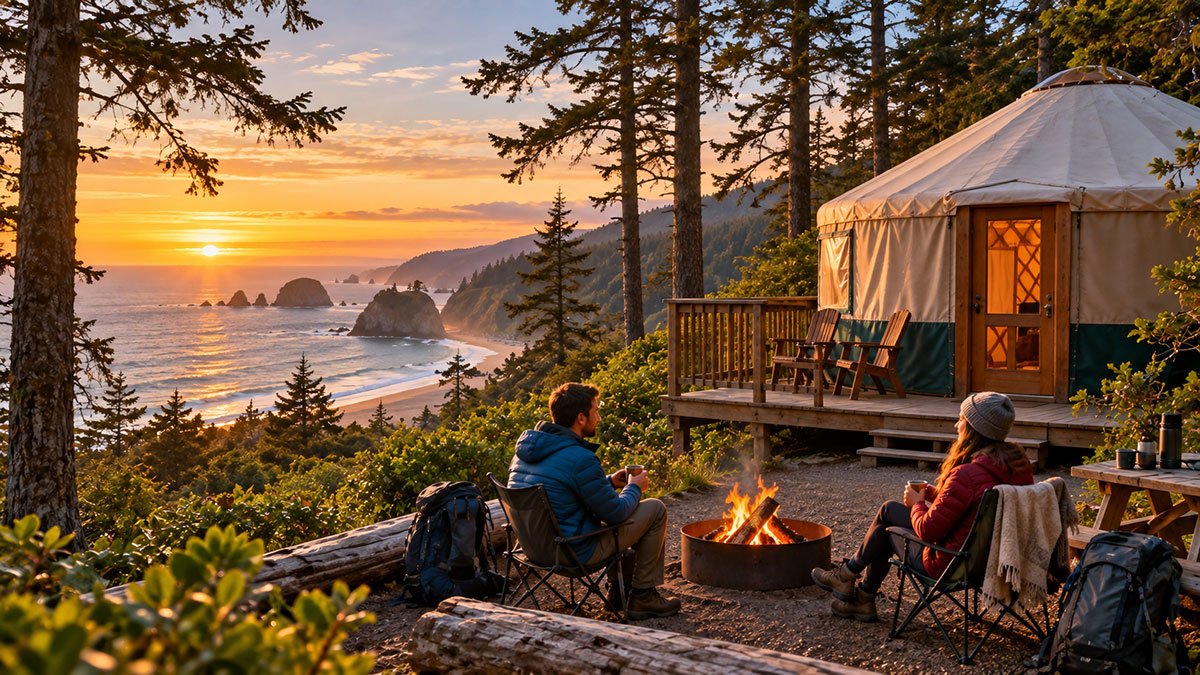
Camping in Oregon’s Yurts: A Complete Guide for Travelers
Camping does not always mean sleeping on the ground in a tent.
Across Oregon, travelers can stay in yurts that provide a more comfortable alternative while keeping them close to forests, beaches, rivers and hiking trails. For people who enjoy the outdoors but would rather skip pitching a tent, camping in Oregon’s yurts can be an appealing middle ground between traditional camping and a cabin stay.
Oregon State Parks offers yurts at selected parks, including locations along the Oregon Coast and inland. The accommodations vary, so it is important to check the individual park before booking.
Some yurts provide electricity, heat, lighting, beds and locking doors. Others offer additional amenities such as private bathrooms and kitchenettes. That makes choosing the right yurt just as important as choosing the destination.
What Is a Yurt?
A yurt is a circular, dome-shaped shelter traditionally associated with the nomadic cultures of Central Asia.
Modern recreational yurts retain the basic round structure but use contemporary materials and construction. Oregon’s park yurts are designed as fixed camping accommodations rather than portable homes.
For travelers, the attraction is simple: you get a roof, a floor, a bed and protection from the elements while remaining in a campground setting.
That makes a yurt particularly useful for people who want to experience camping without bringing a tent and sleeping system.
What Can You Expect Inside an Oregon State Park Yurt?
Not every yurt is identical.
Oregon State Parks generally classifies its yurts as rustic or deluxe accommodations.
Rustic yurts
Rustic yurts generally include:
- Beds with vinyl mattresses
- Electricity
- Heat
- Lighting
- A table and chairs
- A locking door
- An outdoor fire pit
- An outdoor picnic table
Guests staying in rustic yurts use shared campground restrooms and showers. Bedding is not normally supplied, so you should bring what you need for sleeping.
Cooking is also not permitted inside rustic yurts.
Deluxe yurts
Deluxe yurts provide additional comforts at selected locations.
At Umpqua Lighthouse State Park, for example, deluxe yurts include a private bathroom with a shower and a kitchenette with a mini refrigerator and microwave. Outdoor grills are also provided.
Because facilities vary by park, always check the accommodation description before assuming that a yurt has a bathroom, kitchen, refrigerator or other equipment.
Why Choose a Yurt Instead of a Tent?
The biggest advantage is comfort.
A traditional tent requires you to carry and assemble your shelter, sleeping equipment and often a cooking system. A yurt provides the structure and basic furnishings before you arrive.
Yurts can therefore work particularly well for:
- First-time campers
- Families
- Couples
- Travelers who do not own camping equipment
- People who want easier overnight stays
- Travelers visiting Oregon during cooler or wetter weather
- Anyone looking for a camping experience without sleeping in a tent
You still remain in a campground environment. You can enjoy a campfire, hiking, wildlife and the surrounding landscape without giving up a solid sleeping space.
Oregon Yurts Are Available in Different Landscapes
One of the best things about yurt camping in Oregon is the variety of settings.
You can stay near the Pacific Coast, among forests or close to inland recreational areas.
Coastal yurt camping
Oregon’s coast is one of the most popular settings for a yurt stay.
Cape Lookout State Park, for example, has yurts within a coastal campground near the Pacific Ocean and Netarts Bay. The park also provides access to hiking trails and the beach.
Other coastal state parks with yurts include locations such as:
- Beachside State Recreation Site
- Carl G. Washburne Memorial State Park
- Cape Blanco State Park
- William M. Tugman State Park
- Sunset Bay State Park
- South Beach State Park
Facilities, yurt numbers, pet policies and seasonal operations vary from park to park.
A coastal yurt can be particularly appealing if you want to combine camping with beach walks, hiking and sightseeing along U.S. Highway 101.
Forest and inland settings
Yurts are not limited to the coast.
Champoeg State Heritage Area, near the Willamette Valley, offers yurts alongside other camping options. The park provides access to a landscape shaped by the Willamette River and is suitable for travelers who want an outdoor stay without heading to the ocean.
Other inland locations provide opportunities to explore forests, rivers and recreational areas.
When choosing a park, think about the activities you want to do rather than choosing a yurt simply because it is available.
Cape Lookout: A Classic Coastal Option
Cape Lookout State Park is one of the best-known places to experience an Oregon yurt stay.
The park sits on the northern Oregon Coast and offers a combination of camping, beach access and hiking.
The park currently has 13 yurts, including pet-friendly options, as well as cabins and conventional campsites.
The Cape Trail leads through coastal forest toward the tip of Cape Lookout, where the landscape opens toward the Pacific. The park is also connected with sections of the Oregon Coast Trail.
The campground does not provide direct ocean views from its campsites, so travelers should not assume that booking a yurt means waking up to an unobstructed view of the Pacific.
Instead, the appeal is the combination of forest, coastline, hiking and easy access to nearby coastal destinations.
Beachside State Recreation Site
If beach access is your priority, Beachside State Recreation Site offers another option.
The park has two yurts, one of which is pet-friendly, and both are accessible accommodations. It also provides flush toilets and hot showers for campers.
The campground operates seasonally, so check current dates before planning a stay.
Its coastal location makes it particularly suitable for travelers who want to combine a yurt stay with time on the Oregon Coast.
William M. Tugman State Park
Further south, William M. Tugman State Park provides another year-round yurt option.
The park has 16 yurts, including pet-friendly and accessible accommodations. The campground also provides showers, flush toilets and other camping facilities.
Its location makes it a useful base for exploring Oregon’s southern coast and nearby outdoor attractions.
Champoeg State Heritage Area
For travelers who want something different from the coast, Champoeg State Heritage Area provides a yurt experience in the Willamette Valley.
The park has six yurts, including pet-friendly options, and operates its yurt and cabin accommodations year-round.
The surrounding landscape offers a different perspective on Oregon. Instead of ocean beaches and coastal cliffs, visitors can explore river landscapes, trails and the agricultural character of the Willamette Valley.
How to Book an Oregon Yurt
Yurts at Oregon State Parks require reservations.
The state park reservation system currently allows yurt and cabin reservations up to six months ahead. New reservation inventory becomes available at 6 a.m. daily.
Popular locations can fill quickly, particularly during weekends, holidays and desirable travel periods.
For that reason, it is worth deciding on your preferred dates and destination early.
Before booking, check:
- Exact yurt type
- Number of beds
- Whether bedding is provided
- Bathroom arrangements
- Cooking facilities
- Pet policy
- Accessibility features
- Parking
- Campground facilities
- Seasonal operating dates
- Current cancellation conditions
Do not assume that every Oregon yurt provides the same amenities.
What Should You Bring?
Yurt camping requires less equipment than tent camping, but you still need to prepare.
For a typical rustic yurt stay, consider packing:
- Sleeping bags or suitable bedding
- Pillows
- Towels
- Toiletries
- Warm layers
- Waterproof clothing
- Comfortable walking shoes
- Food and snacks
- Reusable water bottles
- Flashlights or headlamps
- Personal cooking equipment if permitted and needed
- Phone and portable charger
- Insect protection
- Basic first-aid supplies
Check the rules for your specific yurt before bringing cooking equipment or other appliances.
Oregon weather can change quickly, particularly along the coast. Even if the forecast looks favorable, pack layers and rain protection.
Can You Bring a Dog?
Some Oregon State Park yurts are pet-friendly, but not all of them are.
Pet-friendly yurts are specifically designated, and Oregon State Parks currently allows up to two cats or dogs in these facilities.
Additional pet fees apply.
Dogs must generally be physically restrained in state parks, subject to designated exceptions. Beach rules can also vary depending on location and wildlife protections.
If you are travelling with a pet, select a pet-friendly yurt during the reservation process rather than assuming that pets are allowed in every yurt.
Are Oregon Yurts Available in Winter?
Some are.
Several Oregon State Park yurt locations operate year-round, making them an option for travelers who want an outdoor getaway during cooler months.
A yurt can provide a much more comfortable shelter than a tent during wet or chilly conditions. However, it should not be treated as a substitute for checking the weather.
Before a winter trip, check:
- Weather forecasts
- Road conditions
- Park advisories
- Trail conditions
- Seasonal facility closures
- Fire restrictions
- Your accommodation’s current operating status
Coastal storms can make conditions particularly changeable.
Yurt Camping Is Not Quite Glamping
It is tempting to describe every yurt as luxury camping, but that can create the wrong expectation.
A rustic Oregon State Park yurt is still part of a campground. You may have electricity, heating and a comfortable mattress, but you may also need to walk to shared showers and restrooms.
Deluxe yurts provide more amenities, but they are still designed around an outdoor experience.
Think of a yurt as a bridge between tent camping and a cabin rather than a hotel room in the forest.
Respect the Oregon Outdoors
A comfortable yurt does not remove the responsibilities that come with camping.
Keep food and waste secured, follow campground rules and avoid disturbing wildlife.
Oregon State Parks is also asking visitors to follow firewood precautions because of invasive pests such as emerald ash borer. Buying locally harvested or certified heat-treated firewood can help reduce the spread of invasive insects.
Beach visitors should also pay attention to seasonal wildlife restrictions and posted signs. Some coastal areas have special protections for nesting birds.
Always follow current instructions at the park you visit.
When Is the Best Time for Yurt Camping?
The best season depends on the experience you want.
Spring
Spring can bring fresh greenery, waterfalls and fewer visitors than the busiest summer periods. Rain remains possible, so waterproof clothing is useful.
Summer
Summer is popular for Oregon’s beaches, hiking and outdoor recreation. Yurt availability can be limited at popular parks, so advance reservations are particularly important.
Autumn
Fall can be a rewarding time for forest scenery and coastal trips. Cooler nights make a heated yurt especially appealing.
Winter
Winter offers a quieter camping experience at year-round locations. Coastal storms can be dramatic, but travelers should check weather and road conditions carefully before setting out.
Tips for Choosing the Right Yurt
The best yurt is not necessarily the one closest to a famous attraction.
Start by deciding what kind of trip you want.
For beaches and ocean scenery: Look at Oregon Coast parks such as Cape Lookout, Beachside or Carl G. Washburne.
For a quieter inland experience: Consider a park such as Champoeg.
For longer coastal exploration: Choose a location that gives you convenient access to several nearby towns, beaches and attractions.
For pet travel: Filter for pet-friendly yurts before selecting your dates.
For accessibility: Check the individual park’s accessibility information and select an appropriate accommodation.
For maximum comfort: Look for a deluxe yurt with private bathroom and kitchenette facilities where available.
A Comfortable Way to Experience Oregon
Yurts give travelers another way to experience Oregon’s outdoors.
They are more comfortable than traditional tent camping while retaining the atmosphere of staying in a campground. You can spend the day hiking, walking along the beach or exploring nearby communities, then return to a heated shelter and a proper bed.
The key is to choose the accommodation carefully. Facilities, pet policies, seasonal operations and accessibility vary between parks.
Whether you choose a coastal yurt at Cape Lookout, a southern Oregon base such as William M. Tugman, or an inland setting such as Champoeg, a yurt stay can turn a conventional camping trip into a more comfortable outdoor escape.
