
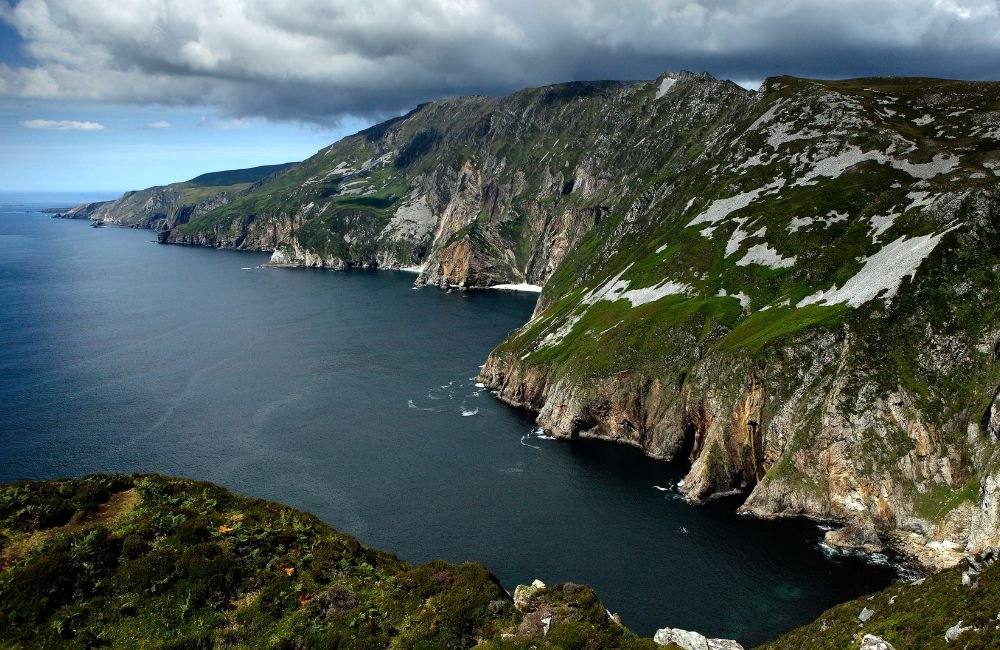
Dramatic green cliffs of Slieve League rising above the deep blue Atlantic Ocean in County Donegal, Ireland.
5 Best Things to Do in Donegal, Ireland
County Donegal is one of Ireland’s most appealing destinations for travelers who enjoy dramatic coastlines, mountain scenery, historic castles and traditional Irish culture. Located in the northwest of the island, Donegal combines rugged Atlantic landscapes with welcoming towns, remote beaches and communities where the Irish language remains part of everyday life.
The best things to do in Donegal range from walking beside the towering cliffs of Slieve League to exploring the gardens of Glenveagh Castle, discovering rural Irish heritage at Glencolmcille Folk Village and wandering through the historic streets of Donegal Town.
Whether you are planning a scenic road trip, a walking holiday or a cultural break, Donegal offers plenty of reasons to explore beyond Ireland’s better-known tourist centres.
Here are five highlights to help you plan a memorable visit.
1. Explore Letterkenny, Donegal’s Lively Market Town
Letterkenny is a useful starting point for exploring County Donegal. As one of the county’s principal towns, it combines everyday Irish town life with restaurants, cafés, traditional pubs, cultural attractions and access to the surrounding countryside.
For travelers who prefer having accommodation, shops and places to eat within easy reach, Letterkenny can also serve as a practical base for exploring northern Donegal.
What to see and do in Letterkenny
Start with a walk through the town centre, where you can browse local shops and stop for coffee or a meal. Traditional music venues and pubs offer opportunities to experience local hospitality, although performances and schedules vary.
Other worthwhile stops include:
- Donegal County Museum: Discover exhibitions covering the county’s history, archaeology and cultural heritage.
- St Eunan’s Cathedral: Admire the distinctive Victorian Gothic architecture and prominent position in the town.
- Local food and music venues: Explore Irish food, hospitality and traditional music where available.
Letterkenny is also useful for organizing excursions into the surrounding countryside. Visit the local tourist information centre for maps, practical advice and information about regional attractions.
Travel tip: If you are planning to explore without a rental car, compare your accommodation location with the bus routes available for your intended destinations. Staying in a well-connected town can make a car-free trip easier to organize.
2. Discover the Wilderness of Glenveagh National Park
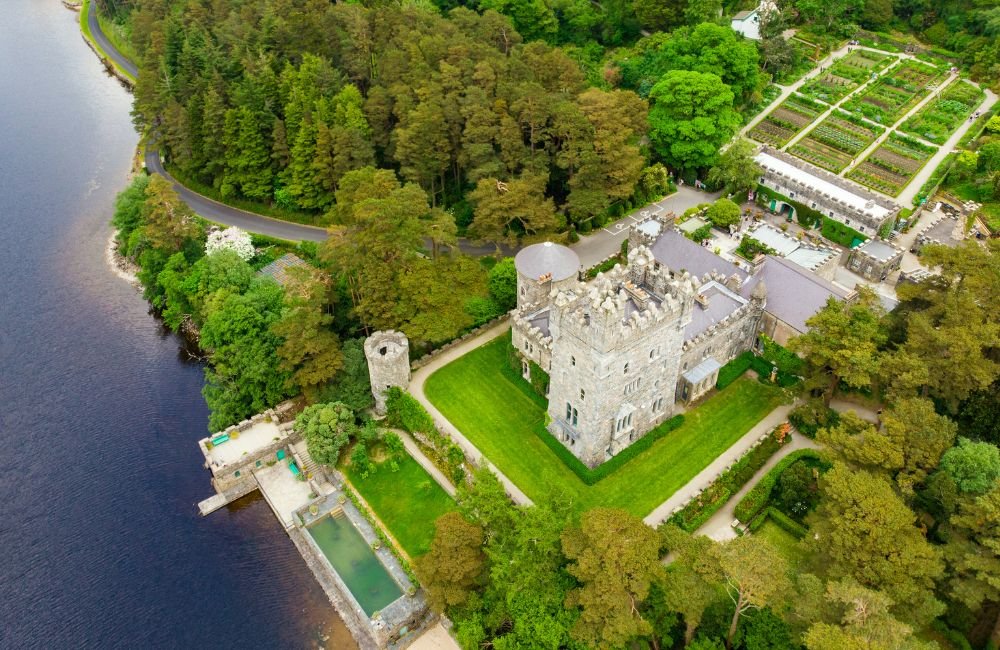
Glenveagh National Park is one of the defining natural attractions of County Donegal. Located among the rugged Derryveagh Mountains, the park protects a landscape of mountains, lakes, woodland and open wilderness.
It is an excellent destination for travelers who want to experience Ireland’s natural beauty away from busy towns and heavily developed resort areas.
Visit Glenveagh Castle and its gardens
One of the park’s main attractions is Glenveagh Castle, a castellated mansion built in the 19th century beside Lough Veagh.
The castle’s remote setting, mountain backdrop and gardens create a distinctive contrast with the surrounding wilderness. Visitors can explore designated paths, enjoy views across the lake and discover the landscape around the historic property.
Depending on the season and current arrangements, visitors can also tour the castle and gardens. The park’s visitor facilities help travelers learn about the area’s natural environment, conservation work and history.
Walking and wildlife
Glenveagh offers opportunities for different levels of outdoor activity. Visitors who prefer a relaxed outing can explore suitable walking trails and enjoy the scenery around the visitor facilities. Experienced hikers can consider more demanding routes, provided they have appropriate equipment and understand the terrain.
Before heading out:
- Check the park’s official information for current trail conditions and closures.
- Confirm whether the castle, gardens and shuttle bus are operating on your chosen date.
- Wear sturdy footwear and bring waterproof clothing.
- Check the weather forecast before committing to a longer walk.
The national park is generally accessible throughout the year, but individual facilities and visitor services have seasonal schedules. Admission arrangements for the park, castle and shuttle service are not necessarily the same, so check the official information before departure.
Travel tip: Allow time to enjoy the landscape rather than treating Glenveagh as a quick stop. The castle, gardens, walking trails and mountain scenery offer different experiences, and trying to fit everything into a rushed visit can detract from the experience.
3. Experience the Dramatic Cliffs of Slieve League
For many travelers, the spectacular Atlantic coastline is the strongest reason to visit Donegal. Slieve League, also known by its Irish name Sliabh Liag, is one of the county’s most impressive coastal landmarks.
The steep cliffs rise dramatically above the Atlantic Ocean, creating sweeping views across the water and surrounding headlands. The scale of the landscape makes this an especially rewarding destination for photographers, walkers and anyone who enjoys wild coastal scenery.
How to experience Slieve League
Visitors can explore the area through its viewing points and walking routes. The nearby visitor facilities provide a useful starting point for understanding the landscape and planning an outing.
Those seeking a longer walk can consider the Slieve League Pilgrim Path, a strenuous route that requires suitable footwear, good preparation and appropriate weather conditions. Shorter walks towards designated viewing areas may suit travelers who prefer a less demanding visit.
The cliffs can look very different depending on the weather. Clear conditions may provide far-reaching views, while cloud, mist and shifting light can give the landscape a more dramatic atmosphere.
However, poor visibility and strong winds can make exposed coastal areas dangerous.
Essential safety advice
Donegal’s coastal landscapes are beautiful, but visitors should treat cliff edges with care.
- Stay on marked paths and observe local signs and barriers.
- Check weather and coastal safety information before hiking.
- Avoid exposed cliff-edge routes in strong winds or poor visibility.
- Wear suitable footwear and carry enough water and clothing for the conditions.
- Do not attempt a demanding route without the necessary experience and equipment.
Check the current access arrangements and transport information for the viewing areas before setting out.
Travel tip: Make Slieve League a major stop on your southwest Donegal itinerary instead of squeezing it between several distant attractions. Give yourself enough time to enjoy the views and return safely.
4. Step Back in Time at Glencolmcille Folk Village
Donegal’s appeal extends beyond its scenery. The county also has a rich cultural heritage, and Glencolmcille Folk Village offers an accessible introduction to traditional rural life.
Located in the southwest of Donegal, this open-air folk museum recreates aspects of Irish life through a group of traditional-style cottages. Known as a clachán, the settlement includes buildings furnished to represent different historical periods.
Visitors can learn about how people lived, worked and managed everyday life in rural Ireland before modern conveniences became widespread.
What makes the folk village special?
The reconstructed cottages provide a tangible connection to the region’s past. Their traditional construction, household objects and period furnishings help explain how generations adapted to rural life and the area’s demanding Atlantic climate.
The village also has connections to local traditions, craftsmanship and the Irish language. Its setting adds to the experience, with the surrounding coastal landscape providing a reminder that the region’s geography helped shape its communities.
Depending on current opening arrangements, visitors may also be able to browse the craft shop and enjoy refreshments.
Practical visiting advice
The folk village operates seasonally, generally during the warmer months and into autumn. Exact opening dates, hours and facilities can vary, so check the official website before travelling.
Allow time to explore the cottages and exhibits rather than treating the village as a brief photographic stop. If you are already visiting Slieve League, combining the two attractions may make practical sense because both are in southwest Donegal.
Travel tip: Respect the local community and its cultural traditions. In areas where Irish is spoken as a community language, visitors can support local businesses and approach cultural experiences with curiosity and consideration.
5. Discover Donegal Town and Its Historic Castle
Donegal Town offers a different experience from the county’s remote mountains and cliffs. It is a convenient place to explore local history, browse shops, enjoy a meal and take a break from longer countryside excursions.
The town’s main historical attraction is Donegal Castle, which stands close to the River Eske in the centre of town.
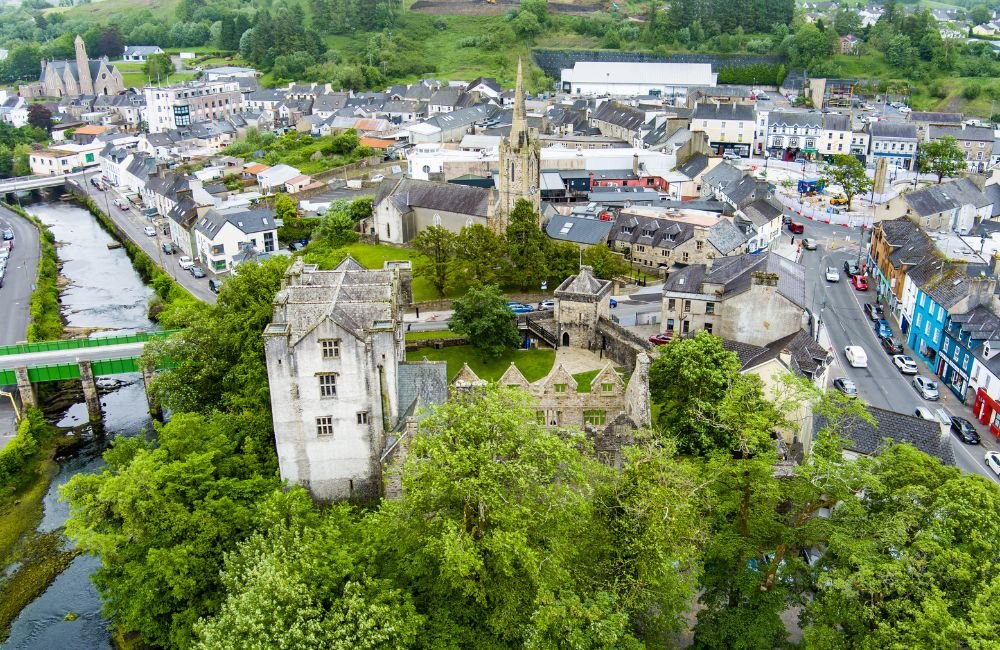
Explore Donegal Castle
Built in the 15th century as the stronghold of Red Hugh O’Donnell, Donegal Castle reflects the power of the O’Donnell clan in the region’s history.
The complex was subsequently altered under English ownership in the early 17th century. Its surviving tower house and later manor-style additions reveal different periods in the building’s history.
The castle underwent restoration during the 20th century and now helps visitors understand the area’s political and architectural heritage.
Inside, interpretive displays explain the building’s past and its connections to the people who lived there.
Enjoy the town beyond the castle
After exploring the castle, spend time wandering through Donegal Town. Local shops, cafés and places to eat make it a comfortable stop on a wider tour of the county.
The town also works well as part of a longer itinerary that combines cultural attractions with nearby coastal scenery. Travelers who enjoy history can use it as an opportunity to explore other heritage sites across Donegal.
Before visiting the castle, check current admission arrangements, opening hours and access information through the official Heritage Ireland website.
Travel tip: Allow extra time around your castle visit for lunch or a relaxed walk through town. This makes the stop more worthwhile than simply arriving, visiting the building and driving straight on.
An Extra Day Trip: Walk the Historic Walls of Derry
Although Derry is not part of County Donegal, its historic city walls make it a worthwhile addition to a wider northwest Ireland itinerary.
Derry, also known as Londonderry, is in Northern Ireland. Its historic walls were built between 1613 and 1618 and remain one of the best-preserved examples of a walled city in Europe.
The circuit offers elevated views over the historic centre, traditional streets, gates and surrounding neighbourhoods. Historic cannons remain on display along sections of the walls, including the well-known Roaring Meg.
Walking the walls is a good way to discover Derry’s layered history and understand the development of the city.

What to know before crossing the border
A visit to Derry means travelling from Ireland’s County Donegal into Northern Ireland, which is part of the United Kingdom.
Although there are no routine immigration controls on the land border, travelers must still comply with the applicable UK entry rules. Depending on nationality and immigration status, this may mean obtaining a visa or an Electronic Travel Authorisation (ETA).
Check the official UK government guidance before including Derry in your itinerary, particularly if you are visiting Ireland on a visa or have specific travel-document requirements.
Also verify access to the walls before visiting, since sections may occasionally be restricted for maintenance or events.
How to Plan Your Donegal Trip
Donegal is a large county, and its main attractions are spread across different areas. The best way to enjoy the region is to plan around geography, transport and the amount of time you have available.
Choose a convenient base
Letterkenny is a practical option for exploring northern Donegal and visiting Glenveagh National Park. Donegal Town can work well for the southern part of the county and its heritage attractions.
If you want to focus on Slieve League and Glencolmcille, consider accommodation in or near southwest Donegal to avoid unnecessary backtracking.
You do not have to stay in one place for the entire trip. Splitting your accommodation between suitable locations may make a longer road trip more comfortable.
Decide whether to rent a car
A rental car provides flexibility for reaching beaches, remote viewpoints, smaller villages and attractions that are difficult to connect by public transport.
However, driving is not essential for every Donegal itinerary. Bus services connect major towns, and some routes provide access to well-known attractions. Car-free travel requires more advance planning because services to rural destinations may be limited or infrequent.
Before choosing your transport, check:
- Bus routes and current departure times.
- The distance between your accommodation and attractions.
- Parking and access arrangements at visitor sites.
- Whether your chosen routes involve narrow or winding rural roads.
- The cost and practicality of hiring a car compared with public transport.
Do not rely on an assumed timetable. Check the relevant operator’s current schedule before travelling.
When is the best time to visit Donegal?
Late spring and summer can be appealing for outdoor exploration because daylight hours are longer. The county’s coastline, mountain scenery and walking trails are also attractive during the shoulder seasons, although weather and daylight conditions vary.
There is no guarantee of dry weather at any time of year. Rain, mist and strong winds can affect visibility, outdoor activities and transport.
Autumn and winter visits can still be rewarding, particularly for travelers interested in history, quieter towns and dramatic coastal landscapes. However, shorter days and seasonal opening arrangements may limit how much you can comfortably fit into a day.
Before travelling, check the forecast from Met Éireann, Ireland’s national meteorological service, and review any relevant weather warnings.
Pack for changing weather
Even if the forecast looks promising, bring waterproof outerwear, comfortable walking shoes and layers that can be added or removed as conditions change.
For coastal walks and mountain routes, pack equipment appropriate to the route and season. Longer hikes may require additional food, water, navigation equipment and preparation.
Always match your plans to your fitness, experience and the conditions on the day.
A Simple Three-Day Donegal Itinerary
If you have three days, the following outline provides a practical starting point. It prioritizes nearby attractions on each day rather than attempting to cover the whole county in one continuous rush.
Day 1: Letterkenny and Glenveagh National Park
Explore Letterkenny in the morning, then spend the rest of the day enjoying Glenveagh’s landscapes, visitor facilities and, if available, the castle and gardens.
Day 2: Slieve League and Glencolmcille
Concentrate on southwest Donegal. Explore the coastal scenery around Slieve League, then visit Glencolmcille Folk Village if it is open. Allow sufficient time for walking and check the weather before setting out.
Day 3: Donegal Town and Donegal Castle
Explore Donegal Castle and enjoy a relaxed visit to Donegal Town. Depending on your transport arrangements and onward plans, you may be able to add another nearby stop without making the day too rushed.
Derry can be considered as an additional excursion or an alternative day, depending on your route, available time and entry requirements. It is better to allow adequate time for each area than to spend most of your holiday driving between distant attractions.

Frequently Asked Questions About Visiting Donegal
Is Donegal worth visiting?
Yes. Donegal combines dramatic Atlantic coastal scenery, mountain landscapes, historic sites, traditional Irish culture and attractive towns. It is particularly appealing to travelers who enjoy outdoor activities and exploring beyond Ireland’s major cities.
Do you need a car to explore Donegal?
No, but a car offers greater flexibility. Public transport connects major towns and some attractions, although services to remote coastal areas and small villages may be limited. A car-free itinerary works best when accommodation and activities are chosen around available routes.
How many days should you spend in Donegal?
Three days is a useful starting point for exploring selected highlights. A longer stay allows more time for walking, coastal scenery, cultural experiences and destinations farther apart. The ideal duration depends on your route and whether you are travelling by car.
Is Donegal suitable for a walking holiday?
Yes. Donegal offers coastal walks, forest trails and more demanding mountain routes. Choose walks that match your experience, check weather and access conditions, and carry appropriate equipment. Some exposed routes require careful planning and should be avoided when conditions are unsafe.
Final Thoughts
Donegal rewards travelers who take the time to explore its different landscapes and communities. Slieve League provides dramatic Atlantic views, Glenveagh National Park offers mountain scenery and historic gardens, while Letterkenny, Glencolmcille Folk Village and Donegal Castle reveal different sides of the county’s history and culture.
Plan your route around the attractions that interest you most, allow time for the distances involved and check current visitor information before setting out. With a little preparation, Donegal makes an excellent destination for a road trip, a walking holiday or a deeper exploration of Ireland’s northwest.
