
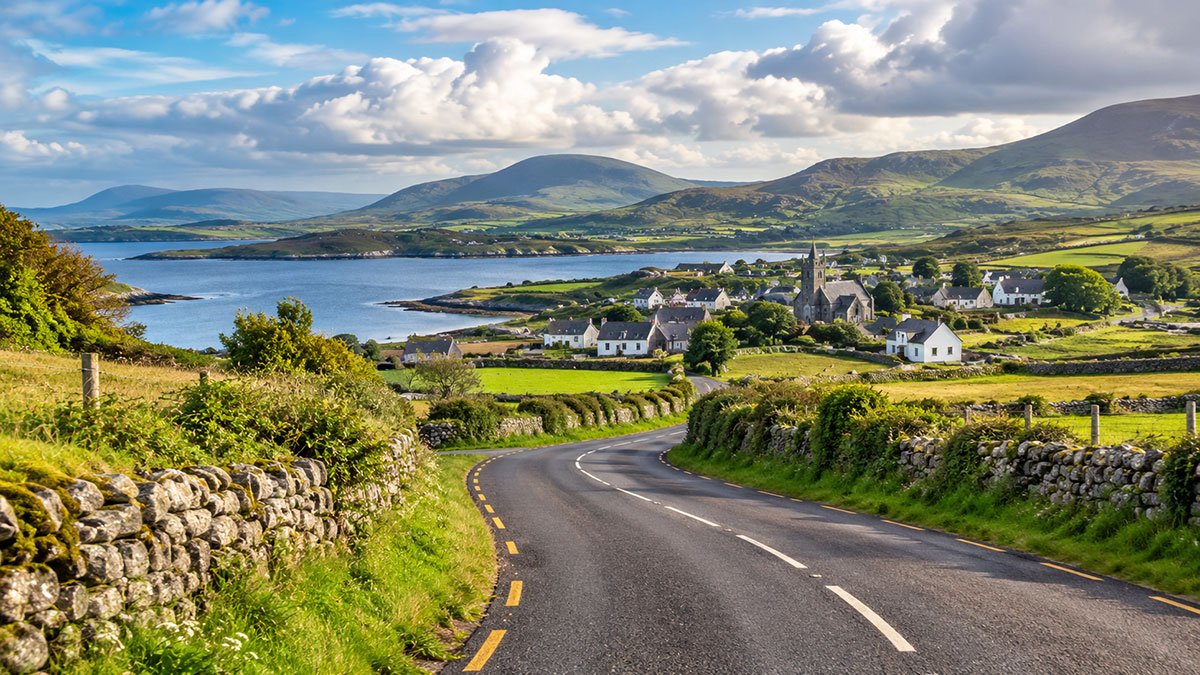
A scenic drive through the Irish countryside, with winding roads, traditional stone walls, rolling green hills and a charming village beside the coast.
Weekend Driving Tours in Ireland: 2 Scenic Road Trips
Ireland is ideal for a weekend road trip, offering spectacular coastal scenery, historic sites, mountain landscapes and welcoming towns within a relatively compact area. The best weekend driving tours in Ireland combine a manageable amount of driving with enough time to explore on foot, enjoy local food and discover places along the way.
For a dramatic coastal escape, follow part of Northern Ireland’s Causeway Coastal Route, where rugged cliffs, seaside villages and the remarkable Giant’s Causeway make an unforgettable combination. If you prefer mountains, lakes and ancient ruins, head south from Dublin into County Wicklow for a scenic journey through the Irish countryside.
Both routes can be enjoyed over two days. The key is to choose a few memorable stops rather than trying to see everything in one weekend.
1. The Causeway Coastal Route: A Weekend by the Sea
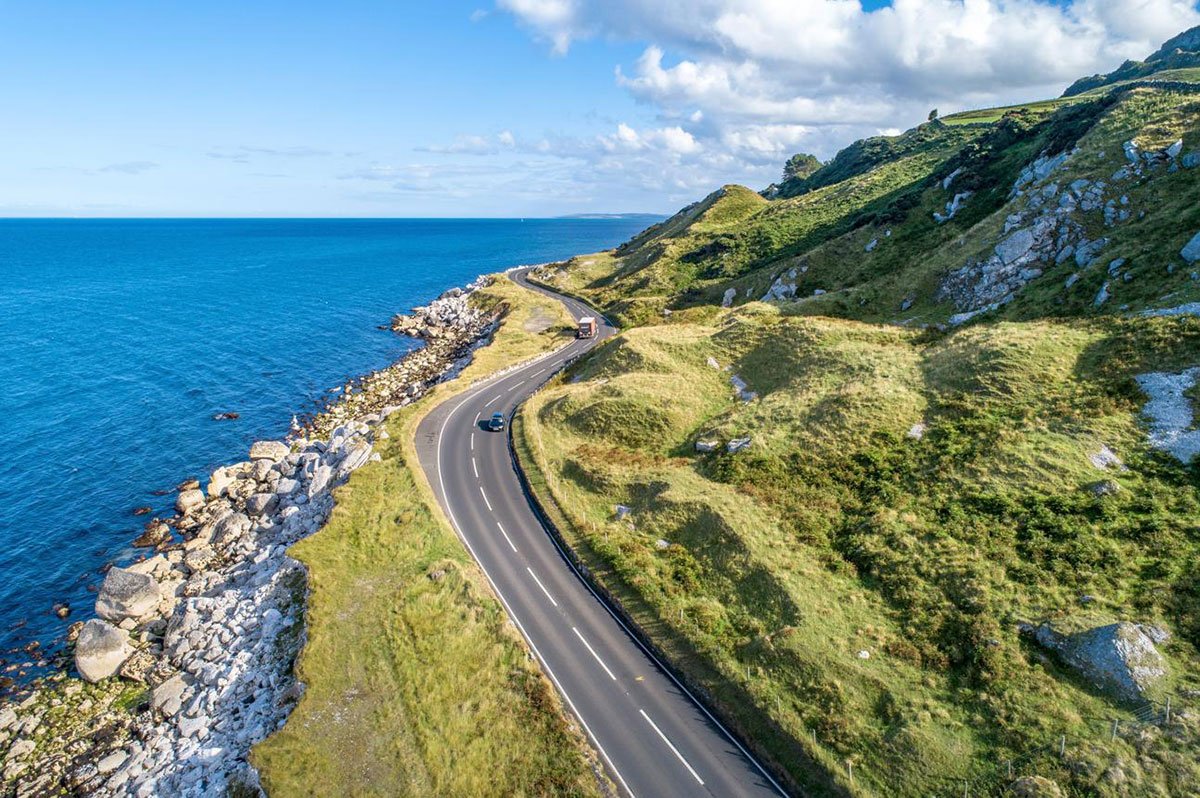
The Causeway Coastal Route is one of the island’s most celebrated scenic drives. It follows Northern Ireland’s northeastern coastline, connecting the Belfast area with the north coast and Derry~Londonderry, with dramatic seascapes, sandy beaches, historic ruins and distinctive coastal villages along the way.
Although the wider route deserves several days for an unhurried journey, a well-planned weekend is enough to experience some of its most memorable highlights.
Day 1: Belfast to the Antrim Coast
Begin in Belfast and travel north towards County Antrim. Rather than rushing directly to the most famous attraction, allow time for scenic viewpoints and small coastal communities.
Recommended stops
- Glenarm: A traditional coastal village that makes a pleasant early stop, with historic character and views across the sea.
- Cushendall: A useful place to pause for refreshments and explore a village surrounded by the Glens of Antrim.
- Ballycastle: A lively coastal town that works well for lunch, a seaside stroll or an overnight stay.
- Carrick-a-Rede: This famous rope bridge crosses a narrow chasm between the mainland and a small offshore island. Visits depend on available tickets and prevailing conditions, so check the official booking information before planning your day.
You do not need to visit every stop. Select two or three, depending on your departure time and how much walking you intend to do.
Spend the night around Ballycastle, Bushmills or Portrush. Staying along the north coast makes it easier to explore the major attractions the following morning without retracing the entire route.
Day 2: Giant’s Causeway and the North Coast
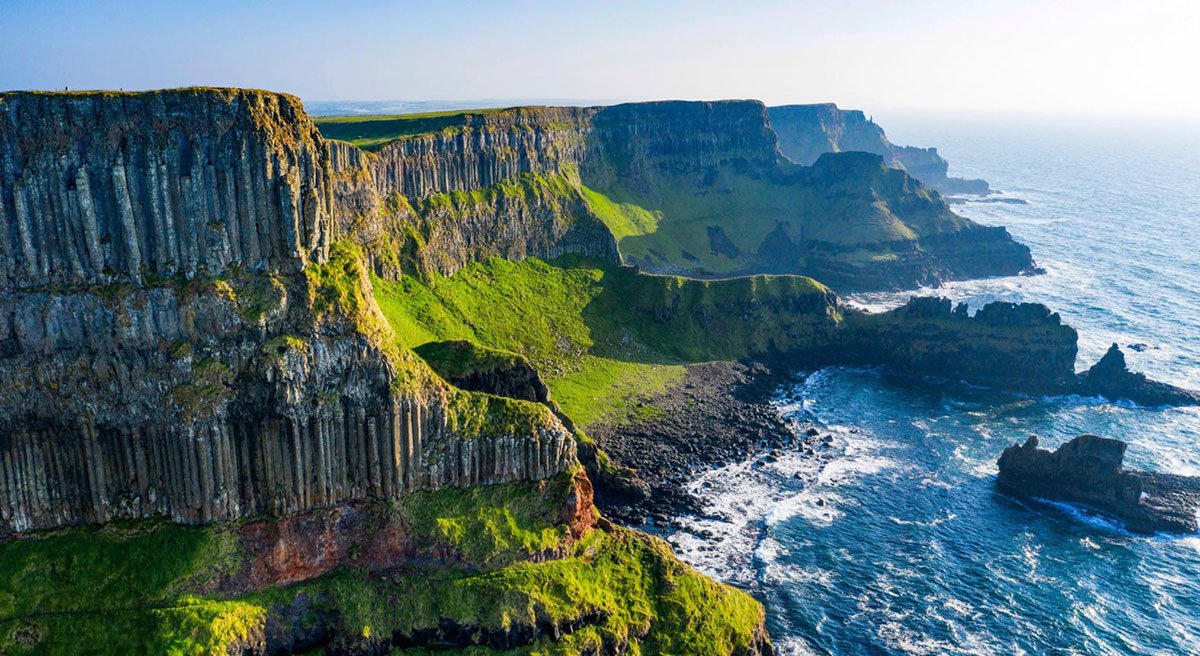
The highlight of the second day is the Giant’s Causeway. This UNESCO World Heritage Site is famous for its interlocking basalt columns, formed by ancient volcanic activity.
Local folklore tells a different story: the giant Finn McCool supposedly built a causeway across the sea to Scotland. The contrast between geological explanation and Irish legend is part of the attraction’s appeal.
Allow a substantial part of the morning for the visit. Walking from the visitor area to the stones and back involves a descent towards the coast, uneven surfaces and some uphill walking.
Before you go, note the following:
- Reserve the official Visitor Experience in advance if you want the visitor centre, guided interpretation and associated parking.
- Walking to the Causeway stones by the public right of way is possible without buying the Visitor Experience ticket, but you must make separate arrangements for parking.
- Wear footwear with a good grip, especially after rain.
- Check the coastal weather and any restrictions before setting out.
After visiting the Causeway, continue to Dunluce Castle, whose dramatic ruins stand on a rocky headland above the sea. If time permits, explore the coastal area around Portrush or take a leisurely break in Bushmills.
Finish in Derry~Londonderry if you want to extend the drive westwards, or return to Belfast depending on your departure arrangements. Avoid packing in extra stops if you have a flight or other fixed commitment.
What makes this route special?
The Causeway Coast combines natural scenery with accessible cultural attractions. You can enjoy sea views from roadside viewpoints, explore historic sites, visit villages and take short coastal walks without committing to a strenuous hiking holiday.
The best experience comes from allowing time to stop whenever the scenery catches your attention, while remaining within designated parking and access areas.
Best for: Couples, photographers, coastal explorers, history enthusiasts and travellers who enjoy short walks.
Suggested pace: Two days, with one overnight stay on the north coast.
2. Dublin and the Wicklow Mountains: A Scenic Countryside Escape
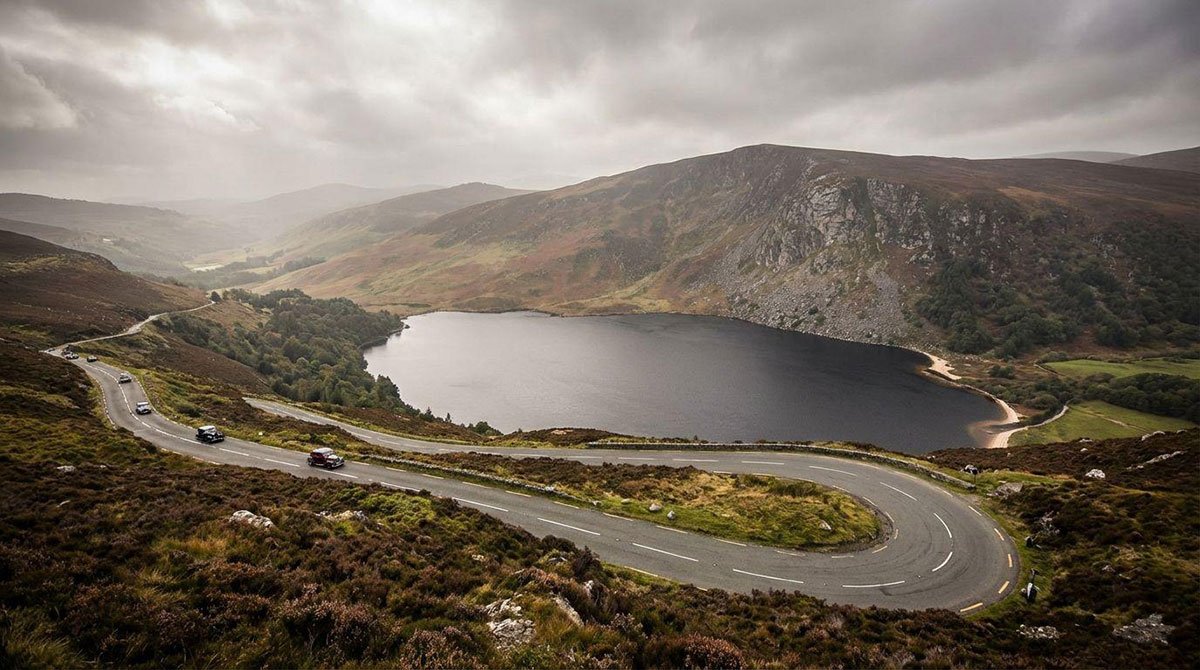
For a different side of Ireland, travel south from Dublin into County Wicklow. Often called the Garden of Ireland, Wicklow offers mountain scenery, wooded valleys, lakes, historic settlements and attractive gardens within reach of the capital.
A weekend here can combine a scenic mountain drive with a visit to a historic monastic settlement and time in a village or country café. The route is best enjoyed without trying to cover the entire county.
Day 1: Dublin, Enniskerry and the Wicklow Mountains
Leave Dublin in the morning and head towards Enniskerry, a village at the foothills of the Wicklow Mountains.
Your first major stop can be Powerscourt Estate. Its historic house and formal gardens provide a contrast to the rugged landscape beyond the town.
Powerscourt Waterfall is a separate destination approximately 6 km from the main estate and gardens, so account for the additional drive when planning your day. Check admission details and opening arrangements for each attraction before leaving.
After exploring the area, continue into the mountains along a suitable scenic route. Depending on road conditions, weather and how much time you have, you could include:
- Sally Gap: A mountain pass known for open upland scenery and expansive views.
- Lough Tay: A striking mountain lake surrounded by rugged hills. Respect private property and use designated viewpoints.
- Mountain viewpoints and short walks: Choose established stopping places rather than pulling onto narrow roads or blocking passing traffic.
These mountain roads can be narrow, winding and exposed. Weather can change quickly, so check the forecast and avoid attempting a scenic detour in poor visibility or unsafe conditions.
Stay overnight in the Glendalough area, Laragh or another suitable base in Wicklow. Alternatively, return to Dublin if you prefer not to change accommodation.
Day 2: Glendalough and the Ancient Monastic Valley
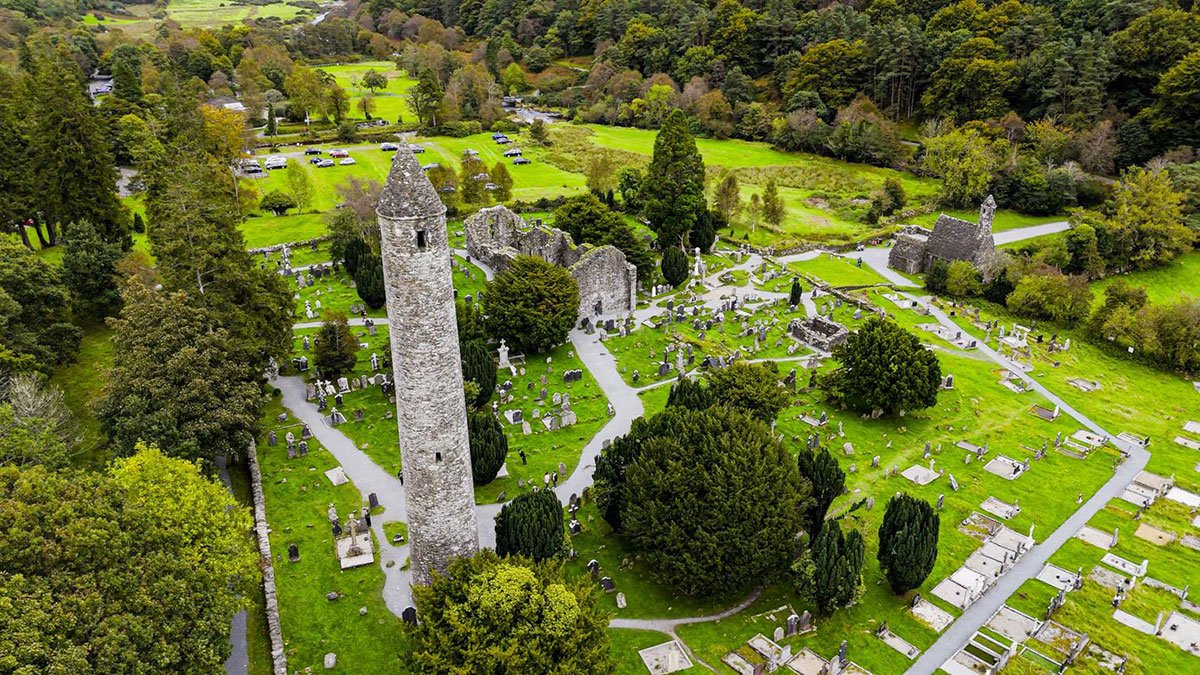
Spend the second day at Glendalough, one of Ireland’s best-known historic and natural destinations.
The valley is famous for its early medieval monastic settlement, associated with St Kevin. Its surviving stone structures include a distinctive round tower, churches and grave markers set against a landscape of wooded slopes and lakes.
The main sights are complemented by walking opportunities in the surrounding valley. You can choose a short visit to the monastic remains or allow more time for a longer walk around the lakes and nearby trails.
For a comfortable visit:
- Start early during busy weekends to give yourself more flexibility.
- Wear sturdy footwear for uneven paths and potentially muddy trail sections.
- Check trail notices, parking arrangements and visitor-centre opening times before departure.
- Choose a route that suits your fitness and available daylight.
If you have extra time, explore a nearby village or visit another attraction along your chosen return route. If you are driving back to Dublin, leave enough time for the journey rather than treating the return drive as an afterthought.
What makes this route special?
The Wicklow Mountains offer a compact introduction to Ireland’s rural landscapes. Within a single weekend, you can experience gardens, winding mountain roads, historic ruins and lakeside scenery.
Unlike the more exposed Causeway Coast, this trip focuses on inland scenery, with a mixture of cultural attractions and opportunities to walk.
Best for: Nature lovers, history enthusiasts, couples, photographers and visitors based in Dublin.
Suggested pace: Two days, with an optional overnight stay in County Wicklow.
How to Choose the Best Weekend Driving Tour in Ireland
Both routes are rewarding, but the right choice depends on where you are starting, your preferred scenery and how you like to spend your time.
| Travel preference | Best choice | Why |
|---|---|---|
| Dramatic sea views and coastal walks | Causeway Coastal Route | Cliffs, beaches, coastal villages and ocean scenery |
| Mountains, lakes and woodland | Wicklow Mountains | Mountain drives, lake views and walking trails |
| Famous natural landmark | Causeway Coastal Route | The Giant’s Causeway is the principal highlight |
| Historic ruins in a rural setting | Wicklow Mountains | Glendalough’s monastic remains sit within a scenic valley |
| Starting from Dublin | Wicklow Mountains | The route is conveniently located south of the capital |
| A longer northern Ireland road trip | Causeway Coastal Route | The weekend can form part of a longer journey between Belfast and Derry~Londonderry |
One important planning point: the island of Ireland includes both the Republic of Ireland and Northern Ireland. The Wicklow itinerary is in the Republic, while the Causeway Coast itinerary is in Northern Ireland. The two are not interchangeable when it comes to currency, road signs or some driving arrangements.
When Is the Best Time for an Irish Road Trip?
Ireland’s coastal and mountain landscapes can be attractive throughout the year, but weather and daylight have a noticeable effect on how much you can comfortably do.
Late spring and summer generally offer longer daylight hours, making it easier to fit in scenic stops and short walks. Popular attractions can be busy, so booking ahead is sensible.
Autumn brings changing colours, quieter periods at some destinations and atmospheric coastal scenery. Expect shorter days and the possibility of rain and strong winds.
Winter can offer dramatic views and a quieter experience, but shorter daylight hours, poor visibility and difficult road conditions may limit your itinerary. Some attractions and visitor facilities operate seasonally.
There is no guarantee of dry weather in any season. Pack a waterproof layer, dress for changing conditions and check the forecast before travelling, especially if your route includes exposed mountain roads or coastal paths.
Essential Driving Tips for Ireland
A scenic drive is more enjoyable when the practical details are sorted out before departure. These rules and precautions are particularly important for visitors hiring a car or driving across both jurisdictions.
Drive on the left
Traffic travels on the left throughout the island. Take particular care at junctions and roundabouts, especially when you first leave a rental-car depot.
If you are not accustomed to driving on the left, consider choosing an automatic vehicle and beginning with a short, straightforward journey before attempting narrow coastal or mountain roads.
Pay attention to the speed units
In the Republic of Ireland, road signs use kilometres per hour (km/h). In Northern Ireland, speed limits are displayed in miles per hour (mph).
This difference is easy to overlook when crossing the border. Follow the posted signs and drive at a speed appropriate to road width, visibility, traffic and weather rather than treating the limit as a target.
Prepare for narrow rural roads
Not every scenic road is wide enough for two vehicles to pass comfortably. Rural routes may have sharp bends, limited visibility, farm traffic, cyclists and pedestrians.
Slow down before bends, use passing places where provided and never stop in the carriageway for photographs. On mountain routes, avoid continuing if wind, fog, ice or heavy rain makes the drive unsafe.
Understand toll arrangements
Some roads in the Republic of Ireland have tolls. Certain toll systems, including the Dublin M50 barrier-free toll, require drivers to understand the payment arrangements rather than simply paying at a conventional booth.
If you hire a car, ask the rental company which tolls may apply, whether the vehicle uses an electronic tag and how any charges are collected. Check the official tolling website for current rates and payment deadlines.
Check rental insurance and border permissions
When booking a hire car, confirm which insurance, excess and roadside-assistance arrangements are included. If you plan to drive between the Republic of Ireland and Northern Ireland, tell the rental company in advance and confirm that cross-border travel is permitted under the rental agreement.
Drivers bringing their own vehicle should verify that their insurance covers the intended journey and that their documentation is valid.
Use appropriate child restraints
Children must travel in suitable child restraint systems under the applicable rules. In the Republic of Ireland, the Road Safety Authority states that children under 150 cm in height or 36 kg in weight generally require an appropriate restraint, subject to the applicable legal exceptions.
Check the rules that apply to the jurisdiction in which you will be driving. When hiring a vehicle, arrange a suitable child seat in advance rather than assuming one will be available on arrival.
Plan for mobile navigation and breaks
Download offline maps before leaving areas with reliable mobile coverage. Carry a charging cable and, where practical, keep the route accessible without relying entirely on a live data connection.
Plan regular breaks and allow extra time for photographs, traffic and weather-related delays. Never use a handheld phone while driving, and never drink alcohol before taking the wheel.
Food, Pubs and Places to Stay
Part of the appeal of a driving holiday in Ireland is that the journey need not revolve solely around landmarks. A good roadside café, a traditional pub meal or an overnight stay in a small town can become just as memorable as the scenery.
On the Causeway Coast, look for opportunities to enjoy local seafood, a leisurely lunch or an evening in one of the north-coast towns. In County Wicklow, village cafés, garden visits and country dining make natural additions to a day of exploring.
When choosing accommodation, prioritise location over the number of attractions it claims to be near. One night around Ballycastle, Bushmills or Portrush is convenient for a Causeway Coast itinerary. For Wicklow, a base near Glendalough or Laragh can reduce unnecessary driving at the end of the day.
Book ahead during busy travel periods, and check cancellation conditions if your trip depends on weather-sensitive activities.
Before You Set Off: A Weekend Road Trip Checklist
Use this quick checklist to avoid common problems during your journey.
- Choose one primary region rather than trying to tour the whole island.
- Reserve accommodation and pre-book attractions where required.
- Check driving times and parking arrangements for every major stop.
- Review the weather forecast and official road or trail notices.
- Confirm insurance and cross-border permissions if using a rental car.
- Understand speed units, toll-payment arrangements and local road rules.
- Pack waterproof clothing and comfortable walking shoes.
- Allow time for meals, rest stops and unexpected delays.
A successful weekend driving tour in Ireland is not about covering the greatest distance. It is about choosing a manageable route, enjoying the landscape and leaving enough time to experience the places that make the journey memorable.
Whether you prefer the Atlantic cliffs of the Causeway Coast or the quiet lakes and mountain passes of Wicklow, a thoughtfully planned two-day escape is an excellent way to experience Ireland beyond the main cities.
