
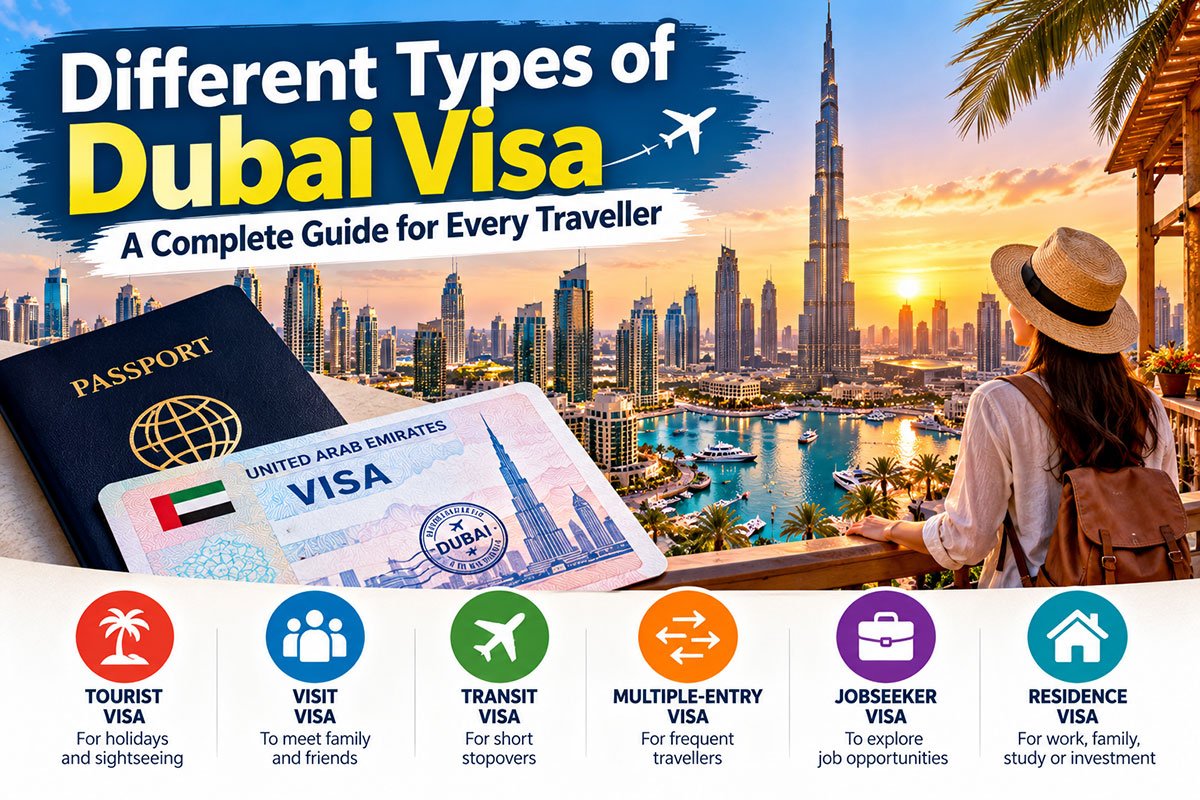
Understanding the Different Types of Dubai Visa
Dubai attracts tourists, business travellers, job seekers, students and people relocating to the United Arab Emirates (UAE). Before travelling, it is important to understand which visa or entry permit matches your purpose of visit.
The UAE offers several entry and residence options. These include tourist visas, family visit visas, transit visas, jobseeker permits, work-related residence visas and long-term residence programmes.
However, not every traveller needs to apply for a visa in advance. Entry requirements depend on nationality, passport type, residency status and the purpose of travel. Some visitors qualify for visa-free entry or a visa on arrival, while others must obtain an entry permit before departure.
Here are the main types of Dubai visa and what travellers should know about each one.
-
Dubai Tourist Visa
A Dubai tourist visa is intended for people visiting the UAE for holidays, sightseeing and leisure activities. It is commonly used by travellers who do not qualify for visa-free entry or a visa on arrival.
Tourist visas may be available for different durations and entry arrangements. For example, Dubai’s immigration authority lists single-entry tourist visas for stays of 30 or 60 days, subject to approval and the applicable requirements.
Who can apply for a tourist visa?
A tourist visa may suit travellers who want to:
- Explore Dubai’s attractions and shopping destinations
- Enjoy beaches, restaurants and entertainment
- Visit friends while travelling for tourism
- Take a holiday in Dubai or elsewhere in the UAE
Applications can generally be arranged through eligible UAE-based airlines, hotels, licensed travel agents or the relevant immigration authority. The available application route depends on the traveller’s circumstances.
Important points
Tourist visa fees, processing times, permitted stays and document requirements vary. Applicants should confirm the current conditions before paying an agent or booking non-refundable travel arrangements.
-
Dubai Visit Visa for Family and Other Purposes
A UAE visit visa can support several purposes beyond a conventional holiday. Depending on the category, travellers may visit relatives or friends, attend business meetings, explore investment opportunities, seek employment or receive medical treatment.
The permitted stay depends on the specific visa category. Some visit visas are available for 30, 60 or 90 days, while specialised permits have different conditions.
Family and friend visits
People travelling to see relatives or friends in Dubai should check whether their application requires an eligible host or sponsor. The sponsor’s status and the relationship between the applicant and host may affect the required documents.
Typical supporting documents may include:
- A passport valid for at least six months
- A recent passport photograph
- Details of the host or sponsor, where required
- Proof of relationship for relevant family categories
- Travel or health insurance, where applicable
- Any additional documents requested by immigration authorities
The precise list depends on the application type and nationality. Do not assume that all visit visas have the same sponsorship or renewal rules.
-
Dubai Transit Visa
A transit visa is designed for eligible travellers passing through the UAE who want to leave the airport during a stopover.
The UAE currently recognises two main transit visa durations: 48 hours and 96 hours. These visas are sponsored by UAE-based airlines, must be approved before entry and cannot be extended.
Who needs a transit visa?
You may need a transit visa if you are not eligible for visa-free entry or a visa on arrival and intend to leave the airport during your stopover.
Applicants generally need a valid onward travel ticket and travel documents that permit entry into the UAE and onward travel to the next destination. The airline or relevant authority can confirm the current requirements.
A transit visa is not a substitute for a tourist visa when you intend to stay longer than the permitted transit period.
-
Multiple-Entry Tourist Visa
A multiple-entry visa allows eligible travellers to enter the UAE more than once during the visa’s validity. It may be useful for people who expect to visit Dubai repeatedly for holidays, family visits or other permitted purposes.
One option is the five-year multiple-entry tourist visa. Under the published UAE government conditions, eligible holders can stay for up to 90 days per visit and may apply to extend a stay for a further 90 days, subject to the applicable rules. The total stay must not exceed 180 days in a year.
Main requirements
The published requirements for the five-year tourist visa include:
- A passport valid for at least six months
- Health insurance meeting UAE requirements
- A return or onward travel ticket
- Proof of a bank balance of at least US$4,000, or its equivalent, during the preceding six months
Additional conditions or documents may apply. Check the official requirements before applying.
A multiple-entry visa does not automatically grant permission to work in the UAE. Travellers must follow the conditions attached to their visa.
-
UAE Residence Visa
A residence visa or residence permit is intended for eligible foreign nationals who plan to live in the UAE for a longer period. The appropriate category depends on the reason for residence and the applicant’s eligibility.
Unlike the fixed three-year validity mentioned in older visa guides, residence permits do not all have the same duration. Validity and renewal conditions depend on the specific category and current regulations.
Common residence visa categories
Employment residence visa: For eligible foreign nationals taking up employment with a UAE employer. The relevant employer and authorities must complete the required procedures.
Family residence visa: Allows eligible UAE residents to sponsor qualifying family members, subject to income, accommodation and other conditions.
Student residence visa: For eligible international students enrolled at approved educational institutions.
Investor or business residence options: Available to qualifying investors and business owners under the relevant rules.
Green Visa: A residence option for eligible categories of skilled employees, freelancers, self-employed people and investors, subject to the applicable criteria.
Golden Visa: A long-term residence option for qualifying investors, professionals, entrepreneurs, outstanding talents and other eligible categories.
The UAE also offers residence routes for certain retirees and people working remotely for employers outside the country. Each category has its own eligibility requirements.
Medical screening and residence procedures
Applicants for many UAE residence categories must complete medical fitness screening and other formalities. Requirements can differ according to the visa category and the applicant’s circumstances.
A residence permit is not issued solely on the basis of a medical test. Applicants must also meet the relevant sponsorship, eligibility and documentation requirements. Check the official immigration and health authorities for the rules applicable to your case.
-
Jobseeker and Business-Related Visit Visas
Some travellers visit the UAE to explore employment or investment opportunities before committing to a long-term move.
The UAE offers specific visit visa categories for eligible applicants who want to explore job opportunities or investment prospects. These permits have individual eligibility requirements and validity periods.
A jobseeker visa does not itself authorise employment. Anyone who receives a job offer must follow the appropriate work authorisation and residence procedures before starting work.
Similarly, a business-related visit permit should not be treated as permission to undertake activities that require a separate licence or work authorisation.
How to Apply for a Dubai Visa
The correct application process depends on your nationality, purpose of travel and visa category. For many entry permits, applications are available through the Federal Authority for Identity, Citizenship, Customs and Port Security (ICP) or Dubai’s General Directorate of Residency and Foreigners Affairs (GDRFA).
The UAE government also identifies eligible airlines, hotels, travel agents and registered typing centres as possible application channels for relevant categories.
Follow these steps before applying:
- Check your entry eligibility. Confirm whether your nationality qualifies for visa-free entry, a visa on arrival or a pre-arranged visa.
- Choose the correct category. Select a tourist, visit, transit, employment or residence route that matches your purpose.
- Review the documents. Check passport validity, photographs, sponsorship evidence, insurance and other category-specific requirements.
- Apply through an authorised channel. Use the relevant official immigration portal or an eligible service provider.
- Confirm fees and processing times. Costs and processing arrangements may vary by category and application channel.
- Verify the approved permit. Check the permitted entry date, duration of stay and any restrictions before travelling.
For official information, consult the UAE Government visa portal and the GDRFA Dubai website.
Important Dubai Visa Rules to Remember
Visa regulations can change, so avoid relying on old online articles or unverified social media posts. Before departure, confirm the following:
- Your passport meets the required validity period. The UAE government generally specifies at least six months.
- Your visa or entry permit matches your intended purpose.
- You understand the permitted stay and the conditions for any extension.
- Your travel insurance and supporting documents meet the applicable requirements.
- You do not overstay or undertake work without the required authorisation.
Overstaying can result in fines and other immigration consequences. If your plans change, contact the relevant authority before your permitted stay expires.
Choose the Right Dubai Visa for Your Trip
The different types of Dubai visa serve different needs. A tourist visa may suit a holiday, a visit visa may support an eligible family or business visit, and a transit visa can help travellers during a short stopover.
Multiple-entry tourist visas may suit frequent visitors, while residence options support eligible people who intend to live in the UAE for work, family, study, investment or other approved reasons.
Before applying, check your nationality-specific requirements, confirm the latest rules and use an authorised application channel. Careful preparation can help you avoid delays and make your journey to Dubai more straightforward.
