
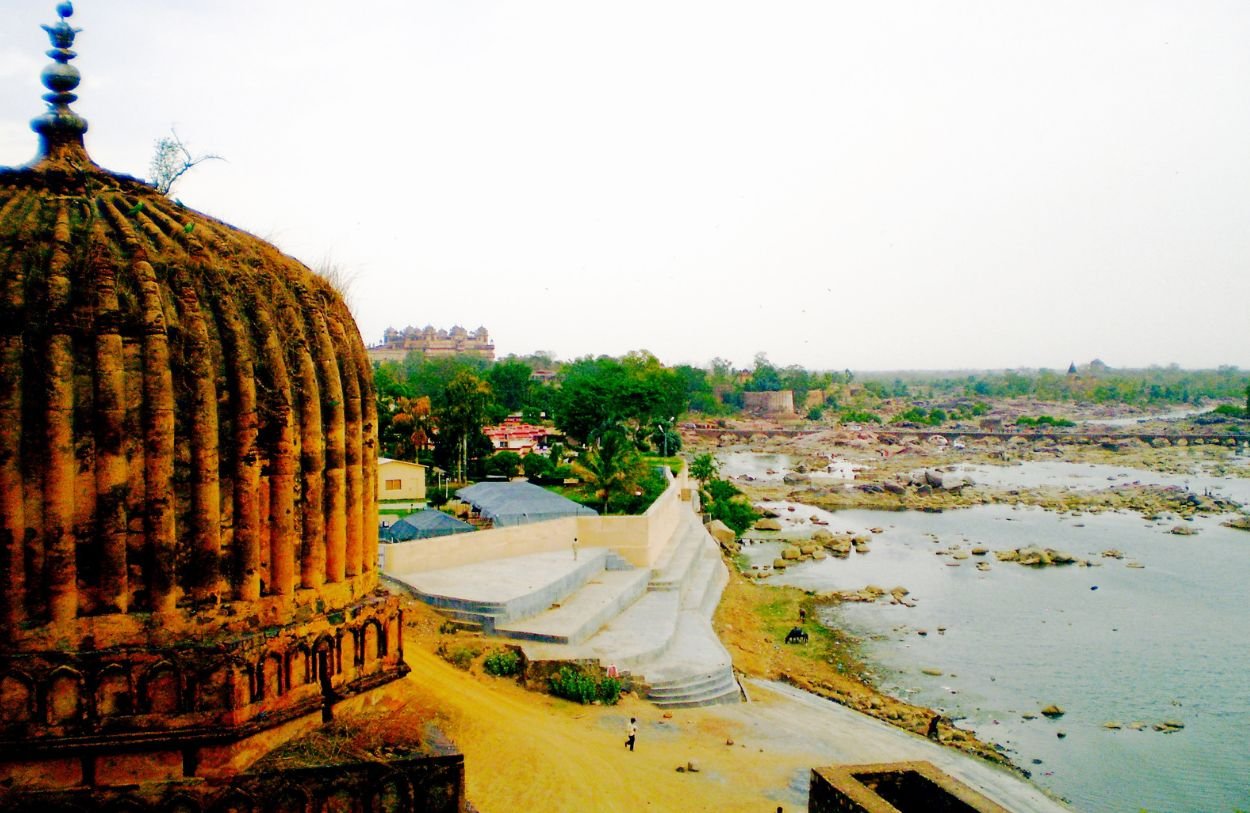
The historic royal cenotaphs of Orchha rise above the Betwa River, creating one of Madhya Pradesh’s most recognisable heritage landscapes.
Orchha by the Betwa River: History, Temples and Travel Guide
<p>On the banks of the Betwa River in Madhya Pradesh, Orchha is a historic town where royal palaces, towering temples and magnificent riverside monuments preserve the legacy of the Bundela rulers. Its sandstone architecture, peaceful ghats and distinctive skyline make it one of the most interesting heritage destinations in central India.
The Orchha Betwa River landscape is central to the town’s appeal. Here, the river flows past royal cenotaphs, rocky banks and historic buildings that reflect the architectural traditions of Bundelkhand.
Located in Niwari district, approximately 16 kilometres from Jhansi in Uttar Pradesh, Orchha is also relatively easy to reach by road and rail. Travellers often combine it with Jhansi, Gwalior or Khajuraho, although the town deserves time to explore in its own right.
Orchha offers history enthusiasts, architecture lovers, photographers and nature lovers a memorable travel experience, with magnificent temples, scenic landscapes and a peaceful atmosphere away from the crowds of larger cities.
This guide explains what makes Orchha special, the attractions worth visiting, how to reach the town and how to plan your stay besi
de the Betwa River.
Orchha: A Historic Town on the Betwa River
Orchha was founded in the early 16th century by Bundela Rajput chief Rudra Pratap Singh. It subsequently developed into an important political and cultural centre of the Bundela kingdom.
The town’s position beside the Betwa River contributed to its strategic importance. Natural waterways, surrounding forests and rocky terrain helped shape its historic settlement and defensive architecture.
Over the centuries, Bundela rulers constructed palaces, temples, gardens and commemorative monuments that combined elements of Rajput, Mughal and regional architectural traditions.
The resulting style is often described as Bundeli architecture.
Today, these buildings create a remarkable historic landscape, with many of Orchha’s main attractions situated within or near the old town. Visitors can easily explore several monuments without travelling long distances.
In 2019, India included the Historic Ensemble of Orchha on its UNESCO World Heritage Tentative List, highlighting the site’s cultural significance and heritage value.
However, Orchha is not currently an inscribed UNESCO World Heritage Site.
Why the Betwa River Is Special to Orchha
The Betwa is more than a scenic background to Orchha’s monuments. It has influenced the town’s development, religious traditions and relationship with the surrounding landscape.
Near Orchha, the river divides into several channels, creating the area traditionally known as Satdhara.
Local folklore connects these seven channels with the former rulers of Orchha.
The river’s rocky outcrops, seasonal water levels and wooded banks create a distinctive setting for the town’s historic buildings.
One of the most memorable sights is the group of royal cenotaphs rising above the riverbank. Their domes and tapering towers form an unmistakable skyline, particularly when viewed from across the water.
The Scenic Ghats of Orchha
Orchha’s riverbanks include ghats and traditional access points where visitors can observe the water and surrounding monuments.
Kanchan Ghat is especially associated with views of the royal cenotaphs.
In calmer conditions, the river may reflect the buildings, creating attractive opportunities for photography.
Early morning and late afternoon are often rewarding times to explore the riverside, when softer light brings out the textures of the sandstone architecture.
However, the Betwa’s water levels and currents can change significantly, especially during the monsoon.
Visitors should remain on established paths and safe viewing areas rather than attempting to cross slippery rocks or enter unfamiliar stretches of the river.
Best Places to Visit in Orchha
Orchha’s main attractions include royal palaces, active Hindu temples, historic gardens and riverside memorials.
Most visitors should prioritise the fort complex, Ram Raja Temple, Chaturbhuj Temple and the cenotaphs beside the Betwa River.
1. Orchha Fort Complex
The Orchha Fort Complex is the town’s principal architectural landmark.
Its large courtyards, gateways, balconies and towering palace buildings reveal the political importance of the former Bundela capital.
Several major structures form part of the complex.
Jahangir Mahal
Jahangir Mahal is one of Orchha’s most impressive buildings.
Constructed during the reign of Bir Singh Deo, it is closely associated with Mughal Emperor Jahangir.
The palace features a large central courtyard, imposing gateways, ornate balconies and domed pavilions.
Its symmetrical layout reflects the interaction between Rajput and Mughal architectural traditions.
Visitors interested in architectural photography should pay particular attention to its layered courtyards and views from accessible upper levels.
Raja Mahal
Raja Mahal, also known as Raj Mahal, served as a royal residence.
Although its exterior appears relatively restrained compared with Jahangir Mahal, its interiors contain decorative paintings and architectural details.
The palace offers valuable insight into the artistic and religious traditions associated with the Bundela court.
Rai Praveen Mahal
Rai Praveen Mahal is a smaller palace associated with the celebrated poet, singer and court performer Rai Praveen.
Its relatively modest scale and landscaped setting provide a contrast to the larger royal buildings.
Visitors interested in Orchha’s artistic and literary heritage should consider including it in their exploration of the palace complex.
2. Ram Raja Temple
The Ram Raja Temple is one of Orchha’s most important religious landmarks.
Unlike the typical temple setting, the shrine occupies a former palace associated with the Bundela royal family.
Lord Rama is worshipped here as a king, giving the temple a distinctive place in the town’s religious and cultural identity.
According to local tradition, the deity was brought to Orchha by Queen Ganesh Kumari and installed in her palace.
The story remains an important part of Orchha’s living religious heritage.
The temple attracts pilgrims throughout the year, particularly during major Hindu festivals.
Visitors should dress respectfully, follow local photography restrictions and check the current darshan arrangements before arriving.
3. Chaturbhuj Temple
The Chaturbhuj Temple dominates Orchha’s skyline with its impressive towers and monumental architectural form.
Originally associated with the worship of Lord Vishnu, the temple is also central to the traditions surrounding Lord Rama’s arrival in Orchha.
Its design combines the appearance of a fortified structure with features of Hindu temple architecture.
The high towers, elevated platforms and substantial stone walls create an imposing presence above the surrounding town.
Visitors should take time to appreciate the structure from different viewpoints.
Those exploring accessible elevated areas should be prepared for steps and uneven surfaces.
4. Royal Cenotaphs Along the Betwa River
The royal cenotaphs, locally called chhatris, are among Orchha’s most photographed landmarks.
These memorial structures were built to honour Bundela rulers and members of the royal family.
Their multi-storeyed forms combine domed pavilions with temple-like towers, creating an architectural style that is especially striking beside the river.
The cenotaphs stand in a group along the Betwa, where their silhouettes form one of the most recognisable views of Orchha.
Photographers often prefer the softer light around sunrise or sunset.
For a wider composition, look for a safe vantage point across the river that includes the cenotaphs, rocky shoreline and surrounding vegetation.
5. Laxmi Narayan Temple
Laxmi Narayan Temple is another notable landmark for visitors interested in architecture and historical painting.
The building combines temple and fort-like characteristics, with substantial walls and distinctive architectural proportions.
Its interiors are particularly valued for their surviving murals.
These paintings depict religious themes and scenes associated with historical life and courtly traditions.
The temple is worth including in a more complete Orchha sightseeing itinerary, especially for travellers interested in regional art.
6. Phool Bagh and Historic Gardens
Phool Bagh reflects another side of Orchha’s architectural heritage.
The garden landscape is associated with the Bundela rulers and the development of water-based cooling and landscaping features.
Its historic structures demonstrate how gardens, fountains and architectural spaces were incorporated into royal surroundings.
Although visitors usually come to Orchha for its palaces and temples, the surviving garden landscapes provide additional insight into the town’s historical planning.
Outdoor Activities Around the Betwa River
Orchha is not solely a destination for monument sightseeing.
Its riverside setting also provides opportunities for nature appreciation, walking and selected outdoor activities.
Betwa River Rafting
Madhya Pradesh Tourism promotes river rafting on the Betwa as one of Orchha’s adventure experiences.
The activity offers an unusual perspective on the river landscape and historic monuments, including views of the royal chhatris from the water.
However, rafting availability depends on river conditions, seasonal water flow and the arrangements of the authorised operator.
If you are interested in rafting, confirm that the activity is operating and that appropriate safety equipment and qualified guides are provided.
Avoid entering the river independently, particularly during periods of strong currents or high water.
Nature Walks and Birdwatching
The landscape around Orchha includes woodland, rocky riverbanks and natural habitats.
The Orchha Wildlife Sanctuary provides another option for travellers interested in birdwatching and the natural environment.
It is better treated as an additional excursion rather than squeezed into a short monument-focused itinerary.
Check the latest sanctuary access arrangements and any applicable entry requirements before travelling.
Photography Along the River
Orchha is particularly appealing to landscape and architectural photographers.
Interesting subjects include:
- The royal cenotaphs reflected in the Betwa River.
- The towers of Chaturbhuj Temple above the old town.
- Jahangir Mahal’s courtyards and architectural details.
- Historic stone ghats and riverside scenery.
- Traditional streets around the Ram Raja Temple.
For more natural-looking photographs, work with the available light and preserve the true proportions of the monuments.
Experience the Culture of Bundelkhand
Orchha shares its rich cultural heritage, traditions and history with the wider Bundelkhand region, which spans parts of Madhya Pradesh and Uttar Pradesh.
The local culture includes traditional music, regional dialects, religious celebrations, handicrafts and food.
Traditional Crafts and Local Markets
Small shops around Orchha’s town centre sell souvenirs, decorative items and handicrafts.
When shopping, ask vendors where the products come from and what materials they contain, as not all items available in local markets originate in Orchha.
Travellers interested in traditional textiles may also consider exploring wider regional craft centres, including Chanderi, on a separate itinerary.
Local Food and Homestays
Visitors can sample regional cooking in local restaurants and homestays.
Traditional Bundeli cuisine often centres on seasonal ingredients, lentils, vegetables and wheat-based preparations.
Madhya Pradesh Tourism also promotes community-based rural experiences in nearby villages such as Ladpura Khas.
These programmes offer opportunities to learn about local food, village life and regional cultural traditions.
Choosing an established homestay can be a useful way to experience Orchha beyond its major monuments.
Best Time to Visit Orchha
The most comfortable period for general sightseeing is usually October to March, when temperatures are more suitable for walking around outdoor monuments.
However, Orchha has a different character in each season.
October to March: Comfortable Heritage Sightseeing
These months are generally well suited to visiting palaces, temples, ghats and surrounding attractions.
Clearer weather can also make this a rewarding period for outdoor photography.
Winter mornings and evenings may feel cool, so carrying an additional layer is sensible.
April to June: Hot Summer Conditions
Summer temperatures in Bundelkhand can become extremely high.
Exploring exposed courtyards and stone monuments during the middle of the day may be uncomfortable.
If visiting during summer, arrange outdoor sightseeing for the cooler parts of the day and carry sufficient drinking water.
July to September: Monsoon Scenery
The monsoon can transform Orchha’s landscape with greener vegetation, cloud-filled skies and changing river conditions.
Madhya Pradesh Tourism also highlights the atmospheric appeal of visiting during the rains.
However, rainfall may make stone steps slippery, affect outdoor activities and raise water levels in the Betwa.
River-based activities should never be assumed safe during this period.
How to Reach Orchha
Orchha is well connected with Jhansi and other destinations across northern Madhya Pradesh.
For most travellers arriving from major Indian cities, Jhansi is the most convenient railway gateway.
By Train
Virangana Lakshmibai Jhansi Junction, formerly known as Jhansi Junction, is the nearest major railway station.
It is approximately 16–17 kilometres from Orchha and has connections with several important Indian cities.
From the railway station, visitors can continue by taxi or auto-rickshaw.
Orchha also has its own railway station, but service options are more limited than at Jhansi.
The local station is around six kilometres from Ram Raja Temple.
Before booking, compare the available train services and choose the station that provides the most convenient onward journey.
By Road
Orchha has road connections with Jhansi, Gwalior and Khajuraho.
Jhansi is the nearest major transport hub, making it particularly convenient for a short road transfer.
Travellers can reach Orchha using taxis, buses or private vehicles.
For those planning a heritage circuit, common routes combine Gwalior, Orchha and Khajuraho.
Road conditions and travel times vary, so allow flexibility rather than relying on a fixed journey duration.
By Air
Gwalior and Khajuraho are the principal airports to consider when planning a journey to Orchha.
Both require onward road transport.
Flight availability and routes can change, so compare current schedules before choosing an airport.
For many travellers, a train to Jhansi followed by a road transfer may provide a convenient alternative.
How Many Days Do You Need in Orchha?
Orchha can be explored on a day trip, but staying overnight creates a more relaxed experience.
One day is suitable for travellers who want to visit the principal palaces and temples before enjoying the Betwa River scenery.
Two days allow more time for photography, additional monuments, riverside walks and local cultural experiences.
Travellers interested in rafting, nature excursions or rural homestays may prefer an extended stay.
Suggested Two-Day Orchha Itinerary
Day 1: Palaces, Temples and Riverside Heritage
Morning
Begin at the Orchha Fort Complex.
Explore Jahangir Mahal and Raja Mahal, taking time to appreciate the architecture, courtyards and surviving artwork.
Afternoon
Visit the Ram Raja Temple and Chaturbhuj Temple.
Afterwards, explore the surrounding historic streets and stop for lunch.
Late afternoon
Head towards the Betwa River and the royal cenotaphs.
Enjoy the river views and photograph the monuments in softer light.
Evening
If the sound-and-light show is operating, consider attending it at the fort complex.
Alternatively, spend the evening exploring the town centre and experiencing the atmosphere around Ram Raja Temple.
Day 2: Gardens, Nature and Local Culture
Morning
Visit Laxmi Narayan Temple and any smaller historic buildings missed on the first day.
Late morning
Explore Phool Bagh or arrange a guided heritage walk.
Afternoon
Choose an additional experience based on your interests.
Options include visiting the wildlife sanctuary, exploring a nearby rural tourism village or joining a properly organised river activity when conditions permit.
Finish the day with a relaxed meal before continuing your journey.
Orchha Sound-and-Light Show
An evening sound-and-light show at the Orchha Fort Complex introduces visitors to the history of the Bundela dynasty.
The presentation uses illumination, narration and music to tell stories associated with the kingdom and its rulers.
It is an appealing option for visitors who would like more historical context after exploring the palaces during the day.
The show has been advertised in Hindi and English, with seasonal arrangements.
However, published timings and ticket prices are not consistent across official tourism information sources.
Confirm the current show schedule, language, ticket price and operating status at the fort or through Madhya Pradesh Tourism before making plans around it.
This is particularly important if you intend to return to Jhansi on the same evening.
Practical Travel Tips for Orchha
A few simple precautions can make your visit more comfortable.
- Wear comfortable footwear: Historic monuments often have uneven stone surfaces and numerous steps.
- Carry drinking water: Parts of the fort complex and riverside offer limited shade.
- Dress appropriately at temples: Follow local customs and any restrictions on footwear or photography.
- Protect yourself from the sun: A hat and sunscreen are useful during daytime sightseeing.
- Be cautious near the Betwa River: Water levels, currents and slippery rocks can create hazards.
- Check attraction access: Entry arrangements and areas open to visitors can change because of maintenance or religious ceremonies.
- Use established transport providers: Agree on fares before starting journeys when using local taxis or auto-rickshaws.
- Carry some cash: Smaller shops and local transport providers may not always accept digital payments.
- Consider a local guide: An experienced guide can help explain the architectural details and historical context of Orchha’s monuments.
Frequently Asked Questions About Orchha
Where is Orchha located?
Orchha is in Niwari district, Madhya Pradesh, near the Uttar Pradesh border. It is situated on the banks of the Betwa River, approximately 16 kilometres from Jhansi.
What is Orchha famous for?
Orchha attracts visitors with its magnificent Bundela-era palaces, Ram Raja Temple, Chaturbhuj Temple, historic architecture and royal cenotaphs along the Betwa River.
Is Orchha worth visiting?
Orchha attracts travellers interested in Indian history, historic architecture, religious traditions and riverside scenery. Visitors can easily explore its main attractions without travelling long distances between monuments.
Can Orchha be visited in one day?
Yes. One day is enough to visit several major attractions, including Jahangir Mahal, Raja Mahal, Ram Raja Temple, Chaturbhuj Temple and the riverside cenotaphs. An overnight stay provides additional time for photography and a more relaxed itinerary.
Is Orchha a UNESCO World Heritage Site?
No. The Historic Ensemble of Orchha is on India’s UNESCO World Heritage Tentative List, following its submission in 2019. This is different from being formally inscribed on the World Heritage List.
Is boating or rafting available on the Betwa River?
Madhya Pradesh Tourism promotes organised rafting experiences on the Betwa River. Availability depends on river conditions and operator arrangements, so confirm current services before planning an activity.
Which railway station is best for visiting Orchha?
Virangana Lakshmibai Jhansi Junction is the most practical major railway gateway. Orchha has a smaller railway station, but Jhansi provides a wider choice of train connections.
When is the best time to visit Orchha?
October to March is generally the most comfortable period for heritage sightseeing. The monsoon brings greener scenery but may affect river activities and access to outdoor areas.
Discover the Timeless Beauty of Orchha
Orchha’s appeal comes from the close relationship between its medieval architecture, living religious traditions and natural riverside setting.
The palaces preserve stories of Bundela rulers, the temples remain important places of worship, and the royal cenotaphs create an unforgettable skyline above the Betwa River.
Exploring the town on foot reveals beautiful details, from painted palace interiors and quiet courtyards to scenic riverside views.
Whether you are planning a day trip from Jhansi or a longer journey through Madhya Pradesh, Orchha offers a distinctive combination of history, culture and scenery.
Its greatest attraction may be the opportunity to experience these elements together, in a historic town where the Betwa River remains an essential part of the landscape.
