
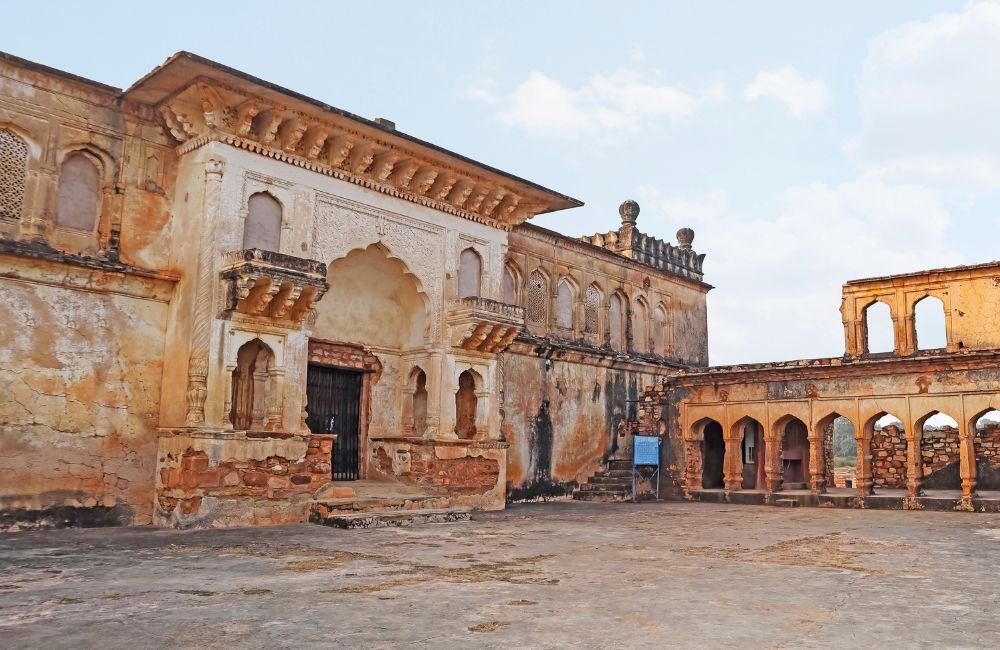
Explore Kalinjar Fort’s historic gateways, carved stone monuments and the revered Neelkanth Mahadev Temple in Bundelkhand.
Kalinjar Fort in Uttar Pradesh: History, Temples and Visitor Guide
Standing on a hill in the Vindhyan landscape of Bundelkhand, Kalinjar Fort in Uttar Pradesh brings together military history, remarkable stone architecture and religious heritage. Located in Banda district, this historic complex was an important stronghold under the Chandela rulers and later passed through the hands of several powerful dynasties.
Today, visitors can explore weathered gateways, remnants of royal buildings, rock-cut sculptures and the revered Neelkanth Mahadev Temple. Natural rock formations and traditional sacred water sites add another dimension to the experience.
Kalinjar is particularly rewarding for travellers interested in India’s lesser-known heritage destinations. However, its hilltop setting and extensive ruins mean that a visit requires more preparation than a quick stop at a conventional museum.
Discover the History of Kalinjar Fort
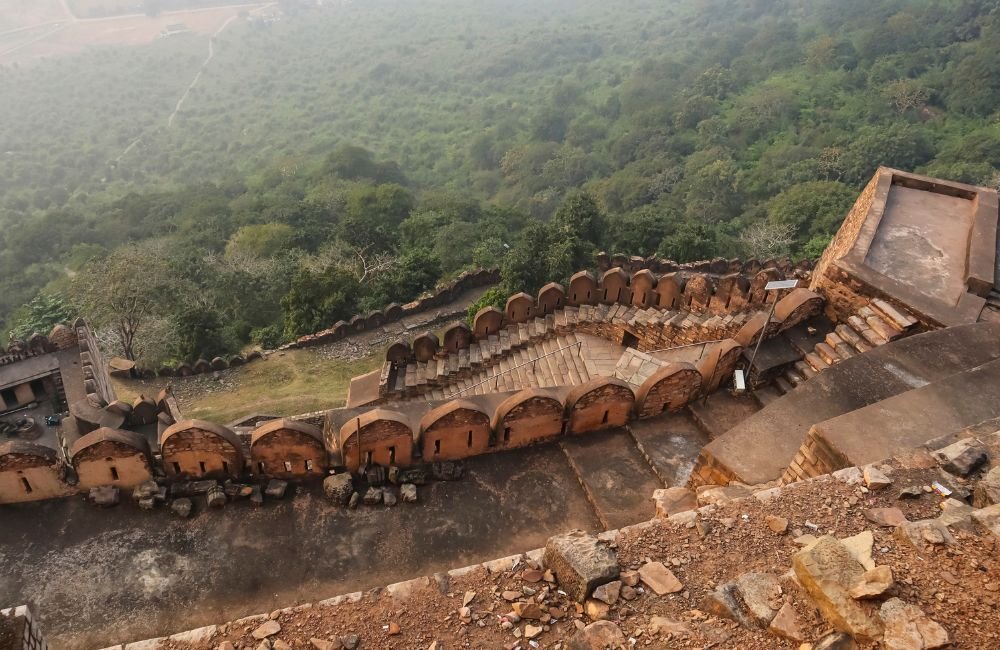
Kalinjar’s position on elevated rocky terrain helped make it a strategically important fortress in the historical region of Bundelkhand. Its history is associated particularly with the Chandela dynasty, which developed an important legacy of forts, temples and stone architecture across central and northern India.
Over the centuries, the fortress witnessed repeated military campaigns and changes in political control. According to the Banda district administration’s historical account, Mughal emperor Akbar captured Kalinjar in 1569. The fort subsequently passed through other regional powers before coming under British control in 1812.
These successive periods are reflected in the site’s surviving architecture and monuments. Rather than viewing Kalinjar only as a military structure, visitors can appreciate it as a landscape in which political history, craftsmanship and religious traditions intersect.
Explore the Historic Gateways
The gateways are among the most distinctive features of Kalinjar Fort. Historically, successive entrances controlled access to the fortified settlement and its elevated interior.
Names associated with the fort’s gates include:
- Alamgir Darwaza: One of the historic entrances described in accounts of the fort.
- Ganesh Dwar: A gateway associated with the wider complex of religious imagery and architecture.
- Chandi or Chaturbhuji Darwaza: Another of the named entrances in historical descriptions.
- Buddha Bhadra Darwaza: Part of the sequence of gateways leading through the fort.
- Hanuman Dwar, Lal Darwaza and Bara Darwaza: Other entrances identified in descriptions of the historic fortification.
Some historical accounts distinguish the gateways of the outer fortified settlement from the successive entrances encountered within the main fort. Names and spellings can vary between sources.
As you explore, look for the relationship between the gateways, defensive stonework and surrounding terrain. These features help explain how the fort used its elevated position as part of its defence.
Visit Neelkanth Mahadev Temple
Neelkanth Mahadev Temple is one of Kalinjar’s principal attractions. Dedicated to Lord Shiva, the temple combines religious importance with distinctive stone craftsmanship associated with the region’s medieval heritage.
The complex contains a blue-stone Shiva lingam and carved representations of Hindu deities. An elaborately worked, pillared entrance pavilion provides another opportunity to appreciate the sculptural traditions associated with the Chandela period.
Hindu tradition links the temple to Samudra Manthan, the churning of the cosmic ocean. According to the legend, Shiva drank the poison that emerged during the churning to protect the universe. The temple honours this sacred episode.
Treat this story as religious tradition rather than a claim about the site’s archaeological history. Its continued significance helps explain why Kalinjar remains a place of worship as well as a historical destination.
Visitors should approach the temple respectfully, observe local worship practices and follow any restrictions on photography or access.
See Kal Bhairav and the Rock-Cut Sculptures
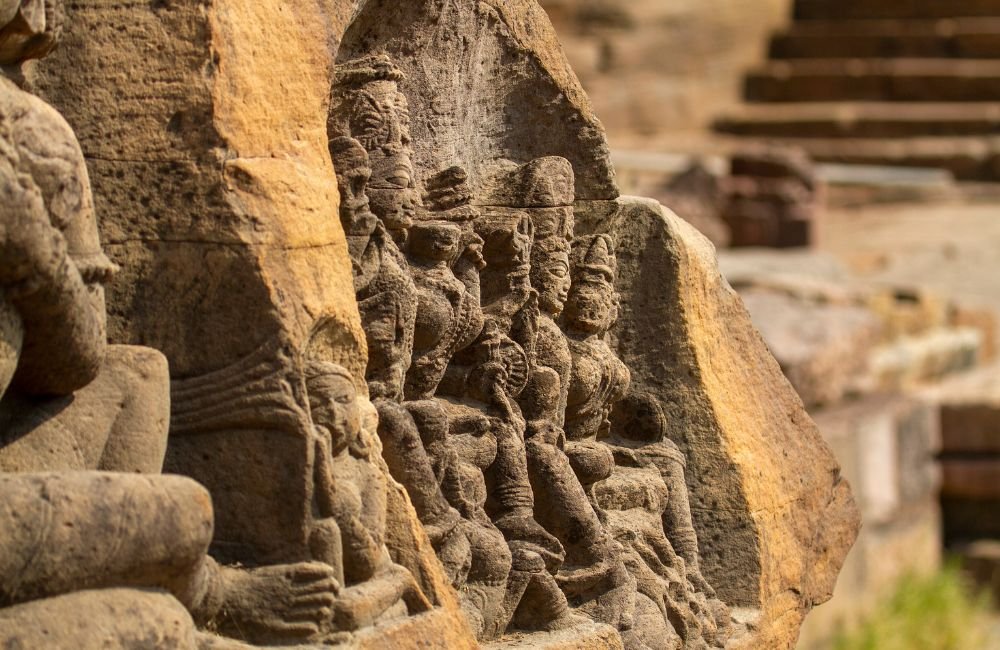
Kalinjar’s carved stone imagery is an important part of its visual character. The route towards Neelkanth Temple includes rock carvings and figures associated with deities such as Shiva, Kal Bhairav, Ganesh and Hanuman.
One notable feature is the large, many-armed representation of Kal Bhairav, a fierce form of Shiva, carved into the rock. The surrounding landscape gives these sculptures a different character from statues displayed in a conventional gallery.
Take time to notice the details of the carved figures, the weathering of the stone and the way the natural rock forms part of the setting.
Because these are historic surfaces, avoid touching fragile carvings, climbing on sculptures or removing pieces of stone. Staying on established routes also helps protect the site.
Explore the Sacred Water Sites and Rock Shelters
Several natural and religious features add to the interest of Kalinjar Fort beyond its gates and temple architecture.
Patal Ganga
Patal Ganga is a traditional sacred water site associated with local religious beliefs. Its name and significance reflect the spiritual traditions attached to natural water features within the fort complex.
Pandu Kund and Other Water Features
Pandu Kund, Budha-Budhi Tal and Koti Tirth are among the named places associated with Kalinjar. These sites form part of the wider cultural and religious landscape described in regional accounts.
Visitors should not assume that every pond or water feature is suitable for bathing or drinking. Water quality, depth, access and seasonal conditions may vary.
Historical beliefs sometimes attribute healing properties to particular pools. Such claims should be understood as local tradition rather than established medical evidence.
Sita Sej
Sita Sej is described as a small rock shelter or grotto associated with meditation and religious tradition. It offers a different perspective on the site, connecting natural rock formations with the ways people have used the landscape for contemplation and worship.
Mrigdhara
Mrigdhara is another natural feature within the fort complex. The name refers to a spring or water source, but visitors should check local conditions to confirm its current state and accessibility.
Not every site is necessarily equally easy to reach. If you want to explore locations beyond the main gateways and temple, ask locally which routes are accessible and allow additional time.
How to Plan Your Visit to Kalinjar Fort
Kalinjar Fort is best approached as an outdoor heritage visit rather than a short indoor museum tour. You will need time to move between different monuments, examine the carvings and negotiate uneven terrain.
Best Time to Visit
The cooler months, roughly October to March, are generally more comfortable for exploring the exposed hilltop setting. During hot weather, walking over stone surfaces and climbing steps can become tiring, so avoid strenuous exploration during the hottest part of the day.
Monsoon conditions can affect outdoor access and walking surfaces. Check local weather and route conditions before travelling.
How to Reach Kalinjar Fort
Kalinjar is located in Banda district, Uttar Pradesh.
- By rail: Banda is a useful railway arrival point for arranging onward road transport to the fort.
- By air: Khajuraho is one airport option identified in regional visitor information. Check current flight availability and the road journey before booking.
- By road: The fort can be reached by road from the surrounding region. Because the final approach climbs towards the hilltop, plan your transport in advance rather than assuming convenient public transport will be available at the entrance.
Local reporting in October 2026 indicated that road improvement and safety work was underway on part of the hill approach, with a revised project target of March 2027. This does not itself establish that the fort is closed, but visitors should check current access arrangements before departure.
Entry Fees and Opening Hours
The official Banda district tourism page provides an overview of Kalinjar Fort and its attractions but does not confirm current visitor hours or admission charges in its published information.
Check with the relevant local authorities before your visit rather than relying on potentially outdated ticket prices or timings found on third-party websites.
Practical Tips for Visitors
A little preparation will help you explore the complex more comfortably.
- Wear sturdy footwear. Expect uneven stone surfaces, steps and potentially slippery sections after rain.
- Carry drinking water. The outdoor setting can be exposed, especially during warmer months.
- Bring sun protection. A hat, sunscreen and suitable clothing are useful when exploring open areas.
- Allow enough time. Do not assume the entire fort complex can be explored comfortably in a short visit.
- Respect religious practices. Neelkanth Temple is a sacred place, so follow local instructions and dress appropriately.
- Protect the monuments. Avoid climbing on fragile structures or damaging carvings.
- Check access locally. Confirm road conditions, visitor arrangements and the accessibility of individual sites before travelling.
Is Kalinjar Fort Worth Visiting?
Kalinjar Fort is particularly suitable for travellers who enjoy historic architecture, religious heritage and places where the surrounding landscape contributes to the experience.
Its combination of fortifications, royal remains, rock-cut imagery and the Neelkanth Mahadev Temple offers more than a single attraction. It also provides insight into the historical and cultural importance of Bundelkhand.
The visit may be less suitable for travellers who need step-free access throughout, since the terrain and historic paths can involve uneven surfaces and changes in elevation. Anyone with mobility concerns should check the accessibility of their intended route before travelling.
Frequently Asked Questions
Where is Kalinjar Fort located?
Kalinjar Fort is in Banda district, Uttar Pradesh, India, in the historical region of Bundelkhand.
Who built Kalinjar Fort?
The fort is strongly associated with the Chandela rulers, who established and developed important strongholds across Bundelkhand. The site subsequently passed through the control of several dynasties.
What is the main attraction inside Kalinjar Fort?
Neelkanth Mahadev Temple is one of the principal attractions. The wider complex also includes historic gateways, palace remains, rock-cut sculptures and sacred water sites.
Is Kalinjar Fort a museum?
Kalinjar is primarily a historic fort and monument complex rather than a conventional indoor museum. Regional listings mention museum-related attractions, but visitors should verify the existence, location and opening arrangements of any separate museum before planning a visit.
How long should I allow for a visit?
Allow enough time to explore the main gateways, temple and accessible monuments at a comfortable pace. The appropriate duration depends on your walking pace, the condition of the routes and which parts of the complex are accessible on the day.
Can I visit Kalinjar Fort during the monsoon?
A visit may be possible, but wet conditions can make outdoor stone paths and steps more difficult to navigate. Check weather conditions, road access and any site restrictions before setting out.
Experience the Heritage of Bundelkhand
Kalinjar Fort brings together the military history of Bundelkhand, the craftsmanship of its stone monuments and the continuing religious importance of Neelkanth Mahadev Temple.
Exploring it at an unhurried pace allows you to appreciate the gateways, sculptures and natural features that make the complex distinctive. With sensible preparation and a check on current access conditions, Kalinjar can be a rewarding addition to a heritage-focused journey through Uttar Pradesh.
