

The distinctive rocky landscape of Gorakhgiri Parvat near Mahoba, a spiritual and scenic destination in Uttar Pradesh’s Bundelkhand region.
Gorakhgiri Mahoba: A Scenic Hill and Spiritual Travel Guide
Gorakhgiri Mahoba is a remarkable destination for travellers interested in nature, spiritual heritage and the rugged landscapes of Bundelkhand. Located near Mahoba city in Uttar Pradesh, this rocky hill is traditionally associated with Guru Gorakhnath, an important figure in India’s Nath yogic tradition.
Known for its enormous weathered boulders, peaceful surroundings and elevated viewpoints, Gorakhgiri Parvat attracts pilgrims, walkers and visitors looking for a quieter experience beyond India’s better-known tourist destinations.
The hill is particularly appealing to those who enjoy outdoor exploration. Its rocky terrain provides opportunities for scenic walks and photography, while its religious associations give the landscape a deeper cultural significance.
For travellers exploring Mahoba or travelling between Uttar Pradesh and nearby Khajuraho in Madhya Pradesh, Gorakhgiri offers an interesting addition to a Bundelkhand itinerary.
Where Is Gorakhgiri Located?
Gorakhgiri Parvat is situated near Mahoba city in the Bundelkhand region of southern Uttar Pradesh, close to the state’s border with Madhya Pradesh.
The hill is associated with the Rahelia area and Mahoba’s surrounding rocky landscape. The district administration also identifies Gokhar Parvat, near the Mahoba Collectorate, as an important local scenic attraction.
Mahoba is known for its Chandela-era heritage, historic temples, lakes and the legendary warriors Alha and Udal.
Although Khajuraho is a well-known destination in the wider region, it is important to distinguish the two places. Gorakhgiri belongs to Mahoba district in Uttar Pradesh, whereas the UNESCO-listed Khajuraho Group of Monuments is located in Chhatarpur district, Madhya Pradesh.
The Spiritual Significance of Gorakhgiri
Gorakhgiri holds an important place in the local religious traditions associated with Guru Gorakhnath.
Guru Gorakhnath is revered within the Nath tradition, which has influenced India’s religious and yogic practices for centuries. According to local belief, the hill served as a place of meditation and spiritual discipline associated with the revered yogi.
The landscape includes religious sites connected with this tradition, particularly the Siddh Baba shrine.
Guru Gorakhnath and Siddh Baba Temple
The Siddh Baba Temple is one of Gorakhgiri’s principal religious attractions.
Situated on the hill, the shrine forms part of the area’s longstanding pilgrimage tradition. Devotees visit to offer prayers, while other travellers come to appreciate the surroundings and learn about the region’s religious history.
Gorakhgiri is also associated in local tradition with Siddhodeepaknath, a disciple of Guru Gorakhnath.
These associations are part of the site’s spiritual heritage. Visitors should distinguish traditional religious accounts from independently established historical evidence.
A Place for Reflection and Meditation
Beyond its religious importance, Gorakhgiri offers an environment that many visitors find suitable for quiet contemplation.
The surrounding rocks, vegetation and expansive views create a setting quite different from crowded urban temples.
Tourism improvements in the area have included the development of meditation-related facilities and visitor infrastructure. However, access arrangements may change as development and maintenance work continues.
Visitors interested in using particular facilities should confirm their availability locally.
Things to Do at Gorakhgiri Mahoba
Gorakhgiri combines outdoor scenery with cultural and religious experiences.
1. Explore the Rocky Hill Landscape
One of Gorakhgiri’s most distinctive features is its collection of enormous natural boulders.
The rounded, weathered rocks form unusual shapes across the hillside, creating a dramatic landscape typical of this part of Bundelkhand.
Visitors can appreciate the rock formations from accessible paths and viewpoints.
The scenery is especially attractive in softer morning or late-afternoon light, when the rocks and surrounding vegetation take on warmer colours.
2. Enjoy Hill Walks and Scenic Viewpoints
Gorakhgiri is a rewarding place for travellers who enjoy walking in natural surroundings.
The hillside offers elevated views over Mahoba and the surrounding countryside.
However, some sections involve uneven rock surfaces, inclines and exposed areas. Conditions can vary with weather and ongoing site improvements.
Choose established access paths rather than attempting shortcuts across loose or steep rocks.
3. Understand the Rock-Climbing Potential
Gorakhgiri’s rocky terrain may appeal to adventurous visitors, but it should not automatically be treated as a managed rock-climbing destination.
Published information does not establish a reliable system of officially maintained climbing routes, equipment rental or regularly available professional climbing guides.
Anyone interested in technical climbing should first seek local permission, confirm current access restrictions and arrange qualified supervision.
Casual visitors should avoid climbing exposed boulders or steep rock faces without suitable experience and safety equipment.
For most travellers, walking and enjoying the viewpoints are more appropriate ways to experience the hill.
4. Visit the Sacred Sites
A visit to Gorakhgiri can include time at the religious sites associated with Guru Gorakhnath and Siddh Baba.
These places offer insight into the beliefs and traditions that have shaped the local landscape.
Visitors should dress respectfully, follow local guidance and avoid disturbing worshippers.
Photography may not be appropriate in every shrine area, so ask permission where necessary.
5. Enjoy Nature Photography and a Relaxed Outing
Gorakhgiri’s natural scenery makes it appealing for landscape photography.
The best subjects include weathered boulders, hillside vegetation, rocky paths and panoramic countryside views.
A quiet daytime outing can also be enjoyable for families and small groups.
If bringing refreshments, choose an appropriate resting place away from sacred spaces and restricted areas. Carry all waste back with you and avoid lighting fires.
The area is better approached as a natural and spiritual destination than as a conventional picnic park with guaranteed recreational facilities.
Best Places to Visit Near Gorakhgiri
Mahoba has several historic attractions that can complement a visit to Gorakhgiri.
Shiv Tandav Temple
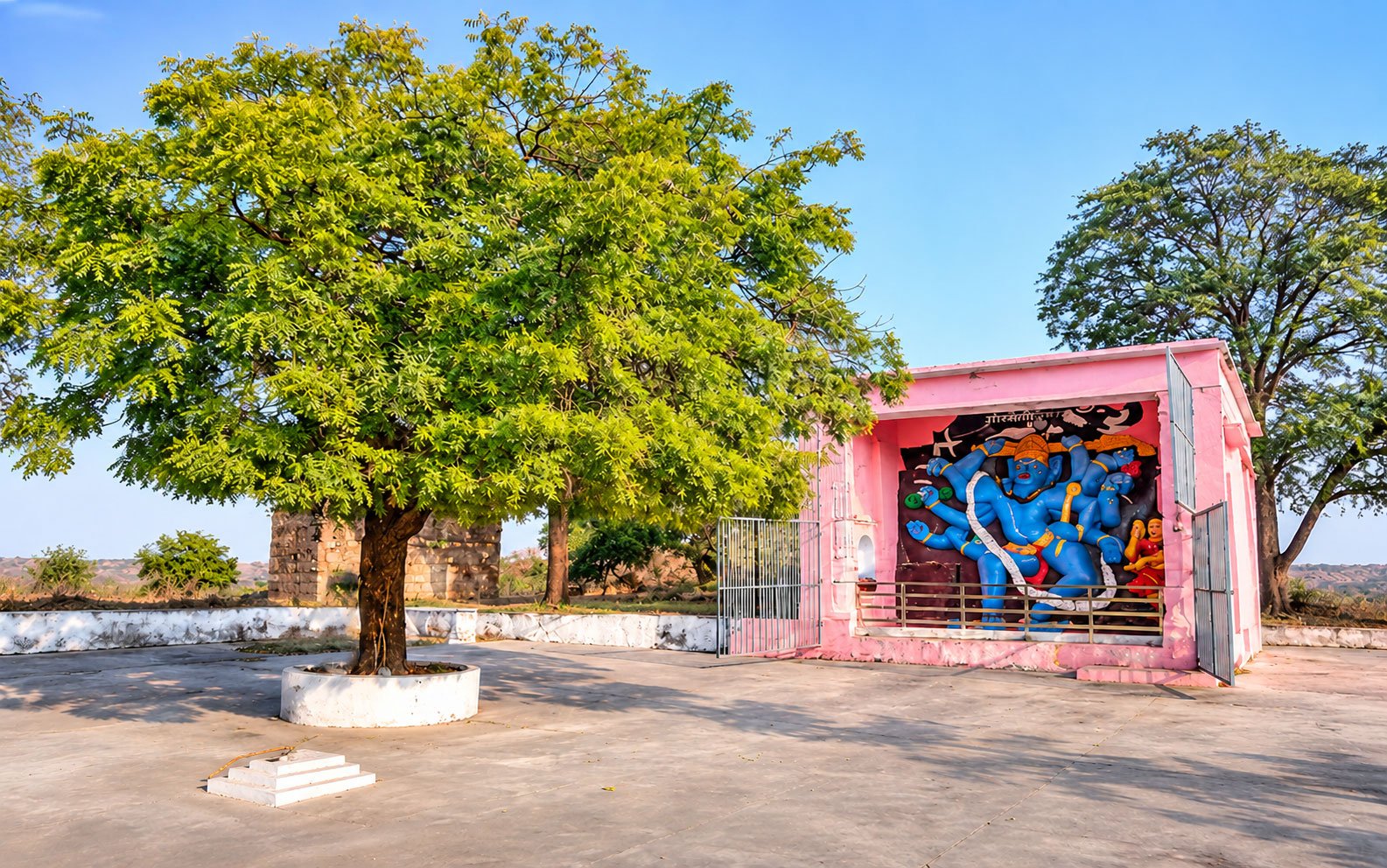
Shiv Tandav Temple in Mahoba, Uttar Pradesh, a religious landmark to explore while visiting Gorakhgiri and the historic Bundelkhand region.
The Shiv Tandav Temple is one of Mahoba’s notable religious heritage sites.
Located near the district Collectorate, it is known for a distinctive granite representation of Lord Shiva in the Tandava dancing posture.
Its stone sculpture makes it particularly interesting to visitors interested in traditional Indian religious art.
Sun Temple of Rahelia
The historic Sun Temple at Rahelia village is another important attraction in Mahoba district.
The temple is associated with the region’s early medieval architectural heritage and includes sculptural remains that reflect the artistic traditions of Bundelkhand.
The nearby Suraj Kund adds to the site’s historical setting.
This is a worthwhile stop for travellers exploring Mahoba’s lesser-known monuments.
Khakramath Temple and Madan Sagar
Khakramath is a historic Shiva temple associated with the Madan Sagar lake landscape.
The setting combines historic stone architecture with water and the surrounding countryside.
The Mahoba district administration also identifies nearby temple remains and elephant sculptures as part of the area’s heritage.
Bari Chandika Temple
Bari Chandika Temple is another prominent religious landmark in Mahoba.
Dedicated to Goddess Chandika, the site is associated with the region’s religious traditions and historic sculpture.
It can be included in a broader tour of Mahoba’s temples.
Khajuraho Group of Monuments
Travellers planning a longer itinerary can combine Mahoba with a visit to Khajuraho in neighbouring Madhya Pradesh.
The Khajuraho Group of Monuments is a UNESCO World Heritage Site celebrated for its outstanding Hindu and Jain temples, elaborate stone sculptures and Chandela-period architecture.
Unlike Gorakhgiri’s natural hill environment, Khajuraho offers a primarily architectural and archaeological experience.
Together, the destinations provide two contrasting perspectives on the heritage of the wider Bundelkhand region.
Discover Mahoba’s Traditional Betel-Leaf Cultivation
Another distinctive aspect of Mahoba is its traditional cultivation of paan, or betel leaf.
The district is particularly associated with Mahoba Desawari Paan, a locally recognised agricultural product with Geographical Indication protection.
Betel vines are traditionally cultivated in carefully maintained structures known as barejas, which help provide suitable growing conditions.
Mahoba also has horticultural and betel-leaf training activities, including facilities associated with Chhatarpur Road.
Travellers interested in local agriculture can learn about this tradition through local producers or appropriate horticultural contacts. However, research and training facilities should not be assumed to offer public tours.
It is also worth remembering that betel leaf and betel nut are different products. Mahoba’s celebrated agricultural tradition concerns the cultivation of betel leaves.
Best Time to Visit Gorakhgiri Mahoba
The cooler months, generally from October to March, are the most comfortable for exploring Gorakhgiri on foot.
During this period, visitors can usually enjoy the rocky landscape without the intense heat associated with the region’s summer months.
Winter: October to March
Winter is generally the preferred season for hill walks, sightseeing and outdoor photography.
Conditions are often more pleasant for exploring Mahoba’s temples and other attractions during the same trip.
Summer: April to June
Summers in Bundelkhand can be extremely hot.
Visitors should avoid strenuous walks during the hottest parts of the day and carry sufficient drinking water.
Early-morning visits are preferable when conditions allow.
Monsoon: July to September
Rainfall can bring fresh greenery to the surrounding countryside.
However, wet rocks and uneven walking surfaces may become slippery. Heavy rain can also affect outdoor access.
Check local conditions before attempting hillside walks during the monsoon.
How to Reach Gorakhgiri Mahoba
Mahoba is accessible by rail and road, making it possible to include Gorakhgiri in a regional travel itinerary.
By Train
Mahoba Junction, station code MBA, is the city’s principal railway station.
Mahoba has rail connections with other destinations in the region, including routes associated with Jhansi, Banda and Khajuraho.
Check current train services and availability through Indian Railways before travelling.
From Mahoba Junction, arrange a local taxi or auto-rickshaw to the Gorakhgiri access area, confirming the drop-off point in advance.
By Air
Khajuraho Airport in Madhya Pradesh is identified by the Mahoba district administration as the nearest airport.
However, flight services and operating schedules can change, so travellers should confirm current connectivity before planning an air journey.
Onward travel from the airport to Mahoba is by road.
By Road
Mahoba has road connections with several regional destinations, including Jhansi, Banda, Chhatarpur and Khajuraho.
Visitors travelling independently can arrange road transport to Mahoba and continue towards the hill’s local access point.
Confirm road conditions and parking arrangements locally, particularly where tourism development work is taking place.
Practical Tips for Visiting Gorakhgiri
A little preparation can make a visit more comfortable and safer.
- Wear suitable footwear: Choose shoes with reliable grip for uneven stone paths.
- Carry drinking water: Do not depend on refreshments being available along every route.
- Check access conditions: Some paths or facilities may be affected by maintenance or construction.
- Avoid exposed rocks: Stay away from steep edges and unstable surfaces.
- Respect religious traditions: Keep noise low near shrines and follow local customs.
- Plan around daylight: Explore the hillside when visibility is good and allow time to return safely.
- Protect the landscape: Avoid littering, damaging vegetation or disturbing religious structures.
Visitors travelling with young children, older relatives or people with reduced mobility should assess the available paths before attempting an ascent.
Tourism improvements have been undertaken at Gorakhgiri, and additional proposals have included ropeway and adventure-tourism facilities. Do not assume that these services are operational without checking with local authorities.
Planning a One-Day Visit to Mahoba
Gorakhgiri can be included in a broader day of sightseeing around Mahoba.
Begin with a morning visit to the hill, allowing time for the viewpoints and religious sites that are accessible.
Afterwards, explore the Shiv Tandav Temple and other nearby landmarks.
If time and local conditions permit, continue to the Rahelia Sun Temple or the Madan Sagar and Khakramath area.
Travellers interested in local culture may also enjoy learning about Mahoba’s Desawari Paan cultivation.
For a more relaxed visit, consider spending a night in Mahoba rather than trying to combine every regional attraction in one day.
Frequently Asked Questions About Gorakhgiri
Where is Gorakhgiri Parvat located?
Gorakhgiri Parvat is located near Mahoba city in the Bundelkhand region of Uttar Pradesh, India.
Why is Gorakhgiri famous?
Gorakhgiri is known for its association with Guru Gorakhnath, the Siddh Baba shrine, distinctive rocky formations and scenic views of the surrounding countryside.
Is Gorakhgiri suitable for rock climbing?
The hill has rugged natural rock formations, but dependable information about officially managed climbing routes and professional facilities is limited. Technical climbing should not be attempted without appropriate permission, expertise and safety arrangements.
Can families visit Gorakhgiri?
Families can enjoy the scenery and accessible parts of the site. However, uneven terrain and steep sections may be unsuitable for some visitors, particularly young children and people with mobility limitations.
Is Gorakhgiri the same as Khajuraho?
No. Gorakhgiri is in Mahoba district, Uttar Pradesh. The Khajuraho Group of Monuments is a separate UNESCO World Heritage Site in Chhatarpur district, Madhya Pradesh.
Is there a ropeway at Gorakhgiri?
Ropeway development has been proposed as part of tourism plans for Gorakhgiri. Travellers should verify whether any service has commenced before relying on it for access to the hill.
Why Gorakhgiri Deserves a Place on Your Travel Itinerary
Gorakhgiri offers a combination of natural scenery, local heritage and spiritual significance that makes it distinctive within Bundelkhand.
The hill’s giant boulders and countryside views appeal to nature lovers, while its connection with Guru Gorakhnath attracts visitors interested in India’s religious traditions.
Combined with Mahoba’s Chandela-era monuments, historic lakes and traditional betel-leaf cultivation, Gorakhgiri provides an opportunity to explore a lesser-known part of Uttar Pradesh.
For travellers who value peaceful landscapes and cultural discovery over crowded attractions, Gorakhgiri Mahoba is worth considering as part of a journey through Bundelkhand.
