

Gwalior Fort, with its historic Man Mandir Palace and imposing sandstone architecture, is one of the most celebrated landmarks of Madhya Pradesh.
Gwalior Travel Guide: Best Places to Visit, History and Travel Tips
Gwalior rises from the plains of northern Madhya Pradesh, where an imposing sandstone fortress overlooks centuries of royal history, sacred architecture and living musical traditions.
The city offers an engaging combination of medieval palaces, intricately carved temples, historic tombs and bustling markets. Yet Gwalior is more than a destination for architecture enthusiasts. Its contribution to Hindustani classical music remains an important part of India’s cultural identity.
This Gwalior travel guide covers the city’s major attractions, how to reach Gwalior, the best time to visit, local experiences and a practical sightseeing itinerary.
Whether you are planning a short heritage break or travelling through Agra, Gwalior, Orchha and Khajuraho, the city deserves a place on your itinerary.
Where Is Gwalior Located?
Gwalior lies in the northern part of Madhya Pradesh, close to the border with Uttar Pradesh.
Its location makes it a convenient stop for travellers exploring the historic cities and monuments of northern and central India.
Agra lies approximately 118 km away by road, while Delhi, Jhansi and other regional destinations connect with Gwalior through major highways and railway routes.
The city has developed around its historic fortress and surrounding neighbourhoods. Today, Gwalior combines educational institutions, residential districts and commercial areas with some of Madhya Pradesh’s most significant heritage attractions.
Why Is Gwalior Famous?
Gwalior is best known for its magnificent hilltop fort, the royal heritage of the Scindia dynasty and its influence on Indian classical music.
Its history reflects the rise and decline of several ruling powers, including the Tomars, the Mughals and the Maratha Scindias.
One of the city’s most celebrated rulers was Raja Man Singh Tomar, whose patronage of architecture and music left a lasting cultural legacy.
The origin of Gwalior’s name also features in local folklore. According to a traditional story, a ruler named Suraj Sen recovered from an illness after receiving water from a sage called Gwalipa. The ruler subsequently honoured the sage, whose name became associated with the settlement.
The story remains part of Gwalior’s cultural identity, although visitors should regard it as legend rather than established historical fact.
Gwalior’s musical reputation gained international recognition when UNESCO welcomed the city into its Creative Cities Network as a City of Music in 2023.
Best Places to Visit in Gwalior
The city’s historic attractions offer plenty to explore over one or two days.
Although Gwalior Fort is the obvious starting point, several other monuments and cultural sites deserve attention.
1. Gwalior Fort – The City’s Defining Landmark
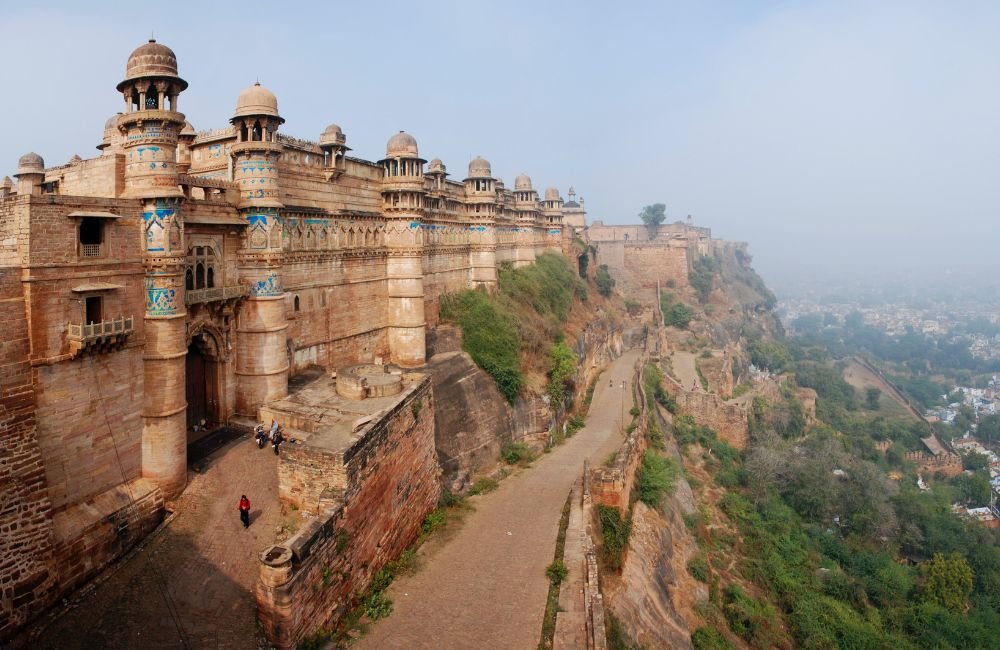
The magnificent Gwalior Fort and Man Mandir Palace stand above the city, showcasing historic sandstone architecture and distinctive blue tile decorations.
Gwalior Fort dominates the skyline from a steep sandstone hill.
Its massive walls, imposing gateways and historic buildings reveal a long architectural and political history.
The fortress contains structures from different periods, including palaces, temples, reservoirs and sacred sites.
Allow enough time to explore the complex rather than treating it as a quick photography stop.
Among the principal attractions within and around the fort are:
- Man Mandir Palace, known for its decorative exterior.
- Teli Ka Mandir, an imposing historic temple.
- The Sas Bahu temple complex, featuring elaborate stone carvings.
- Gurudwara Data Bandi Chhor Sahib, an important Sikh religious site.
- The rock-cut Jain sculptures along the fort’s approaches.
The elevated setting also provides impressive views across Gwalior.
Because the fort covers a substantial area and includes uneven surfaces, comfortable walking shoes are essential.
2. Man Mandir Palace – A Masterpiece of the Tomar Period

Man Mandir Palace, a remarkable architectural landmark within Gwalior Fort, is celebrated for its ornate sandstone façade, domed towers and distinctive blue-green tilework.
Man Mandir Palace is among the most recognisable structures within Gwalior Fort.
Associated with Raja Man Singh Tomar, the palace features elegant sandstone architecture, rounded towers, carved balconies and striking blue decorative tiles.
The colourful exterior distinguishes it from many other medieval fortifications in India.
Look closely at the ornamental bands, geometric patterns and architectural details around the walls.
The palace also reflects the period when Gwalior developed into an important centre of royal patronage and artistic expression.
For photography enthusiasts, its decorative façade is one of the highlights of a visit to the fort.
3. Gujari Mahal – Palace and Archaeological Museum

Gujari Mahal, built by Raja Man Singh Tomar for Queen Mrignayani, now houses an archaeological museum showcasing historic sculptures and artefacts in Gwalior, Madhya Pradesh.
Gujari Mahal stands near the lower part of the fort complex.
Raja Man Singh Tomar commissioned the palace for Queen Mrignayani, whose story forms an important part of Gwalior’s royal traditions.
Today, Gujari Mahal houses an archaeological museum with historical sculptures and other artefacts.
Its collections offer a different perspective from the fort’s grand architecture.
Visitors interested in regional history, religion and stone sculpture should consider including the museum in their itinerary.
Check the museum’s visiting arrangements before departure, as its opening days and access conditions may differ from those of the surrounding fort.
4. Jai Vilas Palace – The Royal Heritage of the Scindias

Jai Vilas Palace in Gwalior showcases the architectural grandeur of the Scindia dynasty, with its elegant European-style façade and beautifully maintained gardens.
Jai Vilas Palace reveals another chapter of Gwalior’s history.
Built during the reign of Maharaja Jayajirao Scindia in the nineteenth century, the palace reflects strong European architectural influences.
Unlike the medieval structures of Gwalior Fort, Jai Vilas features classical design elements and richly decorated interiors.
Part of the palace serves as the HH Maharaja Sir Jiwajirao Scindia Museum.
The museum displays royal collections that include historic furniture, paintings, textiles, arms, decorative objects and ceremonial possessions.
The elaborate Darbar Hall is particularly notable for its grand chandeliers and richly decorated interior.
The museum provides an opportunity to understand the lifestyle and cultural interests of Gwalior’s former ruling family.
Check the palace museum’s official website before visiting, particularly for ticket categories, access arrangements and any changes to opening days.
5. Sas Bahu Temples – Intricate Medieval Architecture

The historic Sas Bahu Temples within Gwalior Fort showcase exquisite sandstone carvings and medieval Indian temple architecture in Madhya Pradesh.
The Sas Bahu temples stand within the Gwalior Fort complex.
Despite the popular name, which may suggest a mother-in-law and daughter-in-law, the temples have an association with the name Sahastrabahu, linked to Lord Vishnu.
These medieval sandstone structures display elaborate carvings, decorative pillars and architectural details.
Visitors can examine the craftsmanship while enjoying views from the elevated fort complex.
The temples offer a quieter experience than the main palace areas, particularly for travellers interested in historical architecture and religious traditions.
6. Teli Ka Mandir – A Distinctive Temple Inside the Fort
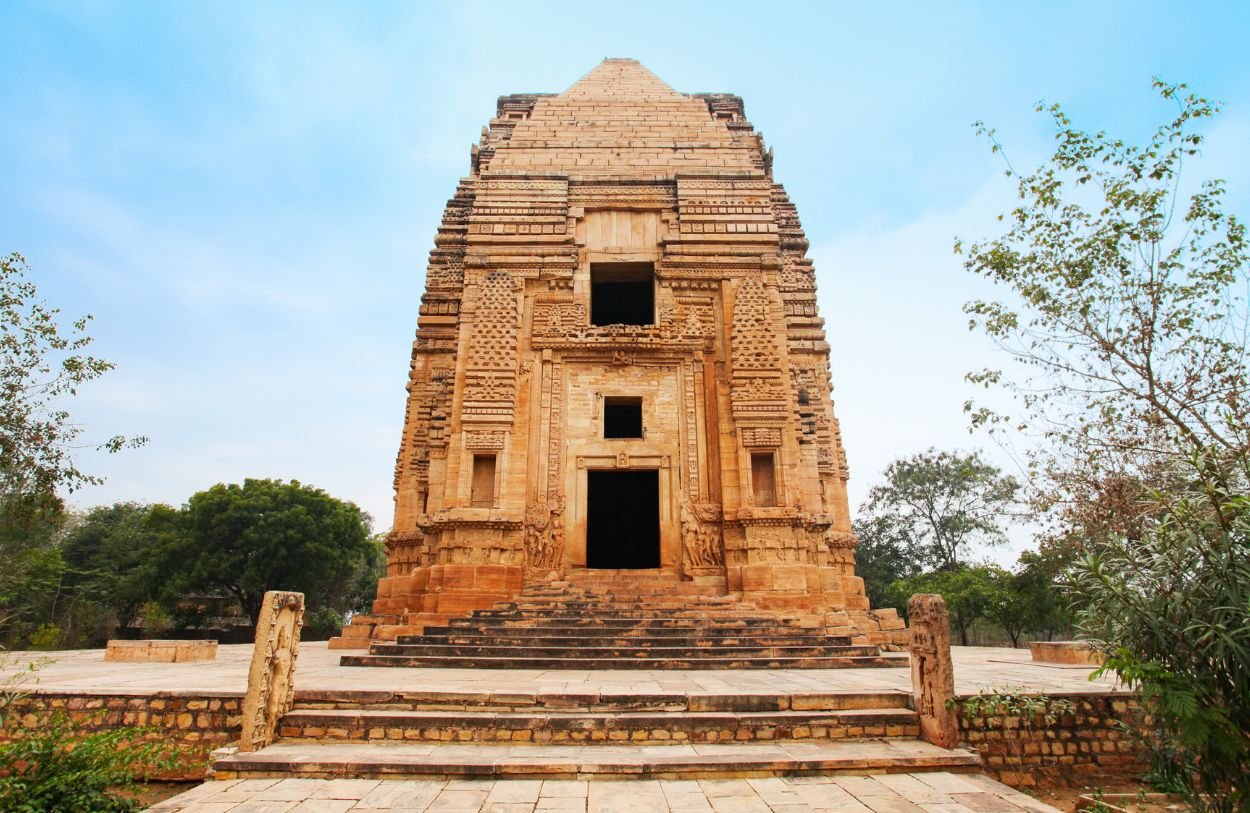
Teli Ka Mandir, also known as Teli Ka Temple, is a historic architectural landmark within Gwalior Fort, renowned for its towering structure and intricate sandstone carvings.
Teli Ka Mandir is another important monument within Gwalior Fort.
Its unusually tall structure combines architectural elements associated with different Indian temple-building traditions.
The temple’s entrance and exterior stonework feature carved decorative motifs.
The building provides an interesting contrast with the more elaborate surfaces of Man Mandir Palace.
Visit it as part of a wider fort exploration rather than making a separate journey solely for this monument.
7. Tansen’s Tomb and the Tomb of Muhammad Ghaus
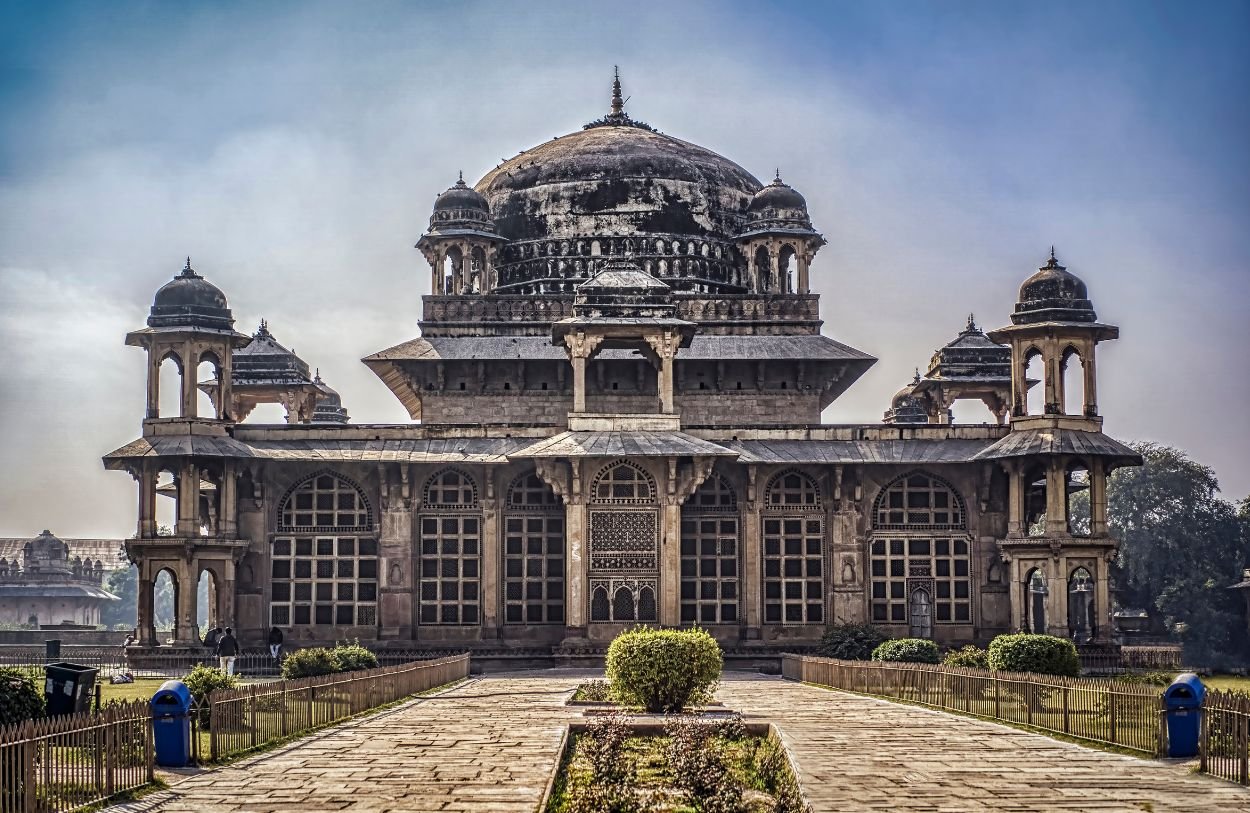
The Tomb of Muhammad Ghaus in Gwalior is a remarkable example of Mughal-era architecture, celebrated for its grand dome, intricate stone latticework and elegant domed pavilions.
Gwalior’s connection with Hindustani classical music becomes especially apparent at the tomb of Tansen.
Tansen is remembered as one of the great musicians associated with Mughal Emperor Akbar’s court.
His tomb stands near the mausoleum of the Sufi figure Muhammad Ghaus.
The surrounding complex offers a peaceful environment for visitors interested in music, history and Indo-Islamic architecture.
The Tomb of Muhammad Ghaus is particularly notable for its finely worked stone screens.
Together, the monuments reflect the religious, artistic and cultural exchanges that helped shape the region.
For music lovers, Tansen’s memorial is one of the city’s most meaningful landmarks.
8. Gopachal Parvat – Monumental Jain Rock-Cut Sculptures

Beautiful rock-cut Jain Tirthankara sculptures at Gopachal Hills, Gwalior, showcasing the city’s remarkable Jain heritage and ancient stone-carving traditions.
Gopachal Parvat is known for its impressive Jain sculptures carved directly into the sandstone rock faces around Gwalior Fort.
The carvings depict Jain Tirthankaras and form an important part of the region’s religious heritage.
Their scale and craftsmanship make them particularly striking.
The sculptures appear along sections of the fort’s approaches, so visitors should plan their route carefully.
Respect the religious significance of the site and follow local instructions concerning access and photography.
9. Sun Temple – A Modern Religious Landmark
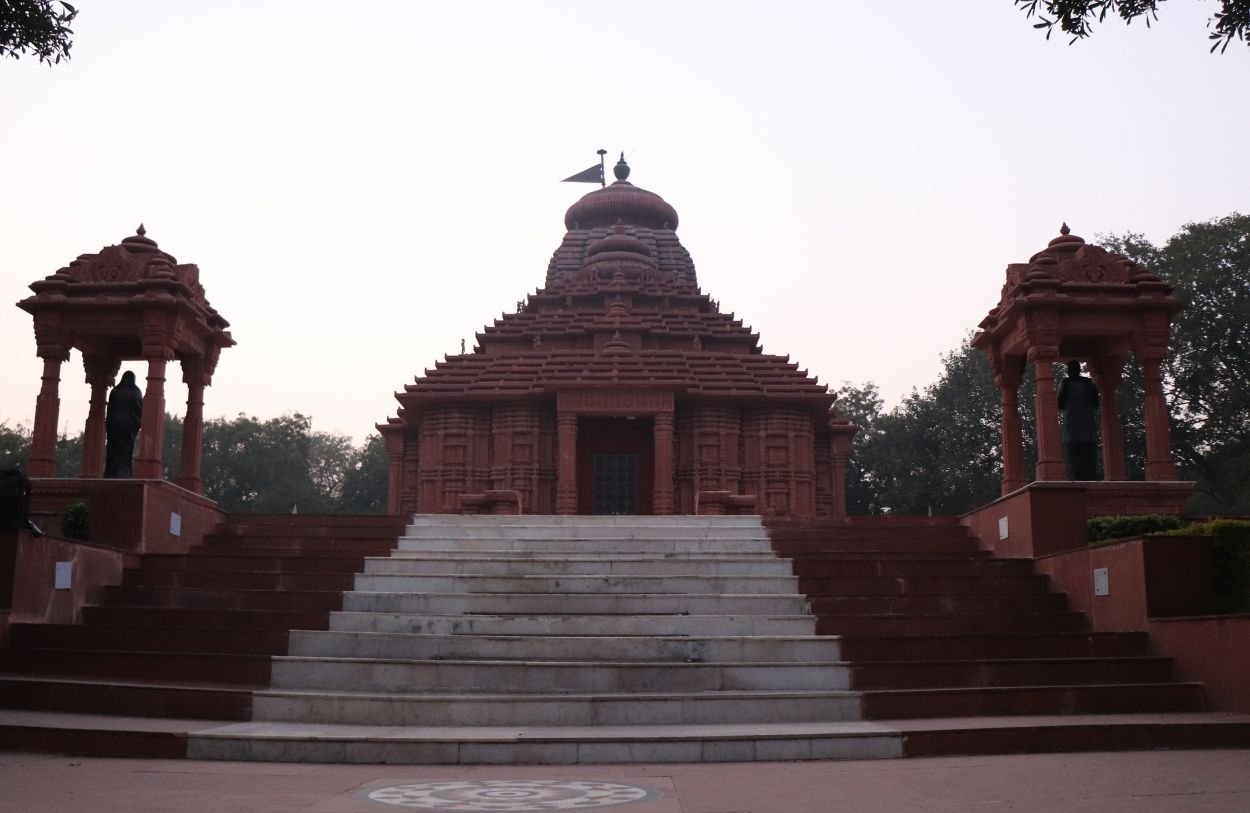
The Sun Temple, also known as Surya Mandir, is a beautiful religious landmark in Gwalior, Madhya Pradesh, featuring distinctive red sandstone architecture inspired by the famous Konark Sun Temple.
Gwalior’s Sun Temple, also known as Surya Mandir, offers an architectural contrast to the city’s medieval monuments.
The temple draws inspiration from the famous Sun Temple at Konark in Odisha.
Its red sandstone exterior and carefully designed surroundings make it an interesting stop for visitors exploring beyond the historic fort area.
The temple is an active place of worship, so visitors should dress respectfully and follow any applicable restrictions.
10. Sarod Ghar – Discover Gwalior’s Musical Legacy

Sarod Ghar in Gwalior celebrates India’s rich classical music heritage through its historic architecture, musical collections and association with legendary musicians.
Sarod Ghar is a museum dedicated to Indian classical music.
Established in the ancestral home of the renowned musician Ustad Hafiz Ali Khan, it preserves musical instruments, photographs and materials associated with important performers.
For visitors who want to understand Gwalior beyond its fortifications and palaces, this museum offers valuable cultural context.
Confirm visiting arrangements before including it in a tightly scheduled itinerary.
Gwalior: A UNESCO City of Music
Gwalior’s contribution to Hindustani classical music extends far beyond its association with Tansen.
The city has played an important role in developing and preserving musical traditions, including Dhrupad and Khayal.
The Gwalior gharana remains an influential tradition in Hindustani vocal music.
UNESCO recognised the city’s musical heritage by including Gwalior in its Creative Cities Network under the Music category.
One of the city’s major cultural events is the Tansen Samaroh, which celebrates classical music and the legacy of the celebrated musician.
The festival generally takes place towards the end of the year, with performances by established and emerging artists.
If you are planning a music-focused trip, check the official festival programme before booking transport and accommodation.
Festival dates, venues and performance schedules can change from one edition to another.
Best Time to Visit Gwalior
The most comfortable period for sightseeing in Gwalior is generally October to March.
During these months, the weather is usually better suited to exploring outdoor monuments and walking around the fort.
October to March: Pleasant Sightseeing Season
Autumn and winter provide relatively comfortable conditions for visiting Gwalior’s historical attractions.
Mornings and evenings can become chilly during the colder months, so carry a light jacket or warmer clothing as appropriate.
This period is also worth considering for travellers interested in cultural events and classical music performances.
April to June: Hot Summer Weather
Summer temperatures can become intense in Gwalior.
Extended sightseeing around exposed stone monuments may feel uncomfortable during the hottest part of the day.
If you visit in summer, explore outdoor attractions early, carry drinking water and allow breaks in shaded or indoor areas.
July to September: Monsoon Season
The monsoon brings seasonal rainfall and greener surroundings.
However, rain may affect sightseeing conditions, especially around outdoor monuments, steps and uneven surfaces.
Check local forecasts and carry suitable rain protection.
How to Reach Gwalior
Gwalior has road, rail and air connections, making it accessible from several major Indian cities.
The most practical option depends on your starting point, travel dates and itinerary.
By Train
Gwalior Junction is a major railway station on important routes through northern and central India.
Train services connect Gwalior with destinations such as Delhi, Agra, Jhansi and other cities across the country.
For travellers already exploring northern India, rail travel can be a convenient choice.
The station lies within the urban area, with onward transport available through taxis and auto-rickshaws.
Use the official Indian Railways enquiry system or IRCTC to check train schedules, journey times and seat availability.
Train services and departure times can change, so confirm your specific travel date rather than relying on a fixed schedule in a travel guide.
By Road
Gwalior connects with Agra, Delhi, Jhansi and several destinations across Madhya Pradesh through the regional road network.
The road distance from Agra is approximately 118 km, making Gwalior a possible stop on a wider northern India itinerary.
Travellers can use private cars, hired taxis or available intercity bus services.
Road conditions, traffic and departure locations affect journey times.
Check the current route before travelling, especially if your itinerary includes several heritage destinations.
By Air
Gwalior has a domestic airport with the Rajmata Vijayaraje Scindia Air Terminal at Maharajpura.
Flight availability depends on airline schedules and the season.
Travellers may find direct services from selected Indian cities, while other routes may require a connection.
Check the Airports Authority of India and individual airlines for current flight operations.
International visitors can also consider arriving through a larger Indian airport, such as Delhi, and continuing by train, road or a suitable domestic flight.
Getting Around Gwalior
Gwalior’s main tourist attractions are spread across different parts of the city.
Auto-rickshaws and taxis are practical options for moving between the railway station, fort, palace and other landmarks.
Consider hiring a suitable vehicle for a full day if you want to visit several attractions without repeatedly arranging transport.
Agree on the fare or confirm the applicable metered or app-based rate before travelling.
The fort deserves particular attention when planning transport.
Its elevated location and extensive grounds may involve considerable walking. Ask your driver about the appropriate access point and arrange a meeting place if necessary.
A knowledgeable local guide can also help visitors understand the complex history of the monuments.
A Practical Two-Day Gwalior Itinerary
Two days allow a more comfortable introduction to the city than attempting to see every attraction in a single visit.
Day 1: Forts, Palaces and Royal History
Morning: Begin at Gwalior Fort. Explore Man Mandir Palace, the Sas Bahu temples and Teli Ka Mandir.
Allow time to appreciate the architecture and enjoy views of the city.
Afternoon: Visit Gujari Mahal Archaeological Museum, subject to its opening arrangements.
Continue to Jai Vilas Palace Museum to discover the Scindia dynasty’s royal collections.
Evening: Explore a local market or consider the sound-and-light show at Gwalior Fort if performances are operating.
Check the official schedule and access arrangements before making evening plans.
Day 2: Music, Spiritual Heritage and Local Culture
Morning: Visit Tansen’s Tomb and the nearby Tomb of Muhammad Ghaus.
Spend time examining the architecture and learning about Gwalior’s musical traditions.
Afternoon: Consider visiting Sarod Ghar, subject to opening arrangements, and continue to the Sun Temple.
Evening: Explore the city’s markets and sample local food.
Travellers with additional time can explore other heritage sites or arrange an excursion outside Gwalior.
Can You Visit Gwalior in One Day?
Yes, but you will need to prioritise.
For a short visit, concentrate on Gwalior Fort and one additional major attraction, such as Jai Vilas Palace or Gujari Mahal.
Trying to cover every monument in a single day can leave little time to appreciate the architecture and history.
Local Food and Shopping in Gwalior
Gwalior offers opportunities to enjoy traditional food alongside its heritage attractions.
Local markets and sweet shops are good places to try regional snacks.
Popular choices include:
- Kachori: A savoury fried pastry commonly served with accompaniments.
- Samosa: A familiar snack found across northern and central India.
- Jalebi: A sweet, syrup-coated fried delicacy.
- Gajak: A traditional sweet made with ingredients such as sesame and jaggery, particularly associated with the region.
- Chaat: A broad selection of savoury snacks with tangy and spicy flavours.
Maharaj Bada is an important commercial area where visitors can experience everyday city life and browse local shops.
When purchasing handicrafts or textiles, compare quality and prices before buying.
Choose busy, reputable food establishments and follow ordinary food and drinking-water precautions.
Places to Visit Near Gwalior
Gwalior works well as a starting point for exploring other historic destinations.
Bateshwar Group of Temples
The Bateshwar temple complex near Morena contains a remarkable collection of early medieval sandstone shrines.
This group lies in Madhya Pradesh and should not be confused with the separate Bateshwar temple complex near Agra in Uttar Pradesh.
Visitors interested in ancient architecture can consider combining Bateshwar with nearby heritage sites.
Mitawali and Padavali
Mitawali is known for its distinctive circular Chausath Yogini Temple, while Padavali features elaborate architectural carvings.
These sites make an interesting excursion for travellers with access to suitable road transport.
Check local access conditions before departure.
Orchha
Orchha is known for its Bundela-era palaces, temples, historic gardens and riverside cenotaphs.
It makes a worthwhile addition to a longer heritage journey through central India.
Travellers commonly approach Orchha through the Jhansi area.
Khajuraho
Khajuraho is celebrated for its UNESCO-listed group of Hindu and Jain temples.
Its richly carved monuments offer a different architectural experience from Gwalior’s fortress and royal palaces.
For travellers with several days available, a broader route through Agra, Gwalior, Orchha and Khajuraho provides an engaging introduction to the region’s heritage.
Where to Stay in Gwalior
Accommodation choices include city hotels, heritage-style properties and smaller establishments.
Choose your location according to your plans rather than selecting accommodation solely by price.
Areas near the railway station can be convenient for short stays and onward train connections.
Accommodation around the central city and Lashkar may suit travellers interested in shopping and accessing urban attractions.
Before booking, check recent guest reviews, verified property information, cancellation conditions and available transport.
Do not assume that every hotel offers airport transfers, parking or other facilities without confirmation.
Practical Travel Tips for Gwalior
A few simple precautions can make sightseeing more comfortable.
- Wear suitable footwear: Fort pathways, old steps and stone surfaces can be uneven.
- Carry drinking water: This is particularly important during warmer weather.
- Plan around daylight: Allow sufficient time for large outdoor monuments.
- Respect religious sites: Follow local dress, footwear and photography rules.
- Check museum arrangements: Opening days, tickets and access may change.
- Allow flexible travel time: Traffic and local conditions can affect transfers.
- Use reliable transport: Confirm fares and pickup locations in advance.
- Travel responsibly: Avoid damaging carvings, littering or entering restricted areas.
International visitors should also verify passport, visa and entry requirements through the official Government of India immigration and visa portals before travelling.
Frequently Asked Questions About Gwalior
Is Gwalior Worth Visiting?
Yes. Gwalior offers a distinctive combination of historic architecture, royal heritage, religious monuments and Indian classical music traditions.
Its fort is one of the city’s main attractions, while museums and cultural landmarks provide additional reasons to visit.
How Many Days Are Enough for Gwalior?
Two days are suitable for exploring the major attractions at a comfortable pace.
One day works for a shorter visit focused on Gwalior Fort and one or two additional sites.
Allow extra time if you plan to explore nearby heritage destinations.
What Is the Best Time to Visit Gwalior?
October to March generally offers the most comfortable conditions for exploring outdoor attractions.
Summer can be extremely hot, while the monsoon brings seasonal rainfall.
What Is Gwalior Most Famous For?
Gwalior is particularly famous for Gwalior Fort, Man Mandir Palace, Jai Vilas Palace and its association with Hindustani classical music.
UNESCO recognised Gwalior as a Creative City of Music in 2023.
Is Gwalior Fort a UNESCO World Heritage Site?
Gwalior’s UNESCO Creative City of Music recognition is separate from UNESCO World Heritage status.
Visitors should not confuse the city’s membership in the Creative Cities Network with designation of the fort as an inscribed World Heritage Site.
Can I Combine Gwalior With Agra and Khajuraho?
Yes. Gwalior fits naturally into a longer heritage itinerary that includes Agra, Orchha and Khajuraho.
Plan travel days carefully and confirm current rail or road arrangements before booking accommodation.
Discover the Heritage and Music of Gwalior
Gwalior rewards travellers who look beyond its fortress walls.
Its palaces tell stories of royal power, its temples reveal centuries of craftsmanship, and its musical traditions continue to influence Indian culture.
Whether you spend a day exploring the fort or stay longer to discover the city’s museums, markets and surrounding monuments, Gwalior offers a memorable perspective on the heritage of northern Madhya Pradesh.
