
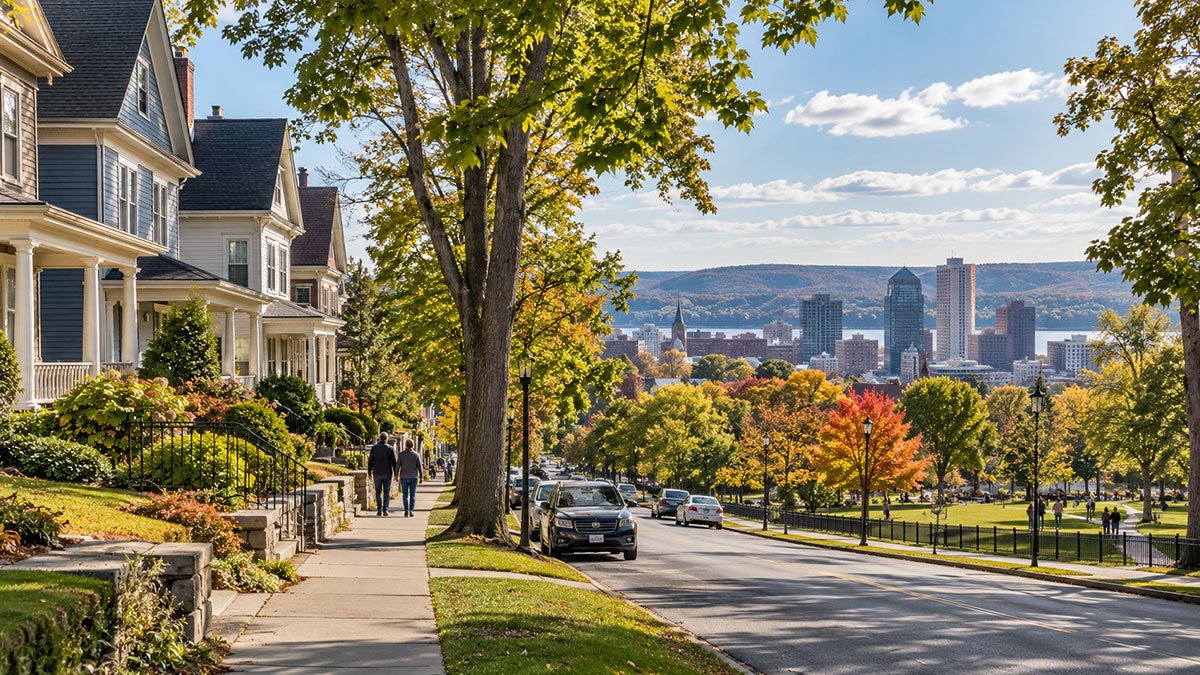
Explore the diverse lifestyles of New York State, where leafy residential streets, classic suburban homes and peaceful parks coexist with vibrant urban skylines. Whether you prefer a quiet neighbourhood or convenient access to city amenities, the right community depends on your lifestyle and budget.
Best Places to Live in New York State: 5 Cities and Towns to Consider
New York State offers a wide range of places to live, from Hudson Valley suburbs and commuter cities near New York City to established communities in the Buffalo region and cultural centres farther north. The right choice depends on your work, housing budget, preferred pace of life and the amenities you use every week.
A town with more space may suit one household, while another may prefer a walkable downtown and direct rail access. Winter weather, property taxes, school districts and the real cost of commuting can also change the picture. Rather than treating any single place as the universal “best,” this guide compares five New York communities with different strengths: Clarkstown, Amherst, White Plains, Saratoga Springs and New Rochelle.
At a Glance: Which Community Might Suit You?
- Clarkstown: A suburban setting in Rockland County with parks, recreation programmes and several distinct residential communities.
- Amherst: A large Buffalo-area suburb with parks, access to the University at Buffalo’s North Campus and a markedly different winter climate from downstate New York.
- White Plains: A Westchester city with a substantial downtown, services and Metro-North rail access to Manhattan.
- Saratoga Springs: A smaller city known for its downtown, mineral-spring heritage, cultural venues and seasonal horse-racing activity.
- New Rochelle: A diverse Westchester city with a downtown, waterfront parks and Metro-North service to New York City.
1. Clarkstown: Suburban Living and Outdoor Recreation
Clarkstown is a town in Rockland County, north of New York City. The town includes communities such as New City, Nanuet, Congers, Valley Cottage and West Nyack, so the experience of living there can vary considerably by neighbourhood.
A major draw is the town’s park and recreation network. The municipal Parks and Recreation Department runs programmes for different ages and maintains parks, sports facilities, pools and community spaces. That variety can appeal to households looking for organised activities and outdoor space without living in a dense urban centre.
Clarkstown may suit people who prefer a suburban setting, have family or community ties in Rockland County, or want access to regional shopping and recreation. However, do not assume that every part of the town has the same transport options. Depending on the address, commuting may involve driving, a local bus or a connection to a rail station. Test the complete door-to-door journey before choosing a property.
Housing considerations: Census Bureau estimates for 2020–2024 put the median value of owner-occupied homes in Clarkstown at about $602,100 and median gross rent at about $2,185 per month. These are area-wide statistical estimates, not asking prices for every home. Compare individual neighbourhoods, property taxes, utilities and commuting costs before setting a budget.
Best fit: People who value suburban neighbourhoods, local recreation and a home-based lifestyle more than having every destination within walking distance.
2. Amherst: A Buffalo-Area Suburb with Parks and Education Links
Amherst is a town in Erie County in western New York, within the Buffalo metropolitan area. It includes residential neighbourhoods, commercial areas, parks and nature spaces. The University at Buffalo’s North Campus is also in Amherst, making the town relevant to students, university employees and households seeking access to the region’s education and healthcare sectors.
The town maintains community parks, neighbourhood playgrounds and nature or conservation areas. Residents can enjoy outdoor space and local recreation while remaining connected to Buffalo’s wider employment, shopping and cultural opportunities.
Climate is an important practical difference. Western New York experiences cold winters and significant snowfall in some seasons. If you are moving from a warmer region, budget for winter clothing, snow removal and potentially higher seasonal heating costs. Also consider how you will manage driving and parking during winter weather.
Compared with the downstate communities in this guide, Amherst’s Census housing measures are lower, although actual costs depend on the exact neighbourhood, home type and condition.
Housing considerations: Census Bureau estimates for 2020–2024 show a median owner-occupied home value of about $311,600 and median gross rent of about $1,393 per month. Use these figures as broad context rather than a promise of what you will pay.
Best fit: Households seeking a suburban environment in the Buffalo region, people connected to the university or local employers, and those comfortable with a snowy winter climate.
3. White Plains: A Downtown Hub with Rail Access to Manhattan
White Plains, in Westchester County, offers a more urban option than many suburbs in the region. Its downtown has offices, shops, restaurants, services and residential buildings, making it possible to live near everyday amenities rather than relying on a car for every trip.
White Plains is served by Metro-North’s Harlem Line, which connects the city with Grand Central Terminal in Manhattan. The convenience of that connection is a major advantage for commuters, but travel times, fares and service patterns vary by train and time of day. Review the current timetable and the walk or drive from a prospective home to the station before deciding that a commute will work for you.
The city also maintains parks, recreation facilities and trails. That combination can suit people who want urban conveniences but still value access to outdoor space.
The main trade-off is housing cost. Census Bureau estimates for 2020–2024 put White Plains’ median owner-occupied home value at about $620,800 and median gross rent at about $2,269 per month. Individual rents and sale prices can differ substantially from these area-wide figures.
Best fit: Commuters who want rail access to Manhattan, professionals seeking downtown amenities, and households that prefer an active city centre over a more spread-out suburb.
4. Saratoga Springs: Culture, Parks and a Distinctive Small-City Feel
Saratoga Springs, in upstate New York, offers a different pace from the New York City suburbs. Its downtown has independent businesses, restaurants and cultural venues, while the area’s mineral-spring history and public parks contribute to its identity.
Congress Park and nearby outdoor spaces provide places to walk and relax. The Saratoga Performing Arts Center adds a major cultural venue to the region, and horse racing brings a distinctive seasonal rhythm to the city. During popular events and racing periods, visitor demand can affect traffic, parking and accommodation availability.
Saratoga Springs may appeal to people who value a walkable centre, arts and entertainment, and access to outdoor recreation. Before moving, visit at different times of year to see how the atmosphere and traffic change outside peak visitor periods.
Winter conditions differ from those in the lower Hudson Valley, so factor cold weather and seasonal driving into your decision. The city is farther from New York City than the two Westchester options, so it is not an equivalent daily rail commute for most Manhattan-based workers.
Housing considerations: Census Bureau estimates for 2020–2024 put the median owner-occupied home value at about $478,100 and median gross rent at about $1,470 per month. These averages do not capture seasonal variations, neighbourhood differences or the cost of an individual property.
Best fit: People seeking a smaller city with a cultural calendar, parks and a traditional downtown, and who do not need a short daily commute to Manhattan.
5. New Rochelle: Waterfront Parks and Commuter Connections
New Rochelle is a city in Westchester County on Long Island Sound. It combines residential neighbourhoods, a downtown with urban amenities and waterfront parks. Its city park system includes beaches, trails, playgrounds, natural areas and a municipal marina, offering a range of options for outdoor time.
The city is served by Metro-North’s New Haven Line, giving residents a rail connection to Grand Central Terminal. As with White Plains, check current train schedules, fares, service alerts and the location of the nearest station relative to a property. A quoted train time alone does not tell you the full commute.
New Rochelle has a varied population and housing stock, from apartments closer to the downtown to houses in residential neighbourhoods. That variety can be an advantage, but it also means that prices, walkability and everyday convenience differ by location.
For homes close to the waterfront, review property-specific flood maps, drainage history and insurance requirements. Waterfront access is a lifestyle benefit, but buyers should understand a property’s exposure to coastal weather and flooding before making an offer.
Housing considerations: Census Bureau estimates for 2020–2024 show a median owner-occupied home value of about $702,500 and median gross rent at about $1,917 per month. The gap between the home-value and rent measures highlights why it is worth comparing renting and buying separately rather than assuming one is automatically the better deal.
Best fit: Commuters who value rail connections, a diverse city environment and access to waterfront parks, provided the housing budget fits.
Comparing Housing Costs: A Useful Starting Point
The U.S. Census Bureau’s QuickFacts pages report median owner-occupied home values and median gross rents based on the 2020–2024 period. The figures below provide a consistent broad comparison, but they are not live real-estate listings and do not describe every neighbourhood.
| Community | Median value of owner-occupied homes | Median gross rent per month |
|---|---|---|
| Amherst | $311,600 | $1,393 |
| Saratoga Springs | $478,100 | $1,470 |
| New Rochelle | $702,500 | $1,917 |
| Clarkstown | $602,100 | $2,185 |
| White Plains | $620,800 | $2,269 |
Sources: U.S. Census Bureau QuickFacts for Amherst, Saratoga Springs, New Rochelle, Clarkstown and White Plains.
A sound budget should include more than the mortgage or rent. Consider property taxes, homeowners or renters insurance, utilities, maintenance, parking, transport costs and any childcare or school-related expenses. In New York, property-tax bills can vary significantly by municipality, school district and individual assessment. Ask the local assessor for an estimate tied to the specific property and check comparable sales before buying.
How to Choose the Right Place for Your Household
Calculate the Real Commute
For daily travel, compare the whole journey—not just the train ride. Include the trip to the station, parking or local transit, transfer time, fares and the walk to your workplace. If you drive, test the route at the time you would normally commute.
Visit the Neighbourhood, Not Just the Listing
Walk or drive around the area during the day and evening. Check how close you are to supermarkets, healthcare, parks, public transport and other places you use regularly. A home that looks ideal online may feel different at rush hour or on a winter evening.
Check School Districts and Local Services
School boundaries do not always match town or city boundaries. Confirm the exact district for a property and consult New York State Education Department report cards rather than relying on general claims about a town’s schools. Also review healthcare access, municipal services and local recreation programmes.
Research Safety Carefully
Avoid relying on a vague claim that a town is “one of the safest.” Look for recent local police data, understand what types of incidents the figures describe and compare neighbourhoods on a consistent basis. Conditions can vary within the same municipality.
Account for Weather and Lifestyle
Amherst and Saratoga Springs have colder winter conditions than many newcomers expect, while suburban and coastal Westchester locations have their own seasonal weather concerns. Consider snow removal, heating costs, flood exposure where relevant and whether you enjoy the activities each area offers throughout the year.
New York State Property and Relocation Checks
Before making an offer or signing a lease, review the practical details that influence long-term affordability:
- Ask for current rent, utility and service-cost information for the actual property.
- For a purchase, confirm the property-tax assessment and ask the local assessor about likely annual taxes.
- Compare the property’s recent sale history and similar local transactions.
- Check zoning, building permits or planned developments if they could affect the property.
- Review commute options and seasonal road conditions.
- For coastal homes, examine flood maps and ask an insurer about coverage and premiums.
- If schools are important, verify the exact school district and review its current information.
You can start with local government websites, Census data, official transit schedules and New York State’s homeowner tax guidance. Then speak with local professionals about details that depend on a specific address.
Which Place Is Best for You?
There is no single winner for every household. Clarkstown provides a suburban setting with extensive local recreation; Amherst offers a Buffalo-area lifestyle and comparatively lower housing benchmarks; White Plains combines downtown amenities with Harlem Line rail access; Saratoga Springs stands out for culture and its small-city character; and New Rochelle offers waterfront parks and New Haven Line commuter service.
The best decision comes from matching daily needs to a real housing and transport budget. Compare current listings, check taxes and school boundaries, test commute routes and visit each area in person before committing. These steps will tell you more than a generalized ranking ever could.
