
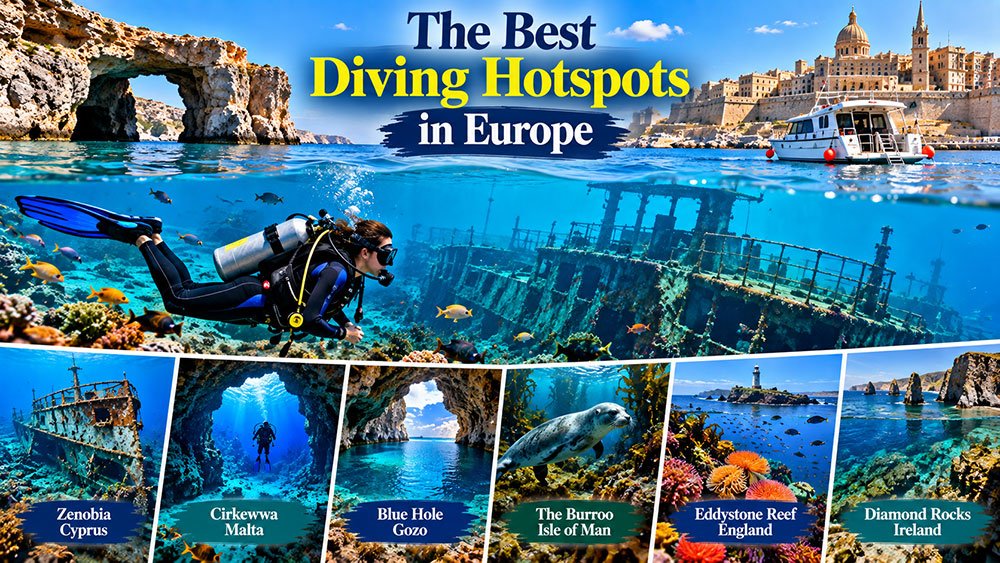
The Best Diving Hotspots in Europe
Europe may be better known for its historic cities, beaches and cultural attractions, but it is also home to some remarkable underwater destinations. From deep Mediterranean wrecks and underwater caves to Atlantic reefs filled with marine life, the best diving hotspots in Europe offer a wide variety of experiences for beginners, experienced divers and underwater photographers.
The Mediterranean provides warm water, excellent visibility and dramatic underwater landscapes, while destinations around the British Isles and Ireland offer colder-water diving with rich marine ecosystems and fascinating reefs.
Here are some of the European dive destinations worth considering for your next scuba diving holiday.
-
The Zenobia Wreck, Cyprus

The MS Zenobia near Larnaka is one of the most famous wreck-diving sites in Europe. The Swedish roll-on/roll-off ferry sank during its maiden voyage in 1980 and now rests on its side in Larnaka Bay.
The wreck is approximately 172 metres long and lies at depths of around 16 to 42 metres. Divers can see sections of the vessel, its cargo and the large trucks that remain around the wreck. The site is also home to marine life including groupers, barracuda, moray eels, turtles, octopus and other Mediterranean species.
The Zenobia is not simply a sightseeing dive. Its depth and size make it particularly attractive to experienced wreck divers. Visit Cyprus currently lists Advanced Open Water and boat-diving qualifications among the requirements for the site.
Cyprus also offers a long diving season, with official tourism information reporting water temperatures ranging from approximately 16°C to 27°C through much of the year.
Why dive the Zenobia?
- Historic and remarkably well-preserved wreck
- Large cargo holds and underwater structures
- Excellent Mediterranean visibility
- Abundant marine life
- Suitable for advanced recreational and technical diving
-
Cirkewwa, Malta

Malta is one of the most established scuba diving destinations in the Mediterranean. The official Malta tourism authority currently promotes more than 120 dive sites across the Maltese Islands, including reefs, caves, wrecks and shore-diving locations.
Cirkewwa, in northern Malta, is particularly popular with divers. The area features underwater rock formations, arches and wreck sites, while the nearby Rozi tugboat wreck provides an accessible artificial reef environment.
The Maltese Islands are known for clear water, varied dive depths and a combination of shore and boat dives. This makes Malta suitable for divers with different levels of experience.
What can you see at Cirkewwa?
- Rocky reefs and underwater arches
- Wrecks and artificial reefs
- Mediterranean marine life
- Clear blue water
- Shore and boat diving opportunities
Cirkewwa is also an important departure point for travel between Malta and Gozo, making it easy to combine diving with a wider island holiday.
-
Blue Hole, Gozo

One important correction to older descriptions of this destination is that the famous dive site in Gozo is the Blue Hole at Dwejra, rather than the Blue Grotto.
The Blue Hole is one of Gozo’s best-known underwater attractions. This natural rock formation creates a sheltered entry before divers pass through an underwater arch into the open sea. The official Visit Gozo diving guide describes it as an iconic dive site with an average depth of around 15 metres and a maximum depth of approximately 25 metres.
Gozo is particularly attractive for divers because it combines caves, arches, tunnels, walls, reefs and wrecks in a relatively compact area. The island’s official tourism information also highlights its clear water, underwater scenery and diving opportunities for different experience levels.
Important update: the Azure Window
The dramatic Azure Window, which once stood beside the Blue Hole, collapsed during a storm in 2017. The area has nevertheless remained an important diving destination, with the former arch now part of the underwater landscape.
For divers interested in underwater topography, the Dwejra area remains one of the most distinctive locations in the Maltese Islands.
-
The Burroo, Isle of Man

The Isle of Man offers a very different diving experience from the warm Mediterranean. Its waters support rich marine habitats, rocky reefs and kelp-covered underwater landscapes.
The Burroo, near the Calf of Man, is associated with a particularly biodiverse marine environment. The surrounding Calf of Man and Wart Bank area has been recognised for rocky reefs, kelp forests, sea caves and other important marine habitats. The area also supports species including seals, dolphins, basking sharks and a variety of marine life.
The Burroo is located near the southern end of the Calf of Man and is reached by boat. Local maritime information confirms that boat access to the Calf of Man is available from Port Erin and Port St Mary, subject to weather and sea conditions.
This is a destination for divers who enjoy natural reefs and marine biodiversity rather than tropical temperatures.
Why consider the Burroo?
- Diverse rocky reef habitat
- Rich marine life
- Dramatic underwater terrain
- Cold-water diving experience
- Access to some of the Isle of Man’s most interesting southern dive areas
Because currents can be significant around exposed coastal sites, divers should use appropriate experience, local guidance and site-specific briefings.
-
Eddystone Reef, Plymouth, England

The waters around Plymouth are another excellent choice for divers interested in British marine life and maritime history.
The Eddystone is a large offshore rock approximately 12 miles from Plymouth. According to Visit Plymouth, the underwater area is rich in marine life, with divers potentially encountering species such as moray eels, John Dory and numerous fish. The site is accessed by hardboat charter.
Conditions are important here. Visit Plymouth states that the Eddystone can be dived throughout the year when conditions are suitable, but dives should take place at slack water, approximately two to three hours after high and low water at Plymouth.
That makes the Eddystone very different from an easy tropical shore dive. Planning, weather conditions, tides and local knowledge are important parts of the experience.
Highlights of Eddystone diving
- Offshore reef environment
- Rich marine life
- Dramatic underwater rock formations
- Maritime history and nearby wreck sites
- Boat-diving experience
-
Kilkee Bay and Diamond Rocks, Ireland

Ireland’s Atlantic coast provides some of the most atmospheric diving in Europe. Around Kilkee in County Clare, divers can explore rocky underwater terrain, gullies and marine habitats along the Wild Atlantic Way.
Discover Ireland highlights Kilkee Bay as a notable diving destination and notes that the area offers dives suitable for different levels of ability. The destination is also famous for its dramatic cliffs and Diamond Rocks.
The surrounding coastline provides more than diving. Visitors can combine a dive trip with the Kilkee Cliff Walk, coastal sightseeing and exploration of the wider County Clare coastline.
What makes Kilkee interesting?
- Rugged Atlantic underwater scenery
- Rocky gullies and reefs
- Marine life
- Diving opportunities for different experience levels
- Excellent coastal attractions above the water
Atlantic conditions can change quickly, so divers should check local weather and sea conditions before entering the water.
How to Choose the Best Diving Hotspots in Europe
The best European dive destination depends on your experience, preferred water temperature and the type of underwater environment you want to explore.
For wreck diving
Choose destinations such as Zenobia in Cyprus or the wreck-rich waters around Malta. These sites provide opportunities to explore historic vessels and artificial reefs.
For caves and underwater formations
Gozo is particularly attractive. Its Blue Hole, caves, arches, tunnels and dramatic walls create a varied underwater landscape.
For marine biodiversity
The Isle of Man and other British and Irish locations offer cold-water reefs with abundant marine life and distinctive ecosystems.
For warm Mediterranean diving
Cyprus and Malta are strong choices because of their relatively warm water, long diving seasons and wide range of sites.
Diving in Europe: What to Know Before You Go
European diving conditions vary considerably. A Mediterranean dive in summer can feel completely different from a winter or spring dive around Ireland or the Isle of Man.
Before booking a diving holiday, consider:
- Your certification and experience level
- Water temperature and exposure protection
- Current and tidal conditions
- Shore or boat access
- Maximum depth
- Visibility
- Local diving regulations
- Weather and sea conditions
- Emergency and surface-support arrangements
Current information from the Divers Alert Network stresses that currents can change in strength and direction and that divers should receive a site-specific briefing before undertaking current dives.
Wreck diving also requires appropriate training and experience. DAN notes that offshore wrecks can combine factors such as currents, waves, cold water and limited visibility, making proper preparation particularly important.
Best Time for Scuba Diving in Europe
There is no single best month for diving throughout Europe.
The Mediterranean generally provides a longer and warmer diving season. Cyprus, for example, reports water temperatures of approximately 16°C to 27°C across much of the year.
Malta and Gozo also have favourable diving conditions and numerous sites that can be reached by shore or boat. Gozo’s official tourism information notes that diving is possible for much of the year, with sea temperatures generally remaining above 14°C.
By comparison, Atlantic destinations such as Ireland and the Isle of Man require divers to prepare for colder water and changing weather conditions.
Responsible Diving in Europe
Protecting marine environments is an important part of modern scuba diving. Avoid touching corals and marine organisms, maintain good buoyancy control and do not remove shells, rocks or historical objects from the seabed.
This is particularly important around protected marine habitats. The Calf of Man and Wart Bank area, for example, includes protected rocky reefs, kelp forests, sea caves and other sensitive habitats.
Responsible diving helps preserve these underwater environments for future divers.
Frequently Asked Questions About Diving in Europe
What are the best diving hotspots in Europe?
Some of the most notable destinations include the Zenobia wreck in Cyprus, Malta’s extensive network of dive sites, Gozo’s Blue Hole, the Burroo near the Calf of Man, Eddystone near Plymouth and Kilkee Bay in Ireland.
Is Europe good for scuba diving?
Yes. Europe offers a wide range of diving environments, including Mediterranean wrecks, reefs, caves and walls as well as colder Atlantic and Irish Sea ecosystems.
Which European destination is best for wreck diving?
The Zenobia in Cyprus is one of Europe’s most famous wreck-diving experiences. Malta also offers numerous wreck and artificial reef sites.
Is Gozo still good for diving after the Azure Window collapsed?
Yes. The Azure Window collapsed in 2017, but the Dwejra area remains an important diving destination. The Blue Hole and surrounding underwater formations continue to attract divers.
Can beginners dive at these locations?
Some sites are suitable for beginners, while others require advanced training or experience. The Zenobia, for example, is an advanced wreck dive, whereas Gozo and Malta offer sites for a range of ability levels. Always check the current site requirements with a qualified local dive operator.
Final Thoughts
The best diving hotspots in Europe offer far more variety than many travellers expect. Cyprus delivers spectacular wreck diving, Malta combines reefs and wrecks, Gozo is renowned for caves and underwater formations, while the Isle of Man, Plymouth and Ireland provide rewarding cold-water experiences.
Whether you want to explore a historic shipwreck, swim through an underwater arch or discover marine life on a rocky Atlantic reef, Europe has a diving destination to match your interests and experience level.
Before travelling, check current local conditions, certification requirements and diving regulations. With the right preparation and responsible diving practices, a European scuba diving holiday can provide memorable experiences both above and below the surface.
