
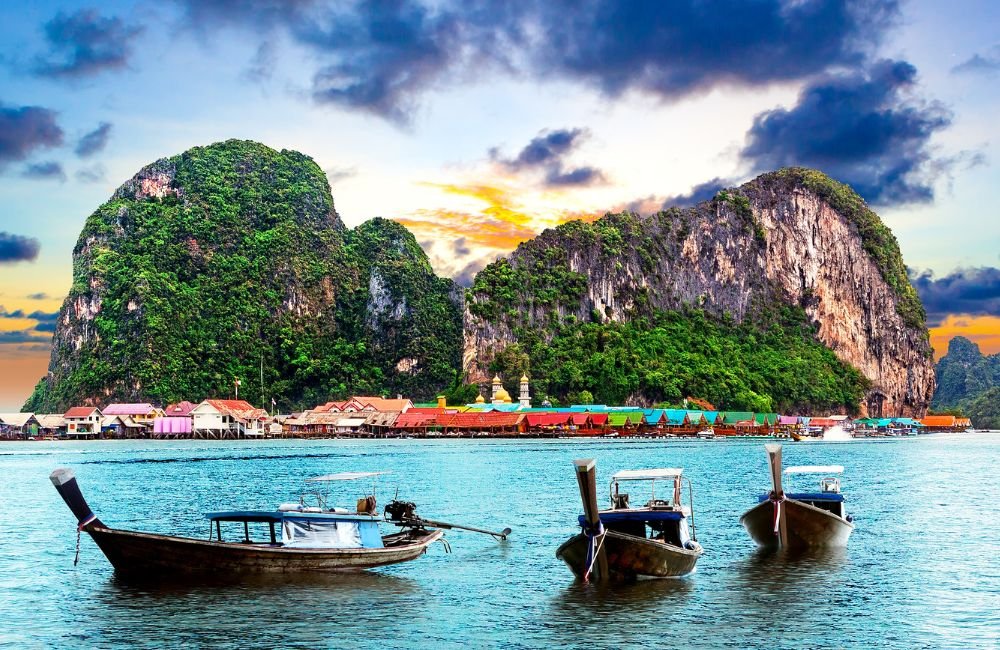
Railay Beach in Krabi showcases the tropical landscapes, limestone cliffs and beautiful coastline that make Thailand a popular travel destination.
Best Places to Visit in Thailand: 10 Top Destinations
Thailand offers an extraordinary variety of travel experiences, from ancient temples and bustling markets to tropical islands, forested mountains and national parks. Whether you are planning your first holiday in Southeast Asia or returning to explore somewhere different, choosing the right destinations can make a significant difference to your trip.
The best places to visit in Thailand depend on what you enjoy. Bangkok is ideal for temples, street food and city life, while Chiang Mai offers northern Thai culture and mountain scenery. Phuket, Krabi and Koh Lanta attract beach lovers, while destinations such as Sukhothai and Ayutthaya reveal the country’s fascinating history.
Thailand is also larger and more geographically varied than many first-time visitors expect. Travelling between northern cities and southern islands takes planning, and weather conditions can differ considerably between regions.
This guide explores ten rewarding destinations across Thailand, what makes each one special and how to combine them into a memorable holiday.
1. Bangkok: Temples, Markets and City Life
Bangkok is often the first stop on a Thailand itinerary, and it deserves more than a brief airport connection.
Thailand’s capital combines historic Buddhist temples, royal architecture, modern shopping districts and neighbourhoods filled with restaurants and markets.
The Chao Phraya River remains central to the city’s character. Travelling along the waterfront reveals a different side of Bangkok from its busy roads and commercial areas.
Best things to do in Bangkok
Visit the Grand Palace and Wat Phra Kaew
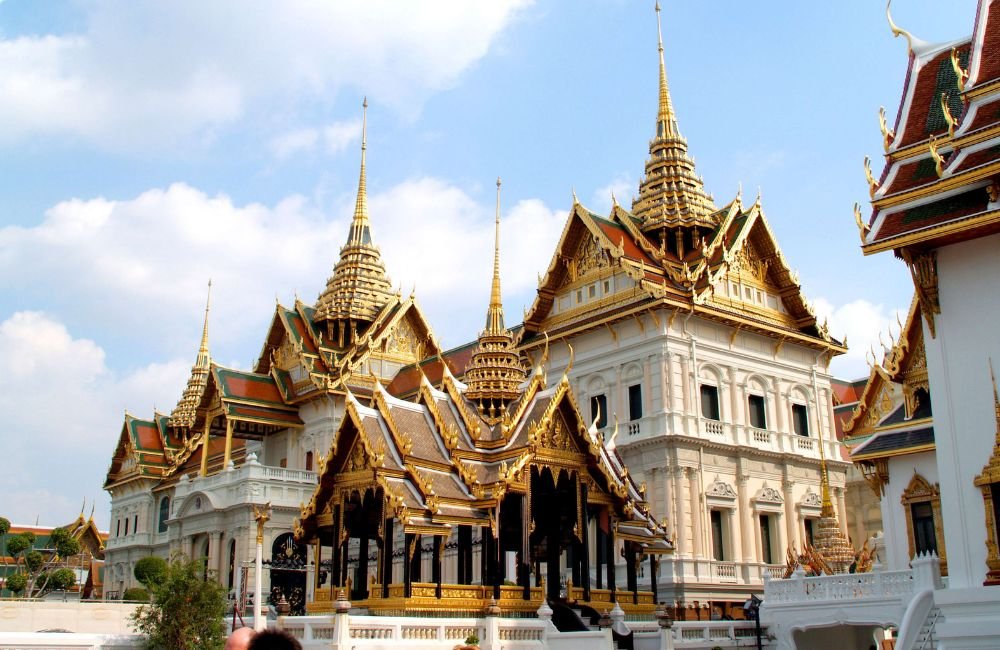
The magnificent architecture of Bangkok’s Grand Palace complex, home to Wat Phra Kaew, one of Thailand’s most sacred Buddhist temples.
The Grand Palace is one of Bangkok’s most important historic landmarks. Within the complex, Wat Phra Kaew houses the revered Emerald Buddha.
Visitors should dress respectfully and check official admission arrangements, as access to parts of the complex may be affected by royal or ceremonial events.
See the Reclining Buddha at Wat Pho
Wat Pho is famous for its enormous reclining Buddha image and ornate temple buildings.
The temple is close to the Grand Palace, making it convenient to combine both attractions in one sightseeing day.
Explore Wat Arun
Across the Chao Phraya River, Wat Arun stands out for its distinctive central prang and decorative architectural details.
The temple is especially photogenic when viewed from the opposite riverbank in the late afternoon.
Discover Pak Khlong Talat Flower Market
Pak Khlong Talat is one of Bangkok’s established flower trading areas.
Located near the Chao Phraya River in the historic part of the city, the market is known for colourful orchids, roses, garlands and other flowers.
It offers an interesting glimpse into a working commercial market rather than a conventional tourist attraction.
Experience a floating market
Damnoen Saduak Floating Market is a popular excursion for visitors staying in Bangkok. However, it is actually located in Ratchaburi province, outside the capital.
The market is known for its canal-side trading atmosphere, food vendors and traditional boats.
Visit early if you want to experience its characteristic morning activity. Confirm transport arrangements and boat costs before committing to an excursion.
How long should you stay in Bangkok?
Allow two to four days for the main attractions, depending on your interests.
Bangkok also works well as a starting point for visiting central Thailand before travelling north or heading to the islands.
2. Ayutthaya: Explore Thailand’s Ancient Capital
For travellers interested in Thai history, Ayutthaya is one of the most rewarding places to visit.
The city served as the capital of the Ayutthaya Kingdom from the 14th century until its destruction in 1767.
Today, the UNESCO-listed Historic City of Ayutthaya preserves the remains of temples, monasteries and other structures that reflect the former kingdom’s political and cultural importance.
Walking among the brick ruins provides a striking contrast to Bangkok’s active temples and modern skyline.
What to see in Ayutthaya
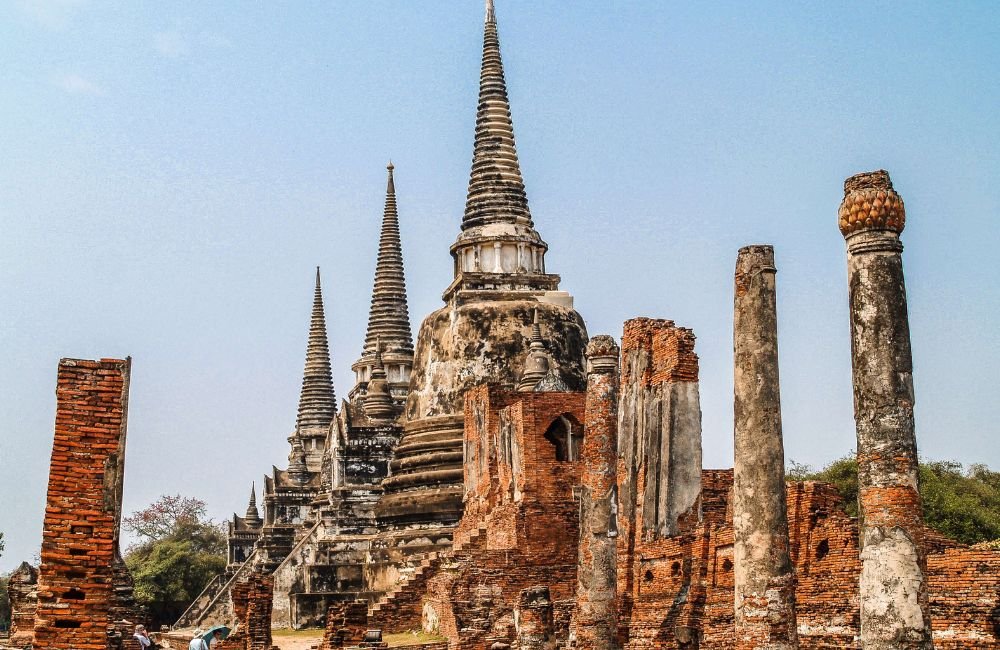
Ancient temple ruins and towering chedis at Wat Phra Si Sanphet, one of the most recognisable historic landmarks in Ayutthaya Historical Park, Thailand.
Three important sites deserve particular attention:
- Wat Mahathat: Known for its historic ruins and the Buddha head surrounded by tree roots.
- Wat Phra Si Sanphet: Recognisable for its three prominent chedis and its association with the former royal palace.
- Wat Chaiwatthanaram: An impressive riverside temple complex with a central prang and surrounding architectural remains.
Visitors interested in archaeology may also enjoy the Chao Sam Phraya National Museum, which contains significant objects associated with the ancient city.
Is Ayutthaya a day trip from Bangkok?
Yes. Ayutthaya can be visited on a day trip from Bangkok, with rail and road transport options available.
However, its historic attractions are spread across several locations. Staying overnight allows more time to explore without rushing between temples.
For the most comfortable sightseeing experience, start early, carry drinking water and wear appropriate clothing for active religious sites.
3. Khao Yai National Park: Wildlife, Forests and Waterfalls
Thailand is not just about beaches and cities. Khao Yai National Park offers a completely different experience, with forests, wildlife habitats and scenic walking routes.
The park forms part of the UNESCO-listed Dong Phayayen-Khao Yai Forest Complex.
Its landscapes include evergreen forests, grasslands, waterfalls and mountain viewpoints.
Khao Yai is particularly appealing to nature enthusiasts looking to experience Thailand’s protected landscapes.
What can you see in Khao Yai?
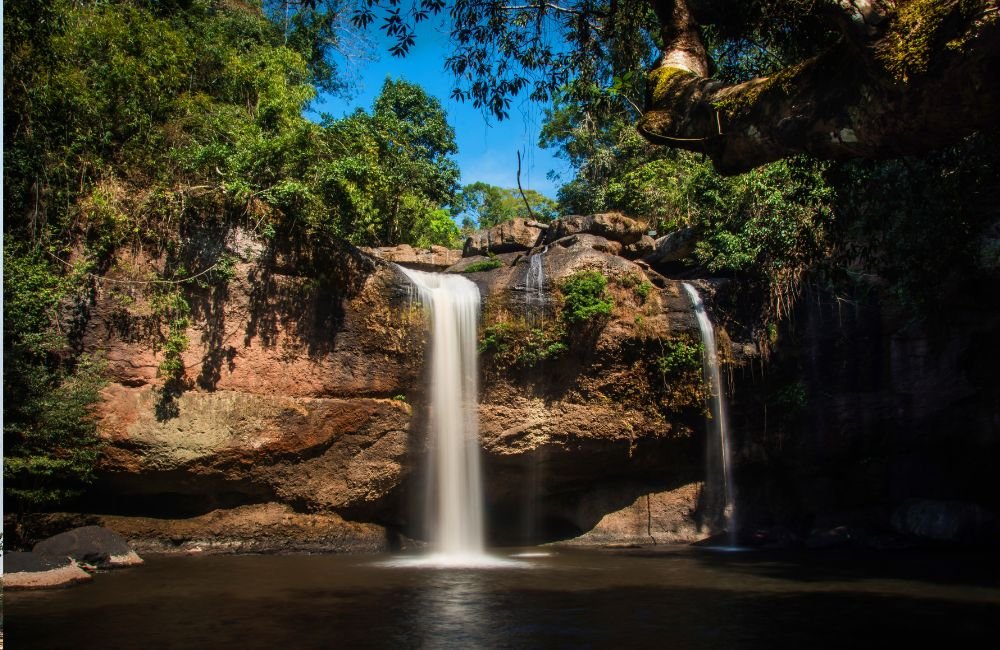
Haew Suwat Waterfall in Khao Yai National Park, Thailand, features cascading water, dramatic rock formations and lush tropical forest scenery.
Wildlife watching
Khao Yai supports a variety of wildlife, including wild elephants, gibbons, deer and numerous bird species.
Seeing wildlife is never guaranteed. Observations depend on conditions, location and animal behaviour.
Keep a safe distance from animals and follow instructions from park personnel.
Waterfalls and forest scenery
Haew Suwat and Haew Narok are among the park’s well-known waterfalls.
However, heavy rain, flooding and maintenance can cause temporary closures. Visitors should check the current status of each attraction rather than assuming all routes are accessible.
Nature trails
Designated walking routes provide opportunities to explore the park’s forests and natural environment.
Some trails require authorised guides or have specific access rules.
Do not enter closed paths or wander off marked routes.
Who should visit Khao Yai?
Khao Yai is a good choice for travellers who enjoy wildlife, nature photography and outdoor activities.
An overnight stay can provide a more relaxed experience than trying to fit several distant park attractions into one day.
Check official national park announcements before travelling, especially during periods of heavy rainfall.
4. Sukhothai: Ancient Temples and Peaceful Historical Landscapes
Sukhothai is another essential destination for travellers interested in Thailand’s cultural heritage.
The historic town was the centre of the Sukhothai Kingdom, which flourished during the 13th and 14th centuries.
Sukhothai Historical Park preserves the remains of temples, Buddha images, ceremonial structures and historic water features.
Compared with the bustle of Bangkok, exploring the archaeological landscape can feel more reflective and unhurried.
Highlights of Sukhothai Historical Park
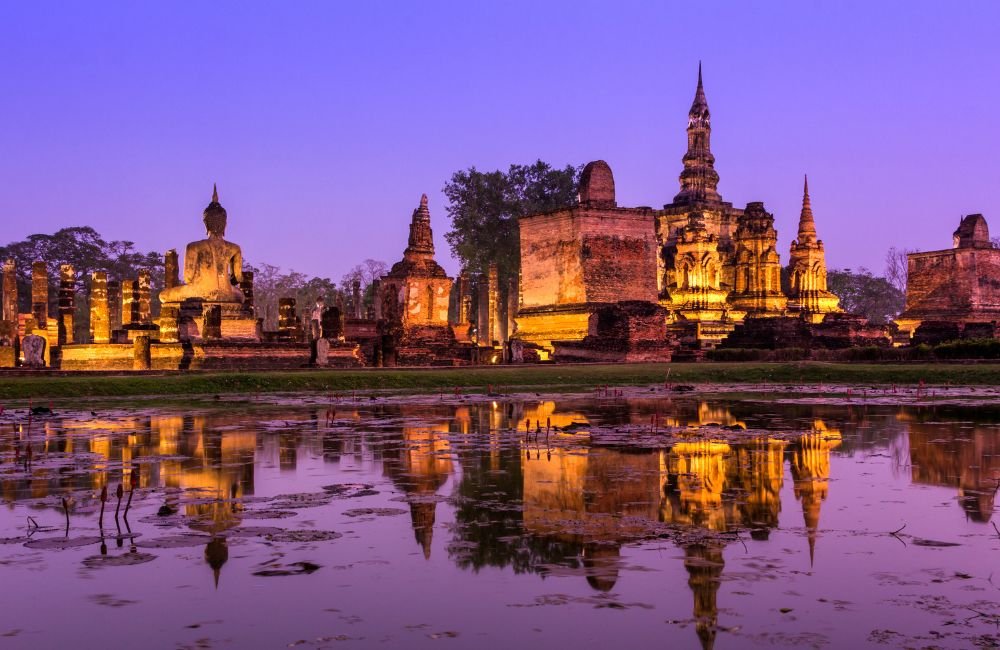
Ancient Buddhist temples and historic chedis glow beneath a purple evening sky at Sukhothai Historical Park, one of Thailand’s UNESCO World Heritage destinations.
Wat Mahathat
This major temple complex forms one of the central features of the historic park.
Its surviving architecture and Buddha images illustrate the artistic traditions associated with the Sukhothai period.
Wat Si Chum
Wat Si Chum is particularly famous for its large seated Buddha image enclosed within a monumental structure.
The setting makes it one of Sukhothai’s most memorable historic sites.
Wat Sa Si
Set beside water and surrounded by landscaped grounds, Wat Sa Si offers a scenic example of the area’s religious architecture.
Explore Si Satchanalai
Travellers with additional time should consider Si Satchanalai Historical Park.
Together with Sukhothai and Kamphaeng Phet, it forms part of the UNESCO World Heritage property known as the Historic Town of Sukhothai and Associated Historic Towns.
These are separate archaeological areas, so allow suitable travel time between them.
Travel tip
Cycling can be an enjoyable way to explore sections of Sukhothai Historical Park where bicycles are permitted.
Carry drinking water, protect yourself from the sun and follow signs concerning restricted areas.
5. Chiang Mai: Northern Thai Culture and Mountain Scenery
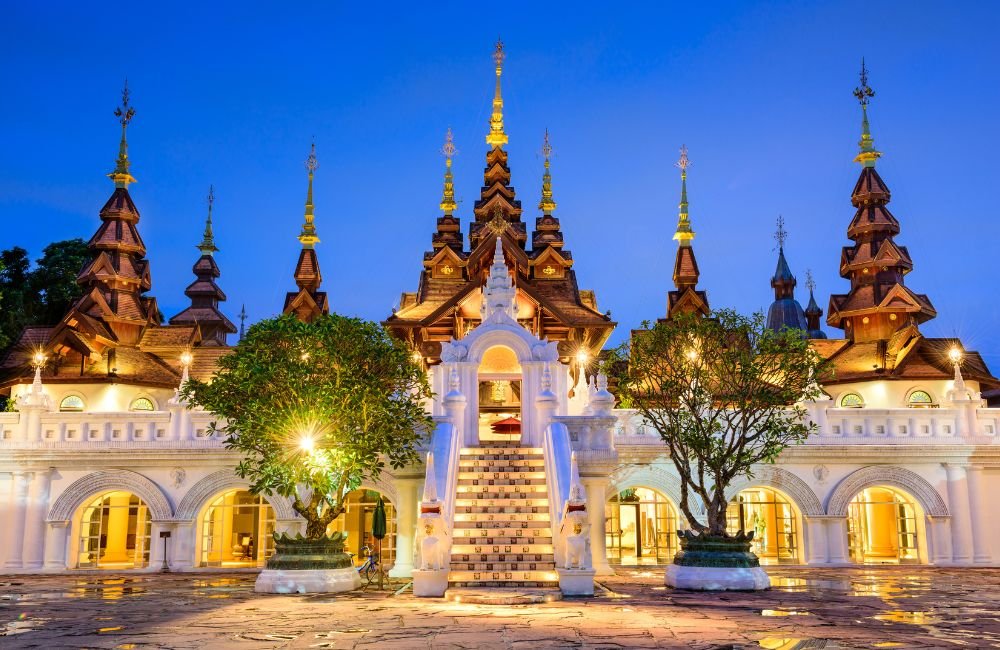
Beautiful Lanna-style architecture illuminated against the evening sky in Chiang Mai, reflecting the distinctive artistic and cultural traditions of northern Thailand.
Chiang Mai is one of the best destinations in Thailand for travellers who want to experience traditional architecture, local food, handicrafts and surrounding mountain landscapes.
Located in northern Thailand, the city developed as an important centre of the historic Lanna Kingdom.
Its old city contains numerous Buddhist temples, while its surrounding countryside provides access to forests, mountains and rural communities.
Best things to do in Chiang Mai
Visit Wat Phra That Doi Suthep
Situated on Doi Suthep mountain, this revered temple is an important religious landmark.
Its elevated setting provides views across the surrounding region when visibility is good.
Explore Wat Chedi Luang
Located within Chiang Mai’s old city, Wat Chedi Luang is known for its substantial historic chedi and religious significance.
It is a convenient stop when exploring the old city’s temples on foot.
Discover local markets and northern Thai food
Chiang Mai is an excellent place to try regional dishes such as khao soi, a northern Thai curry noodle dish.
Its markets and walking streets also offer opportunities to browse handicrafts, textiles and local products.
Visit Doi Inthanon National Park
Doi Inthanon is home to Thailand’s highest mountain and is known for its cooler highland environment, viewpoints and natural scenery.
The national park contains forests, waterfalls and designated walking routes.
Mountain weather can be cool or wet even when Chiang Mai city is warm. Check current access rules and trail conditions before visiting.
Experience northern Thailand’s local communities respectfully
The mountains of northern Thailand are home to diverse ethnic communities, including Karen and Lahu peoples.
Some communities offer locally organised tourism experiences involving walking, traditional crafts, agriculture or cultural learning.
Choose community-led activities that respect residents’ privacy and provide direct local benefits.
Avoid tours that treat villages as human exhibitions or pressure residents to pose for photographs.
Ask permission before taking pictures and respect places that are not open to visitors.
How many days do you need in Chiang Mai?
Three or four days provide a useful introduction to the old city, local cuisine and nearby countryside.
Additional time is worthwhile if you want to explore national parks or spend more time in northern Thailand.
6. Chiang Rai: Artistic Temples and Northern Landscapes
Chiang Rai is another fascinating destination in northern Thailand.
Although it shares some cultural connections with Chiang Mai, it has its own distinctive attractions, including contemporary religious art, mountain landscapes and historic communities.
What to see in Chiang Rai
Wat Rong Khun (White Temple)
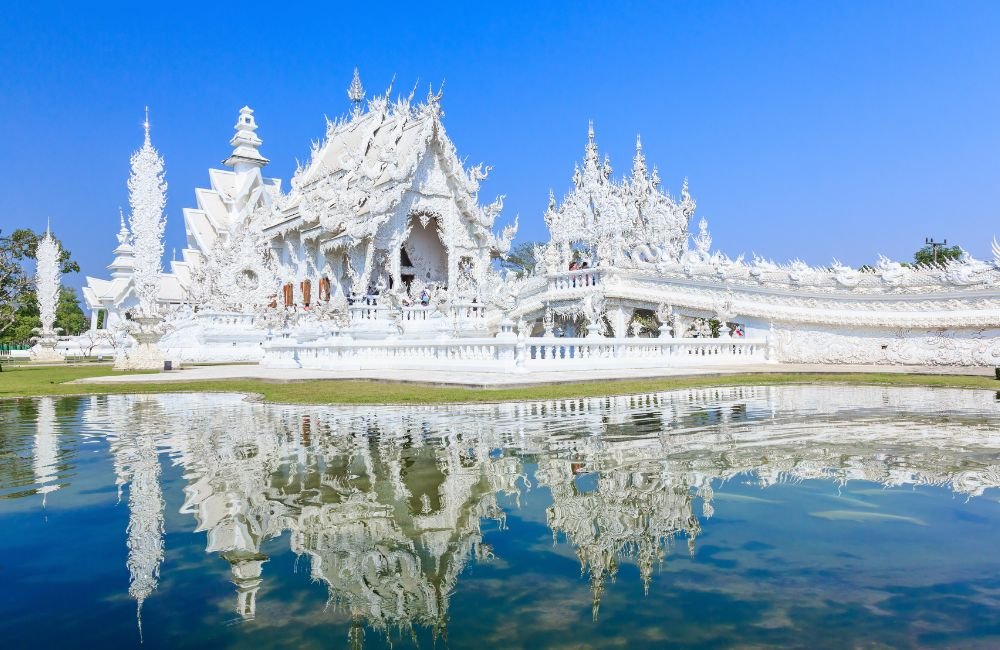
The magnificent Wat Rong Khun, also known as the White Temple, in Chiang Rai, Thailand, featuring intricate white architecture reflected in a peaceful pond.
Wat Rong Khun is one of the region’s most recognisable attractions.
Designed by Thai artist Chalermchai Kositpipat, the complex combines Buddhist symbolism with elaborate contemporary artistic details.
Its white exterior and intricate ornamentation make it visually distinctive.
Wat Rong Suea Ten (Blue Temple)
This striking temple is known for its blue decorative colour scheme and detailed religious artwork.
Baan Dam Museum
Often referred to as the Black House, Baan Dam is an artistic complex associated with Thai artist Thawan Duchanee.
Its architectural forms and collections offer a contrasting experience to Chiang Rai’s Buddhist temples.
Doi Tung and northern viewpoints
The broader province includes highland gardens, scenic viewpoints and mountain communities.
Visitors interested in landscape photography may particularly enjoy the changing scenery outside the city.
Travel tip
Chiang Rai is suitable for travellers who prefer a slower-paced northern itinerary.
Rather than rushing through its main attractions on a long day trip, consider staying overnight to explore the city and nearby countryside.
7. Phuket: Beaches, Culture and Island Experiences
Phuket is Thailand’s largest island and one of its most established beach holiday destinations.
Located on the Andaman Sea, it offers a combination of coastal resorts, historic architecture, restaurants, viewpoints and water-based activities.
However, different parts of Phuket offer very different experiences.
Choosing the right area matters more than simply booking any hotel advertised as being on the island.
Best things to do in Phuket
Explore Phuket’s beaches
Patong is associated with a lively atmosphere, entertainment and nightlife.
Kata and Karon are established beach areas with accommodation and restaurants.
Other coastal locations, including Kamala and Mai Khao, offer alternative settings depending on your preferred style of holiday.
Beach conditions vary throughout the year. Always follow lifeguard instructions and swimming flags, particularly during rough seas.
Walk through Phuket Old Town
Phuket Old Town provides an interesting cultural contrast to the beach resorts.
Its colourful historic shophouses, Sino-European architectural influences, cafés and local markets reflect the island’s trading history.
Visit coastal viewpoints
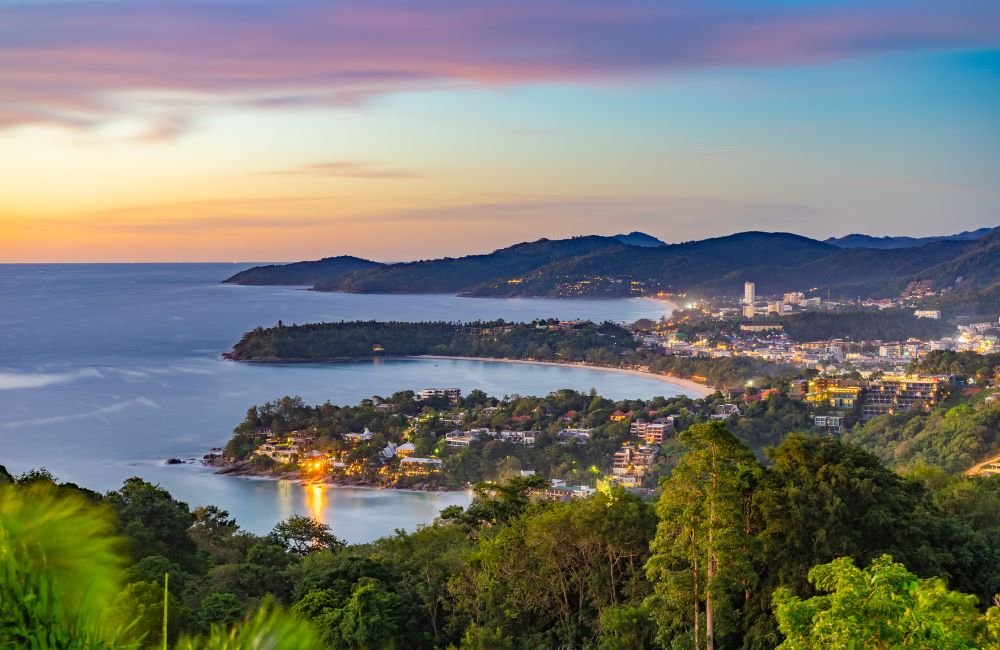
A beautiful twilight panorama from Karon Viewpoint, formerly known as Kata Viewpoint, overlooking Phuket’s scenic coastline, beaches and the Andaman Sea.
Phuket has several viewpoints overlooking the Andaman Sea.
Promthep Cape is a well-known location for coastal scenery, particularly around sunset.
Take a suitable boat excursion
Phuket can serve as a base for exploring nearby marine landscapes and islands.
However, boat routes depend on weather and sea conditions. Choose licensed operators and check marine park access before making plans.
How long should you stay in Phuket?
Three to five days are reasonable for combining beach relaxation with sightseeing.
Travellers planning diving, multiple boat trips or a slower resort holiday may prefer a longer stay.
8. Krabi: Limestone Cliffs and Beautiful Beaches
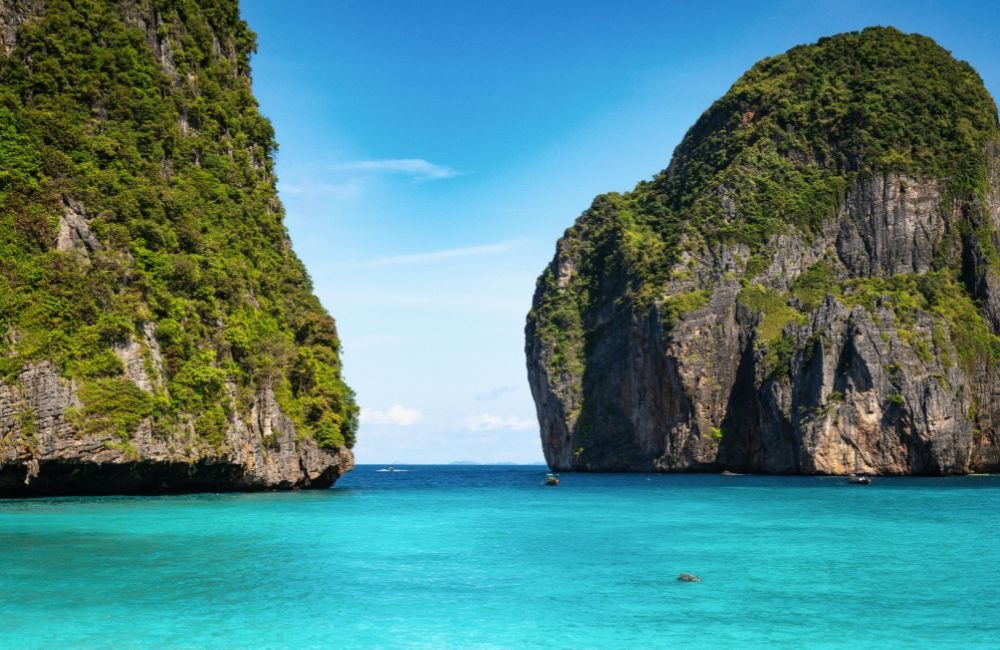
Dramatic limestone cliffs and crystal-clear turquoise waters showcase the spectacular coastal scenery of Krabi, one of Thailand’s most beautiful island-hopping destinations.
Krabi is one of Thailand’s most visually distinctive coastal destinations.
Its landscape features dramatic limestone cliffs, turquoise water, tropical vegetation and offshore islands.
While Phuket is known for its wide range of developed resort areas, Krabi particularly appeals to visitors who want to experience beaches alongside striking natural scenery.
Best things to do in Krabi
Visit Railay Beach
Railay is famous for its towering limestone cliffs and coastal scenery.
Although attached to the mainland, the peninsula’s geography means visitors commonly reach it by boat.
Railay is also associated with rock climbing, with activities available through specialist operators.
Explore Ao Nang
Ao Nang is a convenient coastal base for accommodation, restaurants and boat excursions.
It is often used as a departure point for trips to nearby beaches and islands.
Discover the Hong Islands
The Hong Islands are known for limestone scenery, sheltered waters and attractive beaches.
Some areas fall within protected national park territory, and access may be regulated.
Enjoy island excursions
Krabi offers opportunities for boat journeys towards islands such as Ko Poda and the Phi Phi Islands.
Not every island or beach is suitable for swimming throughout the year. Some sensitive marine areas may also have restrictions designed to protect their ecosystems.
Travel tip
For an island excursion, check marine forecasts, boat safety arrangements, national park requirements and cancellation policies.
Never assume a boat tour will operate simply because the weather looks pleasant from the beach.
9. Koh Lanta: Relaxed Beaches and Natural Beauty
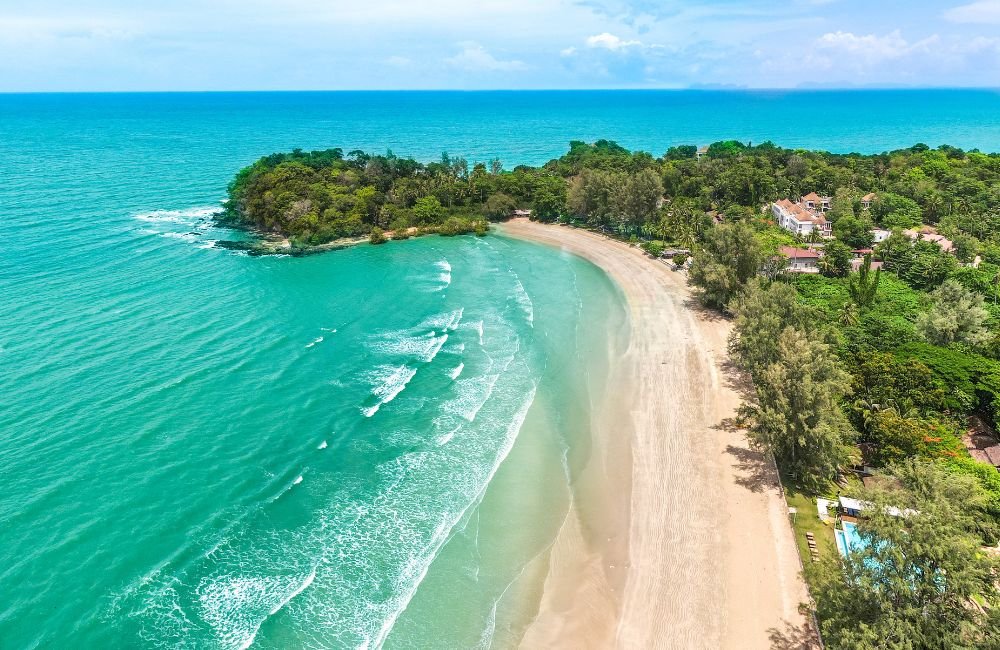
A beautiful aerial view of Kantiang Bay in Koh Lanta, Thailand, featuring turquoise water, a sweeping sandy beach and lush tropical greenery.
Koh Lanta is a strong choice for travellers who prefer a quieter island atmosphere.
Located in Krabi province on Thailand’s Andaman coast, the area includes Koh Lanta Yai and surrounding islands.
Koh Lanta Yai offers long beaches, forested hills, local communities and a range of accommodation.
Compared with some of Thailand’s busier resort centres, its appeal is often the opportunity to spend more time enjoying the surroundings at a relaxed pace.
Best things to do in Koh Lanta
Relax on the beaches
Koh Lanta has several stretches of sandy coastline.
Long Beach, also known as Phra Ae Beach, is one of its better-known beach areas.
Visit Mu Ko Lanta National Park
The national park protects coastal and island environments within the region.
At the southern end of Koh Lanta Yai, visitors can explore the park headquarters area and coastal scenery, subject to access arrangements.
Explore Lanta Old Town
The island’s historic east-coast settlement provides a different perspective from the west-coast beaches.
Traditional buildings, waterfront settings and local businesses offer insight into the island’s cultural character.
Consider snorkelling and boat trips
Nearby islands may offer opportunities for snorkelling and marine sightseeing when conditions are suitable.
Choose responsible operators that follow park regulations and avoid damaging coral or disturbing marine life.
Who should visit Koh Lanta?
Koh Lanta suits couples, families and independent travellers who prefer a relaxed island holiday.
It is particularly appealing if you want beach time without filling every day with organised activities.
10. Koh Samui: Tropical Beaches on the Gulf of Thailand
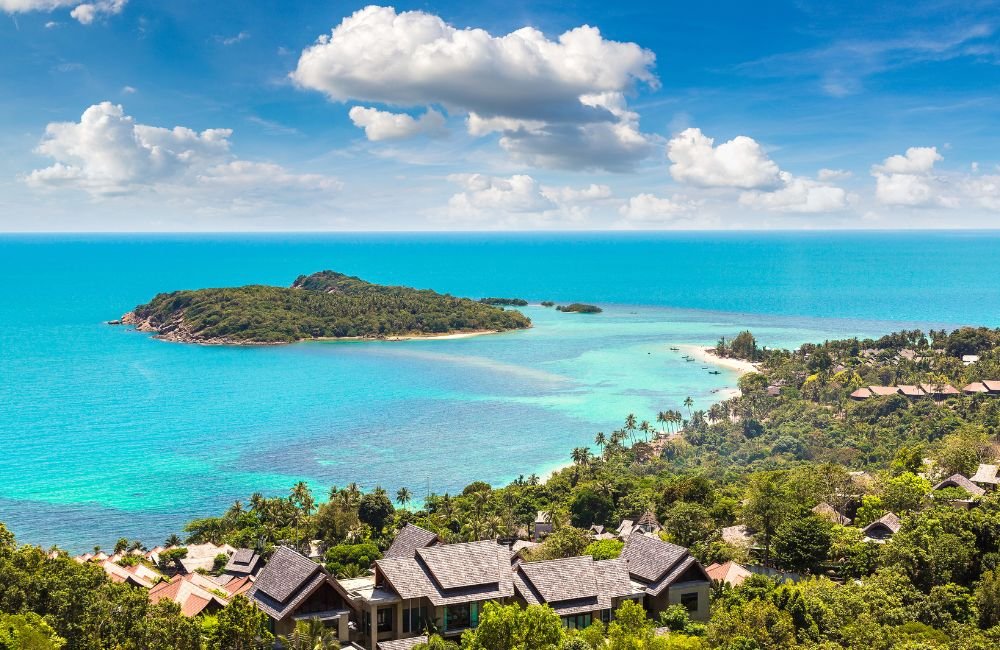
Beautiful coastal scenery in Koh Samui, Thailand, featuring turquoise Gulf of Thailand waters, lush tropical greenery and a peaceful offshore island.
Koh Samui is one of Thailand’s major island destinations on the Gulf of Thailand.
Unlike Phuket, Krabi and Koh Lanta, which face the Andaman Sea, Koh Samui sits on the country’s opposite coast.
This distinction matters because the two coasts experience different seasonal weather patterns.
Koh Samui offers beaches, resorts, tropical landscapes, temples and boat excursions.
Best things to do in Koh Samui
Explore Chaweng Beach
Chaweng is one of the island’s main tourism areas, known for its beach, accommodation, restaurants and nightlife.
Relax around Lamai
Lamai offers another established beach area, with accommodation and dining options.
Visit Wat Phra Yai
Commonly called the Big Buddha Temple, Wat Phra Yai is one of Koh Samui’s recognisable religious landmarks.
Visitors should dress respectfully and follow temple rules.
Explore Ang Thong National Marine Park
Ang Thong National Marine Park protects a group of islands in the Gulf of Thailand.
The park is known for its limestone formations, sea views and marine environments.
Excursions depend on park opening arrangements, sea conditions and authorised boat services.
Who should visit Koh Samui?
Koh Samui is well suited to visitors seeking a resort holiday with access to beaches, restaurants and sightseeing.
It can also be considered when weather conditions on the Andaman coast are less favourable, although the Gulf has its own rainy periods.
Which Part of Thailand Should You Visit?
Thailand’s destinations are spread across several distinct regions, so it helps to choose a location based on your main interests.
| Travel interest | Suggested destinations |
|---|---|
| First-time visitors | Bangkok, Chiang Mai and Krabi |
| History and ancient temples | Ayutthaya and Sukhothai |
| Beaches and resorts | Phuket, Koh Samui and Koh Lanta |
| Wildlife and national parks | Khao Yai and Doi Inthanon |
| Northern culture and mountain scenery | Chiang Mai and Chiang Rai |
| Island excursions and limestone landscapes | Krabi and Koh Lanta |
| Food, shopping and nightlife | Bangkok, Chiang Mai and Phuket |
| Relaxed coastal holidays | Koh Lanta and quieter areas of Koh Samui |
You do not need to visit all ten destinations to enjoy Thailand.
For most travellers, choosing two or three complementary locations creates a more satisfying holiday than spending too much time moving between airports, hotels and transport connections.
Best Time to Visit Thailand
There is no single perfect month for every part of Thailand.
The country experiences tropical weather influenced by seasonal monsoons, and conditions vary significantly between the mainland, Andaman coast and Gulf of Thailand.
Bangkok and central Thailand
November to February is generally a comfortable period for sightseeing, with relatively cooler and drier conditions.
March and April can be particularly hot.
The wetter part of the year brings heavier rainfall, which can affect outdoor attractions and travel.
Chiang Mai and northern Thailand
The cooler months, broadly November to February, are often favourable for exploring temples, markets and mountain landscapes.
However, northern Thailand can experience serious air pollution during the dry-season haze period, particularly from February through April.
Smoke and fine particulate pollution can affect visibility, outdoor activities and health.
Check air-quality reports when planning trips to Chiang Mai or Chiang Rai during this period.
Phuket, Krabi and Koh Lanta
The Andaman coast generally experiences more favourable beach and boating conditions from around November to April.
The southwest monsoon can bring rougher seas and heavier rainfall during other months.
Some marine national park attractions close seasonally for safety and environmental protection.
Koh Samui and the Gulf Coast
Koh Samui follows a different rainfall pattern from the Andaman coast.
The Gulf islands can provide attractive beach conditions during parts of the year when the western coast experiences heavier monsoon weather.
However, Koh Samui can receive substantial rainfall during the later months of the year, particularly around October to December.
Always check local forecasts rather than relying on a general statement about Thailand’s dry season.
How to Plan a Thailand Holiday
Once you have chosen your destinations, the next step is organising a route that avoids unnecessary travel.
A 7-day Thailand itinerary
For a first visit, consider either:
City and culture: Bangkok and Chiang Mai.
Spend several days in Bangkok exploring its temples and markets, then travel north for Chiang Mai’s old city and mountain attractions.
City and beaches: Bangkok and Krabi or Phuket.
Combine the capital’s historic landmarks with a few days relaxing on the southern coast.
Trying to include Bangkok, northern Thailand and several islands in only one week would leave limited time for sightseeing.
A 10-day Thailand itinerary
A ten-day holiday provides more flexibility.
One possible route is:
- Days 1–3: Bangkok, including an optional Ayutthaya excursion.
- Days 4–6: Chiang Mai.
- Days 7–10: Krabi or Phuket.
This gives travellers a balance of cultural attractions, northern scenery and coastal relaxation.
Transport days should be treated as part of the itinerary rather than completely free sightseeing days.
A 14-day Thailand itinerary
Two weeks allow travellers to explore at a more relaxed pace.
For example:
- Bangkok and Ayutthaya: 3 days.
- Chiang Mai and nearby attractions: 4 days.
- Krabi: 4 days.
- Koh Lanta: 3 days.
Choose the beach destinations according to your travel dates and sea conditions.
These are illustrative itineraries rather than fixed schedules. Adjust them for flight connections, preferred activities and the needs of your travelling group.
Getting Around Thailand
Thailand has domestic flights, intercity trains, buses, ferries and local transport services.
The best choice depends on your route and how much time you have.
Domestic flights
Flights can be useful when travelling between Bangkok, northern Thailand and southern destinations.
Bangkok has two major airports, Suvarnabhumi and Don Mueang, so check carefully which one your flight uses.
Allow sufficient time for connections, especially if your itinerary involves changing airports.
Trains and buses
Thailand’s rail network provides an alternative for several mainland routes.
Intercity buses also connect many cities and provinces.
Confirm schedules and booking arrangements through official transport providers.
Boats and ferries
Island transfers depend on the destination.
Some islands have direct airport connections, while others require a combination of road and boat transport.
Ferries and smaller boat services may be delayed or suspended during rough weather.
Build flexibility into your itinerary when travelling between islands, particularly if you need to catch an international flight afterward.
Getting around Bangkok
Bangkok’s BTS Skytrain and MRT system can help travellers avoid some of the city’s road congestion.
River boats are useful for reaching certain waterfront attractions.
Taxis and other road-based transport remain available, but journey times can vary significantly with traffic.
Essential Thailand Travel Tips
Check your visa requirements
Thailand’s entry requirements depend on nationality, passport type, intended activities and length of stay.
The country operates visa-exemption arrangements for eligible visitors, while others must obtain a visa.
Under changes effective from September 2026, many eligible foreign tourists may enter without a visa for stays of up to 30 days, subject to applicable conditions.
However, immigration rules can change. Always confirm the requirements for your passport with an official Thai embassy or immigration authority before departure.
Complete the Thailand Digital Arrival Card
Most foreign visitors entering Thailand must complete the Thailand Digital Arrival Card (TDAC) online within the three days before arrival.
The official registration is free.
The TDAC is not a visa and does not replace any visa that a traveller may need.
Use the official Thai Immigration Bureau portal rather than websites that charge unnecessary processing fees.
Respect temple customs
Thailand’s temples are important places of worship.
Visitors should:
- Wear clothing that covers shoulders and knees where required.
- Remove shoes before entering designated religious spaces.
- Follow photography rules.
- Avoid touching sacred objects or climbing on historic monuments.
- Respect worshippers and religious ceremonies.
Take weather and outdoor safety seriously
Thailand’s tropical climate can bring intense heat, thunderstorms and sudden heavy rainfall.
When visiting waterfalls, forests or islands, follow local warnings and national park instructions.
Never enter the sea when red warning flags indicate dangerous swimming conditions.
For trekking, use designated routes and qualified guides where required.
Choose responsible wildlife experiences
Thailand offers opportunities to observe wildlife in national parks and other protected areas.
Choose experiences that prioritise animal welfare and conservation.
Avoid attractions involving animal performances, riding elephants or close-contact activities that exploit wildlife.
Keep useful emergency numbers
Thailand’s Tourist Police hotline is 1155.
For medical emergencies, the national emergency medical number is 1669.
Save important contacts before travelling and make sure you have access to your accommodation details and travel documents.
Frequently Asked Questions About Thailand Tourist Destinations
What are the best places to visit in Thailand for first-time travellers?
Bangkok, Chiang Mai and Krabi make a good combination for first-time visitors.
Together, they offer temples, food, northern Thai culture, mountain scenery and beaches.
Travellers who prefer resort facilities may choose Phuket instead of Krabi.
Which part of Thailand has the best beaches?
Phuket, Krabi, Koh Lanta and Koh Samui all offer attractive beaches, but the experience differs.
Phuket has a wide range of developed resort areas, Krabi is known for its limestone scenery, Koh Lanta appeals to travellers seeking a slower pace, and Koh Samui offers a well-established Gulf coast holiday experience.
The most suitable choice depends on the season and preferred atmosphere.
Is northern Thailand worth visiting?
Yes. Chiang Mai, Chiang Rai and Sukhothai offer important cultural and historical attractions alongside mountain landscapes and local food.
Northern Thailand is particularly suitable for travellers interested in temples, architecture, handicrafts and nature.
However, seasonal air pollution should be considered when selecting travel dates.
How many days do you need to visit Thailand?
A week is enough for a combination of two destinations.
Ten to fourteen days provide greater flexibility for experiencing different regions without rushing.
For a longer trip involving several islands, national parks and northern towns, additional time is worthwhile.
Is Thailand suitable for family holidays?
Thailand offers a wide variety of family-friendly travel experiences, including beaches, gardens, museums, cultural attractions and nature activities.
Bangkok, Chiang Mai, Phuket, Krabi and Koh Samui all provide different possibilities.
Families should consider journey lengths, heat, swimming conditions and the ages of their children when planning excursions.
Can you travel around Thailand without renting a car?
Yes. Domestic flights, trains, buses, public transport and boat services connect many major destinations.
However, some national parks and rural attractions are less convenient without private transport or organised transfers.
Check local options before choosing accommodation away from major transport routes.
Discover the Many Sides of Thailand
Thailand rewards travellers who look beyond a single beach or city.
Bangkok provides an energetic introduction to the country’s culture and modern life, while Ayutthaya and Sukhothai preserve important chapters of Thai history.
Chiang Mai and Chiang Rai reveal the distinctive character of northern Thailand, and Khao Yai introduces visitors to the country’s remarkable natural environments.
Further south, Phuket, Krabi, Koh Lanta and Koh Samui each offer their own interpretation of a tropical island holiday.
Rather than trying to see everything at once, choose destinations that match your interests and the season. With a little planning, Thailand offers the opportunity to experience several very different landscapes and cultures within one memorable journey.
