

Railay Beach in Krabi is among Thailand’s memorable coastal attractions, known for its towering limestone cliffs and tropical scenery.
Thailand Tourist Attractions: 9 Must-See Places and Travel Tips
Thailand is a country where centuries-old temples stand beside modern cities, tropical islands rise from turquoise seas, and colourful markets bring local traditions to life. From Bangkok’s royal landmarks to the rugged limestone cliffs of Krabi, the country offers experiences that appeal to almost every type of traveller.
Some of the most memorable Thailand tourist attractions include the Grand Palace in Bangkok, the historic ruins of Ayutthaya, Chiang Mai’s lively Night Bazaar and the extraordinary marine landscapes of the Similan Islands.
However, choosing where to go requires more than collecting a list of famous landmarks. Thailand stretches across several distinct regions, and attractions can be separated by long journeys. Seasonal weather, transport arrangements and local regulations can also influence your plans.
This guide explores nine remarkable places to see in Thailand, explains what makes them special and provides practical advice to help you build a realistic itinerary.
1. The Grand Palace, Bangkok: Discover Thailand’s Royal Heritage
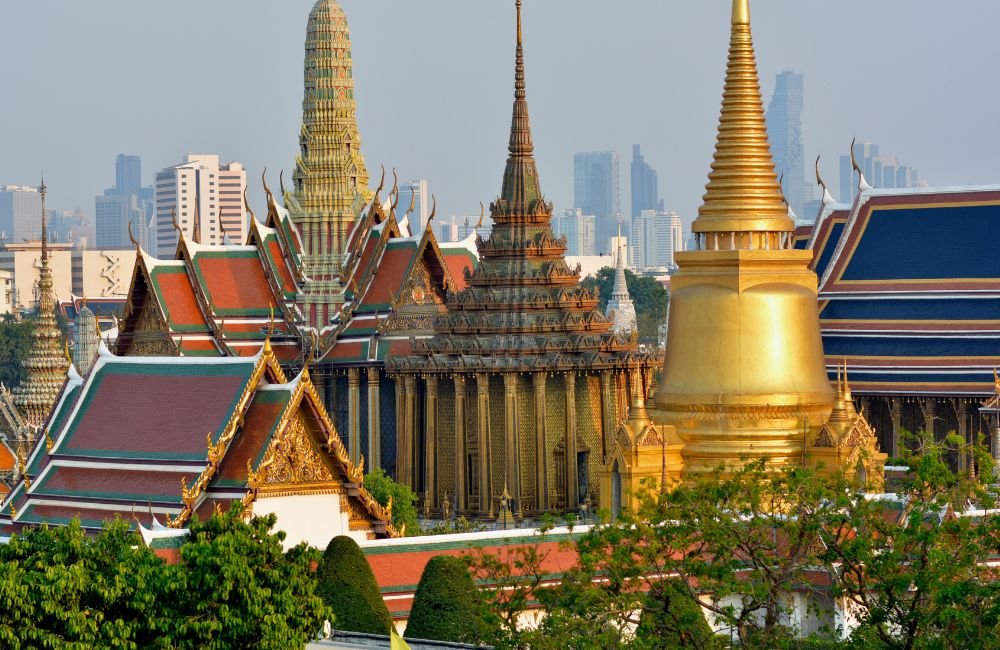
The Grand Palace in Bangkok is one of Thailand’s most celebrated cultural landmarks, renowned for its magnificent royal architecture and the sacred Temple of the Emerald Buddha.
The Grand Palace is one of Bangkok’s most important historical and cultural landmarks. Established in 1782 during the reign of King Rama I, the palace complex reflects the history of Thailand’s Chakri dynasty and the beginnings of Bangkok as the capital.
Its elaborate architecture, golden decorations, ceremonial buildings and peaceful courtyards create an impressive introduction to Thai royal traditions.
The complex also houses Wat Phra Kaew, the Temple of the Emerald Buddha, which contains one of Thailand’s most revered Buddhist images.
What to see at the Grand Palace
Several features deserve particular attention:
- Wat Phra Kaew: A magnificent royal temple complex containing the Emerald Buddha.
- Chakri Maha Prasat: An impressive structure combining European architectural influences with traditional Thai roof design.
- Phra Maha Monthien: A group of important royal buildings associated with ceremonial functions.
- Decorative murals and architectural details: Richly ornamented structures that reflect Thai craftsmanship and religious traditions.
The Grand Palace remains a working royal and ceremonial site, so access to certain sections may change.
Practical visiting tips
The Grand Palace stands in Bangkok’s historic Rattanakosin district, near the Chao Phraya River.
Visitors can use Bangkok’s public transport network and riverboat services to reach the surrounding area.
A strict dress code applies. Wear clothing that covers your shoulders and knees, and avoid shorts, sleeveless tops, transparent clothing and ripped trousers.
Visit earlier in the day if possible to avoid the strongest afternoon heat. Always consult the official Grand Palace website for admission information, visitor arrangements and temporary closures.
Best for: First-time visitors, cultural travellers, history enthusiasts and families interested in Thai heritage.
2. Wat Arun, Bangkok: Explore the Temple of Dawn
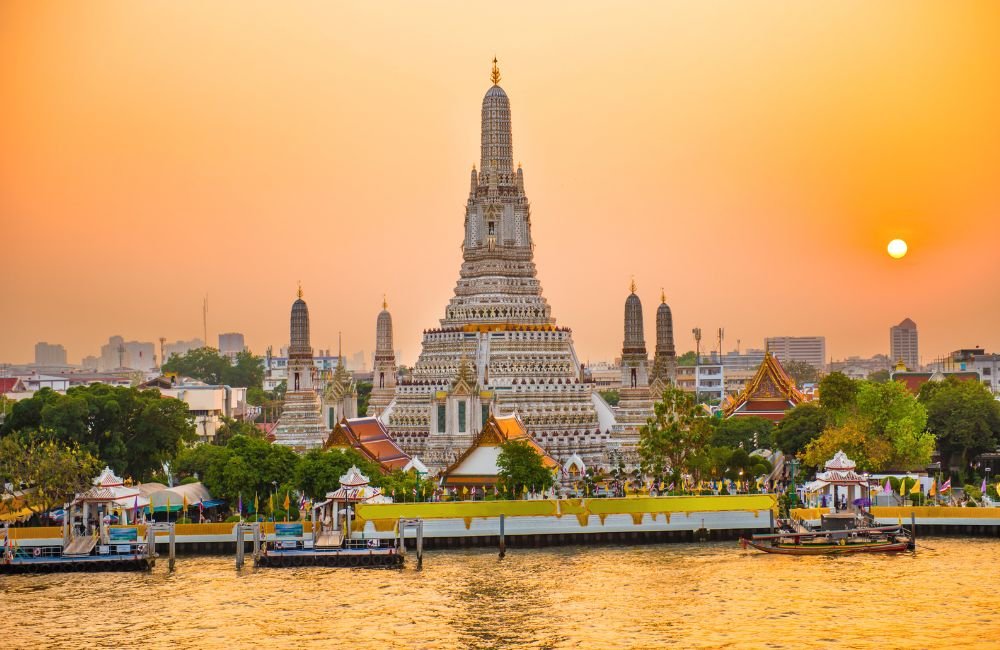
Wat Arun, Bangkok’s iconic Temple of Dawn, rises above the Chao Phraya River against a beautiful golden-orange sunset sky.
Across the Chao Phraya River from Bangkok’s historic centre stands Wat Arun, one of the capital’s most recognisable Buddhist temples.
Commonly called the Temple of Dawn, Wat Arun is especially famous for its towering central prang, decorated with intricate porcelain and ceramic details.
The temple’s riverside location gives it a distinctive appearance, particularly when sunlight illuminates its elaborate surfaces.
Unlike a conventional museum, Wat Arun remains a place of religious significance. Visitors should approach its buildings and sacred spaces respectfully.
What makes Wat Arun special?
The central prang dominates the temple complex, surrounded by smaller structures, decorative sculptures and traditional Thai architecture.
A closer look reveals detailed floral patterns and ceramic ornamentation.
The temple is also an excellent subject for photography from the opposite riverbank, especially during the late afternoon.
How to visit Wat Arun
Wat Arun is on the western bank of the Chao Phraya River, opposite the Wat Pho area.
Visitors commonly reach the temple using river transport or road connections.
You can combine Wat Arun with the Grand Palace and Wat Pho when exploring Bangkok’s historic centre. However, allow sufficient time for each attraction rather than attempting to rush through them.
Dress modestly and follow the temple’s rules concerning photography and access to religious areas.
Best for: Architecture lovers, photographers, couples and travellers exploring Bangkok’s historic temples.
3. Ayutthaya Historical Park: Walk Through an Ancient Capital
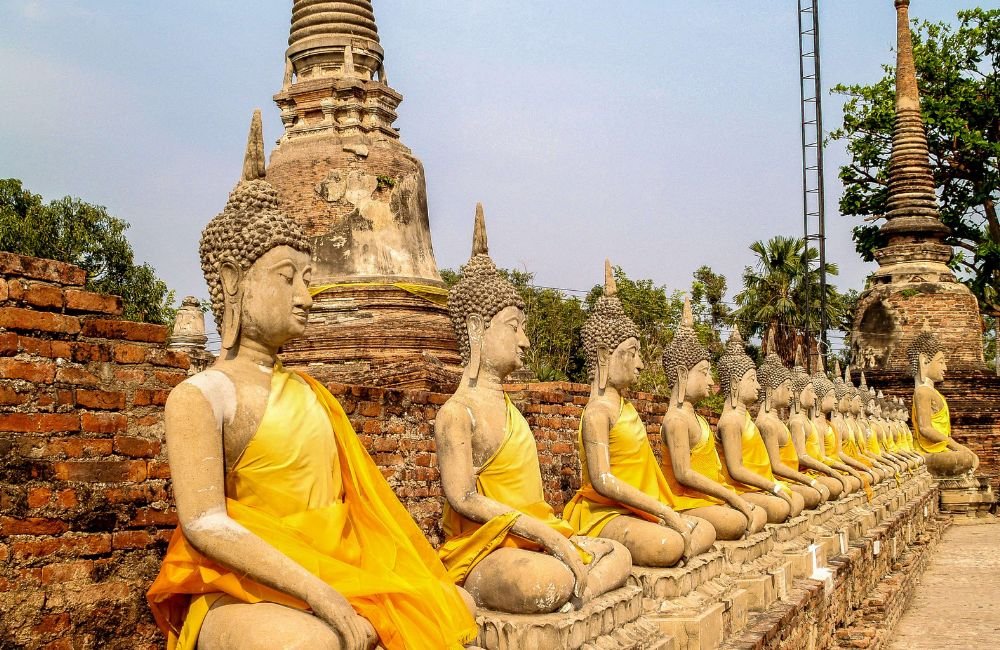
Ancient Buddha statues dressed in golden-yellow robes line the historic temple ruins of Ayutthaya, Thailand’s former royal capital and a UNESCO World Heritage Site.
Thailand’s cultural heritage extends well beyond Bangkok.
The Historic City of Ayutthaya, north of the capital, preserves the remains of one of Southeast Asia’s most significant former royal cities.
Founded around 1350, Ayutthaya became the second major capital of the Siamese Kingdom. It developed into an important centre of commerce, diplomacy and culture before its destruction in 1767.
Today, the city’s impressive temple ruins and archaeological landscapes form a UNESCO World Heritage Site.
Important places to explore in Ayutthaya
Wat Mahathat is particularly famous for the Buddha head surrounded by the roots of a tree. Visitors should follow local guidance about respectful behaviour and photography near sacred images.
Wat Phra Si Sanphet contains distinctive chedis associated with the former royal precinct.
Wat Ratchaburana is another important temple complex, noted for its historic architecture and surviving artistic heritage.
Exploring these sites offers insight into the country’s history before Bangkok became the capital.
Planning your visit
Ayutthaya is a practical excursion from Bangkok and can be reached through established road and rail connections.
A day trip allows you to see several major sites, although an overnight stay provides more time to explore without rushing.
The archaeological areas are spread across different locations, so arrange a suitable combination of walking, cycling or local transport.
Bring drinking water, wear comfortable footwear and protect yourself from the sun.
If travelling with children, choose a manageable number of temples rather than attempting to cover the entire historical area in one day.
Best for: History enthusiasts, educational family trips, cultural sightseeing and photography.
4. Chiang Mai Night Bazaar: Experience Northern Thailand After Dark
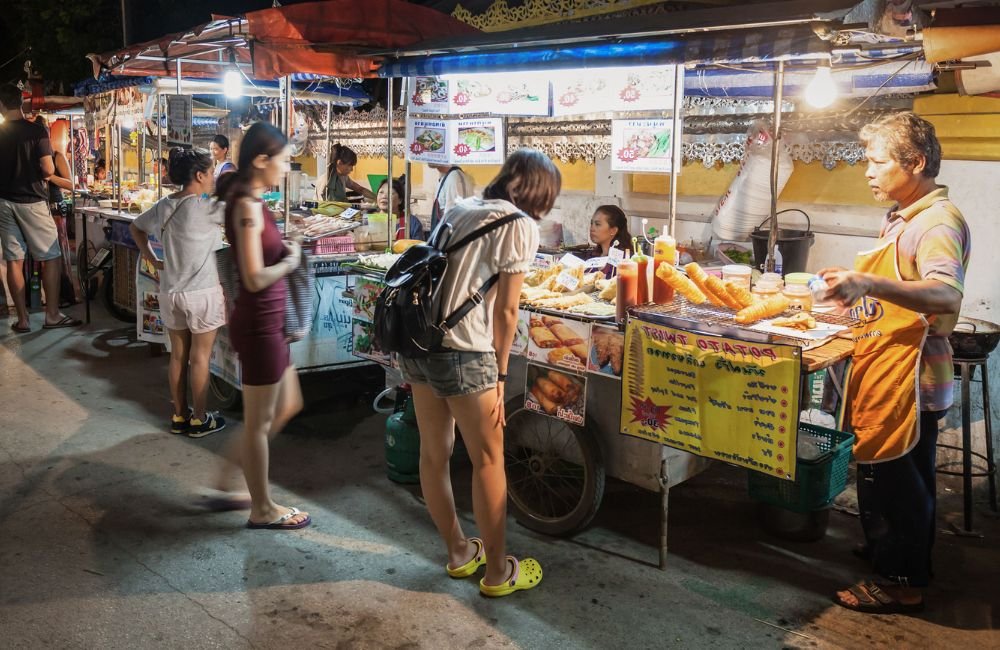
Visitors browse street food stalls at Chiang Mai Night Bazaar, a popular evening destination for local snacks, shopping and nightlife in northern Thailand.
Thailand’s markets offer a different kind of sightseeing experience.
Rather than concentrating on monuments or natural landscapes, they introduce visitors to local food, shopping traditions, crafts and everyday social life.
Among the country’s established shopping attractions is the Chiang Mai Night Bazaar, located around Chang Khlan Road.
The market area is associated with stalls and shops selling clothing, accessories, souvenirs, decorative items and handicrafts.
What can you find at Chiang Mai Night Bazaar?
Depending on the vendors operating during your visit, you may encounter:
- Thai-style clothing and accessories.
- Handcrafted decorative products.
- Souvenirs and gift items.
- Artwork and textiles.
- Local snacks and prepared food.
- Nearby restaurants and other evening shopping venues.
The wider area provides opportunities to enjoy the city’s atmosphere after sunset.
However, not every product sold at a tourist market is locally handmade. If authenticity matters, ask about where an item was produced.
Shopping tips for visitors
Bargaining may be acceptable at some independent stalls, but not every seller negotiates.
Approach the process politely and agree on a price before paying.
Compare similar goods when appropriate, and inspect purchases before leaving the stall.
Carry a convenient payment method, but keep valuables secure in crowded areas.
Also distinguish Chiang Mai Night Bazaar from the city’s Sunday Walking Street and other night markets. Their locations and operating arrangements are not identical.
Best for: Shoppers, food enthusiasts, couples and travellers interested in Chiang Mai’s evening atmosphere.
5. Wat Phra That Doi Suthep: See Chiang Mai from the Mountains
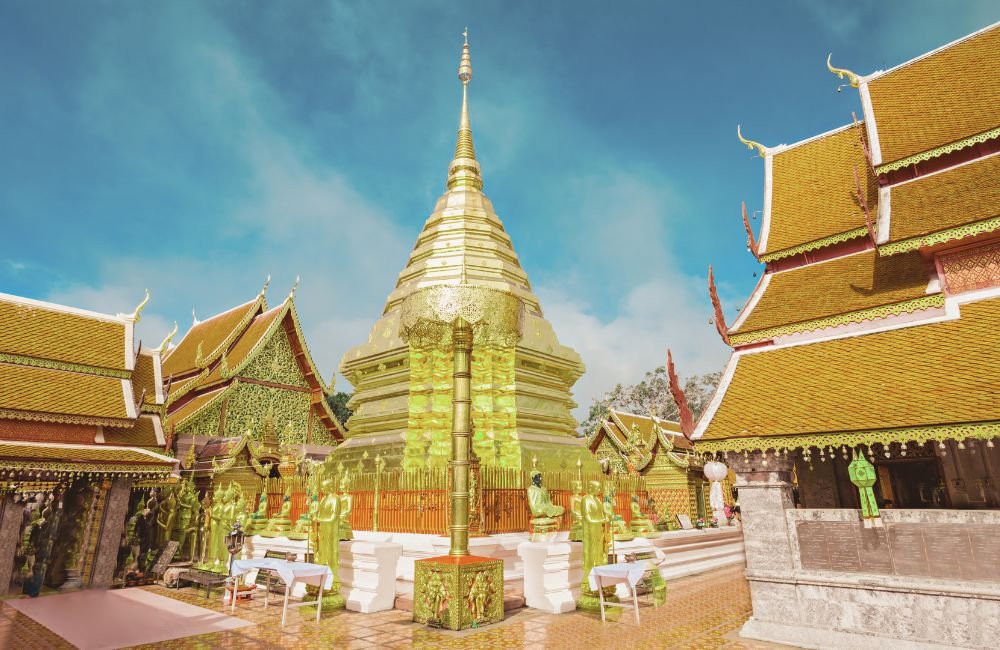
The magnificent golden chedi of Wat Phra That Doi Suthep, one of Chiang Mai’s most revered Buddhist temples, surrounded by beautiful traditional Lanna architecture.
High above Chiang Mai stands Wat Phra That Doi Suthep, one of northern Thailand’s most celebrated Buddhist temples.
The temple occupies a mountain setting and is known for its golden chedi, traditional Lanna architecture and sweeping views towards Chiang Mai.
Its religious significance makes it an important destination for Buddhist worshippers as well as tourists.
Highlights of Doi Suthep
One of the most memorable features is the staircase decorated with elaborate naga, or serpent, balustrades.
The stairs lead towards a richly ornamented temple complex with gilded architectural details.
Visitors who prefer not to climb the entire staircase can enquire about the lift or funicular-style access arrangements available at the temple.
The mountain setting adds another dimension to the experience, with cooler conditions possible at higher elevations.
How to get there
Wat Phra That Doi Suthep is accessible by road from Chiang Mai.
Visitors commonly arrange transport through local drivers, shared vehicles or organised excursions.
Check the current transport arrangements before departure, especially if you plan to return independently.
As this is an active religious site, dress respectfully and follow instructions about removing footwear in designated areas.
Allow time to explore the temple rather than treating it solely as a viewpoint.
Best for: Religious architecture, cultural experiences, scenic viewpoints and northern Thailand sightseeing.
6. Sukhothai Historical Park: Discover the Origins of Thai Art and Architecture
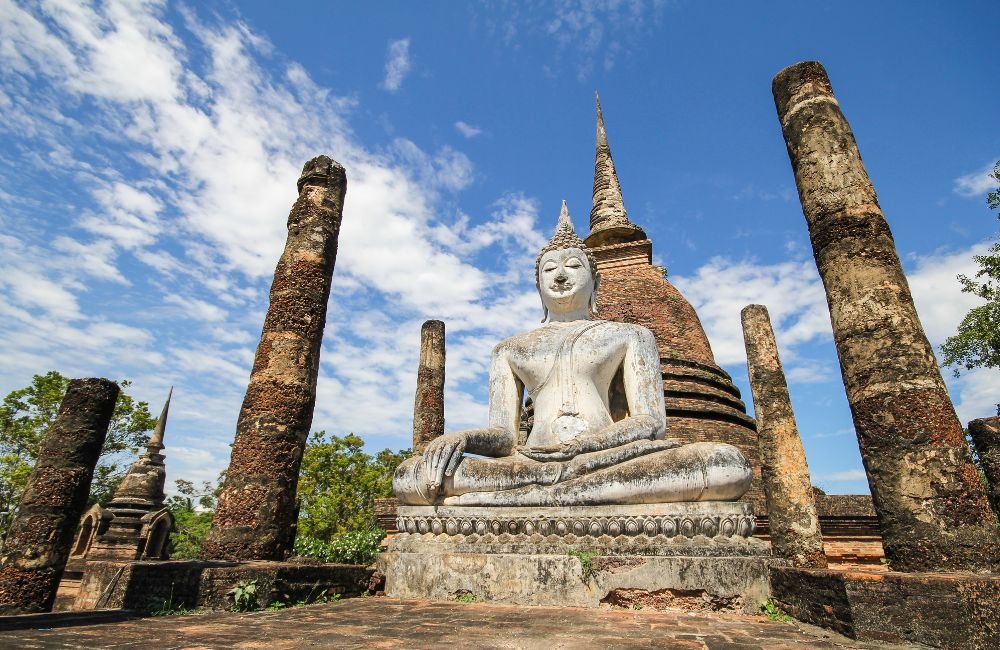
A magnificent seated Buddha statue stands among ancient temple ruins at Sukhothai Historical Park, a UNESCO World Heritage Site renowned for Thailand’s early Buddhist art and architecture.
For travellers interested in Thailand’s early history, Sukhothai Historical Park provides a remarkable archaeological experience.
Sukhothai was an important centre of the early Siamese kingdom, and its surviving monuments reflect developments in Buddhist art, sculpture and architecture.
Together with the historic towns of Si Satchanalai and Kamphaeng Phet, Sukhothai forms part of a UNESCO World Heritage property.
The park’s landscapes include temple ruins, ancient walls, ponds, Buddha images and distinctive chedis.
What to see in Sukhothai
Wat Mahathat is one of the principal temple complexes, with extensive ruins and important religious structures.
Wat Si Chum is particularly memorable for its monumental seated Buddha image within a partially enclosed structure.
Other historic monuments help visitors understand the artistic traditions that developed during the Sukhothai period.
The archaeological setting is generally more open and spacious than Bangkok’s busiest tourist attractions.
Exploring the historical park
Cycling is a popular way to explore suitable sections of Sukhothai Historical Park.
A bicycle allows visitors to move between monuments while enjoying the surrounding landscape at a relaxed pace.
Walking is also possible, although the historical areas cover substantial distances.
Start in the morning when temperatures are more comfortable and allow time to appreciate individual sites.
Sukhothai requires a separate journey from Bangkok or Chiang Mai, so consider whether it fits naturally into your route through central and northern Thailand.
Best for: History lovers, photographers, cycling enthusiasts and travellers seeking a slower cultural experience.
7. Railay Beach, Krabi: Limestone Cliffs and Tropical Scenery
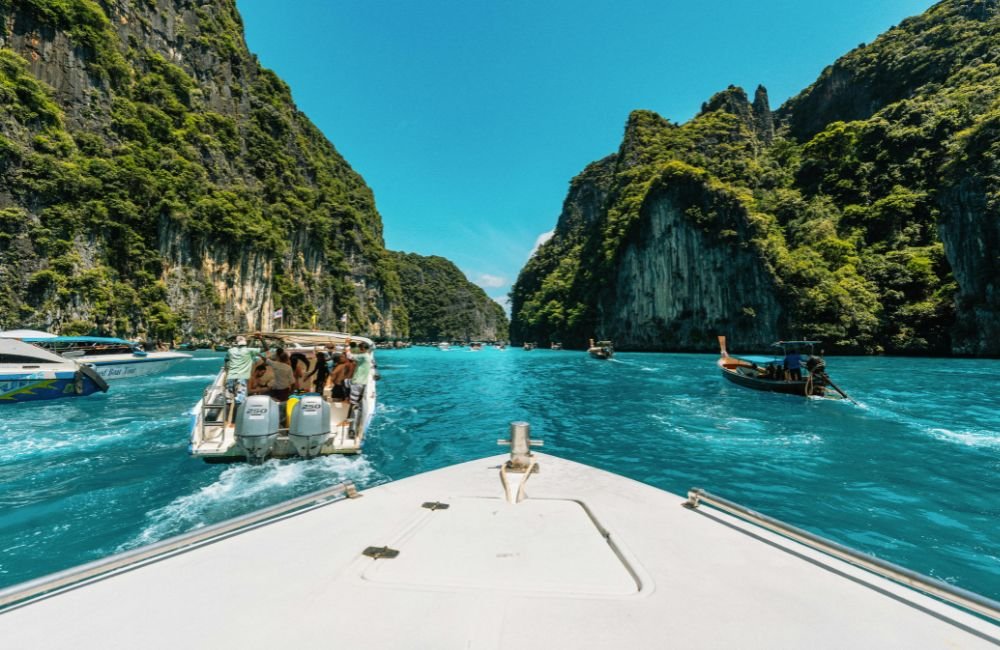
A scenic boat excursion through turquoise waters and dramatic limestone cliffs showcases the spectacular coastal landscapes of Krabi, Thailand.
Railay Beach is one of southern Thailand’s most visually distinctive coastal destinations.
Located in Krabi province on the Andaman Sea, Railay is surrounded by dramatic limestone cliffs and tropical vegetation.
Although it is part of the mainland, steep limestone formations separate the area from the surrounding road network.
As a result, visitors reach Railay by boat.
This unusual geography contributes to the area’s atmosphere and makes the boat journey part of the experience.
What to do at Railay Beach
Railay offers several appealing activities.
Relax on Railay West: The sandy beach is known for its limestone scenery and views across the Andaman Sea.
Visit Phra Nang Beach: Explore another picturesque stretch of coastline surrounded by towering rock formations.
Try rock climbing: Railay is internationally recognised for its limestone climbing routes. Beginners should book suitable instruction with a reputable operator.
Enjoy a boat excursion: Local boat operators provide connections and excursions, subject to weather and sea conditions.
Watch the sunset: Railay’s western-facing coastal views can be particularly attractive in the late afternoon.
How to reach Railay
Boat services operate from areas including Ao Nang and Ao Nam Mao, depending on the route and local arrangements.
Confirm your departure point, fare and return options before travelling.
Rough seas or adverse weather can affect boat services, especially during the southwest monsoon.
If you are planning to return in the evening, establish the operating arrangements in advance rather than assuming boats will remain available at all hours.
Is Railay suitable for families?
Families can enjoy the scenery, beaches and relaxed atmosphere.
However, some walking routes involve uneven ground, steep paths or slippery surfaces.
Parents should supervise children carefully near cliffs, boats and the water.
Travellers with limited mobility should also check boat boarding and accommodation access before booking.
Best for: Beach holidays, couples, photographers, outdoor enthusiasts and rock climbers.
8. Similan Islands: Explore Thailand’s Marine National Park
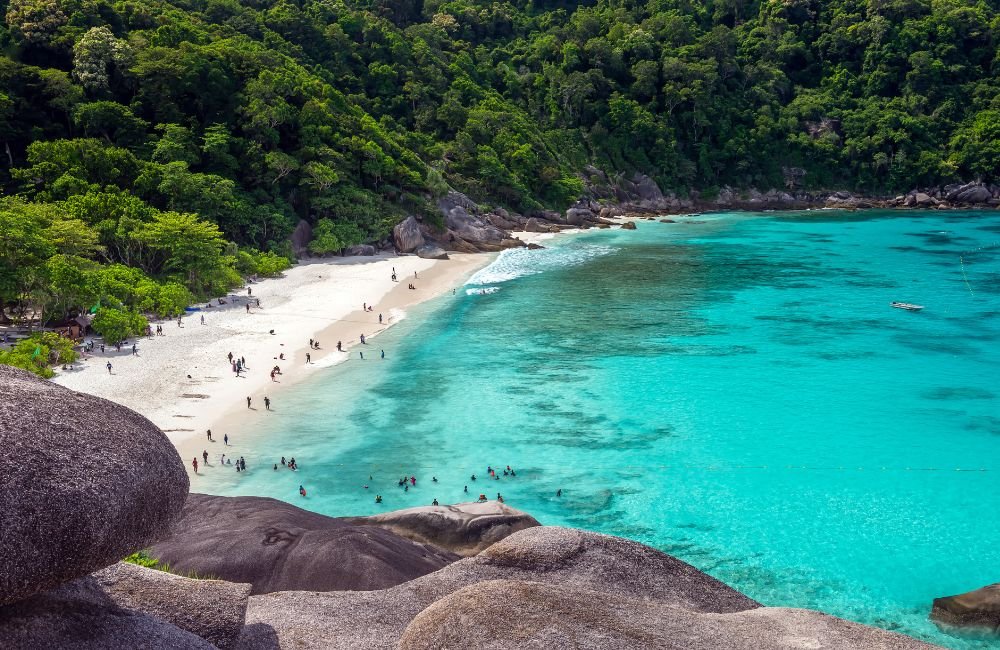
The Similan Islands in Thailand are renowned for their crystal-clear turquoise waters, white sandy beaches, impressive granite boulders and spectacular marine scenery.
The Similan Islands, off the coast of Phang Nga province, are among Thailand’s most remarkable marine destinations.
Protected within Mu Ko Similan National Park, the island group is known for clear waters, granite rock formations, white-sand beaches and diverse marine environments.
Snorkelling and scuba diving are among the main reasons travellers visit.
The name Similan is historically associated with nine islands, although the wider protected national park encompasses additional islands.
Not every island is accessible to tourists.
What makes the Similan Islands special?
The marine landscape combines rocky formations, coral habitats and open-water environments.
Popular activities include:
- Snorkelling in designated areas.
- Scuba diving through authorised operators.
- Visiting permitted island landing points.
- Enjoying coastal viewpoints and natural scenery.
- Observing marine life without disturbing it.
Underwater visibility and marine conditions vary with the weather, location and time of year.
Never assume that wildlife encounters are guaranteed.
When can you visit the Similan Islands?
Seasonal access is one of the most important planning considerations.
Mu Ko Similan National Park generally opens during the northeast monsoon tourism season, approximately from mid-October to mid-May.
The park closes during the southwest monsoon period to support visitor safety and environmental recovery.
The precise opening and closing dates can change, so confirm the current arrangements with Thailand’s Department of National Parks before booking.
The park also operates visitor-management measures, and electronic ticketing applies to designated marine national parks.
How to reach the islands
Visitors commonly travel by speedboat from the Phang Nga coast, with Thap Lamu serving as an important departure point.
Khao Lak is a convenient mainland base for arranging authorised excursions.
Check whether your tour includes national park admission, transport, equipment and any required permits or electronic reservations.
The crossing can be uncomfortable during rough conditions, so consider whether the journey is suitable for your health and travel preferences.
Protect the marine environment
Avoid touching coral, collecting marine organisms or feeding wildlife.
Follow the instructions of park rangers and licensed tour operators.
Some areas may close temporarily or remain restricted for conservation purposes.
Best for: Snorkelling, scuba diving, marine photography and nature-focused island excursions.
9. Khao Sok National Park: Discover Southern Thailand’s Rainforest
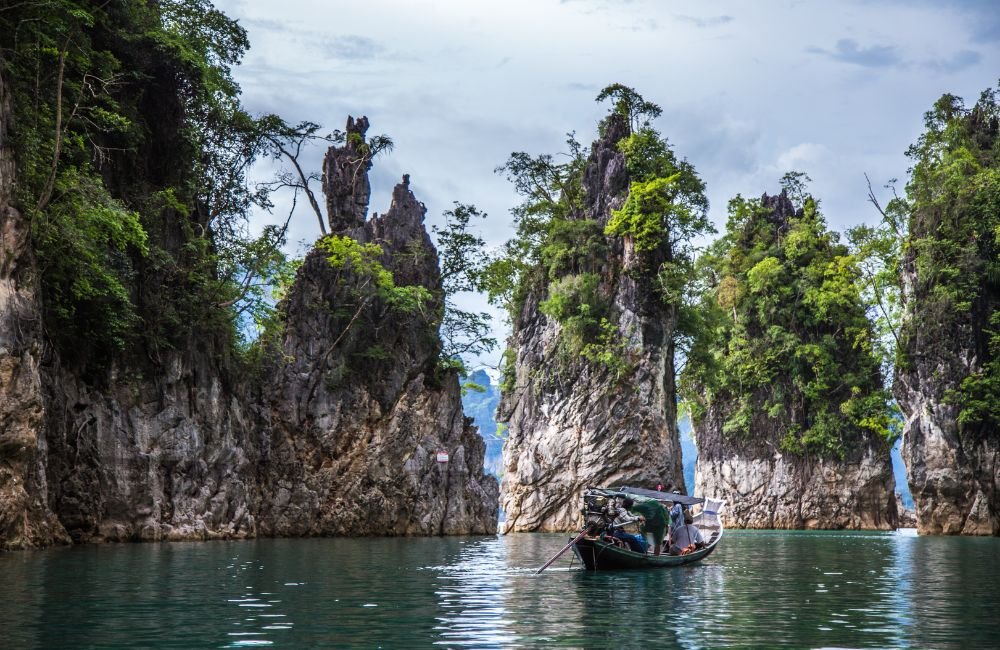
A traditional long-tail boat explores the spectacular limestone formations and emerald-green waters of Cheow Lan Lake in Khao Sok National Park, southern Thailand.
Thailand’s natural attractions are not limited to beaches and islands.
Khao Sok National Park, in Surat Thani province, protects an impressive landscape of tropical rainforest, limestone mountains, streams and diverse plant and animal life.
It offers a very different experience from the country’s coastal resorts.
Visitors can explore forest trails, learn about local ecosystems and enjoy the scenery of the wider Khao Sok region.
What can you do in Khao Sok?
Explore rainforest trails: Guided walks can introduce visitors to the area’s vegetation, wildlife habitats and natural history.
Discover limestone landscapes: The region’s towering rock formations create striking scenery.
Visit the Cheow Lan Lake area: The reservoir, also known as Ratchaprapha Lake, is associated with boat excursions and dramatic limestone scenery within the wider national park landscape.
Experience nature responsibly: Guided activities can provide opportunities to learn about the rainforest without disturbing wildlife or damaging sensitive environments.
Important planning considerations
Khao Sok is a rainforest environment, and rainfall can occur throughout the year.
Walking conditions may change quickly after heavy rain. Certain routes or activities may be restricted for safety reasons.
Book excursions through reputable providers and follow national park guidance.
If your itinerary includes Cheow Lan Lake, confirm the actual departure point. Lake excursions and activities near the main park visitor area do not necessarily start from the same location.
Avoid approaching or feeding wild animals, and do not enter restricted trails without appropriate permission or guidance.
Best for: Nature enthusiasts, guided rainforest adventures, photographers and travellers seeking experiences beyond Thailand’s beaches.
How to Choose the Right Thailand Attractions for Your Trip
Thailand’s attractions are spread across different regions, so your itinerary should reflect your available time and travel interests.
Trying to cover every major destination in one short holiday can involve unnecessary transfers.
A better approach is to choose a few complementary locations.
| Region | Attractions in this guide | Main experiences |
|---|---|---|
| Bangkok | Grand Palace, Wat Arun | Royal history, temples, riverside sightseeing |
| Central Thailand | Ayutthaya Historical Park | Archaeology, ancient capital, cultural heritage |
| Northern Thailand | Chiang Mai Night Bazaar, Doi Suthep | Markets, Lanna architecture, mountain scenery |
| Lower Northern Thailand | Sukhothai Historical Park | UNESCO heritage, historic temples, cycling |
| Krabi | Railay Beach | Beaches, limestone cliffs, rock climbing |
| Phang Nga | Similan Islands | Snorkelling, diving, marine national park |
| Surat Thani | Khao Sok National Park | Rainforest, nature walks, limestone landscapes |
For a short holiday
Choose one main region and explore it properly.
For example, a Bangkok-based holiday can combine the Grand Palace, Wat Arun and an excursion to Ayutthaya.
Alternatively, a Krabi-based holiday can focus on Railay and nearby coastal experiences.
For a longer journey
Combine Bangkok with northern Thailand or selected southern destinations.
You may wish to visit Chiang Mai and Sukhothai on a cultural journey, or combine Krabi with a separate stay in the Khao Lak or Khao Sok area.
Remember that rail, road, air and boat transfers all take time.
Consider travel days when comparing destinations, not just the number of attractions you hope to visit.
Best Time to Visit Thailand’s Tourist Attractions
Thailand has different regional weather patterns, which makes the best travel period dependent on your destination.
November to February: Comfortable conditions for many sightseeing trips
The cooler season is generally favourable for exploring Bangkok, Ayutthaya, Chiang Mai and Sukhothai.
It can also be an attractive period for Andaman Sea destinations, although weather conditions still vary.
Northern mountain areas may experience noticeably cooler temperatures, particularly in the morning and evening.
March to May: Hot weather and outdoor planning
Temperatures can be high, especially in inland cities and historic parks.
If visiting exposed archaeological sites, plan outdoor activities for cooler parts of the day and allow time for rest.
Northern Thailand can also experience seasonal haze and air pollution, so check air-quality information before travelling.
May to October: Rainy conditions in many regions
The southwest monsoon brings wetter conditions to much of Thailand, particularly the Andaman coast.
Heavy rain and rough seas can affect boat journeys and outdoor activities.
Some marine national parks, including the Similan Islands, close seasonally.
However, rainfall patterns vary between regions. The Gulf of Thailand islands follow a different seasonal pattern from the Andaman coast.
Check local forecasts rather than assuming the weather will be identical throughout the country.
Essential Travel Tips for Visiting Thailand
A little preparation can make sightseeing more comfortable and help you avoid common problems.
Check entry requirements before departure
Thailand’s visa requirements depend on your nationality, passport, travel purpose and intended length of stay.
Check the Royal Thai Embassy or Thailand’s official e-Visa website before booking.
Most non-Thai travellers entering Thailand must also complete the Thailand Digital Arrival Card (TDAC) online within the three days before arrival.
The TDAC is free and is not a visa. Certain travellers who remain in international transit without passing through immigration are exempt.
Use the official Thai Immigration Bureau website rather than an unofficial paid intermediary.
Dress appropriately at temples
Buddhist temples are places of worship, not merely sightseeing attractions.
Wear respectful clothing, follow posted dress codes and remove your shoes wherever required.
Do not climb on religious monuments, touch sacred objects without permission or pose disrespectfully beside Buddha images.
Use reliable transport
Thailand has domestic flights, rail services, intercity buses, local transport and boat connections.
The best option depends on the route and your budget.
Use established transport providers, confirm fares where necessary and allow additional time for connections.
For island excursions, prioritise licensed operators and weather-related safety advice over the cheapest available price.
Respect national park regulations
Protected areas may impose visitor limits, permit requirements, seasonal closures and restrictions on particular activities.
Do not assume a national park is open simply because nearby hotels or tour companies are accepting bookings.
Check the latest park announcements before travelling.
Carry suitable travel insurance
Consider a policy that covers emergency medical care and your planned activities.
If you intend to scuba dive, climb limestone cliffs or undertake other adventure activities, verify that your policy specifically covers them.
Keep your insurer’s emergency contact information accessible.
Frequently Asked Questions About Thailand Tourist Attractions
What are the most famous tourist attractions in Thailand?
The Grand Palace and Wat Phra Kaew in Bangkok, Wat Arun, Ayutthaya Historical Park, Railay Beach and the Similan Islands are among Thailand’s well-known attractions.
Other important experiences include northern Thailand’s historic temples, markets and national parks.
Which attractions in Thailand are best for first-time visitors?
Bangkok’s Grand Palace and Wat Arun provide an accessible introduction to Thai culture and architecture.
Ayutthaya is an appealing option for visitors interested in history, while Chiang Mai and Krabi offer contrasting cultural and coastal experiences.
Is Railay Beach accessible by road?
No. Railay is separated from the surrounding road network by steep limestone cliffs.
Visitors normally arrive by boat from nearby coastal departure points, including Ao Nang and Ao Nam Mao.
Can tourists visit the Similan Islands throughout the year?
No. Mu Ko Similan National Park closes seasonally during the southwest monsoon.
Access generally resumes around mid-October, subject to official announcements and weather conditions.
Always verify the current season before booking.
Is Chiang Mai Night Bazaar worth visiting?
Chiang Mai Night Bazaar is an enjoyable option for visitors interested in shopping, souvenirs, local food and evening activities.
Travellers seeking traditional northern Thai crafts should check the origins of individual products rather than assuming everything is locally made.
Are Thailand’s historical temples suitable for children?
Many temple complexes and historical parks can be educational family attractions.
However, some sites have steps, uneven surfaces, exposed areas and limited shade.
Choose a manageable itinerary, follow local rules and supervise younger children.
How many days do you need to explore Thailand?
A short holiday is usually better focused on one region.
A longer trip allows you to combine Bangkok with northern or southern Thailand.
The right duration depends on your interests, transport arrangements and how much time you want to spend at each destination.
Final Thoughts
Thailand rewards travellers who look beyond a single beach resort or crowded shopping district.
The Grand Palace reveals the country’s royal heritage, Ayutthaya and Sukhothai preserve important chapters of its history, and Chiang Mai offers a distinctive northern cultural experience.
Meanwhile, Railay Beach, the Similan Islands and Khao Sok National Park introduce visitors to the remarkable diversity of Thailand’s natural landscapes.
You do not need to visit every attraction on one journey. Choose the experiences that interest you most, plan your route carefully and allow enough time to appreciate each destination.
With thoughtful preparation, Thailand offers a memorable combination of history, culture, nature and adventure.
