
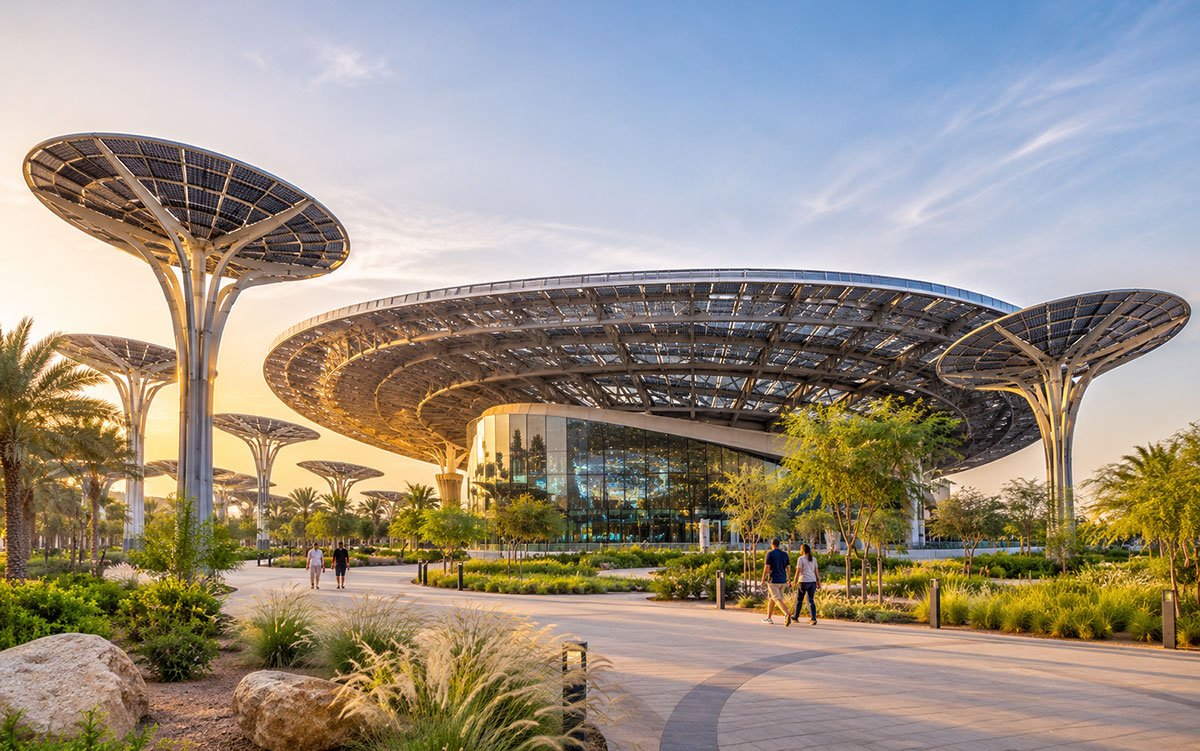
Terra at Expo City Dubai showcases sustainable architecture, solar-energy technology and environmentally conscious urban design.
Sustainable Developments in Dubai: 6 Green Projects Shaping the City
Dubai is famous for its futuristic skyscrapers, luxury hotels and ambitious construction projects. However, another side of the city is attracting growing attention: its commitment to sustainable urban development.
From solar-powered communities to environmentally conscious architecture, sustainable developments in Dubai demonstrate how the emirate is exploring new approaches to energy efficiency, water conservation, greener buildings and urban living.
Projects such as The Sustainable City, Al Barari and Expo City Dubai show different ways of incorporating environmental considerations into residential neighbourhoods and public spaces. Meanwhile, the Mohammed bin Rashid Al Maktoum Solar Park highlights the emirate’s investment in renewable energy.
For travelers, these initiatives offer opportunities to discover a different side of Dubai beyond conventional sightseeing.
This guide explores six noteworthy green developments and initiatives, explains their environmental features and identifies which locations visitors can experience.
Why Sustainable Development Matters in Dubai
Dubai’s rapid urban growth has created opportunities for economic development, tourism and innovation. It has also increased demand for electricity, water, transport and infrastructure.
The city’s desert climate makes sustainability particularly challenging.
High summer temperatures increase the need for air conditioning, while limited natural freshwater resources create a strong dependence on desalination and efficient water management.
Sustainable urban planning aims to address these challenges through better building design, renewable energy, water-saving technologies and improved public transport.
Important priorities include:
- Energy efficiency: Reducing electricity consumption through insulation, efficient cooling systems and building design.
- Renewable energy: Expanding solar electricity generation and supporting cleaner energy technologies.
- Water conservation: Using efficient irrigation, water-saving fixtures and recycled water where appropriate.
- Sustainable transport: Encouraging public transport, walking, cycling and electric mobility.
- Waste reduction: Improving recycling, reuse and responsible resource management.
- Urban greenery: Introducing suitable vegetation, shaded public spaces and landscapes designed for the local climate.
Dubai’s approach combines government policies with projects developed by private companies and public institutions.
However, a development’s green appearance does not automatically make it environmentally sustainable. Its energy consumption, water requirements, construction materials and long-term operations also matter.
1. The Sustainable City Dubai: A Model for Eco-Friendly Living
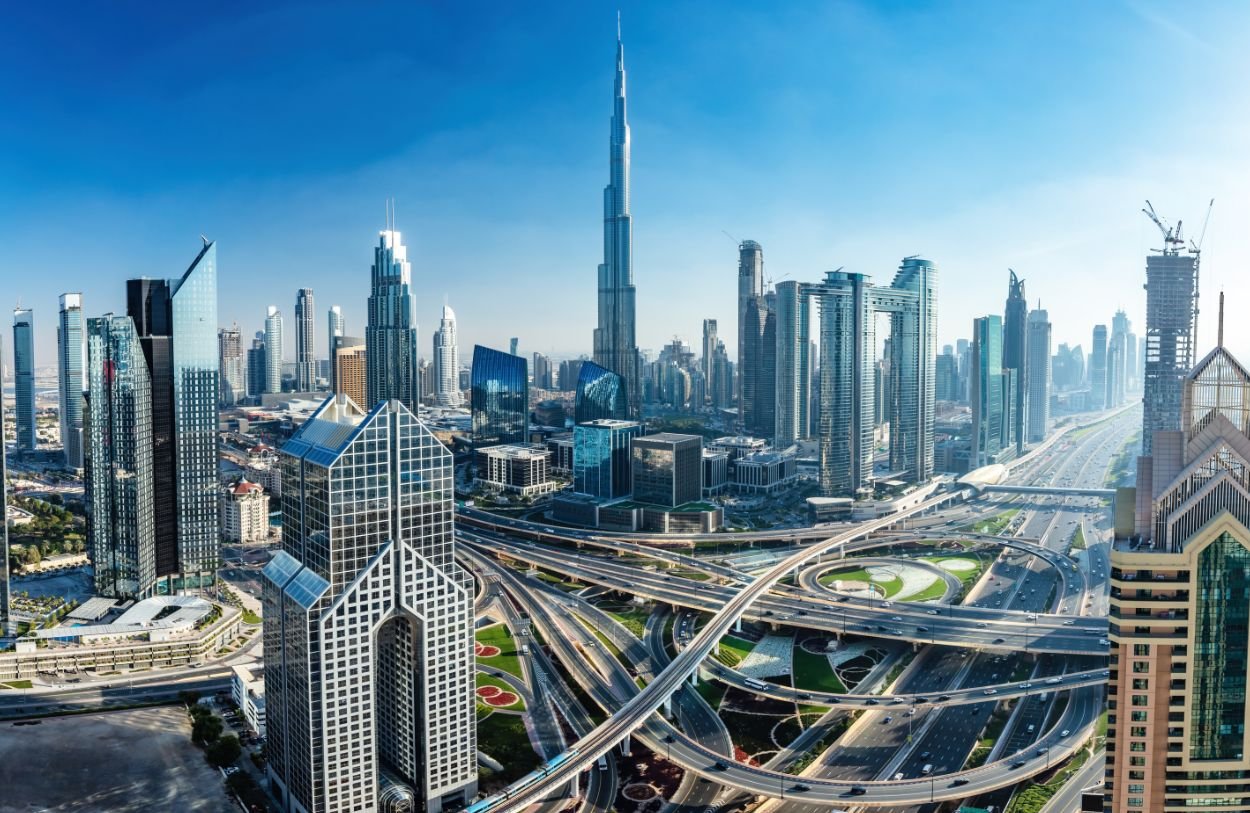
A spectacular panoramic view of Downtown Dubai, featuring the iconic Burj Khalifa, modern high-rise buildings and an extensive network of urban highways.
The Sustainable City in Dubailand is one of Dubai’s most recognisable residential projects built around environmentally conscious urban planning.
Developed as a functioning neighbourhood rather than a conceptual proposal, the community integrates residential properties with green spaces, solar technology and facilities designed to encourage resource efficiency.
Its design places considerable emphasis on reducing dependence on conventional energy sources and making everyday movement more convenient.
What Makes The Sustainable City Different?
The development incorporates several environmental features:
- Solar panels installed on buildings and parking structures.
- Residential clusters designed to reduce internal vehicle traffic.
- Pedestrian-friendly areas and shared electric transport.
- Landscaped spaces with water-efficient irrigation.
- Waste separation and recycling systems.
- Buildings designed to improve energy efficiency.
- Urban agriculture and productive landscaping.
According to its developer, the community has achieved substantial improvements in electricity and water efficiency compared with conventional residential benchmarks.
These figures are project-specific claims and should not be interpreted as proof that every property produces zero emissions.
Can Tourists Visit The Sustainable City?
The Sustainable City is primarily a working residential community, not a conventional tourist attraction.
Visitors may access designated commercial or publicly available facilities, subject to local arrangements. Private homes and residential areas should be respected.
Anyone interested in an organised sustainability tour should contact the relevant operator or community management in advance.
For architecture enthusiasts, the development provides an interesting example of how environmental considerations can influence neighbourhood planning.
2. Al Barari: Green Landscapes and Luxury Residential Design
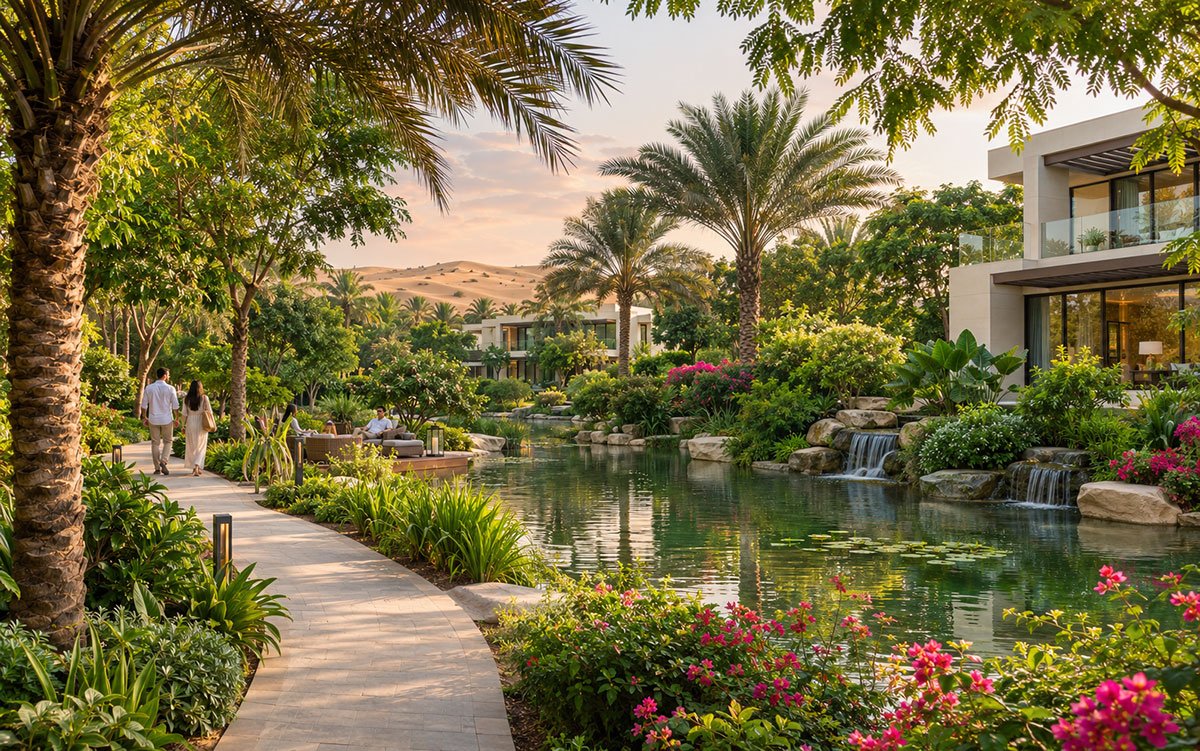
Al Barari in Dubai is known for its lush botanical landscapes, luxury residential architecture, landscaped waterways and peaceful green surroundings.
Al Barari is another distinctive residential development that places landscaped surroundings at the centre of its design.
Located in Dubai’s Dubailand area, this luxury community combines villas, apartments, botanical gardens, waterways and recreational facilities.
Its name comes from an Arabic word associated with wilderness, reflecting the development’s emphasis on greenery and natural surroundings.
Unlike conventional urban developments dominated by roads and hard surfaces, Al Barari incorporates substantial planted areas and landscaped pathways.
Sustainable Features of Al Barari
The community is notable for its integration of buildings with outdoor environments.
Its main features include:
- Extensive botanical landscaping.
- Shaded pedestrian areas.
- Gardens and green spaces surrounding residential buildings.
- Water features integrated into the landscape.
- Nature-inspired residential design.
- Outdoor recreational and wellness spaces.
The developer states that a substantial portion of the community is dedicated to greenery and landscaping.
However, maintaining vegetation in a desert environment requires careful water management. Large green spaces alone do not establish that a development has a low environmental footprint.
Al Barari is therefore best understood as an example of nature-focused luxury planning rather than a completely carbon-neutral community.
What Can Visitors Experience at Al Barari?
Although much of Al Barari is residential, the neighbourhood includes selected dining and leisure destinations.
One recognised attraction is The Farm, a restaurant surrounded by botanical landscaping and waterside scenery.
Visitors can enjoy a meal in a garden setting while experiencing part of the community’s distinctive landscape design.
Reservations and access arrangements should be checked before visiting, particularly during weekends and popular dining periods.
3. Expo City Dubai: Sustainable Architecture and Urban Innovation
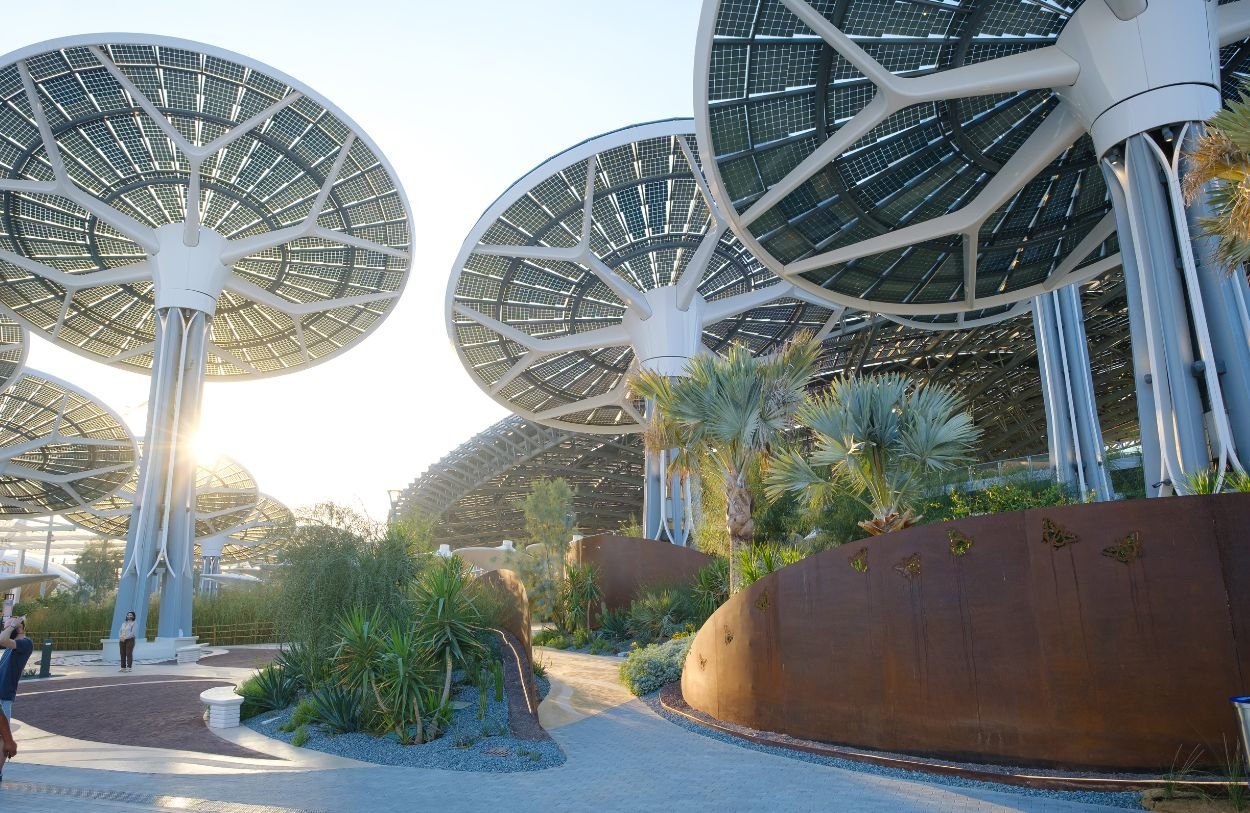
The solar-powered Energy Trees at Terra Sustainability Pavilion, Expo City Dubai, showcase innovative architecture, renewable energy and environmentally conscious landscape design.
Expo City Dubai is one of the city’s most significant examples of sustainable urban planning and the reuse of major event infrastructure.
Developed from the site of Expo 2020 Dubai, the district combines existing exhibition buildings with public spaces, attractions, workplaces and ongoing urban development.
Its master plan emphasises environmental performance, public transport connections and the efficient use of infrastructure.
Rather than demolishing the entire exhibition site after the event, Dubai retained and repurposed important buildings and facilities.
This approach illustrates how adaptive reuse can contribute to more resource-conscious urban development.
Terra: The Sustainability Pavilion
One of Expo City Dubai’s most distinctive attractions is Terra, the Sustainability Pavilion.
The building is recognised for its striking architectural design, including a large canopy and solar-powered structures resembling trees.
Terra was designed with net-zero energy and water ambitions, supported by renewable-energy systems and resource-efficient design features.
Its exhibitions explore the relationship between human activities and the natural environment.
Visitors can experience immersive displays covering topics such as:
- Forest ecosystems and biodiversity.
- Marine environments and ocean conservation.
- Human consumption and environmental impacts.
- Sustainable lifestyles and responsible choices.
- The relationship between technology and nature.
The pavilion combines architecture, interactive learning and environmental education, making it particularly appealing to families and travelers interested in sustainability.
How to Visit Expo City Dubai
Expo City Dubai is accessible by the Dubai Metro Red Line via Expo 2020 station.
Public areas of the district can generally be explored without an admission ticket, although individual attractions, including Terra, have separate ticketing arrangements.
Opening hours, exhibition availability and admission charges should be checked through Expo City Dubai’s official website before travelling.
For visitors interested in sustainable architecture, Terra offers one of the most accessible opportunities to experience a green building project in Dubai.
4. Mohammed bin Rashid Al Maktoum Solar Park: Dubai’s Renewable Energy Project
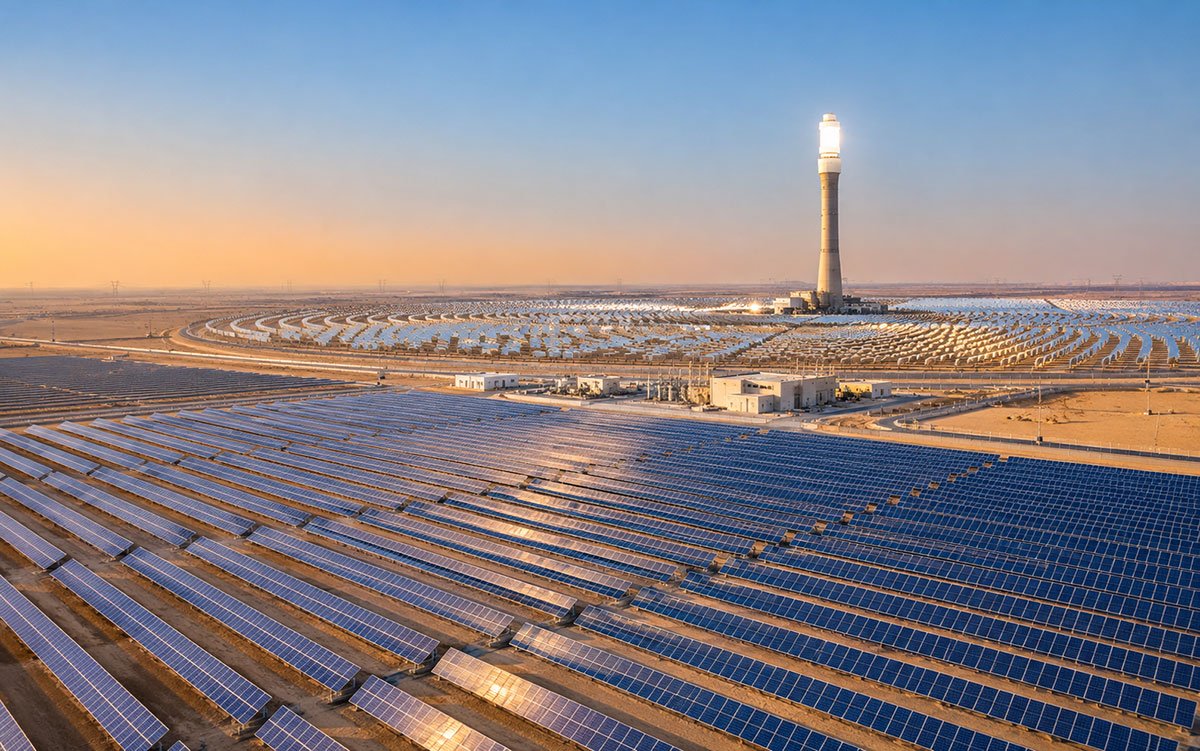
Mohammed bin Rashid Al Maktoum Solar Park is one of Dubai’s major renewable-energy developments, combining photovoltaic solar panels and concentrated solar power technology.
The Mohammed bin Rashid Al Maktoum Solar Park is a major renewable-energy development operated by the Dubai Electricity and Water Authority (DEWA).
Located in the desert, the project forms an important part of Dubai’s efforts to increase electricity generation from cleaner energy sources.
The solar park incorporates large-scale solar power infrastructure, including photovoltaic and concentrated solar power technologies.
It is being developed in multiple phases, allowing electricity-generating capacity to expand over time.
The project supports the Dubai Clean Energy Strategy 2050 and wider efforts to reduce the carbon intensity of electricity generation.
Why Is the Solar Park Important?
Solar energy offers particular potential in Dubai because the emirate receives abundant sunshine throughout the year.
Large-scale solar generation can reduce reliance on conventional fossil-fuel-based electricity production.
The solar park also supports research into renewable-energy technologies, electricity systems and related innovations.
However, renewable electricity generation is only one part of a sustainable energy system. Storage, grid integration, efficient electricity consumption and long-term infrastructure management are also important.
Visit the Sustainability and Innovation Centre
Visitors interested in renewable energy can explore DEWA’s Sustainability and Innovation Centre, located within the solar park.
The centre provides educational exhibits about electricity, renewable energy and emerging technologies.
Its interactive displays introduce visitors to the history of electricity generation, solar technology and Dubai’s energy initiatives.
The centre also offers opportunities to learn about research, innovation and the practical challenges of transitioning towards cleaner energy systems.
Advance ticket booking is recommended.
Because the solar park is located outside central Dubai, visitors should arrange suitable transport for both directions. Access to the industrial and electricity-generating facilities is separate from the public visitor centre.
5. Dubai Science Park: Research, Technology and Environmental Innovation
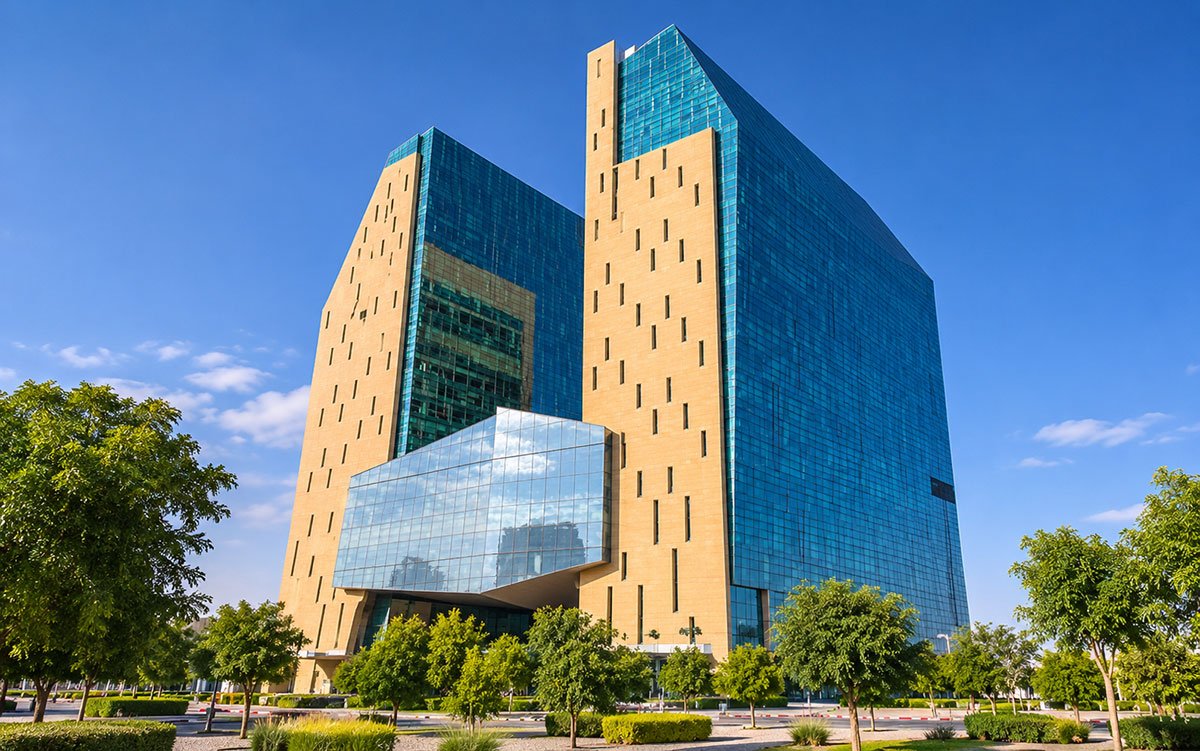
Dubai Science Park in the UAE is a business and research hub supporting scientific innovation, technology development and collaboration across specialised industries.
Dubai Science Park is a business and research-focused development that supports companies operating in scientific and technological industries.
The project evolved from Dubai Biotechnology and Research Park, commonly known as DuBiotech, and the Energy and Environment Park.
These organisations were brought together under the Dubai Science Park identity to encourage collaboration across a wider range of science-related sectors.
Today, Dubai Science Park provides a business environment for organisations involved in areas such as life sciences, healthcare, research and related technologies.
How Does Dubai Science Park Support Sustainability?
Scientific research and technological innovation can contribute to environmental sustainability in several ways.
Relevant fields include:
- Renewable-energy research.
- Environmental technologies.
- Resource-efficient industrial processes.
- Sustainable materials and product development.
- Life sciences and biotechnology.
- Research partnerships and knowledge exchange.
The significance of Dubai Science Park lies in its role as an innovation ecosystem rather than in the claim that every business operating there is environmentally sustainable.
Its companies work across different industries, and individual environmental outcomes depend on their actual activities and performance.
Is Dubai Science Park a Tourist Attraction?
Dubai Science Park is primarily a commercial and scientific business community.
It should not be confused with a public science museum or an unrestricted research facility.
Travelers interested in interactive renewable-energy exhibitions will find a more conventional visitor experience at DEWA’s Sustainability and Innovation Centre or Terra at Expo City Dubai.
6. Dubai Can and Urban Conservation: Sustainability Beyond Buildings
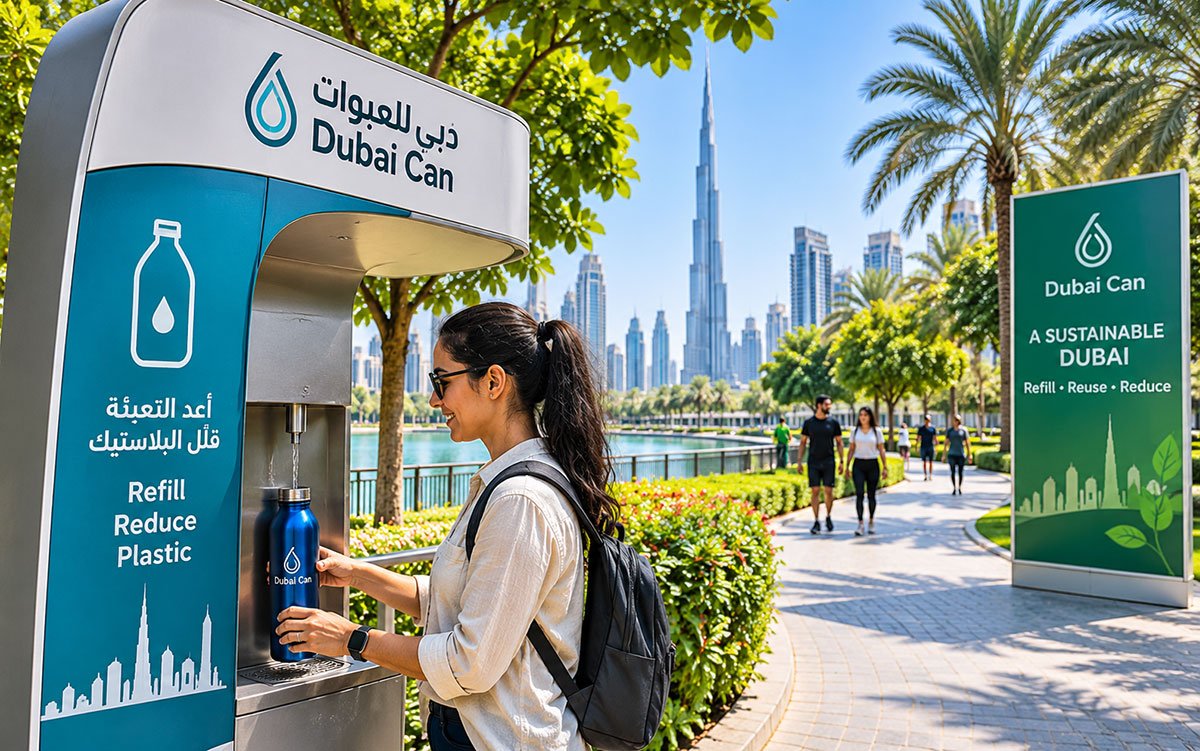
The Dubai Can initiative encourages residents and visitors to refill reusable water bottles, reduce single-use plastic waste and support sustainable living in Dubai.
Sustainable development is not limited to residential communities and modern architecture.
Dubai has also introduced public initiatives intended to reduce waste and support the conservation of natural environments.
One example is Dubai Can, a citywide initiative encouraging residents and visitors to use refillable water bottles.
Public drinking-water refill stations have been installed in selected locations across the emirate.
The programme aims to reduce reliance on single-use plastic bottles and encourage more responsible everyday consumption.
Travelers can participate simply by carrying reusable bottles and using authorised refill stations where available.
Ras Al Khor Wildlife Sanctuary
Another important part of Dubai’s environmental landscape is Ras Al Khor Wildlife Sanctuary.
Located near Dubai Creek, this protected wetland provides habitats for flamingos and other resident and migratory birds.
The sanctuary highlights the importance of protecting existing ecosystems alongside urban development.
Its wetlands include mudflats, mangroves and other habitats that support biodiversity.
Dubai Municipality has designated wildlife-viewing facilities where visitors may observe birds without entering sensitive habitats.
However, development work and conservation operations can temporarily affect access to viewing hides. Visitors should confirm the status of individual hides before travelling.
Together, Dubai Can and Ras Al Khor demonstrate that sustainability also involves resource conservation and protecting natural ecosystems.
Dubai’s Green Building Regulations and Future Urban Plans
Individual projects form part of a wider policy framework intended to make Dubai’s development more resource-efficient.
Two important initiatives are the Al Sa’fat Dubai Green Building System and the Dubai 2040 Urban Master Plan.
Al Sa’fat: Dubai’s Green Building System
Dubai Municipality introduced Al Sa’fat to establish and assess environmental performance requirements for buildings.
The system includes mandatory green-building standards for applicable new developments, with higher performance classifications available.
Its requirements address several aspects of construction and building operations, including:
- Energy performance.
- Water efficiency.
- Building materials.
- Indoor environmental quality.
- Mechanical and electrical systems.
- Environmental considerations in design.
Green building regulations are particularly important in Dubai because cooling, water consumption and building performance strongly influence the environmental impact of urban development.
Dubai 2040 Urban Master Plan
The Dubai 2040 Urban Master Plan provides a long-term framework for the city’s growth.
Its objectives include expanding green and recreational spaces, improving accessibility and encouraging more integrated urban communities.
The plan also seeks to strengthen pedestrian connections, cycling infrastructure and the role of public transport.
Protecting rural landscapes and natural areas is another important component.
These are long-term planning objectives rather than promises that every proposed improvement has already been completed.
The success of such initiatives will ultimately depend on implementation, measurable environmental performance and the quality of everyday life they provide.
How Travelers Can Explore Sustainable Dubai
Visitors interested in sustainable tourism can experience several aspects of Dubai’s environmental initiatives without arranging a specialised architectural tour.
Explore Expo City Dubai by Metro
Expo City Dubai is one of the easiest sustainability-focused destinations to reach by public transport.
Travelers can take the Dubai Metro Red Line to Expo 2020 station and explore the district’s accessible public spaces.
A visit to Terra adds an educational experience focused on environmental protection and sustainable lifestyles.
Discover Al Barari’s Green Surroundings
Al Barari provides a contrasting experience centred on botanical landscaping and residential design.
Visitors can consider dining at an established venue such as The Farm.
This is particularly pleasant during cooler weather, when outdoor dining and walking are more comfortable.
Learn About Solar Energy
DEWA’s Sustainability and Innovation Centre is suitable for visitors interested in renewable-energy infrastructure, engineering and technology.
Plan the visit separately from central Dubai sightseeing because of the centre’s desert location.
Observe Dubai’s Natural Wildlife
Ras Al Khor Wildlife Sanctuary offers a different perspective on the city’s environmental priorities.
Where viewing facilities are operating, visitors can observe wetland wildlife while following conservation rules.
Bring binoculars if you enjoy birdwatching and avoid disturbing animals for photography.
For more general sightseeing ideas, explore HolidayYP’s guide to the best tourist attractions in Dubai.
Best Time to Explore Dubai’s Green Attractions
Dubai has a hot desert climate, making seasonal planning important.
The cooler months, generally from November to March, are more comfortable for outdoor sightseeing, landscaped gardens and nature-focused activities.
During these months, travelers can more easily explore open public spaces and outdoor attractions.
April and October may also be suitable for some activities, although temperatures can be high.
Summer brings intense heat and humidity, particularly during the daytime.
Indoor destinations such as Terra and DEWA’s Sustainability and Innovation Centre can be alternatives during warmer periods, provided their operating arrangements suit your itinerary.
Regardless of the season, travelers should carry drinking water, wear suitable clothing and avoid unnecessary exposure to extreme heat.
Practical Tips for Responsible Travel in Dubai
Small choices can help visitors reduce their environmental impact.
Consider these practical steps:
- Use public transport where convenient. Dubai Metro can reduce the need for individual car journeys on suitable routes.
- Carry a reusable water bottle. Use official Dubai Can refill stations when available.
- Choose accommodation carefully. Look for documented sustainability practices rather than relying on vague eco-friendly marketing claims.
- Respect conservation areas. Follow wildlife-viewing rules and never enter restricted habitats.
- Reduce unnecessary waste. Avoid disposable products where practical and use recycling facilities correctly.
- Plan journeys geographically. Group nearby attractions to avoid unnecessary travel between distant areas.
- Visit responsibly. Respect residential communities and do not enter private facilities without permission.
Dubai’s Department of Economy and Tourism also operates the Dubai Sustainable Tourism initiative, which supports more responsible practices across the hospitality sector.
Visitors preparing for a broader regional trip can also consult HolidayYP’s guide to travel safety tips for the Middle East.
Frequently Asked Questions About Sustainable Developments in Dubai
What are the main sustainable developments in Dubai?
Important examples include The Sustainable City, Al Barari, Expo City Dubai, the Mohammed bin Rashid Al Maktoum Solar Park and Dubai Science Park. Each focuses on different aspects of sustainability, including urban planning, renewable energy, green spaces or scientific innovation.
Can tourists visit The Sustainable City Dubai?
The Sustainable City is an operational residential community rather than a traditional tourist attraction. Access to public or commercial facilities may be possible, but organised tours and entry to private areas require appropriate permission.
What is the best eco-friendly attraction in Dubai for families?
Terra at Expo City Dubai is a practical option for families interested in sustainability. Its immersive exhibitions explain environmental issues through interactive experiences suitable for different age groups.
Does Dubai use solar energy?
Yes. Dubai generates electricity from solar energy, including through the Mohammed bin Rashid Al Maktoum Solar Park. The emirate is continuing to develop clean-energy infrastructure as part of its long-term energy strategy.
Is Al Barari an environmentally sustainable community?
Al Barari incorporates substantial green landscaping and nature-focused residential design. However, greenery alone does not establish a development’s overall sustainability. Water consumption, energy use and building operations should also be considered.
Is Dubai becoming a sustainable city?
Dubai has introduced green-building regulations, renewable-energy investments, sustainability initiatives and long-term urban planning policies.
These measures support environmental improvements, but the city’s overall sustainability depends on measurable results, including emissions, resource consumption, transport patterns and conservation outcomes.
The Future of Sustainable Development in Dubai
Dubai’s environmental ambitions extend beyond striking architecture and landscaped residential communities.
The Sustainable City demonstrates how energy efficiency, transport planning and resource management can influence residential design. Al Barari highlights the role of landscaped environments, while Expo City Dubai shows how existing infrastructure can support new urban uses.
At a larger scale, the Mohammed bin Rashid Al Maktoum Solar Park and Dubai’s green-building regulations address important challenges related to energy and construction.
Meanwhile, initiatives such as Dubai Can and Ras Al Khor Wildlife Sanctuary show why conservation and responsible consumption remain essential.
For travelers, these developments offer a chance to experience Dubai through a different perspective: one that examines not only what the city builds, but also how its buildings, infrastructure and natural environments can be managed more responsibly.
