
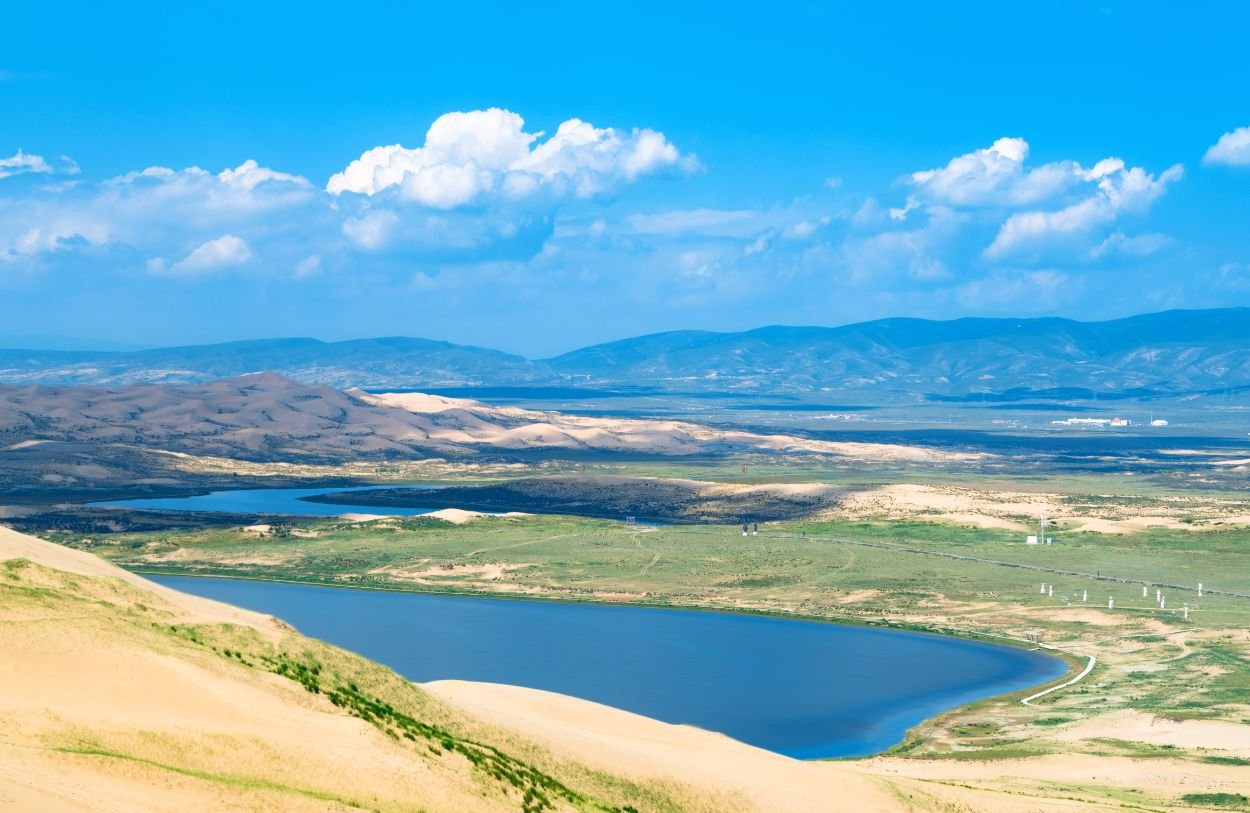
The golden dunes, recovering vegetation and blue wetlands of Sand Island highlight the natural diversity of Qinghai Lake.
Sand Island Scenic Area at Qinghai Lake: A Visitor Guide
Sand Island Scenic Area is one of the most fascinating natural landscapes around Qinghai Lake in northwestern China. Its golden sand dunes, wetlands, grasslands and brilliant blue waters create a striking contrast rarely seen in high-altitude destinations.
Located in Qinghai Province, Sand Island forms part of the wider Qinghai Lake ecosystem. The area is known for its unusual combination of sandy terrain, alpine wetlands and important wildlife habitats.
However, travelers planning to explore Sand Island Scenic Area should know that the former tourist attraction is closed for ecological protection. Although recreational access is restricted, several designated attractions around Qinghai Lake remain available for visitors.
This guide explores Sand Island’s landscape, conservation efforts, nearby attractions, the best seasons to visit Qinghai Lake and practical travel advice.
Where Is Sand Island Scenic Area?
Sand Island Scenic Area, known locally as Sha Dao (沙岛), is situated near the northeastern shore of Qinghai Lake in Haiyan County, Qinghai Province, China.
The area lies within the northeastern Qinghai–Tibet Plateau, where vast grasslands meet sandy dunes and one of China’s most remarkable inland lakes.
Unlike a typical tropical island, Sand Island is associated with a landscape of dunes, sandy ridges, shallow lakes and wetlands.
Changes in lake levels, wind activity and sediment movement have shaped the surrounding terrain over time.
The landscape features several distinctive natural elements:
- Golden sand dunes: Wind-shaped sandy slopes create a desert-like environment beside the lake.
- Wetland habitats: Shallow pools and marshy areas support local wildlife.
- High-altitude grasslands: Native grasses and shrubs add seasonal greenery.
- Panoramic lake scenery: The blue waters of Qinghai Lake contrast with the pale sand.
- Migratory bird habitats: The surrounding lake ecosystem provides important resting and breeding areas.
These natural features make Sand Island an interesting destination to learn about, particularly for travelers interested in geography, ecology and landscape photography.
Qinghai Lake: China’s Largest Inland Saltwater Lake
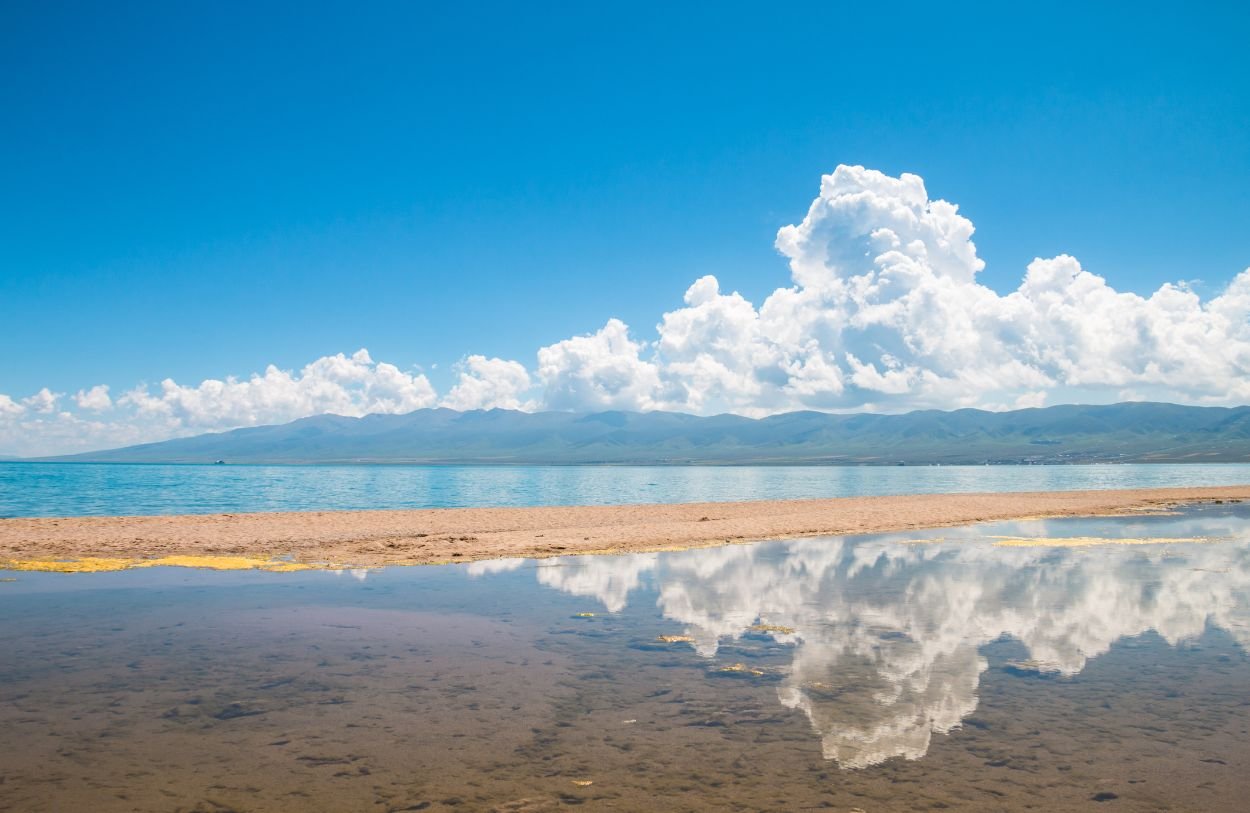
A peaceful view of Qinghai Lake in Qinghai Province, China, featuring blue waters, a sandy shoreline and beautiful cloud reflections against distant mountains.
Qinghai Lake, also known as Qinghai Hu or Koko Nor, is China’s largest inland saltwater lake.
Situated approximately 3,200 metres above sea level, it occupies an expansive basin surrounded by mountains, grasslands and wetlands.
The lake is classified as an endorheic lake because its water does not flow into the ocean. Instead, water enters through rivers, streams and precipitation, while evaporation contributes to its salt concentration.
Qinghai Lake is also an important ecological landmark.
Its surrounding wetlands provide habitats for migratory birds traveling along major Asian migration routes. Species such as bar-headed geese and various gulls use the region for breeding, feeding or resting.
The lake’s ecosystem also supports the Qinghai Lake naked carp and other native wildlife.
Throughout the year, the scenery changes dramatically. Summer brings green grasslands and flowering vegetation, while winter introduces snow-covered surroundings and seasonal ice.
Travelers interested in exploring other natural attractions can discover more in HolidayYP’s guide to popular lakes in Qinghai.
Is Sand Island Scenic Area Open to Tourists?
Sand Island Scenic Area is currently closed to ordinary tourism.
Authorities suspended tourism operations in August 2017 following environmental inspections and concerns about recreational activities within protected areas around Qinghai Lake.
Previously, Sand Island was promoted as a destination for outdoor entertainment and desert-style activities.
Popular attractions once included:
- Sandboarding and sand sliding.
- Camel riding.
- Motorised sand activities.
- Beach volleyball.
- Sand sculpture displays and recreational events.
However, these activities should not be considered available today.
The closure was introduced to reduce environmental damage, restore sensitive habitats and protect the ecological integrity of the Qinghai Lake region.
Visitors should respect all official restrictions and avoid entering closed areas through informal tracks or unauthorised access points.
Fortunately, the wider Qinghai Lake region still offers several designated places for sightseeing and nature appreciation.
Sand Island’s Ecological Restoration
Sand Island has become an important example of environmental restoration in Qinghai Province.
Before the closure, tourism infrastructure, vehicle movements and recreational activities placed pressure on parts of the fragile sandy landscape.
Following the suspension of tourism activities, conservation measures and natural regeneration helped vegetation recover.
Native grasses and shrubs have gradually become established in sections of the previously disturbed terrain.
The recovering vegetation plays an important role in stabilising sand, supporting wildlife habitats and reducing further environmental degradation.
Wetland recovery is also significant because Qinghai Lake provides essential habitats for migratory birds and native species.
The restoration of Sand Island highlights the importance of balancing tourism development with long-term environmental protection.
For nature enthusiasts, understanding these conservation efforts adds depth to any visit to the wider Qinghai Lake region.
Best Places to Visit Near Sand Island and Qinghai Lake
Although Sand Island Scenic Area remains closed, travelers can explore several authorised attractions around Qinghai Lake.
Each destination offers a different perspective on the region’s landscapes and natural heritage.
1. Erlangjian Scenic Area
Erlangjian Scenic Area is one of Qinghai Lake’s main visitor destinations.
Situated along the southern shore, it offers panoramic views across the water and surrounding mountains.
The area has established tourism infrastructure and designated sightseeing facilities.
Depending on seasonal operations, visitors may be able to enjoy lakeside walking areas, organised sightseeing transport and boat excursions.
Erlangjian is particularly suitable for first-time visitors looking for an accessible introduction to Qinghai Lake.
Its wide-open scenery also provides opportunities for travel photography.
2. Xianüwan Scenic Area (Fairy Bay)
Xianüwan, also called Fairy Bay, lies on the northern side of Qinghai Lake.
The area is associated with wetlands, grasslands and Tibetan cultural traditions.
Its natural surroundings offer a quieter contrast to some of the lake’s more developed sightseeing locations.
Visitors can appreciate the relationship between wetland vegetation, water and the surrounding high-altitude landscape.
The area is especially appealing to travelers interested in natural scenery and wildlife habitats.
Always follow designated visitor routes and observe seasonal conservation restrictions.
3. Jinshawan: Golden Sand Landscapes
Jinshawan, commonly translated as Golden Sand Bay, is another sandy landscape near Qinghai Lake.
Its golden dunes and views toward the blue water create scenery that resembles the distinctive environment associated with Sand Island.
However, Jinshawan contains environmentally sensitive land, and access restrictions apply to protected sections.
Travelers should confirm which viewing areas are officially open before visiting.
Unauthorised off-road driving and recreational activities within protected dunes should be avoided.
4. Chaka Salt Lake
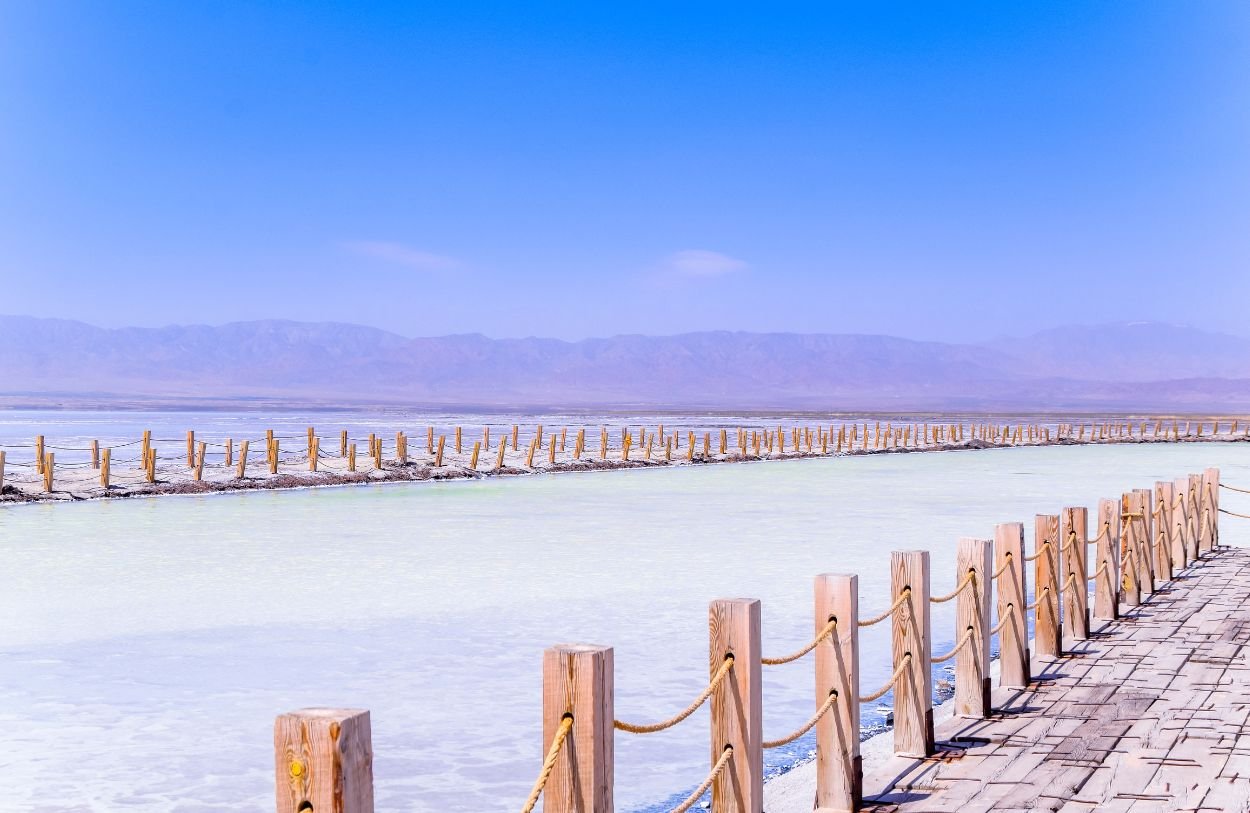
A scenic view of Chaka Salt Lake in Qinghai Province, China, featuring tranquil mineral-rich waters, a fenced walkway and distant mountain ranges.
Travelers exploring Qinghai Lake on a longer itinerary may consider visiting Chaka Salt Lake.
Located farther west, Chaka is famous for its expansive salt-flat landscape.
Under suitable weather and water conditions, the shallow surface creates reflections of the sky and surrounding mountains.
It offers a completely different experience from Qinghai Lake’s dunes and grasslands.
Visitors can learn more about this destination in HolidayYP’s article on Chaka Salt Lake and the Qaidam Basin.
Best Time to Visit the Qinghai Lake Region
The best season for exploring Qinghai Lake depends on the scenery and activities travelers prefer.
June to August: Summer Landscapes
Summer is a popular season for sightseeing around Qinghai Lake.
Grasslands become greener, seasonal flowers appear and the contrast between vegetation and blue water creates beautiful landscapes.
Yellow rapeseed fields are particularly attractive during their flowering season.
Summer is also suitable for photography and outdoor sightseeing along approved visitor routes.
However, weather conditions can still change quickly at high altitude.
September to October: Autumn Scenery
Autumn brings cooler temperatures and changing grassland colours.
The surrounding mountains and lakeshore can look especially beautiful on clear days.
Travelers who prefer cooler conditions may enjoy visiting during early autumn.
Some tourism services may reduce operations as the colder season approaches, so advance planning is advisable.
Winter and Early Spring: Snow and Ice
Winter transforms Qinghai Lake into a cold, dramatic landscape.
Sections of the lake may freeze, while snow covers the surrounding mountains and grasslands.
However, winter travel requires additional preparation.
Some visitor facilities may close seasonally, and icy roads or severe weather can affect travel arrangements.
Visitors should never walk or drive onto frozen lake surfaces unless an activity is explicitly authorised and supervised.
How to Reach Qinghai Lake
Xining, the capital of Qinghai Province, is the main gateway for travelers visiting Qinghai Lake.
The city is connected to other Chinese destinations by air and rail.
From Xining, travelers can reach designated lakeside attractions by road.
Common transport options include:
- Private car or licensed driver: Suitable for visitors who want a flexible sightseeing itinerary.
- Organised tours: Convenient for travelers who prefer arranged transportation and scheduled stops.
- Public transport: Services may connect Xining with selected destinations, although current routes and departures should be verified.
Visitors should plan their journey according to the specific attractions they intend to explore.
Qinghai Lake covers an extensive geographical area, and traveling between different sections of the shoreline can require considerable time.
Since Sand Island itself remains closed, travelers should choose an officially accessible attraction rather than planning a visit to the former tourist entrance.
Essential Travel Tips for Qinghai Lake
Traveling around Qinghai Lake requires some preparation because of the region’s altitude, climate and conservation regulations.
Prepare for the High Altitude
Qinghai Lake lies approximately 3,200 metres above sea level.
Visitors arriving from lower elevations may experience altitude-related symptoms, including headaches, dizziness or fatigue.
Allow time to acclimatise where possible and avoid strenuous physical activity immediately after arrival.
Seek medical attention if symptoms develop or worsen.
Protect Yourself From Sunlight
The high-altitude environment can expose travelers to strong ultraviolet radiation.
Carry sunscreen, sunglasses, a hat and suitable protective clothing.
A warm jacket is useful because temperatures can fall quickly, particularly when winds increase.
Respect Wildlife and Protected Habitats
Qinghai Lake supports numerous bird species and sensitive wetland environments.
Avoid disturbing wildlife, approaching nesting areas or feeding birds.
Photography should be undertaken from permitted locations without damaging vegetation or habitats.
Follow Official Visitor Routes
Use designated roads, walking routes and viewing platforms.
Avoid entering restricted sand dunes, wetlands or grasslands.
Follow local regulations concerning camping, vehicles, drones and waste disposal.
Check Travel Requirements
International travelers should verify China’s current entry requirements before departure.
Visa arrangements depend on nationality and travel circumstances.
Travel insurance, appropriate clothing and advance accommodation arrangements are also advisable.
How to Plan a Qinghai Lake Itinerary
Travelers with one day available can concentrate on an established attraction such as Erlangjian Scenic Area.
A typical sightseeing plan could include a morning departure from Xining, time to enjoy lake views, photography stops at permitted locations and a return journey later in the day.
Visitors with additional time can consider exploring approved northern-shore attractions.
A longer itinerary may also include Chaka Salt Lake or other destinations in Qinghai Province.
Rather than attempting to visit too many places in a short period, allow enough time for road travel, changing weather conditions and rest at high altitude.
Always confirm which scenic areas are operating before finalising the itinerary.
Frequently Asked Questions About Sand Island Scenic Area
Where is Sand Island Scenic Area located?
Sand Island Scenic Area lies near the northeastern shore of Qinghai Lake in Haiyan County, Qinghai Province, China.
Is Sand Island Scenic Area open to visitors?
No. The former tourist area remains closed for ecological protection. Visitors should respect official restrictions and avoid entering protected sections.
Can tourists go sandboarding at Sand Island?
No. Sandboarding and other recreational activities previously associated with the attraction were suspended following the closure.
What makes Sand Island special?
Sand Island is known for its unusual combination of golden sand dunes, wetland habitats, grasslands and views of Qinghai Lake.
Can tourists visit Qinghai Lake?
Yes. Several designated attractions around Qinghai Lake remain available for sightseeing, subject to seasonal operations and local restrictions.
What is the best season to visit Qinghai Lake?
Summer is popular for green grasslands, flowering vegetation and outdoor scenery. Early autumn also offers attractive landscapes and cooler temperatures.
Can visitors swim in Qinghai Lake?
Swimming should not be assumed to be permitted. Visitors must follow the regulations of the specific scenic area and avoid entering the water outside explicitly authorised locations.
Discover the Natural Beauty of Qinghai Lake
Sand Island Scenic Area remains one of the most distinctive natural landscapes associated with Qinghai Lake.
Its golden dunes, recovering vegetation, wetlands and surrounding mountains illustrate the remarkable environmental diversity of China’s northeastern Qinghai–Tibet Plateau.
Although tourism activities at Sand Island have been suspended, nearby designated attractions offer opportunities to experience the natural beauty of the region.
By respecting protected habitats and choosing authorised visitor areas, travelers can enjoy Qinghai Lake while contributing to the preservation of this exceptional high-altitude ecosystem.
