
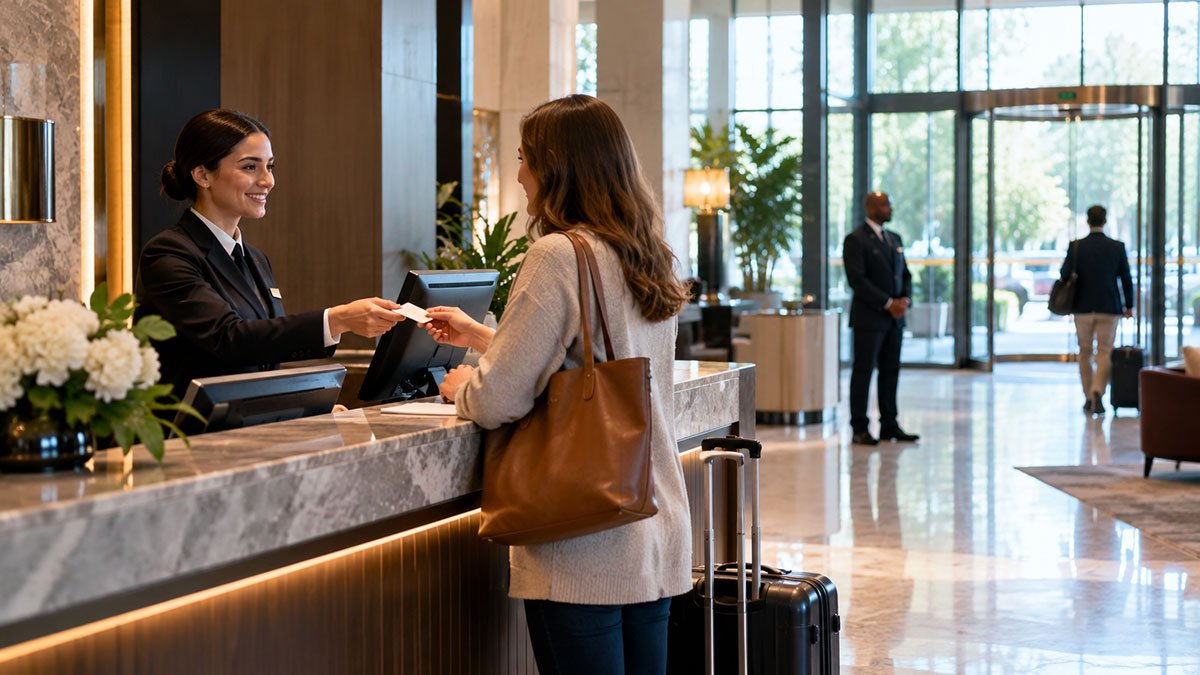
A professional hotel reception, controlled guest access and attentive service help create a welcoming accommodation experience.
Safest Hotels in the World: Security Tips for Travelers
Choosing a hotel is about more than comfort, location and price. Travelers also need to consider personal safety, building security, emergency procedures and the risks associated with their destination.
Some hotels have visible security arrangements, controlled entrances or specialist protection for high-profile guests. Others prioritize privacy, reliable access controls and well-managed emergency procedures. However, there is no universally accepted ranking that establishes which hotels are the safest in the world.
The best approach is to assess the property alongside the destination. A hotel with extensive security equipment cannot eliminate every risk, and even an internationally recognized luxury property may be located in a place affected by political instability or other serious hazards.
This guide explains what hotel security means, which features to look for and how to choose accommodation that suits your travel plans.
What Makes a Hotel Safe?
Hotel safety includes several areas that work together. Security guards and surveillance cameras may help control access, but they are only part of the picture.
Before booking, consider the following factors.
Controlled Access and Reception
Look for a hotel that manages access to guest floors and has a clear process for verifying visitors. A staffed reception desk can help guests report concerns and obtain assistance.
Hotels may use electronic room keys, security personnel or controlled entrances. The appropriate arrangements depend on the property’s size, location and risk profile.
Secure Room Doors and Windows
A room should have a door lock that works properly, along with any additional latch or security device provided. Windows and balcony doors should close securely.
A door viewer or equivalent arrangement can help you check who is outside before opening the door. Do not assume that a hotel room is secure simply because the property has a luxury rating.
Fire Safety and Emergency Planning
Fire protection is a fundamental part of accommodation safety. Check that smoke alarms, fire exits and emergency instructions are present and accessible.
When you arrive, identify the nearest emergency exit and read the evacuation information in your room. If the property has several floors, know how to leave without relying entirely on elevators.
Travelers with disabilities or mobility limitations should confirm that evacuation arrangements and accessible rooms meet their needs before booking.
Staff Training and Incident Response
Security equipment is most useful when staff know how to respond to problems. A well-managed property should have a clear process for dealing with suspicious activity, medical emergencies, lost keys and reports of theft.
Before booking a hotel in a higher-risk destination, ask what guest assistance is available and how the property communicates urgent safety information.
Privacy and Protection of Guest Information
Hotels handle personal information, payment details and identification documents. At check-in, staff should manage these details discreetly and follow appropriate privacy practices.
Avoid announcing your room number in public, and do not leave room keys or documents containing your room details where others can access them.
Hotels Known for Distinctive Security or Privacy Features
Rather than naming a definitive list of the world’s safest hotels, it is more useful to examine properties known for particular characteristics. These examples illustrate different approaches to accommodation, privacy and protection; they are not an independently verified safety ranking.
1. Hotel President Wilson, Geneva, Switzerland
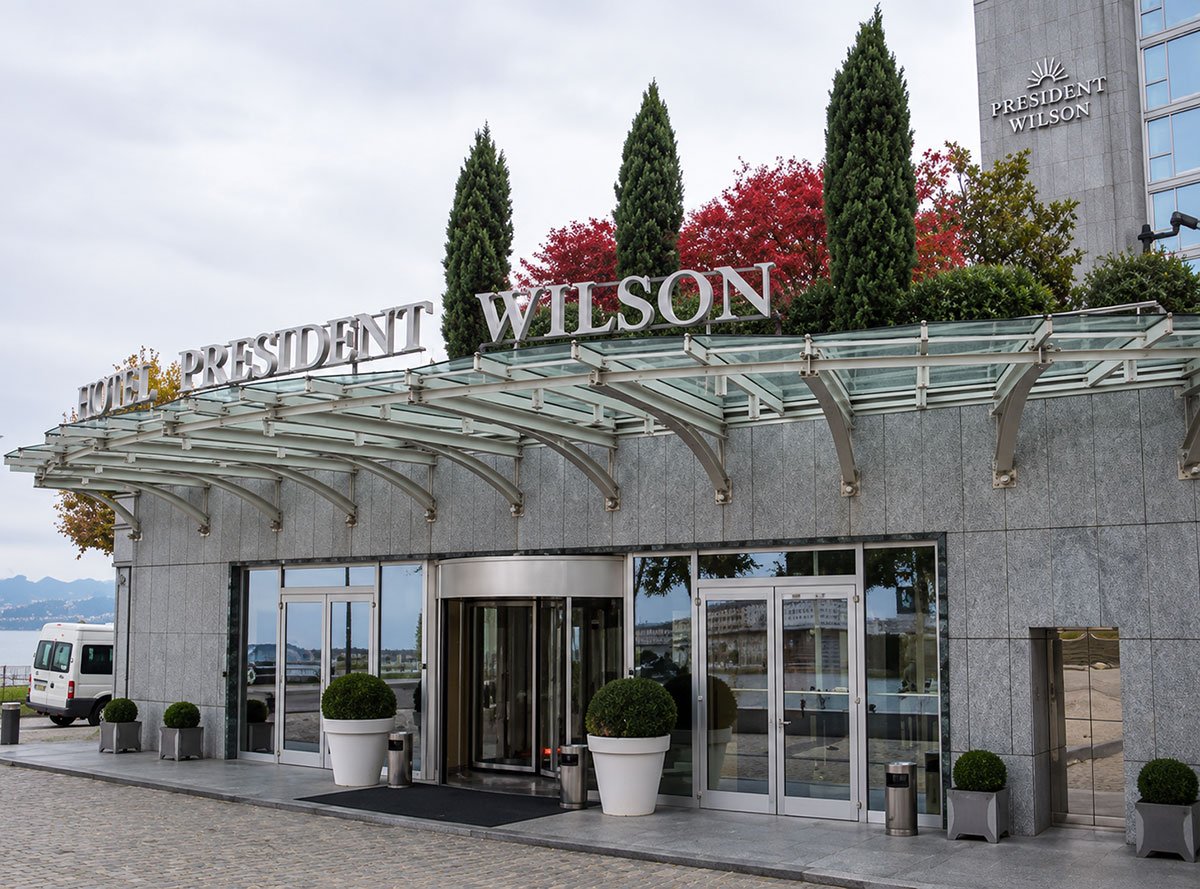
Hotel President Wilson overlooks Lake Geneva and is known for its luxury accommodation and high-end suites. Its Royal Penthouse occupies the hotel’s entire eighth floor and is designed for guests seeking exceptional space, privacy and personalized service.
The property is an example of luxury accommodation aimed at guests who may place a high value on discretion. Its official website describes its suites and amenities, but public marketing information alone does not establish an independent security rating.
For ordinary travelers, the useful lesson is that privacy and service can contribute to a comfortable stay, but basic safety checks remain important regardless of the hotel’s reputation or price.
Before booking: Confirm the room category, included services, accessibility and any special arrangements directly with the hotel.
2. Islamabad Marriott Hotel, Pakistan
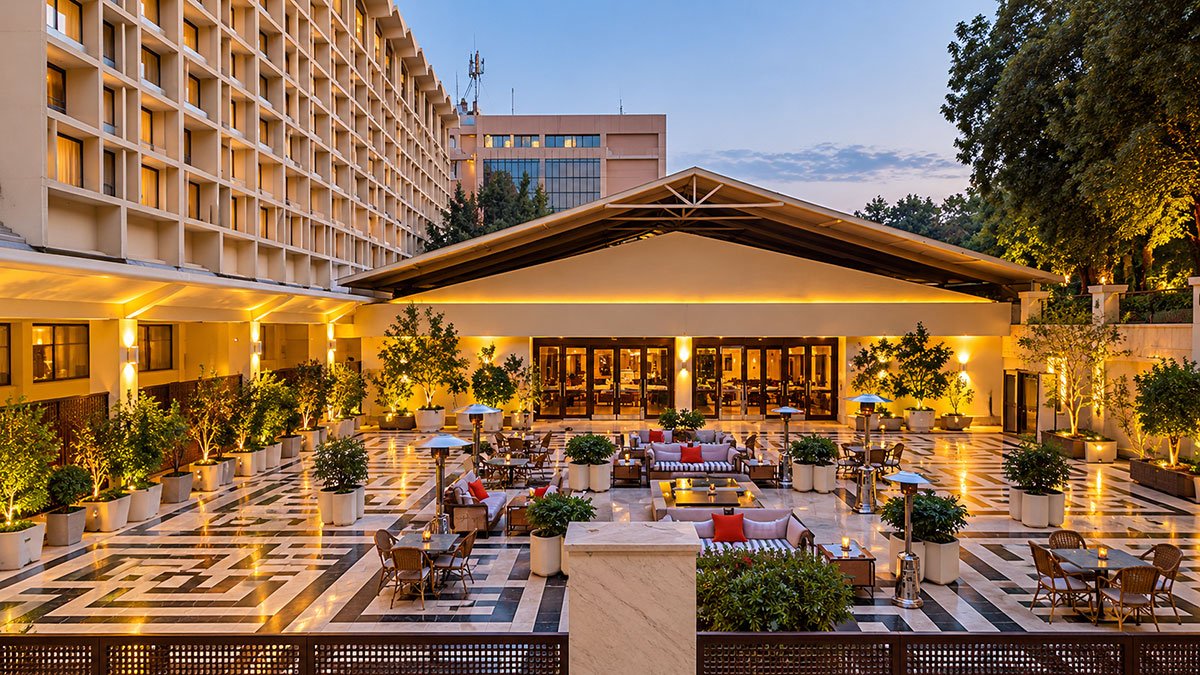
The Islamabad Marriott Hotel serves business and leisure travelers in Pakistan’s capital. The property lists features including electronic room locks, in-room safes, staffed reception and on-site dining.
These amenities can contribute to guest convenience and help manage some everyday security concerns. They should not, however, be interpreted as proof that the hotel or its surrounding area is free from risk.
Security conditions in Pakistan vary by region and can change. Travelers should consult their own government’s current travel advice, review local developments and assess whether the destination is appropriate for their itinerary.
Before booking: Check official travel advisories, arrange reliable airport transportation and confirm the hotel’s current arrival and security procedures.
3. Malmaison Oxford, United Kingdom
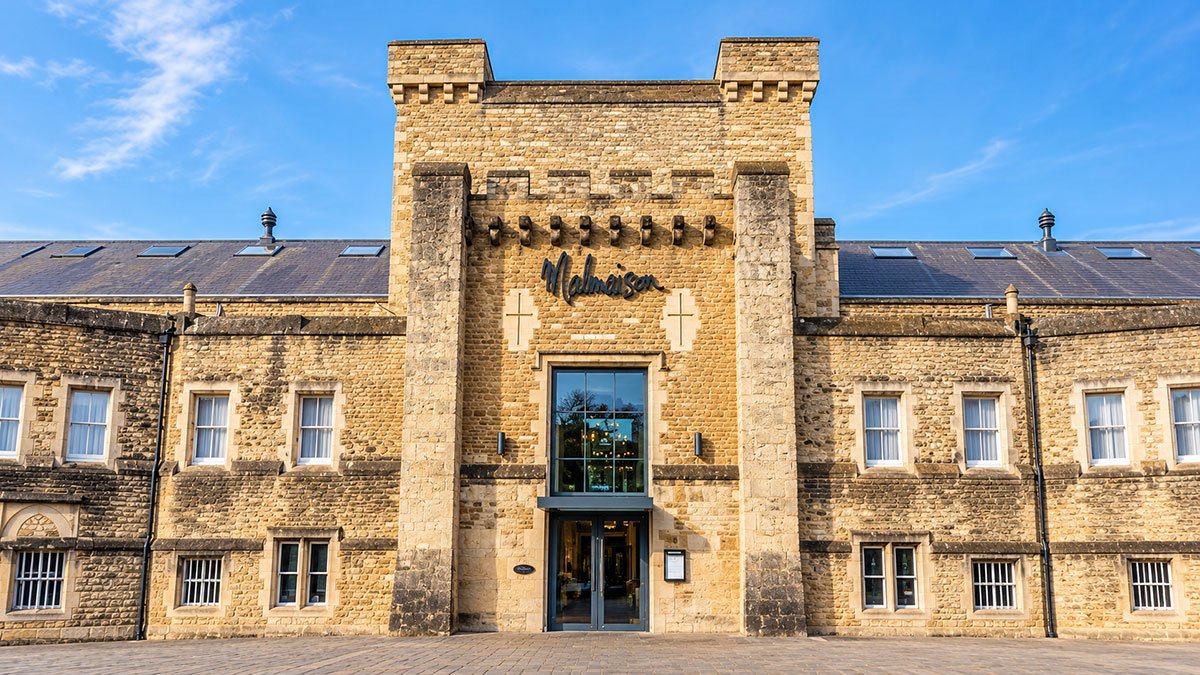
Malmaison Oxford offers a different perspective on hotel security. Located within a former prison complex, the property combines historic architecture with contemporary hotel accommodation.
The building’s former use makes it distinctive, but its heritage should not be confused with a guarantee of superior guest safety. Modern fire protection, working room locks, emergency procedures and attentive management matter far more than the appearance of heavy doors or historic walls.
The hotel is also a useful example of how a building designed for a completely different purpose can be adapted for hospitality.
Before booking: Review the hotel’s current room information, accessibility details and facilities. Guests with specific mobility requirements should confirm their needs directly with the property.
What About Hotels in High-Risk Destinations?
Some properties in unstable regions use extensive security arrangements, such as controlled vehicle access, screening or security personnel. These measures may be intended to reduce particular threats.
However, visible security does not make a dangerous destination safe. Afghanistan, for example, remains subject to a UK government advisory against all travel. Travelers should not treat a hotel’s security measures as a reason to disregard official warnings.
The same principle applies elsewhere: assess the destination first, then consider whether a particular hotel is suitable within that context.
How to Choose a Safer Hotel Before Booking
Use a structured approach rather than relying only on star ratings, brand recognition or promotional descriptions.
- Check official travel advice. Review the latest government advisory for your destination, including regional warnings and information about crime, terrorism, civil unrest and transport disruption.
- Research the neighborhood. Look at the hotel’s location, nearby transport, access to essential services and any relevant local safety concerns.
- Read recent guest reviews critically. Look for recurring reports about unauthorized access, theft, poor maintenance or problems obtaining help. Treat isolated comments cautiously and look for patterns.
- Contact the hotel when necessary. Ask about access control, emergency procedures, airport transfers or specific accessibility requirements.
- Review cancellation conditions. Understand your options if travel advice changes or an unexpected security issue affects your plans.
- Arrange reliable transportation. Confirm how you will travel between the airport, hotel and planned activities, especially if arriving late at night.
- Check insurance coverage. Make sure your policy covers your destination and planned activities. Traveling against official advice may affect coverage.
No hotel can guarantee complete safety. These steps help you make a more informed decision based on your circumstances and the risks that matter most.
Hotel Safety Checklist: What to Check on Arrival
After checking in, take a few minutes to assess your room and familiarize yourself with the property.
- Confirm that the main door, secondary latch and windows close and lock correctly.
- Locate the nearest emergency exit and read the evacuation instructions.
- Check for smoke alarms and other required safety equipment.
- Make sure the room telephone or the hotel’s stated emergency contact method works.
- Keep your room key separate from any packet displaying your room number.
- Use the room safe appropriately, but do not assume it provides absolute protection for valuables.
- Meet unfamiliar visitors in public areas rather than inviting them directly to your room.
- Report damaged locks, suspicious activity or other concerns to hotel management promptly.
If a room does not meet basic safety expectations, ask the hotel to resolve the issue or request another room. If you believe there is an immediate threat, move to a safer location and contact local emergency services.
Are Luxury Hotels Safer Than Budget Hotels?
Not necessarily. A higher room rate may pay for location, design, dining, service or amenities rather than stronger security.
Luxury properties may offer staffed reception, electronic access controls, concierge assistance and other useful facilities. Budget hotels can also be well managed, clean and secure.
Instead of judging safety by price, compare the specific features that matter to your trip:
- Does the property control access to guest rooms?
- Are the doors, windows and common areas well maintained?
- Are fire safety and emergency procedures clearly explained?
- Can staff assist you when a problem occurs?
- Is the neighborhood suitable for your arrival time and planned activities?
- Does the property meet your accessibility and personal security needs?
A modest hotel with reliable management and suitable safety arrangements may be a better fit than an expensive property that does not meet your needs.
Is the Safest Hotel Always in the Safest Country?
Hotel security and destination safety are related, but they are not interchangeable.
A well-protected hotel may reduce certain risks inside its premises. It cannot eliminate hazards on surrounding streets, during transportation or at nearby attractions.
Likewise, a destination with relatively low crime can still experience natural disasters, transport accidents, health emergencies or other unexpected events.
For this reason, travelers should evaluate three separate questions:
- Destination safety: Is the country or region appropriate to visit under current conditions?
- Property safety: Does the hotel have suitable access control, maintenance and emergency arrangements?
- Personal circumstances: Do the location, transport options and available services suit your individual needs?
The answers will vary depending on whether you are traveling alone, with children, for business or with specific accessibility requirements.
Final Advice for Booking Safe Accommodation
The safest hotel for your trip is not necessarily the most expensive or the one with the most visible security equipment. It is the property that meets your needs, has credible safety arrangements and is located in a destination you can reasonably travel to under current conditions.
Research the neighborhood, check official travel advice, read recent reviews and confirm important details directly with the hotel. Once you arrive, inspect your room and learn the emergency procedures.
A few careful checks before and during your stay can help you travel with greater confidence, without assuming that any hotel can eliminate every risk.
