
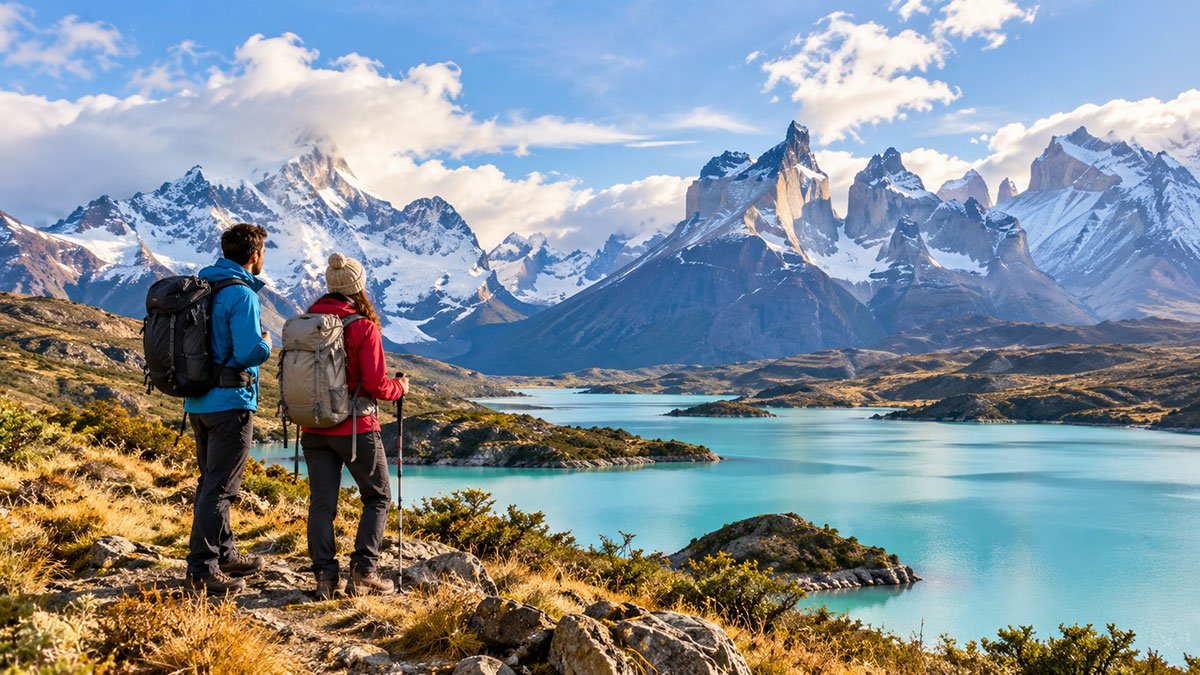
Patagonia Travel Guide: Best Places, Things to Do & When to Go
Patagonia is one of those destinations that rewards travelers who take their time. Stretching across southern Argentina and Chile, the region combines rugged mountains, glaciers, forests, open steppe, turquoise lakes and dramatic coastlines.
A Patagonia travel guide needs to cover more than a list of attractions. The region is enormous, distances can be substantial, weather can change quickly, and some of its most famous national parks operate with seasonal restrictions.
For travelers who plan carefully, Patagonia offers an extraordinary range of experiences. You can walk among Magellanic penguins, explore the viewpoints around Perito Moreno Glacier, hike beneath the mountains of Torres del Paine, drive sections of legendary routes or sail through the fjords of Tierra del Fuego.
Where Is Patagonia?
Patagonia is a vast geographical region shared by Argentina and Chile in the southern part of South America.
The Andes form a major natural divide between the two countries. Argentine Patagonia is known for its expansive steppe, lakes, mountains and glaciers, while Chilean Patagonia is famous for fjords, channels, forests, mountains and remote wilderness.
There is no single city that represents all of Patagonia.
Instead, travelers usually choose one or more regional bases depending on their interests.
Some of the best-known gateways and destinations include:
- El Calafate, Argentina, for Los Glaciares National Park
- El Chaltén, Argentina, for mountain trekking
- Puerto Madryn, Argentina, for marine wildlife
- Punta Arenas, Chile, for southern Patagonia and Tierra del Fuego connections
- Puerto Natales, Chile, for Torres del Paine
- Ushuaia, Argentina, for Tierra del Fuego and expedition cruises
- Bariloche, Argentina, for lakes, mountains and outdoor activities
Because these places are spread across a huge area, a Patagonia itinerary should be built around specific regions rather than trying to see everything in one trip.
Patagonia Is Not the Same as Northern Argentina
One important distinction is worth making when planning a trip.
Iguazú Falls is in northeastern Argentina and is not part of Patagonia. It is an entirely different destination and climate.
The original version of this article associated Iguazú Falls with Patagonia. That is geographically incorrect and has been removed from this guide.
Patagonia itself is best known for southern landscapes such as glaciers, Andean mountains, steppe, fjords and coastal wildlife.
Why Visit Patagonia?
Patagonia appeals to travelers who want dramatic landscapes and outdoor experiences rather than conventional city sightseeing.
The region offers opportunities for:
- Hiking
- Glacier viewing
- Glacier trekking
- Wildlife watching
- Scenic road trips
- Horse riding
- Kayaking
- Boat excursions
- Expedition cruises
- Photography
- Skiing and winter activities
- National park exploration
The experience can be as active or relaxed as you want.
You can spend several days hiking in the mountains or build an itinerary around scenic viewpoints, boat excursions and wildlife experiences.
The Best Places to Visit in Patagonia
Patagonia is too large to cover comprehensively in one short holiday. Choosing the right destinations is therefore one of the most important parts of planning.
El Calafate and Perito Moreno Glacier
El Calafate is one of the principal gateways to the southern part of Argentine Patagonia.
Its major attraction is Perito Moreno Glacier, located within Los Glaciares National Park.
The glacier can be viewed from an extensive system of walkways. Travelers can also choose from activities such as boat excursions and guided glacier experiences.
The official Argentina tourism authority places Perito Moreno Glacier about 80 kilometres from El Calafate by road. It can be visited throughout the year, although conditions and scenery vary with the season.
For many visitors, this is one of the easiest places to experience Patagonia’s glacial landscape without committing to a long wilderness expedition.
El Chaltén
El Chaltén is another important destination in Los Glaciares National Park.
It is particularly popular with hikers because of its access to spectacular mountain scenery.
The landscape around El Chaltén includes dramatic peaks, lakes, forests and trails.
If hiking is a major priority, consider spending several days in the area rather than treating it as a quick stop.
Weather can influence trail conditions, so allow flexibility in your itinerary.
Torres del Paine, Chile
Torres del Paine is one of the defining landscapes of Chilean Patagonia.
The national park combines granite peaks, lakes, rivers, forests, glaciers and open landscapes. Its famous W and O trekking circuits attract hikers from around the world.
Chile Travel identifies Torres del Paine as a major destination for hiking, nature, mountain experiences, adventure activities and expedition cruises.
The park is also home to wildlife including guanacos, pumas and condors.
If you plan to trek here, research the current park regulations, trail conditions, accommodation requirements and entry arrangements before departure.
CONAF, Chile’s national forestry and protected-area authority, specifically advises visitors to check official park information and current conditions before entering.
Puerto Natales
Puerto Natales is a practical base for travelers visiting Torres del Paine.
It also has its own appeal, with a location surrounded by the landscapes of Chilean Patagonia.
Many travelers use the town as part of a wider itinerary that combines Torres del Paine with Punta Arenas or other southern Chilean destinations.
Punta Arenas
Punta Arenas sits on the Strait of Magellan and is an important transportation hub for southern Chile.
It can be used as a starting point for exploring the surrounding region and for some expedition cruises.
It is also useful for travelers planning a longer journey that combines Chilean Patagonia with Argentina.
Ushuaia and Tierra del Fuego
Ushuaia is located in Argentina’s Tierra del Fuego region and is another major southern gateway.
The area offers mountains, forests, waterways and opportunities for hiking, wildlife watching and boat excursions.
It is also a departure point for expedition cruises through the southern Patagonian channels.
For travelers interested in a maritime Patagonia experience, Ushuaia can be an excellent addition to a land-based itinerary.
Puerto Madryn and Punta Tombo
Patagonia is not only about mountains and glaciers.
The Atlantic coast of Chubut offers some of the region’s best wildlife experiences.
Puerto Madryn is a major base for exploring marine wildlife and the surrounding protected areas.
Punta Tombo is particularly notable for its Magellanic penguin colony.
The official Argentina tourism authority describes Punta Tombo as an important protected area for Magellanic penguins and advises visitors to maintain their distance, avoid touching or feeding the birds and never obstruct their movement.
Wildlife experiences are seasonal, so check current local information before planning a visit.
Bariloche and Northern Patagonia
Bariloche provides a different introduction to Patagonia.
Located among mountains and lakes, it is known for outdoor activities, scenic drives, hiking and winter sports.
It can work particularly well for travelers who want a mixture of nature, comfortable accommodation and easier access to services.
Northern Patagonia also provides a gateway to other destinations along the Andes and the Argentine lake district.
Best Things to Do in Patagonia
1. See a Glacier
Glaciers are among Patagonia’s most recognizable natural features.
Perito Moreno Glacier is the best-known option for many first-time visitors.
You can view it from designated walkways or choose organized excursions that approach the glacier from the water or offer guided experiences on the ice.
Always follow the rules of the protected area and your tour operator.
Glacial environments are dynamic. Falling ice, changing weather and unstable terrain can create genuine hazards.
2. Go Hiking
Patagonia is one of South America’s great hiking destinations.
The choice ranges from relatively accessible walks to demanding multi-day trekking routes.
Popular hiking areas include:
- El Chaltén
- Torres del Paine
- Tierra del Fuego
- Bariloche
- Los Glaciares National Park
Do not judge a hike solely by distance.
Wind, elevation gain, weather, trail conditions and daylight can make a relatively short route much harder than expected.
3. Watch Penguins
Punta Tombo provides an opportunity to observe Magellanic penguins in their natural environment.
The experience is different from seeing wildlife in a zoo because the animals are free to move through the protected area.
Responsible wildlife viewing is essential.
Stay on designated paths, maintain appropriate distance and never attempt to touch or feed the animals.
4. Look for Marine Wildlife
The Patagonian coast supports an impressive variety of marine wildlife.
Depending on the destination and season, travelers may encounter:
- Southern right whales
- Sea lions
- Elephant seals
- Penguins
- Dolphins
- Orcas
The Puerto Madryn and Península Valdés area is particularly well known for wildlife encounters.
The best viewing periods differ between species. For example, Argentina’s official tourism information highlights spring as a particularly strong period for wildlife around Puerto Madryn.
5. Take a Patagonia Road Trip
A road trip is one of the best ways to experience the scale of Patagonia.
Argentina’s legendary Ruta 40 runs for approximately 5,194 kilometres from northern Argentina to the far south. Only part of the route lies within Patagonia.
The Patagonian sections pass through landscapes of mountains, lakes, steppe and remote communities.
A road trip requires more planning than simply following a map.
Fuel availability, road surfaces, weather, accommodation and long distances between services all need to be considered.
Argentina’s official tourism authority recommends preparing carefully for Ruta 40 and notes that conditions can include strong winds and winter snowfall.
6. Explore Chile’s Carretera Austral
Chile offers another iconic road journey through Patagonia: the Carretera Austral.
The route travels through some of the country’s most remote southern landscapes, with forests, rivers, mountains, glaciers and fjords.
It is particularly attractive to travelers who enjoy scenic driving and remote landscapes.
Because conditions and access can vary along such a long route, check current road information before committing to a detailed self-drive itinerary.
7. Take an Expedition Cruise
A cruise offers another way to experience Patagonia.
Instead of travelling primarily by road or hiking trail, expedition cruises navigate the channels and fjords around southern Chile and Argentina.
Current expedition itineraries operate from both Punta Arenas and Ushuaia, with routes incorporating places such as Tierra del Fuego, the Strait of Magellan and Cape Horn.
These journeys can include Zodiac excursions and guided land activities.
Cruise schedules are seasonal, so travelers should check the operator’s current itinerary before booking.
When Is the Best Time to Visit Patagonia?
There is no single best month for the entire region.
Patagonia covers an enormous area, and conditions differ between the north and south, mountains and coast, Argentina and Chile.
Summer: December to February
Southern summer generally offers the most favorable conditions for many outdoor activities.
Days are long, temperatures are generally milder and many hiking routes are accessible.
This is also a popular period for visiting Torres del Paine, Los Glaciares and other major destinations.
Expect higher demand in popular areas.
Autumn: March to May
Autumn brings cooler temperatures and changing colors in some forested areas.
March can still provide good conditions for outdoor activities in parts of Patagonia, while later autumn brings shorter days and increasingly cold weather.
Winter: June to August
Winter transforms Patagonia.
Snow covers many landscapes, and ski resorts become important destinations in areas such as Bariloche and other mountain regions.
However, winter also brings shorter days, colder temperatures and seasonal access restrictions.
Some hiking routes can become inaccessible or require additional equipment and experience.
Spring: September to November
Spring brings longer days and improving conditions.
Wildlife viewing can also be rewarding, depending on the location and species.
Around Puerto Madryn, official tourism information identifies September to November as a particularly good period for observing whales and other marine wildlife.
How Long Do You Need in Patagonia?
The answer depends on how much of the region you want to explore.
A short trip should focus on one geographic area rather than trying to cover Argentina and Chile together.
For example:
Short glacier-focused trip:
Base yourself around El Calafate and explore Los Glaciares National Park.
Hiking-focused trip:
Combine El Chaltén with other nearby destinations.
Chile Patagonia trip:
Spend several days around Puerto Natales and Torres del Paine.
Wildlife-focused trip:
Base yourself around Puerto Madryn and explore the surrounding coastal reserves.
Longer Argentina-Chile itinerary:
Combine several regional hubs and cross the international border where appropriate.
The biggest mistake is trying to fit too many destinations into a short holiday.
How to Get Around Patagonia
Patagonia requires realistic planning because distances are large.
Depending on your itinerary, you may use:
- Domestic flights
- Long-distance buses
- Rental cars
- Organized tours
- Private transfers
- Ferries
- Expedition cruises
El Calafate, Ushuaia and Punta Arenas have important air connections for southern Patagonia.
Puerto Natales is an important gateway for Torres del Paine.
For long overland journeys, buses can be useful where services operate.
A rental car provides more freedom but also requires careful planning around fuel, road conditions, weather and border rules.
Crossing Between Argentina and Chile
Many travelers combine both countries in one Patagonia itinerary.
That can make sense geographically, but an international border crossing adds another layer of planning.
Check:
- Passport requirements
- Visa requirements for your nationality
- Border crossing arrangements
- Current operating conditions
- Customs rules
- Rental-car permissions
- Insurance requirements
Argentina and Chile have different immigration and customs systems.
Argentina’s official immigration guidance states that entry requirements depend on nationality and that some travelers may require a visa. Chile’s immigration authority likewise states that visa or prior authorization requirements depend on nationality.
Do not rely on an old blog post for border requirements. Check the official immigration authorities shortly before departure.
Travel Insurance for Patagonia
Travel insurance is particularly useful for an outdoor-focused trip.
Consider a policy that matches the activities you plan to undertake.
Depending on your itinerary, this may include hiking, trekking, adventure activities or other outdoor excursions.
Check the policy wording carefully.
Do not assume that a standard policy automatically covers every activity or emergency evacuation from a remote mountain area.
What to Pack for Patagonia
Patagonia’s weather can change quickly, so packing for several conditions is more practical than packing only for the season.
Useful items include:
- Waterproof and windproof outer layer
- Warm insulating layer
- Comfortable walking shoes or hiking boots
- Lightweight base layers
- Warm socks
- Gloves
- Hat
- Sunglasses
- Sunscreen
- Reusable water bottle
- Small daypack
- Personal medicines
- Power bank
- Camera equipment if required
For serious trekking, follow the equipment list supplied by your trekking operator or national park.
Avoid overpacking.
You may need to move between destinations by air, bus or boat, so manageable luggage makes the trip easier.
Patagonia Weather: What Should You Expect?
Patagonia is famous for wind.
Weather can change quickly, especially in exposed mountain areas.
A sunny morning does not necessarily mean that the afternoon will remain calm and clear.
Rain, snow, strong winds and sudden temperature changes can occur depending on the location and season.
This is one reason travelers should keep some flexibility in their itinerary.
Avoid planning every hour around a single outdoor activity if your trip depends heavily on weather.
Responsible Travel in Patagonia
Patagonia’s landscapes are among its greatest attractions, but they are also fragile.
Responsible travel helps protect these environments for future visitors.
Follow basic principles:
- Stay on designated trails.
- Carry your waste with you.
- Avoid disturbing wildlife.
- Never feed wild animals.
- Keep a safe distance from wildlife.
- Respect park restrictions.
- Avoid taking natural objects as souvenirs.
- Use designated campsites and facilities.
- Follow fire regulations.
- Support local businesses where practical.
The landscape may look untouched, but popular trails and protected areas can experience significant visitor pressure.
Is Patagonia Suitable for First-Time Adventure Travelers?
Yes, but the trip should match your experience.
You do not need to be an experienced mountaineer to visit Patagonia.
Many travelers experience the region through scenic drives, guided excursions, boat trips, wildlife viewing and relatively accessible trails.
More demanding trekking requires stronger preparation.
If you have limited hiking experience, consider starting with shorter day hikes and organized excursions before attempting remote multi-day routes.
A Practical Patagonia Itinerary Strategy
Rather than creating one enormous itinerary, divide your trip into geographic sections.
For example:
Option 1: Argentine Patagonia
Start in Buenos Aires and fly south to a Patagonian hub such as El Calafate.
Continue to Los Glaciares National Park and then travel toward El Chaltén.
If time allows, continue north toward other destinations in Argentine Patagonia.
Option 2: Chilean Patagonia
Fly into southern Chile and travel toward Puerto Natales.
Use the town as a base for Torres del Paine.
Continue toward Punta Arenas if your schedule allows.
Option 3: Argentina and Chile Combined
Combine El Calafate and El Chaltén with Puerto Natales and Torres del Paine.
This creates a strong glacier-and-mountain itinerary but requires additional border and transportation planning.
Option 4: Wildlife-Focused Patagonia
Base your trip around Puerto Madryn and the Chubut coast.
Combine marine wildlife experiences with Punta Tombo and other nearby protected areas.
The best itinerary is the one that gives you enough time to experience each destination rather than simply collecting names on a map.
Patagonia Travel Tips
Before leaving home, check the following:
Check park conditions
National parks can introduce seasonal restrictions or temporary closures.
For example, CONAF currently publishes specific seasonal information for Torres del Paine, including restrictions affecting parts of the park during winter.
Book popular accommodation early
Demand can be strong during the main trekking season, particularly around famous parks.
Build flexibility into your itinerary
Weather and transportation can affect outdoor plans.
Check baggage limits
Domestic flights can have different baggage conditions from international flights.
Carry layers
Patagonia’s weather can change rapidly.
Plan fuel stops carefully
This is particularly important on remote road trips.
Check border requirements
Requirements can vary according to nationality and travel arrangements.
Use official sources
National park rules and entry requirements can change. Always verify them shortly before travel.
Is Patagonia Worth Visiting?
For travelers who enjoy dramatic landscapes, wildlife and outdoor experiences, Patagonia offers an unusually broad range of possibilities.
You can watch a glacier calve into a lake, hike beneath granite peaks, walk near penguins, search for whales, drive through open steppe or sail through remote southern fjords.
The key is to approach Patagonia as a region rather than a single destination.
Choose a manageable area, allow enough time between destinations and plan around the season.
With realistic expectations and good preparation, Patagonia can become one of the most memorable journeys in South America.
