
Iguazú Falls: Travel Tips, Facts and a Complete Visitor Guide
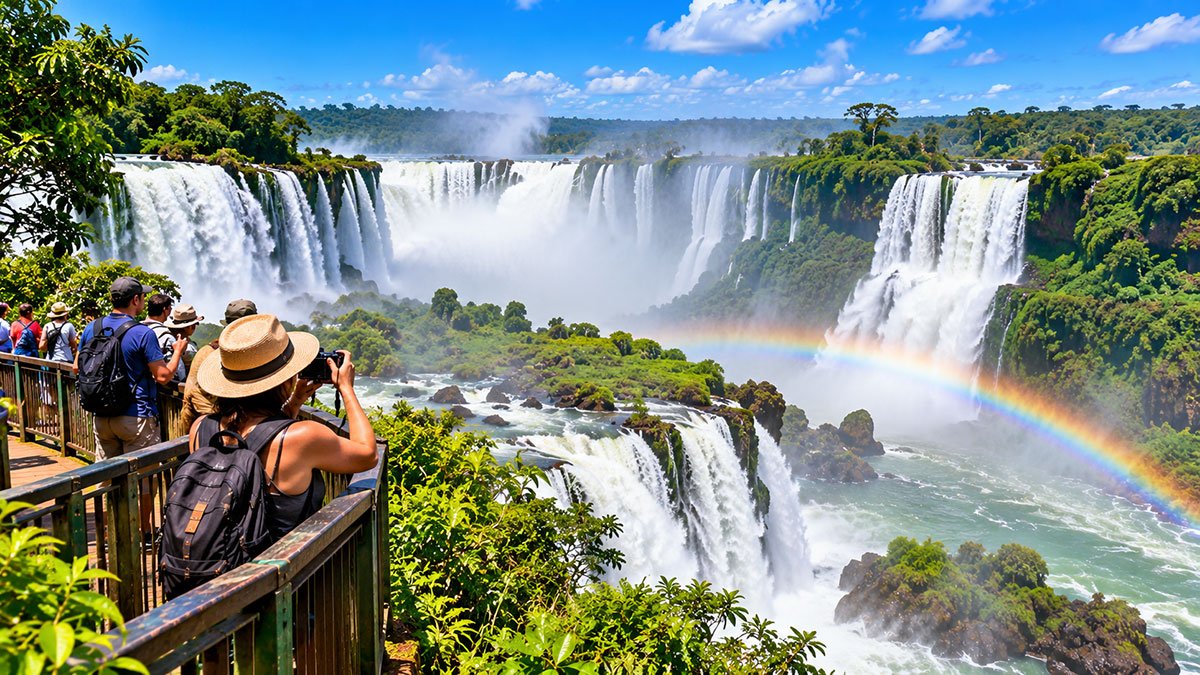
Iguazú Falls is one of the most spectacular natural attractions in South America. Located on the border between Argentina and Brazil, this magnificent waterfall system features powerful cascades, lush subtropical rainforest and breathtaking panoramic viewpoints.
Stretching for nearly 2.7 kilometres, the falls create a dramatic landscape of rushing water, rising mist and forest-covered islands. Visitors can explore walking trails, enjoy boat excursions and discover the remarkable wildlife of the surrounding national parks.
Whether you are planning a dedicated waterfall holiday or adding Iguazú Falls to a wider South American itinerary, a little preparation can make your visit more enjoyable. These Iguazú Falls travel tips will help you understand the two sides of the falls, choose accommodation, plan transportation and prepare for the experience.
-
Where Are Iguazú Falls Located?
Iguazú Falls lies along the international border between Argentina and Brazil, where the Iguazú River flows over a series of rocky ledges into numerous cascades.
The waterfall system is protected by two adjoining national parks:
- Iguazú National Park, Argentina: Known for its extensive walking trails, close-up waterfall viewpoints and access to the famous Devil’s Throat.
- Iguaçu National Park, Brazil: Known for its panoramic views across the waterfall system and its scenic visitor trail.
Both parks are UNESCO World Heritage properties because of their outstanding natural beauty and ecological importance.
The surrounding rainforest supports a rich variety of plant and animal life. Wildlife in the wider region includes toucans, coatis, howler monkeys, giant anteaters and jaguars, although sightings of elusive species are never guaranteed.
The nearby cities of Puerto Iguazú in Argentina and Foz do Iguaçu in Brazil are convenient bases for exploring the falls. Paraguay is also nearby, but crossing into Paraguay is not necessary to visit either national park.
-
Discover the Spectacular Devil’s Throat
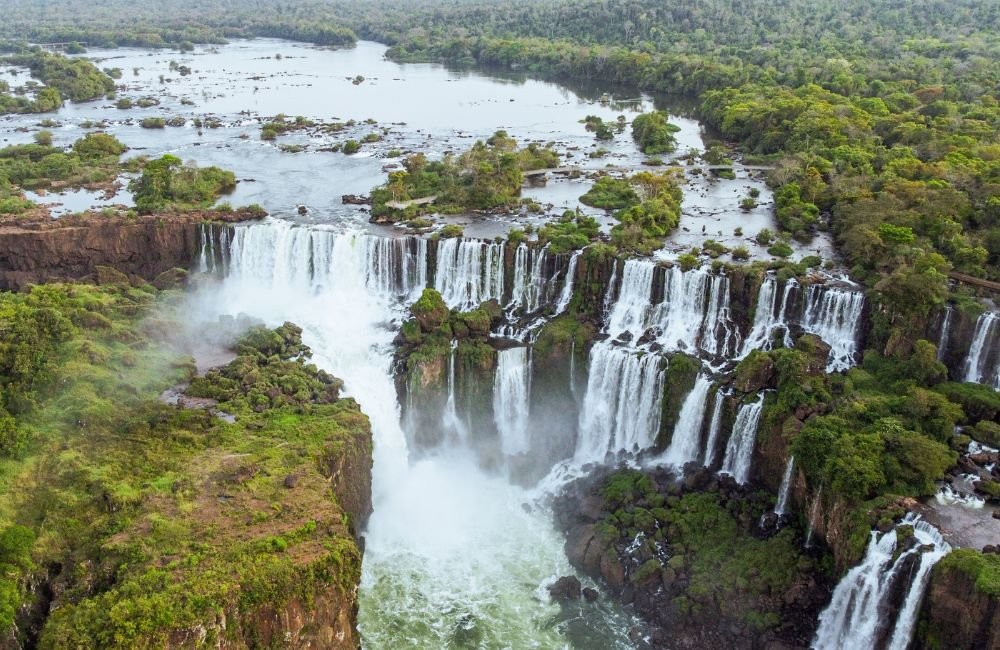
One of the most famous features of Iguazú Falls is Devil’s Throat, known as Garganta del Diablo in Spanish and Garganta do Diabo in Portuguese.
This enormous, U-shaped section concentrates a tremendous volume of water into a dramatic chasm. The roaring cascades and clouds of spray create an unforgettable spectacle.
On the Argentine side, designated walkways lead visitors towards viewpoints overlooking the falls. The experience can feel remarkably close to the rushing water, especially when the river is flowing strongly.
The Brazilian side provides a different perspective, allowing visitors to appreciate the scale of the waterfall system across a broad panorama.
For the best experience, allow enough time to explore the viewpoints rather than simply stopping for a quick photograph. Bring a waterproof cover for your camera or phone, as mist can reach the viewing areas.
Access to individual trails and viewpoints can change because of water levels, maintenance or safety restrictions. Check the official park notices before setting out.
-
Learn About the Legend of Iguazú Falls
The falls are associated with a traditional Indigenous legend often retold in travel literature.
In one version, a deity becomes angry when a young woman escapes by canoe with the person she loves. The deity cuts the river, creating the immense waterfalls and separating the lovers.
The legend offers a dramatic explanation for the powerful landscape, but it should be understood as a traditional story rather than a scientific account of how the falls formed.
Geologically, the waterfall system developed through the interaction of the river with ancient basalt rock and the landscape’s geological structure.
Visitors can learn more about the region’s Indigenous heritage through reputable local cultural resources and interpretation. Respect for Indigenous communities and their traditions is an important part of responsible travel.
-
Choose Between the Argentine and Brazilian Sides
If time permits, visiting both sides provides a fuller experience of Iguazú Falls.
Exploring the Argentine side
The Argentine national park offers a network of paths and viewpoints that take visitors through the forest and towards different sections of the falls.
Depending on current access, visitors may explore the Upper Circuit, Lower Circuit and the route towards Devil’s Throat.
The park’s ecological train has traditionally connected key visitor areas, helping people move through the park. Check current operating information before relying on it for your itinerary.
Plan to spend a substantial part of the day here. The walking routes, viewpoints and time needed to travel between sections can make the Argentine side a full-day visit.
Exploring the Brazilian side
The Brazilian national park offers a more panoramic experience of the falls. Its main visitor route provides impressive views across the cascades and opportunities for photography.
Allow time to enjoy the viewpoints without rushing. The experience can be particularly rewarding when mist rises above the water and the sunlight creates rainbows.
The Brazilian visit can often fit into a shorter itinerary than the Argentine side, but queues, transport, weather and the availability of optional activities can affect how long you need.
Travel tip: If you have only one day, choose the side that best matches your interests and confirm trail access before travelling. If you have two days, consider dedicating a separate day to each national park.
-
Where Should You Stay Near Iguazú Falls?
The two main accommodation bases are Puerto Iguazú in Argentina and Foz do Iguaçu in Brazil.
Puerto Iguazú, Argentina
Puerto Iguazú is a convenient base for visitors who want to explore the Argentine national park. The town offers hotels, guesthouses, restaurants and tour services.
Staying here can simplify an early start for the park and provide opportunities to enjoy local restaurants in the evening.
Foz do Iguaçu, Brazil
Foz do Iguaçu has a wide range of accommodation options, restaurants, shopping facilities and transport services. It is convenient for visiting the Brazilian national park and other regional attractions.
Compare accommodation by location rather than price alone. Airport transfers, park transport, border-crossing time and the cost of meals can influence your overall budget.
Staying inside a national park
Accommodation within or immediately beside a park may offer convenient access and a distinctive setting. However, availability, access arrangements and hotel names can change over time.
Check the official national park websites and accommodation providers for current operating status, facilities, rates and booking conditions before making a reservation.

-
Check Visa and Border-Crossing Requirements
Because Iguazú Falls lies on an international border, travellers who want to visit both sides must meet the entry requirements for both Argentina and Brazil.
Do not assume that entry into one country automatically permits entry into the other. Visa rules depend on your nationality, passport, purpose of travel and length of stay.
For example, citizens of the United States, Canada and Australia have been subject to Brazil’s visitor e-visa requirement since 10 April 2025. Other nationalities may have different rules.
Before crossing the border:
- Check the official immigration requirements for Argentina and Brazil.
- Confirm whether you need a visa or electronic travel authorisation.
- Carry the required valid travel documents.
- Allow enough time for immigration checks and transport.
- Verify the requirements for children travelling with you.
- Check whether your planned tour includes a border crossing.
Official resources:
- Argentina: https://www.argentina.gob.ar/migraciones
- Brazil’s Ministry of Foreign Affairs: https://www.gov.br/mre/
Important: Confirm current requirements with the relevant government authorities before travelling. Do not rely on old blog posts or assume that a visa can be obtained at the border.
-
Prepare for Mist, Rain and Humid Weather
The enormous volume of water produces persistent spray around many sections of Iguazú Falls. Visitors can get wet even when it is not raining.
Bring a waterproof jacket or poncho and a protective cover for your camera, phone and other electronics.
Comfortable walking shoes with good grip are useful because paths may be wet. A spare shirt or lightweight change of clothes can make the rest of your day more comfortable.
Other useful items include:
- A reusable water bottle
- Sunscreen and a hat
- Insect repellent
- Lightweight clothing suitable for humid conditions
- A small day bag
- A waterproof phone pouch
- Snacks, subject to park rules
A swimsuit may be useful for certain separately operated excursions, but it is not a substitute for appropriate clothing on the park trails. Follow all safety instructions and use only authorised areas for water activities.
-
Consider a Boat Ride Near the Falls
Boat excursions offer a different perspective on the power of Iguazú Falls. Depending on the operator and conditions, trips may travel along the river and approach sections of the cascades.
These excursions can be exciting, but they often involve substantial splashing and spray. You should expect to get wet on trips that approach the falls closely.
Before booking, check the operator’s safety procedures, minimum age and health requirements, departure location, cancellation terms and what equipment is provided.
Protect your camera and phone carefully. Even when a waterproof bag is supplied, confirm what it protects against and follow the crew’s instructions.
Boat excursions are optional and may be affected by river levels, weather and operating restrictions. Do not assume that a tour is available every day.
-
Food, Drinks and Transport Inside the Parks
Food and drink facilities may be available in visitor areas, but opening hours, prices and services can vary.
If you want to keep costs under control, eat before entering or bring permitted snacks and a refillable water bottle. Check the current rules on food, waste and what you can carry into each park.
Transport arrangements also differ between the two sides. Argentina has used an ecological train to connect parts of its visitor network, while the Brazilian park has its own visitor transport and trail arrangements.
Check official park information for the latest ticket options, transport services, opening hours and accessibility details.
Arriving early can give you more time to explore, particularly during busy periods. Build in extra time for ticket checks, queues, walking and any optional activities.
-
Protect the Rainforest and Respect Wildlife
Iguazú Falls is more than a scenic attraction. The surrounding protected areas preserve important remnants of the Atlantic Forest and provide habitat for a wide range of species.
Responsible visitor behaviour helps protect this fragile environment.
- Stay on designated trails and viewing platforms.
- Never feed wild animals, including coatis.
- Keep a safe distance from wildlife.
- Avoid touching or removing plants, rocks and other natural features.
- Carry rubbish out or dispose of it in designated bins.
- Follow barriers, closures and instructions from park staff.
- Respect local communities and Indigenous cultural heritage.
Animals may approach visitors in search of food, but feeding them can change their behaviour and create risks for both people and wildlife.
Choose authorised tour operators and follow their environmental and safety guidance.
-
How Much Time Should You Spend at Iguazú Falls?
The time you need depends on how many trails and activities you want to experience.
A single day may be sufficient for a focused visit to one side, depending on crowd levels, transport and trail access. Visiting both sides usually requires more planning because you must account for travel and border formalities.
For a more relaxed itinerary, consider spending two days in the area:
Day 1: Explore the Argentine national park, including its main circuits and available viewpoints.
Day 2: Visit the Brazilian national park for panoramic views. Add a boat excursion or another local attraction if time and operating conditions permit.
If you have additional days, explore the towns, local food and other attractions in the surrounding region.
Conclusion: Plan an Unforgettable Visit to Iguazú Falls
Iguazú Falls is an extraordinary natural destination where powerful cascades meet lush subtropical rainforest. The Devil’s Throat, the panoramic Brazilian viewpoints and the walking trails on the Argentine side each offer a different way to appreciate the landscape.
A successful visit begins with practical preparation. Choose your accommodation carefully, check visa and border requirements, confirm park access and bring suitable protection against water and humid weather.
Most importantly, take time to appreciate the falls without rushing. Whether you explore one side or both, Iguazú offers an opportunity to experience one of South America’s remarkable natural wonders while learning about the ecosystems and cultural heritage that make the region special.
