

Ocean City, New Jersey, combines traditional coastal homes, sandy beaches and boardwalk recreation with the amenities of a year-round seaside community.
Living in Ocean City NJ: A Guide to Coastal Life and Real Estate
Ocean City, New Jersey, is famous for its sandy beaches, lively boardwalk and family-friendly atmosphere. Yet beyond its popularity as a summer destination, this coastal community offers something else: the opportunity to make the Jersey Shore part of everyday life.
For families, retirees, remote workers and people considering a second home, living in Ocean City NJ can mean morning walks by the Atlantic Ocean, easy access to outdoor recreation and a community with established schools, cultural facilities and local services.
However, moving to a barrier island requires more planning than choosing a home in a typical suburban neighbourhood. Property buyers must consider flood exposure, insurance, seasonal traffic, maintenance costs and the differences between summer and winter living.
Located in Cape May County, Ocean City offers a mixture of permanent residences, condominiums, vacation properties and seasonal rentals. Its character changes throughout the year, but its waterfront setting remains central to local life.
This guide explains what to expect when relocating to Ocean City, including housing choices, employment opportunities, schools, recreation and the practical considerations that matter before buying or renting a home.
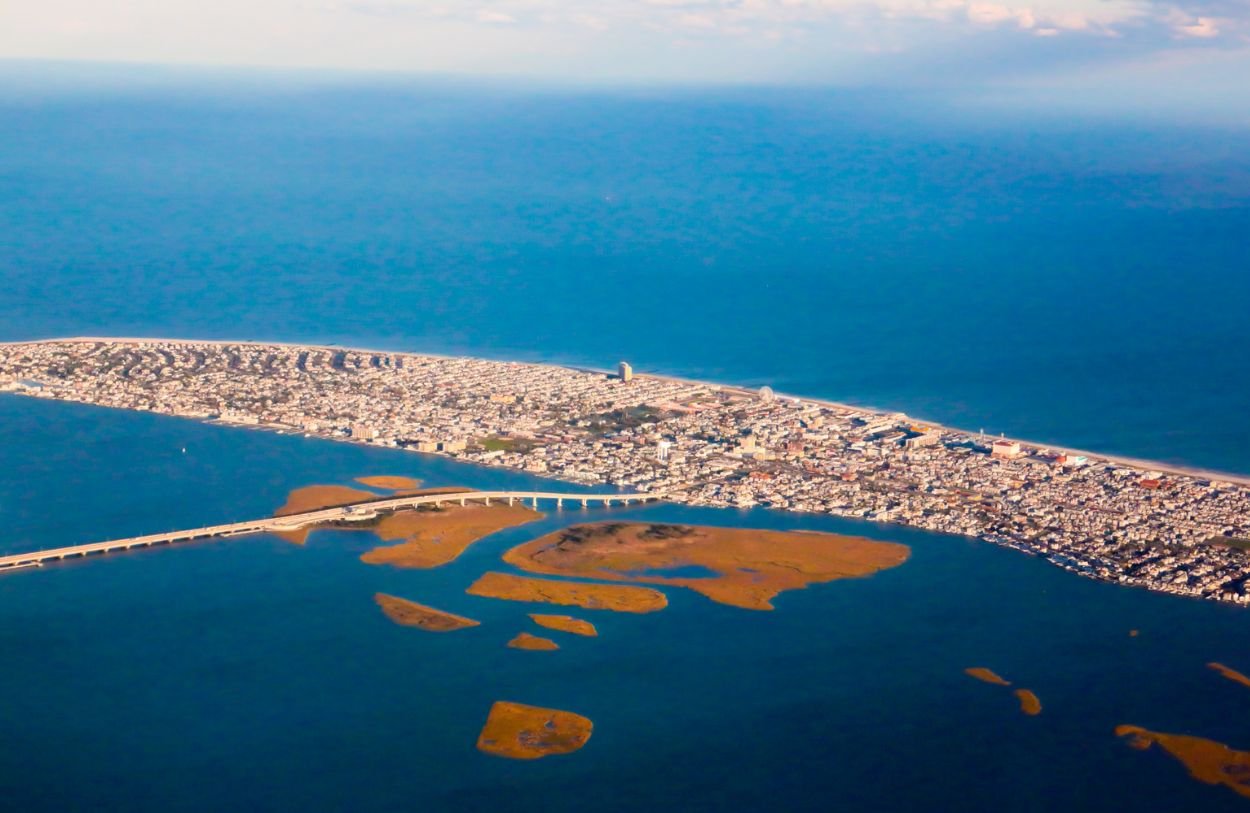
Aerial panorama of Ocean City, New Jersey, featuring its densely developed barrier island, Atlantic coastline, surrounding bay waters and mainland bridge connection.
Why Consider Living in Ocean City, New Jersey?
Ocean City occupies a barrier island along New Jersey’s southern Atlantic coast. The Atlantic Ocean borders the eastern side, while the bays and wetlands of the Great Egg Harbor region lie to the west.
Its location gives residents access to beaches, boating, fishing and coastal scenery without leaving their hometown.
The community is widely known by its long-established nickname, America’s Greatest Family Resort.
Ocean City’s family-oriented identity is closely connected to its beaches, boardwalk, recreational programmes and tradition of alcohol-free public resort life.
Unlike many other shore destinations, Ocean City prohibits alcohol sales within the municipality. Public drinking is also prohibited.
For prospective residents, the appeal extends beyond summer recreation.
The city has public schools, community facilities, recreational programmes, municipal services and a downtown shopping district.
Its location also provides road connections to Somers Point, Atlantic City and other parts of Cape May County.
However, the town’s popularity as a vacation destination means prospective residents should think carefully about how their daily routines might change between the busy summer season and quieter months.
What Is Year-Round Life in Ocean City Like?
One of the most important things to understand before relocating is the difference between visiting Ocean City for a summer holiday and living there throughout the year.
Summer: An Active Seaside Community
Summer brings visitors, seasonal businesses and a full calendar of recreational activities.
The boardwalk becomes a major gathering place, beaches attract families and restaurants experience increased demand.
Residents can enjoy a wide range of entertainment and outdoor activities close to home.
However, summer also brings practical challenges.
Parking may become more difficult near popular beach access points. Traffic increases around the causeways, and shopping or dining areas can become crowded.
Properties in heavily visited neighbourhoods may also experience additional activity associated with vacation rentals.
For some residents, the energetic atmosphere is part of Ocean City’s appeal. Others may prefer residential streets farther from the busiest boardwalk areas.
Autumn and Winter: A Quieter Coastal Lifestyle
After the main summer season, the pace of life changes.
The beach and boardwalk remain important public spaces, but fewer visitors generally mean quieter streets and less competition for parking.
Autumn can be particularly enjoyable for walking and cycling.
Winter brings colder weather, shorter days and the possibility of coastal storms.
Some businesses reduce their operating hours or close seasonally, while schools, municipal departments and established community facilities continue serving residents.
If you plan to live in Ocean City permanently, consider spending time in town during winter as well as summer.
A property that feels ideal during a beach holiday may offer a very different experience during the colder months.
Ocean City NJ Real Estate: Choosing the Right Home
The Ocean City housing market includes several types of residential properties.
Depending on your budget, household needs and intended use, you may consider a condominium, traditional single-family home, townhome or seasonal vacation property.
Each option offers different advantages and responsibilities.
Condominiums
Condominiums can appeal to buyers looking for a smaller coastal property without maintaining an entire detached house.
Some condominium buildings offer shared amenities or building-management arrangements.
However, owners usually contribute to association expenses, which can include maintenance, insurance, reserve funding and major building projects.
Before purchasing a condominium, review the association’s governing documents, financial statements, insurance arrangements and any planned special assessments.
Also verify whether the property allows year-round occupancy and whether rental restrictions apply.
Single-Family Homes
Detached houses offer greater independence and may provide more space for families, guests or home offices.
However, homeowners generally take direct responsibility for exterior maintenance, structural repairs and property insurance.
On a coastal island, salt air, wind-driven rain and storm exposure can affect building materials.
Routine upkeep and appropriate construction details are therefore particularly important.
Before buying, arrange a professional inspection that considers the property’s age, structural condition, moisture intrusion and coastal exposure.
Duplexes and Multi-Unit Properties
Ocean City also has residential properties with multiple units.
These can interest buyers who want separate living spaces or hope to generate rental income.
However, property configuration does not automatically establish legal occupancy or rental rights.
Confirm the property’s approved use, zoning, rental licensing requirements and any association restrictions before making financial assumptions.
Vacation Homes and Seasonal Properties
Some buyers want a property primarily for weekends, holidays and summer stays.
Others plan to use their home throughout the year or eventually retire in Ocean City.
Your intended use should influence the type of property you purchase.
A summer home may prioritise access to the beach and guest accommodation. A permanent residence may place greater importance on storage, parking, heating, nearby services and year-round convenience.
When comparing properties, think about how the home will function in January as well as July.
Understanding the Cost of Living in Ocean City
Purchasing a coastal property involves more than the advertised sale price.
Prospective homeowners should prepare a realistic budget that accounts for both ownership and everyday living expenses.
Important costs include:
- Mortgage payments or other financing expenses.
- Property taxes.
- Homeowners and flood insurance.
- Condominium or homeowners association fees, where applicable.
- Electricity, water, heating and internet.
- Routine maintenance and occasional major repairs.
- Parking and transportation costs.
- Property management and maintenance during periods of absence.
Property prices and insurance premiums vary significantly between individual homes.
Rather than relying on a general estimate for Ocean City, compare recent transactions and obtain property-specific insurance quotations.
Property Taxes
Ocean City assesses residential property for local taxation under New Jersey rules.
The amount you pay depends on the property’s taxable assessment and applicable tax rates.
Before buying, request the property’s current tax information and investigate whether planned improvements or reassessments could affect future expenses.
The Ocean City Tax Assessor and Tax Collector provide official information about assessments and tax records.
Budgeting for Coastal Maintenance
Living near the ocean can create additional maintenance needs.
Salt air and moisture may accelerate corrosion and deterioration of exposed materials.
Decking, railings, windows, exterior fixtures and roofing deserve particular attention.
Owners should plan for periodic inspections and preventative maintenance rather than treating repairs as unexpected expenses.
Flood Risk and Insurance: Essential Considerations Before Buying
Flood exposure is one of the most important factors when evaluating property in Ocean City.
The city sits on a barrier island and faces potential flooding from the Atlantic Ocean, bay waters, high tides and coastal storms.
Ocean City’s municipal flood information identifies the entire island as flood-prone.
Although the city invests in drainage and flood-protection improvements, no project can completely eliminate flooding.
Check the Property’s Flood Zone
Before purchasing a home, investigate the property’s location on current flood hazard maps.
FEMA flood maps provide information about designated flood-risk zones.
You should also review the property’s elevation relative to applicable flood requirements.
Ocean City provides access to flood elevation certificates that may help buyers understand building elevations.
However, a certificate may not exist for every property, and older documents may not reflect subsequent changes.
If necessary, consult a qualified surveyor or engineer.
Review New Jersey’s Flood Disclosure Requirements
New Jersey requires sellers of real property to provide specified flood-risk disclosures before buyers become obligated under a purchase contract.
The requirements include information about designated flood hazard areas and the seller’s actual knowledge of flood-related conditions.
Prospective buyers should examine these disclosures carefully.
Ask about previous water intrusion, flood damage, repairs and insurance claims.
A disclosure is an important source of information, but it should complement independent due diligence rather than replace it.
Obtain a Flood Insurance Quote
Standard homeowners insurance generally does not cover damage caused by flooding.
Separate flood insurance may therefore be necessary, and lenders may require coverage under applicable rules.
The cost depends on property-specific risk characteristics, coverage choices and insurer underwriting.
Before finalising a purchase, request quotations for both homeowners and flood insurance.
This can prevent unexpected ownership expenses.
Prepare for Coastal Storms
Permanent residents should understand Ocean City’s emergency procedures and evacuation routes.
The municipality provides flood preparedness guidance, emergency notifications and storm-safety information.
Keep important documents accessible and develop a household emergency plan.
If you own a second home, consider who will inspect the property and secure it when severe weather approaches.
Working and Finding Employment in Ocean City
Employment is an important consideration for anyone planning to relocate permanently.
Ocean City’s visitor economy supports businesses involved in accommodation, food service, retail, recreation and tourism.
However, some jobs follow the summer season rather than operating throughout the year.
Seasonal Employment Opportunities
Ocean City’s municipal government recruits seasonal employees for various departments.
These opportunities can include recreation, administration, maintenance and beach-related work.
Private employers may also recruit staff during busy tourism periods.
Applicants should check individual job descriptions for required qualifications, age restrictions and employment dates.
Seasonal work can provide valuable experience, but it may not offer dependable year-round income.
Year-Round Careers
People seeking permanent employment can investigate opportunities in education, municipal services, retail, property management and other local businesses.
The wider region also provides additional employment possibilities.
For example, nearby mainland communities and Atlantic County may offer jobs beyond Ocean City’s seasonal tourism economy.
However, opportunities depend on individual qualifications and the prevailing labour market.
Research current vacancies before relocating rather than assuming that a particular field has open positions.
Remote Working from Ocean City
Remote work may make coastal living possible for people whose jobs do not require daily office attendance.
Before renting or buying, confirm the property’s internet service options and reliability.
It is also worth evaluating whether the home has sufficient workspace, appropriate heating and a layout that supports year-round use.
If your employer requires occasional office visits, test the practical journey during normal working hours.
Schools and Education in Ocean City
Families with school-age children will want to understand the local education system before selecting a home.
Ocean City has its own public school district, serving students from preschool through high school.
The district operates three schools.
Ocean City Primary School
Ocean City Primary School serves students from pre-kindergarten through third grade.
The school provides early childhood and elementary education.
Ocean City Intermediate School
Ocean City Intermediate School serves grades four through eight.
It provides the transition between elementary and secondary education.
Ocean City High School
Ocean City High School serves grades nine through twelve.
The school offers academic programmes, extracurricular activities and athletics.
It also serves eligible students from certain neighbouring communities under applicable educational arrangements.
What Families Should Check
Before moving, contact the Ocean City School District about enrolment procedures, residency requirements, transportation and available educational services.
School eligibility and attendance arrangements may depend on the child’s circumstances and official district policies.
Families should also investigate childcare, after-school programmes and activities that match their children’s needs.
Beaches and Boardwalk: Everyday Life by the Ocean
Ocean City’s beaches and boardwalk remain central to the appeal of living on the Jersey Shore.
The city’s oceanfront offers opportunities for walking, swimming, surfing and enjoying the outdoors.
However, residents must follow the same public beach regulations as visitors.
Ocean City Beach Tags
Ocean City requires beach tags for people aged 12 and older during its designated summer tag season.
The municipality offers different tag categories, including seasonal options.
Rules, prices and dates may change from year to year.
Residents planning regular beach visits should check the official city website before the summer season begins.
Beach Safety and Lifeguards
The Ocean City Beach Patrol supervises designated swimming areas during its operating season.
Lifeguard coverage varies by location and date.
Always check the current list of guarded beaches before entering the ocean.
The city advises beachgoers to swim only where lifeguards are on duty.
During the off-season, the beach can remain attractive for walking and photography, but visitors should not assume that swimming areas have lifeguard supervision.
Ocean City’s Boardwalk
The boardwalk is one of the city’s best-known public spaces.
It offers walking and cycling opportunities, shops, eateries and seasonal entertainment.
For residents, it can become part of an everyday outdoor routine rather than merely a vacation attraction.
However, certain businesses and recreational attractions operate seasonally.
Cycling rules also vary by season, so check posted restrictions before riding on the boardwalk.
Parks, Recreation and Community Facilities
Living in Ocean City offers more than access to the beach.
The municipality maintains recreational facilities, parks, sports areas and community programmes for different age groups.
Ocean City Community Center
The Ocean City Community Center at 1735 Simpson Avenue is an important year-round facility.
It houses several services and attractions, including:
- Ocean City Free Public Library.
- Ocean City Aquatic & Fitness Center.
- Ocean City Arts Center.
- Ocean City Historical Museum.
- Howard S. Stainton Senior Center.
The combination of educational, recreational and cultural facilities makes the centre particularly valuable during winter or rainy weather.
Aquatic & Fitness Center
The Aquatic & Fitness Center includes a 25-metre swimming pool, fitness equipment and spaces for organised classes.
Programmes may include exercise, wellness and recreational activities.
Membership arrangements and schedules vary, so check current details before joining.
Parks and Sports
Ocean City maintains public recreation areas that support activities such as tennis, basketball and other sports.
The city also operates a municipal golf course.
Families can explore playgrounds, open spaces and recreational programmes without relying exclusively on the beach.
Events Throughout the Year
Ocean City hosts community celebrations and seasonal events.
Long-established traditions include the Night in Venice boat parade, Baby Parade, downtown block parties and First Night festivities.
The Ocean City Music Pier also hosts concerts and cultural performances.
Residents can use the municipality’s official events calendar to follow upcoming activities.
Shopping, Dining and Everyday Essentials
A permanent move requires access to ordinary services, not just holiday attractions.
Asbury Avenue and Downtown Ocean City
Asbury Avenue forms the heart of Ocean City’s downtown shopping district.
The area includes local shops, restaurants and other businesses.
It provides an alternative to the boardwalk’s visitor-focused commercial environment.
Before choosing a home, consider how easily you can reach the businesses you expect to use regularly.
Groceries and Other Services
Prospective residents should investigate grocery shopping, pharmacies, banking and other services in relation to the neighbourhood they are considering.
Some shopping trips or specialised services may require travel to nearby mainland communities.
Availability and opening hours can change between summer and winter.
Healthcare
Access to healthcare deserves particular attention for families, retirees and people with ongoing medical needs.
Investigate local medical and dental services as well as hospital access in nearby communities.
Shore Medical Center in Somers Point is a nearby hospital option.
If you require specialist treatment, review where appropriate services operate and how long your regular journey would take.
Getting Around Ocean City and the Surrounding Region
Ocean City connects to nearby mainland communities through road bridges and causeways.
Route 52 provides an important connection towards Somers Point and the Garden State Parkway.
Other routes connect the island with surrounding coastal communities.
Driving and Parking
For many permanent residents, a car offers flexibility for work, shopping, healthcare appointments and travel outside Ocean City.
However, parking conditions vary between neighbourhoods.
Some properties provide off-street spaces, while others rely on street parking.
Before buying, check whether the property includes dedicated parking and whether restrictions apply nearby.
Ocean City operates municipal parking lots and metered spaces, with seasonal charges in certain areas.
Public Transportation
NJ TRANSIT provides bus connections between Ocean City and Atlantic City, including routes 507 and 509.
These services may offer useful connections for residents without a car.
However, route frequency, operating hours and connections should be checked before relying on public transportation for daily commuting.
For longer journeys, travellers can investigate rail and bus connections through Atlantic City and other regional transport hubs.
Test Your Commute Before Moving
If you expect to travel regularly for work, make the journey during the times you would normally commute.
Pay particular attention to summer traffic and routes across the causeways.
A manageable winter journey may take longer during peak vacation periods.
Buying a Vacation Home for Rental Income
Some property buyers consider renting their Ocean City home to vacationers when they are not using it.
Seasonal rentals can provide income, but they also involve legal responsibilities, expenses and uncertainty.
Understand Rental Registration
Ocean City requires residential rental properties to obtain the appropriate municipal mercantile licence or rental registration.
Owners must also comply with applicable insurance and municipal requirements.
Before advertising a property, confirm that its intended rental use is permitted.
Condominium associations may impose additional restrictions.
Understand the Financial Responsibilities
Rental income does not eliminate the costs of ownership.
Expenses may include cleaning, management, repairs, utilities, insurance and periods without tenants.
Property owners should also investigate applicable taxes and reporting obligations.
It is safer to build a financial plan that does not depend on continuous bookings or a particular rental income figure.
If rental income is an important part of the purchase decision, seek advice from appropriately qualified property, tax and legal professionals.
Choosing the Right Part of Ocean City
Different parts of Ocean City can offer noticeably different daily experiences.
Rather than selecting a property solely because it is close to the ocean, consider the surrounding neighbourhood and its suitability for your lifestyle.
Near the Boardwalk
Properties near the main boardwalk offer convenient access to restaurants, recreation and summer entertainment.
However, buyers should consider visitor activity, traffic and parking.
Downtown and Central Residential Areas
The neighbourhoods around Asbury Avenue and central Ocean City may appeal to residents who value access to shops, schools and community services.
Street conditions and property characteristics still vary from block to block.
Quieter Residential Streets
Areas farther from the busiest commercial locations may offer a different residential atmosphere.
However, being farther from the boardwalk does not automatically mean a property has lower flood risk.
Always assess the individual address rather than making assumptions based on neighbourhood appearance.
Questions to Ask Before Choosing a Neighbourhood
- How close is the property to schools, shops and healthcare?
- What happens to traffic and parking during summer?
- Are neighbouring homes occupied year-round or primarily used as rentals?
- Does the property have adequate parking and storage?
- What are the flood zone and elevation details?
- How long will regular journeys take?
- Are the nearby businesses and services available throughout the year?
Visiting the same neighbourhood during different seasons can reveal details that property photographs cannot.
Practical Checklist Before Moving to Ocean City NJ
Before making a long-term commitment, complete the following checks.
- Research the housing market. Compare actual property characteristics and recent transactions rather than relying only on asking prices.
- Investigate flood exposure. Review flood maps, elevation certificates and the property’s disclosure documents.
- Obtain insurance quotations. Understand homeowners and flood coverage before finalising your budget.
- Confirm property taxes and fees. Include association expenses, utilities and maintenance.
- Arrange a professional inspection. Pay particular attention to water intrusion, roofing, exterior materials and structural conditions.
- Review permitted property use. Check zoning, occupancy and rental rules where relevant.
- Research employment and commuting. Confirm practical job opportunities or remote-work arrangements.
- Contact the school district. Verify enrolment procedures and any services your family requires.
- Investigate healthcare access. Consider everyday appointments and specialist needs.
- Visit during the off-season. Experience the town outside its busiest vacation months before deciding where to live.
These steps can help buyers distinguish an appealing holiday property from a home that genuinely supports their everyday needs.
Frequently Asked Questions About Living in Ocean City NJ
Is Ocean City, New Jersey, a good place to live year-round?
Ocean City can suit people who enjoy a coastal lifestyle, community recreation and access to beaches. However, permanent residents must also consider flood exposure, seasonal business activity, housing costs and commuting requirements.
Is Ocean City NJ only a summer destination?
No. Ocean City has permanent residents, public schools, municipal services and year-round community facilities. Nevertheless, its visitor economy makes summer considerably busier than the off-season.
Are there public schools in Ocean City?
Yes. The Ocean City School District operates a primary school, intermediate school and high school, serving students across the preschool-to-grade-12 range.
Do Ocean City residents need beach tags?
Yes. The city’s summer beach-tag requirements also apply to residents who use the beaches, unless they qualify for an applicable exemption.
Is flood insurance necessary in Ocean City?
Flood insurance deserves serious consideration because Ocean City is a flood-prone barrier island. Certain mortgage arrangements require it. Buyers should check the property’s specific insurance requirements and obtain a quotation before purchasing.
Can I rent out my Ocean City vacation home?
Owners may be able to rent eligible properties, subject to municipal licensing, approved use, insurance requirements and any applicable association restrictions. Confirm the rules for the exact property before planning rental income.
Is Ocean City suitable for retirees?
Ocean City may appeal to retirees who enjoy walking, coastal scenery and community activities. However, healthcare access, insurance costs, property maintenance and storm preparedness should influence the decision.
Can you live in Ocean City without a car?
Some daily activities are possible on foot or by bicycle, depending on where you live. NJ TRANSIT also provides regional bus services. However, a car may offer greater convenience for employment, medical appointments and shopping outside the city.
Is Moving to Ocean City NJ Right for You?
Ocean City offers an appealing combination of coastal scenery, family-oriented recreation and established community facilities.
Its beaches, boardwalk, schools, cultural activities and local services make the town more than a seasonal holiday destination.
At the same time, life on a barrier island involves responsibilities that prospective buyers should not overlook.
Flood insurance, property maintenance, seasonal traffic and the availability of year-round employment can have a significant influence on everyday life.
The most useful approach is to experience Ocean City in different seasons, investigate individual properties carefully and compare the complete cost of living against your household needs.
With realistic expectations and thorough preparation, Ocean City can become more than a favourite place to spend summer holidays. It can become a coastal community you call home.
