
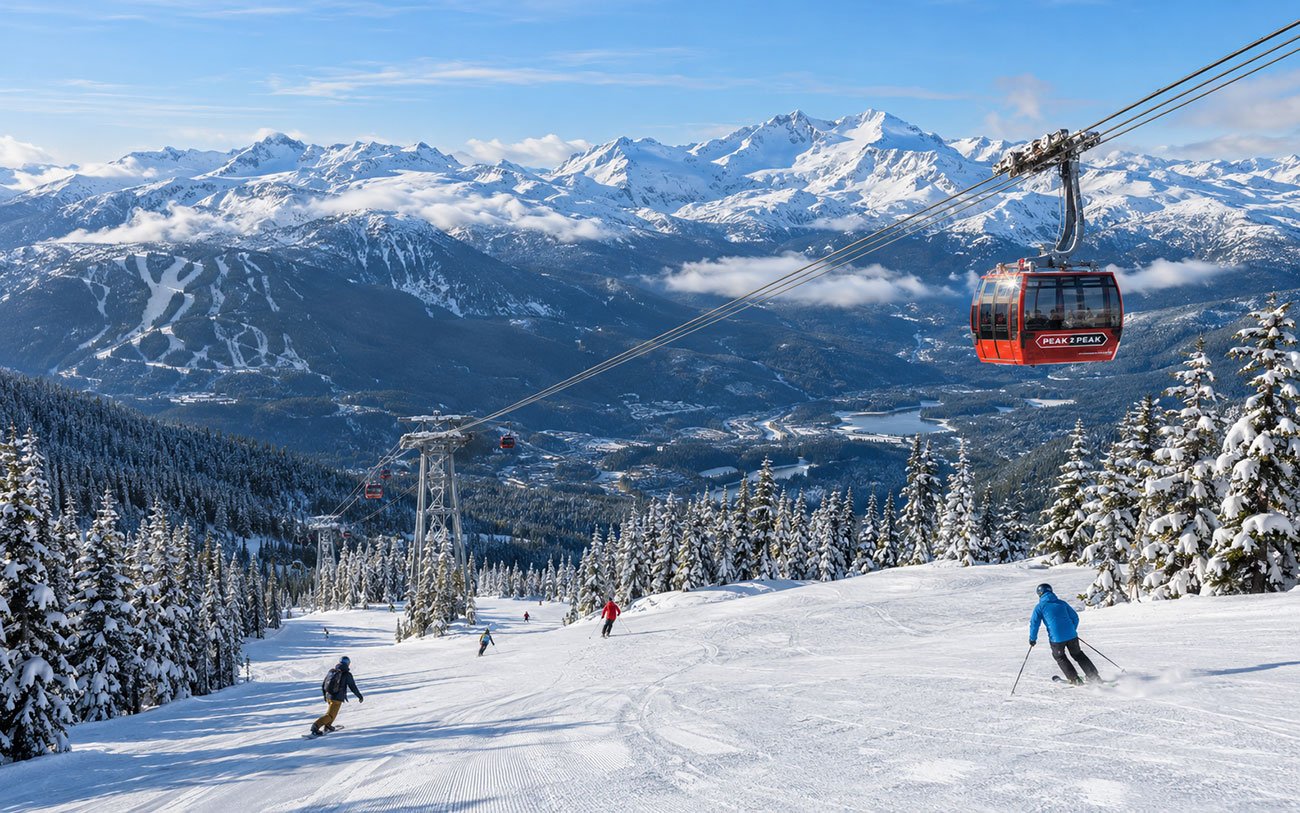
Whistler Blackcomb offers expansive ski slopes, mountain scenery and memorable winter experiences in British Columbia, Canada.
Whistler Ski Trip Guide: Skiing, Stays and Getting There
A Whistler ski trip combines spectacular mountain scenery, extensive ski terrain and the atmosphere of a Canadian alpine village. Set in the Coast Mountains of British Columbia, Whistler is one of North America’s best-known winter destinations, attracting skiers, snowboarders and travellers who simply want to experience the snow.
The main attraction is Whistler Blackcomb, a vast ski resort spread across two neighbouring mountains. Visitors can enjoy everything from beginner-friendly slopes and ski lessons to challenging alpine terrain. Away from the pistes, Whistler offers scenic gondola rides, winter walks, restaurants, spas and family activities.
Getting to Whistler is relatively straightforward. The resort is approximately two hours by road from Vancouver, with scheduled buses and airport transfers available for visitors who prefer not to drive.
Whether you are planning your first skiing holiday or returning for another mountain adventure, this guide covers when to visit, where to stay, how to reach Whistler and what to arrange before travelling.
Why Visit Whistler for a Ski Holiday?
Whistler’s appeal goes beyond its reputation for skiing.
The destination brings together a substantial mountain resort, a pedestrian-friendly village and a wide selection of winter activities. You can spend the morning on the slopes, enjoy an afternoon exploring the village and finish the day at a restaurant overlooking the mountains.
Whistler Blackcomb consists of two interconnected mountains: Whistler Mountain and Blackcomb Mountain. Together, they offer more than 8,000 acres of skiable terrain, with runs for different abilities.
The resort is also known for its PEAK 2 PEAK Gondola, which connects the mountains high above the valley.
Another advantage is the variety of accommodation. Visitors can choose hotels, serviced suites, holiday rentals and properties close to mountain lifts.
Families and groups with different interests can enjoy a holiday together without everyone needing to ski.
When Is the Best Time to Visit Whistler?
The best time for a Whistler ski trip depends on your priorities. Snow conditions, lift operations, accommodation availability and crowds vary throughout the winter.
Whistler Blackcomb generally begins its ski season in November and continues into spring, with exact dates determined by weather and operating conditions.
November and Early December: The Start of Winter
Early-season visitors can enjoy the excitement of the mountains reopening, along with festive decorations appearing around Whistler Village.
However, snow coverage and open terrain may be limited at this stage.
If skiing is your main priority, check the resort’s snow report and available lifts before booking an early-season holiday.
January and February: Midwinter Skiing
January and February are popular months for travellers seeking a traditional winter mountain experience.
Whistler often receives substantial snowfall during this period, although conditions vary from year to year.
Temperatures can be cold in the alpine, and storms may affect visibility or lift operations.
These months suit visitors who prioritise skiing and snowboarding, provided they are prepared for changeable mountain weather.
March and April: Spring Skiing
Spring brings longer daylight hours and often milder conditions at lower elevations.
It can be an appealing time to combine skiing with outdoor dining and village activities.
Snow conditions may vary considerably between the mountain bases and higher slopes. Some lower-elevation terrain may close before upper-mountain skiing finishes for the season.
Always check which lifts and runs are scheduled to operate during your chosen dates.
Skiing and Snowboarding at Whistler Blackcomb
Whistler Blackcomb is the centre of the destination’s winter sports experience.
Although the resort spans two mountains, they operate as one connected ski destination rather than a collection of separate ski resorts.
Both mountains offer a range of runs and facilities, allowing visitors to choose terrain suited to their experience.
Whistler Mountain
Whistler Mountain offers varied ski runs, open alpine areas and access from Whistler Village and Creekside.
It is a popular starting point for visitors staying near the main village.
Skiers can progress from designated beginner terrain towards more demanding runs as their skills develop.
Blackcomb Mountain
Blackcomb Mountain offers a similarly extensive network of slopes, with a combination of groomed pistes, challenging terrain and alpine scenery.
It can be accessed from the Upper Village and through connections from Whistler Village.
Experienced skiers and snowboarders will find demanding terrain on both mountains, but the available runs depend on snow conditions and safety decisions.
The PEAK 2 PEAK Gondola
One of Whistler’s most distinctive attractions is the PEAK 2 PEAK Gondola.
The gondola connects Whistler and Blackcomb mountains above the valley, allowing skiers and snowboarders to move between the two without returning to the village.
It also offers sweeping views of forests, mountains and the surrounding landscape.
Non-skiers can experience the gondola through designated sightseeing tickets when sightseeing operations are available.
Check the operating schedule before planning your visit, as weather, maintenance and seasonal arrangements may affect access.
Is Whistler Suitable for Beginner Skiers?
Yes. Whistler Blackcomb has designated beginner terrain and offers professional ski and snowboard lessons.
You do not need previous skiing experience to enjoy a winter holiday here.
However, the size of the resort can feel intimidating when you first arrive. Booking a lesson and selecting the correct beginner area will make your first day easier.
Ski and Snowboard Lessons
Whistler Blackcomb’s Snow School provides lessons for different ages and ability levels.
Depending on availability, visitors can choose group lessons or private instruction.
Beginners can learn essential techniques such as controlling speed, stopping, turning and using ski lifts safely.
More experienced visitors can arrange coaching to improve their technique.
Reserve lessons in advance, especially during school holidays and other busy travel periods.
Remember that lessons do not automatically include everything you need. Check whether lift access and equipment rentals must be purchased separately.
Renting Ski or Snowboard Equipment
You do not need to own skis or a snowboard to visit Whistler.
Rental shops provide equipment for different skill levels, including skis, snowboards, boots and helmets.
Booking equipment ahead of your arrival can improve availability and reduce the amount of organising required on your first morning.
If you are a beginner, ask for equipment suitable for learning rather than choosing advanced gear.
Allow enough time for boot fitting and adjustments before your lesson begins.
Choosing the Right Lift Ticket
Lift tickets and ski passes are a significant part of the cost of a Whistler holiday.
The resort offers different ticket and pass products, including options for visitors skiing for only a few days and those planning a longer season.
Prices and conditions depend on factors such as travel dates, the ticket type and when you purchase.
Before booking, compare:
- The number of days you intend to ski.
- Whether your dates fall within restricted holiday periods.
- The difference between daily lift tickets and available pass products.
- Any conditions attached to discounted tickets.
- Whether your ski lessons or holiday package include lift access.
Advance purchasing can provide savings, and some ticket products have limited availability.
Do not assume that a pass offers unrestricted access on every date.
Where to Stay in Whistler
Choosing the right accommodation area can make your holiday much more convenient.
Whistler has several distinct neighbourhoods, each offering a different experience.
Whistler Village: Best for First-Time Visitors
Whistler Village is a convenient base for visitors who want restaurants, shops, nightlife and mountain access close to their accommodation.
The pedestrian-oriented centre makes it easy to explore without a car.
You will also find access to mountain lifts, rental shops and visitor services.
For a first ski holiday, staying within comfortable walking distance of the lifts can be especially useful.
Upper Village: Convenient for Blackcomb Mountain
The Upper Village sits near the base of Blackcomb Mountain.
It offers accommodation close to the Blackcomb Gondola and provides access to Whistler Village on foot.
This area can suit travellers who prefer being near the Blackcomb base while remaining close to the main resort centre.
Whistler Creekside: A Quieter Alternative
Creekside lies south of Whistler Village and provides access to Whistler Mountain through the Creekside Gondola.
The area has its own shops, restaurants, ski services and accommodation.
It can be a good choice for families or travellers who prefer a smaller village atmosphere.
However, if you plan to spend most evenings in the main village, consider how you will travel between the two areas.
Hotels or Holiday Rentals?
Hotels may suit short trips where convenience and hotel services are priorities.
Holiday apartments and larger rental properties can be practical for families or groups who want additional space and self-catering facilities.
When comparing accommodation, check the exact location rather than relying only on descriptions such as “close to the slopes.”
Some properties offer ski-in, ski-out access, while others require walking, local transport or a shuttle.
Also review cancellation conditions, parking charges, additional accommodation fees and equipment storage arrangements before making a reservation.
How to Get from Vancouver to Whistler
Most international visitors reach Whistler through Vancouver International Airport (YVR).
Whistler is approximately 120 kilometres north of Vancouver by road, with a longer journey from the airport depending on your starting point.
The main route follows Highway 99, commonly known as the Sea to Sky Highway.
This scenic journey passes coastal landscapes, mountain scenery and the town of Squamish before reaching Whistler.
1. Vancouver Airport to Whistler by Shuttle
An airport shuttle is one of the easiest transport choices for visitors who do not want to hire a car.
Services connect Vancouver International Airport with Whistler, including operators such as YVR Skylynx and Whistler Shuttle.
Depending on the service, journeys may use scheduled stops or offer transfers to selected accommodation areas.
Before booking, compare the departure point, destination stop, luggage allowance and connection time after your flight.
Reserve your seat ahead of travel, especially if arriving during a busy winter period.
2. Vancouver to Whistler by Bus
Scheduled coaches also operate between downtown Vancouver and Whistler.
This is a practical option for travellers spending a few days in Vancouver before heading to the mountains.
Some services include stops along the Sea to Sky corridor.
Check the operator’s current timetable and luggage policies, particularly if carrying skis or snowboards.
Journey times vary with traffic and weather, so allow additional time when making onward connections.
3. Driving from Vancouver to Whistler
Hiring a car provides flexibility, especially if you plan to explore places beyond Whistler Village.
The drive from Vancouver generally takes around two hours in favourable conditions, while journeys from Vancouver International Airport commonly require approximately two and a half hours or longer.
However, Highway 99 is a mountain road. Winter weather can bring snow, ice, reduced visibility and travel delays.
Winter driving requirements are important.
British Columbia requires approved winter tyres on designated sections of the Sea to Sky Highway from October 1 to March 31.
Before hiring a vehicle:
- Confirm that it meets the applicable winter tyre requirements.
- Check weather forecasts and road conditions.
- Allow additional travel time.
- Avoid driving when conditions exceed your experience.
- Review your accommodation’s parking arrangements.
DriveBC provides official highway information and traffic cameras.
Travellers who are uncomfortable driving on winter roads may find a shuttle more relaxing.
4. Private Transfers and Air Travel
Private vehicle transfers are another option for families, groups or travellers who prefer a direct journey.
Compare the total price with shuttle tickets, particularly when travelling with several people.
Whistler also has specialised air-transfer options, including chartered helicopter services.
Scheduled floatplane connections are seasonal and mainly operate outside the winter ski period. They should not be treated as a standard winter airport transfer.
For most ski holidays, travelling by road is the practical choice.
Getting Around Whistler Without a Car
Once you reach Whistler, you may find that a rental car is unnecessary.
The main village is pedestrian-friendly, and accommodation near the lifts allows visitors to walk to many services.
BC Transit operates local buses connecting Whistler Village, Creekside and other neighbourhoods.
Seasonal free shuttle services also operate on selected routes.
Before relying on a particular service, check its current operating schedule and whether your accommodation is within walking distance of a stop.
If you are travelling with children or ski equipment, consider how far you will need to walk between your accommodation, transport stops and ski lifts.
Things to Do in Whistler Besides Skiing
Whistler is not exclusively a destination for skiers and snowboarders.
Visitors who prefer gentler activities can still enjoy the mountains, forests and village atmosphere.
Ride the PEAK 2 PEAK Gondola
When sightseeing operations are available, the gondola offers an opportunity to enjoy alpine scenery without skiing.
Check sightseeing ticket conditions and weather forecasts before travelling up the mountains.
Try Snowshoeing
Snowshoeing is a popular way to explore winter landscapes at a slower pace.
Whistler has designated snowshoeing opportunities, including routes around Lost Lake and in the wider region.
Choose maintained trails suited to your ability and check trail conditions before setting out.
Experience Cross-Country Skiing
Cross-country skiing offers a different experience from downhill skiing.
Lost Lake Park and Whistler Olympic Park are among the area’s recognised Nordic skiing destinations.
Rental equipment and lessons may be available, depending on the venue and season.
Explore the Village
Whistler Village offers shops, cafés, restaurants and public spaces surrounded by mountain scenery.
It is an enjoyable place to spend a day without committing to an organised activity.
Seasonal ice skating at Whistler Olympic Plaza is another option when the rink is operating.
Discover Whistler’s Arts and Culture
The Squamish Lil’wat Cultural Centre introduces visitors to the cultures of the Squamish and Lil’wat Nations.
The Audain Art Museum is another notable attraction, with a focus on art from British Columbia.
These venues provide rewarding alternatives when you want a break from outdoor activities.
Visitors can also consider a spa experience or other organised winter activities, subject to operating arrangements.
What to Pack for a Whistler Winter Holiday
Whistler’s weather can change considerably between the village and the alpine.
A mild or wet day at lower elevations may coincide with colder temperatures, strong winds or snowfall higher on the mountains.
Pack clothing that can be layered and adjusted throughout the day.
Essential items include:
- Waterproof and insulated outerwear suitable for winter conditions.
- Thermal base layers and warm mid-layers.
- Waterproof gloves or mittens.
- Warm socks and comfortable winter boots.
- A helmet for skiing or snowboarding.
- Suitable ski goggles or sunglasses.
- Sunscreen and lip protection.
- A small backpack for everyday essentials.
- Personal medicines and basic first aid supplies.
If renting equipment, confirm what your rental package includes.
Ski clothing, helmets, boots and other accessories may need to be arranged separately.
Safety Tips for Skiing in Whistler
Mountain conditions deserve careful attention, regardless of your experience.
Follow the resort’s Alpine Responsibility Code, obey closure signs and choose runs within your ability.
A few precautions can help you prepare:
- Check the official snow report and lift status each morning.
- Use designated runs appropriate for your skill level.
- Wear a properly fitted helmet.
- Allow extra time for changing weather.
- Avoid closed trails and restricted terrain.
- Carry a charged phone and know how to contact ski patrol.
- Arrange travel insurance that covers your planned winter sports.
Do not enter the backcountry without appropriate avalanche knowledge, equipment and experience.
Resort boundaries separate managed ski areas from terrain where hazards may be significantly greater.
If you want to explore beyond the marked resort slopes, seek appropriate professional guidance.
How to Plan a Whistler Ski Trip on a Budget
Whistler can be an expensive winter destination, particularly during popular holiday periods.
However, careful planning can help you manage costs without sacrificing the main experiences.
Book Accommodation Early
Compare properties in Whistler Village, Upper Village and Creekside.
Check the full accommodation cost, including taxes, service charges and transportation needs.
A less expensive property may not provide good value if it requires repeated taxi journeys.
Compare Lift Tickets Before Arrival
Lift tickets purchased close to the travel date may cost more than certain advance-booking products.
Compare the total cost of the number of ski days you need, and check any restrictions.
Consider Midweek Travel
If your schedule is flexible, consider travelling outside major holiday periods.
Midweek visits may provide more accommodation choices and a less crowded experience, although savings are not guaranteed.
Rent Equipment Rather Than Bringing Everything
For occasional skiers, renting equipment at the destination may be more practical than transporting personal skis or snowboards.
Compare rental prices with any airline charges for sporting equipment before deciding.
Use Public Transport When Practical
An airport shuttle and local buses may eliminate the need for a rental car, fuel and parking.
This can be particularly convenient if your accommodation is close to the village and mountain lifts.
Frequently Asked Questions About Visiting Whistler
Is Whistler worth visiting if you do not ski?
Yes. Whistler offers gondola sightseeing, snowshoeing, cross-country skiing, cultural attractions, restaurants, spas and seasonal village activities. There is plenty to experience without skiing or snowboarding.
How many days should you spend in Whistler?
A three- or four-night stay can work well for a first visit, especially if you want time for skiing and exploring the village. Beginners taking lessons or experienced skiers wanting to explore both mountains may prefer a longer stay.
How far is Whistler from Vancouver?
Whistler is approximately 120 kilometres north of Vancouver along Highway 99. Driving usually takes around two hours in favourable conditions, although the journey can take longer depending on the starting point, traffic and weather.
Can beginners ski at Whistler Blackcomb?
Yes. Whistler Blackcomb offers beginner terrain and ski and snowboard lessons for different ability levels. Booking instruction in advance is recommended for first-time visitors.
Do you need a car in Whistler?
Not necessarily. Whistler Village is pedestrian-friendly, and local buses and selected free shuttles connect other areas. Visitors staying close to the slopes can often manage without a rental car.
When does Whistler’s ski season begin?
Whistler Blackcomb typically opens for winter skiing in November and continues into spring, depending on mountain conditions and seasonal operations.
Is Whistler suitable for families?
Yes. Whistler offers ski lessons for different age groups, family-friendly accommodation and activities beyond the slopes. Confirm the age requirements for lessons and activities before booking.
Making the Most of Your Whistler Holiday
A successful Whistler ski trip begins with choosing the right travel dates, accommodation and transport.
If skiing is your priority, arrange lift access, lessons and equipment well before arrival. If you prefer a more relaxed holiday, leave time for mountain sightseeing, village walks and cultural attractions.
Travelling from Vancouver is relatively simple with the available road and shuttle connections, while Whistler’s compact village makes exploring convenient once you arrive.
With its combination of mountain scenery, winter sports and activities away from the slopes, Whistler offers plenty of ways to enjoy a Canadian winter holiday.
