
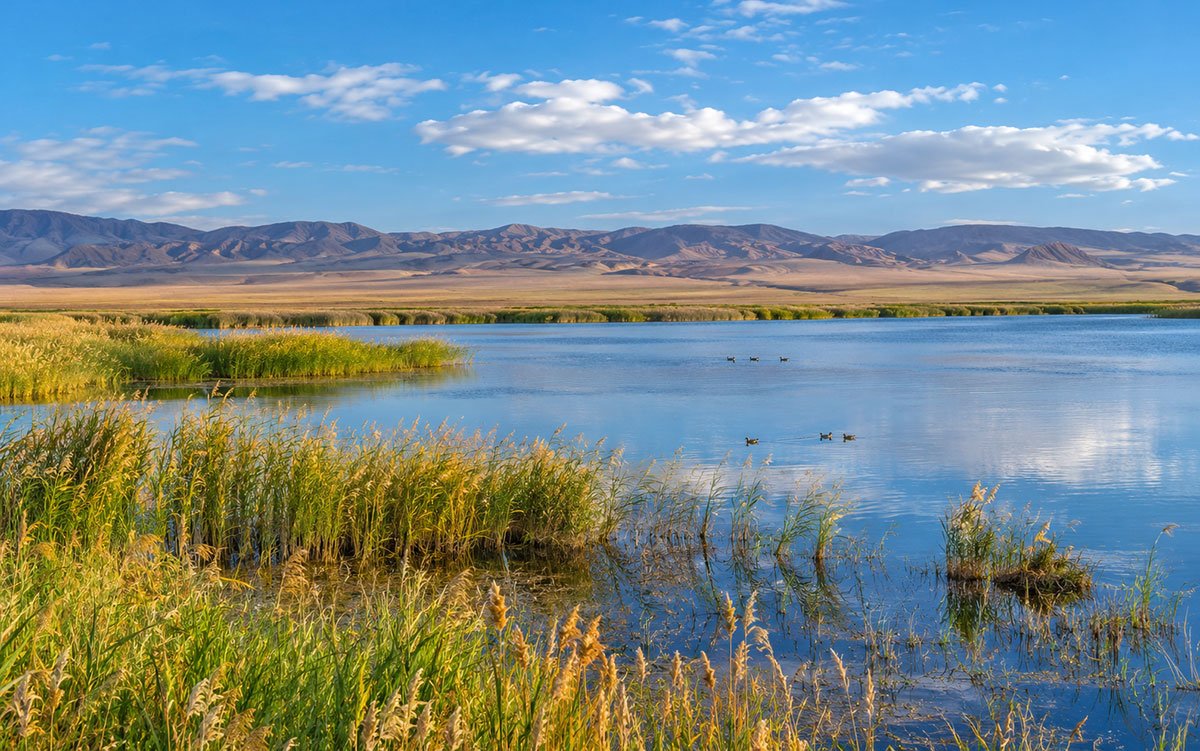
Keluke Lake, also known as Hurleg Lake, features tranquil freshwater wetlands surrounded by the arid landscapes of Qinghai’s Qaidam Basin.
Keluke and Tuosu Lakes, Qinghai: A Travel Guide to the Sister Lakes of Delingha
In the vast landscapes of China’s Qinghai Province, the Keluke and Tuosu Lakes offer an unusual natural contrast. Although a short watercourse connects these two high-altitude lakes, one contains relatively fresh water while the other is saline.
Located near Delingha in the northeastern Qaidam Basin, the lakes lie between open grasslands, wetlands and the arid terrain of the Gobi Desert. Keluke Lake attracts attention for its reed beds and aquatic birdlife. Tuosu Lake offers a different atmosphere, with broad waters surrounded by dry, sparsely vegetated land.
Together, they are traditionally known as the Dalian Lakes or Hanhai Dalian Lakes. Travelers may also encounter the names Hurleg Lake and Toson Lake, which remain in use in geographical and scientific literature.
For visitors exploring Qinghai’s less crowded natural landscapes, the lakes offer an interesting excursion from Delingha. However, they form part of a protected nature reserve, so travelers must distinguish between designated visitor areas and restricted shorelines.
Where Are Keluke and Tuosu Lakes Located?
Keluke and Tuosu Lakes lie on the Huaitoutala grassland area, southwest of Delingha in Haixi Mongolian and Tibetan Autonomous Prefecture, Qinghai Province.
The lakes are approximately 40–50 kilometres from Delingha, depending on the route and destination. They occupy the northeastern part of the Qaidam Basin, an extensive high-altitude region known for its deserts, salt lakes, mountains and grasslands.
The surrounding landscape sits at roughly 2,800 metres above sea level. Despite the generally dry regional climate, rivers and wetlands support distinctive ecosystems.
Keluke Lake lies to the north, while the larger Tuosu Lake extends farther south. A watercourse connects them, allowing water to pass from the northern lake into the southern basin.
This relationship creates one of the area’s most interesting geographical features.
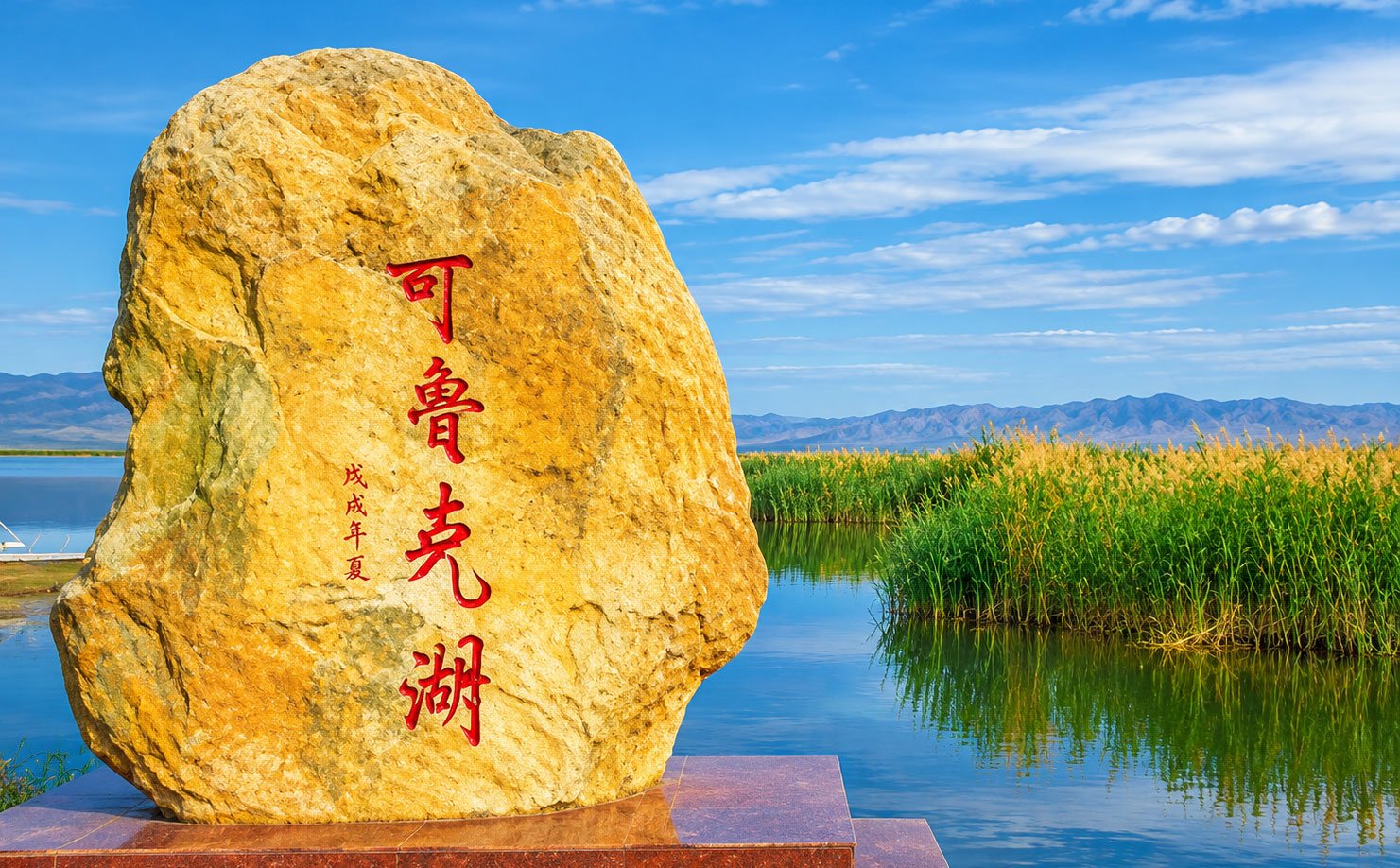
A stone monument marks Keluke Lake (Hurleg Lake), surrounded by tranquil waters, green reed beds and distant mountains in Qinghai’s Qaidam Basin.
Keluke Lake: The Freshwater Lake of the Qaidam Basin
Keluke Lake, also known as Hurleg Lake, is the northern lake of the pair. It is a shallow freshwater lake with slightly mineralised water, surrounded by wetlands, reeds and patches of grassland.
Its greener surroundings distinguish it from the more arid landscape around Tuosu Lake.
A Lake Fed by the Bayin River
The Bayin River, which originates in the mountains north of Delingha, provides much of Keluke Lake’s water.
The river carries water and sediment into the basin, supporting aquatic vegetation and freshwater habitats. Keluke Lake then releases water through an outlet channel that leads towards Tuosu Lake.
Unlike an enclosed salt lake, Keluke benefits from this continuing movement of water. Its surroundings support reed beds and aquatic plants, creating important habitats for fish and waterbirds.
Wildlife and Birdwatching at Keluke Lake
Keluke Lake forms part of the Keluke–Tuosu Lake Provincial Nature Reserve, an important wetland habitat in the northeastern Qaidam Basin.
The lake and its surrounding wetlands attract migratory birds during different seasons. Visitors may encounter waterfowl such as ducks, geese, gulls and grebes.
Whooper swans also visit the wetland during the colder months.
The combination of open water, reeds and surrounding grassland creates opportunities for birdwatching and nature photography.
However, the reserve exists primarily to protect wildlife and its habitats. Visitors should observe birds from authorised areas rather than entering reed beds or approaching nesting sites.
Tuosu Lake: A Saltwater Lake Surrounded by the Gobi Desert
South of Keluke lies Tuosu Lake, also known as Toson Lake. Although the two lakes are connected, their landscapes and water chemistry differ considerably.
Tuosu is a saline inland lake surrounded largely by dry, open terrain.
Its shores have fewer extensive freshwater wetlands than Keluke. Instead, the landscape features barren ground, distant hills and broad expanses of water.
On calm days, the lake reflects the sky and surrounding terrain. Strong winds can quickly disturb the surface, producing waves along its exposed shoreline.
The contrast between the blue water and the surrounding desert makes Tuosu particularly interesting for landscape photography.
Why Is Tuosu Lake Salty?
The different water conditions of Keluke and Tuosu result from their positions within the local drainage system.
Water enters Keluke Lake from rivers and continues towards Tuosu through the connecting channel.
Tuosu occupies a closed drainage basin without a comparable surface outlet. In this dry environment, evaporation removes water while leaving dissolved minerals behind.
Over time, this process concentrates salts in the lake.
Consequently, two connected lakes have developed markedly different aquatic environments.
The relationship offers a clear example of how water movement, evaporation and basin geography shape inland lakes.
Why Are They Called the Dalian Lakes?
The traditional name Dalian Lakes comes from the Chinese term dalían (褡裢), which refers to a double-sided bag or saddlebag.
The arrangement of the two connected lakes inspired this comparison. The separate basins and the narrow connection between them were likened to the two compartments of a traditional bag.
This explains why the lakes are sometimes described collectively as the Hanhai Dalian Lakes.
The name should not be confused with Dalian, the coastal city in northeastern China.
For travelers searching maps or arranging transport, the Chinese names are especially useful:
-
Keluke Lake — 可鲁克湖
-
Tuosu Lake — 托素湖
-
Keluke–Tuosu Lake Nature Reserve — 可鲁克湖—托素湖自然保护区
Using these names can help visitors communicate with local drivers and locate the recognised scenic area.
Best Time to Visit Keluke and Tuosu Lakes
Late spring through early autumn generally offers the most comfortable conditions for a sightseeing trip.
However, each season brings different scenery.
Spring: Migratory Birds and Changing Landscapes
As temperatures rise and the winter ice retreats, birds return to the wetlands.
Reed beds gradually regain their colour, while the surrounding grasslands begin to recover from winter.
Spring can also bring strong winds, so visitors should prepare for changeable conditions.
Summer: Green Wetlands and Open Views
June through August is a particularly attractive period for exploring the lake landscapes.
Keluke’s reed beds are generally greener, and the contrast between vegetation, water and surrounding desert becomes more noticeable.
Summer also brings strong sunlight at high altitude. Visitors should carry drinking water, sun protection and a light windproof jacket.
Autumn: Golden Reeds and Bird Migration
September and October can offer excellent photographic conditions.
Reed beds turn golden, the air becomes cooler and migratory birds pass through the wetland.
The mixture of autumn colours, open water and distant mountains creates a distinctive landscape.
Winter: Cold Weather and Limited Access
Winter brings freezing temperatures, strong winds and possible ice formation.
Some waterbirds, including whooper swans, may visit suitable open-water habitats during the colder season.
However, winter conditions can affect road travel and visitor access. Travelers should confirm local arrangements before attempting a visit.
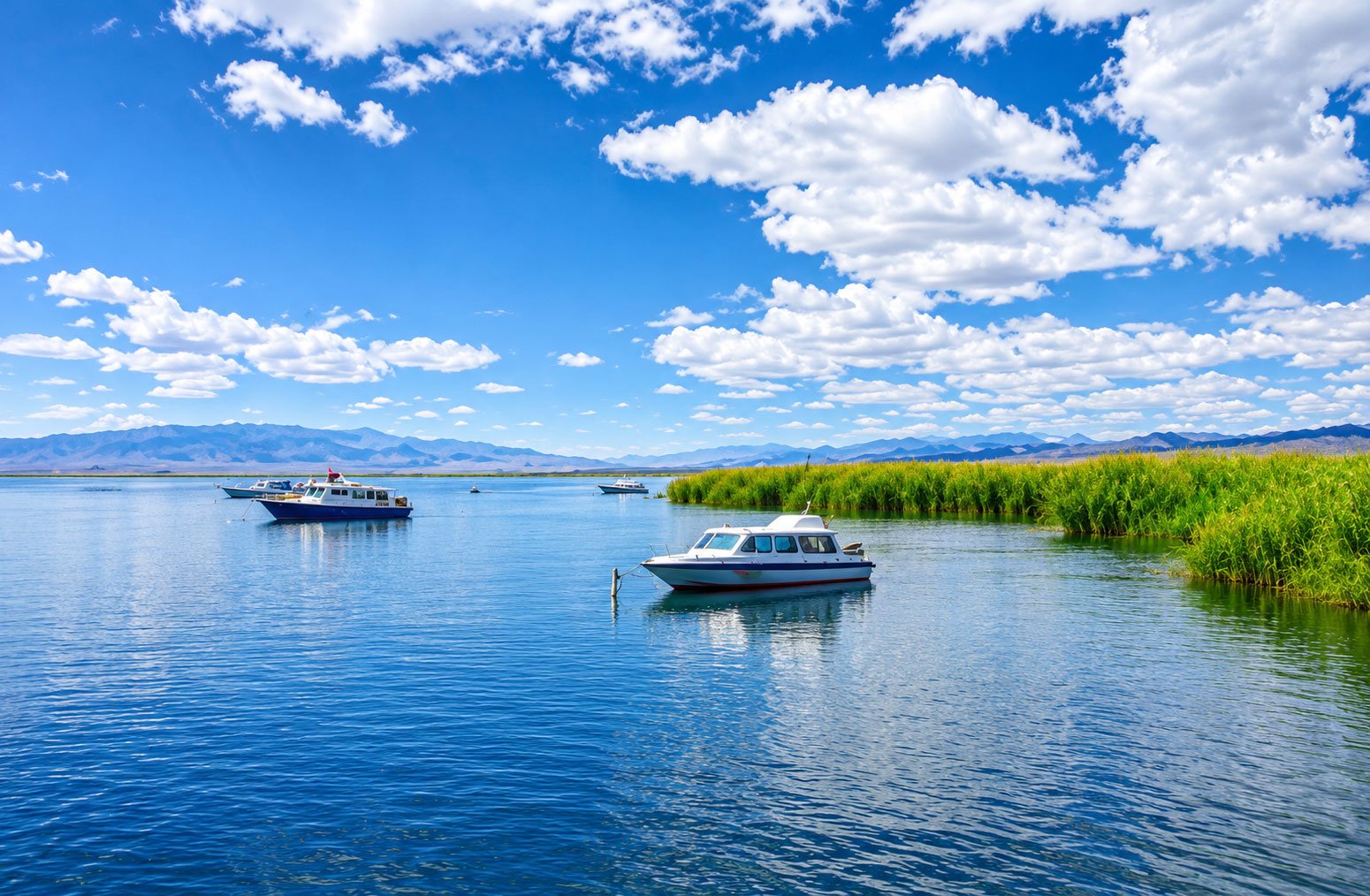
Scenic view of Keluke Lake, also known as Hurleg Lake, featuring boats, freshwater wetlands and distant mountains in China’s Qaidam Basin.
How to Reach Keluke and Tuosu Lakes
Delingha is the most practical base for exploring the lakes.
The city provides connections to the wider Qinghai region, while the lakes lie outside the main urban area.
Traveling from Xining to Delingha
Xining, the capital of Qinghai Province, is an important transport gateway.
Travelers can reach Delingha by rail, with services and availability depending on the travel date.
The official China Railway 12306 platform provides current railway information and ticket booking.
Road travel is another option for visitors exploring Qinghai and the Qaidam Basin by car.
Getting from Delingha to the Lakes
Travelers generally need private road transport to reach the designated visitor areas.
A prearranged vehicle or licensed local driver is particularly useful because public transport does not provide a reliably documented service to every lakeside destination.
Before leaving Delingha, confirm which visitor areas are open and agree on the return journey.
Do not assume that a mapped road or track provides legal public access to a protected shoreline.
Can Visitors Access Both Lakes?
This is an important consideration when planning a trip.
Keluke Lake has an established scenic area with visitor arrangements. However, it lies within a wider protected landscape.
Access to Tuosu Lake and other parts of the reserve may be restricted. A public listing describing a lake as accessible does not necessarily mean that every shoreline, road or conservation zone is open to visitors.
Haixi authorities prohibit unauthorised entry into restricted nature-reserve areas and other closed landscapes.
Visitors should therefore confirm permitted routes through local scenic-area management or the relevant tourism authorities.
Avoid drivers or tour operators offering unofficial access through closed conservation areas.
Things to Do Around the Lakes
The main appeal of the Keluke and Tuosu Lakes is their natural environment rather than a long list of commercial attractions.
1. Enjoy the Wetland Scenery
Keluke Lake offers views across open water and surrounding reeds.
Where designated viewing areas are available, visitors can appreciate the contrast between wetland vegetation and the dry terrain beyond.
2. Watch Migratory Birds
Birdwatching is one of the most rewarding activities in the region.
A pair of binoculars or a camera with a telephoto lens allows visitors to observe birds without disturbing them.
Bird movements vary with the season, weather and water conditions, so sightings cannot be guaranteed.
3. Photograph the Lake Landscapes
The area offers striking combinations of water, grassland and desert.
Early morning and late-afternoon light can create softer colours and more balanced photographs.
Photographers should use authorised viewpoints and avoid entering sensitive habitats for a closer composition.
4. Discover the Natural Geography
The freshwater and saltwater contrast makes the lakes especially interesting for visitors who enjoy geography and natural history.
The landscape illustrates how rivers, drainage basins, evaporation and wetland ecosystems interact in an arid region.
Practical Travel Tips
A little preparation makes a visit more comfortable, particularly for travelers unfamiliar with Qinghai’s high-altitude environment.
-
Allow enough time: Plan a half-day excursion from Delingha for an accessible lakeside visit, with additional time only if other areas are officially open.
-
Carry suitable clothing: Bring layers and a windproof jacket, even during warmer months.
-
Protect yourself from the sun: High-altitude sunlight can be intense. Wear sunscreen, sunglasses and a hat.
-
Take water and snacks: Do not depend on finding shops or restaurants at remote lakeside locations.
-
Respect wildlife: Do not feed birds, collect eggs, damage reeds or approach nesting areas.
-
Stay on authorised routes: Avoid driving across grassland, salt flats or unmarked tracks.
-
Check weather and access: Wind, ice, local road conditions and conservation restrictions can affect a trip.
High-Altitude Health Considerations
The lakes lie at an elevation where travelers arriving from lower altitudes may notice the effects of thinner air.
Allow time to adjust, avoid strenuous activity immediately after a rapid ascent and pay attention to symptoms such as headache, dizziness or nausea.
If symptoms become severe or worsen, seek medical attention and move to a lower altitude when appropriate.
Visitors with relevant medical conditions should obtain professional travel-health advice before making a high-altitude journey.
Where to Stay Near the Lakes
Delingha is a sensible accommodation base.
Staying in the city allows travelers to arrange transportation, purchase supplies and plan an excursion without relying on facilities within the protected wetland area.
It also makes it easier to adjust plans if the weather changes or particular visitor routes are closed.
For a wider Qinghai road trip, Delingha can serve as a stop between the eastern Qinghai destinations and the landscapes farther west in the Qaidam Basin.
Other Places to Explore in the Qaidam Basin
Travelers who enjoy the scenery of Keluke and Tuosu Lakes may also want to explore other recognised destinations in the region.
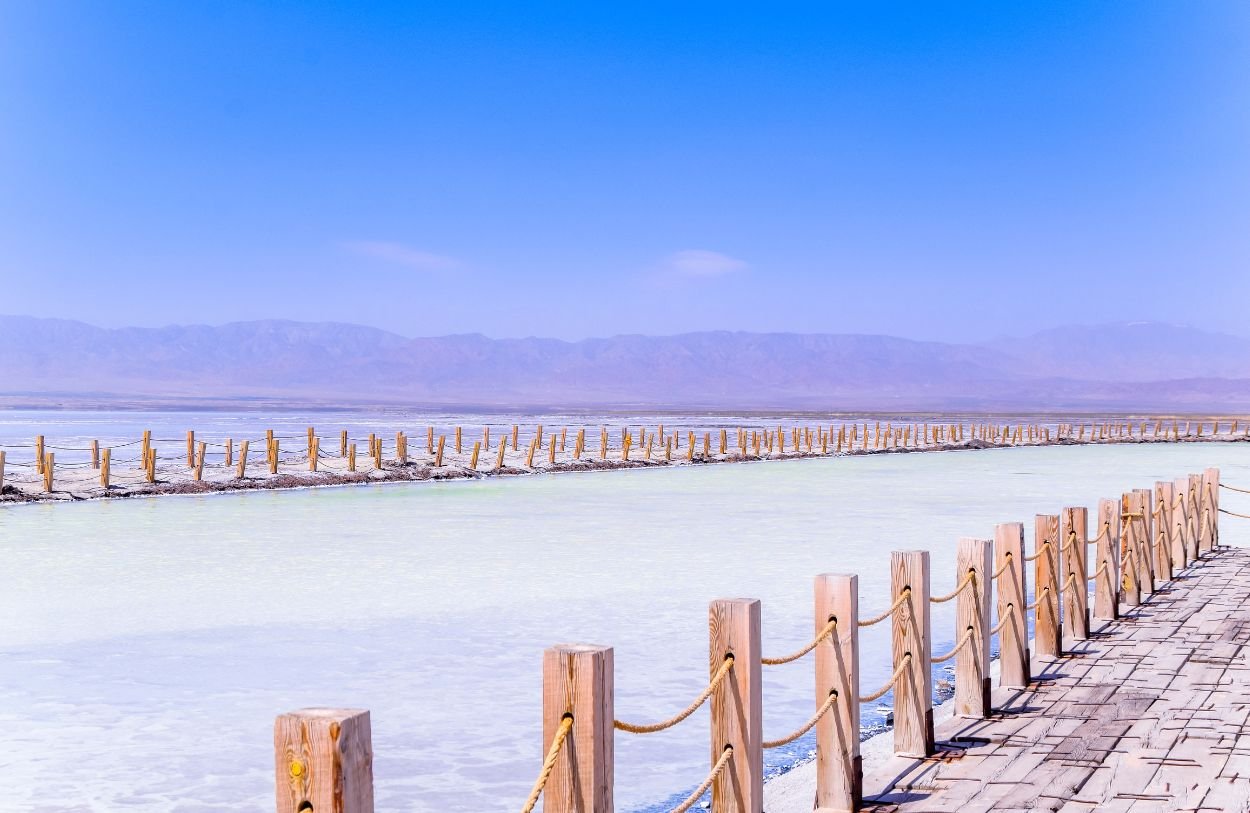
A scenic view of Chaka Salt Lake in Qinghai Province, China, featuring tranquil mineral-rich waters, a fenced walkway and distant mountain ranges.
Chaka Salt Lake
Chaka Salt Lake is known for its reflective salt surface and the striking appearance of water against the surrounding mountains.
Unlike the relatively undeveloped areas around Tuosu, Chaka has an organised tourism infrastructure with designated visitor zones.
Its official scenic-area website provides operating notices and visitor information.
Chaka is a separate destination and requires additional travel time from Delingha.
Dachaidan and the Western Qaidam Basin
The wider Qaidam Basin features dramatic desert scenery, salt lakes and unusual geological formations.
Dachaidan is one of the principal travel areas west of Delingha.
Visitors planning to continue farther into the basin should research the specific attractions they intend to visit and use established roads and legally accessible sightseeing areas.
Remote desert areas should not be treated as unrestricted driving or camping destinations.
Frequently Asked Questions
Are Keluke Lake and Hurleg Lake the same place?
Yes. Keluke Lake and Hurleg Lake are alternative English names for the same freshwater lake near Delingha. Keluke is commonly used in tourism information, while Hurleg also appears in scientific publications.
Is Tuosu Lake the same as Toson Lake?
Yes. Tuosu and Toson are different transliterations referring to the saline lake south of Keluke.
Why is one lake fresh and the other salty?
Keluke receives river water and has an outlet that carries water towards Tuosu. Tuosu is a closed-basin lake where evaporation concentrates dissolved minerals, making its water saline.
Can tourists visit both lakes?
Tourists can visit designated areas that are officially open. Keluke has an established scenic area, but public access to Tuosu and other parts of the protected reserve may be restricted. Confirm access before traveling.
How long should visitors spend at the lakes?
Allow approximately half a day from Delingha for travel and sightseeing at an accessible lake area. A longer visit depends on the routes and visitor facilities legally available at the time.
Are the lakes suitable for birdwatching?
Yes. The Keluke–Tuosu wetland system provides habitats for several species of waterbirds and migratory visitors. Spring and autumn are particularly interesting periods, although individual sightings depend on natural conditions.
Are Keluke and Tuosu Lakes Worth Visiting?
Keluke and Tuosu Lakes offer a rewarding introduction to the natural geography of Qinghai’s Qaidam Basin.
Their appeal comes from the contrast between two connected environments: a reed-fringed freshwater lake and a saline basin surrounded by arid terrain.
For nature lovers, photographers and travelers interested in landscapes beyond China’s most familiar attractions, the lakes provide a distinctive experience near Delingha.
The best approach is to plan a relaxed visit to officially accessible areas, appreciate the wetlands from a respectful distance and leave the protected environment undisturbed.
