
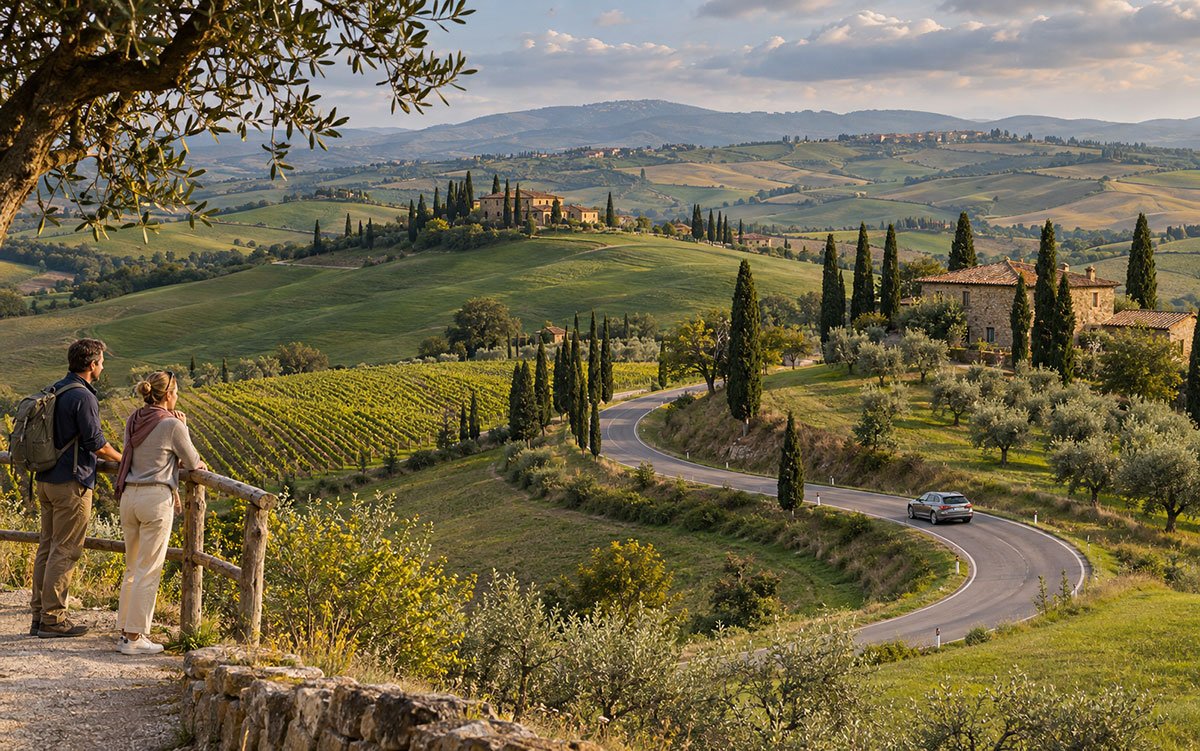
Tuscany’s winding countryside roads offer memorable scenery for a European self-drive holiday.
European Driving Holidays: 5 Scenic Road Trips and Essential Travel Tips
There is something special about exploring Europe by car. You can leave a historic town after breakfast, follow a scenic country road through vineyards and stop for lunch in a village that wasn’t even on your original itinerary.
That freedom is what makes European driving holidays so appealing.
Trains and flights connect Europe’s major destinations efficiently, but a self-drive holiday offers a different experience. With your own vehicle, you can explore rural landscapes, smaller towns and scenic viewpoints that may be difficult to reach by public transport.
From the rolling hills of Tuscany to the lavender-growing countryside of Provence, Europe offers remarkable opportunities for independent travel.
However, successful road trips require preparation. Driving regulations differ between countries, historic centres may restrict vehicle access, and rental agreements can contain important conditions.
This guide explores five scenic European road trips, including recommended routes, memorable places to visit and practical advice for planning your journey.
Why Choose a Self-Drive Holiday in Europe?
A road trip allows you to create a holiday around your interests instead of following a fixed tour schedule.
You can spend an extra afternoon exploring a medieval village, visit a countryside restaurant or change your plans when you discover an interesting attraction.
Driving is particularly useful in regions where public transport does not conveniently connect smaller settlements.
The Main Advantages of European Road Trips
- Flexible itineraries: Choose where to stop and how long to stay.
- Access to rural destinations: Visit countryside accommodation, villages and scenic viewpoints.
- Independent sightseeing: Explore attractions without relying entirely on organised tours.
- Convenient luggage transport: Keep belongings in your vehicle between accommodation stops.
- Varied experiences: Combine historic towns, beaches, mountains and countryside within one journey.
Nevertheless, hiring a car is not always the best option.
In major cities such as Paris, Rome and Florence, parking restrictions, congestion and limited-traffic zones can make driving inconvenient.
A practical solution is to explore large cities by public transport and rent a vehicle when you begin travelling through the surrounding countryside.
1. Tuscany, Italy: Vineyards, Hilltop Towns and Scenic Country Roads
Tuscany is one of Europe’s most rewarding destinations for a countryside road trip.
Its landscapes feature rolling hills, vineyards, olive groves, historic farmhouses and medieval towns. Travelling by car allows you to explore beyond major cities and discover the quieter countryside.
Two areas are particularly appealing: Chianti, between Florence and Siena, and the beautiful Val d’Orcia farther south.
Drive the Chiantigiana Road Through Chianti
The Chiantigiana, also known as the SR222, is a scenic route connecting Florence and Siena through the Chianti countryside.
The road passes vineyards, olive groves and villages with traditional stone architecture.
Consider these stops:
Greve in Chianti
Greve is an appealing introduction to the Chianti region. Its historic Piazza Matteotti is surrounded by arcaded buildings, shops and places to enjoy local food.
The surrounding countryside contains vineyards and estates that offer visitor experiences.
Castellina in Chianti
This historic hilltop town features medieval architecture, characteristic stone streets and views across the surrounding landscape.
Its atmospheric Via delle Volte is particularly worth exploring.
Siena
Siena is one of Tuscany’s most remarkable historic cities.
Its medieval centre, Piazza del Campo and magnificent cathedral make it a rewarding sightseeing destination.
Park outside restricted areas and explore the centre on foot.
Continue Into the Val d’Orcia
South of Siena, the Val d’Orcia offers some of Tuscany’s most recognisable landscapes.
Cypress-lined roads, gently rolling farmland and historic villages create beautiful countryside scenery.
Pienza is an excellent stop for Renaissance architecture, panoramic views and traditional Pecorino cheese.
Other worthwhile destinations include Montalcino, Montepulciano and Bagno Vignoni, although you should allow additional time rather than trying to visit them all in one afternoon.
Suggested Tuscany Driving Itinerary
For a relaxed journey, consider spending five to seven days exploring the region.
- Day 1: Arrive in Florence and explore the city without a car.
- Day 2: Collect your rental vehicle and travel through Greve and the Chianti countryside.
- Day 3: Explore Castellina in Chianti and continue to Siena.
- Day 4: Discover Siena’s historic attractions and enjoy a leisurely afternoon.
- Day 5: Drive into the Val d’Orcia and visit Pienza.
- Days 6–7: Explore nearby villages, enjoy a countryside stay and return your vehicle.
Important Driving Advice for Tuscany
Many historic town centres have restricted traffic zones called Zona a Traffico Limitato, or ZTL.
Cameras may monitor entry, and unauthorised vehicles can receive fines.
Do not assume your navigation system will automatically avoid these areas.
Choose accommodation with clearly explained parking arrangements and ask your hotel whether vehicle access requires special authorisation.
If you plan to visit wineries, arrange a designated driver or a guided tasting experience that includes transport.
Best for: Couples, food enthusiasts, photographers and travellers who enjoy historic villages and countryside landscapes.
2. Southern France: Provence Villages and Mediterranean Scenery
Southern France offers an appealing combination of rural landscapes, historic settlements, local markets and Mediterranean coastal scenery.
For travellers who enjoy a varied itinerary, Provence is particularly well suited to independent exploration.
You can spend a morning in a historic town, enjoy lunch in a village square and finish the day overlooking olive groves or rocky coastal landscapes.
Explore Provence’s Most Beautiful Villages
A rewarding road trip can begin in Avignon and continue through the Luberon region before heading towards Aix-en-Provence and the Mediterranean coast.
Avignon
Avignon is a useful starting point for exploring western Provence.
Its historic centre includes the Palais des Papes, a major monument associated with the period when the papacy was based in the city.
Consider visiting the historic attractions before collecting your rental vehicle.
Gordes
Perched above the surrounding countryside, Gordes is known for its stone buildings and dramatic hilltop setting.
The village offers picturesque streets, scenic viewpoints and access to nearby rural landscapes.
Roussillon
Roussillon stands out for its colourful ochre buildings and surrounding mineral-rich landscape.
Its warm red, orange and yellow tones create a striking contrast with the greenery of the Luberon.
Aix-en-Provence
Aix-en-Provence combines elegant architecture, markets, fountains and a lively café culture.
It provides a good opportunity to enjoy Provençal food and explore a historic urban centre on foot.
Continue Towards the Mediterranean Coast
If your itinerary allows, extend your trip to Cassis, a coastal town near Marseille.
The harbour, waterfront restaurants and surrounding limestone landscapes make Cassis a pleasant contrast to inland Provence.
Visitors may also explore the nearby Calanques National Park, subject to access rules and seasonal fire-risk restrictions.
Check official park information before planning hikes or boat excursions.
Travellers with more time can continue towards the French Riviera, including Nice and nearby coastal towns. However, adding the Riviera substantially increases the scope of the journey.
Suggested Southern France Driving Itinerary
Allow approximately five to seven days for a relaxed combination of Provence villages and the Mediterranean coast.
- Day 1: Arrive in Avignon and explore its historic centre.
- Day 2: Visit Gordes and enjoy the Luberon countryside.
- Day 3: Explore Roussillon and nearby villages.
- Day 4: Continue to Aix-en-Provence.
- Day 5: Travel towards Cassis and enjoy the coastal scenery.
- Days 6–7: Spend additional time by the Mediterranean or return to your departure point.
Driving Tips for Southern France
Some French cities operate low-emission zones and vehicle restrictions.
Depending on your route and vehicle, a Crit’Air air-quality certificate may be required.
Confirm the applicable rules before driving into urban areas. If you are hiring a car, ask the rental company whether the vehicle meets the necessary requirements.
French motorways may also charge tolls.
Finally, remember that Provence’s narrow village streets are not always suitable for driving or parking. Use designated parking areas and explore village centres on foot.
Best for: Couples, culture enthusiasts, food lovers and travellers seeking a combination of countryside and coastline.
3. Germany’s Romantic Road: Medieval Towns and Alpine Landscapes
Germany’s Romantic Road is a well-established scenic touring route stretching from Würzburg to Füssen in southern Bavaria.
The official route connects historic towns, river valleys, countryside landscapes and attractions near the Alps.
It is particularly appealing to travellers interested in European history and traditional architecture.
Highlights Along the Romantic Road
Würzburg
Begin your journey in Würzburg, a historic city beside the River Main.
The Würzburg Residence is a UNESCO World Heritage Site and an important example of Baroque architecture.
Rothenburg ob der Tauber
Rothenburg is known for its exceptionally atmospheric medieval townscape.
Walk along its historic streets, explore the old town and enjoy the traditional half-timbered architecture.
Dinkelsbühl
This historic town features colourful buildings, preserved fortifications and a charming medieval atmosphere.
It offers a rewarding stop between Rothenburg and southern Bavaria.
Füssen
Füssen lies near the Bavarian Alps and provides access to impressive mountain landscapes.
The nearby Neuschwanstein and Hohenschwangau castles are major attractions.
Check official admission arrangements and reserve tickets in advance when necessary.
How Long Should You Allow?
A journey of approximately five to seven days allows time for several historic towns and sightseeing stops.
The official Romantic Road organisation publishes route information, maps and suggested driving itineraries.
Follow the designated route signs if you want to experience the smaller towns rather than simply taking the fastest motorway.
Best for: History enthusiasts, families, couples and travellers who enjoy castles and traditional European towns.
4. Douro Valley, Portugal: Riverside Roads and Vineyard Landscapes
Portugal’s Douro Valley is an attractive choice for travellers who prefer a countryside road trip.
The region is known for its terraced vineyards, winding river landscapes and historic wine-producing communities.
The Upper Douro Wine Region is recognised as a UNESCO World Heritage Site.
Driving allows visitors to explore viewpoints, smaller settlements and rural accommodation beyond the main transport routes.
Follow the Douro River
A popular starting point is Peso da Régua, an established centre for exploring the region.
From here, the riverside route towards Pinhão offers beautiful views across the Douro landscape.
Pinhão is surrounded by vineyards and provides access to river excursions and wine estates.
With more time, you can explore the countryside around Alijó and other settlements in the Upper Douro region.
What to Experience Along the Way
Depending on your interests, you can:
- Stop at designated viewpoints overlooking the river.
- Explore traditional vineyard landscapes.
- Visit wine estates offering pre-booked tours.
- Enjoy regional Portuguese food.
- Discover small villages and rural accommodation.
- Take a river excursion where services are operating.
The roads can be narrow and winding, particularly when travelling away from major routes.
Allow generous time for each journey and avoid rushing between attractions.
Wine tasting should be planned responsibly. If you intend to sample alcoholic drinks, arrange suitable transport rather than driving afterwards.
Suggested Duration
Three to five days can work well for a relaxed exploration of selected Douro Valley locations.
You may prefer to spend several nights in one accommodation property rather than changing hotels daily.
Best for: Landscape photographers, food lovers, couples and travellers interested in countryside escapes.
5. Ireland’s Wild Atlantic Way: Dramatic Coastal Driving
Ireland’s Wild Atlantic Way offers a different experience from mainland Europe’s vineyard and village routes.
Its western coastline features dramatic cliffs, beaches, rugged peninsulas, traditional villages and constantly changing Atlantic scenery.
The full route extends across much of Ireland’s western coast, so travellers with limited time should choose a particular section rather than attempt the entire journey.
Discover the Ring of Kerry
One appealing option is the Ring of Kerry, a scenic driving circuit in County Kerry.
Beginning near Killarney, the route passes through coastal and mountain landscapes, with opportunities to explore villages and viewpoints.
Suggested stops include:
Killarney
Killarney provides access to lakes, woodland and attractions within Killarney National Park.
Waterville
Waterville is a coastal village with views over Ballinskelligs Bay and the surrounding Atlantic landscape.
Kenmare
Kenmare is known for its attractive town centre, local shops and position between scenic countryside routes.
You can continue towards Killarney to complete the circuit.
Driving Conditions in Ireland
Unlike France, Italy, Germany and Portugal, Ireland drives on the left-hand side of the road.
This is particularly important for visitors arriving from countries where traffic keeps right.
Some rural roads are narrow, and drivers may encounter farm vehicles, cyclists or changing weather conditions.
Drive at a safe speed, allow additional time and avoid stopping on narrow roads simply to take photographs.
Suggested Duration
Allow two to four days to explore the Ring of Kerry and surrounding attractions without rushing.
For a longer Irish road trip, consider adding the Dingle Peninsula or other sections of the Wild Atlantic Way.
Best for: Nature enthusiasts, photographers, couples and travellers who enjoy dramatic coastal scenery.
Which European Driving Holiday Is Right for You?
Each route offers a different experience.
| Destination | Main Experience | Suggested Duration |
|---|---|---|
| Tuscany, Italy | Vineyards, hilltop towns and historic architecture | 5–7 days |
| Southern France | Provençal villages and Mediterranean scenery | 5–7 days |
| Romantic Road, Germany | Medieval towns, castles and Alpine landscapes | 5–7 days |
| Douro Valley, Portugal | Terraced vineyards and scenic river roads | 3–5 days |
| Ring of Kerry, Ireland | Coastal landscapes and traditional villages | 2–4 days |
These durations are suggested planning allowances, not fixed tour schedules.
Your ideal itinerary will depend on the number of attractions you visit, overnight stops and your preferred pace.
Essential Tips for Planning European Driving Holidays
Choosing the destination is only the beginning.
Driving in another country requires preparation, particularly when renting a car and navigating unfamiliar roads.
1. Check Your Driving Licence Requirements
European countries do not apply identical rules to foreign driving licences.
A valid licence issued by an EU country is generally recognised across the European Union.
However, travellers using licences issued outside the EU may need an International Driving Permit or an accepted official translation.
Requirements vary by destination.
Italy, for example, has specific documentation requirements for drivers with non-EU licences. France permits qualifying short-stay visitors to drive using a valid foreign licence subject to conditions, including translation or permit requirements where applicable.
Check the relevant government guidance and your rental company’s requirements before departure.
An International Driving Permit does not replace your original driving licence.
2. Choose a Suitable Rental Vehicle
A smaller car can be more convenient when travelling through narrow village streets or historic towns.
Before booking, consider:
- Manual versus automatic transmission.
- Number of passengers and luggage capacity.
- Vehicle size and parking convenience.
- Fuel type or electric charging requirements.
- Rental excess and insurance arrangements.
- Mileage limits.
- Additional-driver charges.
- Child-seat requirements.
- Deposit and payment-card conditions.
Automatic cars may not be available in every rental category, so reserve the correct transmission type rather than assuming you can change vehicles on arrival.
3. Understand Rental Insurance
European rental vehicles must carry compulsory third-party liability insurance.
However, this does not automatically mean that damage to the rental car, theft or every other risk is fully covered.
Review the insurance excess, exclusions and any optional protection carefully.
If you purchase separate excess-reimbursement insurance, understand whether you would have to pay the rental company first and then submit a claim.
Photograph the vehicle when collecting and returning it. Report existing damage before leaving the rental location.
4. Check Cross-Border Rental Conditions
A European road trip may involve travelling through more than one country.
However, permission to cross borders with a rental car is not automatic.
Tell the rental company about your planned destinations before booking.
Some providers restrict travel to particular countries or apply additional charges.
Cross-border journeys may also affect insurance, breakdown assistance and vehicle documentation.
One-way rentals can be useful, but returning the vehicle in another country may involve additional fees.
5. Learn the Local Driving Rules
Most continental European countries drive on the right, while Ireland, Malta and Cyprus drive on the left.
Other differences include speed limits, road signs, parking arrangements, alcohol limits and required safety equipment.
Seat belts and suitable child restraints are essential.
Avoid using a handheld mobile phone while driving.
Most importantly, do not assume that regulations in one European country will be identical to those in another.
6. Watch for Restricted Traffic Zones
Historic European cities frequently restrict vehicle access.
In Italy, many towns operate ZTL areas, sometimes monitored by cameras.
In France, low-emission restrictions and Crit’Air requirements may apply to particular urban areas or circumstances.
Check current local regulations before entering a restricted zone.
If your hotel is inside a controlled area, ask whether access is permitted and whether any registration process is required.
A hotel booking does not automatically authorise entry.
7. Budget for Motorway Tolls and Parking
Some European countries charge tolls on major motorways.
In Italy and France, toll costs can depend on the road section and vehicle category.
Payment arrangements also vary. Certain French motorways use free-flow toll collection, meaning vehicles pass without stopping at a traditional toll barrier and payment must be arranged separately unless an appropriate electronic toll service is in use.
Research your intended route before departure.
Parking can also represent a significant expense, especially near historic centres and popular coastal destinations.
8. Plan Realistic Daily Driving Distances
One of the most common road trip mistakes is including too many destinations in a single day.
A short distance on a map may take longer than expected when roads are narrow, winding or busy.
Allow time for sightseeing, meals, rest breaks and unexpected delays.
For scenic countryside holidays, two or three meaningful stops may be more enjoyable than trying to visit six or seven towns.
Consider spending two nights in particularly appealing locations instead of changing accommodation every day.
9. Check Seasonal Road and Weather Conditions
Europe’s driving conditions vary significantly by region and season.
Mountain roads may experience snow, ice or seasonal closures. Coastal areas can become busy during peak holiday periods, while heavy rain can affect rural roads and visibility.
Some countries and regions have winter tyre or other seasonal vehicle-equipment rules.
Confirm the requirements for your specific route, especially when crossing mountains or travelling during colder months.
10. Carry Important Documents and Emergency Information
Before collecting a rental car, make sure you have the documents required by the rental company and local authorities.
These may include:
- Passport or accepted identification.
- Valid driving licence.
- International Driving Permit or translation, where required.
- Rental agreement.
- Insurance documentation.
- Payment card accepted by the rental provider.
- Emergency contact and roadside-assistance details.
Keep digital copies in a secure location, but carry original documents where required.
The European emergency number is 112 across EU countries.
How to Save Money on a European Road Trip
A self-drive holiday can be economical when planned carefully, but costs can rise if you overlook additional charges.
Compare the Total Rental Price
Do not choose a rental solely because it has the lowest advertised daily rate.
Check the cost of insurance, fuel policies, deposits, additional drivers, optional equipment and one-way fees.
A slightly more expensive rental may offer better value when important extras are included.
Avoid Unnecessary City Rental Days
If you intend to spend several days sightseeing in a major city, consider collecting the car only when you leave.
You may save on rental charges and parking while avoiding city-centre driving restrictions.
Choose Accommodation With Practical Parking
A countryside hotel or guesthouse with convenient parking can simplify your journey.
In historic town centres, parking may be limited or available only at a separate facility.
Confirm access arrangements before booking rather than relying solely on the property’s description.
Consider Travelling Outside Peak Periods
Spring and autumn can be appealing for many Mediterranean countryside routes, although weather conditions vary.
Popular destinations may experience higher accommodation demand during major holidays, festivals and the height of summer.
Compare different travel dates, but do not select a season solely because accommodation appears cheaper.
Balance Motorways With Scenic Roads
Motorways can be useful for covering longer distances efficiently.
However, secondary roads often provide access to smaller villages, rural restaurants and scenic landscapes.
The best itinerary combines both.
Use major roads when necessary and reserve time for countryside exploration where driving conditions permit.
What Is the Best Time for a European Road Trip?
There is no single best season for every European driving holiday.
The ideal time depends on your destination and planned activities.
Spring: Often appealing for Tuscany, Provence and other countryside destinations, with seasonal greenery and generally more comfortable conditions for outdoor sightseeing.
Summer: Offers longer daylight hours and a wide range of outdoor experiences. However, popular coastal and historic destinations can become crowded, and some areas experience significant heat.
Autumn: Particularly attractive for vineyard landscapes and food-focused itineraries. Some regions offer beautiful seasonal colours, although daylight hours become shorter.
Winter: Can suit selected city and countryside breaks, but mountain roads may experience difficult conditions or closures. Confirm suitable tyres, equipment and access arrangements.
For any season, check local weather forecasts, road information and attraction arrangements before travelling.
Frequently Asked Questions About European Driving Holidays
Is it easy to drive around Europe as a tourist?
Driving can be straightforward with proper preparation, but the experience varies by country.
Motorways generally provide efficient connections, while rural roads and historic towns may require greater attention.
Research local rules before travelling and choose a manageable itinerary.
Do you need an International Driving Permit in Europe?
Not everyone needs one.
EU-issued driving licences are generally recognised throughout the EU. Travellers with non-EU licences may need an International Driving Permit or an accepted translation, depending on the destination and licence.
Always verify the rules for each country.
Is it better to rent a car or travel by train in Europe?
Trains are often more convenient for journeys between major cities.
A rental car becomes particularly useful when visiting rural destinations, villages and attractions with limited public transport connections.
Many travellers benefit from combining both transport options.
Can you drive a rental car between European countries?
Often, yes, but permission depends on the rental agreement.
Some companies allow cross-border travel subject to conditions, while others restrict particular destinations or charge additional fees.
Confirm your plans with the rental provider before collecting the vehicle.
Are European road trips expensive?
The cost depends on the destination, season, vehicle category, accommodation and daily driving distances.
Fuel, tolls, parking and rental insurance can add significantly to the total.
Planning a realistic route and comparing complete rental prices can help you manage spending.
Which European driving holiday is suitable for first-time visitors?
Tuscany’s countryside routes and Germany’s Romantic Road are appealing options for travellers interested in scenic villages and historic attractions.
However, suitability also depends on your confidence driving abroad, familiarity with local rules and comfort on narrow roads.
Choose a straightforward route and avoid overloading your itinerary.
Final Thoughts
European driving holidays offer a wonderful opportunity to explore beyond major tourist centres.
Whether you are following Tuscany’s vineyard roads, discovering Provençal villages, visiting Germany’s medieval towns or enjoying Ireland’s Atlantic coastline, the journey can become an important part of the holiday.
The most rewarding road trips balance independence with preparation.
Choose a realistic itinerary, understand local driving regulations and leave room for spontaneous discoveries.
Sometimes the most memorable part of travelling through Europe is not the destination you planned to visit, but the beautiful place you discover along the way.
