
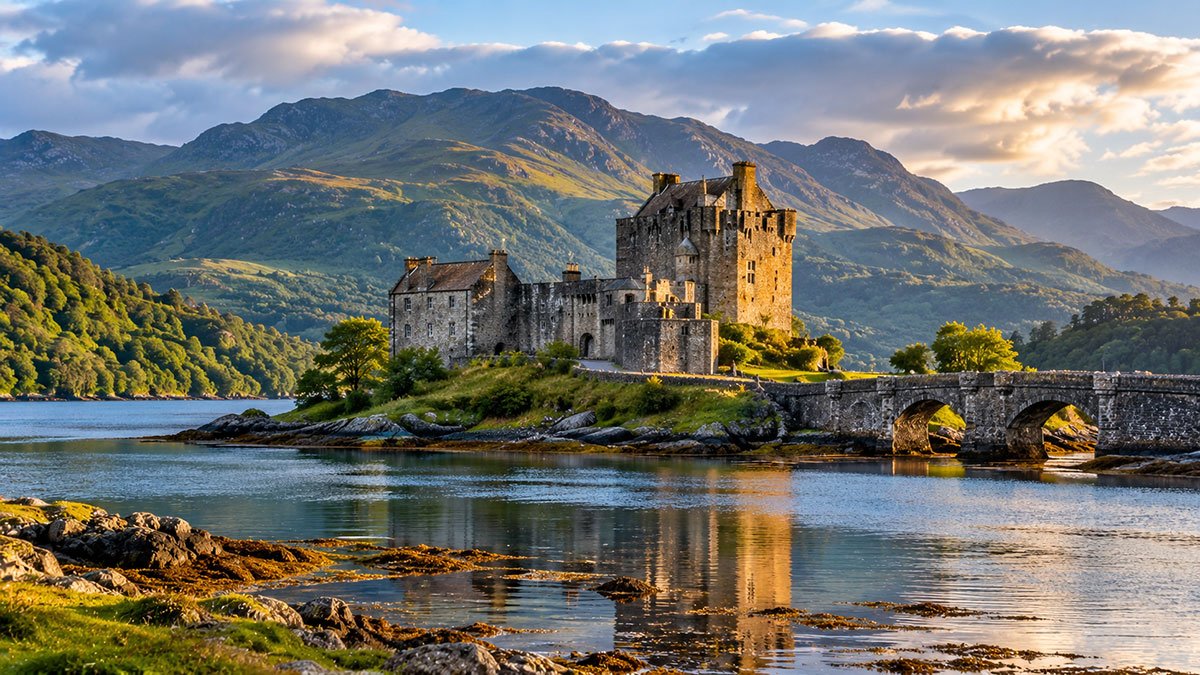
Eilean Donan Castle stands on a small island where three sea lochs meet in the Scottish Highlands.
Castles in Scotland: 6 Historic Places to Visit
Scotland’s castles bring together dramatic landscapes, royal history and centuries of architectural change. Some stand on rocky islands surrounded by Highland lochs, while others dominate city skylines, overlook rugged coastlines or sit within extensive country estates.
Exploring castles in Scotland offers more than a chance to admire ancient stone walls. These places reveal stories of royal ambition, clan rivalries, military strategy and everyday life across different periods of Scottish history.
From the famous silhouette of Eilean Donan Castle to the historic stronghold of Edinburgh Castle, each destination offers a different experience. This guide introduces six castles worth considering, explains what to expect from a visit and provides practical advice for planning a Scottish castle holiday.
Why Are Scotland’s Castles So Special?
Scotland’s castles developed over many centuries. Their purposes ranged from defending strategic routes and protecting landowners to serving as royal residences and demonstrating wealth or status.
Some sites have their origins in earlier hillforts, while medieval castles evolved into more elaborate fortifications and tower houses. Later country houses sometimes incorporated defensive-looking architecture as part of their design.
The surrounding landscape adds another dimension. Highland mountains, sea lochs, rocky headlands and rolling countryside provide distinctive settings for castles across the country.
Scotland is also well suited to heritage road trips. However, its castles are spread across several regions, so a sensible itinerary is essential. Visiting a fortress near Edinburgh, a coastal ruin in Aberdeenshire and a Highland castle may involve substantial travel between stops.
1. Eilean Donan Castle: An Iconic Highland Setting
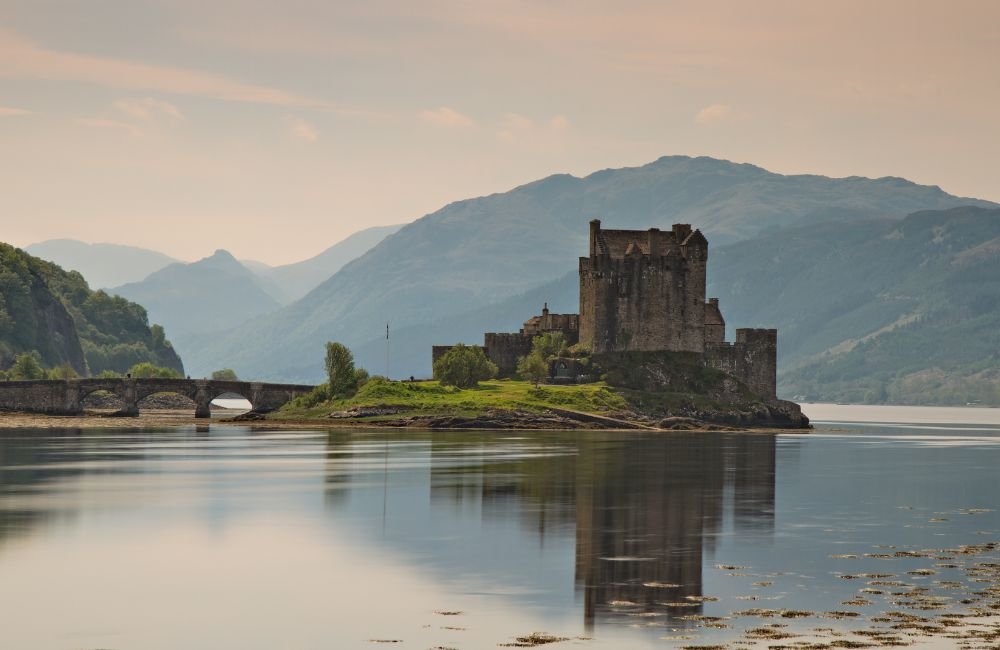
Eilean Donan Castle is one of Scotland’s most recognisable landmarks. It stands on a small island near Dornie in the western Highlands, where sea lochs and mountain scenery create a memorable setting.
A stone bridge connects the island to the mainland, making the castle especially distinctive in photographs. Its position near the meeting of Loch Duich, Loch Long and Loch Alsh also makes it a natural stop on a journey through the western Highlands.
History of Eilean Donan Castle
The castle developed as a fortified stronghold during the medieval period, with its origins dating to the thirteenth century.
Its history includes involvement in the Jacobite conflicts. In 1719, government forces bombarded the castle after Spanish troops supporting the Jacobite cause occupied it. The building was reduced to ruins and remained abandoned for almost two centuries.
Reconstruction began in the early twentieth century under John MacRae-Gilstrap and George Mackie Watson. The restored castle was completed in 1932, and today’s appearance reflects that reconstruction as well as the earlier site’s history.
This distinction is important: visitors see a carefully reconstructed historic castle rather than an untouched medieval building.
What to See
Explore the castle’s interior and exhibitions to learn about its history, the MacRae family and the conflicts that shaped the region. The bridge, island setting and surrounding scenery also make it a notable photography stop.
Allow time to enjoy the view from the mainland as well as the visit inside. The landscape is a major part of Eilean Donan’s appeal.
Practical information: Opening times vary seasonally, and the official visitor website lists planned closure dates. The castle currently sells admission tickets on site rather than through advance online sales. It also restricts large bags and rucksacks inside. Check the official Eilean Donan Castle visitor information before travelling.
2. Edinburgh Castle: A Royal Fortress Above the Capital
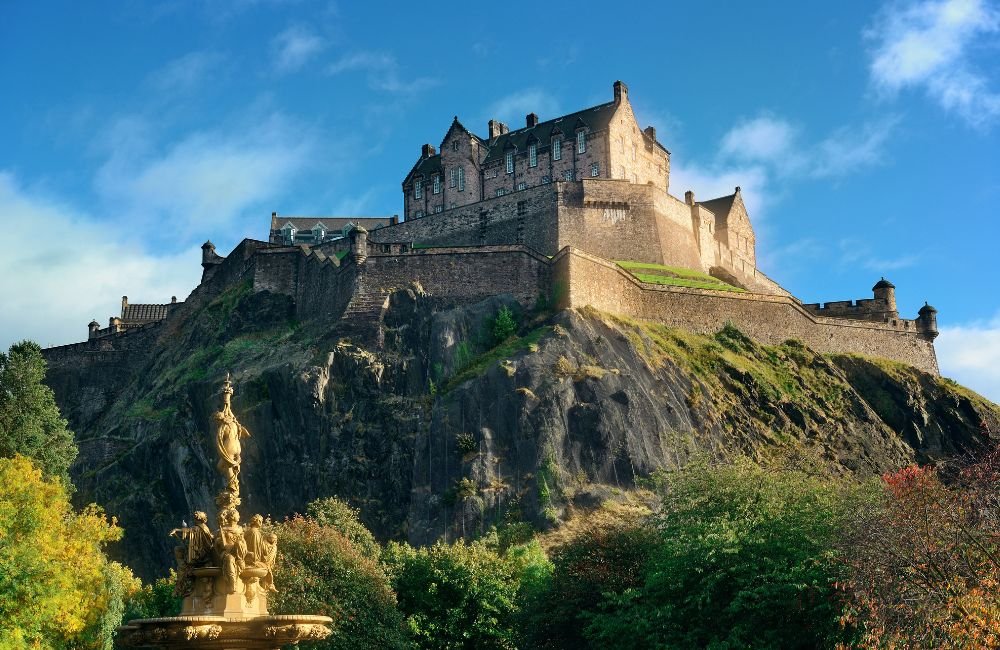
Edinburgh Castle dominates the city from its position on Castle Rock, a volcanic outcrop overlooking the Old Town.
Its location makes it one of Scotland’s most prominent historic sites. The castle has served as a royal residence, military stronghold and symbol of Scottish history.
Unlike a ruined castle that visitors mainly admire from outside, Edinburgh Castle contains several historic buildings, museums, memorials and exhibitions.
A Long and Turbulent History
Human activity on Castle Rock stretches back to the Iron Age, when the site was used as a hillfort. The castle later became an important royal residence and military base.
One of its most significant surviving buildings is St Margaret’s Chapel, generally dated to around 1130. The Great Hall, built in the early sixteenth century, provides another insight into the castle’s royal period.
The site also contains the Honours of Scotland, the Scottish National War Memorial and Mons Meg, a historic siege cannon.
What to See
Give yourself enough time to explore the main enclosures, historic buildings and viewpoints. The elevated position offers extensive views over Edinburgh and the surrounding landscape.
If you are interested in Scottish history, consider joining an official guided tour or using an audio guide. These can help connect the buildings with the people and events associated with them.
Edinburgh Castle can become particularly busy during peak travel periods, including summer and major festival events.
Practical information: Historic Environment Scotland recommends booking admission online in advance because tickets can sell out. The castle’s opening hours vary seasonally, and adverse weather can affect access. Check the official Edinburgh Castle visitor guide for current tickets, access arrangements and closures.
3. Stirling Castle: Royal Power and Scottish History
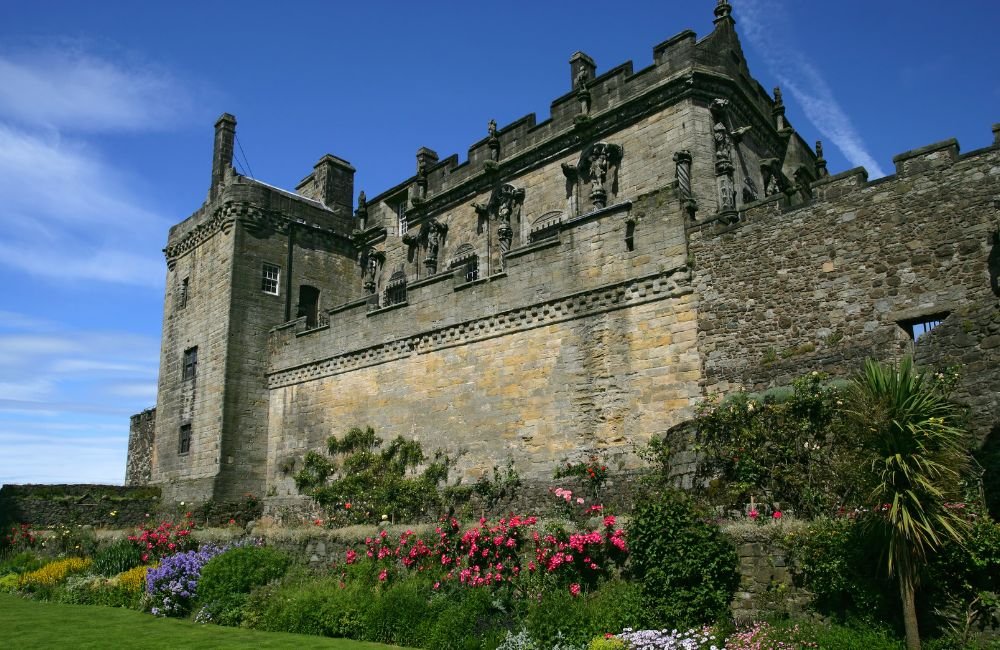
Stirling Castle is an important addition to any exploration of Scotland’s historic fortresses. It stands on a rocky outcrop overlooking Stirling and the surrounding countryside, close to a route that has long connected the Highlands and Lowlands.
Its architectural character reflects centuries of development. The castle was particularly important during the fifteenth and sixteenth centuries, when Scottish monarchs expanded and embellished it.
Why Visit Stirling Castle?
Stirling offers an opportunity to see a substantial royal castle complex rather than just isolated ruins. Its courtyards, historic buildings and defensive positions help explain how the royal household and military functions operated together.
The castle is associated with numerous figures from Scottish history, including Mary, Queen of Scots, James IV and James V.
Its position also helps visitors understand why Stirling was strategically important. The surrounding landscape offers views over the town and countryside.
What to See
Explore the main courtyards and historic rooms, taking time to appreciate the architecture and displays. Guided tours can provide context about the monarchy, military history and daily life at the castle.
Stirling also works well as part of a central Scotland itinerary, particularly for travellers combining heritage attractions with walks and visits to nearby towns.
Practical information: Advance booking is recommended. The official site currently notes that its car park is closed to most vehicles, so check alternative parking or public transport before arriving. The uphill approach and uneven surfaces may also affect some visitors. Consult the official Stirling Castle visitor information before planning your visit.
4. Dunnottar Castle: Dramatic Ruins on the Aberdeenshire Coast
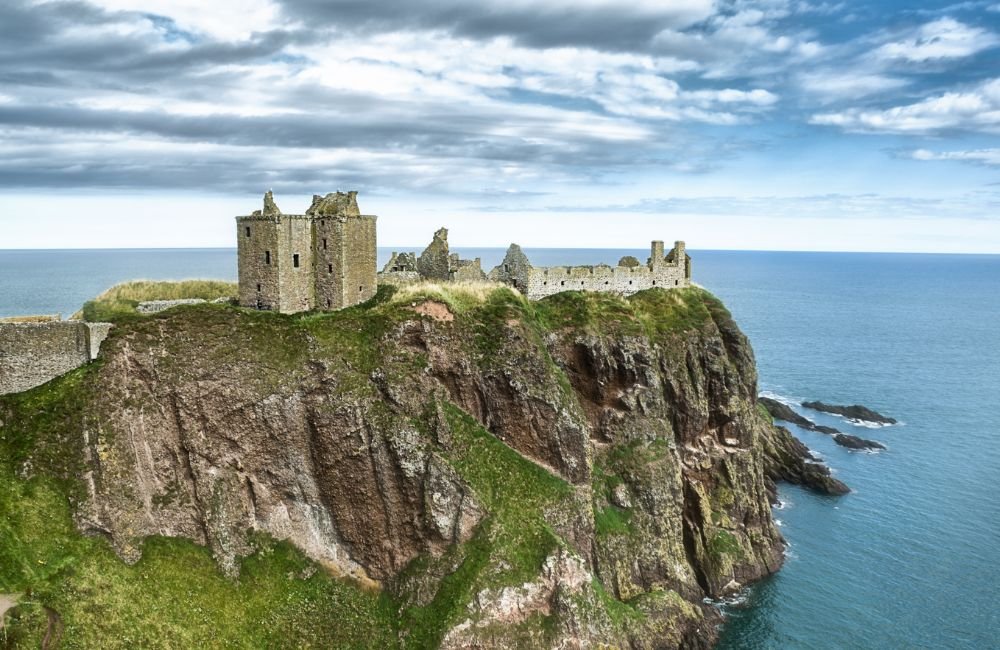
Dunnottar Castle occupies a rocky headland overlooking the North Sea near Stonehaven in Aberdeenshire. Its dramatic position makes it one of Scotland’s most striking coastal castle sites.
Unlike Edinburgh or Stirling, Dunnottar is largely a ruin. Its appeal lies in the combination of surviving stone structures, exposed cliffs, sea views and the history of a strategically important stronghold.
History and Significance
Dunnottar played a role in Scotland’s military and political history over several centuries. Its location made it difficult to approach and provided a defensive advantage.
The castle is associated with important events involving Scottish forces and the country’s struggle to protect its national symbols. Its later history also reflects the decline of castles as military residences.
The ruins help visitors imagine how a fortified settlement functioned within a difficult coastal landscape.
What to See
Walk through the surviving buildings and explore the views across the coastline. The approach itself is part of the experience, as the castle sits above the sea on a rocky outcrop.
The setting is particularly appealing to landscape photographers, although the cliffs and exposed location require care.
Dunnottar can be combined with a visit to Stonehaven, allowing time for a coastal walk or a meal in town.
Practical information: The castle has steep steps and uneven ground, and access may be restricted during strong winds, snow or icy conditions. Opening hours change seasonally, and the site can close at short notice for safety reasons. Check the official Dunnottar Castle visitor guide and accessibility information before travelling.
5. Drum Castle: A Medieval Tower House in Aberdeenshire
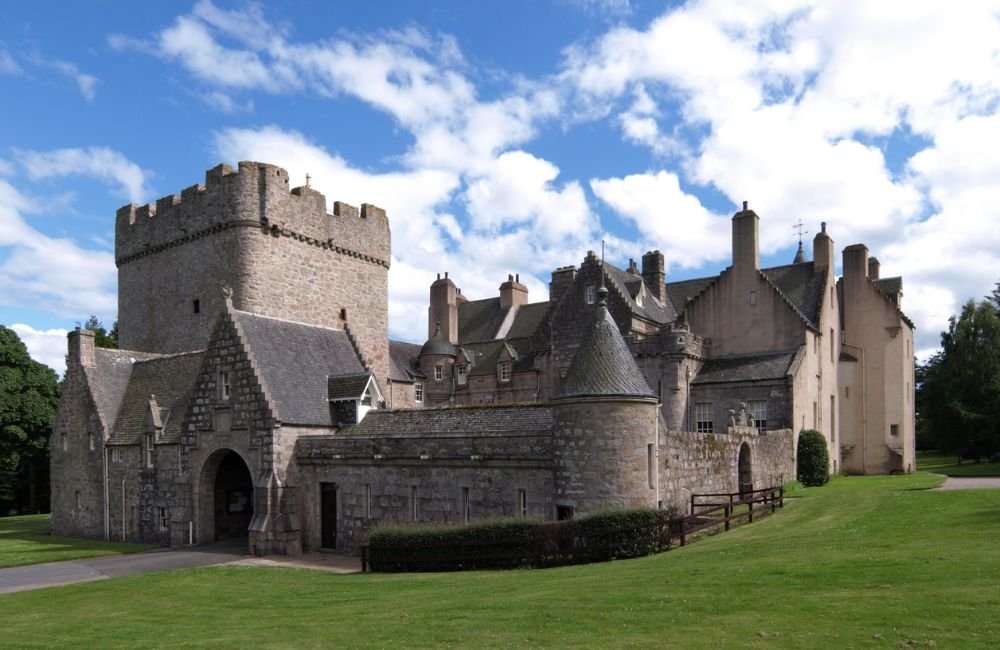
Drum Castle, near Drumoak in Aberdeenshire, provides a different perspective on Scottish castle architecture.
Its medieval square tower stands alongside later additions, including a Jacobean mansion house. The result illustrates how an older fortified residence could develop into a more substantial family home.
The Irvine Family Connection
The estate was granted to the Irvine family by Robert the Bruce in 1323. The family remained closely associated with Drum over many generations.
The property contains architectural features from several periods. Among its highlights are a historic chapel and a Victorian library with a substantial collection of books.
Outside, the estate includes woodland and a walled garden, providing an opportunity to combine heritage with time outdoors.
What to See
Visitors can explore the castle through guided tours when available, learning about the Irvine family, the building’s development and its historic interiors.
The surrounding woodland and garden provide a different experience from the stone architecture. Depending on conditions, the estate can also be a pleasant place for a walk.
Important access note: The National Trust for Scotland currently states that Drum Castle’s tower is not accessible to visitors because of structural repairs. Other castle areas and the grounds have separate visitor arrangements. Check the official Drum Castle planning information before arranging your trip.
6. Culzean Castle: An Elegant Cliff-Top Estate in Ayrshire
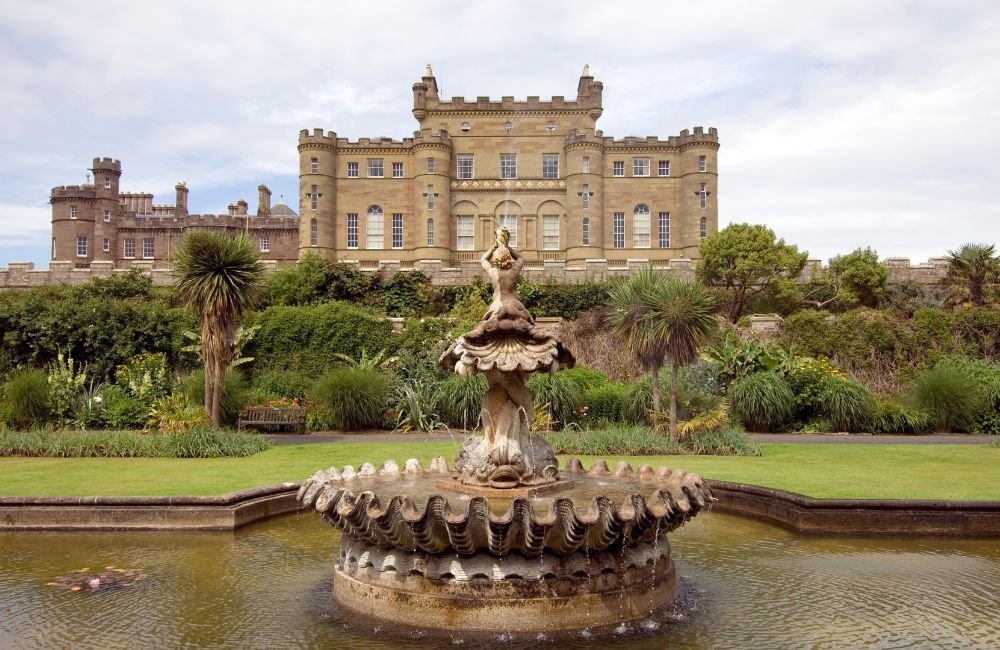
Culzean Castle stands on the Ayrshire coast, overlooking the Firth of Clyde. Its dramatic setting combines architecture, parkland and coastal scenery.
Unlike a medieval fortress, Culzean’s main building is an eighteenth-century country house designed by Scottish architect Robert Adam for the Kennedy family. The estate occupies a historic site with earlier defensive origins.
Architecture and History
Culzean is known for its sweeping Oval Staircase, distinctive rooms and collections associated with the family who lived there.
The castle’s design reflects the ambitions of the Scottish elite during the eighteenth century, when grand country houses became expressions of status as well as comfortable residences.
General Dwight D. Eisenhower also used accommodation within the castle as a holiday home for many years, adding another chapter to the property’s history.
What to See
Culzean offers more than an interior tour. Its extensive country park includes woodland, gardens, coastline, walking routes and family-oriented outdoor facilities.
Visitors can explore the walled garden, enjoy coastal views and spend time in the surrounding grounds. This makes Culzean a good choice for travellers who want to combine architecture with outdoor activities.
Allow enough time to explore the estate rather than focusing exclusively on the castle rooms.
Practical information: The castle’s interior and the surrounding country park follow different seasonal schedules. The National Trust for Scotland lists the castle as seasonally open while the grounds operate for longer periods, with shorter winter hours. Check the official Culzean Castle visitor guide for current opening times, admission and facilities.
What About Comlongon Castle?
Comlongon Castle in Dumfries and Galloway is another historic building worth knowing about. Its substantial tower house dates from the late medieval period, with a later mansion house added to the complex.
Historic Environment Scotland recognises the building as a Category A listed property. Its architecture is particularly notable for the thick walls, internal chambers and defensive character of the tower house.
Don’t assume you can visit Comlongon Castle like a regular ticketed attraction. The property has hosted accommodation and events, so contact the current operator to confirm visitor access before travelling.
If you wish to see the castle, contact the estate or check its current official information before making a special journey. Do not assume that the interior or grounds are open for walk-in sightseeing.
How to Plan a Scottish Castle Road Trip
Scotland’s castles are spread across several regions. A well-planned route is more enjoyable than attempting to visit distant sites in a single day.
Edinburgh and Central Scotland
Edinburgh Castle and Stirling Castle make a practical pairing for travellers exploring central Scotland.
You can base yourself in Edinburgh or Stirling and plan visits around the opening arrangements of each attraction. There are also opportunities to explore historic streets, museums and other cultural sites in both places.
The Western Highlands
Eilean Donan Castle suits a road trip through the western Highlands. Its location can be combined with scenic drives, coastal viewpoints and other destinations in the region.
Because the journey may involve rural roads and changing weather, allow flexibility in your schedule rather than making multiple fixed reservations on the same day.
Aberdeenshire
Dunnottar Castle and Drum Castle offer contrasting experiences in the wider Aberdeenshire region.
Dunnottar provides exposed coastal ruins, while Drum offers a more enclosed historic estate with a medieval tower, later domestic architecture and woodland.
Check weather and access restrictions before travelling, particularly for Dunnottar’s cliff-top approach and Drum’s restricted tower access.
Ayrshire and Southwest Scotland
Culzean Castle is a good focus for a trip around Ayrshire’s coast. The country park allows visitors to combine history with outdoor activities.
Comlongon Castle lies farther southwest, but because access is not the same as at a standard ticketed visitor attraction, confirm arrangements before adding it to an itinerary.
When Is the Best Time to Visit Scotland’s Castles?
Castles can be rewarding in every season, but the best time depends on whether you prefer longer daylight hours, quieter visits or dramatic weather.
Spring: Gardens and surrounding landscapes begin to change, while visitor numbers may be lower than during the busiest summer periods. Some sites have seasonal openings.
Summer: Longer days provide more time for sightseeing and scenic drives. Popular castles can be busy, so book ahead where possible.
Autumn: Changing colours can add to the appeal of castle grounds and Highland scenery. However, shorter daylight hours and changing weather mean you should plan routes carefully.
Winter: Some castles remain accessible, but interiors, gardens and visitor facilities may operate shorter schedules or close seasonally. Exposed sites can also close at short notice during dangerous weather.
Check the current schedule for each property rather than assuming every castle operates year-round.
Practical Tips for Visiting Scottish Castles
Book Tickets in Advance
Some major attractions, including Edinburgh and Stirling castles, recommend or require advance booking to secure entry at your preferred time.
Other castles have different arrangements. For example, Eilean Donan currently sells admission tickets on site rather than online in advance.
Review the official website for each destination before setting off.
Wear Suitable Footwear
Historic buildings often have uneven floors, stone staircases, cobbled courtyards and exposed outdoor paths. Some ruins require visitors to walk on steep or uneven terrain.
Wear comfortable shoes with good grip and check the site’s accessibility information if you have mobility requirements.
Check the Weather
Weather can affect access, particularly at coastal sites such as Dunnottar and exposed locations in the Highlands.
Before a long drive, check local forecasts and closure notices. If a site becomes unsafe to visit, follow the operator’s instructions rather than continuing to the entrance.
Understand Ticket Passes
Historic Environment Scotland manages several major attractions, including Edinburgh and Stirling castles, and offers membership and Explorer Pass options.
However, not every Scottish castle belongs to the same organisation. Eilean Donan operates separately, while Drum and Culzean are managed by the National Trust for Scotland.
Verify exactly which sites are covered by any pass you plan to buy.
Respect Historic Buildings and Landscapes
Follow marked routes, respect barriers and avoid climbing on fragile masonry. Many castles stand within protected historic landscapes, and their preservation depends on careful visitor behaviour.
Photography rules may differ between interiors and exhibitions. Check any restrictions before taking photographs.
Frequently Asked Questions About Castles in Scotland
What is the most famous castle in Scotland?
Edinburgh Castle and Eilean Donan Castle are among Scotland’s best-known landmarks. Edinburgh Castle showcases Scotland’s royal and military history, while Eilean Donan captivates visitors with its island setting and restored medieval architecture.
Can you visit Scottish castles without a car?
Yes. Edinburgh Castle and Stirling Castle are accessible within their respective towns, which have public transport connections. Other castles may require a combination of rail, bus, taxi or organised tours. Check the specific route before planning a visit.
Are all Scottish castles medieval?
No. Scotland has medieval fortresses and tower houses, but some famous castles developed into Renaissance residences or eighteenth-century country houses. Culzean Castle, for example, is principally an eighteenth-century design by Robert Adam.
Are Scottish castles open all year?
Opening arrangements differ by property. Some offer year-round access, while others operate seasonally or change their schedules during winter. Weather and maintenance can also cause temporary closures.
Which castles are best for photography?
Eilean Donan is known for its island and loch setting, while Dunnottar offers dramatic coastal views. Edinburgh Castle provides a commanding city panorama, and Culzean combines architecture with sea views and parkland.
Can I visit several castles in one day?
Yes, if the castles are close enough together and their opening hours allow it. However, sites spread across different regions should not be combined without realistic travel planning. Choose a regional route and allow enough time to explore each location.
Discover Scotland Through Its Castles
Scotland’s castles offer a remarkable way to explore the country’s architecture, landscape and history. Edinburgh and Stirling reveal the importance of royal power, Eilean Donan and Dunnottar demonstrate the influence of geography on defence, Drum illustrates the evolution of the tower house, and Culzean shows how the country house became an expression of wealth and design.
Choose a regional route, check current visitor arrangements and allow time to enjoy the scenery between stops. With practical planning, a castle-focused trip can become a broader journey through Scotland’s history and landscapes.
