
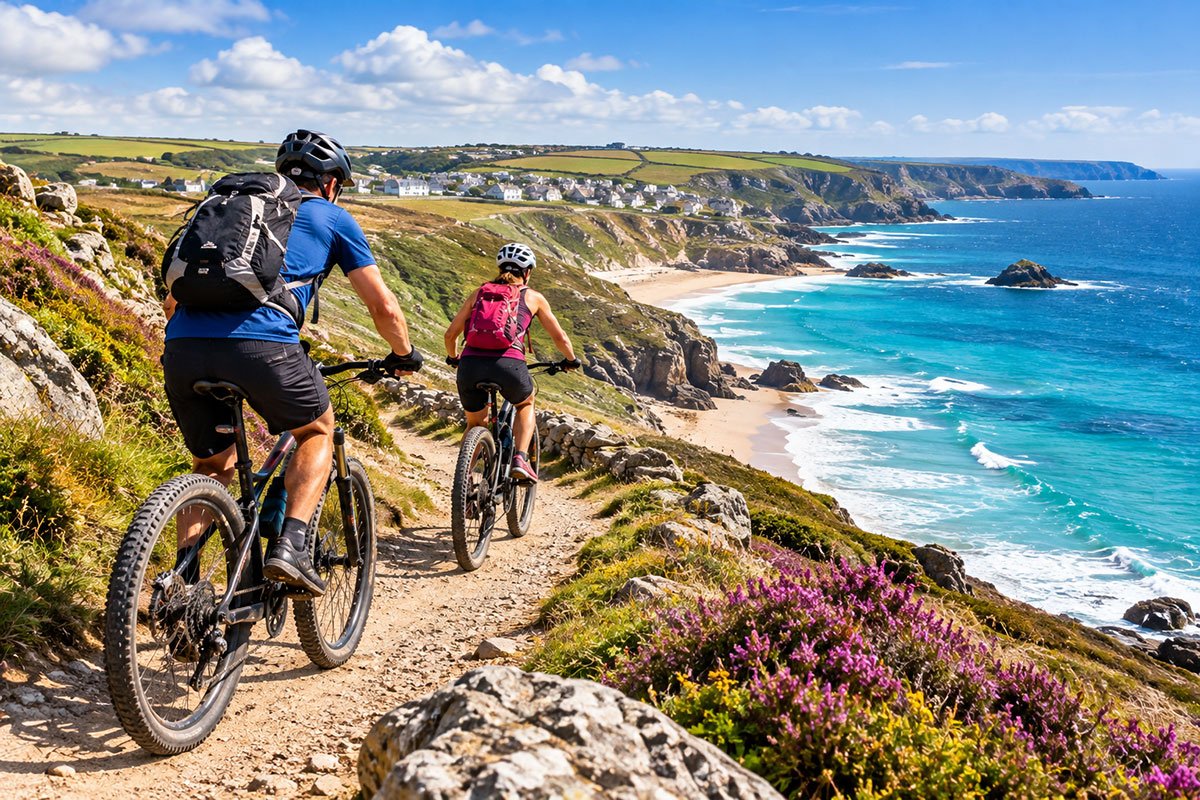
Best Biking Spots in Cornwall, England for Adrenaline Junkies
Cornwall, England, is a fantastic destination for cyclists who love outdoor adventures, beautiful landscapes and challenging terrain. From historic mining trails to rugged countryside routes, the county offers a variety of cycling experiences for riders of different abilities.
The best biking spots in Cornwall, England combine spectacular scenery with fascinating industrial heritage. You can cycle along former railway lines, explore old mining districts and discover quiet Cornish villages along the way.
Whether you prefer technical mountain-bike trails, demanding off-road rides or long-distance cycling adventures, Cornwall has plenty to explore. Some routes are relatively level and suitable for relaxed rides, while others include steep sections, uneven surfaces and mixed on-road and off-road terrain.
Before setting out, check the latest route information, choose a trail that matches your experience and prepare your bike for the conditions.
-
Coast to Coast Trail: A Scenic Ride Across Cornwall
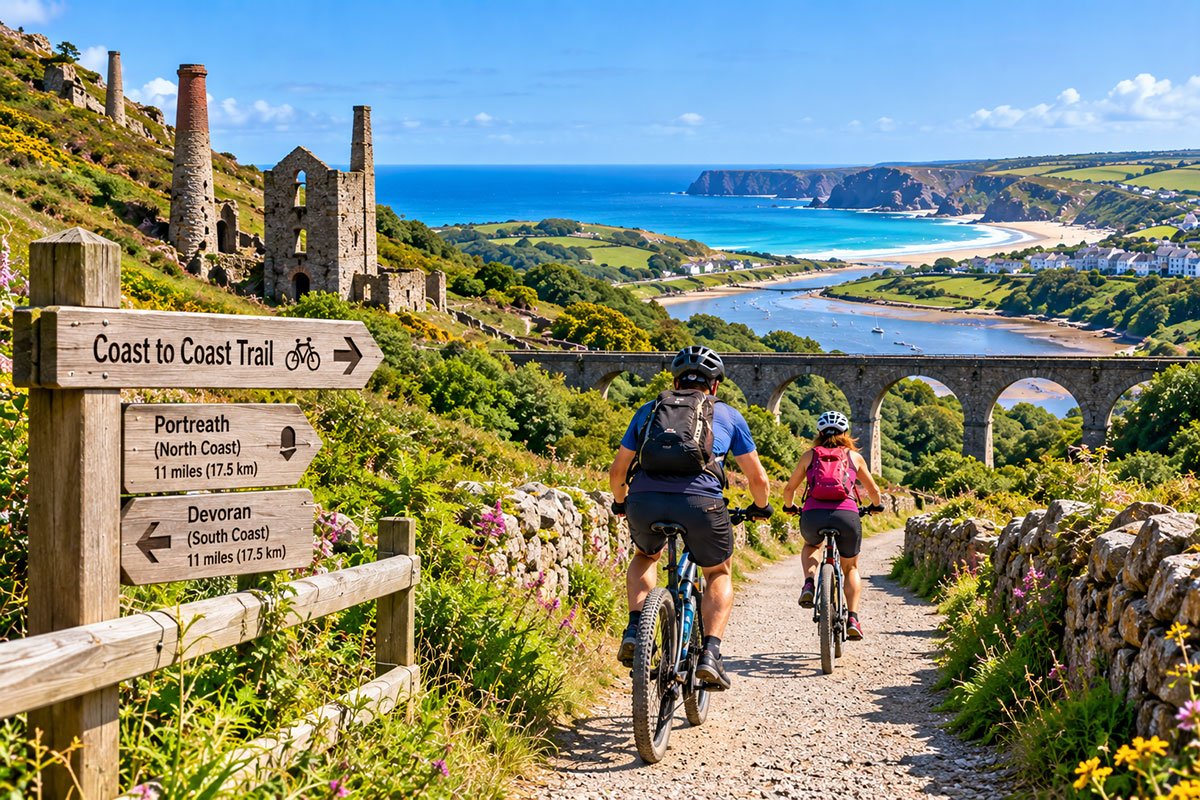
The Coast to Coast Trail is one of Cornwall’s most distinctive cycling routes. It connects Portreath on the north coast with Devoran on the south coast, following historic transport routes that once served the region’s mining industry.
Cornwall Council lists the route at approximately 11 miles (17.5 kilometres). The trail is generally level and mostly off-road, although surfaces and conditions vary along the way.
What Makes the Coast to Coast Trail Special?
The route follows parts of the historic Portreath Tramroad and the former Redruth and Chasewater Railway. These transport links played an important role in moving minerals and supplies between Cornwall’s mining districts and coastal ports.
Today, cyclists can enjoy a different view of this industrial landscape. Former transport corridors pass through countryside, woodland and areas associated with Cornwall’s mining heritage.
Highlights include:
- Historic engine houses: Discover reminders of Cornwall’s former tin and copper mining industries.
- Rural scenery: Enjoy views across the countryside between Portreath and Devoran.
- Former railway routes: Follow sections of transport infrastructure that once supported local industry.
- Connections to other trails: Link up with parts of the wider Mineral Tramways network.
Although the trail has sections of uneven or mixed surfaces, it is not exclusively an extreme mountain-biking route. It is a good choice for riders who enjoy a scenic cross-county adventure with opportunities to explore local history.
For route details and current access information, consult the official Cornwall Council Mineral Tramways guide.
-
Portreath Branchline Trail: Explore Cornwall’s Mining Heritage
The Portreath Branchline Trail is another excellent option for cyclists who want to combine outdoor activity with local history.
The route covers approximately 5.5 miles (8.8 kilometres) and forms part of Cornwall’s wider Mineral Tramways network. It follows a former railway alignment used to transport coal and other goods connected with the mining industry.
What to Expect on the Portreath Branchline Trail
This multi-use trail links with other routes, including the Coast to Coast Trail, Tehidy Trail and Great Flat Lode Trail.
Although parts of the route are relatively straightforward, it includes sections alongside or crossing public highways. Riders should therefore remain alert and follow road-safety precautions.
Depending on your route and riding style, you can expect a combination of countryside scenery, industrial heritage and access to nearby settlements.
Highlights include:
- Historic railway and mining landscapes.
- Connections to longer cycling routes.
- Access to nearby villages and local refreshments.
- Opportunities to extend your ride into the wider Mineral Tramways network.
If you want a longer outing, consider linking this trail with another route. However, check the combined distance, elevation and surface conditions before setting off.
The Portreath Branchline Trail suits cyclists looking for a varied ride rather than a continuous technical mountain-bike challenge.
Find current route details through Cornwall Council’s Mineral Tramways information.
-
First and Last Trail: A Long-Distance Cycling Adventure
The First and Last Trail offers a memorable way to explore the far west of Cornwall. The route runs between Land’s End and Hayle, passing through landscapes that include historic settlements, countryside and coastal scenery.
The route is approximately 25 miles (40 kilometres) long. Its mixture of on-road and off-road sections makes it important to plan your ride carefully.
Discover the Landscapes of West Cornwall
Starting near Land’s End, cyclists can experience the rugged scenery of Cornwall’s western peninsula before continuing towards Penzance and Hayle.
One of the route’s highlights is the view across Mount’s Bay. On suitable days, you may also see St Michael’s Mount rising from the water near Marazion.
The route offers a mix of experiences:
- Land’s End: Begin your adventure near one of England’s best-known coastal landmarks.
- Penzance: Stop for refreshments, explore the town or arrange bike-related services.
- Mount’s Bay: Enjoy views across the bay and towards the surrounding coastline.
- Marazion: Discover the village near St Michael’s Mount.
- Hayle: Finish your ride near the town’s estuary and coastal landscapes.
The route is not entirely off-road. Some sections follow public roads, so cyclists should be comfortable riding in traffic and navigating mixed terrain.
Its overall distance makes it a rewarding challenge for riders who enjoy longer journeys. However, the difficulty depends on weather, fitness, route conditions and how much of the journey you complete.
For maps, transport information and facilities, visit the official Cornwall Council First and Last Trail page.
-
Great Flat Lode Trail: Steep Sections and Historic Mining Sites
For cyclists seeking more demanding terrain, the Great Flat Lode Trail is worth considering.
This circular route covers approximately 7.5 miles (12 kilometres) and passes through Cornwall’s historic Camborne–Redruth mining district. Much of the route is off-road, although some sections include steep gradients.
Why Experienced Cyclists May Enjoy This Route
The trail combines varied countryside with remains of Cornwall’s mining past. Old mine sites and engine houses provide striking reminders of the industrial activity that once shaped the area.
Depending on your direction of travel and riding conditions, the route can include climbs that require sustained effort. Riders who enjoy testing their fitness may find these sections particularly rewarding.
Things to look out for include:
- Historic engine houses and mining structures.
- Open countryside and heathland.
- Varied trail surfaces.
- Connections to the wider Mineral Tramways network.
Although some sections can be demanding, this route is not necessarily a technical downhill mountain-bike trail. Riders seeking jumps, berms and purpose-built singletrack should check dedicated mountain-bike facilities separately.
Choose appropriate tyres, assess your fitness and be prepared to dismount where conditions are unsuitable.
The official Cornwall Council Mineral Tramways guide provides additional route information.
-
Engine House Trail: A Journey Through Cornwall’s Industrial Past
The Engine House Trail is an appealing choice for cyclists who want a longer countryside ride with a strong historical theme.
The route covers approximately 24 miles (38.7 kilometres), travelling between Hayle and Truro through parts of Cornwall’s historic mining region.
What Can You See Along the Way?
Starting in Hayle, the route follows quieter roads towards Camborne before joining largely traffic-free sections near Carn Brea and Redruth.
Along the way, cyclists encounter the remains of engine houses and other structures associated with Cornwall’s former mining industry. These buildings form an important part of the county’s industrial landscape.
Highlights include:
- The historic foundry landscape around Hayle.
- Mining heritage near Camborne and Redruth.
- Countryside near Carn Brea.
- Former tramway routes around Bissoe.
- Access to refreshments in nearby towns and villages.
The route uses a mixture of roads and off-road paths, so it is best suited to cyclists who are comfortable planning a longer ride and managing changing conditions.
You can also use public transport to access several towns along the route, making it possible to organise a ride around your preferred distance.
See Cornwall Council’s official Engine House Trail guide for route details, facilities and transport options.
-
Camel Trail: A More Relaxed Cycling Alternative
Not every cycling adventure needs steep climbs or challenging off-road terrain. The Camel Trail offers a more relaxed way to explore Cornwall’s countryside.
This largely traffic-free, surfaced and virtually level multi-use route extends for approximately 18 miles (29 kilometres) between Wenfordbridge, Bodmin, Wadebridge and Padstow.
Enjoy Riverside Scenery and Coastal Landscapes
Following a former railway line, the trail offers a pleasant ride through the countryside and along the Camel Estuary.
Its relatively gentle gradients make it suitable for leisure cyclists and visitors who want to enjoy the landscape without tackling demanding climbs.
The route can be divided into three main sections:
- Padstow to Wadebridge: Approximately 5.5 miles (8.8 kilometres).
- Wadebridge to Bodmin, via Boscarne: Approximately 5.75 miles (9.25 kilometres).
- Bodmin to Wenfordbridge: Approximately 6.25 miles (10.1 kilometres).
Bike hire and refreshments are available at several locations along the route, although opening times and availability may vary.
The Camel Trail is popular with walkers and other users, so cyclists should moderate their speed, give people plenty of room and follow local signs.
While it is not the most technical option for adrenaline seekers, it makes an excellent addition to a cycling holiday and provides a gentler day between more demanding rides.
For access details, facilities and route information, visit Cornwall Council’s official Camel Trail page.
Tips for Planning a Cycling Holiday in Cornwall
Choosing a route is only one part of preparing for a successful cycling adventure. Cornwall’s weather, varied terrain and mixture of road and off-road riding mean that careful planning can make a substantial difference.
Choose a Trail That Matches Your Ability
Check the total distance, elevation, surface type and road exposure before committing to a route.
Beginners may prefer shorter, relatively level trails. Experienced cyclists can consider longer routes or those with steep sections, provided they have the necessary skills and equipment.
Do not judge difficulty by distance alone. A short route with rough surfaces and steep climbs can be more demanding than a longer, flatter ride.
Check Weather and Trail Conditions
Cornwall’s coastal weather can change quickly. Rain can make some surfaces slippery, while strong winds may affect exposed sections.
Check local forecasts and official route information before departure. Look for notices about temporary closures, maintenance or access restrictions.
Carry suitable clothing and allow extra time if conditions deteriorate.
Prepare Your Bike and Safety Equipment
Before riding, inspect your tyres, brakes, gears and chain. Make sure the bike suits the terrain and that you can repair a puncture if necessary.
Useful equipment includes:
- A correctly fitted helmet.
- Front and rear lights when appropriate.
- A repair kit and pump.
- Water and snacks.
- A phone with offline maps.
- Weather-appropriate clothing.
- A basic first-aid kit for longer rides.
For demanding off-road routes, consider whether your tyres, brakes and suspension are suitable for the conditions.
Respect Other Trail Users
Many Cornish trails are shared by cyclists, walkers and horse riders. Reduce your speed when approaching other people, give clear warnings where appropriate and leave sufficient space when passing.
Follow local signs and avoid cycling on paths where riding is prohibited.
Plan Food, Water and Transport
Check where you can stop for refreshments and whether bike hire is available if you are travelling without your own bicycle.
For point-to-point routes, arrange transport back to your accommodation or starting point. Check train and bus policies before assuming you can take a bicycle on board.
Allow enough time to enjoy the scenery without rushing to finish before dark.
When Is the Best Time to Cycle in Cornwall?
Spring, summer and early autumn can all be suitable for cycling in Cornwall, but conditions vary from day to day.
Spring brings longer daylight hours and fresh countryside scenery. Summer generally offers more daylight for longer rides, although popular routes may be busier. Early autumn can provide quieter conditions, depending on the weather and school-holiday periods.
Winter cycling is also possible, but shorter daylight hours, wet surfaces and stronger winds can make some routes more challenging.
Rather than relying on the season alone, check the forecast shortly before your ride and adjust your plans to match the conditions.
Conclusion
Cornwall offers a remarkable variety of cycling experiences, from historic mining trails and countryside routes to long-distance adventures and relaxed riverside rides.
The Coast to Coast Trail and Portreath Branchline Trail provide opportunities to explore the county’s industrial heritage. The First and Last Trail offers a longer journey through west Cornwall, while the Great Flat Lode and Engine House trails combine countryside scenery with historic mining landscapes. The Camel Trail provides a gentler alternative for a more relaxed day.
Before setting out, check the latest route information, choose a trail that suits your abilities and prepare for changing weather.
With the right planning, Cornwall can deliver an unforgettable cycling holiday filled with fresh air, historic discoveries and spectacular scenery.
