
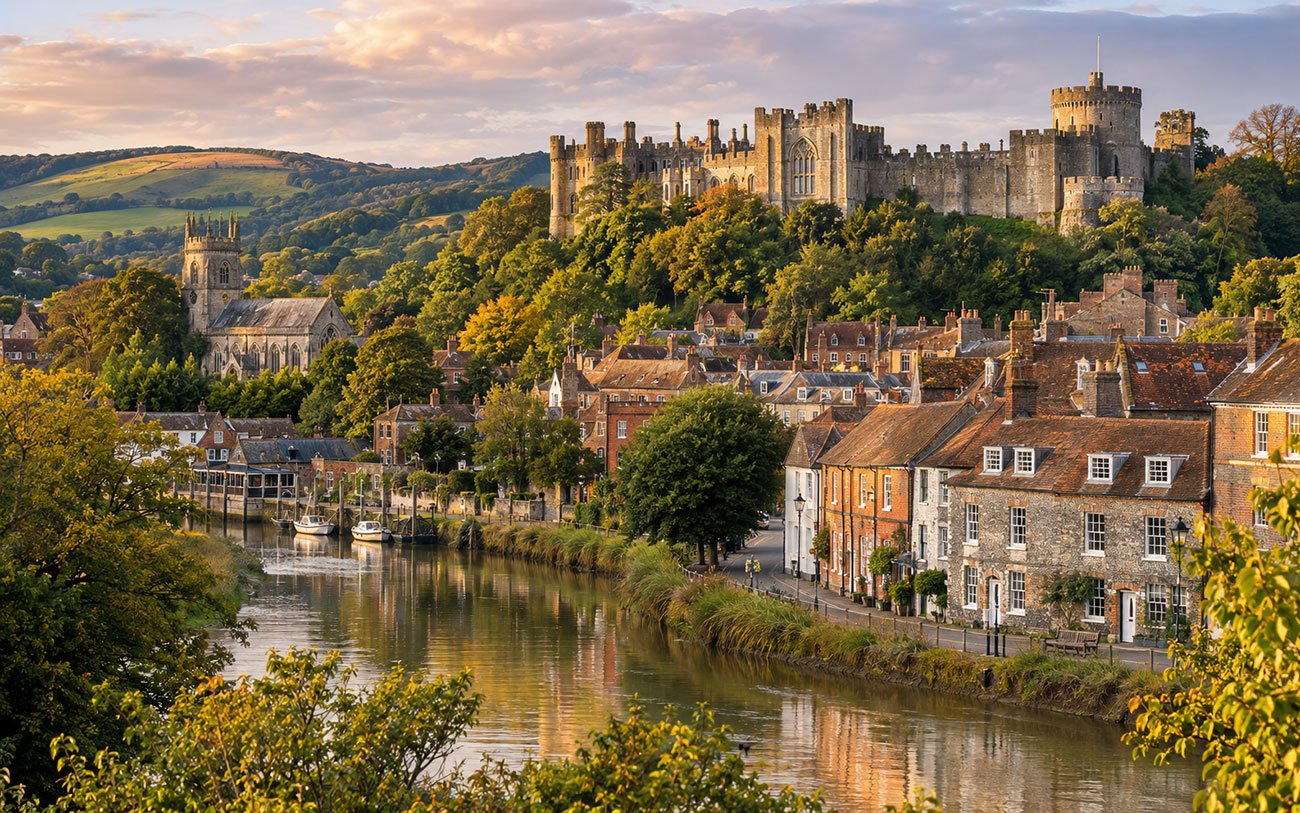
Arundel Castle rises above the picturesque town of Arundel and the River Arun, showcasing the medieval heritage and countryside charm of West Sussex.
5 Historic Towns and Villages in West Sussex to Explore
England’s southern countryside is full of places where history remains part of everyday life. From medieval castles and Tudor mansions to Roman mosaics and centuries-old village churches, West Sussex offers a remarkable variety of heritage within a relatively compact region.
Exploring the historic towns and villages in West Sussex is an enjoyable way to discover a quieter side of England. Here, traditional market squares, independent shops, rural lanes and peaceful landscapes sit alongside some of the country’s most important historical attractions.
Whether you are planning a weekend break, a countryside road trip or a day exploring the South Downs, these five destinations deserve a place on your itinerary.
Why Visit the Historic Towns and Villages of West Sussex?
West Sussex lies on England’s south coast, between Hampshire and East Sussex. Its landscape stretches from the rolling chalk hills of the South Downs to wooded countryside, fertile farmland and coastal settlements.
The county has a rich history shaped by Roman Britain, the Norman period, medieval trade, Tudor estates and changing rural traditions.
Many of its historic communities have retained their distinctive character despite being within reach of London and the larger towns of southern England.
Visitors can explore Roman archaeological sites, walk through traditional English high streets, discover grand country houses and enjoy scenic countryside without travelling far between attractions.
Five particularly rewarding places are Midhurst, Climping, Cuckfield, Arundel and Fishbourne.
1. Midhurst: Tudor Heritage and South Downs Scenery
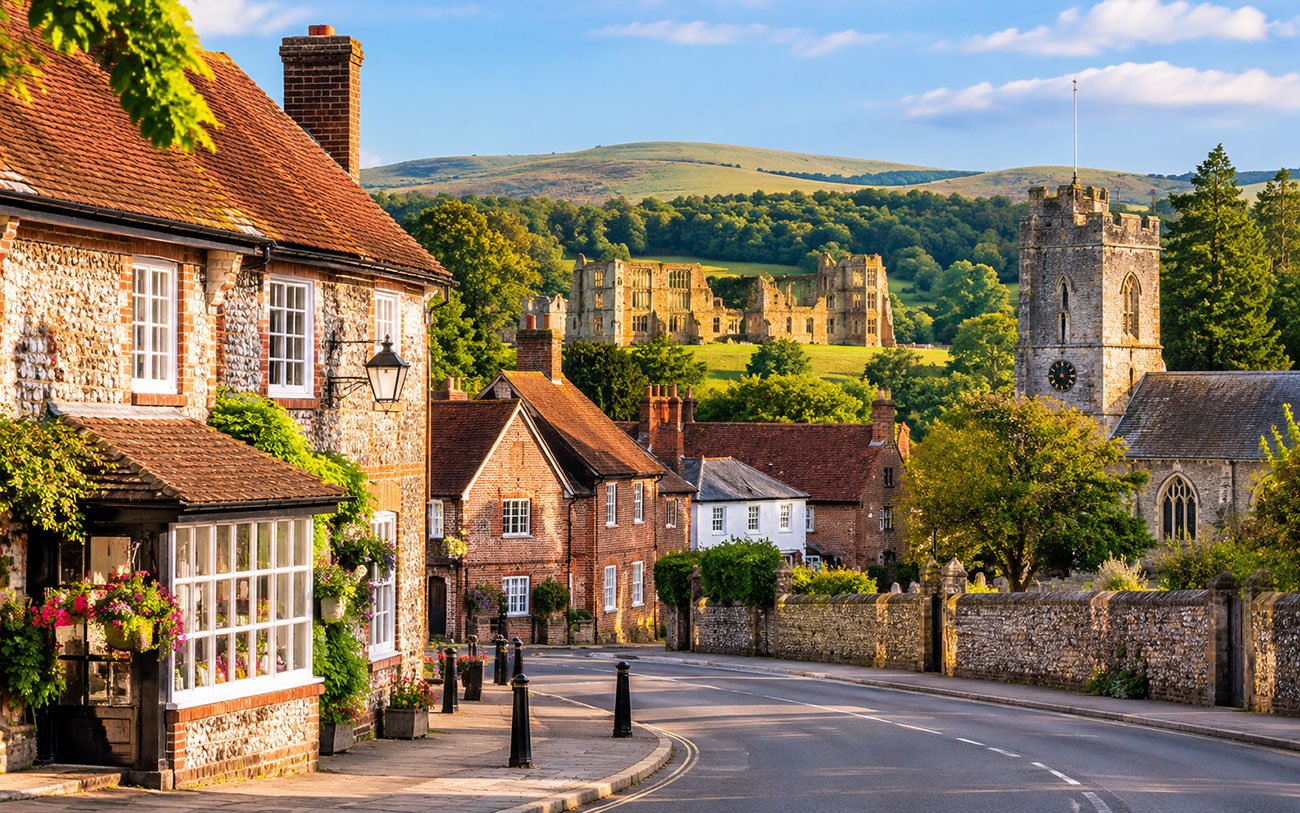
Midhurst’s historic streets, traditional English architecture and surrounding South Downs countryside reflect the rich Tudor heritage of West Sussex.
Midhurst is an attractive historic market town in the western part of the South Downs National Park.
Its narrow streets, traditional buildings and surrounding countryside make it a rewarding destination for visitors interested in English heritage.
The town is especially associated with Cowdray, one of the most significant Tudor houses in southern England.
Discover the Historic Cowdray Ruins
The ruins of Cowdray House stand in picturesque parkland near the centre of Midhurst.
Once a magnificent Tudor residence, Cowdray welcomed prominent historical figures, including King Henry VIII and Queen Elizabeth I.
The building suffered a devastating fire in 1793, leaving the impressive ruins visible today.
Its surviving walls, towers and architectural details offer a glimpse of the scale and grandeur of the original mansion.
However, visitors should not assume they can freely enter the ruins.
Cowdray Ruins is closed for general admission, although guided tours and heritage events provide opportunities to explore parts of the historic site.
Check the official Cowdray Estate website for available tours before planning your visit.
Explore Midhurst’s Historic Streets
The town centre is worth exploring at a leisurely pace.
Traditional buildings, independent shops, cafés and local businesses contribute to Midhurst’s character.
A heritage walk provides an opportunity to learn about the development of the town and its connections with the Cowdray Estate.
The South Downs National Park Authority also provides information about a short historic walk around Midhurst.
Enjoy the Surrounding Countryside
Midhurst is an appealing starting point for exploring the western South Downs.
The nearby countryside features woodland, river valleys, open landscapes and established walking routes.
You can combine a morning in the historic town with an afternoon countryside walk, choosing a route that matches your fitness and available time.
Best for: Tudor history, heritage walks, traditional market-town atmosphere and countryside scenery.
Visitor tip: Cowdray Ruins is best planned around a confirmed guided tour or heritage event. The town and its surroundings can still be enjoyed independently.
2. Climping: A Historic Coastal Village
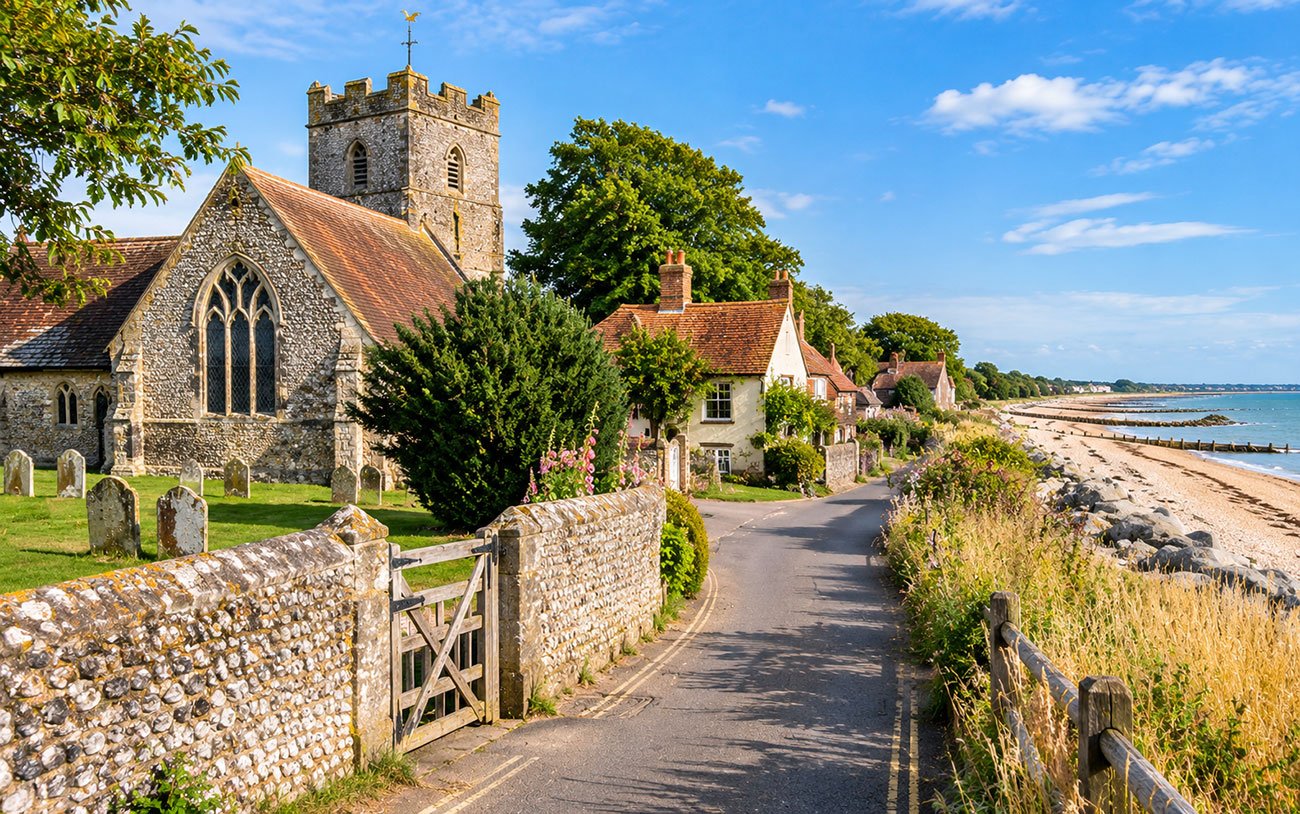
Climping in West Sussex is known for its historic rural heritage, traditional village character and scenic coastline along the English Channel.
Climping, also written as Clymping, offers a different side of West Sussex.
Located near Littlehampton and the River Arun, this rural coastal parish combines historic buildings, agricultural landscapes and a shoreline shaped by the English Channel.
It appeals to visitors who enjoy peaceful countryside and places with a less commercial atmosphere.
Visit the Historic Church of St Mary
One of Climping’s most important historical buildings is the Church of St Mary.
The church preserves notable Norman and early medieval architectural features, including a distinctive tower and decorative stonework.
Its history reflects the development of the surrounding rural community.
For travellers interested in historic churches, Climping provides an opportunity to appreciate medieval craftsmanship away from the crowds of larger tourist destinations.
Check local church information before visiting if you wish to see the interior, as access may depend on services and other arrangements.
Discover Climping Beach
Climping Beach is known for its exposed coastal setting and relatively undeveloped surroundings.
Unlike a traditional seaside resort with a busy promenade, the area has a quieter, more natural character.
However, the coastline has experienced significant erosion and storm damage.
Coastal protection works have changed parts of the beach, while access routes, parking and visitor facilities have been affected.
Do not assume that older photographs or travel descriptions reflect current conditions.
Before visiting, check local access information, weather conditions and Environment Agency flood warnings.
Enjoy the Rural Landscape
Climping’s surrounding countryside offers an appealing contrast to the busier coastal resorts.
Visitors can appreciate the agricultural landscape and historic character of the village while following suitable public rights of way.
Stay on designated routes and respect private farmland.
The coastline is vulnerable to changing conditions, so avoid unstable shingle banks and areas affected by erosion.
Best for: Rural heritage, historic churches, coastal landscapes and quieter sightseeing.
Visitor tip: Climping is better approached as a countryside and heritage excursion than as a conventional beach-resort day. Confirm access and parking arrangements before setting out.
3. Cuckfield: Historic Streets and Village Heritage

Cuckfield in West Sussex is known for its charming historic streets, traditional English architecture, independent shops and rich village heritage.
Cuckfield is one of West Sussex’s most attractive historic communities.
Situated in the Mid Sussex countryside, it combines traditional architecture, independent businesses and a strong sense of local identity.
Although often described as a village, Cuckfield has a long history as a market town.
Its historic streets are particularly appealing to visitors who enjoy discovering smaller English destinations on foot.
Explore the Historic High Street
Cuckfield’s High Street contains buildings that reflect different periods of the settlement’s development.
Traditional shops, historic inns and attractive houses create a welcoming atmosphere.
Rather than rushing between attractions, allow time to wander through the village centre and appreciate its architectural details.
Local cafés and independent businesses provide convenient places to stop along the way.
Visit Cuckfield Museum
Cuckfield Museum is one of the village’s most interesting cultural attractions.
Located in Queen’s Hall on the High Street, this small independent museum explores local history, community life and the area’s geological heritage.
Exhibitions cover subjects such as historic trades, village buildings and important local discoveries.
One particularly fascinating connection is the discovery of dinosaur fossils in the surrounding area.
Fossils found near Cuckfield contributed to the early scientific study of Iguanodon, one of the first dinosaurs to be formally identified.
The museum is run by volunteers and offers free admission, with donations welcomed.
Its opening hours are limited, so check the official website before travelling.
The museum occupies the first floor of a historic building and does not currently offer access for visitors who cannot use stairs.
Discover Holy Trinity Church
Holy Trinity Church is another important part of Cuckfield’s heritage.
Its history spans many centuries, and the building contains architectural features that reflect the development of the community.
The church is also known for its decorated interior.
Nearby, visitors can explore more of the village’s historic landscape and follow locally recommended walking routes.
Enjoy a Countryside Stay
Cuckfield is also a pleasant base for a short rural escape.
Among its established accommodation options is Ockenden Manor Hotel & Spa, which combines a historic country-house setting with contemporary spa facilities.
The property overlooks the surrounding countryside and provides an alternative for visitors who prefer a relaxing overnight stay.
Check accommodation availability and facilities directly before booking.
Best for: Historic streets, local museums, village walks, traditional architecture and countryside breaks.
Visitor tip: Download the local heritage trail from Visit Cuckfield to discover historical points of interest that are easy to overlook.
4. Arundel: Medieval Castle and Riverside Charm
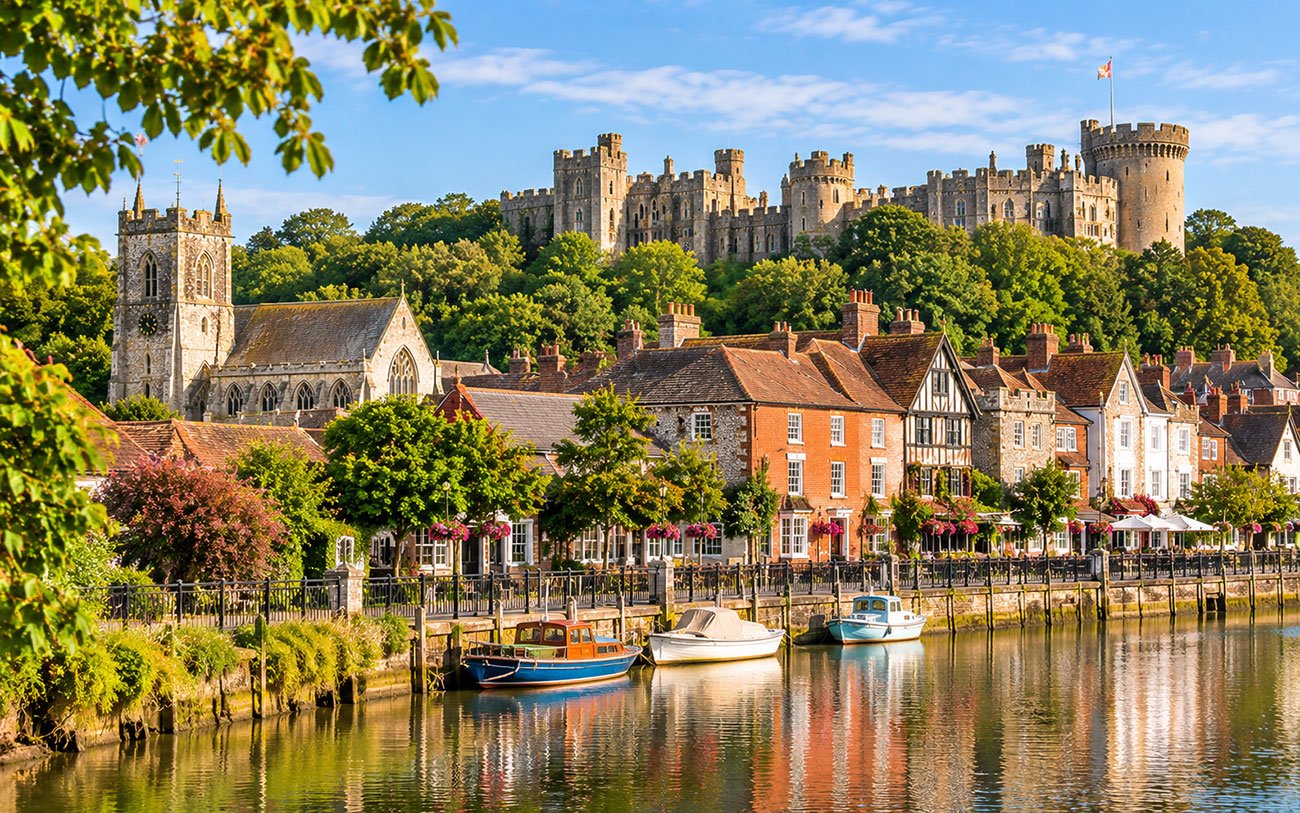
Arundel Castle dominates the historic town of Arundel, where medieval heritage, traditional architecture and the scenic River Arun create a picturesque setting.
Arundel is among the most visually striking historic towns in West Sussex.
Situated beside the River Arun, the town is dominated by the magnificent Arundel Castle, which rises above its streets and surrounding landscape.
Arundel combines medieval heritage with independent shops, historic buildings, galleries and riverside scenery.
It is one of the strongest choices for visitors with limited time who want to experience the county’s history.
Explore Arundel Castle
Arundel Castle is one of England’s great historic residences.
Its origins date to the Norman period, and the castle has a long association with the Earls of Arundel and the Dukes of Norfolk.
Over the centuries, the building has undergone major changes, including extensive restoration and reconstruction.
Today, the castle presents an impressive combination of medieval fortifications, grand interiors, historic collections and landscaped gardens.
Visitors can discover furnished rooms, decorative art, architectural details and exhibitions connected to the castle’s history.
The surrounding grounds are also an important part of the experience.
Walk Through the Castle Gardens
Arundel Castle’s gardens provide a beautiful setting for a leisurely visit.
Seasonal planting, landscaped areas and ornamental features create an attractive contrast with the historic stone buildings.
Spring is particularly appealing for garden enthusiasts.
However, the castle and gardens operate seasonally rather than remaining open throughout the year.
Check opening dates, admission arrangements and access to individual areas before travelling.
Experience Medieval Events
Arundel Castle is well known for its historical events.
Depending on the annual programme, visitors may encounter medieval demonstrations, historical re-enactments or jousting tournaments.
These activities can be particularly enjoyable for families and travellers interested in living-history experiences.
Some special events require separate tickets or have different admission arrangements.
Check the castle’s official events calendar before making travel plans.
Explore Arundel’s Historic Centre
The castle is only part of Arundel’s appeal.
The town’s historic streets contain a mixture of traditional architecture, independent shops, antique dealers and cafés.
Arundel Cathedral is another prominent landmark, adding to the town’s distinctive skyline.
The surrounding riverside area offers attractive views of the River Arun and opportunities for a relaxed walk.
You can easily spend several hours exploring Arundel without entering every paid attraction.
Best for: Medieval history, castles, architecture, gardens, independent shopping and riverside walks.
Visitor tip: Arundel Castle closes during the winter season. If the castle is the main reason for your trip, verify its opening dates before booking accommodation.
5. Fishbourne: Discover Roman Britain
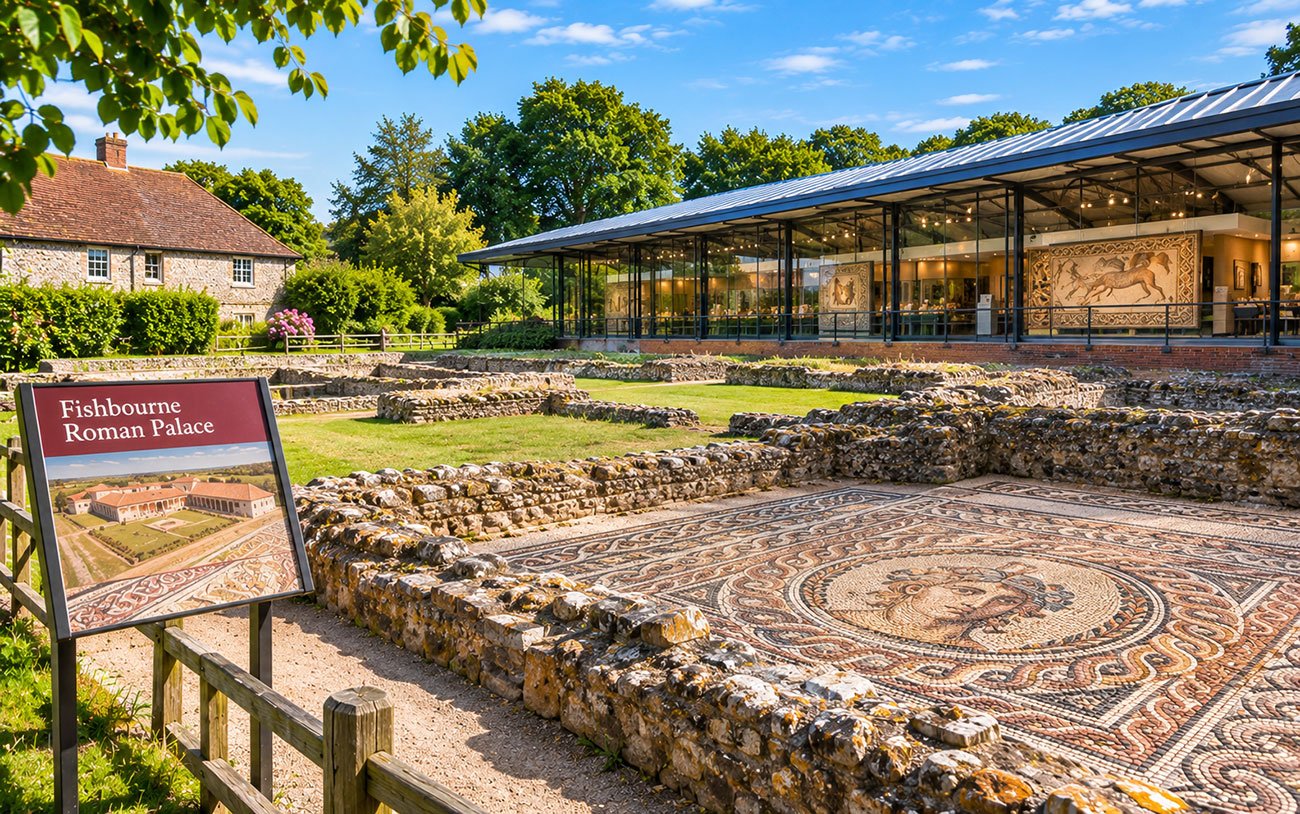
Fishbourne Roman Palace in West Sussex preserves remarkable Roman mosaics and archaeological remains, offering visitors a fascinating glimpse into Roman Britain.
Fishbourne, near Chichester, is one of the most important destinations in West Sussex for visitors interested in Roman history.
Although it has the character of a quiet village, Fishbourne contains the remains of an extraordinary Roman residence.
Fishbourne Roman Palace and Gardens is the area’s principal attraction and one of the most significant Roman archaeological sites in Britain.
Explore Fishbourne Roman Palace
The palace dates to the first century AD and is recognised as the largest known Roman residential palace north of the Alps.
Its remains reveal the scale and sophistication of high-status life in Roman Britain.
The site is particularly famous for its surviving mosaic floors.
Many of these mosaics remain in their original positions, allowing visitors to appreciate the decorative craftsmanship of the Roman period.
One of the most celebrated designs depicts Cupid riding a dolphin.
The archaeological displays help explain the history of the palace, the people who lived there and the process of discovering the site.
Discover the Reconstructed Roman Gardens
The palace’s formal gardens are another highlight.
Reconstructed using archaeological evidence, they help visitors imagine the appearance of the original Roman residence.
The planting patterns, pathways and layout reflect the carefully organised garden design associated with the palace.
These outdoor areas complement the museum exhibits and provide a more complete picture of Roman domestic life.
Learn About Roman Engineering
Fishbourne also offers an opportunity to understand the technical achievements of Roman Britain.
Archaeological evidence from the palace demonstrates sophisticated approaches to construction, decoration, water management and heating.
Museum displays explain the site’s architectural development and the lifestyle of its wealthy occupants.
Families can also benefit from educational activities and exhibitions that make Roman history more accessible.
Plan Your Visit
Fishbourne Roman Palace combines indoor museum displays with outdoor gardens.
This makes it a useful option when the weather is unpredictable, although some areas are exposed.
The palace is within walking distance of Fishbourne railway station and is also accessible by bus from Chichester.
The attraction operates seasonal opening arrangements, including periods when it closes to general visitors.
Check the official Sussex Past website for current admission details, opening dates and visitor facilities.
Best for: Roman archaeology, ancient mosaics, educational visits, gardens and family history activities.
Visitor tip: Allow around two hours for the main museum, mosaics and gardens, with additional time if you have a strong interest in Roman history.
Which Historic West Sussex Destination Should You Choose?
Each of these five places offers a different experience.
| Destination | Main attraction | Best suited to |
|---|---|---|
| Midhurst | Cowdray Ruins and historic town centre | Tudor history and countryside walking |
| Climping | St Mary’s Church and coastal landscape | Rural heritage and quiet coastal exploration |
| Cuckfield | Historic High Street and Cuckfield Museum | Village history, local culture and relaxed breaks |
| Arundel | Arundel Castle and historic town centre | Medieval architecture, gardens and sightseeing |
| Fishbourne | Fishbourne Roman Palace and Gardens | Roman history, archaeology and educational visits |
If you have only one day and want a varied historical experience, Arundel is a particularly rewarding choice.
For ancient history, Fishbourne stands out. Midhurst is ideal for Tudor heritage, while Cuckfield and Climping offer a quieter experience of traditional Sussex life.
How to Plan a West Sussex Heritage Weekend
Trying to visit all five destinations in one day would leave little time to enjoy their attractions.
A more practical approach is to group nearby places together and plan around museum and castle opening arrangements.
Day 1: Arundel and Climping
Begin in Arundel, exploring its historic centre and, during the open season, Arundel Castle.
Allow time for the gardens and a walk beside the River Arun.
In the afternoon, consider visiting Climping to explore the village’s historic church and rural surroundings.
Include the beach only if weather, access and coastal conditions are suitable.
This combination provides a contrast between a grand medieval town and a peaceful coastal settlement.
Day 2: Midhurst and Fishbourne
Start with Midhurst’s historic streets and the landscape surrounding Cowdray Ruins.
If a guided heritage tour is available, plan your morning around its scheduled time.
Continue towards Fishbourne for an afternoon exploring the Roman Palace and Gardens, provided it is open.
This itinerary brings together two different periods of English history: the Roman era and Tudor England.
Add Cuckfield for a Longer Trip
Cuckfield is farther east than the other four destinations, so it is better treated as an additional half-day excursion rather than squeezed into an already busy day.
Explore the village centre, visit the museum during its opening hours and enjoy a walk or café stop.
This gives you time to appreciate the village’s character without rushing.
Getting to and Around West Sussex
West Sussex is accessible by road and rail from London and other parts of southern England.
However, transport options vary considerably between the larger towns and smaller rural communities.
Travelling by Train
Arundel has its own railway station, making it a convenient option for visitors who prefer public transport.
Fishbourne also has a railway station close to the Roman Palace.
For Cuckfield, Haywards Heath provides a useful rail connection, with onward travel required to reach the village.
Midhurst and Climping require more consideration because they do not have the same direct rail access to their principal attractions.
Check National Rail for current services and use a journey planner to confirm onward bus connections.
Exploring by Car
A car offers greater flexibility when travelling between historic towns, villages and countryside attractions.
This is particularly useful for combining destinations with limited public transport connections.
However, parking arrangements vary.
Climping’s coastal access and parking have been affected by erosion and coastal protection work, so check local information before visiting.
Allow additional time for rural roads, seasonal traffic and finding suitable parking in historic town centres.
Walking and Cycling
Many historic centres are pleasant to explore on foot.
The South Downs National Park also offers established walking and cycling routes through attractive countryside.
Choose recognised paths and check the terrain before setting out.
Some heritage attractions have steep slopes, cobbled streets or uneven surfaces that may be difficult for visitors with reduced mobility.
Best Time to Visit Historic West Sussex
West Sussex can be explored throughout the year, although seasonal conditions influence which activities are most enjoyable.
Spring
Spring is a particularly attractive season for countryside walks and garden visits.
Historic towns begin to feel lively, while the landscape offers fresh greenery and seasonal flowers.
Check the reopening dates of attractions such as Arundel Castle before planning a trip.
Summer
Summer provides longer daylight hours for exploring villages, historic buildings and coastal areas.
It is also a popular period for outdoor events and historical re-enactments.
Book accommodation ahead of time if your visit coincides with major local events.
Autumn
Autumn can be particularly appealing for those who enjoy quieter villages and woodland scenery.
The countryside around Midhurst and other rural destinations offers attractive seasonal colours.
However, some heritage attractions begin reducing their opening schedules or close for winter.
Winter
Winter is suitable for exploring town centres, traditional cafés and countryside scenery when conditions allow.
However, several major attractions operate limited hours or close seasonally.
Check opening arrangements carefully before travelling, particularly if you intend to visit Arundel Castle, Cowdray Ruins or Fishbourne Roman Palace.
Practical Tips for Exploring Historic Towns and Villages in West Sussex
A few simple precautions can make your trip more enjoyable.
- Check attraction opening dates. Historic houses, museums and castles may have seasonal schedules.
- Book guided tours when required. Cowdray Ruins cannot be treated as an unrestricted walk-in attraction.
- Allow time for walking. Many historic streets and heritage sites are best explored at a relaxed pace.
- Prepare for changing weather. Bring comfortable footwear and waterproof clothing.
- Research coastal conditions. Climping Beach is affected by erosion, and access can change.
- Consider accessibility. Historic buildings may have stairs, uneven floors or restricted wheelchair access.
- Support local businesses. Independent cafés, shops and accommodation help sustain rural communities.
- Respect heritage sites. Follow designated paths, observe access restrictions and avoid damaging historic structures.
When possible, choose a smaller number of attractions and spend more time enjoying each destination.
Frequently Asked Questions About Historic West Sussex
What Are the Best Historic Towns and Villages in West Sussex?
Midhurst, Cuckfield, Arundel, Climping and Fishbourne are all worthwhile destinations. Each offers a different combination of historical architecture, museums, rural landscapes and cultural attractions.
Which West Sussex Town Is Best for Medieval History?
Arundel is an excellent choice for medieval history because of Arundel Castle and its historic town centre. The castle’s origins date to the Norman period, and its architecture reflects centuries of development.
Where Can I See Roman Ruins in West Sussex?
Fishbourne Roman Palace near Chichester is one of the county’s most important Roman sites. Visitors can explore original mosaic floors, archaeological displays and reconstructed formal gardens.
Can You Visit Cowdray Ruins in Midhurst?
Cowdray Ruins is closed for general admission, but guided tours and special heritage events are available. Check the official Cowdray Estate programme before travelling.
Is Climping Beach Worth Visiting?
Climping’s coastline is appealing for its rural setting, but erosion and coastal protection work have affected beach access and parking. Confirm conditions before visiting, and avoid unstable or restricted areas.
Can You Explore West Sussex Without a Car?
Yes, particularly if you focus on destinations with railway connections, such as Arundel and Fishbourne. Rural villages may require additional bus journeys or taxis. A car offers greater flexibility for visiting several destinations in one trip.
How Many Days Do You Need to Explore Historic West Sussex?
Two or three days provide a useful introduction. A two-day itinerary can cover Arundel, Climping, Midhurst and Fishbourne, depending on opening arrangements. Add extra time for Cuckfield and longer countryside walks.
Discover the Heritage and Countryside of West Sussex
The historic towns and villages of West Sussex reveal how different periods of English history continue to shape the landscape.
Midhurst preserves the legacy of Tudor England, while Arundel offers a striking reminder of medieval power and architecture. Fishbourne takes visitors back to Roman Britain, and the quieter communities of Cuckfield and Climping reveal the history of everyday village life.
Together, these destinations provide an enjoyable journey through the county’s cultural heritage, countryside and coastal scenery.
Whether you prefer exploring castles, visiting museums or wandering through traditional English streets, West Sussex rewards travellers who take time to discover its smaller places.
