
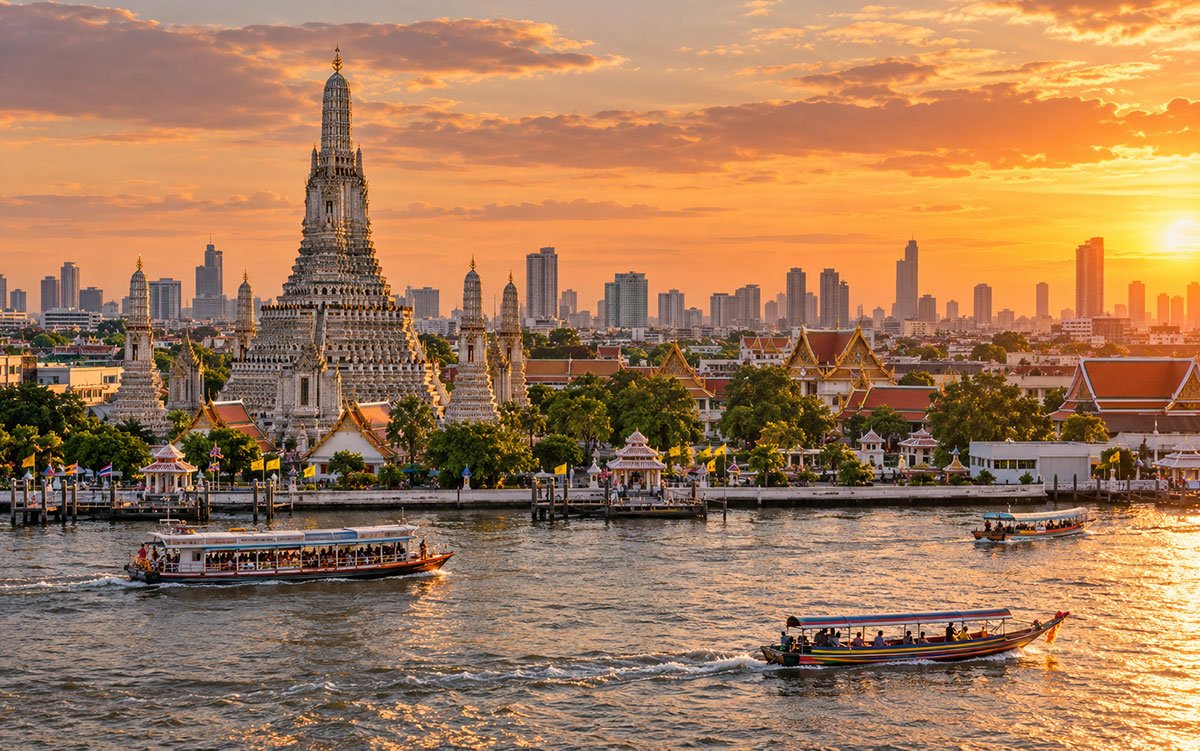
Discover Bangkok’s diverse neighbourhoods, from the historic Wat Arun temple and scenic Chao Phraya River to the city’s modern skyline and vibrant urban districts.
Where to Stay in Bangkok: A Guide to the City’s Neighbourhoods
Bangkok is a city of striking contrasts. Historic Buddhist temples stand near busy markets, modern shopping centres dominate major intersections, and quiet residential streets sit only a short distance from lively nightlife districts.
For first-time visitors, deciding where to stay in Bangkok can be surprisingly difficult. The city covers a large area, and choosing accommodation in the wrong location can mean spending more time travelling between attractions than actually exploring them.
Siam is convenient for shopping and public transport, while Sukhumvit offers restaurants, international hotels and nightlife. Silom combines business districts with food markets and green spaces. Rattanakosin is the historic heart of Bangkok, and Chinatown provides a distinctive combination of Chinese-Thai heritage and street food.
The Chao Phraya riverside, Pratunam, Chatuchak and other neighbourhoods offer equally interesting alternatives.
This guide explains what makes Bangkok’s main areas different, which attractions are nearby and what to consider before choosing your hotel.
Understanding Bangkok’s Districts and Neighbourhoods
Bangkok is officially divided into 50 administrative districts, known in Thai as khet.
However, the neighbourhood names commonly used by travelers do not always correspond to these administrative boundaries.
For example, Siam is a commercial area within Pathum Wan district, while the broader Sukhumvit area extends across several parts of the city. Khao San Road is a well-known street in Banglamphu, within Phra Nakhon district.
This distinction matters because hotels may advertise themselves as being in a particular neighbourhood even when they are some distance from the attractions or transport stations associated with it.
When choosing accommodation, look at the actual location rather than relying on the neighbourhood name alone.
Bangkok’s main neighbourhoods at a glance
| Neighbourhood | Main attractions and experiences | Suitable for |
|---|---|---|
| Siam and Ratchaprasong | Shopping malls, cafés, modern Bangkok | First-time visitors, families, shoppers |
| Sukhumvit | Restaurants, nightlife, international hotels | Dining, nightlife, longer stays |
| Silom and Sathorn | Business areas, markets, Lumphini Park | Business travelers, couples, sightseeing |
| Rattanakosin and Banglamphu | Grand Palace, temples, Khao San Road | History, culture, budget travel |
| Chinatown and Phahurat | Street food, markets, cultural heritage | Food lovers, cultural exploration |
| Chao Phraya Riverside | Boat journeys, riverside landmarks | Scenic stays, couples, temple visits |
| Pratunam and Ratchathewi | Clothing markets, shopping centres | Shopping-focused and budget-conscious trips |
| Chatuchak and Ari | Weekend market, parks, neighbourhood cafés | Markets, relaxed urban exploration |
| Ratchadaphisek and Rama IX | Commercial centres, entertainment | Business visits, alternative city bases |
The choice depends on which parts of Bangkok you expect to visit most often and how easily you can reach them.
1. Siam and Ratchaprasong: Shopping and Central Connections
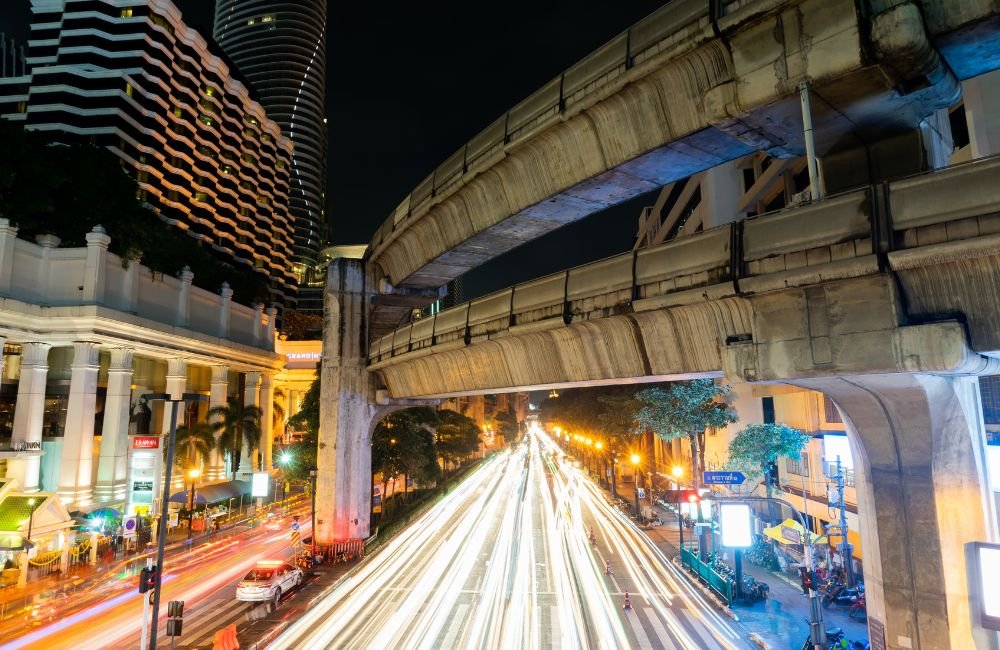
Bangkok comes alive after dark as colourful traffic light trails illuminate the busy streets beneath the BTS Skytrain near Ratchaprasong and Siam.
Siam is one of the most convenient areas for visitors who want to experience Bangkok’s modern commercial centre.
Located around Siam Square and the surrounding shopping complexes, the neighbourhood offers a concentration of retail outlets, restaurants, cafés, entertainment venues and hotels.
Several major shopping destinations are located in or around the area, including Siam Paragon, Siam Center and centralwOrld.
Siam Square also offers smaller retail shops and a lively atmosphere shaped partly by its proximity to educational institutions.
What to see and do in Siam
Spend time exploring the shopping centres and surrounding streets, where you can find everything from international fashion brands to local products and food courts.
Nearby attractions include the Bangkok Art and Culture Centre, which provides an alternative to shopping with exhibitions and cultural activities.
The wider Ratchaprasong area also includes the Erawan Shrine, an active religious site that visitors should approach respectfully.
Why stay in Siam?
Siam BTS station is an interchange between the Sukhumvit and Silom lines of Bangkok’s Skytrain network.
This makes it convenient for reaching other parts of the city without relying entirely on road transport.
However, Siam is not an interchange with the MRT underground railway. Travelers changing to the MRT need to use an appropriate connecting station elsewhere.
Hotels near Siam may suit families and first-time visitors who want shopping, dining and convenient rail access close to their accommodation.
Nearest useful stations: BTS Siam, National Stadium and Chit Lom.
Travel tip: If you plan to explore several neighbourhoods, a hotel within comfortable walking distance of Siam BTS can simplify your daily journeys.
2. Sukhumvit: Restaurants, Nightlife and International City Life
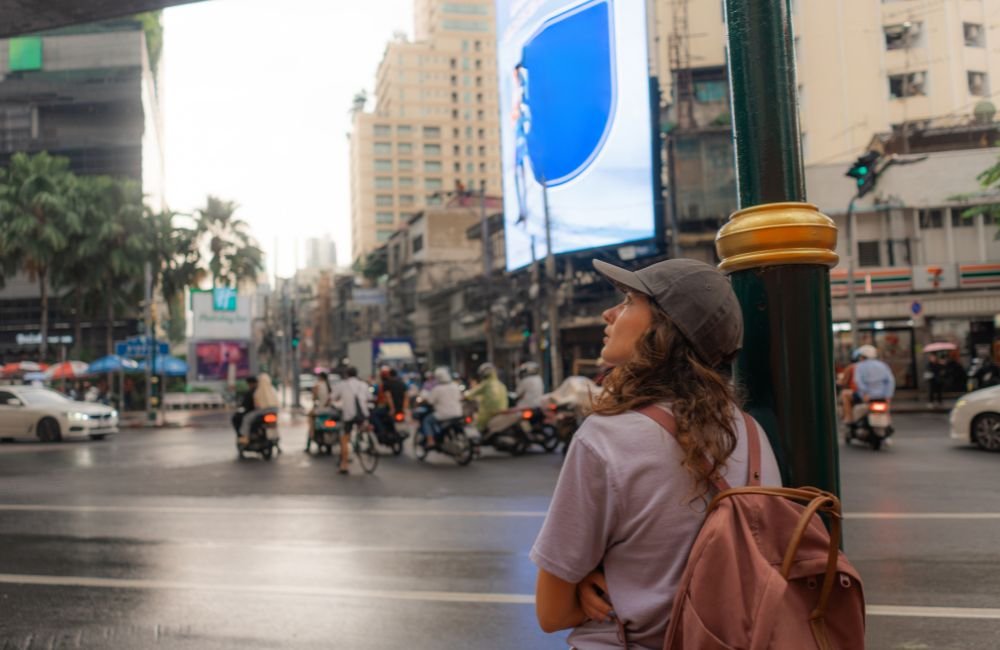
Explore the lively streets of Sukhumvit, one of Bangkok’s popular neighbourhoods for shopping, dining, nightlife and experiencing modern city life.
The Sukhumvit is one of Bangkok’s best-known urban areas, but it is important to understand its geography.
Sukhumvit Road extends far beyond central Bangkok. When visitors refer to staying in Sukhumvit, they usually mean the central section served by BTS stations such as Nana, Asok, Phrom Phong, Thong Lo and Ekkamai.
Each part of this long corridor has a different atmosphere.
Nana and Asok
The Nana area has a lively concentration of hotels, restaurants, bars and nightlife venues.
It also includes adult-oriented entertainment streets, making it important to check the exact location of accommodation if you prefer a quieter environment.
Asok is a major transport and commercial area. Terminal 21 shopping centre is a familiar landmark, and the BTS Asok station connects with the MRT Sukhumvit station.
This interchange is particularly useful for travelers who want access to both rail networks.
Phrom Phong, Thong Lo and Ekkamai
Phrom Phong offers shopping centres, restaurants and residential neighbourhoods. Benchasiri Park provides green space close to the main road.
Farther east, Thong Lo and Ekkamai are associated with dining, cafés, nightlife and residential developments.
These areas can suit visitors who prefer exploring restaurants and local neighbourhood streets instead of spending every day near major tourist landmarks.
Is Sukhumvit a good area to stay?
Sukhumvit offers accommodation across a range of styles and budgets. It can work well for travelers who value access to restaurants, shopping and the BTS network.
However, the distance between two hotels advertised as being in Sukhumvit can be substantial.
Always check the nearest station and the actual walking route before booking.
Useful stations: BTS Nana, Asok, Phrom Phong, Thong Lo and Ekkamai; MRT Sukhumvit.
Travel tip: If you want to explore both modern Bangkok and historic neighbourhoods, staying near Asok can make transfers between BTS and MRT more convenient.
3. Silom and Sathorn: Business, Markets and Green Spaces
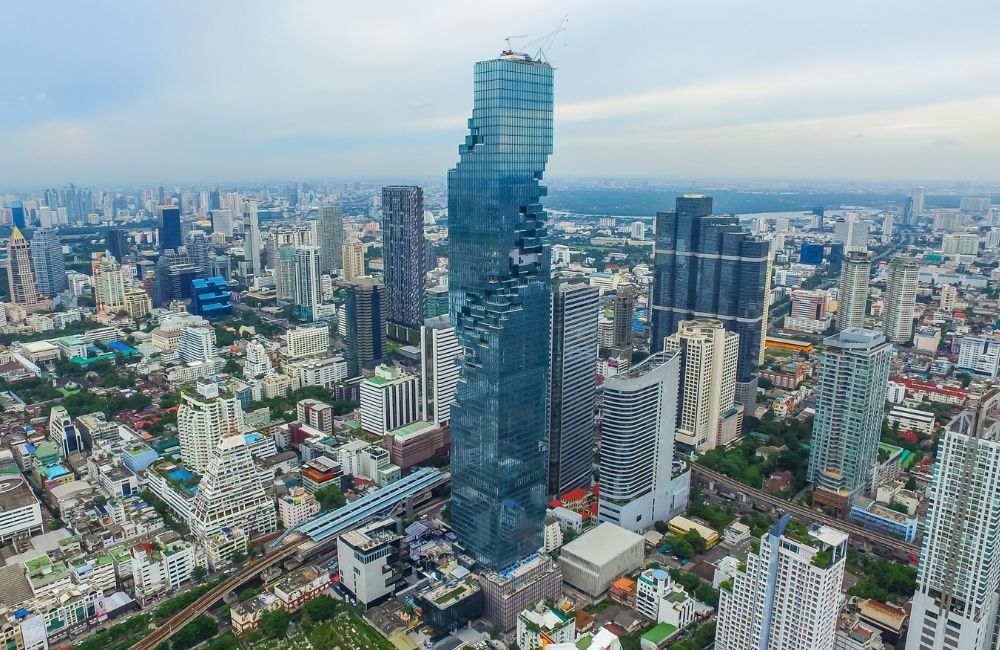
Discover Bangkok’s modern skyline in Sathorn and Silom, where towering skyscrapers, busy business districts and convenient BTS Skytrain connections shape the city’s urban landscape.
Silom and Sathorn offer a combination of modern office districts, hotels, traditional markets, restaurants and evening entertainment.
By day, parts of the area are busy with office workers and commercial activity. In the evening, restaurants, bars and food venues attract visitors and residents.
Silom is also associated with Patpong, a nightlife area known for adult entertainment and market activity.
However, treating the whole neighbourhood as a nightlife destination would overlook much of what it offers.
Explore Lumphini Park
Lumphini Park provides a welcome break from Bangkok’s traffic and dense urban surroundings.
Visitors can enjoy walking paths, landscaped greenery and open spaces while remaining close to major commercial areas.
It is worth including if you want a relaxed morning or afternoon between sightseeing activities.
Discover local markets and dining
The streets around Silom offer different dining experiences, from casual local food to restaurants serving international cuisine.
Markets such as Lalai Sap reflect the area’s longstanding relationship with Bangkok’s working population and commercial life.
Stall availability can vary by day, so check before making a special journey.
Why stay in Silom or Sathorn?
Transport is a major advantage.
BTS Sala Daeng is close to MRT Si Lom, allowing travelers to connect between the Skytrain and underground networks.
Farther west, the BTS Silom Line continues towards Saphan Taksin, a useful connection for river transport.
This makes Silom and Sathorn practical bases for travelers who want a combination of business convenience, sightseeing and restaurants.
Useful stations: BTS Sala Daeng, Chong Nonsi, Surasak and Saphan Taksin; MRT Si Lom and Lumphini.
4. Rattanakosin and Banglamphu: Bangkok’s Historic Heart
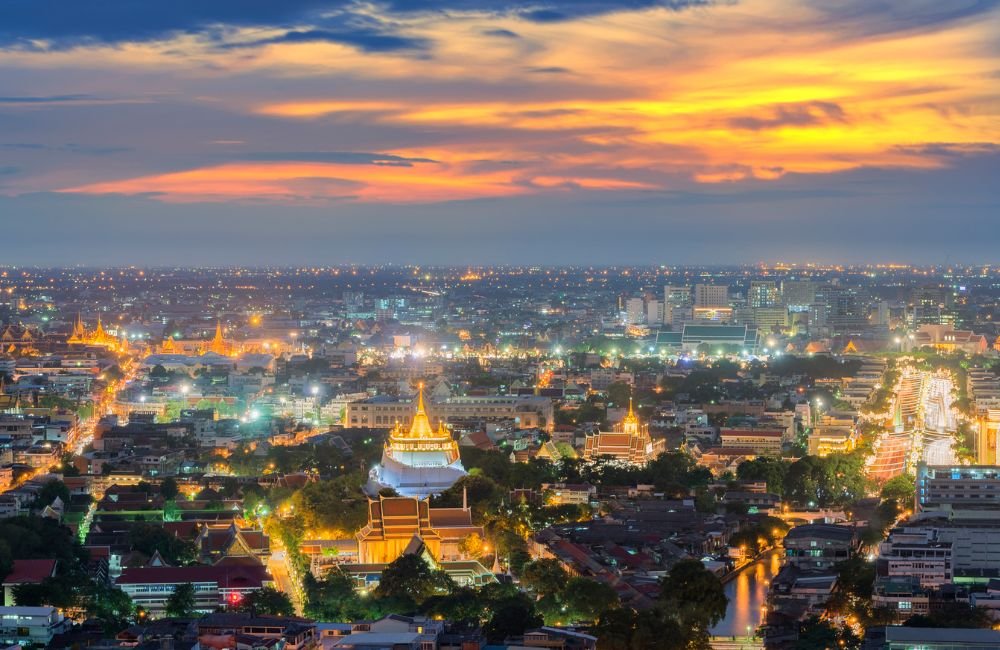
Experience the beauty of Bangkok’s historic Rattanakosin district at sunset, where golden temple spires and illuminated landmarks create a spectacular Old Town skyline.
Travelers interested in Thai history, architecture and Buddhist culture should spend time in Rattanakosin.
Often called Bangkok’s Old Town, Rattanakosin contains some of the capital’s most important historic attractions.
The area around the Grand Palace is especially significant because it reflects Bangkok’s development as Thailand’s royal capital.
Visit the Grand Palace and Wat Phra Kaew
The Grand Palace is one of Bangkok’s major historical landmarks.
Within the palace complex is Wat Phra Kaew, the Temple of the Emerald Buddha, an important religious site associated with Thailand’s monarchy.
Visitors should dress respectfully and follow the palace’s published requirements.
Opening arrangements can change for royal ceremonies and other official functions. Check the official visitor calendar before planning your visit.
Explore Wat Pho
Located close to the Grand Palace, Wat Pho is known for its Reclining Buddha and its association with traditional Thai massage.
The temple remains an active religious site, so appropriate clothing and respectful behaviour are essential.
The combination of the Grand Palace and Wat Pho makes this part of Bangkok particularly suitable for a cultural sightseeing day.
Experience Banglamphu and Khao San Road
Banglamphu lies north of the main palace area and includes the famous Khao San Road.
Khao San is associated with budget accommodation, traveler-oriented businesses, bars and nightlife.
Nearby streets offer a different atmosphere, including older shophouses, local businesses and routes towards the Chao Phraya River.
Visitors who enjoy lively nightlife may appreciate staying near Khao San Road. Those who prefer a quieter night’s sleep should consider accommodation farther away from its busiest sections.
Where should you stay in the Old Town?
Rattanakosin suits travelers whose priority is historic sightseeing rather than modern shopping centres.
The trade-off is that the area does not have the same direct BTS coverage as Siam or Sukhumvit.
MRT Sanam Chai is useful for visiting the Grand Palace and Wat Pho, but it is not immediately beside every Old Town attraction.
Riverboats, buses and taxis can help with other journeys.
Useful transport: MRT Sanam Chai and Sam Yot, plus suitable river piers and local bus services.
Travel tip: Start temple visits earlier in the day where possible, allowing time for heat, walking and security procedures.
5. Chinatown and Phahurat: Street Food and Cultural Heritage
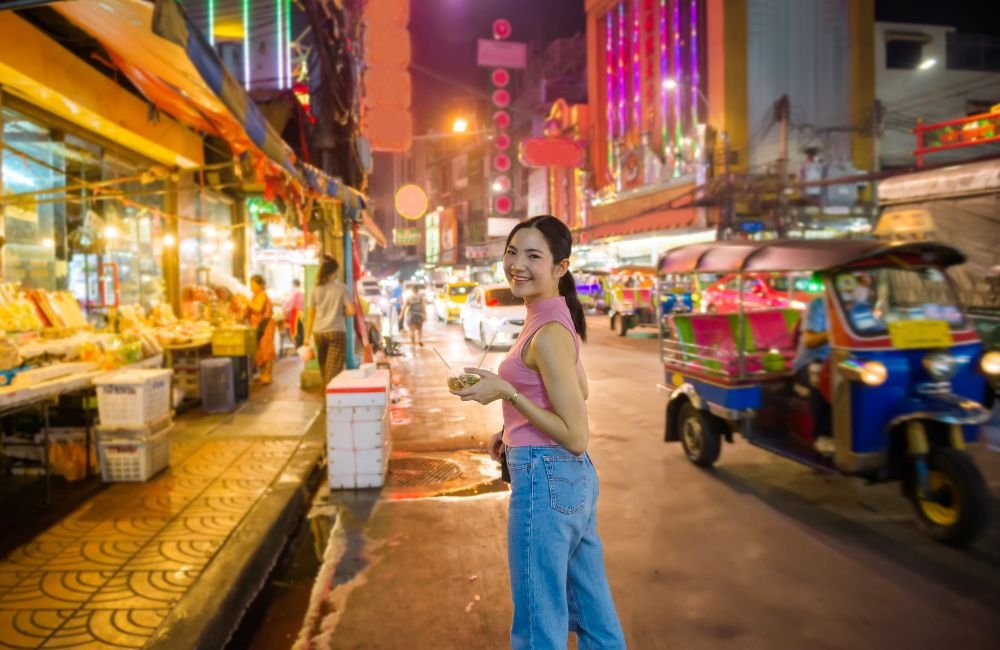
Explore the vibrant streets of Bangkok’s Chinatown, where colourful neon lights, traditional tuk-tuks and bustling food stalls bring Yaowarat to life after dark.
Bangkok’s Chinatown centres on Yaowarat Road and the surrounding streets in Samphanthawong district.
This is one of the capital’s distinctive commercial and cultural areas, with Chinese-Thai temples, traditional shops, markets and food businesses.
The area becomes particularly atmospheric in the evening when restaurants and participating street-food vendors serve visitors along Yaowarat and nearby roads.
Explore Yaowarat
A walk through Chinatown introduces visitors to an important part of Bangkok’s Chinese-Thai heritage.
Food is a major attraction, with noodle dishes, roasted meats, seafood, traditional sweets and other specialities found in the surrounding streets.
For a broader cultural experience, explore the smaller lanes, markets and places of worship beyond the busiest dining area.
Wat Mangkon Kamalawat is an important Chinese Buddhist temple in the neighbourhood.
Nearby Wat Traimit is known for its Golden Buddha and is another worthwhile cultural stop.
Visit Phahurat, Bangkok’s Little India
Close to Chinatown, Phahurat has a different cultural character.
Sometimes called Little India, the area is associated with textile shops, Indian businesses, food and Sikh heritage.
Visitors can explore fabric markets and learn about the neighbourhood’s communities.
The Sri Guru Singh Sabha Gurdwara is an important Sikh religious site in the area. Anyone visiting a place of worship should follow the relevant dress and behaviour requirements.
Chinatown and Phahurat are close enough to combine in one broader cultural outing, but they should not be treated as a single interchangeable neighbourhood.
Is Chinatown a good place to stay?
Chinatown may appeal to visitors interested in food, historic streets and cultural experiences.
Accommodation choices differ from those in Bangkok’s large modern commercial districts, so compare individual properties carefully.
Useful station: MRT Wat Mangkon, with Hua Lamphong also serving part of the wider area.
Travel tip: Explore Chinatown during daylight to appreciate the architecture and markets, then return in the evening if you want to experience its dining atmosphere.
6. Chao Phraya Riverside and Thonburi: Temples and River Views
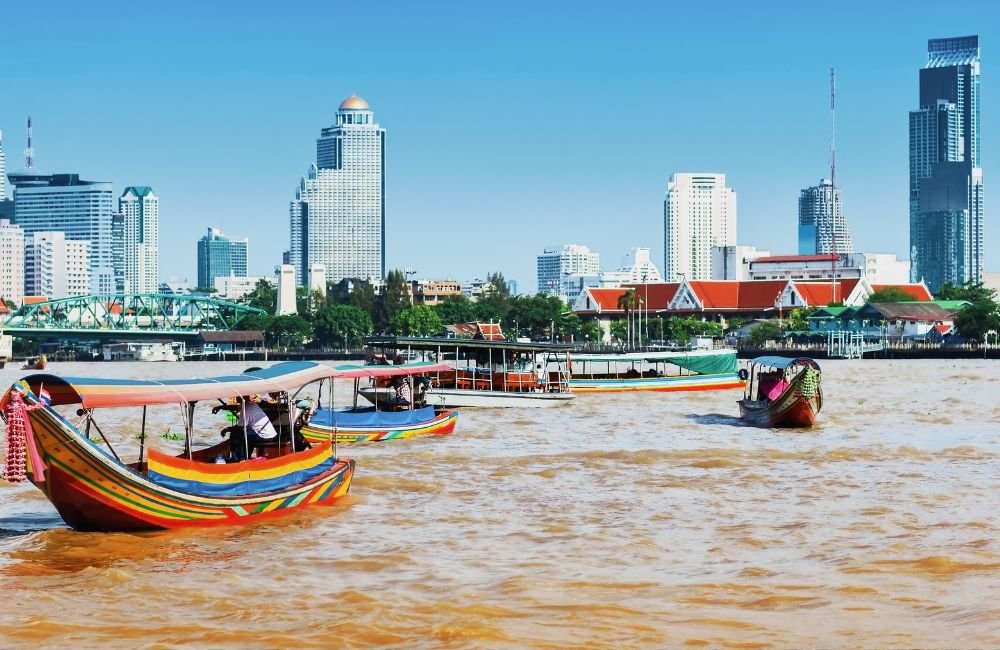
Explore Bangkok’s scenic Chao Phraya River, where colourful traditional long-tail boats travel past historic riverside buildings and the city’s modern skyline.
The Chao Phraya River is central to Bangkok’s history and remains an important transport corridor.
Staying near the river provides a different perspective from the shopping centres and high-rise districts farther east.
Along the waterfront, visitors will find historic buildings, temples, hotels, local communities and modern developments.
Discover Wat Arun
Wat Arun, commonly known as the Temple of Dawn, is one of Bangkok’s most recognisable landmarks.
It stands on the western bank of the Chao Phraya River in Bangkok Yai district, part of the wider Thonburi side of the city.
The temple’s distinctive central prang is decorated with intricate porcelain and ceramic details.
Visitors can reach the area using suitable riverboat connections and other local transport.
Wat Arun is especially memorable when viewed from the opposite riverbank, where its architecture forms a striking part of Bangkok’s skyline.
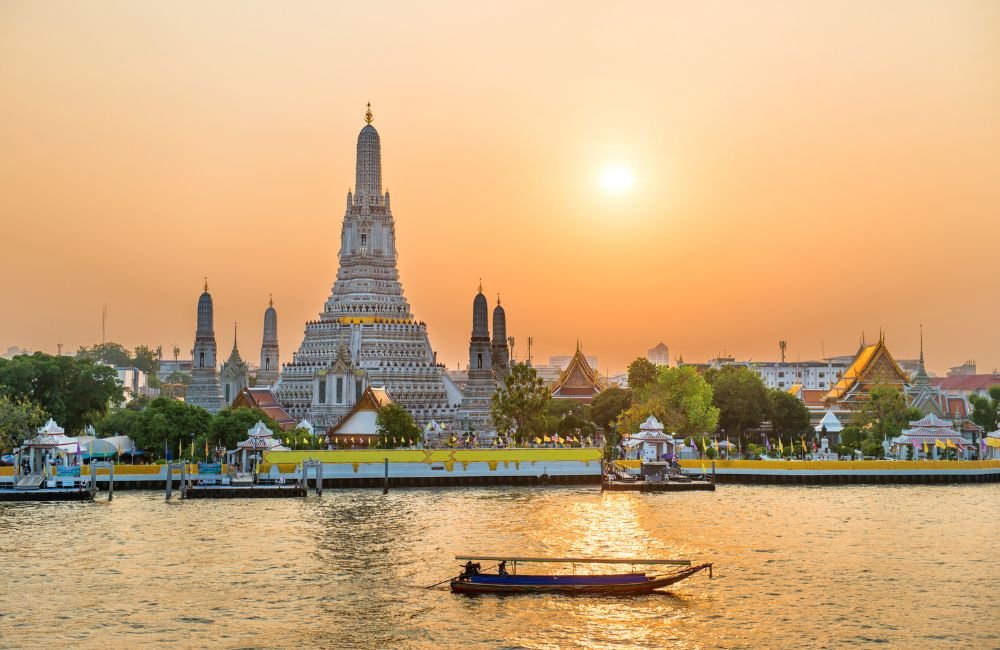
Wat Arun glows at sunset across the Chao Phraya River, showcasing one of Bangkok’s most recognisable historic landmarks.
Explore the riverside
The Chao Phraya offers several ways to experience the city.
Public riverboats connect numerous piers, while tourist boat services provide access to important sightseeing locations.
Popular riverfront areas include the historic streets around Charoen Krung and the shopping and dining development at ICONSIAM.
The west bank also offers opportunities to explore local communities and quieter neighbourhood streets.
Is the riverside a good place to stay?
Riverside accommodation may suit travelers seeking views, historic sightseeing and access to boat transport.
However, not every riverside hotel is close to a rail station.
Before booking, establish how you will reach the nearest public pier or railway connection.
Some hotels provide boat transfers, but these should be confirmed directly rather than assumed.
Useful connections: BTS Saphan Taksin and Sathorn Pier, along with appropriate Chao Phraya boat services.
Travel tip: Check the operating times and routes for your intended boat service. Not every riverboat stops at every pier, and evening services may be more limited.
7. Pratunam and Ratchathewi: Fashion Markets and Shopping
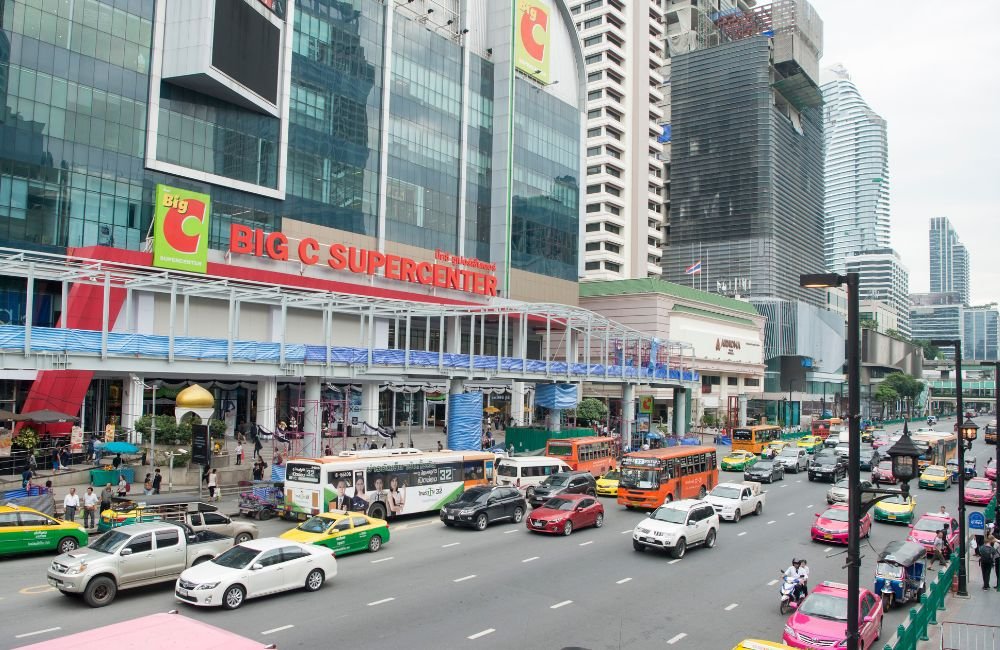
Explore Bangkok’s lively Pratunam shopping area, where busy streets, colourful taxis and modern shopping centres reflect the energy of Thailand’s capital.
Pratunam is an important commercial area for shoppers interested in clothing, accessories and fashion-related products.
The neighbourhood is associated with busy markets and wholesale-style retail businesses, attracting both local buyers and visitors.
Platinum Fashion Mall is one of its familiar shopping destinations, while nearby streets offer additional market activity.
What makes Pratunam different from Siam?
Siam is dominated by large modern retail complexes and major transport connections.
Pratunam, by contrast, is especially associated with fashion markets, smaller shops and densely packed commercial streets.
Some visitors may prefer the atmosphere of browsing numerous smaller businesses rather than spending their time inside large shopping centres.
Where to stay in Pratunam
The area may appeal to travelers whose itinerary includes extensive shopping.
However, busy roads and pedestrian congestion can make walking with luggage more difficult.
Check the exact accommodation location and route to the nearest station.
The wider Ratchathewi area also provides useful public transport connections.
Useful stations: BTS Ratchathewi and Phaya Thai, Airport Rail Link Ratchaprarop, depending on the hotel’s location.
Travel tip: If shopping is your priority, allow time to compare shops rather than assuming every stall sells at a fixed wholesale price.
8. Chatuchak and Ari: Markets, Parks and Neighbourhood Cafés
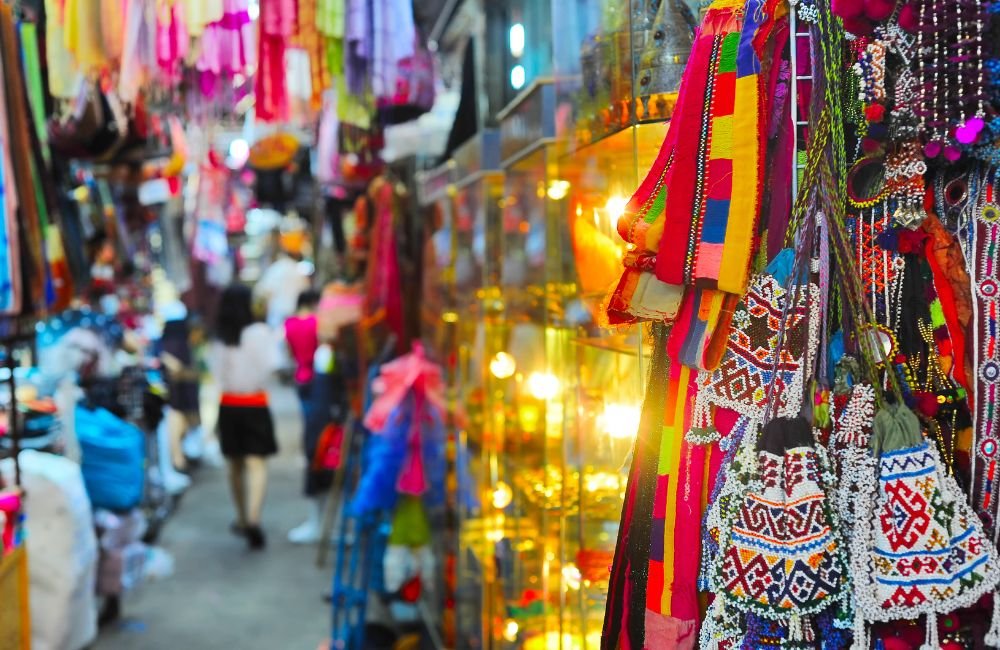
Discover the colourful shopping stalls of Chatuchak Weekend Market in Bangkok, where visitors can browse clothing, embroidered bags, textiles, handicrafts and unique souvenirs.
Bangkok’s northern inner-city neighbourhoods offer alternatives to the familiar Siam and Sukhumvit corridors.
Chatuchak is particularly well known for its weekend market, while nearby Ari has developed a reputation for cafés, restaurants and residential neighbourhood life.
Explore Chatuchak Weekend Market
Chatuchak Weekend Market is one of Bangkok’s major shopping attractions.
Visitors can browse clothing, accessories, handicrafts, decorative objects, household items and food stalls.
The market covers a substantial area, so it is sensible to choose the sections that interest you most.
Although the main market is associated with weekends, some businesses operate on different schedules. Check current arrangements before visiting.
Nearby parks offer opportunities to rest after shopping.
Discover Ari
Ari has a more residential atmosphere than many of Bangkok’s main tourist areas.
Around the BTS station and surrounding streets, visitors will find cafés, restaurants, local shops and a mixture of older and newer buildings.
The neighbourhood is worth considering if you have already visited Bangkok’s major landmarks and want to explore a different side of everyday city life.
Explore Suan Luang Rama IX Park
For visitors looking to escape Bangkok’s busy commercial districts, Suan Luang Rama IX Park offers a peaceful green retreat in the city’s eastern Prawet district. The park features landscaped gardens, a scenic lake, colourful flower beds and elegant Thai architecture. Although it is separate from the Rama IX commercial district, it makes an appealing additional outing for travelers interested in Bangkok’s parks and natural surroundings.
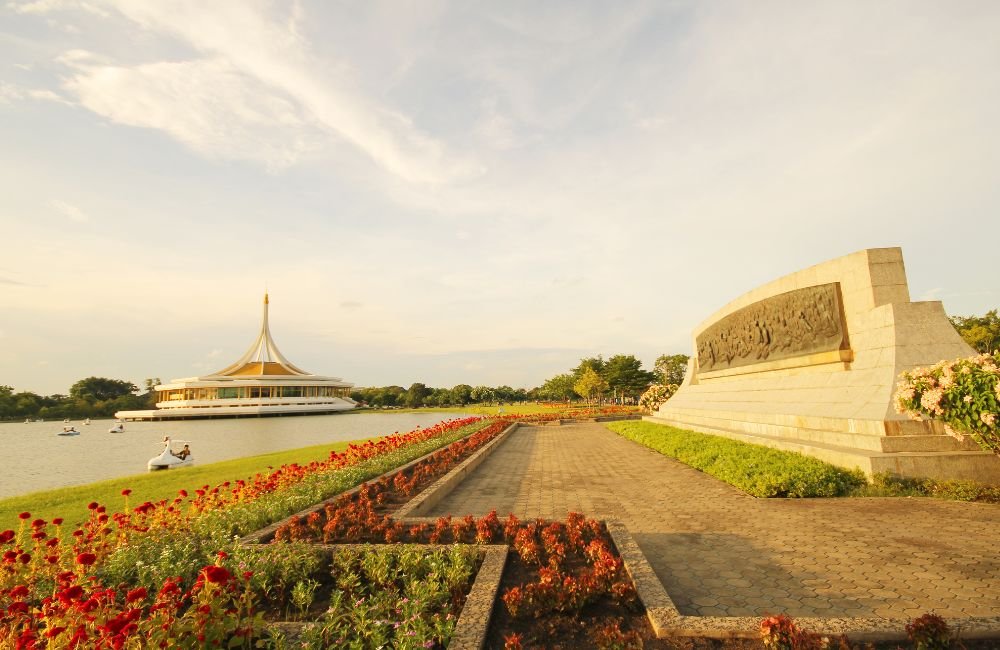
Discover the peaceful beauty of Suan Luang Rama IX Park in Bangkok, where colourful flower gardens, a scenic lake and elegant Thai architecture create a relaxing escape from city life.
Is this area suitable for accommodation?
Chatuchak may suit visitors who plan to spend time at the weekend market or elsewhere in northern Bangkok.
Ari can appeal to travelers looking for a more residential base with access to restaurants and the BTS network.
Neither should be selected solely for proximity to the Grand Palace or the main riverside temples.
Useful stations: BTS Mo Chit and Ari; MRT Chatuchak Park and Kamphaeng Phet.
9. Ratchadaphisek and Rama IX: Modern Commercial Bangkok
Ratchadaphisek Road runs through several parts of Bangkok, so it is important to identify the exact section when considering accommodation.
The areas around Huai Khwang, Thailand Cultural Centre and Rama IX include offices, residential developments, shopping centres, restaurants and entertainment venues.
These neighbourhoods can appeal to visitors travelling for business or staying in Bangkok for an extended period.
What is there to see and do?
The wider Rama IX area includes modern shopping facilities and commercial developments.
MRT stations provide useful connections with Sukhumvit, Silom, Chinatown and other parts of the city.
Visitors interested in nightlife may also encounter Royal City Avenue, commonly known as RCA, a separate entertainment area near Rama IX Road.
However, RCA should not be confused with the entire Ratchadaphisek corridor.
Should you stay in Ratchada?
The area can be suitable if your business appointments or preferred activities are nearby.
It may also work for visitors comfortable using the MRT as their main transport connection.
For first-time tourists planning to focus on temples and historic landmarks, consider whether a more central sightseeing base would reduce travel time.
Useful stations: MRT Thailand Cultural Centre, Huai Khwang and Phra Ram 9.
How to Choose the Right Bangkok Neighbourhood
There is no single neighbourhood that suits every visitor.
The most practical choice depends on your priorities, the length of your trip and the kind of transport you prefer.
For first-time visitors
Consider Siam, central Sukhumvit or Silom if easy access to rail transport and a wide selection of restaurants are important.
These areas offer convenient starting points for exploring several parts of the city.
For history and culture
Rattanakosin is particularly useful for visiting the Grand Palace and Wat Pho.
The riverside also provides access to historical areas through boat transport.
For shopping
Siam and Ratchaprasong are convenient for major shopping centres.
Pratunam offers a different experience centred on fashion markets and smaller retail businesses.
Chatuchak is worth including if your visit coincides with the main market’s operating days.
For nightlife
Parts of Sukhumvit, Silom and Khao San Road have established nightlife scenes.
However, the atmosphere varies significantly between streets.
Check the exact hotel location if you want convenient nightlife access without staying directly above a busy entertainment area.
For families
Siam and the Phrom Phong section of Sukhumvit are worth comparing because of their shopping, dining and transport connections.
Some riverside properties may also suit family stays, but confirm children’s facilities, room arrangements and transport directly with the hotel.
For a quieter neighbourhood atmosphere
Ari, selected residential streets around Sukhumvit and certain riverside areas may be appealing.
Avoid assuming that an entire district is quiet. Road traffic, construction and nearby nightlife can all affect an individual hotel’s surroundings.
Getting Around Bangkok Between Neighbourhoods
Bangkok’s traffic can be slow, particularly during busy periods.
Using public transport can make sightseeing more predictable, although some historic neighbourhoods still require walking or additional connections.
BTS Skytrain
The BTS is useful for travelling between Siam, Sukhumvit, Silom, Sathorn and several other commercial areas.
Siam station connects the BTS Sukhumvit and Silom lines.
The network is particularly convenient when your accommodation is close to a station.
MRT Metro
The MRT Blue Line connects areas including Sukhumvit, Silom, Chinatown and the Old Town.
Stations such as Wat Mangkon and Sanam Chai make certain historic and cultural attractions easier to reach without relying exclusively on taxis.
BTS and MRT have separate ticketing arrangements. Check the applicable payment method and interchange procedure before travelling.
Chao Phraya Riverboats
River services are useful for visiting attractions near the Chao Phraya.
They can also provide a scenic alternative to travelling by road.
Different operators have different routes, fares and schedules, so check the current service before boarding.
Taxis and ride-hailing services
Licensed taxis and authorised ride-hailing operators can be useful when accommodation or attractions are not conveniently connected by rail.
Check the fare arrangements and use reputable services.
Leave additional time when travelling during periods of heavy road traffic.
Arriving in Bangkok: Which Airport and Transport Connection?
Bangkok is served by two major airports: Suvarnabhumi Airport (BKK) and Don Mueang International Airport (DMK).
Your arrival airport can influence the most convenient way to reach your accommodation.
From Suvarnabhumi Airport
The Airport Rail Link connects Suvarnabhumi with the city, including connections at Makkasan and Phaya Thai.
This can be practical for travelers staying near the MRT or BTS networks.
Official airport taxis and other authorised transportation services are also available.
From Don Mueang Airport
Don Mueang is served by public transport options that include the SRT Red Line, buses and taxis.
The most convenient option depends on your arrival time, luggage and destination.
Before flying, check your exact airport and planned transfer rather than assuming all Bangkok flights use the same terminal or airport.
Check Thailand’s entry requirements
Visa and passport requirements depend on your nationality and circumstances.
Thailand also requires most foreign visitors entering the country to complete the Thailand Digital Arrival Card (TDAC) within the official three-day pre-arrival window.
The TDAC is free and is not a substitute for a visa.
Use the official Thai Immigration Bureau website and verify the requirements that apply to your journey.
A Practical Three-Day Bangkok Neighbourhood Itinerary
If this is your first visit to Bangkok, spending three days across a few carefully chosen areas can provide a useful introduction.
Day 1: Rattanakosin and the Chao Phraya River
Begin with the Grand Palace and Wat Phra Kaew, allowing sufficient time for security checks, the site’s dress code and your visit.
Continue to nearby Wat Pho.
Later, use an appropriate river crossing to visit Wat Arun on the western bank, or enjoy views of the temple from the opposite riverside.
This keeps most of the day’s sightseeing around the historic centre and river.
Day 2: Siam, Sukhumvit and Silom
Start around Siam Square and explore the shopping or cultural attractions that interest you.
Continue along the BTS network towards Sukhumvit for lunch, cafés or shopping.
Depending on your energy, spend the evening exploring restaurants in Sukhumvit or Silom.
Avoid trying to visit every mall and nightlife area in one day.
Day 3: Chatuchak or Chinatown
If the main Chatuchak market is operating during your visit, consider spending part of the day there.
Alternatively, explore Chinatown, Wat Mangkon and nearby Phahurat.
You can also add Ari for a café stop or use the MRT to explore other neighbourhoods.
This final day is deliberately flexible, allowing you to spend more time in the area that interests you most.
Frequently Asked Questions About Bangkok Neighbourhoods
Where should first-time visitors stay in Bangkok?
Siam, central Sukhumvit and Silom are practical areas to compare because of their transport connections, accommodation options and access to restaurants and shopping. The right choice depends on which attractions you intend to visit.
Is Sukhumvit or Silom better for tourists?
Sukhumvit offers extensive dining, shopping and nightlife options along the BTS corridor. Silom provides business facilities, markets, restaurants and convenient connections to the MRT and river. Compare hotels by their exact location rather than the district name alone.
Which area is closest to Bangkok’s main temples?
Rattanakosin contains the Grand Palace, Wat Phra Kaew and Wat Pho. Wat Arun is across the Chao Phraya River in Thonburi.
Is Khao San Road suitable for families?
The area has accommodation and restaurants, but the busiest parts of Khao San Road can be noisy at night. Families who prefer a quieter environment may want to consider accommodation farther from the main entertainment street.
Which Bangkok neighbourhood is good for shopping?
Siam and Ratchaprasong are useful for major malls, Pratunam is associated with clothing and fashion markets, and Chatuchak is known for its extensive weekend market.
Can you explore Bangkok without a car?
Yes. Many popular areas are accessible through the BTS, MRT, riverboats and other public transport services. Taxis or ride-hailing services can help with destinations that are less conveniently connected.
How many days should you spend in Bangkok?
Three days can provide a useful introduction to the historic centre, modern shopping districts and selected neighbourhoods. A longer stay allows more time for markets, museums, riverside communities and less-visited areas.
Final Thoughts
Bangkok is easier to appreciate when you recognise that its neighbourhoods offer very different experiences.
Siam represents the modern commercial centre, Sukhumvit brings together international dining and nightlife, and Silom combines business activity with local markets and parks.
Rattanakosin reveals the city’s royal and religious heritage, while Chinatown and Phahurat introduce visitors to longstanding communities and distinctive cultural traditions. The Chao Phraya riverside, Pratunam, Chatuchak, Ari and Ratchadaphisek add further variety.
When deciding where to stay in Bangkok, prioritise the attractions you want to visit and the transport connections you will actually use. A convenient hotel location can make the difference between spending your holiday exploring the city and spending much of it navigating traffic.
Choose a suitable base, organise nearby attractions together and leave time to discover Bangkok beyond its main tourist streets.
