
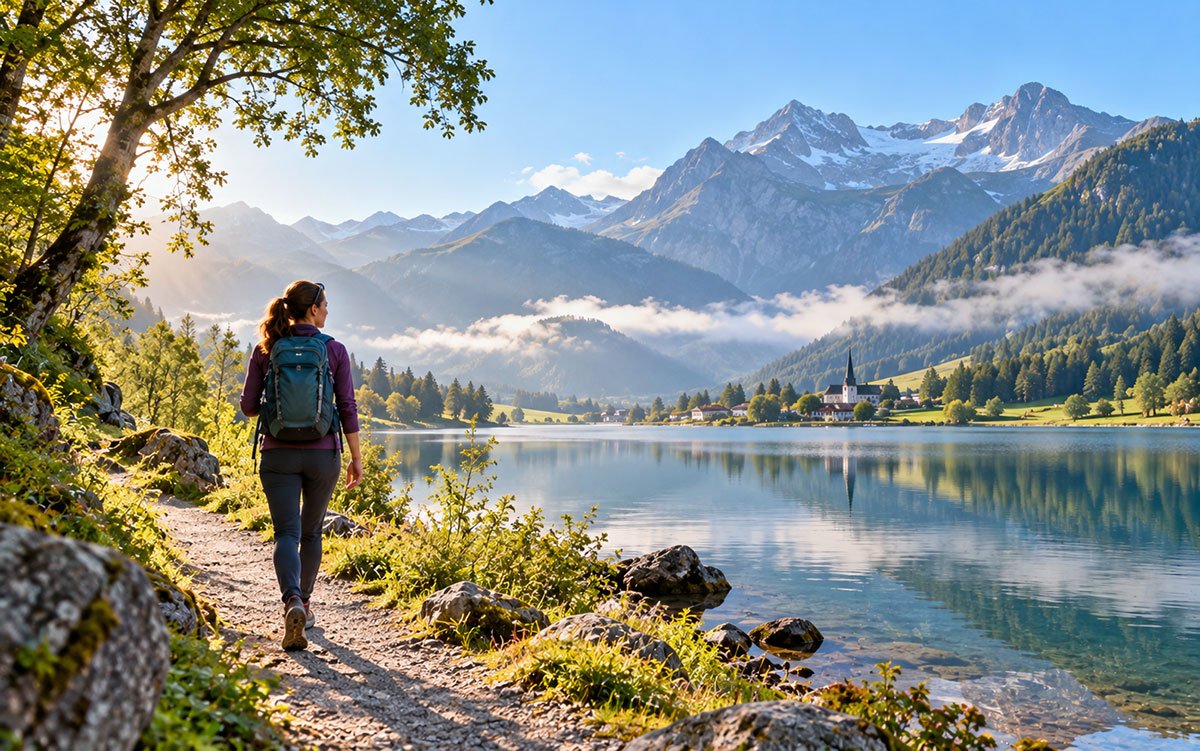
Find space to slow down, reconnect with nature and enjoy a fresh perspective while exploring somewhere new.
Travel and Wellbeing: How Exploring the World Can Help You Reset
Sometimes, a change of scenery is exactly what you need. A walk through unfamiliar streets, a quiet morning beside a mountain lake or an evening sharing a meal with people from another culture can offer a welcome break from everyday routines.
The relationship between travel and wellbeing goes beyond sightseeing. Exploring a new destination can create opportunities to learn, meet people, spend time outdoors and look at familiar challenges from a different perspective.
That does not mean every holiday leaves you feeling refreshed, or that travel can cure illness or resolve deep personal difficulties. Journeys can also bring tiredness, expense and stress. The value often lies in choosing experiences that suit your needs and giving yourself enough time to enjoy them.
Whether you prefer a peaceful countryside escape, a cultural city break or a yoga retreat, here are several ways travel can support personal wellbeing and how to make your next trip more meaningful.
1. Step Away from Everyday Routines
Work, household responsibilities and familiar schedules can leave little room for exploration. A holiday gives you an opportunity to step back from some of these routines and devote time to activities you might otherwise postpone.
You could spend a morning walking beside the sea, explore a historic neighbourhood without checking the clock, or enjoy a leisurely meal in a place you have never visited.
The benefit does not necessarily come from travelling thousands of miles. Even a short break in a nearby town or countryside setting can offer a different pace.
To make the most of that opportunity, avoid replacing your normal schedule with an equally demanding holiday itinerary. Allow time for rest, reduce unnecessary commitments and choose activities that you genuinely enjoy.
A trip can provide temporary distance from everyday pressures. However, problems involving work, relationships or other responsibilities may still need attention when you return. Treat the break as an opportunity to rest and reflect, rather than expecting it to solve everything.
2. Discover New Places and Challenge Yourself
One of the most rewarding aspects of travel is encountering unfamiliar situations.
You might navigate a public transport system in a new city, order food in another language, follow a hiking trail or work out how to reach an attraction without relying entirely on your phone.
These experiences encourage you to observe, make decisions and adapt to changing circumstances. Completing a task that initially seemed difficult can also strengthen your confidence in your ability to manage unfamiliar situations.
You do not need an extreme adventure to experience this. Simple activities can provide a sense of accomplishment, especially when they take you slightly beyond your usual routine.
For example, you could:
- Explore a city on foot using a paper map.
- Join a guided walking tour.
- Learn a few useful phrases in the local language.
- Try a cooking class that introduces regional ingredients.
- Take a beginner-friendly outdoor activity with a qualified instructor.
Choose challenges that feel interesting rather than intimidating. Travel should give you opportunities to learn at your own pace, not create pressure to prove yourself.
3. Gain a Fresh Perspective on Life
Travelling exposes you to different ways of living, working, eating, celebrating and spending time with family.
A visit to a traditional market may show you how local producers bring their goods to the community. A conversation with a guide may introduce you to a different understanding of a place’s history. Exploring a new city can also reveal how people organise everyday life around transport, public spaces and social activities.
These encounters may encourage you to reconsider assumptions you previously took for granted.
You might return home with a greater appreciation for your own routines, a stronger interest in another culture or a clearer sense of what you want to change in your daily life.
Travel does not automatically make someone more open-minded. Meaningful learning depends on curiosity, respectful behaviour and a willingness to listen.
Rather than treating another culture as something to judge against your own, approach it as an opportunity to understand different experiences and perspectives.
4. Build Connections with People
Travel can create opportunities to meet people outside your usual social circles. Depending on the kind of trip you choose, you may connect with fellow travellers, join a guided excursion, speak with local business owners or share an activity with people who have similar interests.
These interactions can make a journey more memorable. A conversation over dinner or a shared experience during a walking tour may introduce you to new ideas and interests.
Travelling with family or friends can also create opportunities to spend uninterrupted time together. Without the usual daily responsibilities competing for attention, you may find it easier to enjoy conversations and shared activities.
Solo travel offers another possibility: you can choose your own schedule while deciding when and how you want to interact with others.
If meeting people is an important goal, consider small-group tours, local classes, community events or accommodation with shared activities. Respect people’s privacy and remember that residents are not obliged to act as guides or provide companionship.
Meaningful connection depends on mutual interest, not simply being in the same place.
5. Spend Time in Nature
A natural setting can offer a useful contrast to the noise, crowds and screen time of everyday life.
Depending on the destination, you might walk through a forest, watch the sunrise over the sea, explore a national park or spend an afternoon in the mountains.
Research into wellbeing has examined nature-based activities such as forest experiences, outdoor exercise and horticulture. These activities may support wellbeing in different ways, although their effects depend on the activity, the individual and the circumstances.
You do not need to travel to a remote wilderness to enjoy nature. A botanical garden, lakeside path, urban park or quiet beach may provide the setting you need.
When planning an outdoor experience, consider your fitness, the weather, accessibility and local safety guidance. Follow the rules of protected areas, stay on permitted trails and avoid disturbing wildlife.
The goal is not to collect photographs of beautiful places. Give yourself time to notice your surroundings and enjoy the experience.
6. Explore Mindful and Wellness Travel
Some travellers choose holidays specifically designed around relaxation, reflection or healthy routines.
Wellness travel covers a broad range of experiences. It may include yoga retreats, meditation programmes, spa breaks, walking holidays or trips focused on nature and healthy living.
India, for example, offers a variety of yoga and wellness experiences, from traditional ashrams to comfortable retreats in mountain and coastal settings. Bali attracts travellers interested in yoga, nature and cultural experiences, while Italy offers opportunities to combine food, history, rural landscapes and a slower pace in selected destinations.
These places do not have exclusive claims to wellbeing, and a wellness holiday does not need to be expensive or far from home.
Before booking a specialised retreat, find out what the programme actually involves. Check the instructor’s qualifications where relevant, the daily schedule, accommodation, food arrangements and whether the activities suit your experience level.
Be cautious about programmes that promise to cure medical conditions, guarantee dramatic personal transformation or replace professional healthcare with unproven treatments.
A restorative trip is best built around realistic expectations and experiences that match your interests.
7. Make Space for Reflection and Personal Growth
Travel can interrupt familiar routines and create time to think. Without the usual sequence of appointments, household tasks and daily obligations, you may find it easier to consider your priorities.
Some people use a holiday to reflect on a career decision, a new stage of life or an interest they want to pursue. Others simply enjoy having fewer demands on their attention.
You can encourage this reflective time without turning the trip into a self-improvement project.
Try keeping a short travel journal. Write down a memorable experience, something you learned or a thought you want to revisit later. Alternatively, take photographs, sketch a scene or spend a quiet period each day reflecting on what you enjoyed.
Give yourself permission not to reach any major conclusions. A holiday can be valuable because it offers enjoyment and rest, even if you return home with no new life plan.
If a trip does inspire a change, identify one or two realistic steps you can take after returning. Small actions are often easier to maintain than attempting to overhaul your entire life at once.
8. Consider Meaningful Volunteering
Some travellers want to combine exploring a destination with contributing to a local cause. Responsible volunteering can provide an opportunity to learn new skills, understand community priorities and support work that matters to local people.
However, volunteering abroad is not automatically beneficial. Poorly designed projects can divert resources, displace local workers or create activities that serve visitors more than the host community.
Before booking a volunteer experience, ask who designed the project, who benefits, how the organisation measures its impact and what skills volunteers need.
Look for established organisations that work with local communities and clearly explain their goals. Confirm that the role is useful, appropriately supervised and suitable for the time you can commit.
Be especially careful with placements involving children or captive wildlife. Ethical projects should protect the people and animals involved rather than treating them as attractions for visitors.
You can also contribute without joining a formal volunteering programme. Supporting local businesses, buying crafts directly from artisans, choosing responsible wildlife experiences and respecting local customs are other ways to make travel more considerate.
The most meaningful experiences recognise that host communities have their own priorities, expertise and agency.
9. Remember That Travel Can Also Be Stressful
Travel has potential benefits, but it does not affect everyone in the same way.
Long journeys, jet lag, crowded airports, unfamiliar food, unexpected expenses and complicated logistics can leave you feeling tired rather than refreshed. A packed itinerary may add pressure, while disagreements with travel companions can make a holiday more demanding than everyday life.
Some people also find that unfamiliar environments increase anxiety. Others may struggle with physical limitations, accessibility barriers or the challenges of travelling while managing an existing health condition.
You can reduce unnecessary stress by planning around your own needs.
- Choose a journey length that feels manageable.
- Allow enough time for airport transfers and connections.
- Avoid scheduling too many major activities in one day.
- Leave room for rest and unexpected delays.
- Research accessibility and medical facilities when relevant.
- Set a budget that does not create financial strain.
- Agree on expectations with your travel companions before departure.
Do not feel obliged to enjoy a particular style of holiday because other people recommend it. A quiet stay close to home may suit you better than a demanding multi-country itinerary.
The purpose is to choose a travel experience that works for you.
10. Bring the Best Parts of the Trip Home
The end of a holiday does not have to mean the end of every positive habit you developed while away.
You may discover that you enjoy walking before work, cooking dishes inspired by your trip or setting aside time to meet friends without distractions.
Try identifying a few experiences you would like to continue at home. This could be a weekly walk, regular time outdoors, a language lesson or an evening without work messages.
You can also preserve memories in a way that feels meaningful. Organise your photographs, write down a favourite story, prepare a dish you enjoyed abroad or share what you learned with friends and family.
Research on vacation and wellbeing suggests that benefits can be temporary and may fade after everyday routines resume. That makes it useful to think about how you can maintain some of the habits or experiences you valued, rather than expecting the holiday itself to produce lasting change.
You do not need to recreate the destination at home. The aim is to identify what made the trip enjoyable and find manageable ways to keep those elements in your life.
Can Travel Improve Mental Health?
Travel may support aspects of wellbeing through opportunities for rest, enjoyable activity, social connection and engagement with new environments. However, researchers are still examining how these factors work and how long their effects last.
The experience varies between individuals. A holiday that feels restorative to one person may be exhausting or stressful for another.
It is also important to distinguish general wellbeing from a diagnosed mental health condition. Travel is not a proven cure for depression, anxiety or other illnesses, and it should not replace appropriate medical care.
If you experience persistent low mood, anxiety or difficulties with everyday activities, consider speaking with a qualified healthcare professional. You can still plan enjoyable activities or a holiday where appropriate, but make decisions that support your needs and any treatment plan you follow.
A trip can form part of a broader approach to looking after yourself. It should not carry the burden of solving every personal difficulty.
How to Plan a More Restorative Holiday
You do not need an elaborate itinerary to enjoy the potential benefits of travel. The most useful approach is to choose a trip that matches your interests, budget and energy level.
Before booking, ask yourself what you want from the experience. Would you like to rest, explore a new culture, spend time in nature, reconnect with friends or learn a skill?
Then plan around that purpose.
- Choose a suitable destination. Consider journey time, climate, accessibility and the activities you genuinely enjoy.
- Keep the itinerary realistic. Allow free time instead of filling every day with excursions.
- Budget carefully. Avoid creating financial pressure in pursuit of a particular experience.
- Prioritise sleep and rest. Plan around travel fatigue and give yourself time to adjust after long journeys.
- Stay open to new experiences. Try something unfamiliar if it interests you, but do not force yourself into activities that feel uncomfortable.
- Respect local communities. Learn basic customs, support local businesses where possible and follow responsible travel practices.
- Plan your return. Leave time to unpack, recover and resume everyday responsibilities without unnecessary pressure.
A well-planned holiday makes space for enjoyment without turning relaxation into another task to complete.
Let Travel Be an Opportunity, Not a Cure-All
The appeal of travel lies partly in its ability to bring us into contact with new places, people and experiences. It can help us step away from routine, discover interests, practise new skills and see familiar questions from a different angle.
But travel does not guarantee happiness or personal transformation. Its value depends on the experience, the traveller and the circumstances.
Choose a journey that fits your needs, allow time to enjoy it and remain open to what you may learn along the way. Sometimes the most meaningful result is a new perspective. At other times, the best part is simply having enjoyed a few days somewhere different.
A worthwhile trip does not have to change your life. It only needs to give you experiences, memories or moments of rest that matter to you.
