
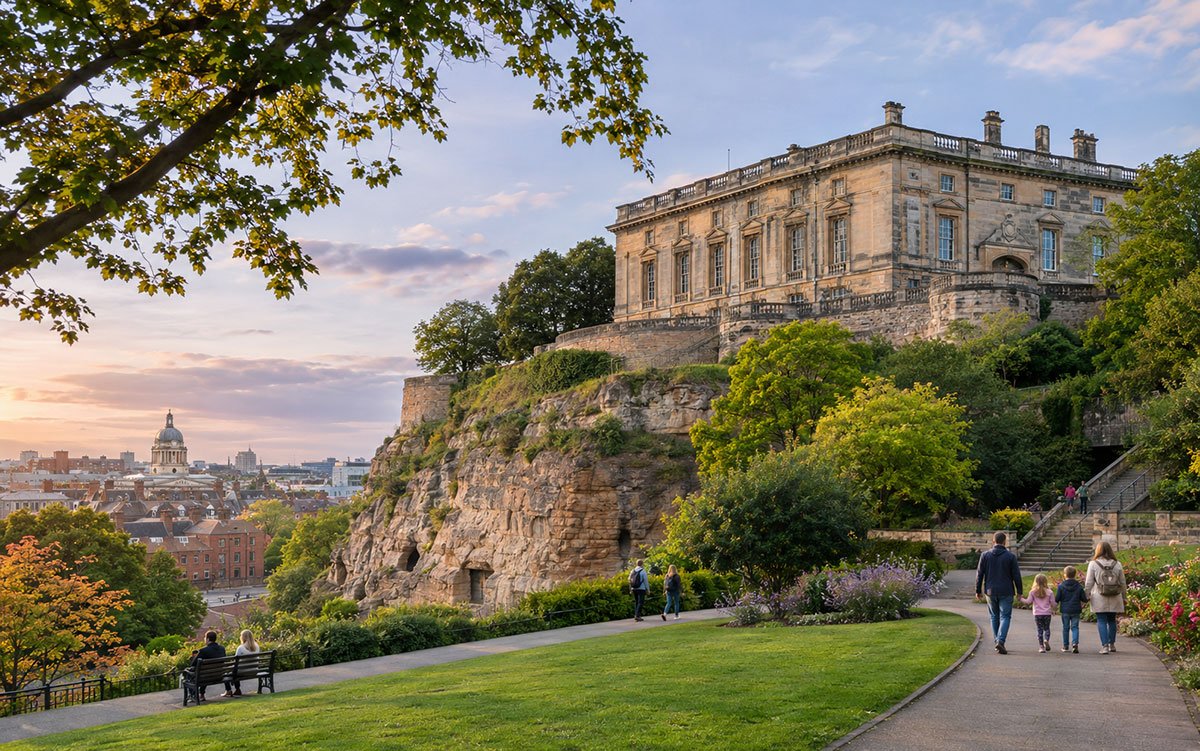
Nottingham Castle is one of Nottinghamshire’s best-known historic attractions, combining centuries of heritage with museum galleries and city views.
Top 5 Places to Visit in Nottinghamshire: Attractions and Travel Tips
Looking for the best places to visit in Nottinghamshire? This historic county in England’s East Midlands offers an appealing mix of medieval legends, fascinating museums, ancient woodland and outdoor adventures.
Nottinghamshire is closely associated with Robin Hood, but there is much more to discover beyond the famous outlaw’s story. Visitors can explore Nottingham Castle, walk through Sherwood Forest, descend into centuries-old sandstone caves and enjoy outdoor activities beside picturesque lakes.
The city of Nottingham also makes a convenient base for a short break. Its compact centre brings several historic attractions within walking distance, while the surrounding county offers countryside escapes and family-friendly experiences.
Whether you are planning a weekend getaway, a family holiday or a day trip, these five Nottinghamshire attractions deserve a place on your itinerary.
1. Sherwood Forest – Discover the Legend of Robin Hood
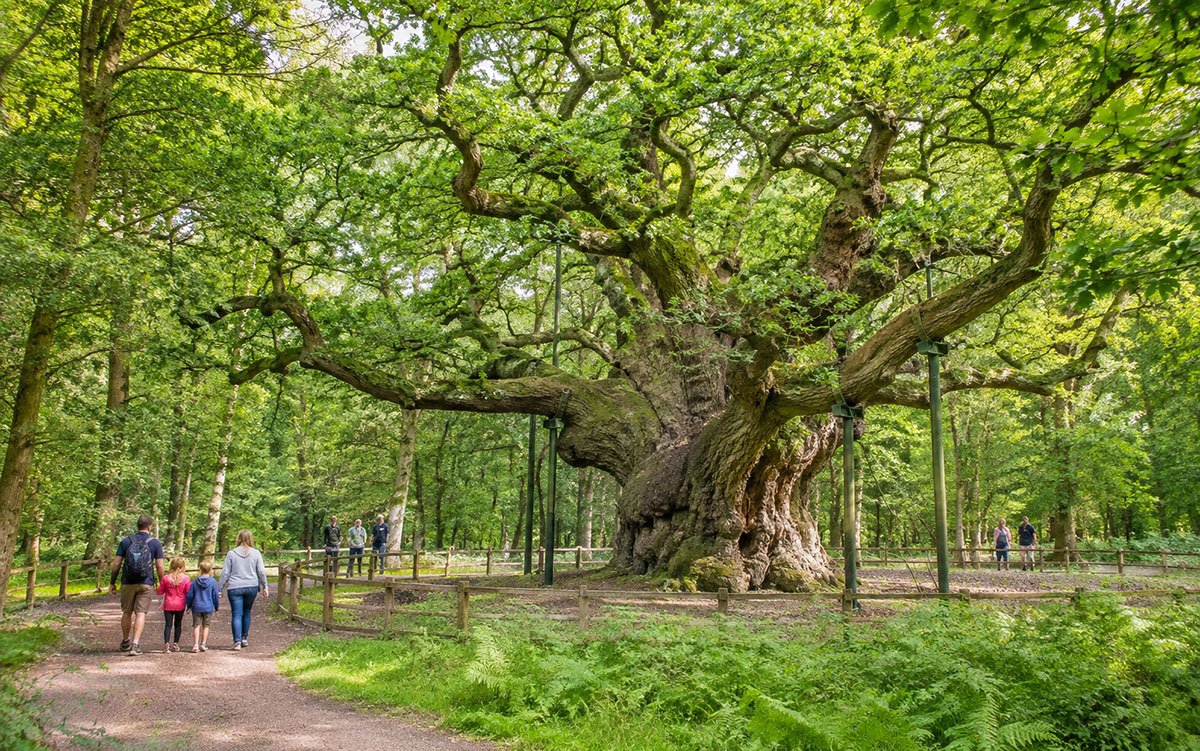
The legendary Major Oak in Sherwood Forest, Nottinghamshire, is one of England’s most famous ancient trees and a landmark associated with Robin Hood.
Few places in Nottinghamshire are as closely linked to English folklore as Sherwood Forest. Famous as the legendary home of Robin Hood and his Merry Men, this ancient woodland offers peaceful walking trails, remarkable wildlife and centuries of history.
Once part of an extensive royal hunting forest, Sherwood is now home to a nationally important nature reserve containing veteran oak trees, heathland and woodland habitats.
The Sherwood Forest Visitor Centre near Edwinstowe provides a useful starting point for exploring the area.
See the Famous Major Oak
The Major Oak is one of Sherwood Forest’s best-known landmarks. This enormous ancient tree is traditionally associated with Robin Hood, although there is no historical evidence that the outlaw actually sheltered there.
Believed to be around 1,000 years old, the oak has fascinated visitors for generations.
After years of declining health, the tree failed to produce leaves in 2026, and RSPB experts believe it has died. Nevertheless, the Major Oak remains standing and continues to provide valuable wildlife habitat and a connection to Sherwood’s history.
Visitors can still see the tree along the forest’s marked walking routes. Protective measures around it help preserve the historic landmark and its surrounding habitat.
Explore the Woodland Trails
Sherwood Forest offers several signposted walking routes suitable for different interests and abilities.
Popular options include:
- Major Oak Trail: A circular walk of approximately 1.5 miles, passing the famous oak and neighbouring ancient trees.
- Greenwood Trail: A roughly 2-mile route showcasing the woodland’s changing seasonal landscapes.
- Wildwood Trail: A longer walk of approximately 4 miles through woodland, heathland and other habitats.
The forest is particularly rewarding for wildlife enthusiasts. Depending on the season, visitors may encounter woodland birds, insects, fungi and other species associated with ancient trees.
Families can also enjoy the Robin Hood-themed play area near the visitor centre.
Practical Visitor Information
The nature reserve is free to enter, although parking charges normally apply. Some organised events and activities have separate fees.
The visitor centre provides refreshments and visitor information. Its opening arrangements vary seasonally.
Visitors without a car can consider the Sherwood Arrow bus service from Nottingham, which serves the visitor centre. Check the operator’s timetable before travelling.
For opening information, walking routes and facilities, visit the official RSPB Sherwood Forest website.
Best for: Nature lovers, families, walkers, photographers and Robin Hood enthusiasts.
2. Nottingham Castle – Explore History Above the City
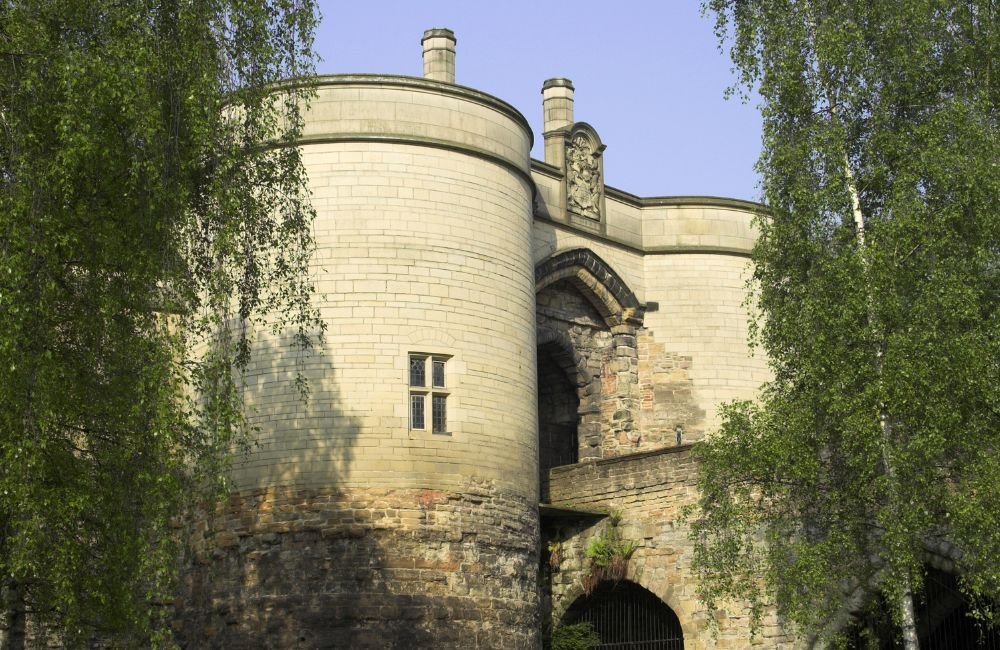
The historic gatehouse of Nottingham Castle, a surviving medieval landmark and one of the fascinating places to visit in Nottinghamshire.
Standing high above Nottingham on Castle Rock, Nottingham Castle is among the city’s most recognisable historic landmarks.
The site has played an important role in English history for centuries, serving as a royal fortress, a symbol of political power and, eventually, a museum and art gallery.
A castle was first established here after the Norman Conquest in the 11th century. The medieval fortress later witnessed royal intrigue, rebellions and conflicts connected with England’s turbulent past.
However, visitors should not expect to find a complete medieval castle today.
Much of the medieval stronghold disappeared following the English Civil War. The prominent building overlooking the city is a later ducal mansion, now used to display historical collections and exhibitions.
Discover Nottingham’s History and Art
The castle’s museum and galleries explore several subjects connected with the city and the surrounding region.
Visitors can discover:
- Nottingham’s medieval history and the story of Robin Hood.
- The city’s heritage of rebellion and political change.
- Nottingham’s famous lace-making industry.
- Historic and fine-art collections.
- Exhibitions exploring local culture and heritage.
The museum’s displays provide useful historical context for other Nottingham attractions, especially the City of Caves and the area’s associations with Robin Hood.
Explore the Caves Beneath Castle Rock
One of the more unusual experiences at Nottingham Castle is the opportunity to explore historic caves beneath the site.
Optional guided tours may include Mortimer’s Hole or King David’s Dungeon, depending on availability.
These underground passages offer insight into how Nottingham’s sandstone landscape influenced the city’s development.
However, cave tours involve steep steps, uneven surfaces and restricted access. They are unsuitable for some visitors with mobility difficulties and are not suitable for children under three.
The cave tour requires a separate ticket in addition to standard castle admission.
Enjoy the Castle Grounds
The landscaped grounds provide opportunities to walk, relax and admire views across Nottingham.
The setting is particularly attractive on a clear day, when the elevated position reveals the contrast between the historic castle site and the modern city.
Before visiting, check the official Nottingham Castle website for current admission prices, seasonal opening hours and guided tour availability.
Best for: History enthusiasts, families, museum visitors and first-time travellers to Nottingham.
3. City of Caves – Explore Nottingham’s Underground World
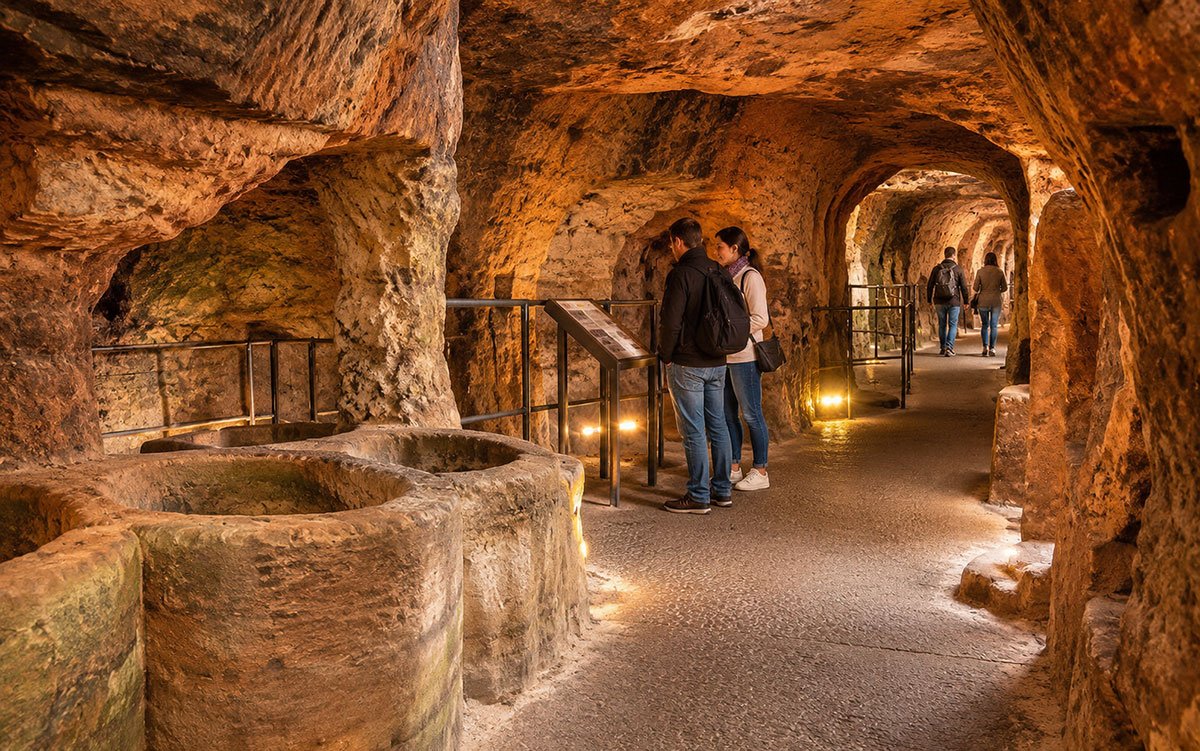
Explore the historic sandstone tunnels of Nottingham’s City of Caves, one of the most fascinating underground attractions in Nottinghamshire, England.
Beneath Nottingham’s busy streets lies one of the city’s most unusual historical attractions.
The City of Caves introduces visitors to an extensive network of human-made underground spaces carved into the local sandstone.
More than 1,000 caves have been identified beneath Nottingham. These underground chambers have served many purposes, including storage, industry, shelter and accommodation.
The City of Caves attraction allows visitors to explore part of this extraordinary underground heritage and discover how people used the caves across different periods.
Discover the Medieval Underground Tannery
One of the attraction’s highlights is the remains of a medieval tannery.
Leather production was an important historical trade, and the underground setting offers a fascinating glimpse into the conditions in which people once worked.
Visitors can also learn about the caves’ changing roles in Nottingham’s social and industrial history.
Experience Nottingham During the Second World War
The caves were also used as air raid shelters during the Second World War.
Exploring these underground spaces helps visitors understand how local residents sought protection during bombing raids.
The contrast between the medieval industrial areas and the wartime shelters makes the attraction particularly interesting for travellers who enjoy social history.
How to Visit the City of Caves
The entrance is at the bottom of the Garner’s Hill steps, near Nottingham Contemporary, rather than inside the former Broadmarsh Shopping Centre.
The attraction uses timed entry arrangements because of the confined underground environment. Advance booking is strongly recommended, especially during weekends and school holidays.
Visitors should wear comfortable footwear and be prepared for steps and uneven surfaces.
Due to the historic layout, the caves are not accessible to wheelchair users, visitors with prams or people with certain mobility limitations.
There are no toilets on site, so visitors may wish to use facilities before entering.
The nearby National Justice Museum is another worthwhile attraction for those interested in Nottingham’s history.
Check the official City of Caves visitor information before planning your trip.
Best for: History lovers, curious travellers, families with older children and visitors interested in unusual historical sites.
4. Ye Olde Trip to Jerusalem – Visit Nottingham’s Famous Historic Pub
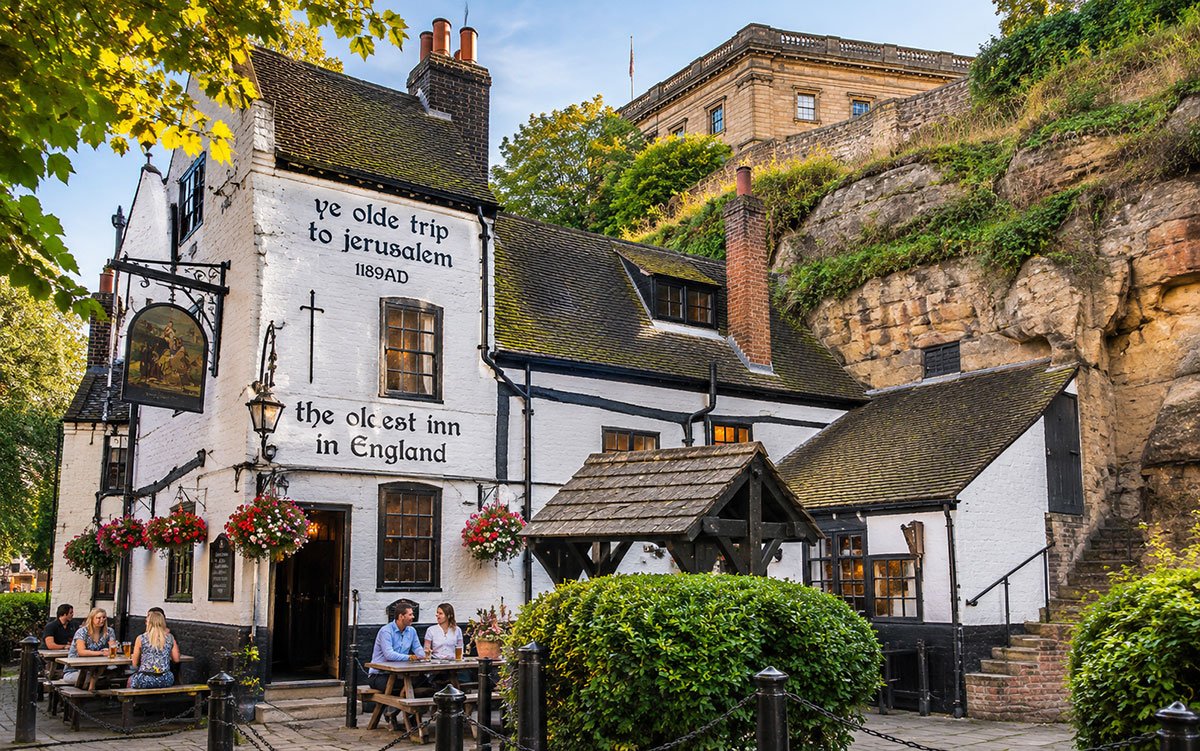
Ye Olde Trip to Jerusalem is a famous historic pub nestled beneath Nottingham Castle, known for its traditional architecture, sandstone caves and centuries-old legends.
At the foot of Castle Rock stands one of Nottingham’s most distinctive historic buildings: Ye Olde Trip to Jerusalem.
Known locally as The Trip, this atmospheric pub is famous for its unusual architecture, sandstone cave rooms and stories associated with medieval Nottingham.
The pub claims origins dating to 1189, which would place its foundation around the time of the Third Crusade.
However, its claim to be England’s oldest inn remains a matter of legend rather than established historical fact.
Historic England identifies the surviving building as principally dating from the late 17th and 18th centuries, with a documented history as a public house from 1760.
That distinction does not diminish the appeal of visiting this remarkable landmark.
Explore Rooms Carved into the Sandstone
What makes Ye Olde Trip to Jerusalem especially memorable is its connection with Nottingham’s cave network.
Parts of the pub incorporate rooms and cellars carved directly into the sandstone beneath Castle Rock.
The building’s historic interiors, narrow passages, traditional furnishings and unusual layout create an atmosphere very different from that of a conventional modern pub.
Some of the caves may have formed part of a medieval brewhouse associated with the castle.
Discover the Pub’s Legends
Over the centuries, Ye Olde Trip to Jerusalem has accumulated a collection of local legends and curious stories.
Among its best-known objects is the Cursed Galleon, a model ship associated with a superstition that touching or cleaning it brings misfortune.
Ghost stories and other tales add to the atmosphere, although they should be enjoyed as folklore rather than documented events.
The building itself is the real attraction, offering a memorable encounter with Nottingham’s architectural and social heritage.
Stop for Traditional Pub Food
Ye Olde Trip to Jerusalem remains an operating pub and restaurant.
Visitors can enjoy a drink or traditional pub meal while taking in the unusual surroundings.
Its location makes it a convenient stop before or after exploring Nottingham Castle.
If you would like to eat at a particular time, check the pub’s current food-serving arrangements and consider booking a table.
Best for: Heritage enthusiasts, couples, food lovers and visitors interested in Nottingham’s historic pubs.
5. Holme Pierrepont Country Park – Enjoy Watersports and Outdoor Adventure

White-water rafting is a popular adventure activity at Holme Pierrepont National Water Sports Centre, one of Nottinghamshire’s leading outdoor recreation destinations.
For travellers who prefer active experiences, Holme Pierrepont Country Park provides a change of pace from Nottingham’s historic attractions.
Located near the River Trent, the park is home to the National Water Sports Centre, a major destination for watersports, outdoor recreation and sporting events.
The surrounding parkland includes lakes, open spaces, walking routes and facilities suitable for a range of ages and interests.
Try White-Water Rafting
The National Water Sports Centre features a purpose-built white-water course used for training, recreation and competitive activities.
Visitors can book selected rafting experiences and other white-water activities, subject to availability and individual participation requirements.
It is an appealing choice for families with older children, groups of friends and anyone seeking an adventurous addition to a Nottinghamshire break.
Participants should check minimum age requirements, safety guidance and booking conditions before reserving an activity.
Discover Other Watersports
White-water rafting is not the only activity available at Holme Pierrepont.
Depending on the programme and availability, visitors can enjoy activities such as:
- Kayaking and paddleboarding.
- Rowing and other organised watersports.
- White-water tubing and related experiences.
- Archery-style activities and outdoor challenges.
- Mini golf and family recreation.
Some activities require advance booking, instruction or supervised participation.
Enjoy the Country Park Without Getting Wet
You do not need to participate in watersports to enjoy Holme Pierrepont.
The surrounding country park offers walking and cycling opportunities, as well as pleasant areas overlooking the lakes.
It is a suitable destination for a relaxed afternoon outdoors, particularly for families with different activity preferences.
The centre also hosts sporting competitions and organised events, which can affect access to particular facilities.
Checking the official events calendar before your visit is therefore advisable.
Find more information about activities and bookings on the National Water Sports Centre website.
Best for: Adventure travellers, active families, groups, watersports enthusiasts and visitors seeking outdoor recreation.
How to Plan a Nottinghamshire Short Break
Nottinghamshire works well as a short-break destination because visitors can combine city sightseeing with countryside activities.
However, the main attractions are not all located within walking distance of each other.
A little advance planning will help you make better use of your time.
A Suggested Two-Day Nottinghamshire Itinerary
Day 1: Historic Nottingham
Begin your visit at Nottingham Castle, allowing time to explore the museum, art galleries and grounds.
If you are interested in the caves beneath Castle Rock, book a guided tour in advance.
Afterwards, visit Ye Olde Trip to Jerusalem for lunch or refreshments.
Spend the afternoon exploring the City of Caves and, if time permits, continue to the nearby Lace Market and National Justice Museum.
This arrangement keeps most sightseeing within central Nottingham.
Day 2: Nature or Adventure
Choose a countryside experience according to your interests.
For nature, walking and Robin Hood history, head to Sherwood Forest. Allow enough time to explore the visitor centre, follow a woodland trail and see the Major Oak.
Alternatively, spend the day at Holme Pierrepont Country Park, especially if you have booked a watersports activity.
Visitors wishing to experience all five attractions should consider adding a third day rather than rushing between different parts of the county.
Getting Around Nottinghamshire
Travelling to Nottingham
Nottingham is accessible by rail from several major cities.
East Midlands Railway operates services connecting Nottingham with London St Pancras and other destinations.
The city’s railway station is also a useful starting point for local transport and sightseeing.
Check the relevant train operator for routes, connections and advance ticket options.
Exploring Nottingham City Centre
Many of Nottingham’s central attractions can be explored on foot.
Nottingham Castle and Ye Olde Trip to Jerusalem are particularly convenient to visit together.
The City of Caves is farther east, close to Nottingham Contemporary and the Lace Market.
Nottingham’s tram system provides another option for travelling around the city.
The Lace Market tram stop is convenient for the City of Caves, while Nottingham Station connects with the wider tram network.
Visiting Attractions Outside Nottingham
Sherwood Forest lies north of the city near Edwinstowe. Visitors can travel by car or use public transport, including the Sherwood Arrow bus service.
Holme Pierrepont is situated outside the city centre and can be reached by road or local bus services.
Always check current routes and timetables before travelling, especially on Sundays and public holidays.
When Is the Best Time to Visit Nottinghamshire?
Nottinghamshire offers worthwhile sightseeing opportunities throughout the year, although the experience varies with the seasons.
Spring: A pleasant choice for woodland walks, sightseeing and exploring the countryside as the landscape becomes greener.
Summer: Well suited to outdoor attractions, longer sightseeing days and activities at Holme Pierrepont. Popular attractions may require advance booking during school holidays.
Autumn: An attractive season for forest walks and historic sightseeing, with changing woodland colours and cooler temperatures.
Winter: Museums, historic buildings and selected indoor attractions provide options during colder weather. Outdoor visits require more planning because of shorter daylight hours and seasonal opening arrangements.
Visitors planning watersports or outdoor events should check weather conditions and individual activity schedules before travelling.
If you enjoy outdoor holidays throughout the colder months, explore our guide to winter camping destinations in England.
Other Attractions Worth Visiting in Nottinghamshire
Although these five destinations provide an excellent introduction to the county, Nottinghamshire has several other attractions worth considering.
Wollaton Hall and Deer Park
Wollaton Hall is an impressive Elizabethan mansion surrounded by extensive parkland.
The estate is known for its historic architecture, natural history collections and deer park.
It is particularly appealing to visitors interested in architecture, wildlife and family outings.
Rufford Abbey Country Park
Rufford Abbey combines the remains of a historic abbey with attractive gardens, parkland and recreational facilities.
It is a good option for families seeking a more relaxed countryside outing.
Newstead Abbey
Newstead Abbey is associated with the poet Lord Byron and offers a combination of literary history, historic interiors and landscaped gardens.
It is a rewarding choice for visitors who would like to explore Nottinghamshire’s cultural heritage beyond the city centre.
For another woodland destination in the English Midlands, discover holidays in England’s National Forest.
Frequently Asked Questions About Visiting Nottinghamshire
Is Nottinghamshire Worth Visiting?
Yes. Nottinghamshire combines historic attractions, countryside scenery and outdoor activities within one region. It is particularly appealing for short breaks focused on English heritage, Robin Hood legends and family sightseeing.
What Is Nottinghamshire Most Famous For?
Nottinghamshire is internationally associated with Robin Hood and Sherwood Forest. Nottingham Castle, the city’s underground caves and its lace-making heritage are also important parts of the region’s history.
What Are the Best Free Places to Visit in Nottinghamshire?
Sherwood Forest is a strong choice for visitors looking for a free outdoor attraction, although parking charges may apply. Nottinghamshire also has public parks and walking routes suitable for budget-friendly outings.
Can You Visit Nottinghamshire Without a Car?
Yes. Nottingham’s city centre is accessible by train, bus and tram, while several major attractions can be reached on foot. Public transport also serves some countryside destinations, although journeys may require more planning.
How Many Days Do You Need in Nottinghamshire?
Two days provide enough time to explore several major attractions and enjoy either a countryside visit or an outdoor activity. Three days offer a more comfortable itinerary for travellers hoping to experience all five featured destinations.
Discover Nottinghamshire’s History, Nature and Adventure
Nottinghamshire is a rewarding destination for travellers who enjoy exploring different sides of a region.
Sherwood Forest brings England’s famous Robin Hood legends into a remarkable natural landscape. Nottingham Castle and the City of Caves reveal centuries of history, while Ye Olde Trip to Jerusalem preserves the atmosphere of an unusual historic pub.
Holme Pierrepont adds outdoor adventure to the experience, making it easy to balance cultural sightseeing with active recreation.
With a little planning, visitors can enjoy a memorable Nottinghamshire break that combines historic landmarks, peaceful countryside and distinctive local experiences.
