
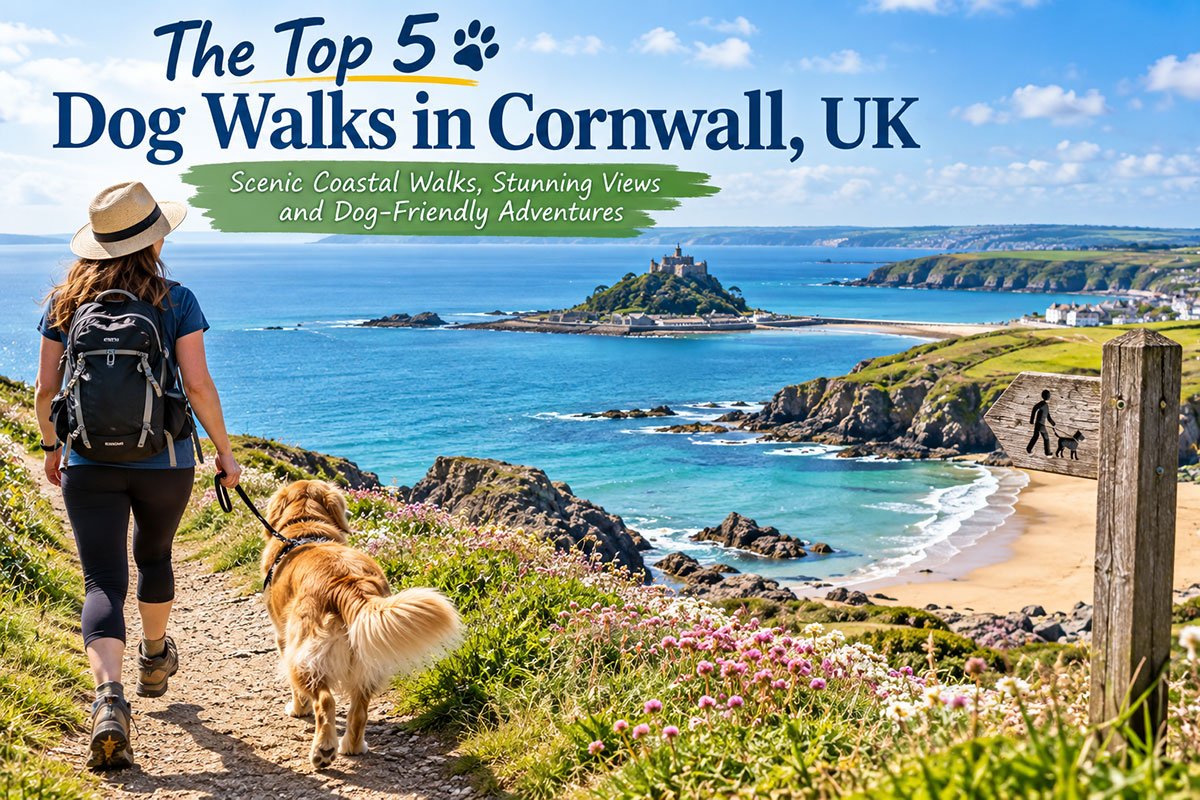
The Top 5 Dog Walks in Cornwall, UK
Cornwall is one of the UK’s best destinations for walking with dogs. From dramatic cliffs and sandy coves to historic mining landscapes and peaceful countryside, there are countless places where you and your four-legged companion can enjoy the outdoors.
A good dog walk in Cornwall can also be an excellent way to discover parts of the county that you might otherwise miss. The South West Coast Path provides numerous routes, ranging from short, easy walks to challenging coastal adventures.
However, dog owners should always check local restrictions before setting out. Cornwall has seasonal restrictions on some beaches, and dogs may also need to be kept on leads in certain areas. Current signs and local guidance should always take priority.
Here are five excellent Cornwall dog walks to consider.
1. Penzance to Marazion
The Penzance to Marazion walk is an excellent choice if you want an easy coastal route with impressive scenery.
The current South West Coast Path listing describes the route as approximately 2.7 miles (4.3 km). It is virtually level and follows a surfaced seawall path, making it one of the more accessible coastal walks in this part of Cornwall.
The route offers beautiful views across Mounts Bay towards St Michael’s Mount, the Lizard and Mousehole. You can start near Penzance Station and finish in Marazion, with public transport available if you do not want to walk back.
It is particularly suitable for dogs because the route passes beaches and places where dogs are welcome. However, beach restrictions can vary seasonally, so check the latest local notices before allowing your dog onto the sand.
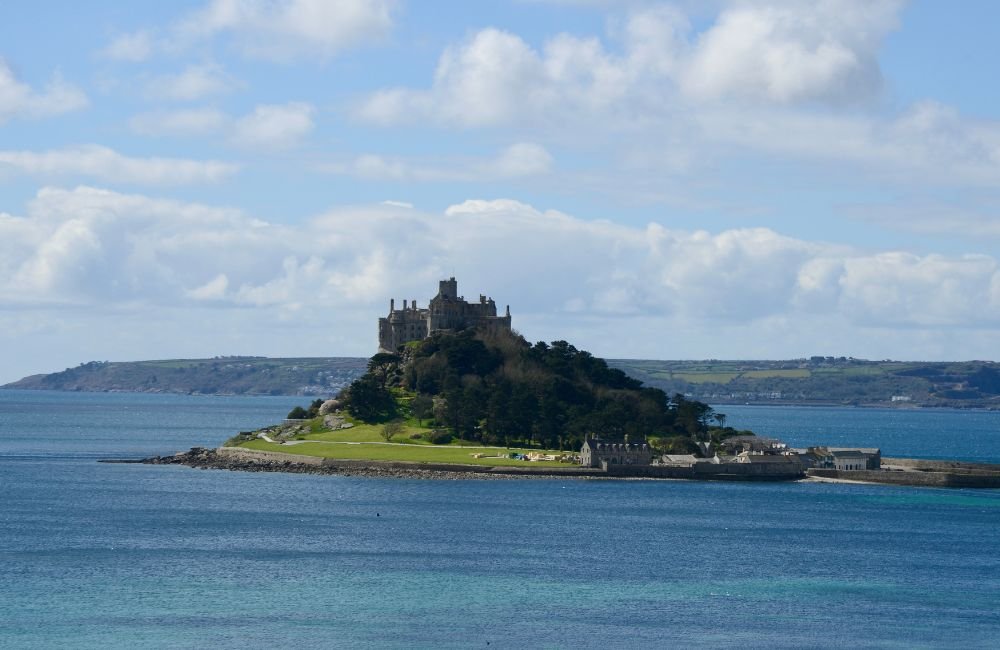
Distance: About 2.7 miles (4.3 km)
Difficulty: Easy
Highlights: Mounts Bay, St Michael’s Mount, seafront views and accessible paths
2. A Twirl of the Cape near St Just
If you want a more rugged dog walk in Cornwall, head towards St Just and the Cape Cornwall area.
The A Twirl of the Cape route is listed by the South West Coast Path as approximately 4.8 miles (7.7 km). The walk combines spectacular coastal scenery with Cornwall’s historic mining landscape.
This area is part of Cornwall’s internationally important mining heritage landscape. Along the route, walkers can enjoy views towards the dramatic Brisons and Longships Lighthouse.
The walk can also provide opportunities to stop at dog-friendly pubs in the St Just area. Visit Cornwall includes this route among its recommended dog walks in Cornwall.
Because coastal paths can include uneven ground, rocks and exposed sections, keep your dog under control and carry a lead. This is particularly important around livestock, wildlife and cliff edges.
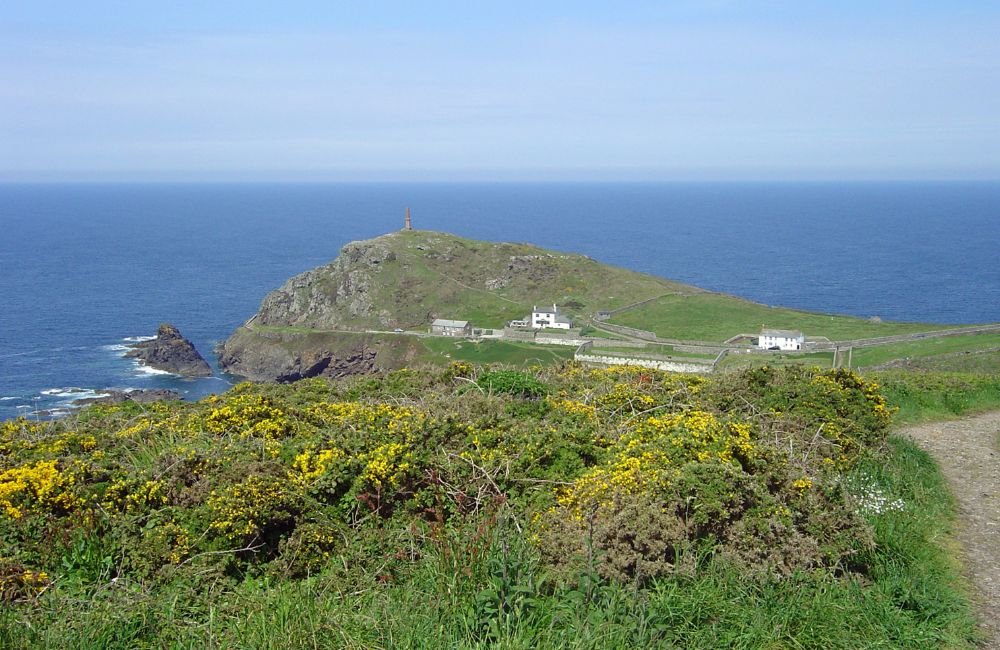
Distance: About 4.8 miles (7.7 km)
Difficulty: Moderate
Highlights: Cape Cornwall, mining heritage, coastal cliffs and panoramic sea views
3. King Arthur and the Slate Coast
The King Arthur and the Slate Coast walk is another excellent choice for dog owners.
The route follows an old donkey track from the village of Treknow towards Trebarwith Strand and covers approximately 5 miles. Visit Cornwall specifically recommends it as a dog walk, with Trebarwith Strand described as dog-friendly throughout the year.
Trebarwith Strand is surrounded by dramatic cliffs and provides an impressive coastal setting. The walk combines historic landscape, coastal views and a beautiful sandy cove.
The nearby Port William Inn is also highlighted by Visit Cornwall as welcoming dogs, making it possible to combine a walk with a dog-friendly refreshment stop.
As with all coastal walks, check conditions before setting out. Tides can significantly change access around rocky coves and beaches.
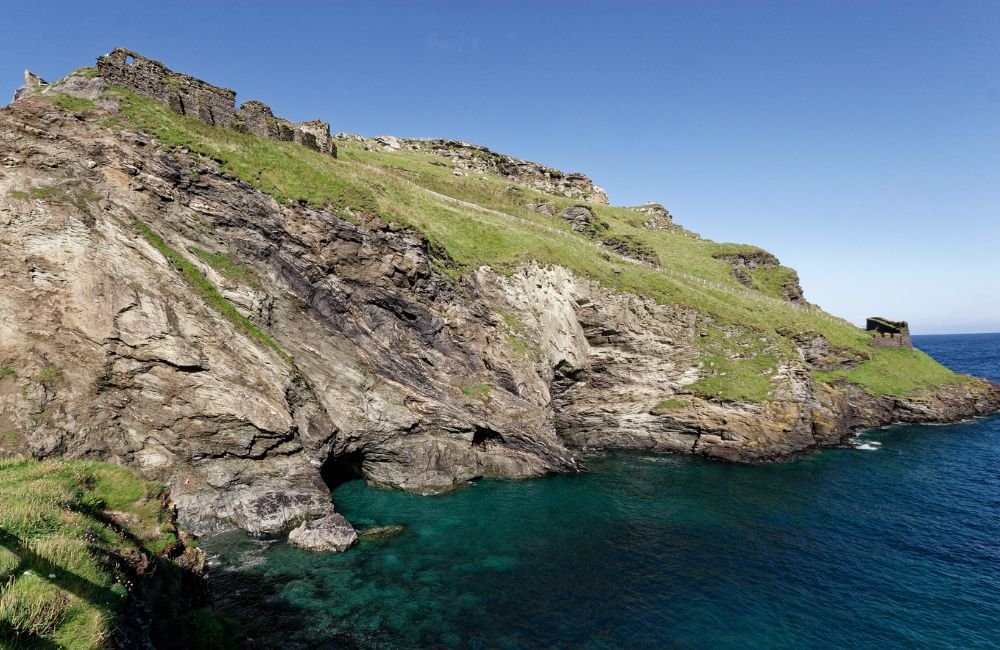
Distance: About 5 miles
Difficulty: Moderate
Highlights: Treknow, Trebarwith Strand, coastal cliffs and historic tracks
4. Mullion Cove and Poldhu
The Mullion Cove and Poldhu area is one of the most attractive places for a dog walk on Cornwall’s Lizard Peninsula.
The South West Coast Path lists a 4.6-mile (7.4 km) Mullion and Poldhu circular walk as a moderate route. It passes Mullion Cove, Polurrian Cove and Poldhu Cove before returning towards Mullion.
The route combines clifftop scenery with sandy beaches and historic attractions. One of its highlights is the area associated with Guglielmo Marconi’s pioneering transatlantic wireless experiments.
Mullion Cove is particularly suitable for dog owners. The National Trust currently states that dogs can enjoy the beach at low tide and the harbour wall when safe, while dogs are welcome along the South West Coast Path throughout the year.
There is an important distinction at nearby Poldhu Cove. Cornwall Council’s seasonal restriction means dogs are prohibited on the beach from 1 July to 31 August between 10am and 6pm. Dogs are still permitted on the footpaths around the beach during those restricted hours.

Distance: About 4.6 miles (7.4 km)
Difficulty: Moderate
Highlights: Mullion Cove, Polurrian Cove, Poldhu Cove and Marconi history
5. Church Cove and Cadgwith
For experienced walkers and energetic dogs, the Church Cove and Cadgwith route offers a considerably more challenging coastal adventure.
The current South West Coast Path route is approximately 6.1 miles (9.8 km). It begins at the Lizard area and travels along high cliffs above coves and caves before reaching the picturesque fishing village of Cadgwith.
Along the route, you can see the Lizard Lighthouse, Housel Bay, dramatic cliff formations and the traditional fishing village of Cadgwith. The route also provides opportunities to observe seabirds and other coastal wildlife.
The route is classified as challenging, with considerable ascent and descent and some steep, stony sections. It is therefore better suited to fit dogs and owners who are comfortable with demanding coastal terrain.
Dog owners should also be aware that Cadgwith Cove beach has a seasonal dog restriction. Cornwall Council currently prohibits dogs there from 1 July to 31 August between 10am and 6pm.

Distance: About 6.1 miles (9.8 km)
Difficulty: Challenging
Highlights: Lizard Lighthouse, coastal cliffs, caves, Cadgwith and wildlife
Important Dog-Walking Advice for Cornwall
Cornwall’s coastal landscape is beautiful, but responsible dog ownership is particularly important.
Before setting out:
- Check current beach restrictions.
- Carry a lead even when dogs are normally allowed off-lead.
- Keep your dog under effective control around livestock.
- Follow signs and temporary path diversions.
- Clean up after your dog.
- Stay away from cliff edges.
- Check tide times when your route includes beaches or coves.
- Carry fresh water for your dog.
- Check the weather before starting a longer coastal walk.
- Make sure your dog is fit enough for the chosen route.
Cornwall Council currently operates several Public Spaces Protection Orders covering dog control, including beach restrictions and requirements relating to dogs on leads. The council’s current information was updated in May 2026.
Why Cornwall Is Great for Dog Walks
One of the biggest advantages of walking in Cornwall is variety. You can enjoy a gentle seafront stroll one day and a challenging cliff walk the next.
The South West Coast Path currently lists numerous dog-friendly routes across West Cornwall alone, including easy, moderate and challenging walks. These include Penzance to Marazion, Cape Cornwall, Mullion and Poldhu, Sennen Cove and Land’s End, and Church Cove and Cadgwith.
This variety makes Cornwall suitable for dogs of different ages and fitness levels.
Whether you live locally or are visiting Cornwall for a holiday, a good coastal walk can turn an ordinary day into a memorable adventure.
Plan Your Next Cornwall Dog Walk
The five routes above provide a useful starting point, but they are only a small selection of the walking opportunities available across Cornwall.
For an easy introduction, Penzance to Marazion is an excellent option. More experienced walkers may prefer Church Cove and Cadgwith, while the Mullion and Poldhu area offers a rewarding combination of coastal scenery, history and dog-friendly walking.
Most importantly, check current access restrictions before you leave. Cornwall’s beaches and countryside can have seasonal rules, and conditions can change.
With sensible preparation, a lead, some water and a responsible approach, Cornwall offers countless opportunities to explore the coast with your dog.
