
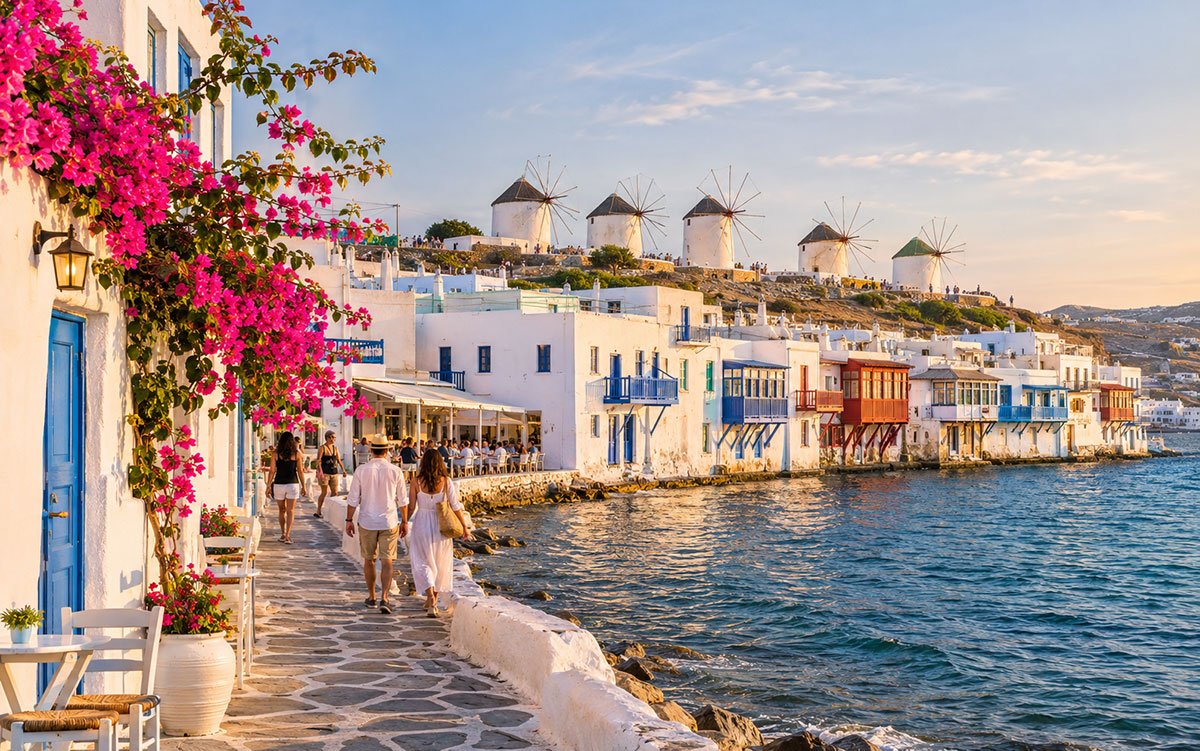
Mykonos Town combines traditional Cycladic architecture, the picturesque Little Venice waterfront and the famous Kato Mili windmills overlooking the Aegean Sea.
Things to Do in Mykonos Town: 10 Best Sights & Tips
Mykonos Town, also known as Chora or Hora, is one of the most picturesque destinations in the Greek islands. Its whitewashed houses, narrow cobbled streets, colourful balconies and beautiful Aegean Sea views attract travelers looking for a memorable Mediterranean holiday.
Although Mykonos is famous for its beaches and nightlife, the island’s capital offers much more than fashionable bars and luxury shopping. Historic windmills, traditional churches, fascinating museums and waterfront neighbourhoods reveal the cultural heritage of this Cycladic destination.
Among the best things to do in Mykonos Town are exploring Little Venice, visiting the famous Kato Mili windmills, wandering through the old town and watching the sunset over the Aegean Sea.
The town is compact enough to explore on foot, making it ideal for a walking tour or a relaxed day of sightseeing. Travelers with additional time can also discover nearby beaches, the traditional village of Ano Mera and the ancient archaeological site of Delos.
This Mykonos Town travel guide covers the main attractions, local food, sightseeing routes, transport options and practical advice for planning your visit.
1. Wander Through the Whitewashed Streets of Mykonos Town
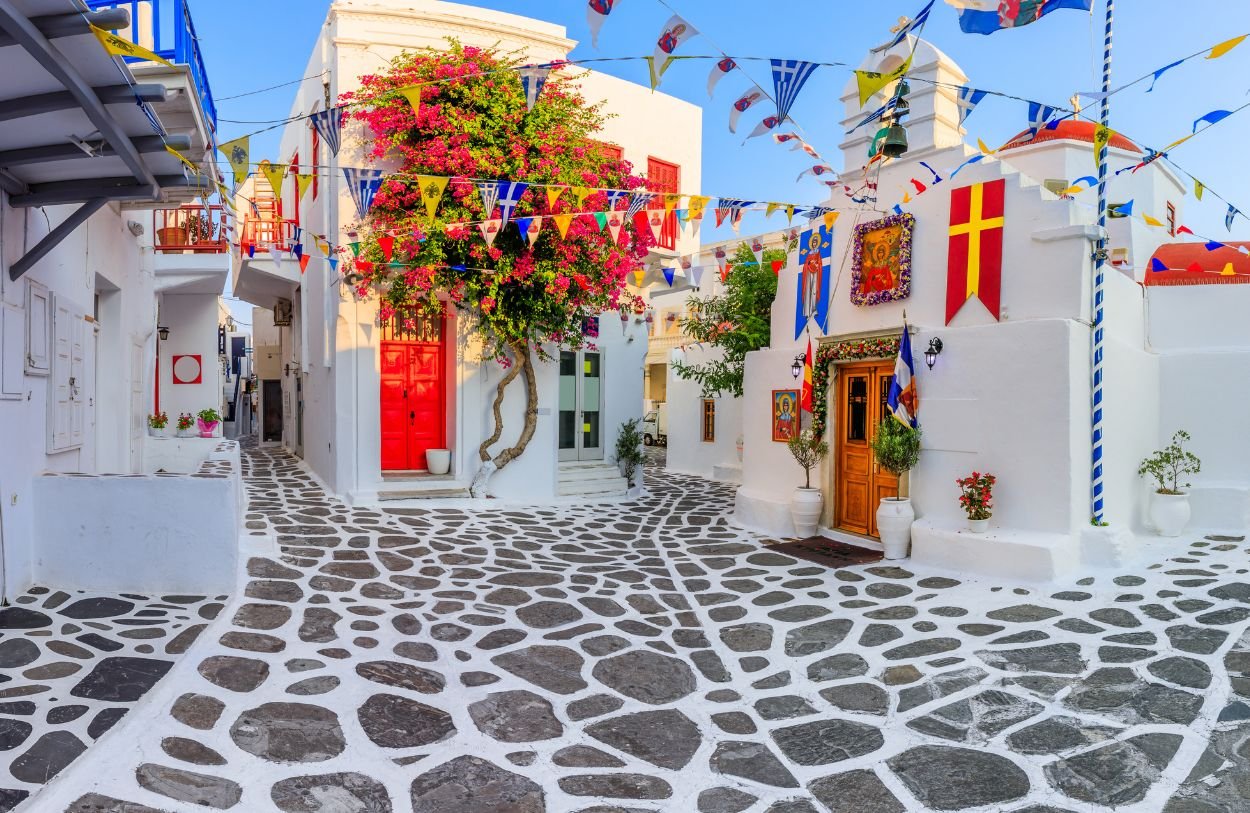
The charming whitewashed streets of Mykonos Town showcase traditional Cycladic architecture, colourful bougainvillea, decorative flags and picturesque stone-paved lanes.
Exploring the narrow streets of Chora is one of the most enjoyable experiences in Mykonos.
The old town is a maze of whitewashed buildings, stone-paved lanes, small squares and traditional Cycladic houses. Blue-painted doors, colourful wooden balconies and bright bougainvillea flowers add character to the surroundings.
Many streets lead to small chapels, independent shops, cafés and unexpected views of the sea.
The town’s traditional architecture developed in response to the Cycladic climate. Whitewashed surfaces reflect sunlight, while compact buildings and narrow streets help create shaded spaces.
Rather than rushing between attractions, allow time to explore the neighbourhood on foot.
You might discover a small church tucked between houses, a peaceful courtyard or a quiet passageway away from the busiest shopping streets.
Travel tip: Visit early in the morning for quieter streets, comfortable walking conditions and attractive photography light.
2. Visit the Famous Kato Mili Windmills
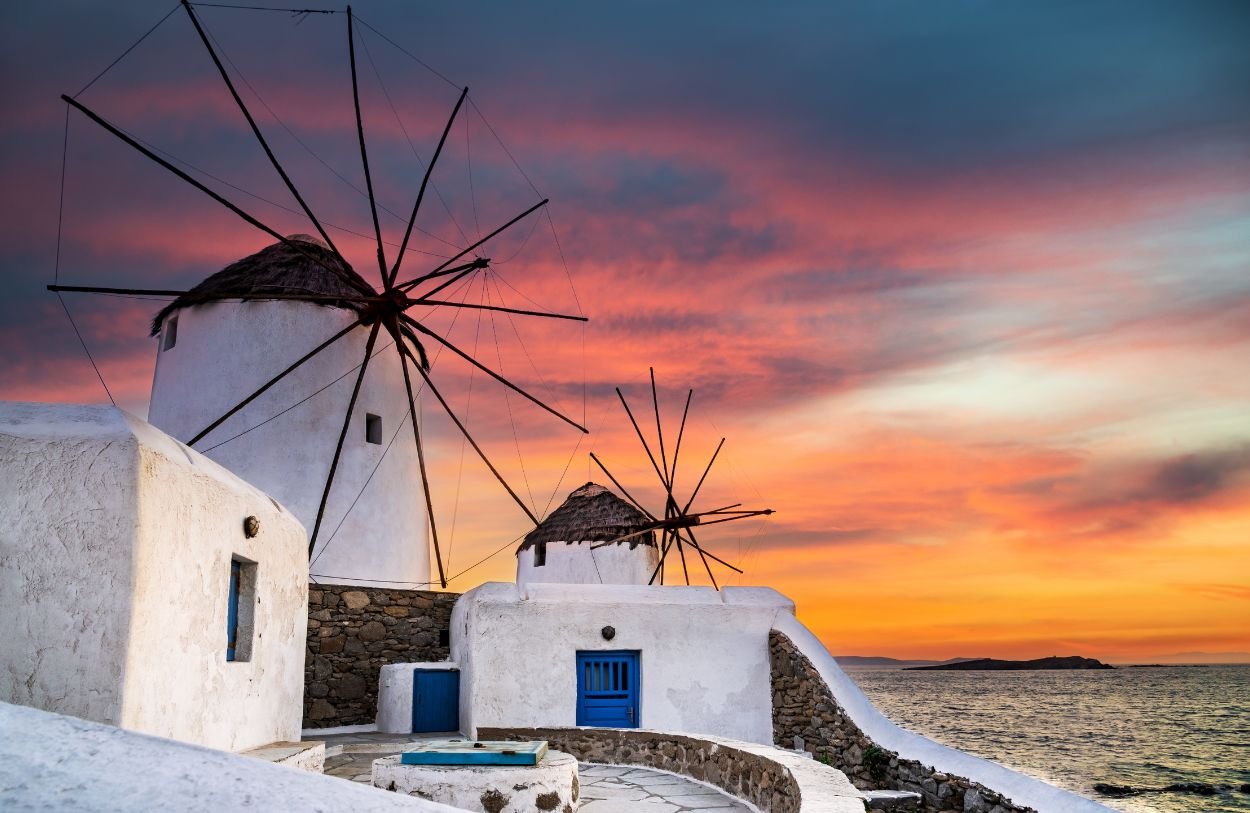
The historic Kato Mili windmills in Mykonos, Greece, stand against a spectacular Mediterranean sunset, offering one of the island’s most iconic coastal views.
The Kato Mili windmills are among the most recognisable landmarks in Mykonos.
Standing on a hill overlooking the sea, these historic white windmills are reminders of the island’s agricultural and maritime heritage.
They were originally used to grind grain, taking advantage of the strong winds that frequently blow across the Cyclades.
Today, their cylindrical white towers and distinctive roofs form one of the island’s most photographed scenes.
The windmills also provide excellent views towards Little Venice and the surrounding coastline.
Visitors can walk around the exterior of the windmill area and enjoy the scenery without purchasing an attraction ticket.
The site is particularly beautiful during the late afternoon, when warm sunlight illuminates the white buildings.
However, it is also a popular sunset location, so expect more visitors during the evening.
Travel tip: Arrive before sunset if you want time to explore the windmill area and take photographs without rushing.
3. Explore Little Venice and Its Waterfront Houses
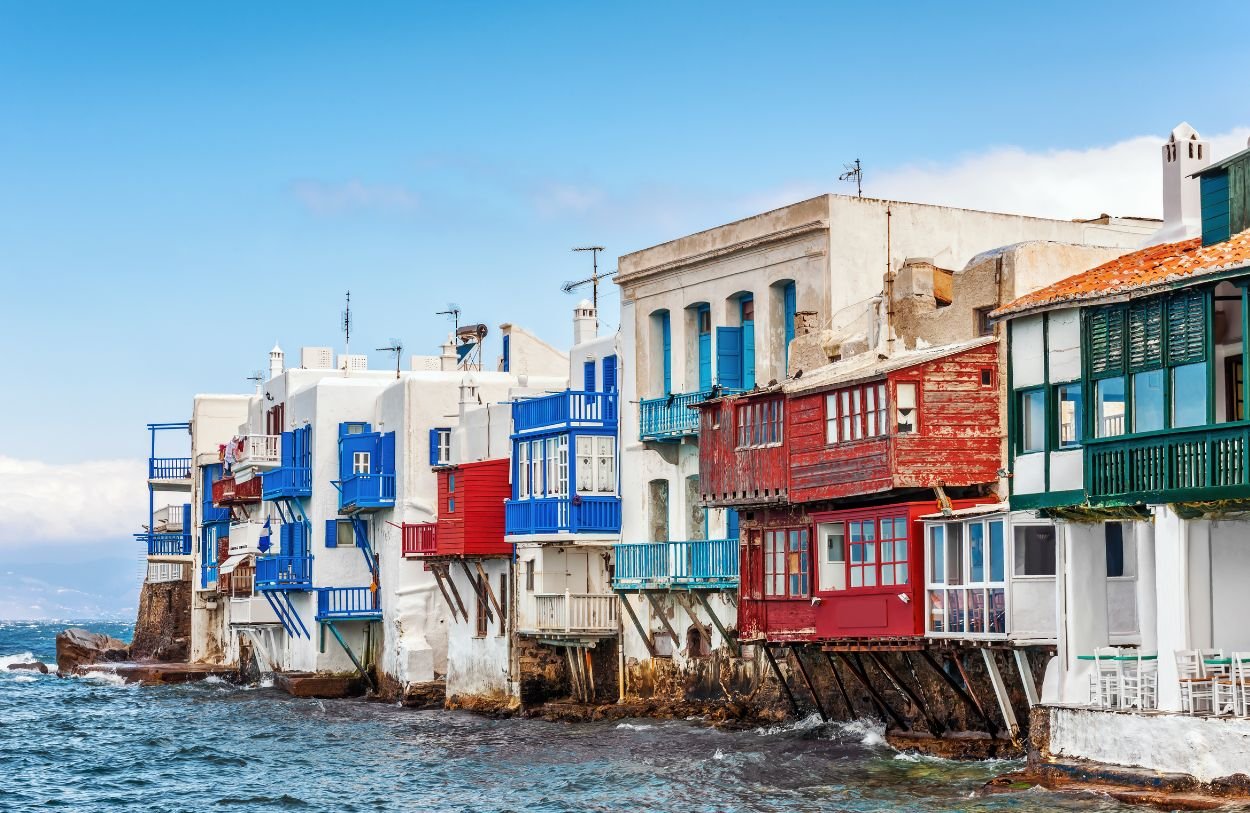
The picturesque Little Venice waterfront in Mykonos, Greece, is famous for its colourful wooden balconies, traditional whitewashed houses and beautiful views across the Aegean Sea.
Little Venice is one of the most distinctive neighbourhoods in Mykonos Town.
Located along the western waterfront, this picturesque district features historic houses with colourful wooden balconies overlooking the Aegean Sea.
Some buildings stand directly beside the water, creating the impression that they rise from the sea itself.
The neighbourhood is particularly known for its 18th-century waterfront architecture and atmospheric setting.
Today, many of the buildings accommodate cafés, restaurants, bars and galleries.
Little Venice is an attractive place to walk, admire the architecture and enjoy views towards the windmills.
At sunset, the waterfront becomes especially popular as visitors gather to watch the changing colours over the sea.
Although waterfront dining can be expensive, appreciating the architecture and scenery is free.
Travel tip: Explore Little Venice during the morning for a quieter experience, then return in the evening if you want to enjoy the sunset atmosphere.
4. Discover the Historic Church of Panagia Paraportiani
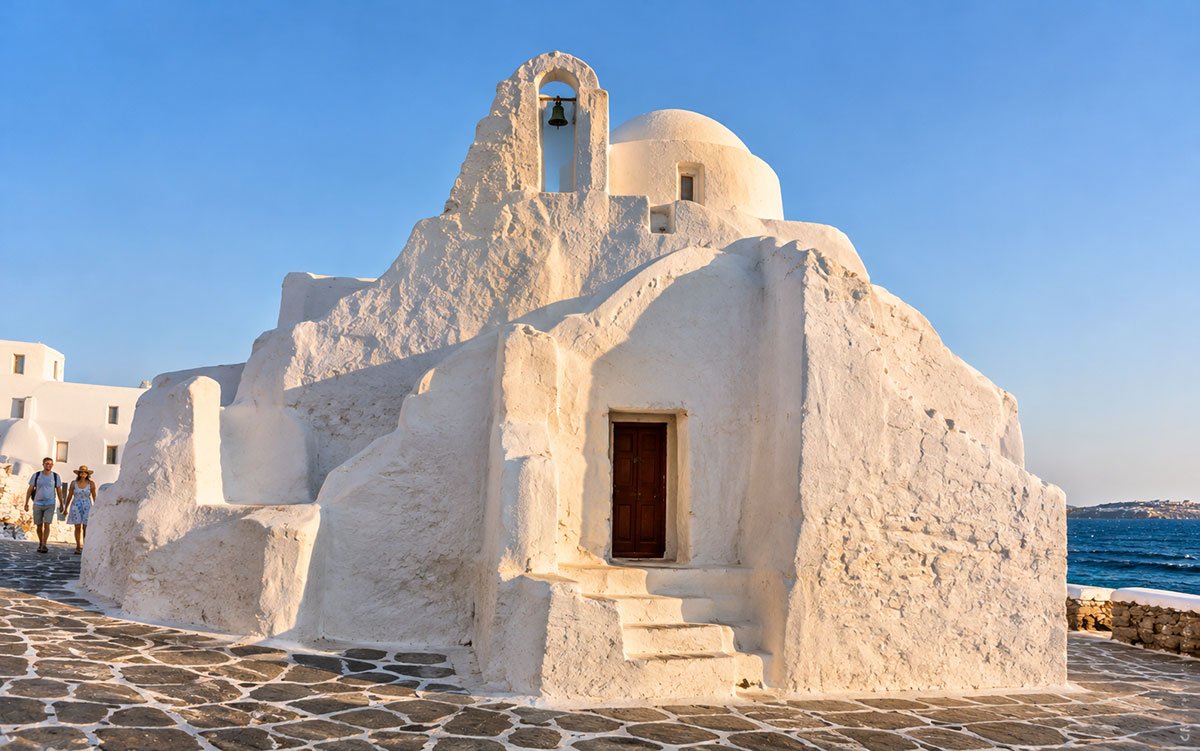
Panagia Paraportiani is one of Mykonos Town’s most distinctive historic landmarks, renowned for its sculptural whitewashed architecture and beautiful coastal setting.
Panagia Paraportiani is one of the most important architectural landmarks in Mykonos Town.
Situated in the Kastro neighbourhood near Little Venice, this beautiful whitewashed church is famous for its unusual shape and simple Cycladic design.
The structure is actually a complex of five connected chapels.
Four chapels form the lower level, while another sits above them.
The complex developed over several centuries, with major construction dating to the 15th and 16th centuries.
Its irregular curves, rounded surfaces and brilliant white exterior create a striking appearance against the blue Aegean sky.
The church is particularly appealing to travelers interested in religious heritage, architecture and photography.
Visitors can admire the exterior from the surrounding public areas. Interior access may be restricted, so do not assume the church is open for sightseeing.
As it remains a religious landmark, visitors should behave respectfully and avoid disturbing services or local worshippers.
Travel tip: Visit in softer morning or late-afternoon light to appreciate the building’s distinctive architectural details.
5. Discover Shopping and Local Life Around Matogianni Street
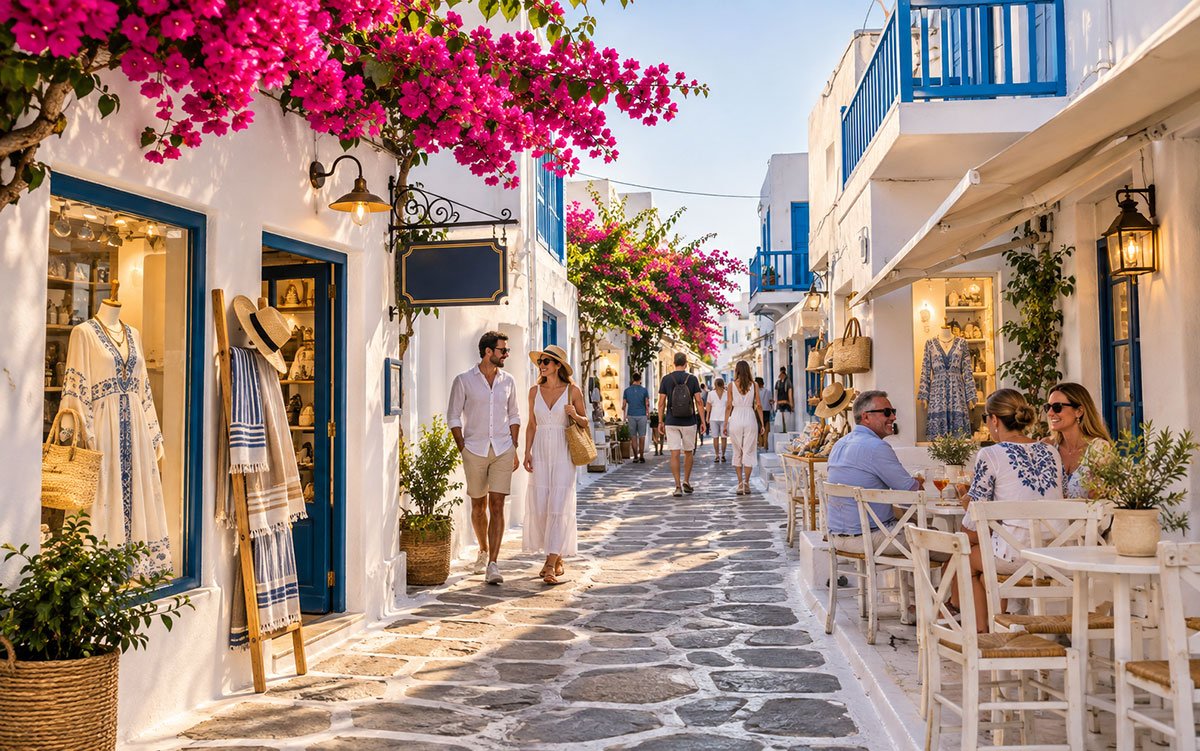
Matogianni Street is one of Mykonos Town’s most charming shopping areas, where traditional Cycladic architecture meets boutique shops, inviting cafés and colourful bougainvillea-lined streets.
Matogianni Street is one of the main shopping areas in Mykonos Town.
This lively pedestrian street connects visitors with boutiques, jewellery stores, souvenir shops, cafés and galleries.
Traditional Cycladic architecture provides an attractive setting for the modern shopping scene.
You will find a mixture of international fashion brands and independent businesses selling clothing, accessories and locally inspired products.
Even if shopping is not part of your holiday plans, wandering through Matogianni and the surrounding streets is an enjoyable way to experience the atmosphere of Chora.
The neighbouring lanes contain small cafés and quieter corners where visitors can pause between sightseeing stops.
For travelers interested in photography, shopfronts, colourful doors and traditional balconies provide plenty of interesting compositions.
Travel tip: Explore the smaller streets branching away from the main shopping area. They often offer a quieter experience than the busiest pedestrian routes.
6. Stroll Along Mykonos Old Port
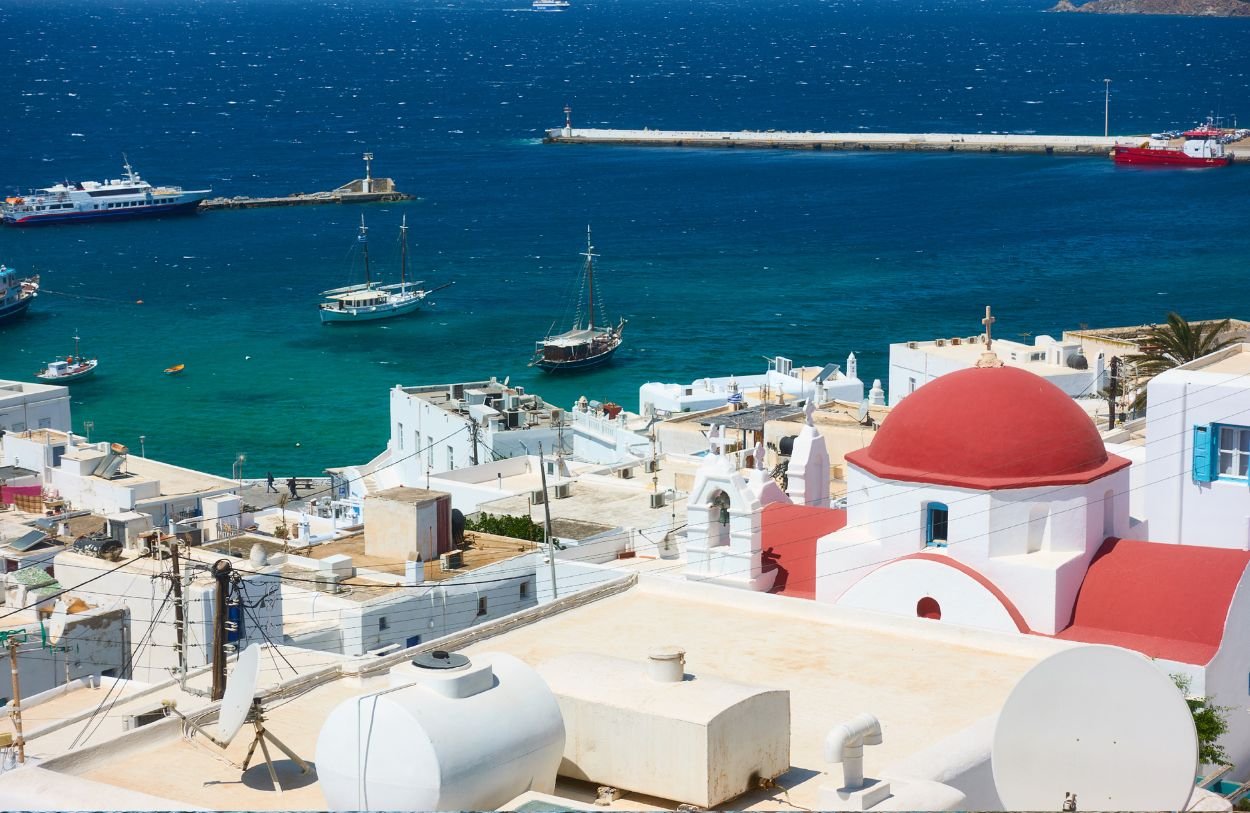
The picturesque Old Port of Mykonos combines traditional whitewashed architecture, colourful fishing and sailing boats, historic churches and beautiful views across the Aegean Sea.
The Old Port is an important part of Mykonos Town’s maritime heritage.
Located beside Chora, the waterfront features traditional buildings, fishing boats, passenger vessels and views across the harbour.
Walking along the promenade is a pleasant way to appreciate the island’s relationship with the sea.
The surrounding area contains cafés, restaurants and small businesses, while the harbour provides access to selected boat excursions.
The Old Port is also associated with departures for the nearby island of Delos, an important archaeological destination.
Visitors should note that the Old Port and New Port are different locations.
Most major passenger ferry services use the New Port at Tourlos, while the Old Port remains associated with selected local and excursion services.
Always check the departure location printed on your booking confirmation.
Travel tip: Explore the waterfront during the morning to observe harbour activity before the busiest sightseeing period.
7. Visit the Archaeological Museum of Mykonos
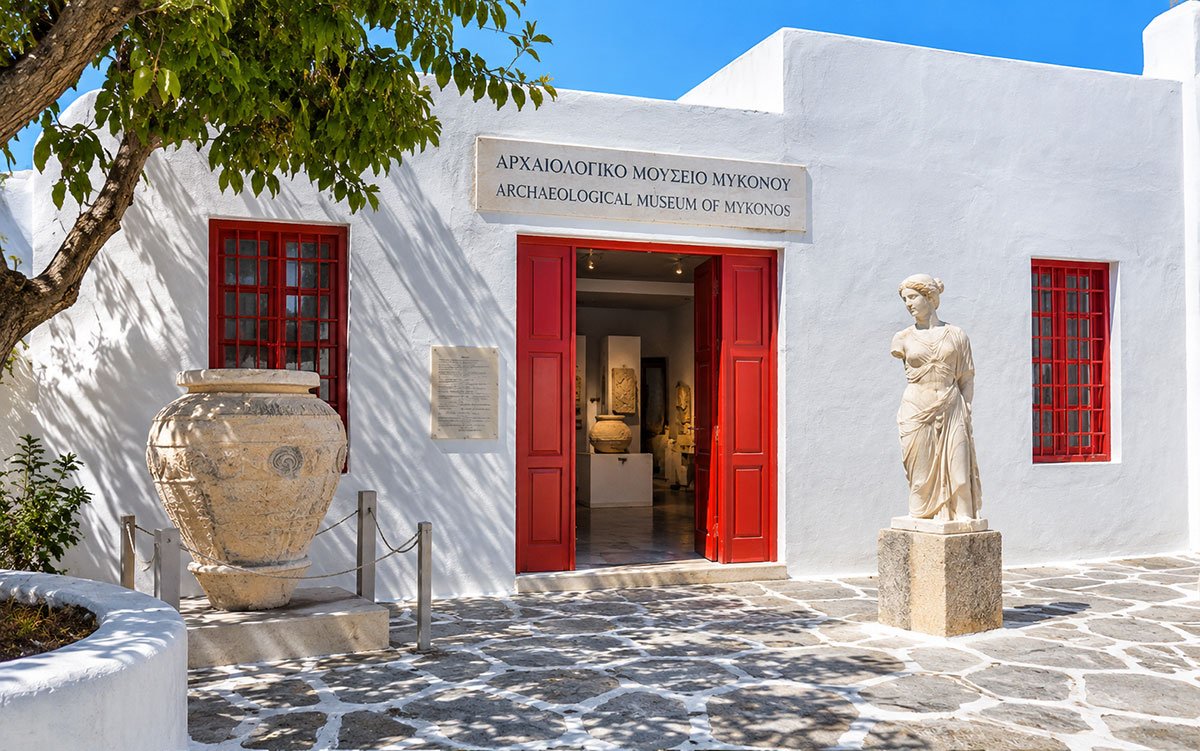
The Archaeological Museum of Mykonos offers visitors an opportunity to explore ancient Greek history through archaeological discoveries, pottery, sculptures and artefacts from Mykonos and neighbouring islands.
The Archaeological Museum of Mykonos offers an opportunity to discover the island’s ancient history.
Located in Chora near the harbour, the museum contains archaeological discoveries from Mykonos and neighbouring islands.
Its collections include pottery, sculptures and objects associated with ancient burial practices and everyday life.
One notable exhibit is the Mykonos Pithos, a large ancient storage jar decorated with scenes associated with the Trojan War.
The museum also contains finds from Rheneia, an island closely connected with the ancient history of Delos.
For travelers interested in archaeology, the exhibits provide valuable context before visiting the ruins of Delos.
The museum operates on seasonal schedules and normally closes on Tuesdays.
Admission charges apply, although free-entry arrangements may be available for eligible visitors or on designated dates.
Check the official Greek Ministry of Culture information before visiting.
Travel tip: Include the museum in your morning sightseeing itinerary and allow time to appreciate the collections rather than making it a brief stop.
8. Explore the Mykonos Folklore Museum and Traditional Houses
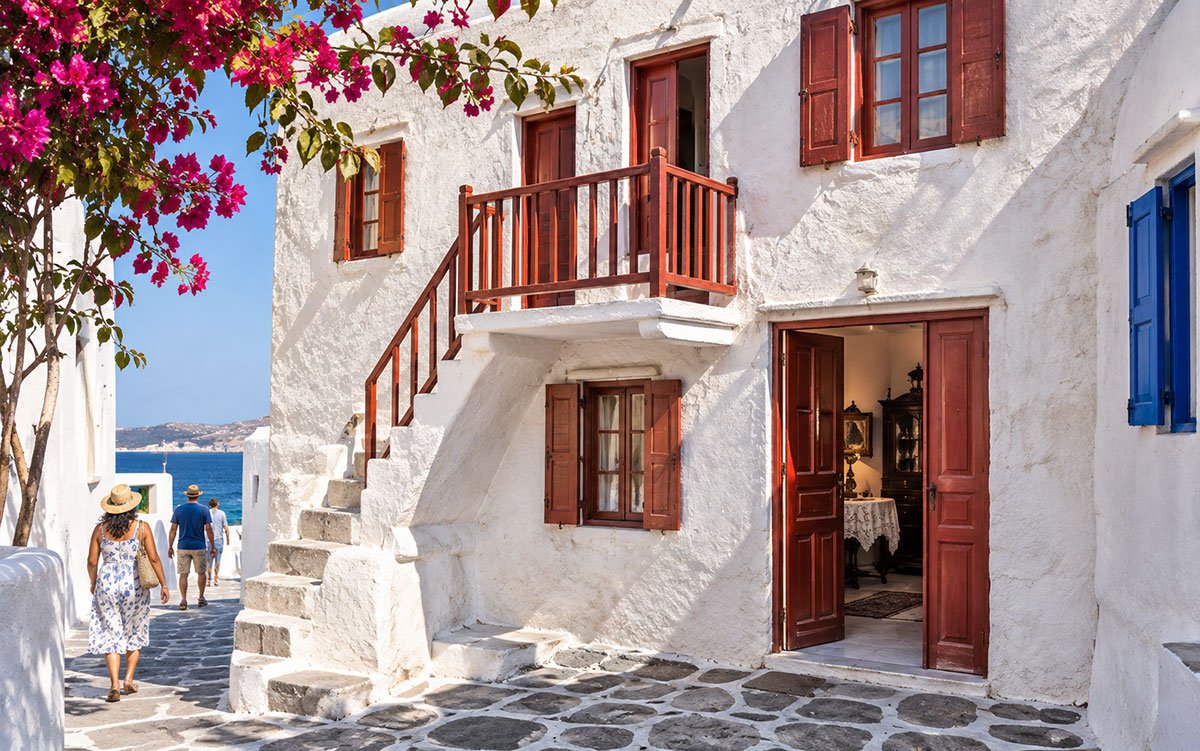
The Mykonos Folklore Museum celebrates the island’s cultural heritage through traditional Cycladic architecture, historic furnishings, local costumes and exhibits illustrating everyday life in Mykonos.
Mykonos has a rich cultural history beyond its famous beaches and nightlife.
The Mykonos Folklore Museum helps visitors understand traditional island life through its collections of household objects, costumes, furniture, photographs and maritime memorabilia.
Its main collection is housed in a historic building in the Kastro area of Chora.
The displays reveal aspects of Mykonian domestic life, local craftsmanship and the island’s relationship with the sea.
The museum organisation also manages other heritage properties, including Lena’s House.
Lena’s House
Lena’s House is a traditional Mykonian townhouse furnished to reflect domestic life during the 19th century.
Visitors can discover period furniture, decorative objects, embroidery and traditional clothing.
The house provides a useful contrast to the modern shops and luxury hotels that now dominate parts of Mykonos.
Both museum experiences appeal to travelers interested in local history and cultural heritage.
Opening arrangements and admission policies can vary, particularly outside the main tourist season.
Travel tip: Contact the museum before planning your visit, especially if you are travelling during the quieter months.
9. Visit Boni’s Windmill for Traditional Island Heritage
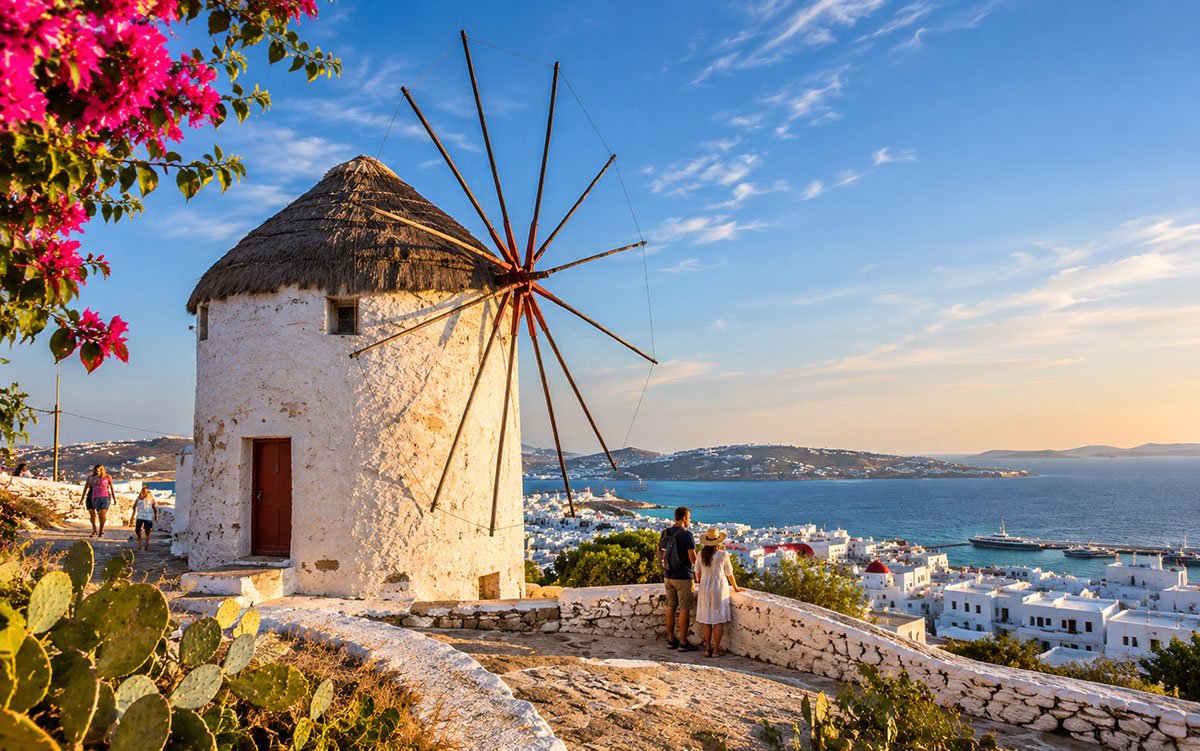
Boni’s Windmill, a historic 16th-century landmark overlooking Mykonos Town, offers beautiful Aegean Sea views and an insight into the island’s traditional agricultural heritage.
Boni’s Windmill, also known as Mylos tou Boni, stands on a hill overlooking Mykonos Town.
Unlike the famous Kato Mili windmills, this site forms part of the island’s Agricultural Museum.
The historic windmill dates to the 16th century and retains important elements of its traditional milling equipment.
The surrounding museum area includes structures associated with rural island life, such as a threshing floor, traditional oven and grape-pressing facilities.
These exhibits help visitors understand how farming and food production supported Mykonos before tourism became the island’s dominant industry.
The elevated setting also offers attractive views over Chora and the surrounding Aegean landscape.
The museum has separate visiting arrangements and may charge a small admission or donation fee.
Check opening information before travelling.
Travel tip: Boni’s Windmill is a worthwhile addition for travelers interested in history, traditional architecture and panoramic photography.
10. Enjoy Traditional Mykonian Food and the Evening Atmosphere
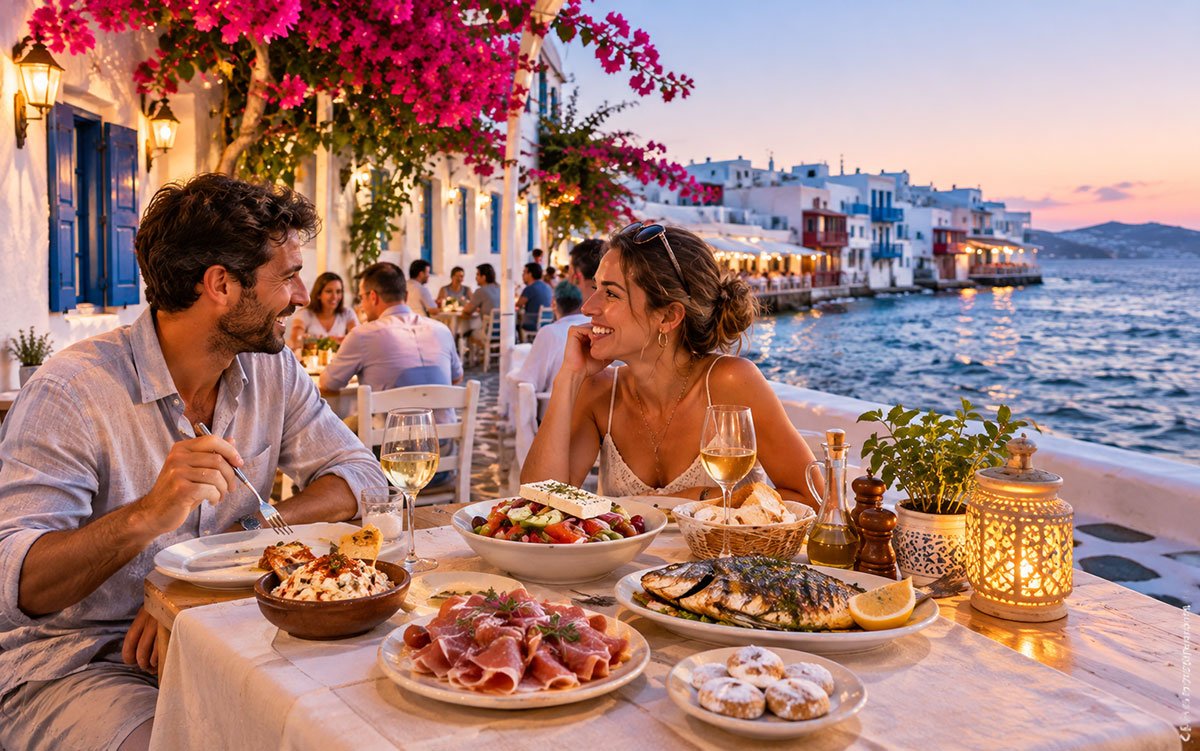
Experience the flavours of Mykonos with traditional Greek cuisine, local specialities and romantic waterfront dining as the sun sets over the Aegean Sea.
Mykonos Town offers dining experiences ranging from traditional Greek tavernas to contemporary restaurants.
Although the island is associated with luxury hospitality, local cuisine remains an important part of its identity.
Traditional dishes reflect the food culture of the Cyclades, with an emphasis on cheese, cured meats, seafood, vegetables and regional ingredients.
Local Foods Worth Trying
Some distinctive Mykonian specialities include:
- Kopanisti: A strongly flavoured, spicy cheese traditionally served with bread or as part of a meze selection.
- Louza: A cured pork speciality seasoned with herbs and associated with Cycladic food traditions.
- Amygdalota: Traditional almond sweets often flavoured with rosewater.
- Fresh seafood: Fish and other seafood prepared in traditional Greek styles, depending on seasonal availability.
- Greek meze: Small dishes that allow visitors to sample different flavours during a relaxed meal.
Menus and prices vary considerably, particularly between waterfront restaurants and establishments located farther from the busiest streets.
Checking displayed menus before entering is a practical way to manage dining expenses.
Experience Mykonos Town After Dark
When evening arrives, Chora takes on a different character.
The whitewashed streets become lively with outdoor dining, bars, music and visitors exploring the town.
Little Venice is especially popular around sunset, while the surrounding lanes contain a variety of nightlife venues.
The atmosphere is generally busiest during the summer tourist season.
Visitors looking for a quieter evening can choose a traditional taverna or enjoy an unhurried waterfront walk rather than visiting a nightclub.
Travel tip: Reserve popular restaurants in advance during the busiest summer weeks, particularly if you want a waterfront table at sunset.
Best Beaches Near Mykonos Town
Although Chora is primarily a historic town and waterfront destination, several beaches are within reach.
Megali Ammos Beach
Megali Ammos is one of the nearest beaches to Mykonos Town.
It is accessible on foot from parts of Chora, making it convenient for visitors who want to combine sightseeing with time by the sea.
The beach has an attractive coastal setting, but wind and waves can affect swimming conditions.
Check local conditions before entering the water.
Ornos Beach
Ornos is a popular beach destination with sandy shores, restaurants and organised visitor facilities.
It is suitable for travelers who prefer a developed beach area with places to eat and relax.
Bus and taxi connections may be available from Mykonos Town, depending on seasonal services.
Platis Gialos Beach
Platis Gialos is another well-known beach on Mykonos.
Its sandy shoreline is surrounded by accommodation, restaurants and other tourism facilities.
It is a practical choice for visitors who want to spend more time by the sea.
Public bus services connect Chora with Platis Gialos during operating periods.
Travelers interested in exploring additional beaches should choose a destination according to the weather, transport options and preferred atmosphere.
Explore Beyond Chora: Ano Mera and Delos
Visitors staying on Mykonos for more than one day can discover important attractions beyond the capital.
Visit the Traditional Village of Ano Mera
Ano Mera is one of the island’s principal inland settlements.
Compared with the busy streets of Chora, the village offers a different perspective on Mykonian life.
Its central square is surrounded by restaurants and traditional village buildings.
A major attraction is the Monastery of Panagia Tourliani, known for its religious heritage and architectural details.
The village is worth visiting for travelers interested in traditional communities, historic churches and a quieter atmosphere.
Access arrangements for the monastery should be confirmed before travelling.
Ano Mera can be reached by road, with public bus connections available according to the operator’s timetable.
Take a Boat Trip to Ancient Delos
Delos is one of the most important archaeological destinations in Greece.
The island is recognised as a UNESCO World Heritage Site because of its extensive ancient ruins and historical significance.
According to Greek mythology, Delos was the birthplace of Apollo and Artemis.
Today, visitors can explore archaeological remains associated with temples, residences, public buildings and ancient religious activity.
Among its famous attractions are the Terrace of the Lions, the Sanctuary of Apollo and the remains of an ancient theatre.
Delos is reached by boat from Mykonos, subject to operating schedules and weather conditions.
The archaeological site requires an admission ticket, and boat transportation is an additional expense.
Opening arrangements are seasonal. The site normally closes to regular visitors from December through March, so winter travelers must check official arrangements carefully.
For history enthusiasts, Delos is one of the most rewarding excursions available from Mykonos.
Best Time to Visit Mykonos Town
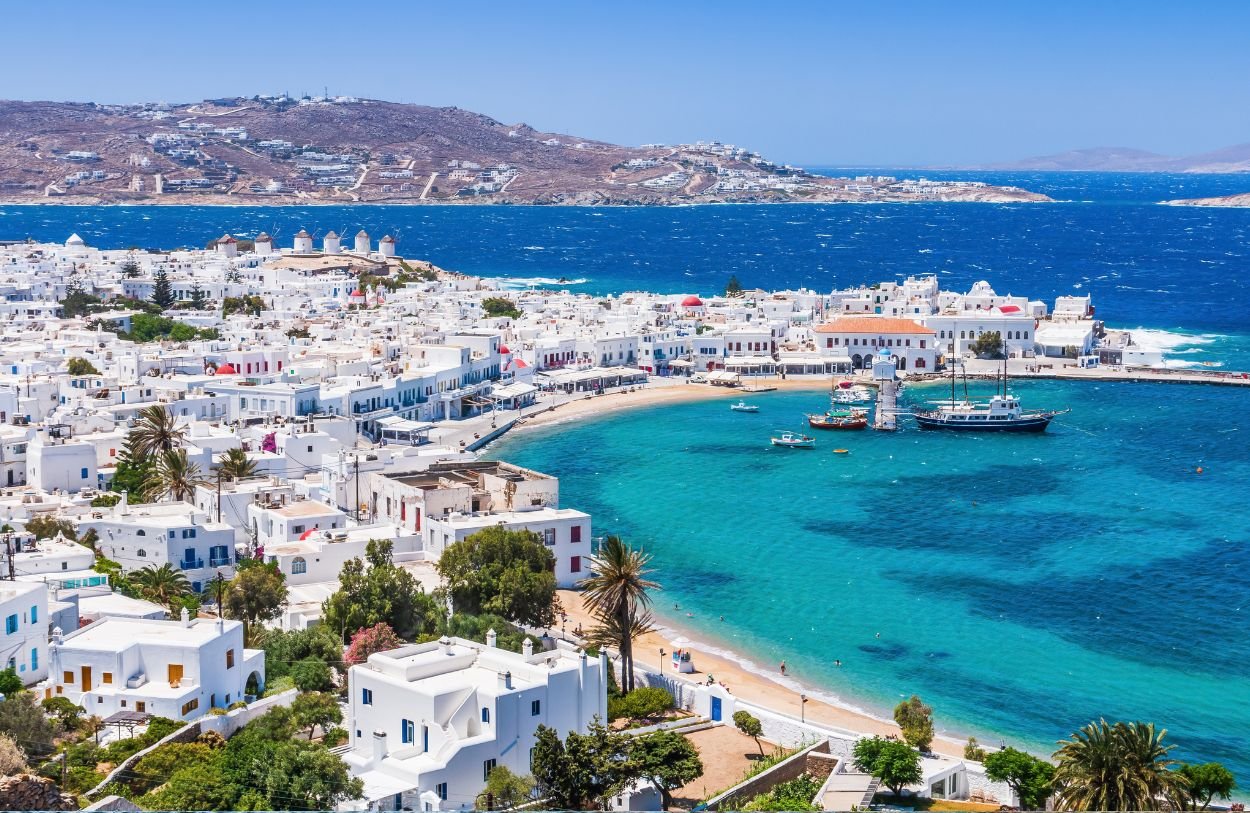
A breathtaking panoramic view of Mykonos Town (Chora), showcasing traditional whitewashed buildings, historic windmills, the picturesque harbour and crystal-clear Aegean waters.
Mykonos offers different experiences throughout the year.
The best season depends on whether you prefer warm beach weather, lively nightlife or quieter sightseeing.
April to June: Pleasant Sightseeing Conditions
Late spring and early summer are attractive periods for exploring Chora.
Temperatures are generally more comfortable for walking than during the hottest part of summer.
More restaurants and tourism businesses begin operating as the main season approaches.
May and June are particularly appealing for travelers who want to combine sightseeing with some beach time.
July to August: Peak Summer Atmosphere
July and August bring the busiest tourism period.
Mykonos Town becomes lively with visitors, shopping, dining and nightlife.
The weather is generally warm and sunny, although strong seasonal winds can affect beaches and boat journeys.
Accommodation and popular attractions may be in greater demand.
Advance reservations are advisable.
September to October: A More Relaxed Island Experience
September is often a good choice for visitors who want warm weather with fewer peak-season crowds.
The sea can remain suitable for swimming, depending on local conditions.
October is quieter, although some seasonal restaurants, beach clubs and excursions may begin reducing operations.
November to March: Quiet Winter Months
Winter offers a different perspective on Mykonos Town.
The streets are generally quieter, and visitors can appreciate the traditional architecture without the intensity of peak-season tourism.
However, many seasonal businesses close, and ferry services or boat excursions may be limited.
Cold winds and unsettled weather can also affect travel.
Winter is more suitable for travelers interested in peaceful sightseeing than for those seeking the island’s famous summer nightlife.
How to Reach Mykonos Town
Mykonos is accessible by air and sea.
Arriving by Air
Mykonos Airport serves the island with domestic flights from Athens and seasonal international connections.
After arriving, travelers can continue towards Chora by taxi, arranged transfer or public bus when services are operating.
Bus timetables change throughout the year, so check the local operator before departure.
Arriving by Ferry
Passenger ferries connect Mykonos with Athens-area ports and other Greek islands.
Services may operate from Piraeus or Rafina, depending on the ferry company and season.
Many major passenger ferries arrive at the New Port in Tourlos, outside the historic town.
Travelers can continue towards Chora using available buses, taxis or the seasonal SeaBus service.
The SeaBus operates between the New Port area and the Old Port side of Mykonos Town during its published operating season.
Check your ferry ticket carefully because departure terminals and travel arrangements vary.
Getting Around Mykonos Town
Walking is the most practical way to explore the historic centre of Chora.
The streets are narrow, and many pedestrian areas contain uneven paving, steps and tight corners.
Comfortable walking shoes are more useful than attempting to travel through the old town by bicycle or scooter.
For destinations outside Chora, visitors can consider public buses, taxis or vehicle rentals.
Public Buses
KTEL Mykonos operates the island’s public bus network.
Two important departure areas are Fabrika and the Old Port.
These serve different routes, so confirm which terminal your chosen destination uses.
Fabrika is particularly relevant for several popular southern beaches, while Old Port services include connections towards parts of the island such as Ano Mera.
Schedules vary by season, and not every route operates throughout the year.
Taxis and Private Transfers
Taxis and prearranged transfers can be convenient for airport journeys, port connections and late arrivals.
Demand can be high during summer.
Booking suitable transfers in advance may be helpful, particularly when travelling with luggage.
Accessibility
Mykonos Town’s traditional layout can be challenging for visitors with limited mobility.
Uneven stone paving, steps, slopes and crowded lanes are common.
Travelers who require step-free access should contact accommodation providers and transport companies before booking.
Where to Stay in Mykonos
Choosing the right accommodation area can make a considerable difference to your experience.
Mykonos Town (Chora)
Chora is convenient for visitors who want restaurants, historic attractions, shopping and nightlife within walking distance.
However, accommodation near busy entertainment areas can be noisy during the summer.
Ornos
Ornos is suitable for travelers who prefer staying near a developed beach while retaining access to Mykonos Town.
Platis Gialos
Platis Gialos offers a beach-oriented atmosphere with hotels, restaurants and seasonal transport connections.
Ano Mera
Ano Mera may appeal to travelers who want a quieter inland setting.
However, reaching beaches and Chora may require transport.
When comparing accommodation, consider walking distances, transport access, noise levels and seasonal service availability rather than choosing solely by the advertised location.
One-Day Walking Itinerary for Mykonos Town
If you have only one day to explore Chora, concentrate on its central attractions.
Morning: Explore the Historic Town
Begin your visit by wandering through the whitewashed streets of Chora.
Explore Matogianni Street and the surrounding lanes before visiting Panagia Paraportiani.
Continue towards the Old Port to enjoy the waterfront scenery.
If you enjoy history, include the Archaeological Museum of Mykonos, provided it is open.
Afternoon: Discover Local Culture
Enjoy lunch at a traditional Greek restaurant.
Afterwards, explore the Mykonos Folklore Museum or Lena’s House if visiting arrangements allow.
You could also walk uphill towards Boni’s Windmill for views of the town and an introduction to the island’s agricultural history.
Late Afternoon: Visit Little Venice and the Windmills
Spend the late afternoon exploring Little Venice.
Admire the colourful waterfront balconies and surrounding Cycladic architecture.
Then walk towards the Kato Mili windmills to enjoy the coastal scenery.
Evening: Enjoy the Sunset and Dinner
Watch the sunset from an accessible viewpoint near the windmills or along the waterfront.
Finish your day with dinner in Chora, sampling traditional Mykonian specialities.
Visitors staying longer can dedicate another day to nearby beaches or a separate excursion to Ano Mera or Delos.
Practical Travel Tips for Mykonos Town
A little planning can make your visit more comfortable.
- Wear suitable footwear: Stone-paved streets and steps can be slippery or uneven.
- Carry drinking water: Summer sightseeing can involve considerable walking in strong sunlight.
- Protect yourself from the sun: Use sunscreen, sunglasses and a hat.
- Expect summer crowds: Popular places such as Little Venice and the windmills become busy around sunset.
- Check opening arrangements: Museums, churches and seasonal attractions may have restricted schedules.
- Allow flexibility for boat trips: Strong winds can affect ferry and excursion services.
- Book accommodation carefully: Confirm whether your hotel is within Chora or in another part of the island.
- Compare restaurant menus: Waterfront dining can be more expensive than other options.
- Respect local residents: Many attractive whitewashed buildings are private homes rather than tourist attractions.
- Check entry requirements: Greece is part of the Schengen Area, and visa requirements depend on your nationality and travel circumstances.
Frequently Asked Questions About Mykonos Town
What are the best things to do in Mykonos Town?
The main attractions include the Kato Mili windmills, Little Venice, Panagia Paraportiani, Matogianni Street, the Old Port and the Archaeological Museum of Mykonos.
Is Mykonos Town worth visiting?
Yes. Chora offers traditional Cycladic architecture, historical landmarks, museums, restaurants, shopping and beautiful sea views. It is worth exploring even if you are not interested in nightlife.
Can you explore Mykonos Town on foot?
Yes. Walking is the most practical way to explore the historic centre. However, some streets have uneven paving, slopes and steps.
How much time do you need in Mykonos Town?
A full day is enough to see many of the main landmarks at a relaxed pace. Travelers interested in museums, dining and nightlife may prefer additional time.
Is Little Venice in Mykonos Town?
Yes. Little Venice is a waterfront neighbourhood within Chora, close to the famous Kato Mili windmills.
Are the Mykonos windmills free to visit?
Visitors can generally admire the Kato Mili windmills from surrounding public areas without paying admission. Access to individual windmill interiors is separate and should not be assumed.
What is the best month to visit Mykonos Town?
May, June and September are appealing months for sightseeing because they generally offer pleasant conditions without the full intensity of peak summer crowds.
Can you visit Delos from Mykonos Town?
Yes. Boat excursions operate between Mykonos and Delos during suitable seasons and weather conditions. The archaeological site has separate admission arrangements and seasonal access restrictions.
Is Mykonos Town suitable for families?
Yes. Families can enjoy walking through Chora, exploring historical landmarks, visiting museums and discovering nearby beaches. However, summer crowds, busy nightlife areas and uneven streets may require additional planning.
Is Mykonos Town expensive?
Mykonos is associated with luxury tourism, particularly during peak summer. However, exploring historic streets, enjoying coastal views and admiring landmarks from public areas can be done without paying admission fees.
Discover the Charm of Mykonos Town
Mykonos Town offers much more than the glamorous nightlife for which the island is famous.
Its whitewashed streets, traditional windmills, historic churches and colourful waterfront buildings reveal an enduring Cycladic identity.
Visitors can spend their time exploring local museums, tasting regional food, admiring architecture or enjoying quiet moments beside the Aegean Sea.
Whether you have a single day or several nights on the island, Chora provides an excellent introduction to the history, culture and atmosphere of Mykonos.
By exploring the historic centre on foot and planning nearby excursions carefully, travelers can experience both the lively and traditional sides of this beautiful Greek island destination.
