
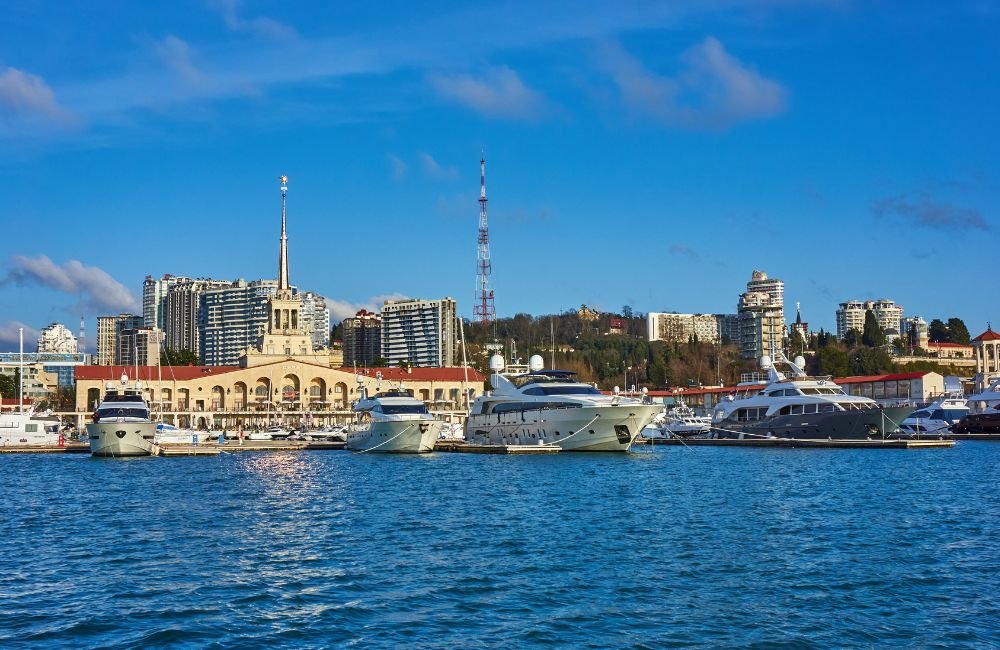
Sochi combines Black Sea coastal scenery with the mountainous landscapes of Russia’s Western Caucasus.
Sochi Travel Guide: Skiing, Beaches and Things to Do
Sochi is one of Russia’s most unusual holiday destinations. Stretching along the Black Sea coast beneath the Caucasus Mountains, the city combines seaside promenades, subtropical greenery, winter sports resorts and landmarks from the 2014 Winter Olympic Games.
What makes Sochi particularly interesting is the contrast between its coastline and the mountains around Krasnaya Polyana. During the warmer months, visitors can explore beaches, parks and forested valleys. Winter brings opportunities for skiing and snowboarding at mountain resorts such as Rosa Khutor.
However, visiting Sochi requires careful consideration. International security conditions, travel advisories, flight arrangements and financial restrictions can present serious difficulties for foreign visitors.
This Sochi travel guide explores the destination’s main attractions, mountain resorts, accommodation areas, local cuisine and practical travel arrangements, helping travellers understand what the region offers and assess whether a visit is appropriate.
Is Sochi Safe to Visit?
Before considering a holiday in Sochi, it is essential to understand the wider security situation in Russia.
The UK Foreign, Commonwealth & Development Office advises against all travel to Russia. The US Department of State also maintains a Level 4: Do Not Travel advisory.
These warnings reflect serious concerns, including security incidents related to the war in Ukraine, the risk of detention, disruption to international transport and limitations on consular assistance.
Drone attacks and air-defence activity can result in airport restrictions, flight diversions and cancellations with little warning. Travelling against official government advice may also affect the validity of travel insurance.
Anyone researching Sochi should:
- Check their own government’s current Russia travel advisory.
- Review visa rules and entry restrictions before making arrangements.
- Confirm whether suitable flights and onward transport are operating.
- Check travel insurance exclusions, including cover for skiing and emergency evacuation.
- Investigate access to money and essential services.
- Consider the implications of limited consular assistance.
The presence of functioning tourist attractions and mountain resorts does not remove these wider risks.
If your government advises against travel, treat that warning seriously. The destination information below is also useful for understanding Sochi and considering a future visit if conditions improve.
Where Is Sochi, and What Makes It Special?
Sochi lies in southwestern Russia, along the northeastern coast of the Black Sea, in Krasnodar Krai.
The broader resort area includes coastal neighbourhoods, forested foothills and mountain settlements. This geography gives the region a particularly varied character.
Along the coast, the climate is relatively mild and humid, supporting palm trees and other subtropical vegetation. Further inland, the terrain rises sharply into the Caucasus Mountains, where winter snowfall supports established ski resorts.
Unlike destinations devoted almost entirely to winter sports, Sochi has attractions associated with several different types of holiday.
Travellers interested in outdoor activities can explore mountain scenery and designated walking routes. Visitors who prefer a slower pace may be drawn to its parks, waterfront areas and regional food.
The city also has a distinctive sporting legacy.
The Legacy of the Sochi Winter Olympics
Sochi hosted the Winter Olympic and Paralympic Games in 2014, bringing international attention to its coastal and mountain landscapes.
The sporting venues were divided between two principal areas.
The coastal cluster accommodated indoor ice events and major ceremonies, while the mountain cluster around Krasnaya Polyana hosted skiing and other winter competitions.
Several Olympic facilities remain important landmarks, although their present-day functions and public access arrangements differ.
The Games also left a substantial transport and resort infrastructure legacy, particularly in the mountain area.
For visitors, this means that Sochi is more than a former Olympic host city. Its winter sports facilities, mountain villages and coastal attractions form part of a wider year-round destination.
Best Things to Do in Sochi
1. Explore the Olympic Park in Sirius
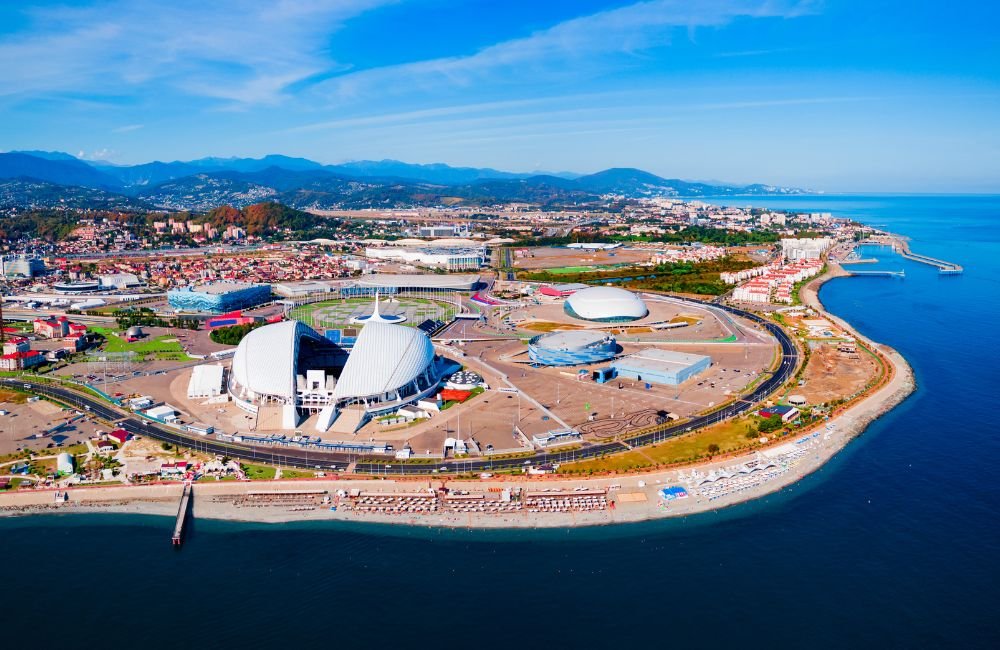
An aerial view of Sochi Olympic Park, featuring the iconic Fisht Stadium, surrounding Olympic venues and the scenic Black Sea coastline near Adler, Russia.
The Olympic Park is one of the most recognisable attractions associated with Sochi.
Located in Sirius, near Adler, the complex contains venues built for the 2014 Winter Games, including Fisht Stadium and several indoor sports arenas.
The area provides an opportunity to see the scale of the Olympic development and appreciate the architectural legacy of the Games.
The surrounding district also contains wide pedestrian areas and access to the nearby coastline.
Visitors should distinguish between exploring the Olympic Park’s public spaces and entering individual venues. Stadium tours, sporting events and indoor access depend on the current arrangements of each facility.
For families, the nearby Sochi Park amusement park offers another potential attraction, subject to its operating calendar and admission requirements.
2. Discover Rosa Khutor Mountain Resort
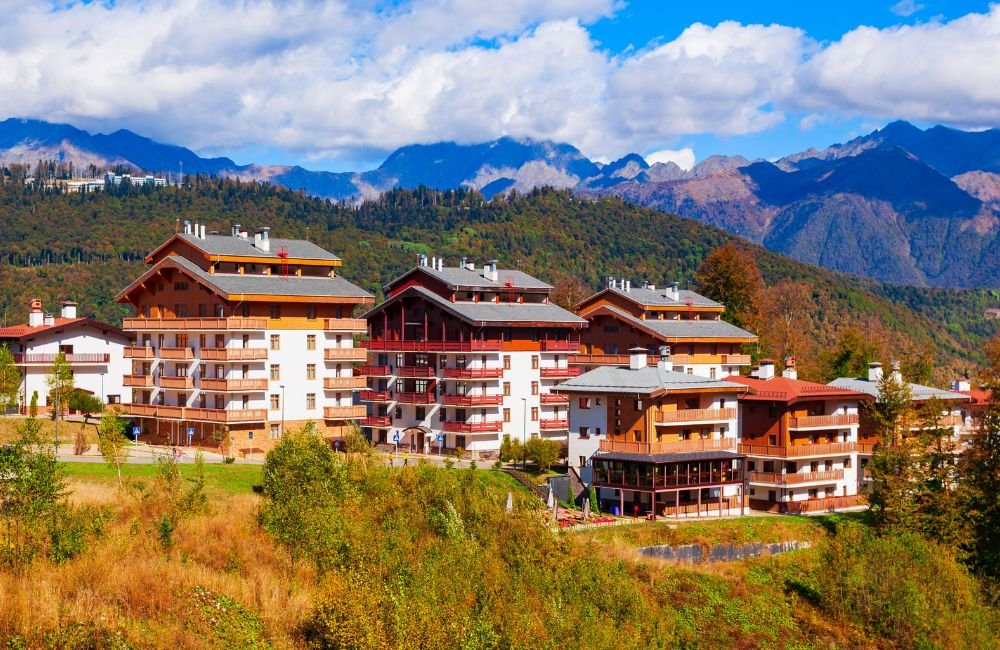
Alpine-style accommodation at Rosa Khutor mountain resort near Sochi, with beautiful autumn scenery and the Caucasus Mountains in the background.
Rosa Khutor is among the best-known mountain resorts in the Sochi region.
Situated near Krasnaya Polyana, it developed into an important venue for alpine skiing during the Winter Olympics and continues to operate as a mountain destination.
In winter, visitors can explore its ski slopes, subject to snow conditions and lift operations.
During warmer months, the resort offers a different experience, with cable-car journeys, mountain viewpoints and access to walking routes.
One of its notable attractions is Rosa Peak, a viewpoint approximately 2,320 metres above sea level.
The scenery changes dramatically with the seasons. Snow-covered slopes dominate the winter landscape, while summer reveals green valleys, alpine meadows and forested mountainsides.
You do not need to be an experienced skier to appreciate the surroundings. Sightseeing lift tickets may allow non-skiers to enjoy mountain views when the relevant services are operating.
Always check lift availability, weather conditions, trail access and any national park permits before heading uphill.
3. Experience the Black Sea Coast
Sochi’s coastline offers a completely different atmosphere from its mountain resorts.
The city is known for waterfront promenades, seaside leisure areas and views across the Black Sea.
Many beaches in the Sochi region are predominantly pebbly rather than sandy. Visitors expecting wide stretches of soft sand should research individual beaches before choosing accommodation.
The main beach season generally falls in the warmer months, although sea conditions and suitable swimming weather vary.
Some stretches of coastline have organised facilities, while others offer simpler waterfront experiences.
For a relaxed outing, a walk along the seafront can be just as enjoyable as spending time on the beach.
Practical tip: Choose designated swimming areas and follow local warnings. Weather, currents, storm conditions and temporary restrictions can affect whether entering the water is safe.
4. Visit the Sochi Arboretum
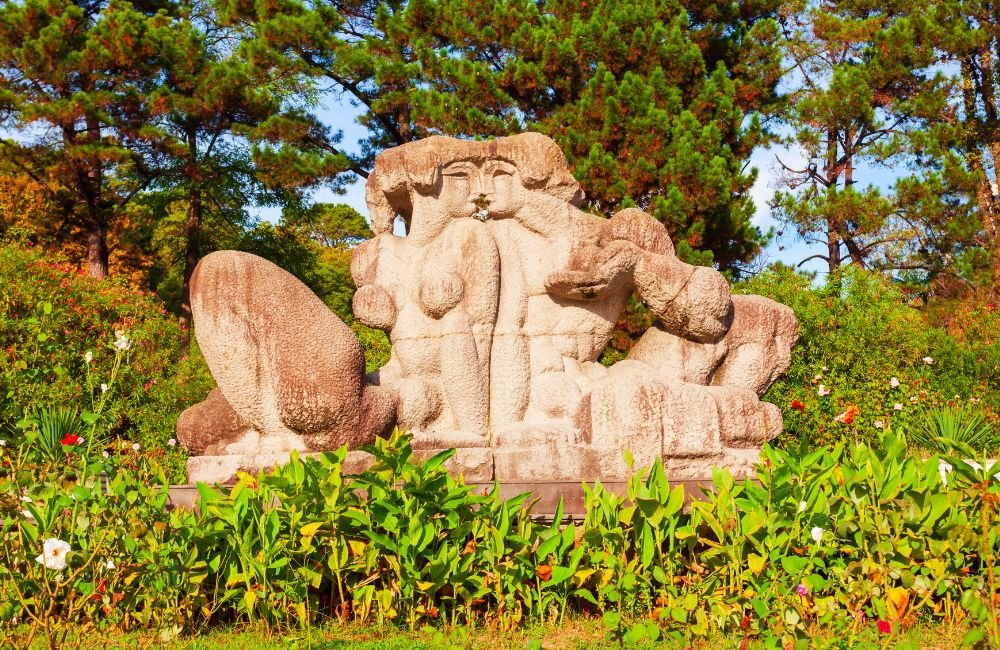
A decorative stone sculpture nestled among lush greenery and colourful flowers at Sochi Arboretum, one of the city’s popular botanical attractions.
For visitors interested in gardens and scenic walks, the Sochi Arboretum, commonly known as Dendrarium, is an established attraction.
Managed by Sochi National Park, it contains landscaped gardens and collections of trees and plants.
The park’s paths, elevated sections and viewpoints provide a quieter alternative to the busiest coastal areas.
It is particularly appealing to travellers interested in photography, horticulture or a leisurely outdoor afternoon.
The grounds include sloping terrain, so comfortable footwear is recommended.
Admission and cable-car arrangements are managed separately according to the services selected. Check the park’s official visitor information before going.
5. Explore Sochi National Park
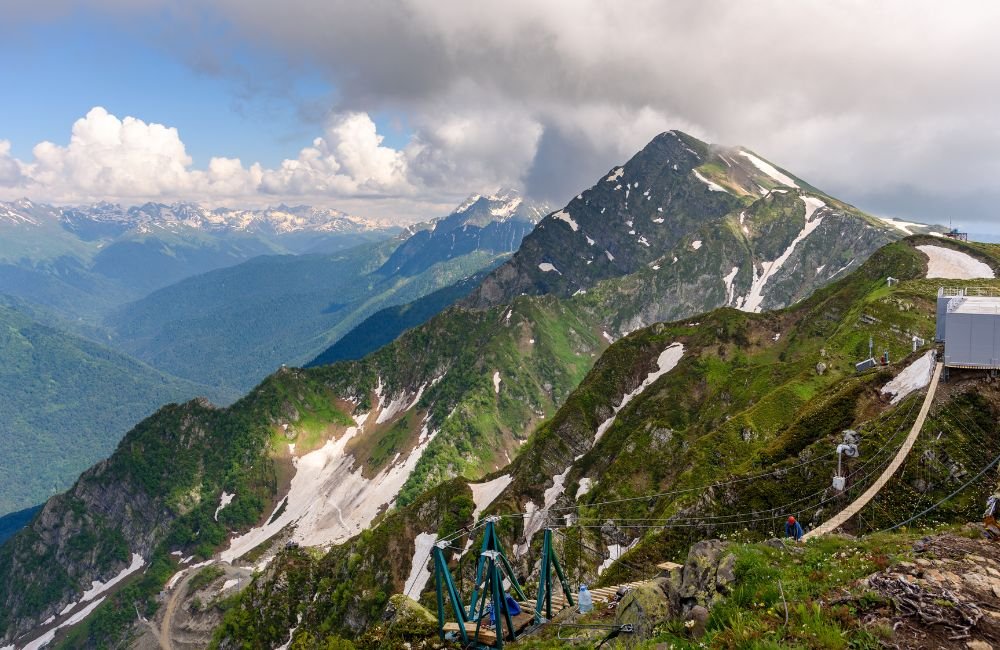
Dramatic mountain scenery around Rosa Peak in Sochi National Park, with rugged Caucasus ridges, alpine vegetation and lingering snow.
Beyond the developed resort areas, Sochi National Park protects forests, rivers, waterfalls and other natural landscapes.
Its recreational attractions include the Zmeykovskiye Waterfalls, the 33 Waterfalls and other designated natural sites.
These locations appeal to visitors interested in short nature walks, photography and exploring the landscape beyond the city.
However, the attractions are spread across different parts of the wider Sochi area. They should not be treated as one compact sightseeing complex.
Access also varies according to the site, weather conditions and park regulations.
Some routes require tickets or permits, and visitors must remain within authorised areas.
Travellers planning longer mountain hikes should check route difficulty, seasonal restrictions, weather forecasts and whether professional local guidance is necessary.
The broader Western Caucasus region also contains internationally significant protected landscapes recognised by UNESCO. However, the UNESCO World Heritage property should not be confused with unrestricted public access to all nearby forests and mountains.
Skiing in Sochi: Where to Go
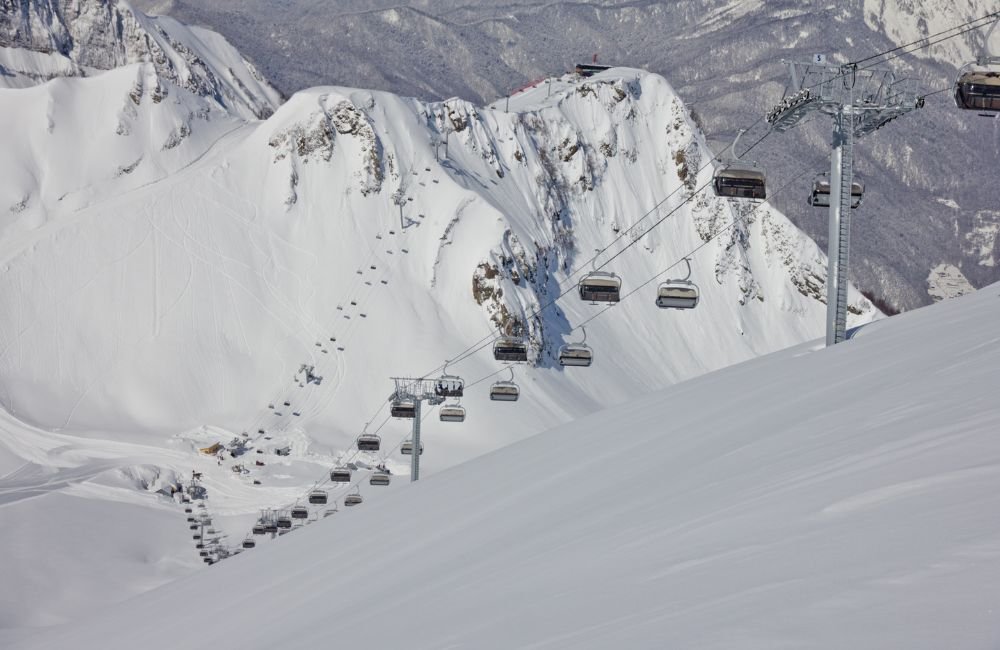
Gondola cable cars crossing the snow-covered Caucasus Mountains near Sochi, where mountain resorts offer skiing, snowboarding and winter sightseeing.
For winter sports enthusiasts, the principal ski destinations are inland, around Krasnaya Polyana and Esto-Sadok.
This mountain area offers access to several resorts with their own slopes, lifts, accommodation and visitor facilities.
Rosa Khutor
Rosa Khutor is particularly associated with alpine skiing and snowboarding.
Its ski infrastructure includes pistes of varying difficulty, lifts and winter sports services.
Beginners should investigate ski-school arrangements and suitable learning areas rather than assuming that every slope is appropriate for first-time visitors.
Experienced skiers should review official trail maps, weather conditions and mountain safety information.
Krasnaya Polyana Resort
Krasnaya Polyana Resort is another major year-round mountain destination.
It provides ski facilities during suitable winter conditions and sightseeing opportunities during warmer periods.
Its mountain sectors sit at different elevations, so weather and lift availability can vary within the resort.
The resort also operates accommodation and leisure facilities, making it a potential base for visitors who prefer to stay in the mountains.
When Is the Ski Season?
The main skiing period generally falls in winter, with opportunities often extending into early spring, depending on the resort and snow conditions.
However, there is no guarantee that every run will open at the beginning of the season or remain available until a particular date.
Snowfall, temperatures, avalanche-control work and operational decisions all affect access.
Before making plans, check:
- Official ski-season announcements.
- Current lift and piste status.
- Snow and weather reports.
- Equipment rental and instruction availability.
- The difficulty of the slopes you intend to use.
Mountain weather can change quickly. Visitors should remain on marked, open runs and follow resort safety instructions. Off-piste terrain presents additional hazards and should never be treated as equivalent to a managed ski slope.
Best Time to Visit Sochi
The most suitable time depends on whether you are interested in winter sports, coastal activities or mountain sightseeing.
| Season | General conditions | Main interests |
|---|---|---|
| Winter | Cooler coastal weather and potential mountain snow | Skiing, snowboarding and mountain scenery |
| Spring | Variable weather, with gradually greener landscapes | Gardens, coastal walks and lower-elevation sightseeing |
| Summer | Warmer coastal conditions and a busy beach season | Black Sea beaches, mountain viewpoints and hiking |
| Autumn | Cooling temperatures and changing mountain scenery | Sightseeing, photography and outdoor walks where conditions permit |
Winter for skiing
Choose winter if the primary attraction is snow sports.
Remember that the weather beside the Black Sea can be very different from the conditions at higher mountain elevations.
Pack accordingly, even if you expect relatively mild weather in the city.
Summer for beaches and mountains
Summer is generally the most appealing season for combining coastal activities with accessible mountain sightseeing.
It is possible to experience warm weather beside the sea and significantly cooler temperatures at higher elevations.
Rather than assuming that beach and mountain visits will both fit comfortably into half a day, allow enough time for travel, lift journeys and changing weather.
Spring and autumn for sightseeing
Spring and autumn can appeal to visitors who prefer exploring parks, gardens and urban attractions without making beach activities or skiing the focus of their holiday.
Rain, mountain conditions and seasonal maintenance may affect outdoor attractions.
Check individual services before deciding on a travel period.
Where to Stay in Sochi
Choosing the right accommodation area is one of the most important decisions when considering Sochi.
The destination is geographically spread out, and a hotel near the beach may not be convenient for daily skiing trips.
Central Sochi: For city sightseeing
Central Sochi is suitable for travellers interested in waterfront walks, restaurants, gardens and urban attractions.
It provides access to the city atmosphere rather than a traditional mountain-resort experience.
Accommodation choices vary, so compare locations carefully instead of assuming that every hotel advertised as being in Sochi is close to the centre.
Adler and Sirius: For coastal and Olympic attractions
The Adler area and neighbouring Sirius are useful locations for visitors interested in the Olympic Park, Sochi Park and the nearby coastline.
Sirius is administratively distinct from Sochi, although it remains closely connected to the wider resort region.
This area may suit visitors whose interests are concentrated on coastal sightseeing and Olympic landmarks.
Krasnaya Polyana and Esto-Sadok: For mountain holidays
Travellers whose main interest is skiing or mountain scenery should consider accommodation in and around Krasnaya Polyana and Esto-Sadok.
Staying near the appropriate resort can reduce the need for repeated transfers from the coast.
Some accommodation is located at the base of the mountains, while other properties are at higher elevations.
Check the precise location, access to lifts, seasonal transport arrangements and whether any transfer service is included.
Accommodation tip: Compare the property’s actual map location, recent guest information, cancellation terms and available payment methods. Do not rely solely on promotional descriptions such as “near the slopes” or “close to the beach.”
Getting to Sochi and Getting Around
Arriving in Sochi
Sochi International Airport serves the resort region and is located in the Adler area.
International flight options depend on current airline routes and airspace restrictions.
Travellers should not assume that direct flights are available from their home country.
Russia’s international transport arrangements have been affected by sanctions and security conditions, while airport operations may change at short notice.
Before arranging travel, verify the complete journey, including connections, transit permissions and return travel.
Travelling between the coast and the mountains
Rail and road links connect parts of the Sochi region with Krasnaya Polyana.
Suburban rail services include connections serving the mountain resort area, while buses and road transfers provide additional options.
Rosa Khutor railway station is a useful transport reference for travellers heading towards the resort.
However, the railway station is not the same as a mountain lift station or a hotel entrance. Some journeys require an additional bus, shuttle or taxi transfer.
Confirm current services using Russian Railways and the relevant resort’s official transport information.
Moving around locally
Public buses, suburban trains and licensed taxis are among the available transport options.
The best choice depends on your accommodation and intended destination.
For example, the Olympic Park and the mountain ski resorts are in different areas, so they should not be treated as neighbouring attractions.
If using a taxi or transfer service, establish the fare and payment method in advance.
Download essential directions for offline use, as navigation and communications services may not function in the same way as those available at home.
What to Eat in Sochi
Food is another interesting part of the Sochi experience.
The region’s cuisine reflects Russian traditions alongside influences from the Caucasus and neighbouring culinary cultures.
You may encounter hearty soups, grilled meats, dumplings, baked dishes and Black Sea fish.
Several regional favourites are worth recognising.
Khachapuri
Khachapuri is a Georgian cheese-filled bread found in different regional styles.
The Adjarian version, often shaped like a boat, is traditionally served with cheese, butter and egg.
It is rich, filling and particularly appealing after a day outdoors.
Khinkali
These Georgian dumplings are commonly filled with seasoned meat, although other fillings are also available.
They are usually served as a substantial meal or shared dish.
Kharcho
Kharcho is a richly flavoured Georgian soup associated with meat, rice, herbs and distinctive seasonings.
Recipes vary, so the taste and ingredients depend on the establishment.
Russian and Black Sea specialities
Visitors may also come across dishes such as borscht, pelmeni and locally prepared fish.
Freshwater trout is another option found in the region’s dining scene.
Rather than planning an itinerary around restaurant recommendations from older travel guides, compare current menus, opening arrangements and recent reviews.
It is also worth checking whether an establishment accepts the payment method you intend to use.
Essential Travel Planning Tips for Sochi
Even if security conditions allow a future visit, travelling to Russia requires more preparation than simply reserving flights and a hotel.
Check visa and entry requirements
Entry requirements depend on your citizenship, travel purpose and length of stay.
Russia operates a unified electronic visa system for eligible nationalities.
Under the current rules, eligible single-entry e-visas are valid for 120 days from issuance and permit a stay of up to 30 days from entry, provided departure occurs within the visa’s validity.
Not every nationality qualifies, and applicants must use an approved border crossing.
Check the Russian Ministry of Foreign Affairs’ official visa information and the relevant embassy or consulate before booking.
Plan how to pay
International payment restrictions are a significant practical issue.
Visa and Mastercard cards issued outside Russia generally do not work at Russian merchants or ATMs.
This can affect hotels, restaurants, transport, online reservations and access to funds.
Travellers must investigate lawful, practical payment options before departure, including currency exchange rules and any restrictions applicable to their nationality.
Do not assume that a card used successfully elsewhere in Europe or Asia will work in Sochi.
Confirm insurance coverage
Suitable travel insurance would ordinarily be an important part of a mountain holiday, especially when skiing or hiking is involved.
However, policies may exclude travel to destinations covered by government warnings or certain conflict-related incidents.
Check the policy wording carefully and obtain written clarification from the insurer where necessary.
Coverage for ordinary sightseeing is not necessarily the same as coverage for skiing, mountain rescue or medical evacuation.
Prepare for different weather conditions
Sochi’s coastal and mountain climates differ considerably.
Visitors planning mountain activities should carry appropriate layers, waterproof clothing and suitable footwear.
Even during summer, temperatures can be much cooler at higher elevations.
Follow official weather forecasts and respect trail or lift closures.
Understand local laws
Travellers should familiarise themselves with Russian laws affecting identification, photography, public behaviour and online activity.
Restrictions may differ substantially from those in their home country.
Keep relevant documents accessible, follow official instructions and avoid photographing restricted or security-sensitive facilities.
How Many Days Do You Need in Sochi?
For general sightseeing, three to five days would provide a reasonable starting point for exploring different parts of the region, assuming travel conditions permit.
However, a longer stay may be more suitable for visitors interested in skiing or extended mountain activities.
A simple three-day sightseeing plan could look like this:
Day 1: Central Sochi and the Black Sea coast
Explore the waterfront, visit the Arboretum and enjoy the city’s coastal atmosphere.
Day 2: Olympic landmarks and Sirius
Visit the Olympic Park area, see its main sporting landmarks and consider nearby family attractions if they are operating.
Day 3: Krasnaya Polyana and Rosa Khutor
Dedicate a full day to the mountains. Depending on the season and operating conditions, choose skiing, cable-car sightseeing or a suitable nature walk.
This is an illustrative itinerary rather than a recommendation to travel while official advisories warn against visiting Russia. Actual plans should depend on security conditions, transport operations and seasonal access.
Frequently Asked Questions About Sochi
Is Sochi worth visiting?
Sochi has a distinctive combination of Black Sea coastline, Caucasus mountain scenery, winter sports infrastructure and Olympic landmarks.
For travellers interested in both coastal and mountain landscapes, its geography is particularly appealing.
However, the destination’s attractions should be considered separately from current security conditions and government advice against travel.
Can you ski in Sochi?
Yes. Established mountain resorts around Krasnaya Polyana and Esto-Sadok offer skiing and snowboarding when conditions permit.
Skiing takes place in the mountains rather than along the coastal city itself.
Does Sochi have beaches?
Yes. The Sochi region has numerous Black Sea beaches, many of which are pebbly.
Swimming conditions and beach facilities vary according to the location and season.
Is Sochi only a winter destination?
No. Although the Winter Olympics made Sochi internationally famous for snow sports, its coast, parks and mountain attractions also provide opportunities for sightseeing during warmer months.
Can you visit Rosa Khutor without skiing?
Yes. Rosa Khutor operates sightseeing lifts and other activities during suitable seasons.
Visitors should check which services are open and whether additional tickets or permits are required.
Do foreign tourists need a visa for Sochi?
Visa requirements depend on nationality and the purpose of travel.
Some foreign nationals may qualify for Russia’s unified e-visa, while others need a different visa or may benefit from a visa-free agreement.
Always consult official entry requirements for your passport.
Final Thoughts
Sochi stands out for its unusual geography. Few resort regions offer the combination of a Black Sea coastline, subtropical gardens, Olympic sporting landmarks and developed ski facilities in the nearby mountains.
Rosa Khutor and Krasnaya Polyana remain important names in the region’s winter sports landscape, while coastal neighbourhoods, parks and natural attractions reveal a different side of Sochi.
For international travellers, however, destination appeal is only one part of the decision. Current security warnings, transport uncertainty, insurance exclusions and payment restrictions must be considered before any travel arrangements.
Understanding both the attractions and the practical risks provides a more complete picture of Sochi and what a future visit might involve.
