
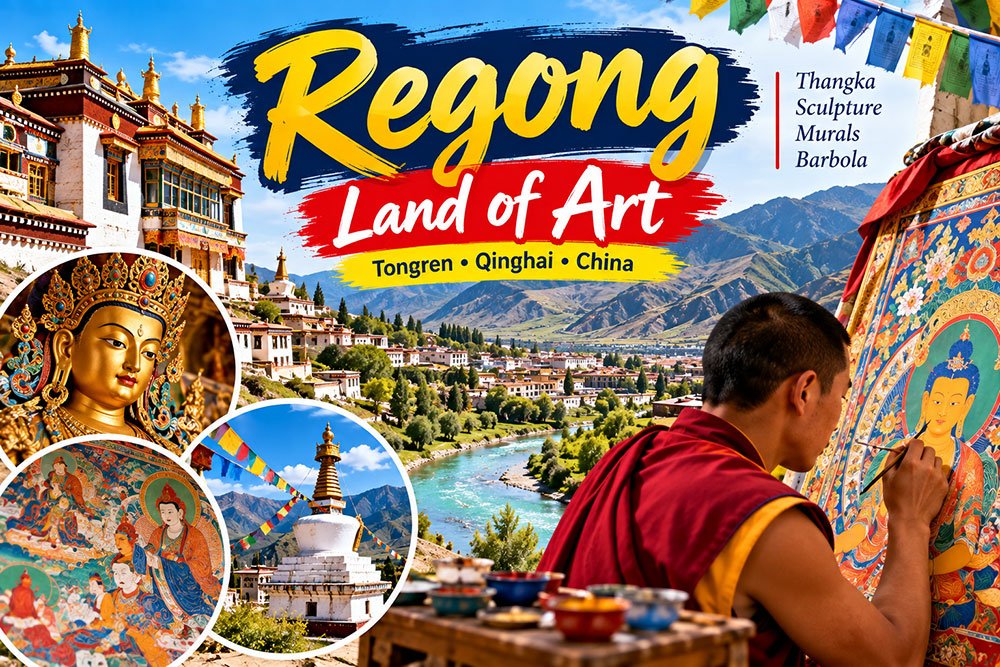
Regong: The Land of Art in Qinghai
Along the Longwu River in southeastern Qinghai lies Tongren, a culturally rich destination better known through its Tibetan name, Regong. Often associated with the meaning “Golden Valley,” the area has become widely recognized for its remarkable artistic traditions, especially thangka painting, sculpture, murals and barbola, a form of textile art.
Regong is much more than a place to see traditional artwork. It is a living cultural landscape where artistic knowledge has been passed between generations through monasteries, villages, workshops and artist communities.
The area’s distinctive traditions have received international recognition. UNESCO inscribed the Regong arts on the Representative List of the Intangible Cultural Heritage of Humanity in 2009. UNESCO explains that Buddhist monks and folk artists in communities along the Longwu River basin practice this tradition, combining Tibetan Buddhist artistic traditions with local cultural influences.
What Is Regong Art?
The term Regong arts refers to a group of traditional artistic practices developed in the Longwu River region.
UNESCO identifies several important forms, including:
- Thangka painting
- Buddhist and decorative murals
- Sculpture
- Barbola textile art
These traditions use different materials and techniques. Thangka artists, for example, traditionally work with prepared cloth and carefully applied natural pigments. Regong sculpture can use materials such as wood, clay, stone and brick, while barbola creates raised decorative forms from pieces of fabric.
Artists do not simply reproduce these techniques as tourist crafts. Instead, masters teach them through years of apprenticeship and hands-on instruction. This tradition helps preserve established artistic methods, patterns, proportions and religious iconography.

Why Regong Is Called a Land of Art
Regong’s reputation comes from the concentration of artists, monasteries, villages and workshops connected with these traditions.
The surrounding Longwu River valley provides the cultural setting for an artistic tradition that has developed over centuries. Government and cultural sources continue to describe Tongren as an important center for Regong art and thangka production.
Visitors can encounter artwork in religious settings, cultural institutions, specialist studios and artist communities. This makes a journey to Regong different from visiting a conventional museum: the artistic tradition remains connected to everyday cultural life.
Thangka Painting: The Heart of Regong Art
Among the best-known forms of Regong art is thangka painting.
Thangkas are traditional religious paintings associated with Tibetan Buddhist culture. UNESCO notes that Regong thangka artists use specialized brushes and traditionally prepared cloth, with techniques involving careful line drawing, color application and pattern design.
The level of detail can be extraordinary.
A finished work may contain finely drawn figures, intricate ornamental borders and layers of symbolism. Creating such a piece requires patience, technical knowledge and an understanding of traditional artistic conventions.
In contemporary Tongren, traditional painting continues alongside training, exhibitions, cultural tourism and new forms of creative presentation. A 2025 report carried by China Daily described a growing ecosystem of painting academies, cultural enterprises, training programs and markets connected with Regong art.
Regong Sculpture and Decorative Arts
Regong art is not limited to painting.
Sculpture forms another important part of the tradition. UNESCO notes that Regong sculpture can be made from wood, clay, stone or brick and may be used to decorate temples and homes.
Other decorative traditions include murals and barbola. Together, these forms demonstrate the breadth of the artistic culture that developed around the Longwu River.
For visitors interested in traditional craftsmanship, seeing artists work can be as memorable as viewing completed pieces.
A Living Artistic Tradition
One of the most important aspects of Regong art is its continuity.
UNESCO’s documentation explains that artistic knowledge has traditionally been passed from fathers to children and from masters to apprentices. Traditional Buddhist painting manuals have also played an important role in teaching proportions, line work, color combinations and decorative patterns.
Modern efforts are expanding these traditions into education, exhibitions and cultural tourism.
A 2026 report published by the Qinghai provincial government described how artists and apprentices in Tongren continue to work with traditional techniques while participating in new cultural markets, creative products and digital forms of promotion.

New Cultural Developments in Tongren
Since the original article was published in 2013, Regong has developed a much broader cultural-tourism profile.
In 2025, Qinghai’s government reported that Tongren was organizing cultural exhibitions, traditional festivals, artisan activities and tourism initiatives centered on Regong culture. The program included exhibitions related to thangka, cultural markets, village events and displays connected with the protection of intangible cultural heritage.
Another notable development came in June 2025, when the Xia Wujiao Folk Regong Art Museum opened in the Thangka Art Town in Tongren. The museum includes exhibition areas dedicated to masks, historic household culture, sculpture, woodcarving, piled embroidery and classic thangka works, with more than 700 collection items reported at opening.
These developments give travelers more opportunities to explore Regong art through museums, workshops and cultural experiences.
Regong and the Regong June Festival
The Regong June Festival is another major cultural attraction.
Tibetan and Tu communities in Tongren celebrate the festival with traditional dances, rituals, performances and village festivities. In August 2026, China News Service reported that visitors, including international travelers, attended the festival’s summer events in Tongren. The report also noted that Tongren had been developing its tourism identity around Regong culture and thangka art.
Festival dates are based on traditional calendars, so travelers should check current local announcements before planning a trip around the event.
Tongren’s Cultural Landscape
Regong should not be viewed only as an art-shopping destination.
The wider Tongren area includes monasteries, historic settlements, cultural sites and landscapes connected with the Longwu River valley. Longwu Temple stands among the area’s important religious and historical landmarks, while surrounding villages preserve strong connections with Regong artistic traditions.
For visitors, this combination of architecture, religious heritage, traditional art and mountain scenery creates a more immersive cultural experience.
Regong Art and Sustainable Cultural Tourism
Current tourism development in Qinghai increasingly emphasizes the relationship between cultural heritage and sustainable tourism.
A 2025 Qinghai government report described efforts to strengthen the protection, study, digital documentation and tourism presentation of intangible cultural heritage, including Regong art.
This approach is important because Regong art is not simply a commercial product. It is a living heritage tradition with cultural and religious significance.
Visitors can support this heritage by purchasing authentic work from artists or established workshops, learning about the techniques and respecting rules in monasteries and other cultural spaces.
What Can Visitors Experience in Regong?
A visit to Tongren can include several different experiences.
Visit artist workshops
Seeing artists paint, sculpt or create decorative work provides insight into the time and precision involved.
Explore museums and exhibitions
Newer cultural institutions and exhibition spaces provide opportunities to understand the history and development of Regong art.
Visit monasteries
Religious architecture and artistic decoration are closely connected with the region’s cultural history. Visitors should follow local rules and photography restrictions.
Explore historic villages
Traditional communities around Tongren help explain how Regong art developed within its cultural landscape.
Attend local festivals
Festival performances can provide a deeper understanding of local traditions, music, dance and community life.
When Is the Best Time to Visit Regong?
The best travel period depends on what you want to see.
For cultural travelers, festival periods may provide a particularly lively atmosphere. Summer also offers opportunities to combine cultural sightseeing with exploration of the surrounding highland landscape.
However, weather and road conditions in Qinghai can vary with altitude and season. Always check current transportation and local conditions before setting out.
Festival dates can also change according to the traditional lunar calendar, so verify the latest schedule before making reservations.
How to Reach Tongren and Regong
Tongren is located in Huangnan Tibetan Autonomous Prefecture, Qinghai Province.
Older travel articles often cite a fixed distance and journey time from Xining. Those figures can become outdated because road conditions, routes and transportation services change.
Instead of relying on a 2013 travel timetable, travelers should check the latest road, bus and private-transport options before departure.
Tongren can be reached by road from Xining and other parts of Qinghai. Current travel information places Tongren roughly 160 kilometers southeast of Xining, although the actual travel time depends on the route and conditions.
For visitors planning an independent trip, it is sensible to confirm transport shortly before travel.
Tips for Visiting Regong
A few simple guidelines can make the experience more rewarding.
Respect religious spaces
Many works of Regong art are connected with Buddhist religious practice. Dress appropriately and follow instructions when visiting monasteries.
Ask before taking photographs
Not every artwork, ritual or religious object can necessarily be photographed. Always follow local instructions.
Buy from reputable sources
When purchasing thangka or other artworks, ask about the artist, materials and production process. This can help distinguish traditional work from mass-produced souvenirs.
Take your time
Detailed Regong artwork is best appreciated up close and without rushing. Allow enough time to examine the craftsmanship.
Learn about the symbolism
Understanding the religious and cultural context can make the artwork much more meaningful.
Regong Art Beyond China
Regong art has gained an international audience.
UNESCO notes that the influence of Regong artistic traditions extends beyond Qinghai into neighboring regions and further abroad.
Contemporary initiatives are also expanding its reach. A 2025 China Daily report said artists and cultural organizations were promoting Regong artworks through sales outlets, exhibitions and international markets, while Tongren continued to invest in artist training and cultural industries.
This growing international visibility has created new opportunities for artists while also increasing the importance of safeguarding traditional techniques.
Regong as a Cultural Travel Destination
What makes Regong especially interesting is the connection between art and place.
You are not simply visiting a gallery filled with historic objects. You are entering a region where painting, sculpture, textile work, religious architecture and community traditions remain interconnected.
That living quality is central to the significance of Regong arts. UNESCO describes them as an integral part of the artistic life of communities in the Longwu River basin.
For travelers interested in cultural heritage, traditional craftsmanship and Tibetan Buddhist art, Regong offers an opportunity to explore these subjects within their local setting.
Final Thoughts
Regong, the Land of Art, is one of Qinghai’s most distinctive cultural destinations.
Its artistic identity comes from centuries of painting, sculpture, mural-making and textile traditions that communities along the Longwu River have preserved and passed down through generations. The international recognition of Regong arts by UNESCO has helped bring greater attention to this heritage, while current cultural initiatives in Tongren are expanding museums, exhibitions, artist training and tourism experiences.
For travelers, the greatest attraction is not just the finished artwork. It gives visitors the opportunity to see how new generations continue to learn, practice and adapt the region’s artistic traditions.
A visit to Tongren can therefore be much more than sightseeing. It can be a journey into a living artistic tradition shaped by religion, community, craftsmanship and the distinctive landscape of Qinghai.
