
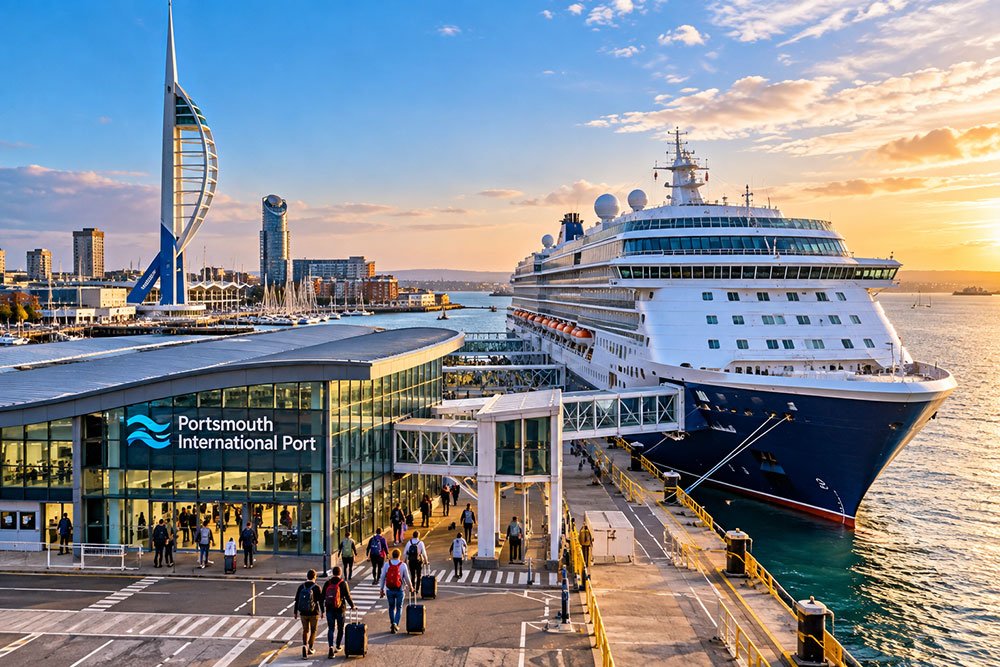
Portsmouth Port: A Growing Cruise and Passenger Gateway
Portsmouth has been a major gateway for sea travel for generations. Today, Portsmouth International Port combines traditional ferry services with a growing cruise business, connecting passengers with destinations across France, Spain, the Channel Islands, and beyond.
Located on the south coast of England, the port has also invested in modern passenger facilities and greener maritime infrastructure. These developments have helped strengthen Portsmouth’s role as an important UK departure and arrival point for both leisure and international travel.
The port is owned and operated by Portsmouth City Council and describes itself as Britain’s largest municipal port. Its ferry network currently serves destinations in France, Spain, Jersey, and Guernsey, while its cruise business welcomes both turnaround cruises and visiting cruise ships.
Portsmouth Port and the Growth of Cruise Travel
Cruise tourism has become an increasingly important part of Portsmouth’s passenger business.
The latest Department for Transport statistics show that UK international cruise passenger numbers reached 3.1 million in 2025, matching the 2024 total and standing 51% above the 2019 figure. Portsmouth recorded around 61,000 cruise passengers starting or ending a cruise journey in 2025.
Portsmouth International Port has also continued to expand its cruise schedule. Its published 2026 programme includes more than 70 cruise calls throughout the year, with established operators such as Saga, Viking, Virgin Voyages, and other cruise brands included in the schedule.
The port’s cruise operation focuses particularly on boutique, luxury, expedition, and small-to-medium-sized cruise ships.
A Modern Cruise Terminal
Investment in passenger facilities has played an important role in Portsmouth’s cruise development.
A new net carbon-neutral terminal extension opened in 2023, providing dedicated check-in facilities, security screening, baggage handling, an exclusive cruise lounge, and improved passenger facilities. The building incorporates features such as solar technology, seawater heating and cooling, and living walls.
The new facilities can handle thousands of cruise passengers while allowing the port to continue its regular ferry operations.
For passengers beginning or ending a cruise in Portsmouth, the terminal provides a more dedicated experience than the facilities available when the port’s cruise business was smaller.
Portsmouth Has More Than Cruise Ships
Cruising is only one part of Portsmouth International Port’s passenger operation.
The port currently provides ferry connections to several destinations in France, including:
- Caen
- Cherbourg
- St Malo
- Le Havre
It also offers ferry services to Bilbao and Santander in northern Spain, as well as Jersey and Guernsey in the Channel Islands.
These routes make Portsmouth useful for travelers who want to explore continental Europe by car, motorcycle, bicycle, or as a foot passenger.
Travel to France by Ferry
France is one of the most accessible international destinations from Portsmouth.
The port currently lists crossings to Caen, Cherbourg, Le Havre, and St Malo. Journey times vary considerably depending on the route. Caen can be reached in around six hours, while longer services such as Portsmouth–St Malo can operate as overnight crossings.
The ferry experience can also be part of the holiday itself. Passengers can relax onboard, enjoy a meal, travel with their vehicle, and arrive in France ready to continue their journey.
From the French ports, travelers can explore Normandy, Brittany, Paris, or other parts of the country.
Sail to Spain from Portsmouth
Portsmouth also provides direct ferry connections to Spain.
Brittany Ferries currently operates services to Bilbao and Santander, offering an alternative to flying for travelers who want to take their own vehicle and explore Spain independently.
The crossings are longer than routes to northern France, but the extended sailing time can be useful for travelers who prefer to make the journey part of their holiday.
Arriving in northern Spain also gives visitors a convenient starting point for exploring the Basque Country, Cantabria, Asturias, or making a longer road trip through Spain.
Channel Islands Connections
Portsmouth International Port also connects mainland England with the Channel Islands.
Current services include crossings to Jersey and Guernsey, offering travelers an easy way to reach two destinations known for coastal scenery, beaches, historic sites, and distinctive island culture.
The addition of DFDS’s Jersey service has further expanded the port’s passenger network. DFDS began operating its Jersey route from Portsmouth in 2025.
A Convenient Location for Travelers
Portsmouth’s location on the south coast gives it an important logistical advantage.
The port sits close to major road connections and the M275, while London is around 60 miles away. The port also highlights its proximity to Southampton Airport and London’s major airports.
This makes Portsmouth particularly useful for passengers who live in southern England or who want to combine a cruise or ferry crossing with a wider UK trip.
Travelers can also stay in Portsmouth before departure and explore the city rather than treating the port purely as a transport hub.
Explore Portsmouth Before or After Your Sailing
Portsmouth has plenty to offer visitors who arrive early or stay after their journey.
The city is famous for its maritime heritage and is home to Portsmouth Historic Dockyard, where attractions include historic naval vessels and museums. The waterfront also includes Gunwharf Quays, the Spinnaker Tower, Southsea Common, beaches, restaurants, and traditional seaside attractions.
This makes an overnight stay in Portsmouth an appealing way to extend a ferry or cruise trip.
Rather than rushing directly to the terminal, travelers can turn the journey into a short city break.
Portsmouth’s Cruise Schedule Continues to Expand
Portsmouth International Port’s published cruise programme demonstrates the variety of operators using the port.
The 2026 schedule includes cruise calls and turnaround services from companies such as Saga, Viking, Phoenix Reisen, and other international operators. The schedule is provisional and can change, so passengers should always check the port’s latest information before traveling.
This range of operators reflects Portsmouth’s growing role in boutique and premium cruising.
The port also promotes its sheltered harbour, dedicated cruise facilities, and proximity to major road networks as advantages for cruise operators and passengers.
A More Sustainable Port
Environmental sustainability has become an increasingly important part of Portsmouth’s development.
In 2026, the port brought its multi-berth, multi-frequency high-voltage shore-power system into operation. This allows compatible ferries and cruise ships to connect to electricity while alongside and switch off their engines.
The port says the system is designed to improve air quality and reduce emissions while supporting the wider transition toward lower-emission maritime operations.
Portsmouth says its shore-power project could save more than 20,000 tonnes of CO₂e annually from 2027 when fully utilized.
The project forms part of a wider programme of investment in renewable energy, electric infrastructure, and sustainable passenger facilities.
The New Passenger Experience
Modern port facilities have changed the experience of traveling through Portsmouth.
Cruise passengers can use dedicated check-in areas, baggage facilities, security screening, and cruise lounges. The port has also developed infrastructure capable of supporting ships of different sizes and multiple passenger operations.
For ferry passengers, the port provides regular services and facilities for people traveling with vehicles, as foot passengers, and with pets, subject to individual operator rules.
Always check the ferry or cruise operator’s instructions because check-in times, luggage limits, boarding procedures, and travel-document requirements vary.
Supporting Portsmouth’s Local Economy
The growth of passenger travel through Portsmouth has benefits beyond the port itself.
Cruise passengers can spend money on accommodation, restaurants, attractions, shopping, transport, and excursions. The port says each cruise call can generate significant economic activity for the city through passenger spending and berthing charges.
Portsmouth City Council also receives the profits generated by its council-owned port, helping support local public services.
The wider tourism economy therefore benefits from passengers who arrive in Portsmouth to begin a cruise, spend a day exploring the city, or stay overnight before or after sailing.
Why Travelers Choose Portsmouth
There are several reasons Portsmouth works well as a passenger gateway.
Easy Access
The port’s road connections make it convenient for travelers arriving from southern England and beyond.
Broad Destination Choice
Passengers can travel directly to France, Spain, Jersey, and Guernsey using current ferry services.
Growing Cruise Network
Portsmouth has developed a strong position in boutique, luxury, and expedition cruising, with dozens of cruise calls scheduled annually.
Modern Facilities
The carbon-neutral terminal extension provides dedicated passenger facilities designed around cruise operations.
City Attractions
Visitors can combine their sailing with Portsmouth’s historic attractions, waterfront, restaurants, shopping, and accommodation.
Tips for Traveling Through Portsmouth Port
A few practical steps can make your journey easier.
Check your operator’s latest sailing time and arrival instructions before leaving home. Ferry and cruise schedules can change, and Portsmouth’s cruise schedule specifically notes that published timings remain provisional.
Allow enough time for check-in, security, passport checks, and boarding. Keep your travel documents readily accessible, particularly when traveling internationally.
If you are driving to the port, check parking arrangements in advance. Passengers using public transport should also confirm their final route to the terminal.
For cruise passengers, check the precise terminal and embarkation instructions supplied by the cruise operator rather than relying on general port information.
Portsmouth as a Gateway to Europe
The growth of Portsmouth International Port demonstrates how important passenger shipping remains to the UK’s travel network.
While the airport and high-speed train have transformed international travel, ferries and cruises continue to offer a different style of journey. Passengers can take their cars abroad, enjoy the sea crossing, bring larger amounts of luggage, or begin a holiday directly from the UK coast.
Portsmouth’s combination of ferry connections, cruise services, modern terminal facilities, and improving environmental infrastructure makes it an important part of that network.
Final Thoughts
Portsmouth cruise port has evolved into a significant passenger gateway connecting southern England with destinations across Europe and the Channel Islands.
Its ferry network currently links Portsmouth with France, Spain, Jersey, and Guernsey, while its cruise programme attracts a growing range of boutique, luxury, and expedition operators.
Investment in passenger facilities and shore-power technology is also changing the way the port operates. At the same time, Portsmouth itself offers enough maritime history, waterfront attractions, restaurants, shopping, and accommodation to make a pre- or post-sailing stay worthwhile.
For travelers planning their next cruise or European ferry journey, Portsmouth offers more than a place to board a ship. It is a gateway to the continent and a destination with its own maritime character.
