
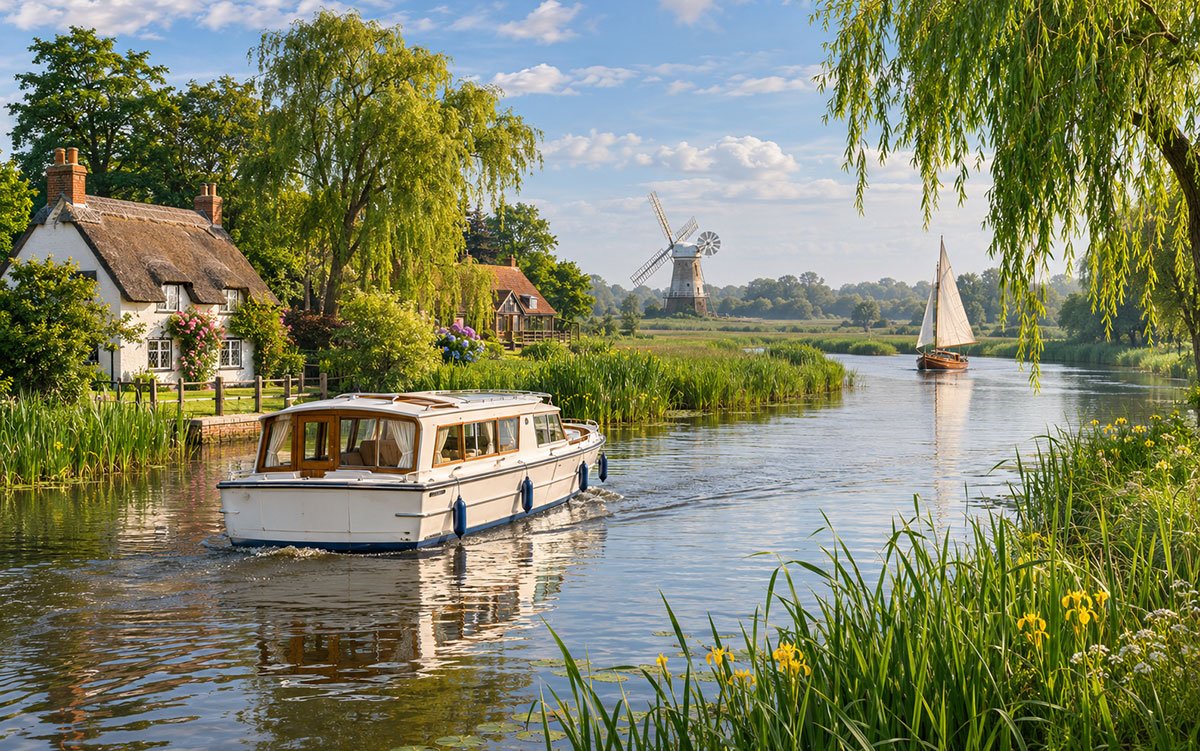
Peaceful waterways, scenic villages and protected wetlands make the Norfolk Broads a popular destination for boating holidays in England.
Norfolk Broads Boating Holidays: A Guide to Exploring the Waterways Safely
Norfolk Broads boating holidays offer a wonderful way to experience the English countryside at a slower pace. With peaceful rivers, historic windpumps, charming waterside villages and abundant wildlife, the Broads provide an appealing escape for couples, families and groups of friends.
Located across Norfolk and Suffolk in eastern England, the Broads form Britain’s largest protected wetland. The landscape covers approximately 303 square kilometres and includes more than 125 miles of navigable waterways, making it one of the country’s most distinctive boating destinations.
You do not need previous boating experience to enjoy a holiday here. Licensed boat hire operators provide instruction before departure, while visitors who prefer not to steer can take guided river cruises.
However, a safe holiday requires more than choosing a boat. Understanding navigation rules, tides, bridge clearances and mooring arrangements will help you explore the waterways confidently.
This guide covers the best places to visit, boating options, wildlife experiences and practical safety advice for planning a Norfolk Broads holiday.
What Makes the Norfolk Broads Special?
The Norfolk and Suffolk Broads are a network of rivers, shallow lakes, reedbeds, grazing marshes and wet woodlands.
The landscape has a fascinating history. Many of the lakes, known locally as broads, developed when medieval peat excavations gradually filled with water.
Today, the area has national park status and is managed by the Broads Authority, which protects its landscape and wildlife while maintaining the waterways for navigation.
Unlike many other UK boating destinations, the main Broads navigation network is lock-free. Visitors can travel between rivers and lakes without negotiating a succession of canal locks.
However, bridges, tides and shallow water still require careful planning.
The Broads are particularly attractive because boating can be combined with walking, wildlife watching, local food and visits to historic villages.
Can Beginners Enjoy a Norfolk Broads Boating Holiday?
Yes. The Norfolk Broads are an accessible destination for people trying a self-drive boating holiday for the first time.
You do not normally need a personal boating licence or previous experience to hire a standard holiday cruiser or day boat.
Licensed hire operators provide a safety briefing and practical instructions covering steering, speed control, mooring and operating the equipment on board.
You should not leave the boatyard until you understand how to handle the boat and feel comfortable doing so.
Choosing the Right Type of Boat
Different boats suit different holiday styles.
| Boat type | Best suited for |
|---|---|
| Self-drive day boat | Short river excursions and first-time boating experiences |
| Holiday motor cruiser | Multi-day holidays with accommodation on board |
| Traditional sailing boat | Travellers with suitable sailing experience or instruction |
| Guided passenger boat | Visitors who prefer sightseeing without steering |
| Canoe or kayak | Exploring suitable waterways at a slower pace |
A day boat is a sensible introduction if you have never handled a vessel before.
For a longer holiday, a motor cruiser allows you to sleep on board and travel between villages.
Many holiday cruisers have cooking, sleeping and toilet facilities, although the exact layout and equipment vary considerably.
What to Check Before Booking
Ask the boat hire company about the following:
- Maximum passenger capacity and sleeping arrangements.
- Availability of correctly sized life jackets.
- Heating, toilet and cooking facilities.
- Fuel charges and any additional costs.
- Pet policies and accessibility.
- Bridge clearance and navigation restrictions.
- Departure, return and handover arrangements.
- Cancellation terms and breakdown assistance.
Compare the total rental cost rather than the advertised starting price alone.
Best Places to Explore on the Norfolk Broads
The waterways extend across northern and southern parts of the Broads, with different landscapes and cruising conditions.
For your first trip, choose a manageable area rather than trying to explore the entire network.
1. Wroxham and Hoveton: A Popular Starting Point
Wroxham and neighbouring Hoveton are among the main centres for boating holidays on the northern Broads.
The River Bure runs through the area, which has boat hire businesses, shops, cafés and visitor services.
It is a convenient location for hiring a day boat or beginning a longer river cruise.
Visitors can enjoy views of riverside properties, passing boats and the surrounding countryside.
Hoveton and Wroxham also have a railway station, making the area accessible without a car.
If you plan to cruise beneath Wroxham Bridge, check your boat’s clearance and any pilot requirements beforehand.
2. Horning: A Picturesque Riverside Village
Horning is a traditional Broadland village on the River Bure.
Its attractive waterfront, moored boats and riverside buildings make it a popular stop for holidaymakers.
Visitors can explore the village, enjoy a meal at a local establishment or simply watch boats passing along the river.
The surrounding waterways also offer opportunities for wildlife watching.
Horning is a pleasant destination for those who want a relaxed boating experience without travelling long distances each day.
3. Ranworth Broad: Wildlife and Waterside Views
Ranworth is a rewarding stop for nature lovers.
The area is home to Ranworth Broad, a protected wetland with a floating wildlife visitor centre operated by Norfolk Wildlife Trust.
Visitors can follow the boardwalk through woodland and reedbeds to reach the visitor centre and look across the water.
The surrounding habitat attracts waterbirds, including species that are difficult to observe elsewhere.
Guided wildlife boat trips may also be available, depending on operating arrangements.
Check visiting information before arrival because access and facilities can vary seasonally.
4. Potter Heigham: Historic Bridges and Broadland Scenery
Potter Heigham sits on the River Thurne and is known for its historic medieval bridge and boating facilities.
The area offers access to waterways surrounded by open marshland, reedbeds and traditional Broads scenery.
It is also a useful location for boat hire and riverside exploration.
However, Potter Heigham’s old bridge has restricted clearance, and passage depends on the vessel, water level and relevant operating requirements.
Do not attempt to navigate beneath it without first consulting your boat hire operator and following the bridge pilot arrangements.
5. Hickling Broad: Open Water and Rare Wildlife
Hickling Broad is the largest of the Norfolk Broads and an important wildlife habitat.
The surrounding Hickling Broad and Marshes National Nature Reserve is managed by Norfolk Wildlife Trust.
Its mixture of open water, reedbeds and fenland supports birds, insects and rare plants.
Visitors can explore designated walking trails, use viewing points and join guided wildlife boat trips when available.
It is a particularly rewarding destination for photographers and birdwatchers.
Some parts of the reserve are protected or have restricted access, so use designated visitor routes and follow local guidance.
6. Beccles: Exploring the Southern Broads
Beccles, in neighbouring Suffolk, offers a different perspective on the Broads.
Situated beside the River Waveney, the market town provides access to attractive waterways and a historic town centre.
It can be a convenient base for exploring the southern Broads or enjoying a quieter riverside break.
Beccles has visitor moorings, although availability and conditions should be checked before arrival.
If your holiday begins on the northern Broads, do not assume you can easily reach Beccles in a short cruise. Travelling between the northern and southern waterways requires careful planning, including the passage through Great Yarmouth and Breydon Water.
Discovering the Wildlife of the Norfolk Broads
Wildlife is one of the greatest attractions of the Broads.
Reedbeds, freshwater habitats, grazing marshes and wet woodland support an impressive variety of birds, insects, mammals and plants.
The area is particularly important for wetland conservation.
The Rare Swallowtail Butterfly
The Broads are home to Britain’s native swallowtail butterfly, one of the country’s most distinctive insects.
This large butterfly has striking yellow-and-black wings and distinctive tail-like extensions.
It is associated with fenland habitat where milk parsley, its main larval food plant, grows.
Early summer, particularly June and July, offers opportunities to see swallowtails in suitable locations, although sightings depend on weather and local conditions.
Hickling Broad and Marshes and other protected wetlands are among the places where visitors may be fortunate enough to encounter them.
Birds to Watch For
The Broads attract birdwatchers throughout the year.
Notable species include:
- Bittern: A secretive reedbed bird recognised for its deep booming call.
- Marsh harrier: A bird of prey frequently seen hunting over open marshland.
- Bearded tit: A small reedbed bird, often heard before it is seen.
- Common crane: An impressive wetland bird associated with parts of the Broads.
- Kingfisher: A colourful bird sometimes spotted beside quieter waterways.
Wildlife sightings are never guaranteed, but early mornings and quieter locations can be rewarding.
Bring binoculars and avoid approaching nesting birds or entering restricted habitats.
Nature Reserves Worth Visiting
You do not need to spend your entire holiday on a boat.
Several nature reserves offer walking routes, wildlife hides and opportunities to learn about conservation.
How Hill National Nature Reserve
How Hill, near Ludham and the River Ant, is known for its wetland scenery and traditional Broadland landscape.
The area offers opportunities to explore nature trails and observe wildlife.
The Broads Authority also runs the Electric Eel wildlife boat trip through nearby waterways when the service is operating.
This can be an enjoyable introduction to habitats that are difficult to explore independently.
RSPB Strumpshaw Fen
Strumpshaw Fen lies beside the River Yare, east of Norwich.
Managed by the Royal Society for the Protection of Birds, the reserve contains reedbeds, woodland and wetland habitats.
Visitors may encounter marsh harriers, bitterns, bearded tits and seasonal wildlife.
The reserve has designated trails and wildlife-watching facilities.
Check the official RSPB website for access arrangements and visiting information before travelling.
Strumpshaw Fen is primarily a land-based nature reserve. Do not assume you can moor a holiday cruiser directly at its visitor entrance.
Essential Safety Rules for Norfolk Broads Boating Holidays
The Norfolk Broads can appear peaceful, but they remain a working navigation environment with moving water, changing tides and other river users.
The Broads Authority publishes official boating safety guidance and navigation byelaws.
Understanding these rules is essential.
1. Wear a Properly Fitted Life Jacket
The Broads Authority recommends wearing a life jacket whenever you are on a boat, boarding or disembarking, or close to the water.
This is particularly important for children and anyone who cannot swim confidently.
Even experienced swimmers can struggle after an unexpected fall into cold water.
Make sure every passenger has a suitable, properly fitted life jacket before departure.
2. Follow the Speed Limits
Speed limits on most Broads waterways range from 3 to 6 mph, depending on the location.
Signs beside the river indicate the applicable limit.
These speeds are measured in miles per hour, not knots or kilometres per hour.
Travelling too quickly creates wash, the waves generated by a moving boat.
Excessive wash can damage riverbanks, disturb wildlife and create difficulties for other boats.
Reduce your speed when approaching moorings, narrow channels and busy areas.
3. Understand Right-of-Way Rules
Boaters generally keep to the right-hand side of the waterway.
Sailing boats may need to change direction repeatedly when sailing against the wind, so motorboat users should give them suitable room.
Do not assume that river navigation works exactly like road traffic.
Follow the Broads Authority’s navigation rules and remain alert to other vessels, especially near bends and junctions.
4. Check Tides and Bridge Heights
The Broads are connected to the sea, and tidal conditions affect water levels and currents.
This can make a significant difference when navigating beneath bridges or approaching moorings.
Before departing, check:
- Tide times relevant to your route.
- The height of your boat above the water.
- Available clearance beneath bridges.
- Any navigation restrictions or closures.
- Local advice from the boatyard.
Some bridges require assistance from an authorised bridge pilot.
Never assume that a bridge is safe to pass beneath simply because another boat has gone through.
5. Plan Mooring Stops Before Sunset
Most holiday hire boats are intended for daylight navigation and must not be cruised after dark.
Plan your route so you have enough time to find a suitable mooring before sunset.
The Broads Authority provides information about designated visitor moorings.
Some locations are free, while others charge a fee or have restrictions on how long boats may remain.
A mooring shown on a map may also be full when you arrive.
Identify an alternative place to stop and allow enough time to reach it safely.
6. Take Extra Care Around Great Yarmouth and Breydon Water
The waterways around Great Yarmouth are more demanding than the quieter inland rivers.
Strong tidal currents, changing water levels, bridges and shallow areas can present significant hazards.
Breydon Water is an important connection between the northern and southern Broads, but boats must remain within the marked navigation channel.
First-time boaters should not plan this crossing without specific advice from their hire operator and careful consideration of tide and weather conditions.
The Broads Authority provides dedicated guidance for navigating the area.
7. Never Drink and Drive a Boat
Boating requires attention, judgement and the ability to respond quickly.
Alcohol can impair balance, coordination and decision-making.
If your group wants to enjoy drinks at a riverside pub, moor safely and make sure nobody operates the boat while impaired.
A holiday on the water should be relaxing without putting passengers or other river users at risk.
8. Take Fire and Carbon Monoxide Safety Seriously
Holiday cruisers may have engines, heating systems and cooking appliances.
Before departure, ask the hire operator to explain the fire-safety equipment, carbon monoxide alarms, emergency procedures and correct use of onboard appliances.
Never use portable heaters, barbecues or cooking equipment in ways that could create a fire or carbon monoxide hazard.
If anyone develops symptoms that might indicate carbon monoxide exposure, move to fresh air and seek emergency help.
Boating Safely with Children and Pets
The Norfolk Broads can be a wonderful family destination when everyone understands the basic safety rules.
Children should wear suitable life jackets and remain under close adult supervision.
Explain that they must not climb over railings, lean out of the vessel or jump between the boat and the riverbank.
Keep young children away from ropes, engine controls and moving equipment.
If travelling with pets, confirm that your chosen boat allows them and arrange a suitable pet buoyancy aid.
Never jump into the water to rescue an animal. Contact the appropriate emergency or boating assistance service if a pet falls overboard and cannot be recovered safely.
When Is the Best Time to Visit the Norfolk Broads?
The Broads offer different experiences throughout the year.
Spring: Fresh Landscapes and Birdlife
Spring brings emerging vegetation, active birdlife and attractive countryside scenery.
It can be a pleasant time for walking and wildlife watching.
However, the weather may be cool or unsettled, so pack warm and waterproof clothing.
Summer: Popular for Family Boating Holidays
Summer is a popular season for boating, outdoor dining and family holidays.
Long daylight hours provide more time for cruising and exploring.
The busiest locations may have greater demand for boat hire and visitor moorings.
Booking ahead is advisable if you need particular travel dates or a specific type of boat.
Autumn: Quieter Waterways and Changing Colours
Autumn offers a different atmosphere as the landscape changes colour and visitor numbers generally reduce.
It can be an appealing season for those seeking a more peaceful holiday.
However, days become shorter, and some visitor services may operate reduced schedules.
Winter: Wildlife and Quiet Landscapes
Winter can be rewarding for birdwatching and peaceful walks.
However, high water levels, flooding, cold weather and limited visitor facilities can make boating more challenging.
The Broads Authority advises particular caution during periods of high water.
First-time boaters should choose their travel dates and route carefully rather than assuming that summer boating conditions apply throughout the year.
Where to Stay on the Norfolk Broads
Your accommodation choice depends on whether you want a holiday afloat or a land-based base for day trips.
Stay on a Holiday Cruiser
A self-drive cruiser allows you to sleep aboard and travel between destinations during your holiday.
This is an appealing option for visitors who enjoy the freedom of moving at their own pace.
However, you will need to manage mooring, water supplies, onboard facilities and daily navigation.
Choose a Riverside Cottage or Holiday Home
A waterside cottage can provide a comfortable alternative for families who want to explore the area without spending every night aboard a boat.
Many visitors combine cottage accommodation with a day boat rental or guided river excursion.
Hotels, Guesthouses and Local Inns
Traditional accommodation is available in towns and villages around the Broads.
This may suit travellers who prefer organised sightseeing, shorter outings and a fixed base.
Before booking, check how easily you can reach boat hire locations and nature reserves from your accommodation.
Getting to the Norfolk Broads
Norwich is a useful gateway to the Broads, particularly for visitors arriving by train.
Rail services connect Norwich with several towns and villages around the waterways.
The Bittern Line serves locations including Hoveton and Wroxham, while the Wherry Lines connect Norwich with destinations towards Great Yarmouth and Lowestoft.
If you are travelling from elsewhere in England, plan your railway journey using National Rail or the train operator’s current information.
A car can be useful for visiting nature reserves and accommodation in more rural locations.
However, it is not essential for every holiday, particularly if you are hiring a boat from a location near a railway station.
Confirm the boatyard’s exact address and transfer arrangements before travelling.
What to Pack for a Norfolk Broads Boating Holiday
Packing depends on whether you are spending the day on the river or staying aboard a cruiser for several nights.
Useful essentials include:
- Waterproof jacket and comfortable layers.
- Non-slip footwear with soft soles.
- Sunscreen, sunglasses and a hat.
- A reusable water bottle.
- Personal medication and a compact first aid kit.
- Binoculars for wildlife watching.
- Phone, charger and a waterproof pouch.
- A torch for use when moored after dark.
- Navigation maps and essential emergency contacts.
If staying aboard, check whether bed linen, towels, cooking equipment and cleaning supplies are provided.
Bring enough food and drinking water for your immediate needs, especially if your first mooring is away from shops.
How to Protect the Broads While Visiting
The Norfolk Broads are both a holiday destination and an internationally important wetland ecosystem.
Their habitats face pressures from climate change, rising sea levels, changes in water quality and other environmental challenges.
Visitors can help reduce their impact through simple choices.
Stay within marked navigation routes, avoid disturbing wildlife and never enter protected areas without permission.
Dispose of rubbish and toilet waste at appropriate facilities. Never discharge hazardous waste into the waterways.
Keep boat wash low, especially near fragile riverbanks and reedbeds.
When exploring on foot, remain on designated paths and respect seasonal restrictions around wildlife habitats.
If you would like to contribute more directly, look for organised conservation volunteering opportunities through established organisations such as the Broads Authority, Norfolk Wildlife Trust and the RSPB.
Responsible tourism helps protect the environment that makes the Broads worth visiting.
Frequently Asked Questions About Norfolk Broads Boating Holidays
Do you need a licence to hire a boat on the Norfolk Broads?
You do not normally need a personal boating licence to hire a standard self-drive holiday cruiser or day boat. Licensed hire operators provide instruction before departure. Different rules apply to privately owned vessels, including registration and navigation toll requirements.
Are Norfolk Broads boating holidays suitable for beginners?
Yes. Many visitors hire a boat without previous experience. A boatyard safety briefing is essential, and beginners should choose manageable cruising routes, avoid difficult tidal passages and follow official navigation advice.
Can you stay overnight on a boat?
Yes. Holiday cruisers are available with sleeping and living facilities for multi-day trips. Visitors must use suitable moorings and comply with the relevant rules and hire conditions.
How fast can you travel on the Norfolk Broads?
Most designated waterways have speed limits ranging from 3 to 6 mph. The exact limit depends on the location, and some waterways have different arrangements. Always follow local signage and navigation rules.
Can you swim in the Norfolk Broads?
Swimming in the Broads can be dangerous because of currents, cold water, boat movements and underwater hazards. The Broads Authority advises against swimming as a routine boating activity. Follow its specific outdoor swimming guidance if considering entering the water.
Are dogs allowed on boating holidays?
Many operators allow dogs, but policies vary. Confirm pet arrangements, charges and buoyancy aid availability before booking.
How long should you spend on the Norfolk Broads?
A day trip is enough to experience a short river cruise. A three- or four-night holiday offers more time to explore a selected area, while a week allows a more leisurely itinerary with additional stops.
What should you do in a boating emergency?
For an immediate emergency on the waterways, call 999 and ask for the Coastguard. For a non-emergency mechanical problem or uncertainty about operating your hire boat, contact your boatyard for assistance.
Enjoy the Norfolk Broads at Your Own Pace
A Norfolk Broads boating holiday is about taking time to enjoy the journey rather than rushing between attractions.
Cruise past quiet reedbeds, stop at historic villages, watch marsh harriers above the wetlands and discover countryside that feels far removed from busy city life.
Plan your route carefully, respect the navigation rules and allow time for unexpected discoveries along the way.
Whether you hire a boat for an afternoon or spend several nights exploring the rivers, the Norfolk and Suffolk Broads offer a memorable combination of nature, relaxation and adventure.
