
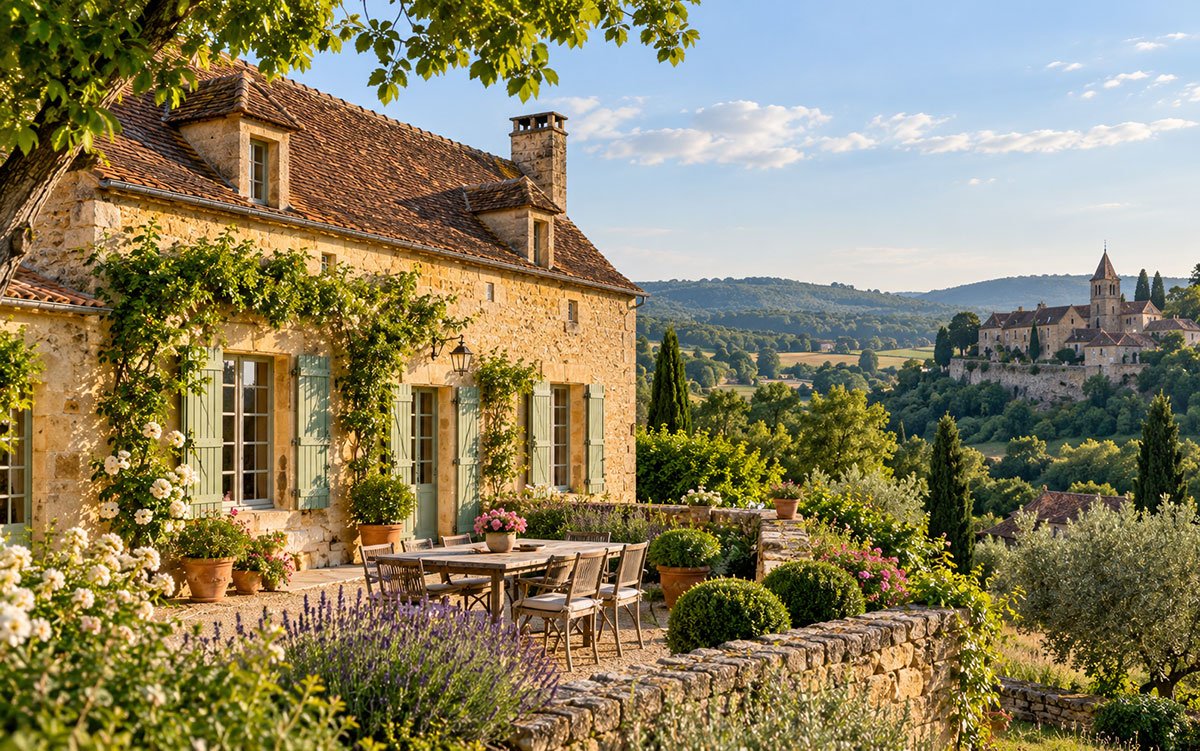
Rural France offers traditional homes, historic villages and countryside landscapes for those considering a move to the Dordogne.
Moving to France: A Practical Guide to the Dordogne
Moving to France can be an opportunity to rethink your lifestyle, explore a different culture and enjoy a closer connection with the countryside. For those who dream of traditional stone houses, historic villages, local markets and scenic landscapes, the Dordogne offers an appealing place to begin that journey.
Located in southwestern France within the Nouvelle-Aquitaine region, the Dordogne combines rural landscapes with historic towns, medieval villages, castles and a strong local food culture. It attracts visitors seeking a quieter setting, as well as people interested in buying a home and making a longer-term move.
However, relocating to rural France takes more than finding an attractive house. Before committing, you need to understand the residency rules that apply to you, research the property market, assess renovation requirements and calculate the full cost of establishing a home.
With careful planning, the move can become a realistic long-term project rather than an expensive leap into the unknown.
Why Consider Moving to the Dordogne?
The Dordogne is known for its countryside, traditional architecture and historic settlements. Its landscape includes wooded hills, agricultural land, river valleys and villages characterised by local stone buildings and traditional roofs.
The region also has a rich cultural heritage. Visitors and residents can explore medieval towns, castles, prehistoric sites, markets and local food producers. The historic centres of Sarlat, Périgueux and Bergerac offer different experiences, while smaller communities provide a more rural setting.
For people considering a move, the attraction often lies in the balance between countryside living and access to established towns.
You might be drawn to the Dordogne because you want:
- A house with a garden or outdoor space.
- A traditional property with renovation potential.
- Access to historic villages and cultural attractions.
- A lifestyle that places greater emphasis on local food, nature and community.
- Opportunities to explore walking routes, markets and the surrounding countryside.
These are possibilities rather than guarantees. Daily life varies considerably between locations, and a picturesque village may offer fewer shops, services or transport connections than a larger town.
The right location depends on your priorities, budget and plans for work, retirement or family life.
Choose the Right Location Before Buying a House
One of the biggest decisions is whether to settle in a town, a village or an isolated rural property.
Living in a town
A town such as Périgueux or Bergerac may offer a practical starting point for people relocating from abroad. You can investigate local services, shops, schools, healthcare facilities and transport connections without depending entirely on a car.
Town living may also provide an easier introduction to French administrative procedures and daily routines.
Living in a traditional village
Smaller villages can offer historic buildings, local markets and a strong sense of place. However, services may be limited, and opening hours or availability can vary by season.
Before buying, check the distance to supermarkets, pharmacies, medical services, schools and other facilities you expect to use regularly.
Living in the countryside
A detached farmhouse or stone house outside a village can provide more privacy and outdoor space. It may also require additional planning.
Consider the condition of access roads, mobile coverage, broadband availability, waste collection, water supply and the distance to everyday services.
If you intend to work remotely, confirm that the actual property has a suitable internet connection rather than relying on advertised coverage for the surrounding area.
A useful rule is to choose your preferred way of living before choosing the house. A beautiful property may not suit you if its location makes daily tasks unnecessarily difficult.
Rent Before You Commit to Buying
A property viewing during a holiday can create an appealing impression, but it rarely reveals every aspect of living in an area.
Where practical, consider renting accommodation locally before purchasing a permanent home. This gives you time to experience the region beyond its tourist highlights.
A longer stay can help you evaluate:
- How quiet the area becomes outside the main visitor season.
- Whether you enjoy the local climate throughout the year.
- How far you must travel for shopping, healthcare and other essentials.
- Whether the area’s transport options meet your needs.
- How comfortable you feel communicating in French.
- Whether the local community and lifestyle suit your expectations.
Try to visit the places you are considering at different times of the year. Summer can reveal the appeal of outdoor living, while a quieter period may give you a better understanding of the region’s year-round services and atmosphere.
Renting first can also help you narrow your property search. You may discover that you prefer a house closer to a town, a smaller village property or a home requiring less maintenance than you originally imagined.
Understand French Residency Requirements
Before arranging a permanent relocation, establish whether you have the legal right to live in France and what documentation you need.
Your nationality, current residence, intended length of stay and reason for moving determine the applicable rules.
Citizens of the EU, EEA and Switzerland generally have different residence arrangements from non-EU nationals. Many non-EU nationals planning to stay in France for more than 90 days need to obtain an appropriate long-stay visa before travelling, unless an exemption applies.
The correct visa category depends on your circumstances. For example, a person moving for private or retirement-related reasons may need a different arrangement from someone relocating for employment, business or family reasons.
Do not assume that purchasing a French property automatically gives you the right to live in the country. Property ownership and immigration permission are separate matters.
Before making a commitment:
- Check the visa and residence requirements applicable to your nationality.
- Confirm whether you can work or conduct business under your proposed immigration status.
- Understand the financial resources, accommodation and health-cover evidence required for your application.
- Check the steps you must complete after arrival.
- Keep sufficient time for applications and administrative procedures.
Use the official France-Visas website to identify the correct route. If your situation involves retirement income, cross-border employment, self-employment or family members with different nationalities, seek advice specific to your circumstances.
Buying Property in France: What Should You Know?
Once you have chosen an area, research the property market carefully. The Dordogne contains a range of homes, from village houses and renovated farmhouses to larger rural properties requiring substantial work.
There is no single price that defines a bargain. The advertised purchase price must be considered alongside the property’s condition, location, legal status and the cost of making it suitable for everyday use.
Look beyond the asking price
When comparing properties, consider:
- The size and layout of the house.
- The condition of the roof, walls and foundations.
- The state of plumbing, electrical installations and heating.
- Insulation, damp and ventilation.
- The condition of windows, doors and drainage.
- Whether the property has mains water and sewerage or private systems.
- The accessibility of the building and surrounding roads.
- The likely cost of repairs and future maintenance.
A low-priced property may require extensive work before it is comfortable to occupy. A house that appears more expensive initially may be more practical if major systems have already been repaired or replaced.
Ask for the relevant property diagnostic reports and consider arranging independent inspections by qualified professionals. For a substantial renovation, obtain specialist advice before making an offer or finalising the purchase.
Budget for the full purchase cost
The purchase price is only one part of the total expenditure.
Your budget should include acquisition costs, applicable taxes, legal and professional advice, inspections, insurance and any immediate repairs. You may also have moving expenses, utility connection costs and ongoing maintenance to consider.
Notary and acquisition costs depend on the type of transaction. Older properties typically have higher acquisition costs relative to the purchase price than qualifying new properties, but you should obtain an estimate for the specific property rather than relying on a general percentage.
A French notaire plays an important role in the legal transfer of ownership, the preparation of the sale deed and the associated formalities. Make sure you understand the contractual conditions before signing any preliminary agreement.
If you are buying from abroad, also investigate the tax implications of owning a property in France, including applicable local property taxes and the effect of any international tax treaty on your wider financial position.
Is Renovating a Traditional French House Worth It?
For people who enjoy DIY, a property requiring renovation can offer an opportunity to create a home that suits their needs.
Traditional stone houses and farmhouses may have features worth preserving, such as exposed stonework, original beams, courtyards or gardens. However, older construction can bring technical challenges that are not immediately apparent during a viewing.
Assess the condition before planning the design
Before deciding how to transform a house, establish what it needs to become safe, weatherproof and suitable for occupation.
Pay particular attention to the roof, structural stability, damp, drainage, electrical installations, plumbing and heating. Investigate insulation, ventilation and the likely cost of improving energy efficiency.
Also check whether the existing property has appropriate water and waste arrangements. If it relies on a private sanitation system, establish its condition and whether any remedial work is required.
These assessments can help you distinguish between cosmetic improvements and essential building work.
Get realistic renovation estimates
Avoid basing a renovation plan on a general estimate or on what a similar house appeared to cost elsewhere.
Instead, ask qualified tradespeople to inspect the property and provide written, itemised quotations. Where substantial work is involved, request separate estimates for essential repairs, services, interior improvements and optional additions.
The total project may include professional fees, materials, labour, equipment hire, waste removal and temporary accommodation while the work takes place.
Allow a financial contingency for unforeseen problems, especially when dealing with an old property whose underlying condition has not been fully established.
If you will manage the renovation remotely or have limited French-language skills, consider how you will communicate with contractors, approve changes and monitor progress.
Check planning rules before extending the property
Do not assume that you can add a conservatory, enlarge a building or change its exterior simply because you own it.
Depending on the project and the property’s location, French rules may require a prior declaration of works or a building permit. Restrictions can also apply in protected areas or around historically significant buildings.
Contact the local mairie (town hall) before starting any significant exterior work. Ask which local planning rules apply and whether the proposed changes are permitted.
If a project involves a major structural alteration, consider obtaining professional architectural or engineering advice before making a financial commitment.
The same principle applies to converting outbuildings or changing how a building is used. Confirm the permissions and technical requirements before including those plans in your purchase decision.
Choose Your Removal Company Carefully
Once your relocation date and accommodation are reasonably certain, start organising the move itself.
An international move involves more than transporting boxes. You may need to arrange packing, loading, delivery, insurance, inventory documentation and access to a property that could be reached by narrow village streets or rural roads.
Obtain written quotations from removal companies experienced in international moves. Compare what each quote includes rather than choosing exclusively by price.
Ask about:
- Packing and unpacking services.
- Transit and goods-in-storage insurance.
- Damage claims and exclusions.
- Delivery access and unloading arrangements.
- The estimated schedule and how delays are handled.
- Inventory and customs documentation, where applicable.
Decluttering before the move can reduce volume and make unpacking easier. Consider whether bulky furniture is worth transporting or whether some items would be better sold or replaced after arrival.
Moving household belongings from another EU country generally involves fewer customs formalities than moving from outside the EU. If you are transferring your main residence from a non-EU country, relief from customs duties and taxes may be available under specific conditions.
Check the French customs authority’s current requirements before shipping your belongings. Keep the relevant inventory and supporting documents ready.
Plan for the Cost of Living and Ongoing Property Expenses
The cost of settling in France depends on your location, household needs, property condition and lifestyle.
A rural house may provide the space you want, but its running costs can be significant if it needs frequent maintenance or has inefficient heating. Remote properties may also require more driving and higher transport expenses.
Prepare a monthly and annual budget that includes:
- Mortgage payments, if applicable.
- Property taxes and home insurance.
- Electricity, heating, water and internet.
- Maintenance, repairs and gardening.
- Vehicle ownership, fuel and transport.
- Food and everyday purchases.
- Healthcare and any applicable insurance premiums.
- Professional or administrative fees.
Tax responsibilities depend on your circumstances. French property owners may be liable for local property taxes even if they live abroad. Secondary residences can also have different tax treatment from a principal home.
If you are relocating permanently, ask a qualified adviser to explain the implications of French tax residence and any relevant tax treaty with your current country of residence. This is particularly important if you retain income, investments, pensions or property elsewhere.
Do not rely on the idea that rural France is automatically inexpensive. Instead, compare actual costs for the specific town and property you are considering.
Prepare for Everyday Life in Rural France
A successful move is about more than buying a house and completing renovations. It also involves learning how daily life works in your new community.
Build your French-language skills
Even basic French can make a considerable difference when arranging repairs, visiting a local authority, speaking with neighbours or organising household services.
If you are not confident in the language, start learning before moving and continue after arrival. Keep important documents organised and consider professional translation or interpretation for complex legal and property matters.
Research local services
Check where you will access healthcare, pharmacies, schools, banking services and other necessities. If you have particular medical or family needs, verify that suitable services are available before choosing a rural location.
Internet reliability, public transport and access to shops can vary considerably between properties. Confirm the facilities available at the address rather than assuming that the nearest village provides everything you need.
Give yourself time to settle in
Moving abroad can be exciting, but adjusting to a new culture and social environment takes time.
Local markets, community events, clubs, classes and volunteering can provide opportunities to meet people and become familiar with your surroundings.
Stay connected with friends and family while building relationships locally. Allow yourself time to develop new routines without expecting every part of life to feel familiar immediately.
A Practical Checklist Before Moving to France
Use this checklist to organise your relocation in a manageable order.
- Research the region. Compare towns, villages and countryside locations against your daily needs.
- Test the lifestyle. Spend time in your preferred area and consider a rental stay before buying.
- Confirm residency requirements. Identify the correct visa or residence route for every person relocating.
- Review your finances. Calculate the purchase price, acquisition costs, renovation budget, moving costs and ongoing expenses.
- Inspect the property. Obtain the relevant reports and arrange independent specialist assessments where needed.
- Check planning permission. Confirm whether your intended renovation or extension is allowed before proceeding.
- Arrange the move. Compare insured international removal services and prepare the necessary inventories or customs documentation.
- Organise everyday essentials. Research healthcare, utilities, internet, transport and other services.
- Prepare for integration. Begin learning French and find opportunities to connect with the local community.
Completing these steps before the move can help prevent costly surprises and make the transition less stressful.
Is Moving to the Dordogne Right for You?
The Dordogne offers a compelling combination of countryside, historic architecture, traditional villages and cultural experiences. For someone seeking a new lifestyle, it may provide the setting for a satisfying long-term move.
However, the best relocation decisions start with practical questions. Can you legally reside in France? Does the location meet your everyday needs? Is the house structurally sound? Can you afford the renovation and ongoing costs? Are you prepared to adapt to a different language and way of life?
Answering these questions before buying helps turn the idea of moving to France into a more informed plan.
Whether you choose a renovated village house or a rural property that needs work, give yourself time to research, visit, budget and prepare. A carefully chosen home and a realistic understanding of everyday life will matter far more than finding an apparently inexpensive property.
