
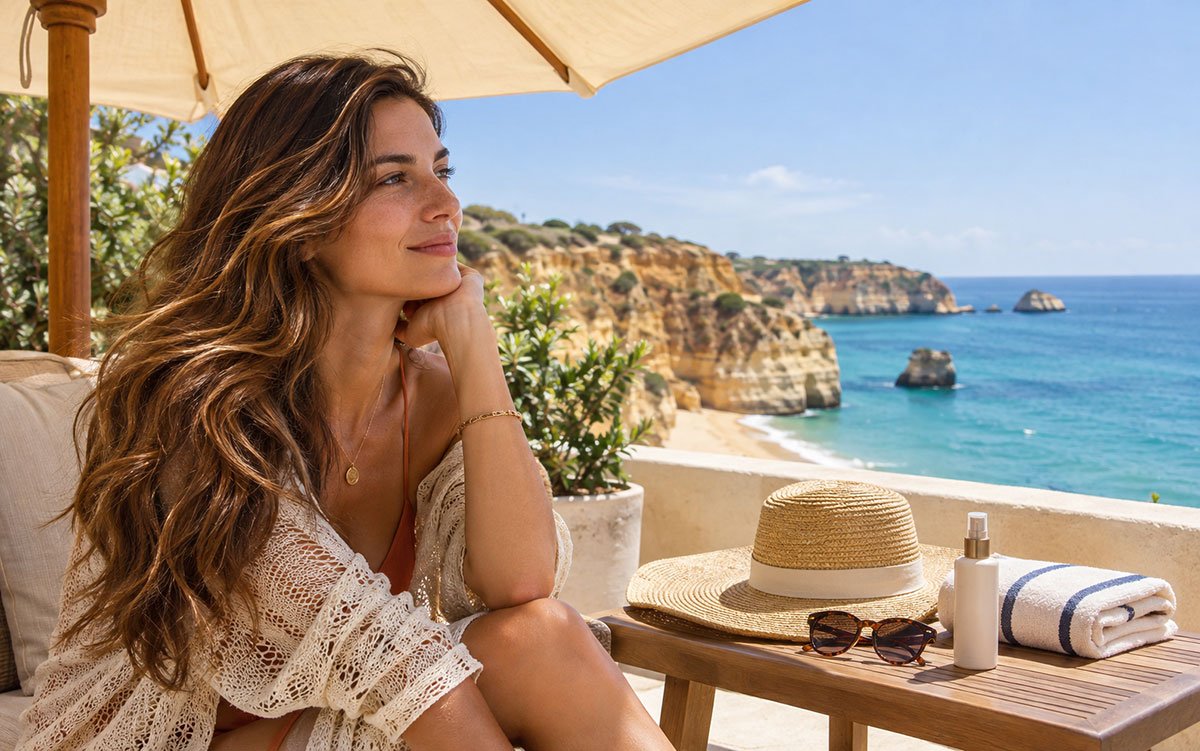
Simple sun protection and gentle haircare can help maintain coloured hair during a beach holiday.
How to Protect Coloured Hair on Holiday: 10 Practical Tips
A beach holiday is the perfect opportunity to relax, swim and enjoy the sunshine. However, if you have dyed, highlighted or bleached hair, spending long days outdoors can leave your colour looking dull sooner than expected.
Sun exposure, chlorinated swimming pools and seawater can all affect the appearance and condition of your hair. This is particularly noticeable when hair has already undergone chemical colouring or lightening treatments.
Fortunately, you do not need an elaborate beauty routine to protect coloured hair on holiday.
A few practical precautions before swimming, sensible sun protection and gentle haircare can help reduce dryness, breakage and unwanted colour changes.
Whether you are visiting a tropical island, staying at a seaside resort or exploring a sunny city, these ten tips will help you look after your hair without spending your holiday worrying about it.
Why Does Hair Colour Fade During a Holiday?
Hair colour can change for several reasons, and understanding them makes prevention easier.
Sun Exposure Can Affect Hair Pigments
Ultraviolet (UV) radiation from the sun can alter pigments in hair and damage the proteins that help maintain its structure.
With prolonged exposure, hair may become drier, rougher and more brittle.
Coloured or bleached hair can be particularly vulnerable because chemical processing may already have altered its protective outer layer, known as the cuticle.
Lighter shades, including blonde and highlighted hair, may show these changes more noticeably.
Chlorine Can Make Hair Dry and Fragile
Swimming pools use chlorine to help control harmful microorganisms.
Although chlorine serves an important purpose in pool hygiene, repeated exposure can strip protective oils from hair and contribute to dryness and breakage.
When chemically treated hair becomes rougher or more porous, it may also be more susceptible to unwanted colour changes.
Seawater Can Increase Dryness
Swimming in the sea is one of the pleasures of a beach holiday. However, repeated exposure to salt water without appropriate rinsing and conditioning can leave hair feeling coarse and tangled.
Salt water can also contribute to fading in colour-treated hair, especially when the hair has been bleached.
You do not need to avoid swimming altogether. Instead, protect your hair before entering the water and rinse it afterwards.
10 Ways to Protect Coloured Hair on Holiday
These practical steps can help you maintain your hair’s appearance while enjoying outdoor activities.
1. Protect Your Hair From Direct Sunlight
One of the simplest ways to prevent unnecessary sun exposure is to cover your hair when spending extended periods outdoors.
A wide-brimmed hat or suitable scarf can help shield the hair and scalp from direct sunlight.
This is particularly useful during beach visits, boat excursions and outdoor sightseeing.
Consider wearing a hat when:
- Relaxing beside a swimming pool.
- Walking along a beach.
- Exploring outdoor markets.
- Taking a boat trip.
- Spending several hours sightseeing in sunny weather.
Choose a comfortable hat with a closely woven fabric or a suitable ultraviolet protection factor (UPF) rating.
Seek shade when practical, particularly during periods of strong sunlight.
2. Use Suitable UV-Protective Hair Products
Some leave-in conditioners and styling products contain ingredients designed to reduce UV exposure to hair fibres.
These may be useful as part of a broader protective routine, especially for colour-treated hair.
However, do not assume that every product marketed as UV-protective has been tested to the same standard as sunscreen for skin.
A hair product should not replace a hat or other effective sun protection.
Apply products according to their instructions, paying attention to whether they are suitable for your hair type and colouring treatment.
Important: The SPF rating on a skin sunscreen is not a direct measure of how well a hair product prevents colour fading.
3. Remember to Protect Your Scalp
Protecting your hair colour is important, but protecting exposed scalp skin matters even more.
The scalp can become sunburned, particularly around the hair parting, hairline or areas where the hair is thin.
Use a broad-spectrum sunscreen with SPF 30 or higher on exposed scalp skin.
A suitable hat can provide additional protection.
Reapply sunscreen according to the product instructions, particularly after swimming or sweating.
If you prefer not to apply conventional sunscreen through your hair, look for a formulation specifically designed for exposed scalp skin.
Do not rely on a cosmetic hair mist alone to protect the scalp from sunburn.
4. Wet Your Hair Before Entering a Swimming Pool
A quick freshwater rinse before swimming is a simple and useful precaution.
Hair can absorb water, so wetting it with clean water first may reduce the amount of chlorinated pool water it absorbs.
Follow these steps:
- Rinse your hair thoroughly using the poolside shower.
- Gently squeeze out excess water.
- Apply an appropriate leave-in conditioner if suitable and permitted by the pool.
- Tie back long hair loosely or wear a swimming cap.
This method cannot prevent all chlorine exposure, but it can help reduce contact with pool chemicals.
It is particularly useful for people who swim frequently or have bleached or colour-treated hair.
5. Consider Wearing a Swimming Cap
A well-fitting swimming cap can reduce the amount of pool water that comes into contact with your hair.
Although swimming caps are not completely waterproof, they provide an additional layer of protection.
They can be especially useful for people who spend considerable time swimming rather than simply relaxing beside the pool.
If you prefer not to wear one, try keeping your hair above the water when possible.
A loose bun or braid can also help reduce tangling, although it does not provide the same protection against water exposure.
Avoid pulling your hair into excessively tight hairstyles, which may contribute to breakage.
6. Rinse Your Hair After Swimming
One of the most useful habits you can develop during a beach holiday is rinsing your hair after leaving the water.
Whether you have been swimming in a pool or the sea, use clean freshwater to remove chlorine, salt and other residues.
Do this as soon as practical rather than leaving your hair coated with pool water or dried salt for the rest of the day.
After repeated or prolonged swimming, a gentle shampoo followed by conditioner may help remove remaining residues and restore manageability.
For frequent pool swimmers, a specially formulated swimmers’ shampoo can be useful.
However, strong clarifying shampoos are not necessarily appropriate for everyday use, particularly when your hair is already dry.
7. Use Conditioner After Shampooing
Conditioning is particularly important for colour-treated hair because chemical processing can make it more vulnerable to dryness and tangling.
A suitable conditioner helps improve manageability and reduce friction between hair strands.
Apply conditioner after shampooing, concentrating on the lengths and ends according to your hair type and the product instructions.
If your hair feels especially dry after swimming, consider an occasional deep-conditioning treatment.
A leave-in conditioner may also help reduce frizz and make hair easier to comb.
Remember that rinse-out conditioners and leave-in conditioners are different products. Do not leave an ordinary rinse-out conditioner in your hair unless its instructions specifically permit that use.
8. Limit Excessive Heat Styling
Hair may already experience additional stress during a holiday because of sunshine, swimming and changes in your usual care routine.
Frequent blow-drying, straightening or curling can add further heat damage.
When possible, allow your hair to air-dry or use a lower heat setting.
If you need to style your hair with heated tools:
- Apply a suitable heat-protection product.
- Use the lowest effective temperature.
- Avoid repeatedly passing hot tools over the same section.
- Keep styling sessions brief.
- Do not use straighteners or curling irons on wet hair unless the appliance is specifically designed for that purpose.
Simple hairstyles such as loose braids, buns or natural waves can be convenient alternatives.
9. Plan Hair Colouring Before You Travel
If you regularly colour your hair, consider how your salon appointment fits into your travel plans.
Bleaching and highlighting can leave hair more susceptible to damage from sunlight and pool chemicals.
The American Academy of Dermatology advises considering the timing of blonde colouring before a holiday involving substantial sun exposure and swimming.
It may be sensible to avoid scheduling intensive bleaching immediately before a beach-focused trip, particularly if your hair is already fragile.
However, there is no universal rule requiring everyone to dye their hair a particular number of days before travelling.
Discuss your plans with your stylist, especially if you are considering major colour changes.
Do not automatically choose a shade two or three levels darker because you expect sunlight to lighten it. The degree of fading is unpredictable and depends on the colouring process, shade and exposure.
If you colour your hair at home, follow the manufacturer’s instructions and complete the recommended allergy alert test before each application.
Never ignore scalp irritation or assume that a product is safe simply because you have used it before.
10. Maintain a Gentle Haircare Routine Throughout Your Holiday
You do not need to spend hours looking after your hair every day.
The most effective routine is often the one you can follow consistently.
Choose a gentle shampoo appropriate for your scalp and hair type, use conditioner after washing and avoid unnecessary chemical treatments.
If you swim regularly, pay particular attention to rinsing your hair and removing pool or seawater residues.
Avoid aggressive towel rubbing, which can contribute to tangles and breakage.
Instead, gently squeeze out excess water and use a soft towel or T-shirt to absorb moisture.
For detangling, use a wide-tooth comb and work carefully from the ends upwards.
The aim is to reduce unnecessary damage while keeping your hair manageable throughout the trip.
How to Look After Different Hair Colours While Travelling
Not every shade responds to environmental exposure in the same way.
Your hair’s condition, previous chemical treatments and swimming habits all influence the results.
Blonde and Highlighted Hair
Blonde, bleached and highlighted hair can be particularly vulnerable to visible dryness and unwanted colour changes.
Some people notice a greenish tint after repeated swimming in certain pools.
Contrary to a common misconception, chlorine itself is not the direct cause of this green colour.
Copper and other metal deposits in pool water can contribute to the effect, particularly when hair becomes more porous.
If your hair develops a green tint, avoid immediately applying more dye or experimenting with harsh home remedies.
A suitable metal-removing or chelating treatment may help, but seek advice from a professional stylist if the problem persists.
Brunette and Black-Coloured Hair
Dark hair can also become dry or lose some of its colour intensity after repeated exposure to sunlight and swimming.
Protecting the hair with a hat, rinsing after swimming and maintaining a suitable conditioning routine can help.
Do not assume that darker colour makes chemically treated hair immune to damage.
Red and Copper Hair
Red and copper shades can show noticeable changes in vibrancy as colour fades.
If your hair is dyed red or copper, take particular care to limit unnecessary sun exposure and follow your colourist’s maintenance advice.
Avoid introducing unfamiliar colour-depositing products during your trip without checking whether they are suitable for your existing shade.
Curly, Coily and Textured Hair
Curly and coily hair may require additional attention to moisture retention and detangling.
Continue using products that work for your hair type rather than switching to an entirely new routine for your holiday.
Protective hairstyles can be convenient, but they should not pull tightly on the scalp or hairline.
A suitable leave-in conditioner and gentle detangling routine can help manage dryness after swimming.
A Simple Holiday Haircare Routine
Protecting your hair does not have to interfere with your travel plans.
Use this straightforward routine as a starting point.
| When | What to Do |
|---|---|
| Before leaving your hotel | Use a suitable leave-in product if needed, protect exposed scalp skin and carry a sun hat. |
| Before swimming | Wet hair with fresh water and consider a swimming cap. |
| After swimming | Rinse thoroughly to remove pool or seawater residues. |
| After shampooing | Apply conditioner and detangle carefully. |
| Before bed | Let hair dry appropriately, avoid tight hairstyles and minimise unnecessary heat styling. |
Adjust the routine according to your hair texture, scalp needs and how frequently you swim.
What Haircare Products Should You Pack?
A small selection of familiar products is usually sufficient for a typical holiday.
Consider packing:
- Gentle shampoo suitable for your hair type.
- Moisturising conditioner.
- Leave-in conditioner, if you normally use one.
- A suitable UV-protective hair product, if desired.
- A wide-tooth comb.
- Soft hair ties or clips.
- A swimming cap for frequent pool use.
- A wide-brimmed sun hat.
- Broad-spectrum SPF 30 or higher sunscreen for exposed skin.
- A small travel-size container of your usual styling product, if needed.
If you expect to swim every day, you may also want a swimmers’ shampoo.
You generally do not need to buy an entirely new range of hair products just for travelling.
Products that already suit your hair and scalp are often the most practical choice.
If travelling with hand luggage only, check your airline and departure airport’s applicable liquid restrictions before packing toiletries.
Common Holiday Haircare Mistakes to Avoid
Some habits can unintentionally make colour-treated hair more difficult to manage.
Skipping the rinse after swimming: Leaving chlorine or salt residues in your hair can increase dryness and tangling.
Using strong clarifying shampoo every day: Excessive cleansing may worsen dryness, particularly in already damaged hair.
Relying entirely on an SPF-labelled hair spray: Hair products do not replace sunscreen for exposed scalp skin or physical sun protection.
Booking aggressive colouring treatments immediately before extensive swimming: Recently bleached or heavily processed hair may be more vulnerable to environmental damage.
Trying unfamiliar chemical treatments during your holiday: New dyes or treatments can cause unexpected results or scalp reactions.
Brushing wet hair aggressively: Rough detangling can cause breakage. Use appropriate tools and a gentle technique.
A consistent routine is more useful than trying to correct extensive damage after it has occurred.
What Should You Do If Your Hair Colour Fades During Your Trip?
Even with careful protection, some fading can occur.
If your colour looks slightly dull, concentrate on gentle cleansing, conditioning and reducing further exposure.
Avoid repeatedly recolouring already dry or fragile hair in an attempt to restore its original appearance.
If your hair develops a persistent green tint, significant breakage or an unusual colour change, consult a qualified hairstylist before applying corrective products.
Scalp symptoms require different attention.
If you develop persistent itching, redness, burning, blistering or unusual hair shedding, seek advice from a healthcare professional or dermatologist.
Severe allergic symptoms require urgent medical attention.
Frequently Asked Questions About Holiday Haircare
Does the sun fade coloured hair?
Yes. Ultraviolet radiation can alter hair pigments and contribute to colour changes. Prolonged exposure can also damage the hair’s structure, causing dryness and brittleness.
Covering your hair, seeking shade and using appropriate care products can help reduce these effects.
Can you swim in a pool with freshly coloured hair?
Swimming is possible, but recently coloured or bleached hair may be more vulnerable to dryness and damage.
Follow your stylist’s guidance about when to resume swimming after a particular treatment. Use a swimming cap where practical and rinse your hair after leaving the pool.
Should you wash coloured hair after swimming?
Rinse hair with freshwater promptly after swimming.
After extended or repeated pool exposure, washing with an appropriate shampoo and following with conditioner can help remove residues.
How often you shampoo should depend on your scalp, hair type and exposure rather than a rigid daily schedule.
Does seawater make hair colour fade faster?
Repeated saltwater exposure can contribute to dryness and fading, especially in bleached or chemically treated hair.
Rinsing with fresh water and using conditioner can help reduce these effects.
Why does blonde hair sometimes turn green in swimming pools?
Greenish discolouration is commonly associated with copper deposits from pool water rather than chlorine alone.
The effect is more visible in lighter or chemically treated hair.
A professional stylist can recommend an appropriate method for removing mineral buildup.
Do you need a special shampoo for coloured hair on holiday?
Not necessarily.
A gentle shampoo suitable for your hair type, paired with conditioner, may be sufficient.
Frequent swimmers may benefit from a specially formulated swimmers’ shampoo, while occasional clarifying treatments can help remove buildup.
Choose products according to your hair’s needs rather than relying solely on labels.
Enjoy Your Holiday Without Worrying About Your Hair
Keeping coloured hair looking its best while travelling does not require an expensive or complicated routine.
Simple habits can make a meaningful difference: protect your hair from excessive sunlight, rinse before and after swimming, use conditioner and minimise unnecessary heat or chemical treatments.
Your hair may still experience some changes during a sunny holiday, particularly if you spend hours swimming or exploring outdoors.
However, with a little preparation and consistent care, you can reduce avoidable damage and spend more time enjoying your holiday.
