
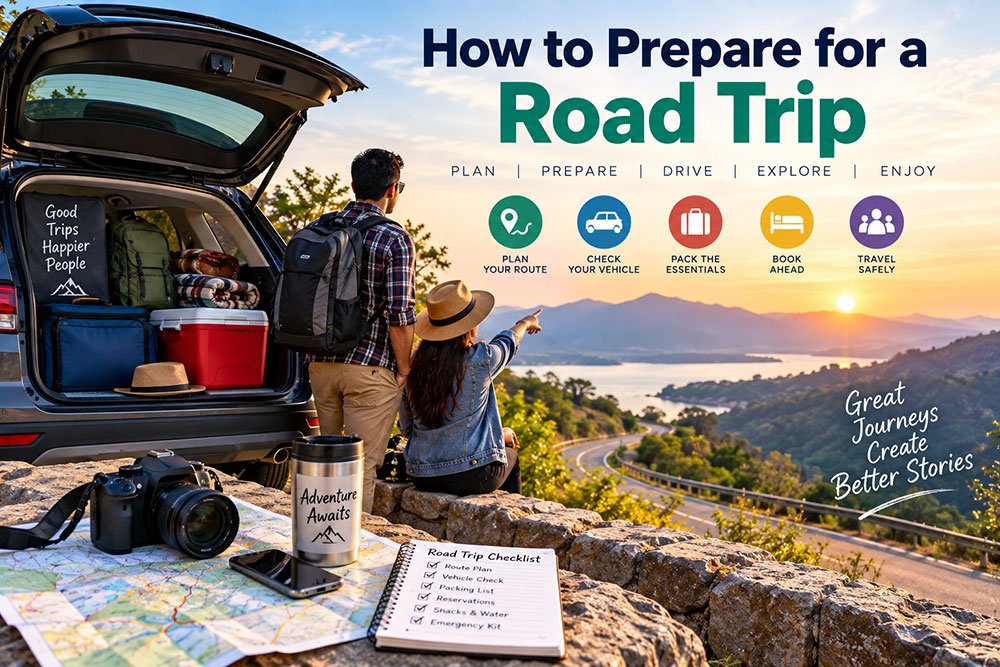
How to Prepare for a Road Trip: Complete Planning and Safety Guide
A road trip can be one of the most enjoyable ways to explore a new destination. You can discover scenic routes, visit interesting towns, stop at attractions and enjoy the freedom of travelling at your own pace.
However, a successful road trip requires more than simply getting into your car and starting the journey. Proper planning can help you avoid unnecessary delays, vehicle problems and safety risks.
Whether you are planning a weekend drive or a long-distance road trip, these practical tips will help you prepare for the journey.
-
Plan Your Road Trip Route
Start by planning your route before you leave home. Decide where you want to go, how long you expect to drive each day and where you want to stop along the way.
Modern navigation apps can help you find directions, traffic information, fuel stations, restaurants and accommodation. However, do not rely entirely on your phone or GPS. Download offline maps when possible and keep important route information available in case you lose mobile connectivity.
Before leaving, check the weather, traffic conditions and road closures along your route. The National Highway Traffic Safety Administration (NHTSA) also recommends reviewing your directions and maps before travelling, even when you use GPS.
Plan More Than One Route
A backup route can prove useful when you encounter traffic congestion, road construction, bad weather or unexpected closures.
Also, share your planned route and expected arrival time with someone you trust. This gives them useful information if you experience an emergency or lose communication.
-
Check Your Vehicle Before the Trip
A vehicle inspection should be one of the most important parts of your road trip preparation.
A breakdown far from home can turn an enjoyable holiday into a stressful experience. Therefore, inspect your vehicle several days before departure instead of waiting until the last minute.
Pay particular attention to:
- Tire pressure and tread condition
- Spare tire and tire-changing equipment
- Engine oil
- Coolant
- Brake fluid
- Windshield washer fluid
- Battery condition
- Brake system
- Headlights and indicators
- Wiper blades
- Belts and hoses
- Air-conditioning system
NHTSA recommends checking tire condition and pressure before long trips. It also advises drivers to check fluids, cooling systems, batteries and other important vehicle components.
Always use the tire pressure recommended by your vehicle manufacturer rather than the maximum pressure printed on the tire itself.
-
Check for Vehicle Recalls
Before starting a long road trip, check whether your vehicle has any outstanding safety recalls.
Manufacturers sometimes issue recalls when they identify a safety-related problem. If your vehicle has an unresolved recall, contact the manufacturer or authorised service centre and arrange the required repair before travelling.
The exact recall-checking process depends on your country. Use the official vehicle manufacturer or government transport authority for your location.
-
Get Enough Sleep Before Driving
Driver fatigue can seriously affect concentration, reaction time and decision-making.
Do not begin a long road trip if you feel tired. Get adequate sleep before departure and plan your driving schedule around regular rest periods.
NHTSA advises drivers to get sufficient sleep before a long journey and avoid driving during periods when they are most likely to feel sleepy.
If you start feeling drowsy while driving, do not try to push through it. Stop at a safe location and rest.
-
Take Regular Breaks
Long hours behind the wheel can make you physically and mentally tired. Plan regular stops instead of waiting until you become exhausted.
Use your breaks to:
- Stretch your legs
- Drink water
- Eat a light meal
- Use the restroom
- Check your route
- Change drivers
- Rest if you feel tired
The UK Highway Code recommends taking at least a 15-minute break after every two hours of driving.
The exact schedule can vary depending on road conditions, weather and the driver’s condition. Safety should always take priority over reaching your destination quickly.
-
Share the Driving When Possible
If two or more qualified drivers travel together, sharing the driving can reduce fatigue.
However, never change drivers simply according to a fixed timetable if someone feels tired. The person behind the wheel should remain alert and fit to drive.
A passenger who has not had enough sleep, consumed alcohol or taken medication that causes drowsiness should not drive.
NHTSA also advises drivers to stop, rest or change drivers when they feel drowsy.
-
Pack the Right Items
Pack according to the length, destination and conditions of your road trip.
Avoid overloading the vehicle, but make sure you carry the essentials.
A useful road-trip packing list can include:
- Drinking water
- Snacks and non-perishable food
- Phone and charging cable
- Power bank
- First-aid kit
- Flashlight
- Basic tools
- Tire-pressure gauge
- Spare tire and jack
- Jumper cables or an appropriate jump-start device
- Important medicines
- Weather-appropriate clothing
- Maps or offline navigation
- Important documents
- Emergency contact information
NHTSA recommends carrying an emergency roadside kit with items such as a phone and charger, first-aid supplies, flashlight, jumper cables, tire-pressure gauge, water, food and other emergency supplies.
-
Keep Your Phone Charged
A smartphone can be extremely useful during a road trip. It can provide navigation, weather information, emergency communication and access to roadside assistance.
However, never use your phone while driving.
Set up navigation before you start moving. If you need to make a call, change the route or check a message, pull over somewhere safe first.
A car charger and power bank can also help prevent your phone from running out of battery.
-
Let Someone Know Your Travel Plans
Before leaving, share your itinerary with a family member or friend.
Include information such as:
- Starting point
- Main destination
- Planned overnight stops
- Expected arrival time
- Alternate route
- Accommodation details
- Emergency contact information
Mobile coverage can disappear in remote areas. Therefore, someone at home should know your general travel plans rather than relying entirely on live phone tracking.
NHTSA specifically recommends telling others your route and expected arrival time before a long journey.
-
Confirm Your Accommodation
If you plan to stay at hotels, guesthouses, resorts or other accommodation, confirm your reservations before leaving.
Check the:
- Booking date
- Check-in time
- Cancellation policy
- Address
- Contact number
- Parking availability
- Payment requirements
Save your booking information offline in case you have limited internet access.
If your route depends on reaching a specific hotel late at night, consider calling the property beforehand to confirm its late check-in arrangements.
-
Carry Food and Water
Roadside restaurants and shops may not always be available, particularly on remote routes.
Carry enough drinking water and suitable snacks for the journey. Pack food that travels well and does not require refrigeration unless you have an appropriate cooler.
You should still take regular breaks rather than eating while driving.
Keeping yourself hydrated and comfortable can make a long road trip easier, but avoid consuming anything that could affect your alertness before driving.
-
Secure Your Luggage Properly
Do not simply place loose bags, suitcases or other heavy objects inside the passenger compartment.
Secure luggage so it cannot move around during sudden braking or a collision. Keep the driver’s view clear and avoid blocking access to essential controls.
NHTSA’s current road-trip guidance also highlights the importance of properly securing loads because unsecured items can endanger vehicle occupants and other road users.
-
Prepare for Weather and Road Conditions
Weather can change quickly during a long journey.
Check the forecast before departure and monitor conditions along the route. Heavy rain, snow, fog, strong winds, extreme heat and flooding can affect driving conditions.
If severe weather creates unsafe road conditions, consider delaying the journey or changing your route.
Drive according to the conditions rather than simply following the posted speed limit. NHTSA notes that speed can become unsafe when road, weather or visibility conditions deteriorate.
-
Follow Basic Road Safety Rules
A road trip should be enjoyable, but safety must remain the priority.
Always:
- Wear your seat belt.
- Follow posted speed limits.
- Never drive under the influence of alcohol or drugs.
- Avoid texting while driving.
- Keep your attention on the road.
- Maintain a safe following distance.
- Follow local traffic laws.
- Watch for pedestrians, cyclists and motorcycles.
- Stop driving when you become tired.
NHTSA’s current safe-driving guidance continues to emphasise seat belts, avoiding distracted driving, avoiding impaired driving and preventing drowsy driving.
-
Plan Your Fuel or Charging Stops
Do not wait until your fuel tank or EV battery reaches a critically low level before looking for a place to refuel or recharge.
Check fuel stations or charging points along longer routes, particularly when travelling through rural or remote areas.
Electric vehicle drivers should consider charging availability, charging time and alternative charging locations when planning the route.
For petrol and diesel vehicles, keeping a reasonable fuel reserve can also reduce the risk of becoming stranded.
-
Keep Emergency Contacts Handy
Save important telephone numbers before leaving.
Depending on your destination, these may include:
- Local emergency services
- Police
- Roadside assistance
- Vehicle manufacturer assistance
- Insurance provider
- Accommodation
- Family or emergency contacts
If you are travelling internationally, learn the local emergency number before starting your journey.
-
Take Care of Children and Pets
Travelling with children requires additional preparation.
Pack water, snacks, entertainment, medicines and any other essential items they may need during the journey. Use age- and size-appropriate child restraints as required by local law.
If you travel with pets, secure them properly and plan suitable rest stops.
Never leave children or pets unattended inside a parked vehicle, particularly in hot weather. Vehicle interiors can heat up rapidly and create life-threatening conditions.
-
Keep the Journey Flexible
One of the biggest advantages of a road trip is flexibility. You can stop at interesting viewpoints, explore local attractions or spend more time at a destination you enjoy.
However, avoid creating an unrealistic itinerary.
Give yourself extra time for traffic, meals, rest stops, sightseeing and unexpected delays. A relaxed schedule can make the journey more enjoyable and reduce the temptation to drive when tired.
Road Trip Preparation Checklist
Before leaving home, run through this quick checklist:
Vehicle
- Check tires and tire pressure
- Check oil and other fluids
- Inspect brakes
- Check lights and wipers
- Check battery condition
- Inspect the spare tire
- Check for recalls
- Confirm roadside assistance
Route
- Plan the route
- Download offline maps
- Check traffic
- Check weather
- Identify fuel or charging stops
- Plan rest stops
- Share your itinerary
Packing
- Water
- Food and snacks
- First-aid kit
- Phone charger
- Power bank
- Flashlight
- Essential medicines
- Important documents
- Emergency supplies
Driver
- Get enough sleep
- Avoid alcohol and impairing substances
- Take regular breaks
- Change drivers when appropriate
- Stop immediately if you feel drowsy
Latest Road Trip Safety Advice
Road-trip preparation has changed considerably since the original version of this article appeared in 2013. Modern guidance places greater emphasis on preventive vehicle maintenance, tire safety, emergency kits, fatigue management, route planning, distracted-driving prevention and properly securing luggage.
NHTSA’s current road-trip guidance recommends checking tires, fluids, batteries, cooling systems and other vehicle components before long journeys. It also recommends checking weather and traffic conditions, carrying an emergency roadside kit and sharing your route and expected arrival time with others.
Fatigue remains another major concern. Current NHTSA guidance advises drivers to get sufficient sleep before travelling and avoid driving when drowsy. The UK Highway Code similarly recommends regular breaks during long journeys.
These recommendations make one point clear: good road-trip preparation is not only about comfort. It is also about reducing avoidable risks before and during the journey.
Final Thoughts
A successful road trip starts before you turn the key.
Plan your route, inspect your vehicle, check the weather, pack an emergency kit and make sure everyone understands the travel plan. Most importantly, get enough rest and never continue driving when you feel sleepy.
With thoughtful preparation and a flexible itinerary, you can spend less time dealing with avoidable problems and more time enjoying the road, the scenery and the destinations along the way.
