
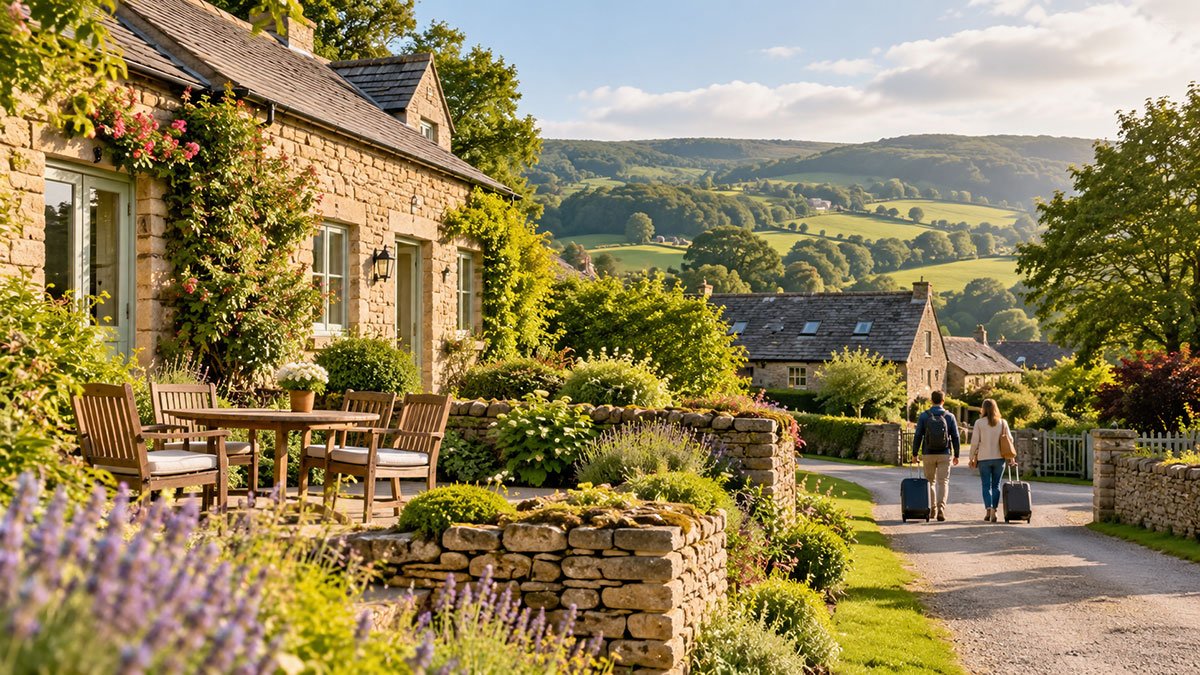
A welcoming countryside setting illustrates the appeal of UK holiday destinations and the importance of a memorable guest experience.
How to Market a UK Holiday Business on a Budget
Running a holiday business in the UK means competing for attention in a crowded market. Holiday parks, cottages, campsites, resorts, visitor attractions and tour operators must convince travellers that their experience is worth booking, while managing operating costs and marketing expenditure.
The good news is that marketing a UK holiday business does not always require a large advertising budget. A clear brand identity, a useful website, strong customer reviews and well-chosen partnerships can help businesses reach the right audience and turn enquiries into bookings.
The challenge is to understand what potential customers value, communicate that value effectively and measure which activities generate genuine revenue. Here are practical strategies tourism businesses can use to strengthen their market position and encourage more people to book a UK holiday.
Understand Your Target Audience
Effective marketing begins with knowing who is most likely to book your accommodation, attraction or holiday package.
A family searching for a campsite has different priorities from a couple looking for a peaceful countryside retreat. Similarly, older travellers may value accessible facilities and convenient transport, while younger visitors might prioritise outdoor activities, flexible itineraries or distinctive experiences.
Rather than trying to appeal to everyone, identify the customer groups that best match your offering.
Consider the following questions:
- Who are your ideal customers? Define your most relevant audiences by travel purpose, interests, budget and booking behaviour.
- What do they value most? This could include location, privacy, family facilities, accessibility, local experiences or flexible booking arrangements.
- When do they travel? Identify peak periods, school holidays, weekends and quieter seasons that may offer opportunities to attract additional bookings.
- How do they discover holidays? Examine website traffic, booking enquiries, customer feedback, search behaviour and the channels that generate reservations.
Use booking records, customer surveys and website analytics to identify patterns. Ask previous guests what influenced their decision and what nearly stopped them from booking.
This information can guide your advertising, website content, packages and customer communications. It also helps prevent spending money on audiences unlikely to convert.
Build a Strong and Consistent Brand
A recognisable brand helps customers understand what makes your holiday business different. It goes beyond a logo or colour scheme to include your positioning, service standards, tone of voice and overall guest experience.
Before investing in a rebrand, identify the problem you want to solve. Perhaps your current identity no longer reflects your accommodation, your website attracts the wrong audience or customers struggle to understand what distinguishes your business from nearby competitors.
A successful brand should communicate a clear promise.
For example, a rural holiday park might emphasise outdoor recreation and family time. A boutique guesthouse could focus on personal service and local character, while a coastal accommodation provider might highlight convenient access to beaches and nearby attractions.
Keep Your Brand Consistent
Use the same visual identity, messaging and core information across your website, social media profiles, booking platforms, brochures and advertising campaigns.
Consistency makes your business easier to recognise and helps customers develop realistic expectations before arrival.
However, consistency does not mean using identical messages everywhere. Adapt the presentation to each platform while maintaining the same underlying identity.
If a rebrand is necessary, update the customer-facing elements together. These may include your logo, website, photography, signage, booking materials and business listings. Make sure returning customers can still identify your business.
Most importantly, ensure that your branding reflects the actual experience you deliver. Marketing may generate an initial booking, but the quality of the stay determines whether customers recommend you or return.
Invest in a Website That Converts Visitors into Bookings
Your website should do more than introduce your business. It should help prospective customers decide whether your offering suits their needs and make it straightforward to enquire or book.
Start by reviewing your website from the visitor’s perspective. Can someone quickly understand what you offer, where you are located, what the accommodation or experience includes and how to check availability?
A useful holiday business website should include:
- Clear descriptions of accommodation, facilities, activities and services.
- High-quality, authentic photographs of rooms, grounds, attractions and guest experiences.
- Transparent pricing, relevant additional charges and booking conditions.
- Information about location, transport links, parking and nearby attractions.
- Accessibility information and details of facilities for different guest needs.
- Customer reviews and answers to frequently asked questions.
- Prominent booking or enquiry options.
- A mobile-friendly layout and straightforward navigation.
Where practical, offer direct booking through your website. Direct reservations can reduce reliance on third-party platforms and give you greater control over the customer relationship. However, compare booking-system costs, payment processing, commissions and the marketing expense required to generate each reservation before deciding which channel is most profitable.
Search engine optimisation (SEO) is also important. Create useful pages around the accommodation, activities and destinations you genuinely offer. A holiday cottage might benefit from content about nearby walking routes, local attractions and seasonal visits, while a campsite could publish practical guides to camping facilities and the surrounding area.
Avoid producing pages that repeat the same keywords without helping visitors. Useful, accurate information is more valuable than content created simply to attract search traffic.
Use Digital Marketing to Reach Potential Guests
Digital marketing allows tourism businesses to reach specific audiences, communicate their strengths and evaluate campaign performance.
The most effective approach will depend on your customers, location, budget and booking cycle. Start with a small number of relevant channels, then expand when the results justify the investment.
Optimise Your Local Online Presence
For businesses that depend on visitors travelling to a physical location, accurate local information is essential.
Maintain your Google Business Profile where eligible, and check that your name, address, telephone number, website, opening information and business category are correct. Add recent photographs and respond professionally to customer reviews.
Keep other relevant directories and booking profiles consistent. Incorrect contact details, outdated photographs or conflicting opening information can undermine customer confidence.
Ask satisfied guests to leave honest reviews without pressuring them or offering incentives that violate a platform’s rules. Respond constructively to criticism and use recurring complaints to improve your service.
Use Social Media with a Clear Purpose
Social media can help potential guests picture the experience your business offers. It is particularly useful for showcasing accommodation, local scenery, activities, food, seasonal events and behind-the-scenes preparation.
Instead of publishing repetitive promotional messages, develop a varied content plan.
For example:
- Inspiration: Show the scenery, activities and experiences guests can enjoy.
- Practical information: Explain facilities, access arrangements, booking procedures and nearby attractions.
- Seasonal content: Highlight experiences available at different times of year, subject to actual availability.
- Customer stories: Share genuine testimonials and guest photographs with permission.
- Offers: Promote clearly defined packages or available dates when the terms make commercial sense.
Choose platforms based on your audience rather than attempting to maintain a presence everywhere. Monitor meaningful actions such as website visits, enquiries and completed bookings, not just followers or likes.
Run Targeted Advertising Campaigns
Paid search and social media advertising can help a holiday business reach people who are actively researching a destination or considering a particular type of break.
Start with a defined objective, such as increasing bookings for selected dates, generating enquiries for group stays or attracting visitors during a quieter period.
Use relevant audience targeting, accurate landing pages and clear calls to action. For example, an advertisement promoting a countryside retreat should lead to a page explaining that retreat, not simply to the homepage.
Set a spending limit and track the results. Compare the cost of acquiring a booking with the revenue and expected profit it generates. Include discounts, commissions and other variable costs when evaluating performance.
If an advertisement attracts clicks but few enquiries, investigate the offer, audience, page content, pricing and booking process before increasing the budget.
Develop Partnerships with Coach Operators and Local Businesses
Partnerships can introduce your business to customers who might not otherwise discover it. They can also help make a holiday more convenient by combining accommodation, transport, activities or local experiences.
Coach and group-tour operators are potential partners for attractions, resorts, heritage sites and accommodation providers that can serve groups effectively.
Before entering an agreement, establish the practical details:
- The number of visitors you can accommodate at one time.
- Available dates and any seasonal restrictions.
- Group pricing, commissions and payment arrangements.
- Coach access, parking, drop-off points and accessibility.
- Cancellation terms and responsibilities for customer communication.
- The expected booking volume and how success will be measured.
Do not assume that group business will automatically be profitable. Consider the cost of staffing, meals, transport coordination, facilities and any discounts required to secure the booking.
Work with Complementary Local Businesses
Partnerships do not have to involve transport companies. A holiday cottage could collaborate with a local walking guide, bicycle hire provider or independent food producer. An attraction might work with nearby accommodation providers, restaurants or event organisers.
Create packages that offer genuine convenience or value. Agree on responsibilities, availability, customer service standards and the way revenue will be shared.
Local partnerships can also support cross-promotion. Partners may feature each other in relevant newsletters, visitor information, websites or social media posts.
The aim is to improve the visitor experience while introducing each business to a relevant audience.
Make the Most of Your Advertising Budget
Advertising works best when it supports a clear commercial objective. A large campaign is not necessarily better than a smaller, well-targeted one.
Begin by identifying the booking problem you need to solve. If your peak-season dates already sell out, additional advertising may offer limited value. If certain weekends remain quiet, a targeted campaign or carefully designed package may be more appropriate.
Consider a combination of channels.
Search advertising can reach people looking for particular accommodation, attractions or holiday experiences. It is most useful when the search terms and landing pages closely match the offer.
Social media advertising can introduce your business to relevant audiences and showcase visual experiences. Test different creative approaches and monitor whether they lead to enquiries or bookings.
Email marketing can help maintain relationships with previous guests and customers who have explicitly agreed to receive marketing communications. Share relevant seasonal news, new experiences and suitable offers rather than sending constant promotional messages.
Local partnerships and public relations can generate referrals, coverage and recommendations without relying entirely on paid advertising. Results are not guaranteed, so track the enquiries and bookings these activities generate.
Traditional advertising, including local print publications and selected outdoor placements, may still suit businesses targeting particular communities or visitor groups. Evaluate each option according to audience relevance, cost and measurable results rather than assuming that a traditional or digital channel is automatically superior.
Measure the Return on Your Marketing
Record the cost and outcome of each campaign. Useful measures include:
- Website visits from the campaign.
- Enquiries and completed bookings.
- Cost per enquiry and cost per booking.
- Revenue generated by the campaign.
- Cancellation rates and average booking value.
- Repeat bookings and referrals.
Where possible, use campaign tracking links, booking-source questions and analytics to understand which channels contribute to sales.
A simple monthly review can reveal which activities deserve more investment, which need improvement and which should be discontinued.
Attract Visitors During Quieter Periods
Seasonal demand can create significant differences in occupancy and revenue. Instead of relying solely on peak-season bookings, consider how your existing facilities and location could appeal to different customer groups throughout the year.
Depending on your offering, opportunities may include weekend breaks, walking holidays, fishing trips, heritage visits, group excursions, work-related stays or special-interest activities.
The key is to match the offer to a genuine customer need and the facilities you can provide.
For example, an accommodation provider near established walking routes might promote suitable off-season breaks to walkers. A visitor attraction could work with schools or organised groups where its facilities and educational offering are appropriate.
Before launching a seasonal package, calculate its costs and establish whether it is likely to generate incremental business. A discounted booking is not necessarily profitable if it displaces a full-price customer or adds substantial operating costs.
Check opening arrangements, local transport, weather-related limitations and the availability of nearby attractions before promising a particular experience.
Improve the Guest Experience to Encourage Repeat Bookings
Attracting a new customer is only part of the marketing process. A positive experience can encourage recommendations, repeat visits and stronger online reviews.
Make the booking process clear, communicate important information before arrival and ensure that advertised facilities match what guests receive.
Small operational improvements can make a difference. These may include straightforward check-in instructions, prompt responses to enquiries, accurate directions, transparent house rules and practical information about local services.
After a visit, invite customers to provide feedback and make it easy for them to contact you if a problem remains unresolved.
With appropriate consent, maintain a customer database for relevant future communications. Segment it where useful, so families, couples, group organisers and returning guests receive information suited to their interests.
Follow applicable data protection and electronic marketing rules, including requirements for consent, transparency and unsubscribe options. Do not assume that having a customer’s email address automatically permits promotional messages.
Customer retention should be measured, too. Track repeat bookings, referrals and feedback over time to understand whether service improvements are helping your business build lasting relationships.
Make Accessibility and Sustainability Part of Your Offer
Travellers need accurate information about whether a holiday experience will suit their requirements. Clear accessibility information can help customers make informed decisions and reduce uncertainty before booking.
Describe relevant features factually, including step-free access, accessible bathrooms, parking, room layouts and any limitations. Avoid broad claims such as “fully accessible” unless they can be substantiated.
Similarly, communicate genuine sustainability measures rather than relying on vague environmental claims. Depending on your business, these might include waste reduction, water conservation, energy efficiency or partnerships with local suppliers.
Explain what you actually do and avoid implying that a business or holiday is environmentally beneficial without appropriate evidence.
These details can strengthen customer confidence while helping visitors choose an experience that matches their needs and priorities.
Create a Practical Marketing Plan
A structured plan makes it easier to turn ideas into action without spreading your resources too thinly.
Start with the following steps:
- Review your current position. Examine bookings, occupancy, website performance, customer reviews, marketing costs and the channels that generate enquiries.
- Choose a clear objective. For example, increase direct bookings, improve occupancy on selected dates or attract more group enquiries.
- Define your audience. Focus on the customers most likely to value your accommodation, attraction or experience.
- Improve the essentials. Correct inaccurate business listings, strengthen website content, update photographs and simplify the booking journey.
- Select a few relevant channels. Combine suitable organic, paid and partnership activities instead of investing everywhere at once.
- Set a realistic budget. Allocate funds according to expected commercial value and your ability to measure results.
- Review performance regularly. Compare enquiries, bookings, revenue and costs against your original objective.
- Refine the approach. Expand activities that work, improve underperforming campaigns and stop spending on channels that consistently fail to deliver value.
Tourism businesses in England can also consult VisitBritain and VisitEngland’s official Business Advice Hub for guidance on digital marketing, customer accessibility, sustainability and tourism business development. Businesses in Scotland, Wales and Northern Ireland should consult their respective national tourism organisations for relevant local advice.
Final Thoughts
Marketing a UK holiday business successfully requires a clear understanding of customers, a credible brand and a booking experience that makes choosing your business straightforward.
Rebranding, digital advertising, coach-hire partnerships and traditional promotion can all play a role, but none should be treated as an automatic solution. Their value depends on the audience, the quality of the offer and the commercial results they produce.
Start by improving the foundations: understand your customers, communicate your strengths, maintain accurate online information and make booking easy. Then build partnerships, test suitable marketing channels and measure the results.
By focusing on customer value and informed decisions rather than advertising spend alone, holiday businesses can make better use of limited resources and build a more resilient foundation for long-term growth.
