
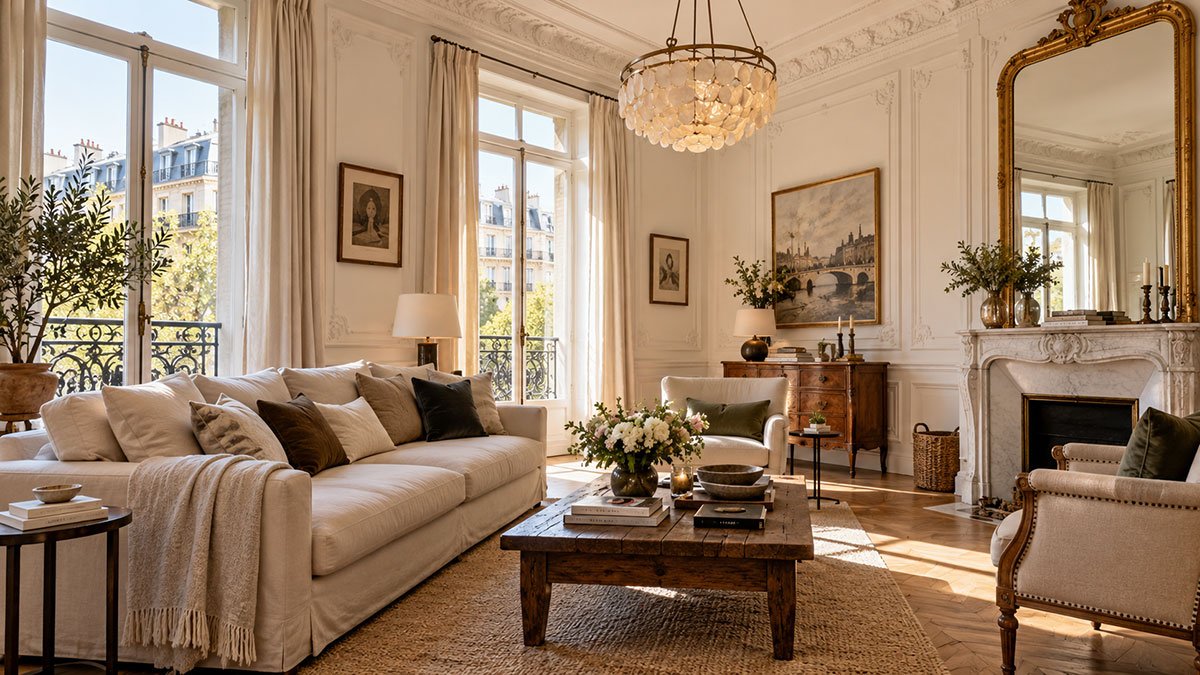
Combine classic architectural details, natural materials and contemporary furnishings to create a relaxed Parisian-inspired living space.
How to Make Your Home Parisian: 8 Timeless Decor Ideas
Parisian interiors have a distinctive appeal. They combine classic architecture, carefully chosen furnishings, natural materials and personal touches to create spaces that feel elegant without appearing overly arranged.
If you want to learn how to make your home Parisian, you do not need a historic French apartment, an expensive chandelier or a collection of antiques. The secret is to balance old and new, pay attention to light and texture, and choose objects that reflect your personality.
From the living room to the bedroom and even a small balcony, a few thoughtful changes can bring the relaxed sophistication of Parisian-inspired interiors into almost any home.
What Defines Parisian Home Decor?
Parisian interior design draws inspiration from a wide range of influences. Historic apartments, decorative arts, contemporary furniture and personal collections can all play a part. There is no single formula that defines every Parisian home.
One familiar reference point is the classic Haussmann-era apartment, associated with features such as tall windows, decorative mouldings and traditional flooring. Contemporary Parisian interiors may preserve these architectural details while introducing modern furniture, striking artwork and understated accessories.
The aim is not to reproduce a museum-like room. It is to create a comfortable, individual space where traditional character and modern living complement each other.
1. Make Natural Light and Architectural Details a Priority
Light is an effective starting point for a Parisian-inspired home. Bright rooms, generous window treatments and uncluttered spaces can make even modest interiors feel more open and welcoming.
Begin by making the most of your existing windows.
- Replace heavy curtains with lighter linen or sheer fabrics where privacy allows.
- Hang curtains high enough to emphasise the height of the room, where the window arrangement permits.
- Use mirrors to reflect daylight into darker corners.
- Keep bulky furniture away from windows whenever possible.
- Choose streamlined window coverings that work with the room rather than dominate it.
Architectural details can add character, too. Decorative wall mouldings, elegant skirting boards, a traditional fireplace or a well-proportioned doorway can create a sense of history.
You do not need to install all these features. In a modern home, framed artwork, carefully placed mirrors and simple furniture can achieve a similar feeling of refinement without major renovation.
If you rent, use reversible decorating methods and obtain the necessary permission before altering walls, doors or other permanent features.
2. Choose a Restrained Colour Palette with Character
A thoughtful colour scheme creates continuity throughout a home. For a Parisian-inspired look, start with a neutral foundation and introduce contrast through selected accessories and furnishings.
Consider colours such as:
- Warm white and ivory for walls and larger surfaces.
- Beige, taupe and soft grey for upholstery and textiles.
- Natural wood tones to add warmth.
- Black or charcoal for definition.
- Muted olive green, deep blue or burgundy for an occasional accent.
Black is particularly useful because it creates contrast against lighter surroundings. A black picture frame, slim lamp base or dark occasional table can give a room structure without making it feel gloomy.
The key is proportion. A pale room does not need black furniture everywhere, and a colourful room does not need to be repainted in neutral shades.
Choose two or three main colours and introduce additional shades through artwork, cushions, books and decorative objects. This makes the room feel connected without making every item match.
3. Mix Vintage Furniture with Contemporary Pieces
One of the most useful ways to achieve a Parisian apartment aesthetic is to combine different periods and styles.
Rather than purchasing a matching furniture set, select pieces that work together through their scale, material or shape.
For example, you could pair:
- A contemporary sofa with a vintage wooden coffee table.
- An antique-style mirror with a simple console.
- A modern dining table with traditional wooden chairs.
- A sculptural floor lamp with a classic armchair.
- A streamlined bed with a characterful bedside table.
The contrast gives the room depth and prevents it from looking like a showroom.
Vintage furniture does not have to be expensive. Explore second-hand shops, local markets, antique dealers or existing family furniture. A well-made older piece can provide the character that a room needs without requiring a complete redesign.
Look for quality, condition and proportion before focusing on age. A furniture piece should be comfortable and useful as well as attractive.
4. Introduce Rich Textures Without Overdoing the Luxury
Parisian-inspired interiors often feel inviting because they combine different materials. Texture adds interest even when the colour palette is restrained.
Consider introducing a mixture of:
- Linen curtains and cotton cushions.
- Wool rugs and woven throws.
- Velvet upholstery or a velvet accent cushion.
- Wood furniture with visible grain.
- Ceramic vases and decorative stone objects.
- Metal fittings in finishes such as brass or black.
Marble can provide a refined accent on a coffee table, side table, vanity or small decorative object. However, you do not need marble walls or expensive stone surfaces throughout your home.
The same principle applies to velvet, silk and other luxurious textiles. A single textured chair or cushion can be more effective than covering every surface in a rich material.
Aim for contrast rather than excess. Smooth surfaces look more interesting beside woven fabrics, while natural wood can soften the appearance of metal and stone.
5. Use Layered Lighting to Create Atmosphere
A single bright ceiling light rarely provides the most inviting atmosphere. Layered lighting allows a room to feel different throughout the day and makes individual areas more practical.
Start with the lighting you already have, then add complementary sources.
A pendant light or chandelier can provide a focal point in a living room or dining area. Table lamps create softer pools of light, while floor lamps can illuminate a reading corner. Wall lights are another option when suitable electrical fittings are available.
When choosing decorative lighting, pay attention to the size of the fixture and the proportions of the room. An oversized chandelier may overwhelm a small space, while a tiny pendant may look out of place above a large dining table.
For a rental or a home that cannot accommodate new electrical fittings, plug-in lamps offer flexibility.
A well-designed room should be comfortable to use after dark, not simply attractive in photographs.
6. Make Artwork and Mirrors Part of the Design
Art brings personality into a home and can help connect the colour scheme, furniture and decorative details.
Paris has a rich artistic heritage, but a Parisian-inspired interior does not need to rely on stereotypical images of the Eiffel Tower or reproductions of famous French paintings.
Instead, select artwork that you genuinely enjoy. This might include landscape paintings, abstract prints, architectural photography, vintage posters or family photographs.
For a cohesive arrangement:
- Place one larger artwork above a sofa, console or bed.
- Create a gallery wall with frames in complementary finishes.
- Use a large mirror to reflect natural light and add visual depth.
- Repeat one or two colours from the artwork elsewhere in the room.
- Leave sufficient space around each piece so the wall does not appear crowded.
An Impressionist-inspired painting can introduce soft colour and movement, while a black-and-white photograph provides a more restrained look. Both can work with Parisian-inspired decor.
Mirrors deserve similar consideration. An ornate frame can lend traditional character, while a simple contemporary mirror creates contrast.
Choose the artwork and frames together, but avoid making every item identical. A slightly varied collection often feels more personal.
7. Bring Parisian Charm to Your Garden, Balcony or Patio
Outdoor spaces can extend the character of your interiors. You do not need a large formal garden to create a French-inspired setting.
For a balcony, small patio or courtyard, focus on a few coordinated elements.
- Use attractive planters with herbs, flowering plants or greenery suited to the available sunlight.
- Choose compact outdoor furniture that leaves enough space to move comfortably.
- Add outdoor cushions or a small rug designed for exterior use.
- Use matching or complementary planters to create a sense of order.
- Introduce a lantern or suitable outdoor lighting for evening use.
If you have a larger garden, neatly maintained hedges, defined planting areas and simple paths can provide a more formal French-inspired appearance. Wrought-iron details may also complement this style where they suit the building and outdoor setting.
However, formal French gardens are different from urban Parisian balconies. There is no need to recreate a grand garden design in a small space.
The better approach is to work with the outdoor area you have. A few well-maintained plants and comfortable seating can make a small balcony feel like a natural extension of the home.
8. Finish with Personal Objects and Thoughtful Details
The finishing touches can make a home feel collected rather than decorated all at once.
A vintage clock, framed photograph, sculptural vase, stack of books or distinctive table lamp can add character. You might also use a decorative tray, ceramic bowl or a few objects collected during your travels.
The important point is to choose things that have meaning or visual interest rather than filling every available surface.
Try these simple principles:
- Give a special object enough space to stand out.
- Group small accessories on a tray or shelf.
- Combine different heights and shapes.
- Display books and photographs naturally.
- Leave some shelves and surfaces uncluttered.
Fresh flowers can add colour to a dining table or entryway. A well-chosen plant can soften an empty corner. Neither needs to be expensive to make a difference.
Personal objects should tell a story about the people who live in the home. That sense of individuality is more convincing than filling a room with matching decorative items simply because they are labelled French.
How to Adapt Parisian Style to Different Rooms
The same principles can be applied throughout the home, but each room has different needs.
Living room
Choose comfortable seating, a practical coffee table and a rug that helps define the seating area. Introduce contrast with a vintage side table, distinctive lighting or a large piece of artwork.
Keep the arrangement functional. You should be able to walk through the room easily and use the furniture without rearranging the decor.
Bedroom
Use soft bedding, restrained colours and layered lighting to create a restful space. A traditional bedside table beside a contemporary bed can add character, while a framed artwork or mirror creates a focal point.
Avoid adding too many decorative cushions or unnecessary objects. Comfort and ease of maintenance matter as much as appearance.
Dining room
A simple dining table can work well with chairs that have different finishes or shapes, provided they remain comfortable and visually balanced.
Use a pendant light to define the dining area where suitable. A mirror, framed artwork or modest floral arrangement can complete the space without crowding the table.
Entryway
An entryway offers a useful opportunity to establish the style of your home.
A slim console, mirror, table lamp or framed print can make a small entrance feel considered. Add a practical place for keys and everyday belongings so that the space remains organised.
Small apartments and rental homes
Limited space does not prevent you from creating a Parisian-inspired interior.
Choose furniture with suitable proportions, use mirrors to enhance the sense of space and rely on textiles and artwork to introduce character. Removable wall decor and freestanding lighting can provide flexibility when permanent changes are not possible.
Rather than trying to imitate an entire historic apartment, select two or three elements that suit your space and build around them.
Common Mistakes to Avoid
Parisian-inspired decorating works best when it feels natural. A few common mistakes can undermine that effect.
Making everything match: A room furnished entirely from one collection can lack the varied character that makes this aesthetic appealing.
Overusing luxury materials: Marble, velvet, gold finishes and ornate furniture can all have a place, but too many competing statement pieces may make the room feel heavy.
Copying architecture that does not suit your home: Decorative mouldings and elaborate chandeliers may not work in every space. Adapt the idea rather than forcing it.
Ignoring comfort: Beautiful furniture is not useful if it is impractical for everyday living. Prioritise seating, lighting, storage and circulation.
Decorating every surface: Leaving some visual space helps individual objects stand out and keeps the room from feeling crowded.
The goal is to create a home that reflects your taste, not a replica of a photograph.
How to Get Started Without a Major Renovation
You can begin creating a Parisian-inspired home with a few deliberate changes.
- Edit what you already own. Remove unnecessary clutter and identify furniture or artwork worth keeping.
- Improve the light. Adjust curtains, reposition mirrors and add a table or floor lamp where needed.
- Choose a colour direction. Use a restrained base palette and select a small number of contrasting accents.
- Add one piece with character. Look for a vintage table, distinctive mirror, interesting lamp or meaningful artwork.
- Introduce texture. Update a cushion, throw, rug or curtain to create more depth.
- Finish gradually. Add personal accessories only when they contribute to the room.
This approach also makes it easier to work within a budget. You can spread purchases over time instead of replacing everything at once.
Create Your Own Parisian-Inspired Home
Learning how to make your home Parisian is less about following a rigid decorating formula and more about combining character, comfort and thoughtful design.
Make the most of natural light, choose materials that feel good to live with, mix older pieces with contemporary furniture and display artwork that means something to you. Add texture and contrast without allowing decorative details to overwhelm the room.
Whether you live in a modern apartment, a family house or a rented space, these ideas can help you create an interior that feels elegant, welcoming and distinctly personal.
