
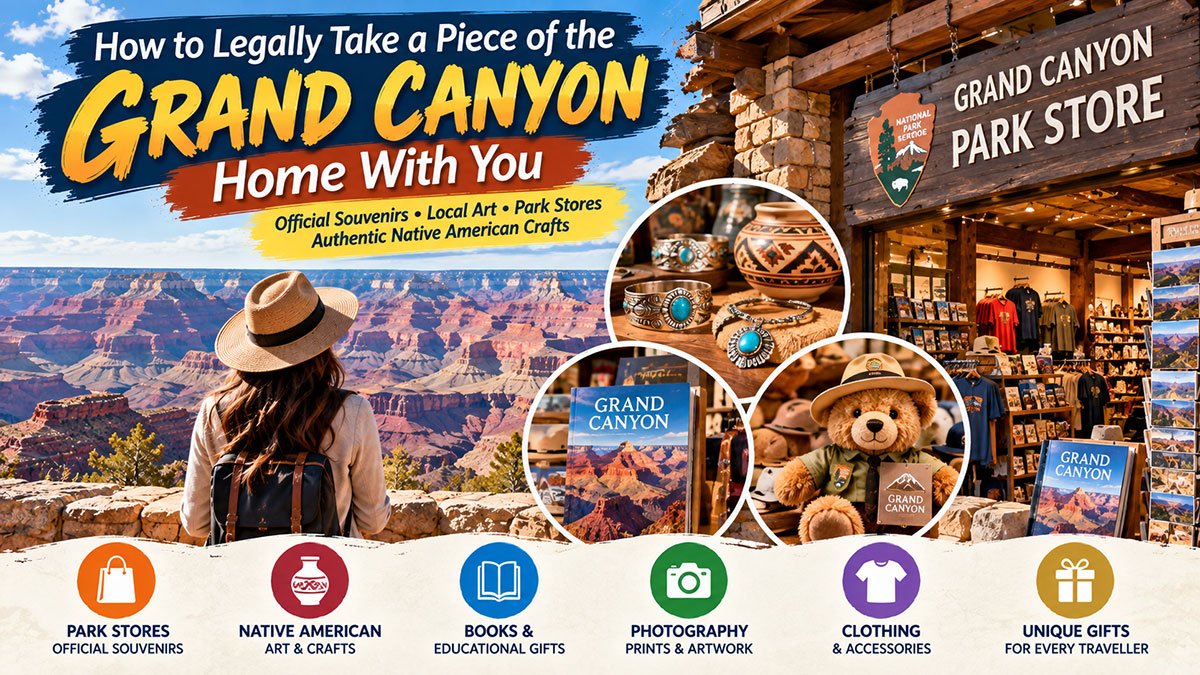
How to Legally Take a Piece of the Grand Canyon Home With You
Shop for Authentic Souvenirs, Artwork and Gifts Instead of Collecting Natural Objects
The Grand Canyon is one of America’s most remarkable natural landscapes, and many visitors want to take home something that reminds them of their experience. You may be tempted to pick up a colorful rock, fossil, plant or other natural object as a souvenir.
However, there is an important rule to remember: you cannot legally remove rocks, minerals, fossils, plants, archaeological objects or other natural features from Grand Canyon National Park. The National Park Service asks visitors to leave natural and cultural resources where they find them.
Fortunately, you can still take home a meaningful piece of the Grand Canyon experience. Park stores, museums, galleries and nearby trading posts offer books, artwork, jewelry, crafts, clothing, photography and other legally purchased souvenirs.
Here is how to shop for memorable Grand Canyon souvenirs while respecting the park and its cultural heritage.
Can You Take Rocks From the Grand Canyon?
No. Visitors should not collect rocks from Grand Canyon National Park.
National Park Service regulations prohibit removing or disturbing rocks, minerals, plants, archaeological resources and other natural features. The rules also prohibit digging or disturbing resources from their natural state.
This applies even when a rock appears small or insignificant. Every natural object contributes to the landscape and geological record of the park.
Archaeological objects are especially important. Grand Canyon National Park contains sites connected to thousands of years of human history, and removing artifacts can destroy valuable information about the past.
Instead of taking a natural object, purchase an officially sold souvenir that represents the canyon.
Where to Shop for Grand Canyon Souvenirs on the South Rim
The South Rim has several official stores, museums and visitor facilities where you can find books, gifts, artwork and other souvenirs. The National Park Service maintains a current list of bookstores and gift shops because locations, hours and availability can change.
1. Grand Canyon Conservancy Park Stores
Grand Canyon Conservancy operates official park stores at several South Rim locations. Purchases help support projects and programs connected with Grand Canyon National Park.
The Park Store at the South Rim Visitor Center is a convenient place to begin your shopping trip. You can find educational materials, books, Junior Ranger items, souvenirs and other Grand Canyon-related products.
The current National Park Service information also lists Park Store locations at the Visitor Center Plaza, Kolb Studio, Verkamp’s Visitor Center and Yavapai Geology Museum.
Best for: Books, educational products, park souvenirs, gifts and Grand Canyon merchandise.
2. Kolb Studio
Kolb Studio is a historic building in Grand Canyon Village that once served as the home and photography studio of brothers Emery and Ellsworth Kolb.
Today, the upper floor includes a Grand Canyon Conservancy Park Store, while exhibits are presented downstairs.
Kolb Studio is particularly interesting for visitors who appreciate photography and art.
In 2026, the historic studio is also hosting the 18th Annual Celebration of Art exhibition and sale from September 27, 2026, through March 31, 2027. The exhibition includes original works inspired by the Grand Canyon, giving visitors an opportunity to purchase artwork rather than remove anything from the landscape.
Best for: Photography, original artwork, books, art-inspired gifts and souvenirs.
3. Yavapai Geology Museum and Museum Shop
If you are fascinated by the rocks and geological history of the Grand Canyon, Yavapai Geology Museum is an excellent place to visit.
The museum sits at Yavapai Point and features geological exhibits, panoramic canyon views, a bookstore and a museum shop. Exhibits explain the different rock layers and geological history of the canyon.
This is an especially good alternative to collecting rocks yourself. You can learn about the geology and purchase an appropriate educational souvenir while leaving the actual landscape untouched.
Best for: Geology books, educational gifts, museum merchandise and Grand Canyon souvenirs.
4. Verkamp’s Visitor Center
Verkamp’s Visitor Center is located in the Historic District of Grand Canyon Village. The National Park Service currently lists it as a visitor facility with exhibits, information and a museum store.
It is a convenient stop for travelers exploring the historic village area.
Best for: Books, historic Grand Canyon products, gifts and educational souvenirs.
5. Hermits Rest
Hermits Rest is located about seven miles west of Grand Canyon Village at the end of Hermit Road. The historic building includes a small gift shop and snack bar.
The building itself is part of the Grand Canyon’s architectural history. It was designed by Mary Colter and features native stonework and a large fireplace.
If you are visiting Hermit Road, the gift shop provides an opportunity to purchase a souvenir without removing anything from the surrounding landscape.
Best for: Small gifts, snacks, souvenirs and a historic Grand Canyon experience.
Shopping at Desert View
Desert View is located on the eastern side of the South Rim, about 23 miles from Grand Canyon Village along Desert View Drive. The area includes the famous Desert View Watchtower and visitor services.
The Desert View Watchtower has a retail store in its View Room, while the nearby Trading Post offers Native American handicrafts and other visitor items.
The area also provides an opportunity to learn about the cultural connections between the Grand Canyon and the Native American tribes associated with the region. The National Park Service identifies 11 federally recognized tribes with cultural connections to the Grand Canyon.
Best for: Native American handicrafts, park souvenirs, books and culturally significant gifts.
Where to Shop Outside Grand Canyon National Park
Some of the most interesting shopping opportunities are located in communities outside the park boundaries.
Cameron Trading Post
Cameron Trading Post is an historic trading post east of Grand Canyon Village on the route toward the park’s eastern entrance.
The trading post traces its history to 1916 and has longstanding connections with Navajo and Hopi communities. Today, its store offers art, décor, baskets, clothing, accessories and other products from artists associated with several Southwestern Native American communities.
Its Native American art gallery includes items such as antique beadwork, rugs, baskets, historic pottery, vintage jewelry, Kachina carvings and sand paintings.
Cameron Trading Post can therefore be a worthwhile stop for travelers looking for a more substantial piece of Southwestern art rather than a conventional tourist souvenir.
Best for: Native American art, jewelry, rugs, pottery, baskets, carvings and Southwestern gifts.
How to Buy Native American Art Responsibly
Shopping for Native American art can be an important part of a Grand Canyon trip, but it is worth taking the time to understand what you are buying.
Look for reputable galleries, established trading posts and sellers who provide information about the artist, community and origin of the work.
For valuable pieces, ask about authenticity, artist information and provenance. A well-documented artwork can provide much more meaning than an anonymous souvenir.
Cameron Trading Post, for example, maintains information about Native American art, artists and traditional crafts on its website.
What You Can Legally Take Home From the Grand Canyon
Instead of collecting natural objects, consider purchasing one of these souvenirs:
- Grand Canyon photography
- Original paintings and artwork
- Books about Grand Canyon geology and history
- Official National Park merchandise
- Postcards and prints
- Clothing and hats
- Jewelry purchased from reputable sellers
- Native American artwork from established galleries
- Handmade pottery and baskets
- Educational geology products
- Junior Ranger merchandise
- Locally produced crafts
- Decorative items inspired by the Southwest
These purchases allow you to keep a physical reminder of your trip without damaging the park’s natural or cultural resources.
Why You Should Leave Rocks and Artifacts Where You Find Them
The Grand Canyon is more than a scenic attraction. It is a complex geological and cultural landscape.
Removing a rock may seem harmless, but collecting objects on a large scale can gradually affect the landscape. Archaeological objects are even more sensitive because their location provides important information about past human activity.
The National Park Service specifically advises visitors to leave artifacts and natural objects where they are. It also notes that 11 modern-day American Indian tribes maintain connections with archaeological sites in the Grand Canyon.
A responsible visitor can enjoy the landscape while helping preserve it for future generations.
2026 Grand Canyon Shopping and Visitor Updates
Grand Canyon National Park continues to update its visitor services and operating information throughout the year. The National Park Service’s South Rim shopping page is updated regularly with information about open and closed facilities and current operating hours.
For October 2026, the National Park Service lists current South Rim facilities including the Grand Canyon Conservancy Park Store, Yavapai Geology Museum and Kolb Studio. Some operating hours change during October, so visitors should check the official park information before making a dedicated shopping trip.
The Desert View area is also currently operating with its Trading Post and other visitor services. The East Entrance and Desert View area have specific seasonal facilities and hours, so checking current conditions is recommended before travelling there.
Take Home a Memory, Not a Rock
The best way to take a piece of the Grand Canyon home is to purchase something created or officially sold for visitors.
A photograph can capture the view. A painting can capture its colors. A book can explain its geological history. Native American artwork can connect your trip with the living cultures associated with the region.
What you should not do is remove a rock, fossil, plant or archaeological object from the park.
By shopping responsibly and leaving natural and cultural resources where they belong, you can enjoy a memorable Grand Canyon experience while helping protect this extraordinary landscape for future visitors.
