
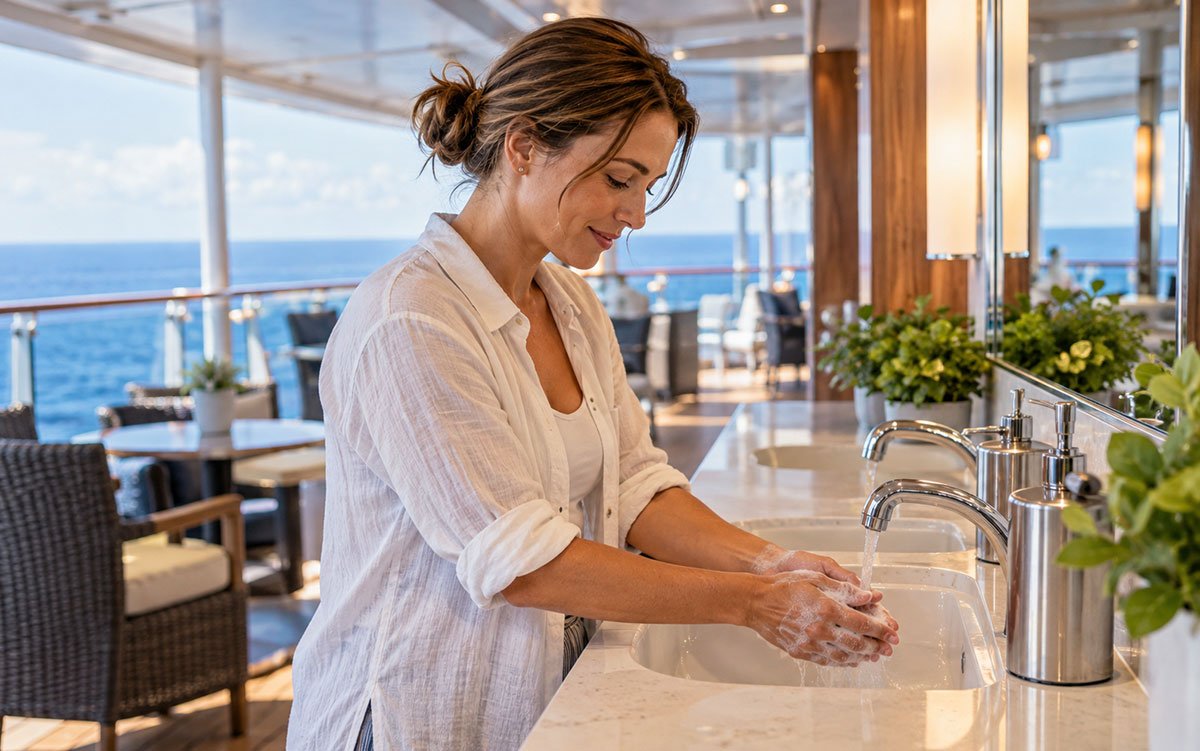
Good hand hygiene and responsible onboard practices can help reduce the risk of norovirus spreading during a cruise holiday.
How to Avoid Norovirus on a Cruise: Practical Tips for Staying Healthy
A cruise holiday offers the chance to explore new destinations, enjoy ocean views and experience life on board. However, sharing dining areas, entertainment venues and public spaces with other travellers can increase the risk of infectious illnesses, including norovirus.
Understanding how to avoid norovirus on a cruise can help you make sensible decisions before departure and throughout your journey. Although no precaution can eliminate the risk completely, good hand hygiene, responsible food habits and prompt action when symptoms appear can help reduce the spread of infection.
The good news is that you do not need to avoid every public space or spend your holiday isolated in your cabin. Focus instead on practical precautions that make a genuine difference.
What Is Norovirus and Why Does It Spread on Cruise Ships?
Norovirus is a highly contagious virus that causes gastroenteritis, an illness affecting the stomach and intestines. Common symptoms include nausea, vomiting, diarrhoea and abdominal cramps. Some people also experience a mild fever, headache or body aches.
The virus spreads through contact with infected people, contaminated food or water, and contaminated surfaces. Particles released during vomiting can also contaminate nearby areas.
Cruise ships bring many people together in shared environments. Passengers may use the same lifts, handrails, dining facilities and other communal spaces throughout their journey. These conditions can allow an infection to spread if appropriate precautions are not followed.
Symptoms usually begin 12–48 hours after exposure. Most people recover within one to three days, although dehydration and other complications can be more serious for young children, older adults and people with weakened immune systems.
7 Practical Ways to Reduce Your Risk of Norovirus on a Cruise
1. Wash Your Hands Properly and Frequently
Thorough handwashing is one of the most effective ways to reduce the risk of norovirus infection.
Wash your hands with soap and water for at least 20 seconds, particularly:
- After using the toilet.
- Before eating or handling food.
- After changing a child’s nappy or helping someone with personal care.
- Whenever your hands become visibly dirty.
Pay attention to your fingertips, thumbs and the spaces between your fingers. Rinse your hands thoroughly and dry them properly.
Alcohol-based hand sanitiser can be useful as an additional precaution, but it does not work well against norovirus and should not replace washing with soap and water.
2. Follow Sensible Food and Drink Precautions
Cruise dining can be an enjoyable part of the holiday. You do not need to avoid buffets or restaurants simply because you are travelling on a ship.
Instead, follow basic food hygiene practices. Wash your hands before eating, use clean serving utensils and avoid sharing drinking glasses or cutlery with others.
Choose properly cooked food and avoid raw or undercooked shellfish, which can carry norovirus. Wash fruit and vegetables when preparing them yourself, and avoid consuming food or water that appears unsafe.
If you notice a food hygiene concern, report it to the appropriate onboard staff rather than assuming that every dining area is unsafe.
3. Be Mindful of Shared Surfaces
Handrails, lift buttons, door handles and other frequently touched surfaces may become contaminated.
You do not need to constantly disinfect everything you touch. However, avoid touching your mouth or eating with unwashed hands after using shared facilities.
Wash your hands before meals, even if you have used sanitiser earlier. If the ship announces additional hygiene measures, follow the instructions provided by its crew.
4. Move Away From Vomiting or Diarrhoea Incidents
If another passenger suddenly vomits or experiences diarrhoea in a public area, move away and notify a crew member if staff have not already responded.
Do not attempt to clean up contaminated material yourself. Vomit and faecal matter can spread norovirus to nearby surfaces, so trained staff should manage the incident using appropriate protective equipment and disinfectants.
Avoid the affected area until the crew confirms it is safe to return.
5. Avoid Travelling While Contagious
If you develop vomiting or diarrhoea shortly before departure, contact your healthcare professional and cruise operator before travelling.
Do not assume that symptoms are harmless simply because you have a holiday booked. Travelling while infectious can expose other passengers and crew members to illness.
Check the cruise line’s illness policies, cancellation terms and your travel insurance coverage so you understand your options if you become unwell before departure.
6. Report Symptoms Promptly
If you develop vomiting, diarrhoea or other symptoms of gastrointestinal illness during your cruise, contact the ship’s medical centre as soon as possible.
Follow the medical team’s advice about assessment, treatment and staying in your cabin. Avoid shared dining, entertainment venues and other communal activities if you are ill, particularly when the crew advises isolation.
Early reporting allows the ship to assess the situation and introduce appropriate infection-control measures. It also helps protect passengers who may be more vulnerable to complications.
7. Support Your Health Throughout the Journey
Adequate rest and hydration are important during a cruise, particularly when you are recovering from an illness.
Drink safe fluids regularly and avoid pushing yourself through activities when you feel unwell. If vomiting or diarrhoea begins, take small, frequent sips of fluid if you can tolerate them.
If you cannot keep fluids down, notice signs of dehydration, experience severe abdominal pain or develop other worrying symptoms, seek medical attention promptly. Do not delay contacting the ship’s medical team.
What Should You Do If You Get Norovirus on a Cruise?
Becoming ill during a holiday can be frustrating, but taking the right steps can help protect you and others.
If you develop symptoms:
- Contact the ship’s medical centre promptly and describe your symptoms.
- Stay in your cabin if advised and follow the crew’s infection-control instructions.
- Drink fluids to help prevent dehydration, taking small sips if necessary.
- Avoid preparing food for others or participating in communal activities while infectious.
- Follow medical advice about recovery and returning to normal activities.
Public-health guidance recommends avoiding food preparation and other activities that could expose people to norovirus for at least 48 hours after symptoms stop. Follow the cruise line’s specific instructions as well.
Norovirus usually resolves without specific antiviral treatment, but some people need medical attention for dehydration or complications. Seek professional advice if symptoms are severe, prolonged or concerning.
Are River Cruises Safer Than Large Cruise Ships?
Not necessarily. A river cruise and an ocean cruise can offer very different experiences, but the type or size of the vessel alone is not a reliable guarantee against norovirus.
Infections can spread wherever people share facilities and come into contact with contaminated food, water, surfaces or other people. The risk also depends on circumstances such as whether an infection is introduced onboard and how quickly it is identified and controlled.
When choosing a cruise, consider the itinerary, accessibility, activities, accommodation and overall travel style that suit you. Regardless of the vessel, careful handwashing and prompt reporting of illness remain important.
Similarly, booking a larger cabin or one with a balcony may improve your comfort and privacy, but it does not replace effective hygiene practices.
How Should You Interpret Cruise Ship Outbreak Reports?
Cruise ship illness reports can be useful when researching a trip, but it is important to understand what they measure.
For voyages within the US Centers for Disease Control and Prevention’s Vessel Sanitation Program jurisdiction, the CDC generally posts gastrointestinal illness outbreaks when 3% or more of passengers or crew report qualifying symptoms to the ship’s medical staff. It may also report other outbreaks of public-health significance.
This threshold is specific to that programme. It is not a universal definition for every cruise ship worldwide, and the absence of a published report does not prove that no gastrointestinal illness occurred.
If you are researching a particular sailing, check the official public-health information relevant to its itinerary and consult the cruise operator for any applicable travel advisories.
Frequently Asked Questions
Can hand sanitiser prevent norovirus on a cruise?
Hand sanitiser alone is not a reliable way to prevent norovirus. Wash your hands with soap and water for at least 20 seconds, particularly after using the toilet and before eating.
How quickly do norovirus symptoms appear?
Symptoms typically begin 12–48 hours after exposure. Common signs include vomiting, diarrhoea, nausea and stomach cramps. Many people recover within one to three days.
Should I avoid swimming pools on a cruise?
You do not need to avoid swimming solely because norovirus exists as a travel risk. However, never use a swimming pool or hot tub while experiencing diarrhoea, and follow all onboard health and pool-safety instructions.
What should I do if other passengers become ill?
Move away from any vomiting or diarrhoea incident and notify crew members if they are not already responding. Follow official onboard health instructions and practise thorough hand hygiene.
Should I cancel my cruise if I become ill before departure?
Contact your healthcare professional and cruise operator before travelling. The appropriate decision depends on your symptoms, the possibility of infection, medical advice and the cruise line’s policies.
Final Thoughts
A healthy cruise holiday starts with practical precautions rather than unnecessary fear. Wash your hands thoroughly, follow sensible food hygiene practices, respect onboard health instructions and report gastrointestinal symptoms without delay.
You cannot control every exposure, but you can reduce avoidable risks and help prevent illness from spreading. With sensible preparation and responsible behaviour, you can focus on enjoying your destinations and making the most of your time at sea.
