
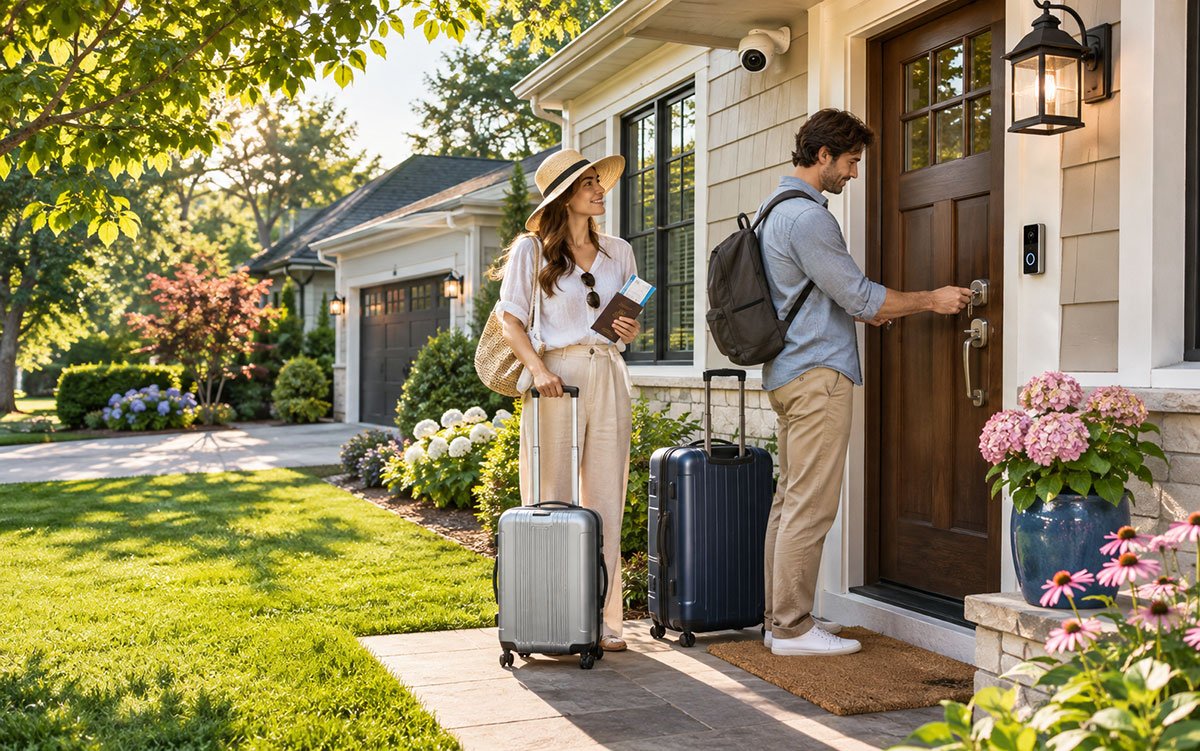
Simple precautions such as securing doors, maintaining outdoor areas and checking security devices can help protect your home while travelling.
Home Security Tips for Summer Vacation: 8 Essential Ways to Protect Your House
Summer holidays offer a welcome opportunity to relax, visit family or explore somewhere new. However, while you are planning flights, accommodation and activities, it is easy to overlook an important detail: preparing your home for your absence.
An unattended property can face risks ranging from opportunistic burglary to storm damage, water leaks and other household emergencies.
Fortunately, you do not need an expensive security system or major renovations to take sensible precautions.
These home security tips for summer vacation explain eight practical ways to protect your house before travelling. From securing doors and arranging mail deliveries to using smart technology and preparing for summer weather, a little planning can make your holiday more relaxing.
1. Secure Every Door, Window and Entry Point
Start with the most basic home security measure: checking that every accessible entrance closes and locks properly.
Even an advanced alarm system cannot compensate for an unlocked back door or an open ground-floor window.
Walk around your property several days before departure and examine doors, windows and other possible entry points.
Check Your Home’s Main Access Points
- Front and back doors: Test the locks and repair loose or damaged fittings.
- Windows: Close and lock accessible windows, including those on upper floors.
- Sliding patio doors: Check the locking mechanism and consider a purpose-made security bar or suitable secondary lock.
- Garage doors: Lock the garage and any connecting door leading into your home.
- Garden gates: Secure side entrances and boundary gates.
- Sheds and outbuildings: Lock away bicycles, tools and valuable equipment.
Avoid leaving spare keys beneath doormats, flowerpots or other obvious hiding places.
Instead, give an emergency key to someone you trust or use an appropriately secured access arrangement.
If your doors or windows need repairs, arrange them before travelling rather than leaving the problem unresolved.
2. Stop Mail and Reschedule Deliveries
An overflowing letterbox or parcels accumulating outside can suggest that nobody has been home for several days.
Before your summer holiday, check which letters, subscriptions and online orders might arrive while you are away.
Pause or reschedule deliveries wherever possible.
Consider a Temporary Mail-Holding Service
Depending on your country, your postal provider may offer a service that holds mail until you return.
For example, the United States Postal Service provides a Hold Mail service for eligible addresses, generally covering periods of 3 to 30 days.
In the United Kingdom, Royal Mail offers a Keepsafe service that temporarily holds eligible mail under its published conditions.
Other countries have different arrangements, so check your local postal operator’s official website.
Remember that stopping postal deliveries may not automatically affect independent couriers.
If you expect a package, arrange delivery to a collection point or ask a trusted person to receive it.
3. Ask a Trusted Neighbour or Friend to Keep Watch
One of the most useful precautions costs little or nothing: arranging for someone nearby to check your property.
A reliable neighbour, friend or family member can identify problems that cameras and automated alerts might miss.
For example, they may notice a damaged window, overflowing mailbox, water leak or unusual activity.
What Can Your Trusted Contact Do?
Depending on your arrangements, they could:
- Visit the property periodically.
- Collect unexpected parcels and letters.
- Move rubbish bins on collection days.
- Check for visible damage after a storm.
- Water plants or arrange garden care.
- Notify you about suspicious activity.
- Contact emergency services if a serious incident occurs.
Provide your travel contact details and explain how to reach you in an emergency.
You may also wish to share the telephone number of a reliable local plumber, electrician or property manager.
Do not expect a neighbour to confront intruders or investigate a potentially dangerous situation.
If someone suspects a burglary is taking place, they should contact the appropriate local police service.
4. Use Lighting Timers to Make Your Home Look Occupied
Lighting can help make an unattended property appear less obviously vacant.
Rather than leaving every light on throughout your holiday, consider using programmable timers or compatible smart bulbs.
These devices can switch selected lights on and off at normal times.
Create a Natural Lighting Schedule
For example, you could:
- Switch a living-room lamp on during the evening.
- Turn bedroom lighting off around your usual bedtime.
- Use suitable motion-activated lighting near entrances.
- Vary the operation of selected lights rather than keeping them on continuously.
Choose electrical devices appropriate for the lights or appliances they control.
Avoid using unsuitable timers with heaters, cooking equipment or other high-powered appliances.
Test your lighting arrangements before departure to make sure they work as expected.
A lighting timer does not guarantee security. However, it can complement properly locked doors, alarms and other practical precautions.
5. Maintain Your Lawn, Garden and Outdoor Areas
Summer vegetation can grow quickly, especially in warm or rainy conditions.
An overgrown lawn, neglected driveway or overflowing rubbish bin may suggest that a property has remained unattended.
Before travelling, tidy your garden and make arrangements for essential maintenance during longer trips.
Improve Visibility Around Your Home
Pay particular attention to bushes and trees near entrances.
Overgrown shrubs can obstruct views of doors and windows, potentially creating areas where someone can remain unnoticed.
Consider these precautions:
- Trim vegetation around entrances and accessible windows.
- Cut the lawn before departure.
- Arrange additional garden maintenance if necessary.
- Store ladders, garden tools and outdoor equipment securely.
- Remove unnecessary clutter near gates and doors.
- Check that outdoor lights illuminate the intended areas.
If your driveway will remain empty, a trusted neighbour may be willing to park there occasionally, where permitted and practical.
You do not need to create an elaborate impression that someone is home. A well-maintained property and an ordinary routine are sensible starting points.
Prepare Outdoor Areas for Summer Storms
If your home faces heavy summer rainfall, thunderstorms or tropical storms, outdoor maintenance also helps reduce weather-related risks.
Secure lightweight garden furniture, decorations and other objects that strong winds could move.
Keep gutters and drainage channels clear, and check for obvious problems with roof coverings or exterior fittings.
Follow local weather warnings and arrange appropriate help if hazardous conditions develop while you are away.
6. Check Your Alarm, Cameras and Smart Security Devices
Modern security technology can provide additional monitoring while you travel.
Video doorbells, motion detectors, security cameras and connected alarms may help identify activity around your property.
However, even a sophisticated system needs regular maintenance.
Test Your Equipment Before Travelling
A few days before departure:
- Check that cameras and sensors work.
- Charge wireless security devices or replace weak batteries.
- Test your alarm system.
- Confirm that mobile notifications reach your phone.
- Review camera recording and storage settings.
- Check that your internet connection works reliably.
- Update emergency contact information.
If you use professional alarm monitoring, confirm the arrangements and instructions for responding to alerts.
A security sign alone does not provide the protection of a functioning alarm system.
Protect Your Smart Home Accounts
Smart security devices can create cybersecurity risks if you neglect account protection.
Use strong, unique passwords and enable two-step verification when available.
Install security updates from the manufacturer and avoid devices that no longer receive support.
Only grant remote access to people who genuinely need it.
Remember that connected cameras and alarms may stop working during internet or power outages. Maintain suitable physical security even when you have remote monitoring.
7. Protect Valuables and Keep Your Travel Plans Private
Your summer holiday should not become a public announcement that your house will remain empty.
Posting travel dates, airport check-ins and real-time holiday photographs can reveal more about your absence than you intend.
Consider sharing some photographs after you return rather than publishing your entire itinerary while travelling.
Be Careful on Social Media
Before departure:
- Review privacy settings on social media accounts.
- Avoid posting your exact departure and return dates publicly.
- Limit public location-sharing features.
- Ask family members not to announce that the property is empty.
- Be cautious about photographs that reveal your address or security arrangements.
Even restricted posts can reach a wider audience when someone else shares them.
Store Important Valuables Securely
Before leaving, remove valuables from easily visible locations.
Pay attention to jewellery, electronics, spare vehicle keys, financial documents and other important possessions.
Keep items you are not taking in secure storage appropriate to their value.
If possible, maintain photographs and identifying records of valuable belongings. These details may help if you need to report theft or support an insurance claim.
Do not leave vehicle keys near entrances or accessible windows.
8. Prepare Your House for Heat, Rain and Other Summer Hazards
Burglary prevention is only one part of protecting your home during a summer holiday.
Heat, humidity, heavy rainfall and unexpected plumbing failures can cause damage even when nobody enters the property.
Before leaving, review the systems that help keep your house safe and in good condition.
Prevent Water Leaks
Inspect visible plumbing connections, taps and areas where leaks have occurred previously.
Fix problems before travelling.
Depending on your property, it may be appropriate to shut off the main water supply or individual appliance valves.
However, some heating, cooling, fire-protection and other building systems require a continuous water supply.
Check the manufacturer’s instructions or obtain professional advice before changing essential services.
If you use connected water-leak sensors, test their alerts before departure.
Manage Summer Heat and Humidity
In hot and humid climates, switching off all cooling or dehumidification equipment may allow indoor moisture levels to rise.
Excess humidity can contribute to condensation and mould problems.
The US Environmental Protection Agency advises keeping indoor relative humidity below 60%, ideally between 30% and 50% where practical.
Check whether your home requires a suitable air-conditioning or dehumidification setting while unoccupied.
The appropriate arrangement depends on your climate, building design and equipment.
Avoid choosing a universal thermostat setting without considering those factors.
Reduce Electrical and Fire Risks
Unplug non-essential appliances where appropriate, particularly equipment that generates heat.
Leave essential equipment operating when necessary, including refrigerators, security systems and devices required for safe building operation.
Test smoke alarms and ensure that they have an appropriate power supply.
Never disconnect smoke detectors simply because nobody will be home.
Review Your Home Insurance
Some home insurance policies restrict coverage when a property remains unoccupied beyond a specified period.
Others impose conditions involving security precautions or periodic property inspections.
Before an extended holiday, check:
- The policy’s definition of an unoccupied property.
- Whether you need to notify the insurer.
- Any requirements for checking the house.
- Coverage for burglary, fire, storms and water damage.
- Claim notification procedures.
Do not assume that travel insurance protects your house. Home insurance and travel insurance serve different purposes.
Summer Vacation Home Security Checklist
A final inspection before departure can help prevent small oversights.
Use this checklist when preparing to leave.
Several Days Before Your Holiday
- Inspect doors, windows and locks.
- Test alarms and security cameras.
- Arrange a trusted neighbour or friend to check the house.
- Pause mail and reschedule parcel deliveries.
- Mow the lawn and trim overgrown vegetation.
- Secure outdoor furniture and tools.
- Check gutters and drainage areas.
- Review home insurance requirements.
- Arrange suitable care for pets and plants.
- Repair obvious plumbing or electrical problems.
On the Day of Departure
- Close and lock all external doors and windows.
- Secure the garage, gates and garden shed.
- Remove visible spare keys.
- Store valuable belongings securely.
- Switch off non-essential electrical equipment.
- Confirm appropriate water and cooling arrangements.
- Activate lighting timers.
- Arm the home alarm.
- Check camera notifications and batteries.
- Share emergency contact details with your trusted contact.
- Complete a final walk-through before leaving.
Allow enough time for this inspection rather than rushing through it moments before departure.
What Should You Do if an Emergency Happens While You Are Away?
Even with careful planning, a serious storm, alarm notification or unexpected household problem may require action.
If you receive a security alert, first review the available information.
A camera may detect ordinary movement caused by animals, trees or passing vehicles.
However, if the evidence suggests an active break-in, contact the appropriate police service or your alarm-monitoring provider.
Do not ask a neighbour to enter a potentially unsafe property.
For a suspected water leak, electrical fault or storm damage, contact a qualified local professional or trusted property manager.
If the incident may involve an insurance claim, notify your insurer promptly and keep records of relevant expenses, photographs and correspondence.
Frequently Asked Questions About Summer Vacation Home Security
How Can I Secure My House Before Going on Summer Vacation?
Start by locking all doors and windows, securing outdoor equipment and checking your alarm system.
Arrange for someone trustworthy to monitor the property, manage deliveries and use appropriate lighting timers.
Also prepare for any seasonal weather risks that could affect your house.
Should I Leave Lights on While on Vacation?
Using suitable lighting timers is generally more practical than leaving lights switched on continuously.
Timers can operate selected lights during normal evening hours and help create a routine that resembles everyday occupancy.
Is It Necessary to Have a Home Security System?
A home security system can provide useful monitoring and alerts, but it is not the only way to improve property security.
Good locks, secure windows, appropriate lighting, careful storage of valuables and trusted local assistance remain important.
Should I Turn Off the Air Conditioning When Leaving for Summer Vacation?
That depends on your climate and building.
In hot, humid areas, some cooling or dehumidification may help prevent excessive indoor moisture.
Follow the equipment manufacturer’s recommendations and obtain appropriate professional advice for your property.
Can I Leave My House Empty for Several Weeks?
An extended absence may require additional precautions.
Review your home insurance conditions, arrange property checks and make sure essential systems can operate safely while you are away.
Some insurers impose special requirements after a defined period without occupants.
What Is the Best Way to Handle Unexpected Deliveries?
Reschedule deliveries before departure whenever possible.
You can also use a suitable postal holding service or arrange for someone you trust to collect unexpected parcels.
Leave Home Secure and Enjoy Your Summer Holiday
Preparing your home for a summer holiday does not have to be complicated.
A reliable locking routine, suitable security technology, trusted local assistance and attention to seasonal maintenance can reduce several common risks.
Start your preparations early, address maintenance problems before departure and complete a final inspection on the day you leave.
With these practical precautions in place, you can spend less time worrying about your property and more time enjoying your holiday.
