
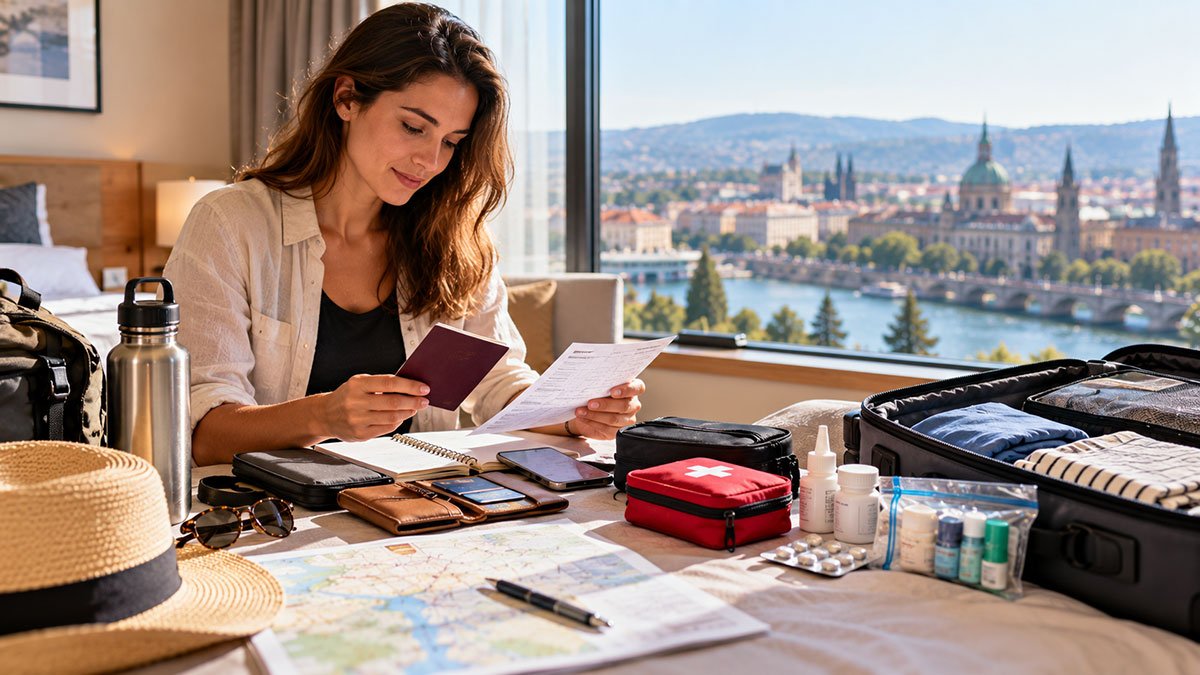
Prepare for safer international travel by organising your documents, essential medicines, first-aid supplies and travel arrangements before departure.
Health and Safety Tips for Traveling Abroad: A Practical Guide
Following sensible health and safety tips for traveling abroad can help you prepare for unfamiliar environments, reduce avoidable risks and respond more confidently if something goes wrong. Whether you are planning a city break, a beach holiday, a business trip or an adventure in a remote destination, preparation matters.
Your health needs, destination, planned activities and access to medical care will influence what you should do before departure. A trip to a major city may require different precautions from a journey involving remote hiking, tropical conditions or several international border crossings.
The key is to prepare for the risks that apply to your particular itinerary without allowing unnecessary worry to overshadow your trip. Start with reliable information, make appropriate medical and insurance arrangements, protect your documents and understand how to obtain help in an emergency.
1. Research Your Destination Before Departure
Start preparing as soon as you choose your destination. Safety conditions, health requirements, entry regulations and local laws can vary between countries and may change before your departure.
Consult your own government’s official travel advice and the destination country’s government or embassy websites. Review the guidance again shortly before leaving.
Pay particular attention to:
- Security concerns, demonstrations and areas travellers should avoid.
- Passport validity, visas and entry requirements.
- Local emergency numbers and nearby medical facilities.
- Health risks, vaccination advice and disease prevention.
- Local laws concerning medicines, alcohol, photography and other activities.
- Weather hazards, natural disasters and seasonal conditions.
- Transport safety and any restrictions affecting your itinerary.
Check transit countries as well as your final destination. You may need to satisfy specific entry or transit requirements even if you do not intend to leave the airport.
Do not rely solely on social media posts, old guidebooks or advice from someone who visited several years ago. Use current official information to make decisions about your trip.
2. Arrange a Travel Health Consultation
A routine medical appointment can help you identify health preparations that apply to your destination and activities.
The US Centers for Disease Control and Prevention (CDC) recommends seeing a healthcare provider or travel health specialist at least four to six weeks before departure when possible. This allows time to discuss vaccinations, preventive medication and destination-specific health risks.
Even if you are leaving sooner, seek appropriate advice rather than assuming it is too late to prepare.
Discuss Your Itinerary and Health Needs
Tell your healthcare professional which countries you plan to visit, how long you will stay and what activities you intend to undertake. Mention any existing medical conditions, allergies, pregnancy, regular medicines or mobility needs that could affect your travel.
Depending on your destination, the consultation may cover:
- Routine and destination-specific vaccinations.
- Mosquito- or tick-borne disease prevention.
- Food- and water-related illnesses.
- Altitude, extreme heat or other environmental risks.
- Management of existing medical conditions while travelling.
- Preventive medicines where a clinician considers them appropriate.
Check official destination-specific guidance rather than assuming every traveller needs the same vaccinations or medicines.
Prepare for Long Journeys
Long flights and extended periods of sitting can affect comfort and, for some travellers, increase the risk of blood clots. Follow suitable movement and hydration advice during long journeys, and seek medical guidance if you have personal risk factors.
If you rely on medical devices or need assistance during a flight, check your airline’s requirements before departure.
3. Check Your Travel Insurance Carefully
Travel insurance can help protect you against certain unexpected costs, but the coverage varies by policy. Do not assume that your regular health insurance will pay for medical care overseas or an emergency evacuation.
Before purchasing a policy, check whether it covers the risks relevant to your trip.
| Coverage | What to check |
|---|---|
| Emergency medical treatment | Hospitalisation, consultations and eligible treatment costs |
| Medical evacuation | Transport to an appropriate medical facility when necessary |
| Repatriation | Arrangements and coverage for returning home when medically required |
| Trip cancellation or interruption | Covered reasons, limits and exclusions |
| Baggage and personal belongings | Theft, loss, damage and claim limits |
| Adventure activities | Whether planned hiking, diving, rafting or other activities are covered |
| Existing medical conditions | Disclosure requirements and applicable exclusions |
Pay attention to exclusions, excesses, maximum benefits and any requirements to contact the insurer before arranging non-emergency treatment.
Save the insurer’s emergency contact details and policy documents where you can access them without an internet connection. If you need medical care abroad, contact the insurer’s assistance service as soon as practical and follow its instructions.
For remote travel or activities that involve additional risks, verify that the policy covers your actual itinerary rather than assuming standard holiday insurance will be sufficient.
4. Carry Prescription Medicines Safely
If you take regular medication, organise your supplies before leaving home. Finding the same medicine overseas can be difficult because availability, names and formulations differ between countries.
Pack enough medication for the planned trip, plus a reasonable extra supply in case delays extend your stay. Follow your prescriber’s instructions and keep essential medicines in your carry-on baggage where permitted, rather than relying on checked luggage.
Check Medication Laws Before You Travel
Some countries restrict medicines that are commonly available in other countries, including certain painkillers, sedatives, stimulants and other controlled substances.
Before departure, verify the rules for your destination and every country where you may pass through customs. Some medicines require prior authorisation, supporting documents or limits on the amount you can carry.
Keep medicines in their original labelled containers where possible. Carry a copy of the prescription and consider obtaining a letter from your healthcare professional that explains the medication’s generic name, dose and medical purpose.
Do not assume that a medicine is legal simply because your doctor prescribed it at home. If you cannot confirm that you may bring an essential medicine into a destination, contact the relevant authorities before travelling.
Prepare a Practical Travel Health Kit
Adapt your health kit to your personal needs, destination and activities. Useful items may include:
- Regular prescription medicines and necessary medical supplies.
- Prescription copies and a list of medicines, doses and allergies.
- Basic plasters and blister dressings.
- Suitable pain relief that you already know you can use safely.
- Hand sanitiser and personal hygiene supplies.
- Sunscreen and insect repellent where appropriate.
- Oral rehydration supplies where appropriate for your destination.
- Any prescribed emergency medication you may need.
Avoid carrying unnecessary medicines or taking antibiotics without appropriate medical advice. Check local restrictions before packing any medicine, including products that you buy without a prescription at home.
5. Protect Yourself From Food- and Water-Related Illness
Trying unfamiliar food is often an enjoyable part of travelling. However, local water quality, food handling and sanitation standards may differ from what you are accustomed to.
Before travelling, check the health advice for your destination. Follow local guidance about drinking water, food preparation and any current disease outbreaks.
Practical precautions include:
- Wash your hands with soap and water before eating and after using the toilet.
- Use hand sanitiser when soap and water are unavailable.
- Follow destination-specific advice on drinking water and ice.
- Choose food that has been thoroughly cooked and served hot when local guidance recommends this approach.
- Wash fruit with safe water or peel it yourself when appropriate.
- Keep food stored safely, particularly in hot weather.
- Be cautious about food from sources where cleanliness and proper storage are uncertain.
These are general precautions, not guarantees against illness. The level of risk varies by destination, and official health guidance should inform your choices.
Avoid Dehydration and Heat-Related Illness
Hot weather, physical activity and gastrointestinal illness can cause dehydration. Drink safe fluids regularly and take breaks in the shade when necessary.
Use suitable sun protection and clothing, and avoid pushing yourself during extreme heat. If your itinerary involves strenuous outdoor activities, plan around the expected conditions and carry enough water.
If you develop persistent vomiting or diarrhoea, signs of significant dehydration or other concerning symptoms, seek medical advice promptly.
6. Stay Alert and Protect Your Belongings
Personal safety depends partly on understanding the environment around you. Research common risks at your destination and adopt precautions that suit the locations you visit.
In crowded tourist areas, markets and public transport, keep your phone, wallet and passport secure. Pickpocketing and distraction scams can occur in busy places, so avoid leaving valuables exposed or unattended.
A few simple habits can help:
- Carry only the cash and payment cards you need for the day.
- Store a backup payment method separately.
- Keep copies of your passport and other key documents apart from the originals.
- Use accommodation safes where appropriate, while recognising that no storage method is completely risk-free.
- Use reputable transport providers and check your route before setting off.
- Be cautious when strangers pressure you to accept help, pay unexpected fees or share personal information.
- Avoid displaying expensive equipment unnecessarily.
- Keep an eye on your drinks and belongings in bars, restaurants and social settings.
Do not leave all your money, documents and bank cards in one bag. Separating them reduces the chance that a single loss will leave you without access to funds or identification.
Protect Your Digital Information
Travel safety also involves protecting personal data. Avoid posting passport details, boarding passes or live accommodation information publicly.
Use strong passwords and multi-factor authentication for important accounts. Keep essential reservations and emergency information available offline, and be cautious about entering banking credentials on unfamiliar networks.
Before departure, make sure you can contact your bank if a card is lost or suspicious transactions appear.
7. Plan Transport and Activities With Safety in Mind
Unfamiliar roads, local driving customs, weather and activity-related hazards can create risks that travellers do not encounter at home.
Before arranging a car rental, check local licence requirements, insurance terms, traffic laws and road conditions. Some destinations require an International Driving Permit in addition to your driving licence.
When using taxis or ride-hailing services, verify the vehicle and driver details before getting in. Follow local advice on which transport providers and routes are considered reliable.
If you plan to hike, dive, cycle, raft or participate in another adventure activity, assess the risks before booking. Check operator credentials, safety equipment, weather restrictions, physical requirements and the insurance coverage applicable to the activity.
For remote adventures, research the route, carry appropriate equipment and tell someone your plans. Do not rely on mobile phone coverage in areas where it may be unreliable.
8. Know How to Get Help During an Emergency
A medical problem, stolen passport or local emergency can be more difficult to handle when you are unfamiliar with the language and services available.
Before departure, save the local emergency number, your accommodation’s contact information, your insurer’s assistance number and your country’s nearest embassy or consulate details.
Share your itinerary with a trusted person and agree on a way to communicate if circumstances change.
If You Need Medical Care Abroad
For a serious or life-threatening emergency, contact the local emergency services immediately. Do not delay urgent treatment while trying to reach an insurer or embassy.
For non-emergency care, your travel insurer may help identify a suitable medical provider and explain the claims process. Hotels, reputable local clinics and your country’s embassy or consulate may also provide information about finding medical assistance.
Keep copies of medical records, prescriptions and receipts for treatment received. If a clinician prescribes new medicines abroad, obtain clear documentation of the treatment and instructions.
An embassy may help you find information about local healthcare providers or contact family in an emergency. It generally does not replace a doctor, pay medical bills or guarantee that treatment will be available.
If Your Passport Is Lost or Stolen
Report the loss to the appropriate local authorities where required, and contact your country’s embassy or consulate for advice on replacement travel documents.
Use your saved copies of the passport and travel confirmations to help establish your identity. Contact your airline or other transport provider if the loss affects upcoming travel arrangements.
If you lose a bank card or suspect fraud, contact the issuer promptly to block the card and review recent transactions.
9. Follow Official Travel Alerts and Emergency Guidance
Conditions can change after you book a trip. Severe weather, natural disasters, public demonstrations, transport disruptions or security incidents may affect your plans.
Check official travel advice before departure and continue monitoring it during your trip. If local authorities issue safety instructions, follow them and avoid restricted areas.
What Is the Smart Traveler Enrollment Program?
The US Department of State operates the Smart Traveler Enrollment Program (STEP), a free service for eligible US citizens travelling or living abroad. It provides email alerts from US embassies and consulates and helps officials contact travellers or their emergency contacts during an emergency.
US citizens can enrol through the official STEP website.
STEP is a US government service, not a universal international registration programme. Travellers of other nationalities should check whether their own government offers a similar service.
Registration does not eliminate travel risks or guarantee evacuation. It is one way to receive relevant official information and improve communication during an emergency.
10. Know When to Seek Medical Advice
It can be tempting to ignore an illness because you do not want to interrupt your holiday. However, delaying care may allow some conditions to become more serious.
Seek medical attention when symptoms are severe, persistent or worsening, or when you have concerns about a possible infection or injury. Use local emergency services for life-threatening symptoms.
If you experience fever or other concerning symptoms after visiting a destination where particular infections occur, tell your healthcare professional where you travelled and when you returned. Travel history can help guide medical assessment.
Keep records of any diagnosis, treatment and medication you receive abroad. These details may help healthcare professionals provide appropriate follow-up care during your journey or after you return home.
International Travel Safety Checklist
Use this checklist before departure to make sure you have covered the essentials.
Travel safety checklist
Destination and documents
Health preparation
Personal safety
Emergency readiness
Final Thoughts
Safe international travel starts with preparation, not with trying to predict every possible problem. Research your destination, arrange appropriate health care and insurance, check medication rules and protect your documents.
During your trip, pay attention to your surroundings, follow local guidance and seek professional help when necessary. Keep essential information accessible and know whom to contact if plans change.
These health and safety tips for traveling abroad can help you make informed decisions while leaving room to enjoy the people, places and experiences that make international travel worthwhile.
