
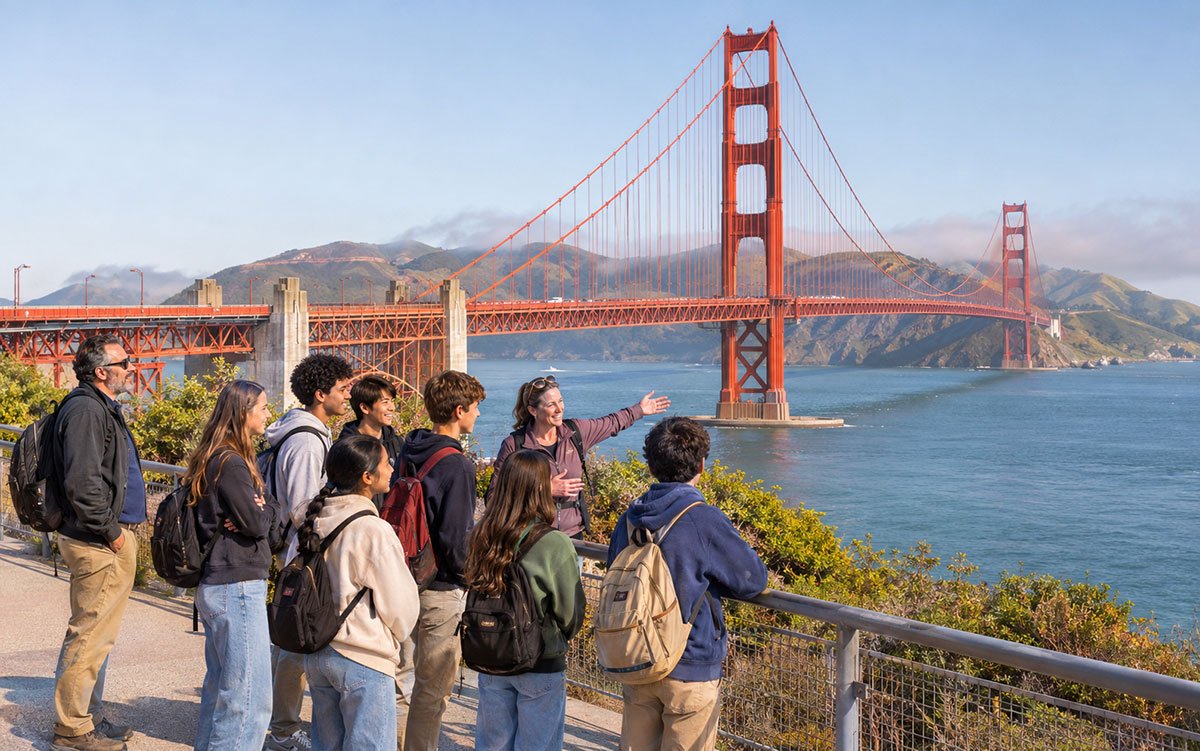
Students and teachers enjoy an educational visit to San Francisco’s Golden Gate Bridge, one of California’s most famous landmarks and a popular destination for school trips.
10 Best Places to Visit in California on a School Trip
California is an exciting destination for school trips, offering everything from famous theme parks and Hollywood attractions to science museums, historic landmarks and outdoor learning experiences. Whether you are organising a high-school graduation excursion or an educational field trip, the state offers opportunities to combine classroom learning with memorable adventures.
Planning a California school trip involves more than choosing popular attractions. Teachers and organisers must also consider educational objectives, students’ ages, travel distances, supervision requirements and group admission arrangements.
Southern California is particularly appealing for theme parks, film-related attractions and interactive museums. Meanwhile, San Francisco and the Monterey Bay area offer outstanding opportunities to explore engineering, marine biology and environmental science.
Here are 10 of the best places to visit in California on a school trip, along with practical advice to help students, teachers and group organisers make the most of their journey.
Best Places for a California School Trip at a Glance
| Attraction | Location | Best For |
|---|---|---|
| Disneyland Resort | Anaheim | Entertainment, creativity and educational workshops |
| Universal Studios Hollywood | Universal City | Film production and entertainment |
| California Science Center | Los Angeles | Science, engineering and space exploration |
| Griffith Observatory | Los Angeles | Astronomy and space science |
| Santa Monica Pier | Santa Monica | Coastal ecology and recreation |
| Knott’s Berry Farm | Buena Park | Physics, history and amusement rides |
| Original Farmers Market | Los Angeles | Food culture and local history |
| Golden Gate Bridge | San Francisco | Engineering, history and architecture |
| California Academy of Sciences | San Francisco | Biodiversity and natural sciences |
| Monterey Bay Aquarium | Monterey | Marine biology and ocean conservation |
1. Disneyland Resort, Anaheim: Entertainment and Creative Learning
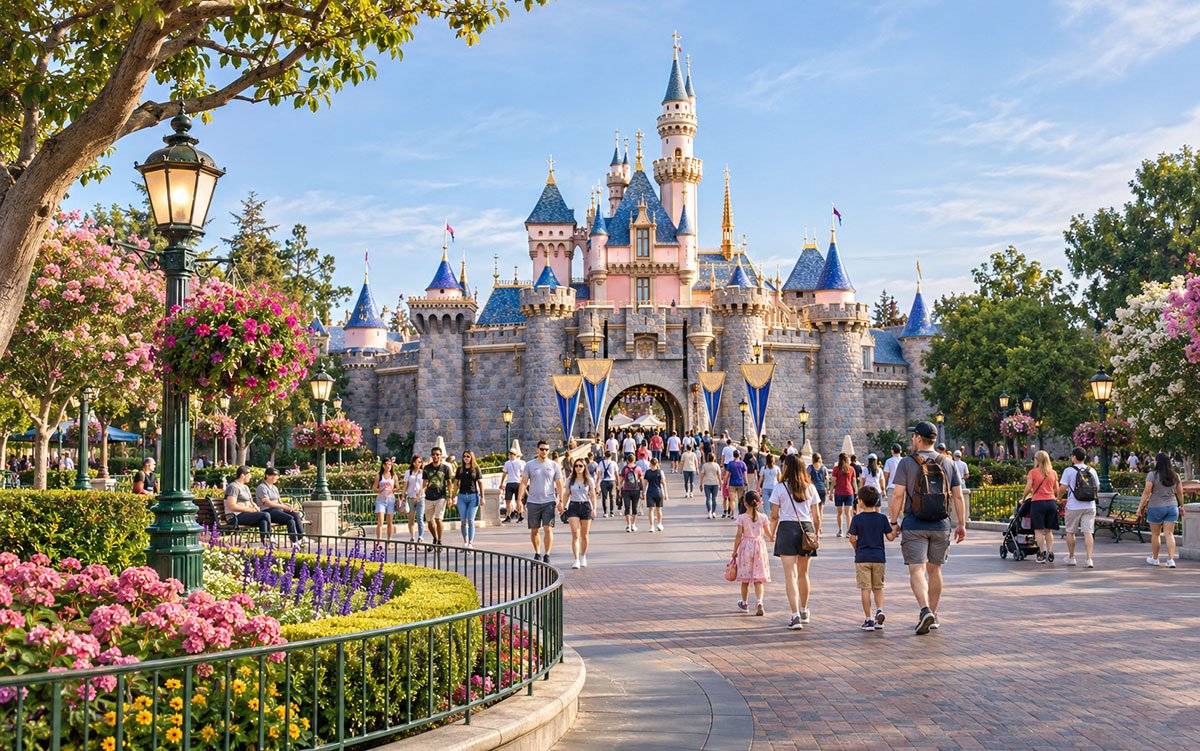
Disneyland Resort in Anaheim, California, welcomes visitors with its iconic Sleeping Beauty Castle, beautiful gardens and exciting theme park attractions.
Disneyland Resort in Anaheim is one of California’s best-known attractions for student groups. It combines themed entertainment, creative storytelling and opportunities to explore how technology shapes visitor experiences.
The resort includes Disneyland Park, which opened in 1955, and Disney California Adventure Park.
Students can explore themed environments inspired by animated stories, adventure, science fiction and California culture.
Educational Opportunities at Disneyland
Disney Imagination Campus offers organised student experiences that connect theme park entertainment with academic subjects.
Depending on the available programme, students may explore:
- Science and technology used in theme park attractions
- Physics principles behind rides and special effects
- Creative storytelling and design
- Leadership, teamwork and innovation
- Performing arts and entertainment production
These organised workshops can add educational value to a visit that might otherwise focus entirely on recreation.
School trip planning tip: Eligible educational and youth organisations can enquire about Disney Imagination Campus programmes and student ticket packages. Workshop participation has minimum group-size requirements, and separate registration is necessary.
General Disneyland admission also requires a valid ticket and a park reservation for the applicable date and park. Confirm the booking arrangements that apply to your group package.
2. Universal Studios Hollywood: Discover the World of Filmmaking
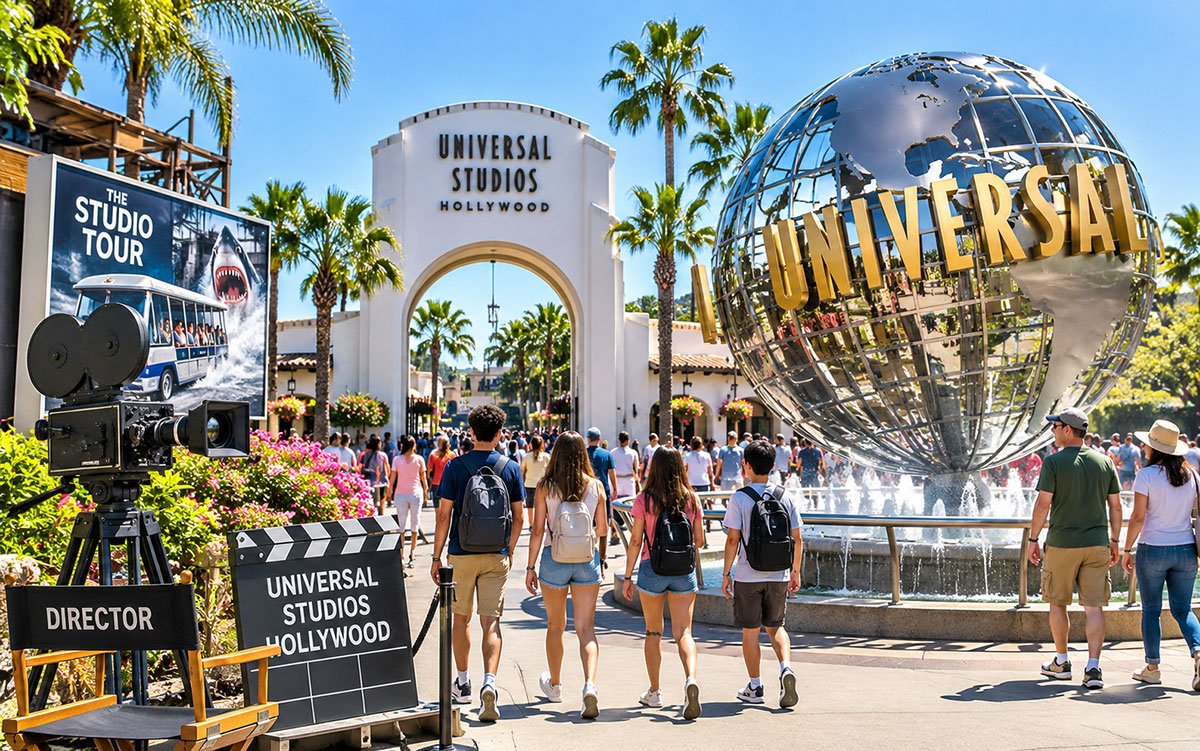
Universal Studios Hollywood in California offers visitors an exciting introduction to the world of filmmaking, studio tours, cinematic attractions and entertainment.
Universal Studios Hollywood combines a working film studio with a major entertainment theme park.
Located in Universal City, it offers an engaging introduction to film production, visual storytelling and the technology used to create screen entertainment.
For students interested in cinema, media studies, performing arts or creative careers, it can be one of the most memorable stops on a California itinerary.
The Famous Studio Tour
The World-Famous Studio Tour is a major attraction.
Visitors travel through parts of the working studio environment while discovering how sets, props and special effects contribute to film and television production.
The experience combines genuine studio-related sights with staged entertainment sequences.
Students can use the visit to explore questions such as:
- How do filmmakers construct believable environments?
- What roles do sound, lighting and visual effects play in storytelling?
- How do production designers create fictional settings?
- How does filmmaking combine artistic and technical skills?
The park also features themed attractions, live entertainment and immersive experiences.
School trip planning tip: Allow a substantial part of the day for the park. Universal’s official ticket guidance does not currently advertise a general group discount, so organisers should contact its group sales team for available arrangements rather than assuming reduced admission.
3. California Science Center: Hands-On Science in Los Angeles
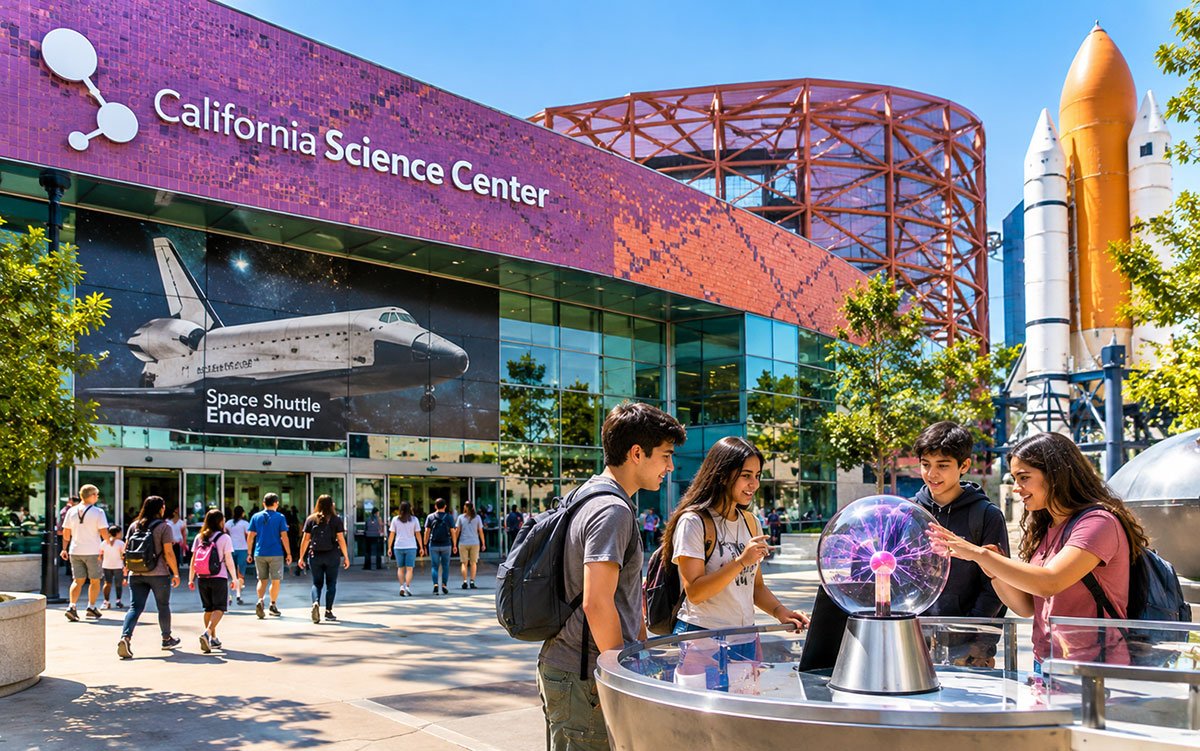
The California Science Center in Los Angeles offers students exciting opportunities to explore science, engineering, technology and space exploration through interactive educational experiences.
The California Science Center is an excellent destination for school groups interested in science, engineering and technology.
Located in Exposition Park in Los Angeles, the institution encourages visitors to explore scientific ideas through interactive exhibits and educational experiences.
Its subject areas include ecosystems, human biology, technology and space exploration.
What Can Students Learn?
A visit can support classroom learning through topics such as:
- Human biology and living systems
- Environmental science and ecosystems
- Engineering principles and technological innovation
- Aviation and space exploration
- Scientific observation and experimentation
The Science Center’s air-and-space facilities include the Space Shuttle Endeavour project, although access to specific galleries and exhibits should be checked before planning activities around them.
Organisers can also explore available educational programmes and IMAX presentations.
School trip planning tip: Confirm which galleries are operating, whether organised group reservations are required and which experiences carry additional admission charges.
Exposition Park also contains other cultural and scientific institutions, making it useful for a broader educational itinerary.
4. Griffith Observatory: Astronomy and Spectacular Los Angeles Views
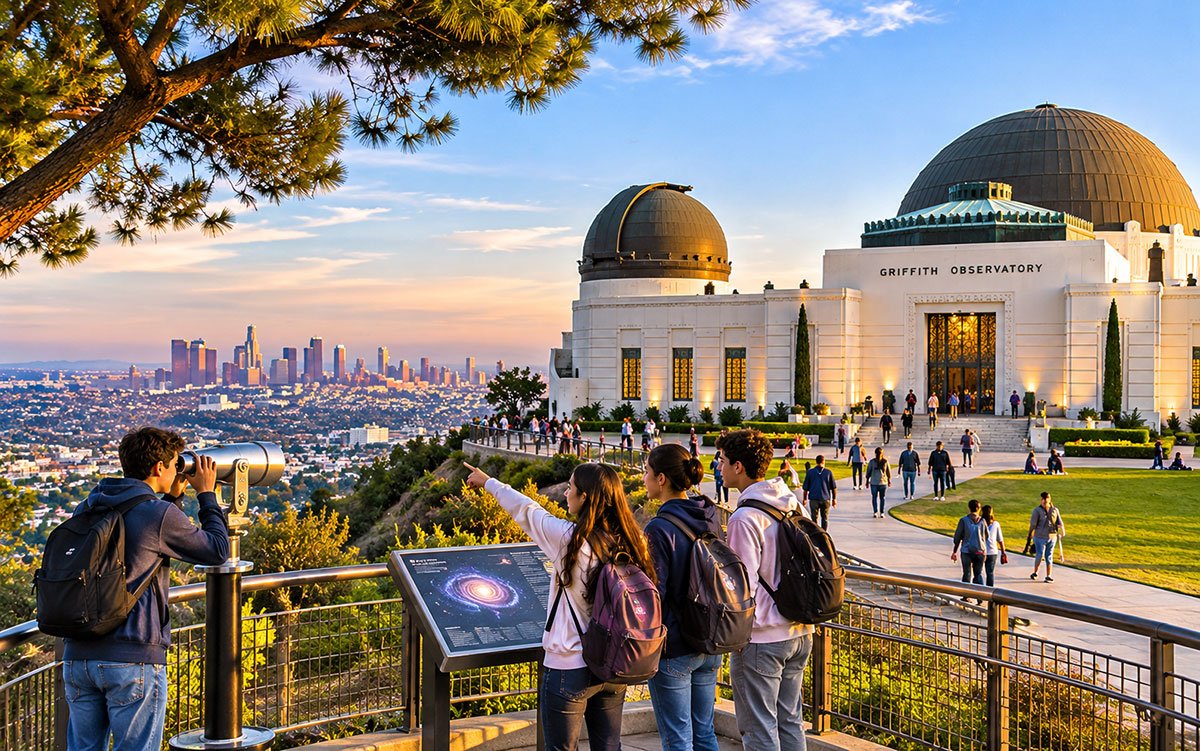
Griffith Observatory in Los Angeles offers spectacular city views and educational experiences in astronomy, space science and the wonders of the universe.
Griffith Observatory is one of the best places in California for students interested in astronomy and space science.
Situated in Griffith Park above Los Angeles, the observatory offers engaging exhibits, astronomical instruments and panoramic views across the city.
Visitors can explore scientific subjects ranging from planetary motion to the structure of the universe.
Educational Highlights
The observatory provides opportunities to learn about:
- The Sun, Moon and planets
- Astronomy and celestial observation
- The history of scientific discoveries
- Telescopes and observing instruments
- The relationship between Earth and space
The Samuel Oschin Planetarium offers additional educational experiences through scheduled presentations.
General admission to the observatory building and grounds is free, although planetarium shows require separate tickets.
School Programmes and Reservations
Griffith Observatory offers a structured fifth-grade school programme designed around astronomy education.
Teachers should distinguish this programme from ordinary public visits, which are available to visitors of other ages during regular opening arrangements.
School trip planning tip: The observatory is normally closed on Mondays. Check the official calendar, school programme eligibility and transport arrangements before visiting.
Parking near the building can be limited, so school groups should plan their arrival and departure carefully.
5. Santa Monica Pier: Oceanfront Fun and Marine Education
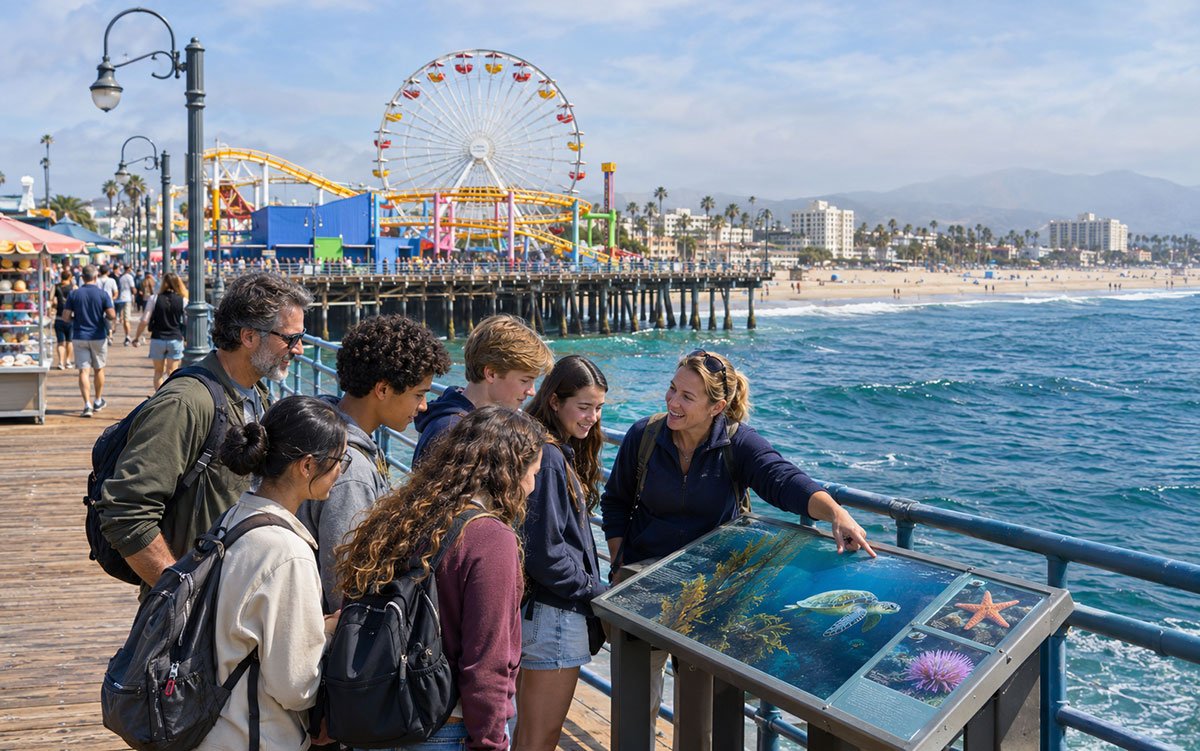
Santa Monica Pier in California combines oceanfront entertainment with marine education, offering students opportunities to explore coastal ecosystems and enjoy views of the Pacific Ocean.
Santa Monica Pier is one of Southern California’s most recognisable coastal landmarks.
Situated beside Santa Monica Beach, the historic pier combines Pacific Ocean views, amusement rides and recreational attractions.
Its colourful Ferris wheel and lively seaside setting make it particularly attractive for students seeking a balance between sightseeing and outdoor recreation.
Activities for Student Groups
Popular experiences include:
- Enjoying the coastal scenery and pier attractions
- Exploring Pacific Park’s amusement rides
- Learning about Santa Monica’s tourism history
- Observing the local coastal environment
- Participating in organised marine education programmes
The historic carousel building is another distinctive feature of the pier.
Learn About the Pacific Ocean
Heal the Bay operates marine education programmes connected with Santa Monica Bay and the coastal environment.
Its educational activities can introduce students to marine ecosystems, watershed health, pollution and ocean conservation.
The organisation also operates Heal the Bay Aquarium beneath the pier area.
However, public aquarium access and school programmes may follow different schedules, particularly during construction affecting pier access.
Teachers should confirm the arrangements directly with Heal the Bay.
School trip planning tip: For an educational visit, consider combining a supervised beach investigation with a scheduled marine science programme.
Follow local beach safety rules and establish clear boundaries for students near the shoreline and water.
6. Knott’s Berry Farm: Theme Park Fun With Educational Value
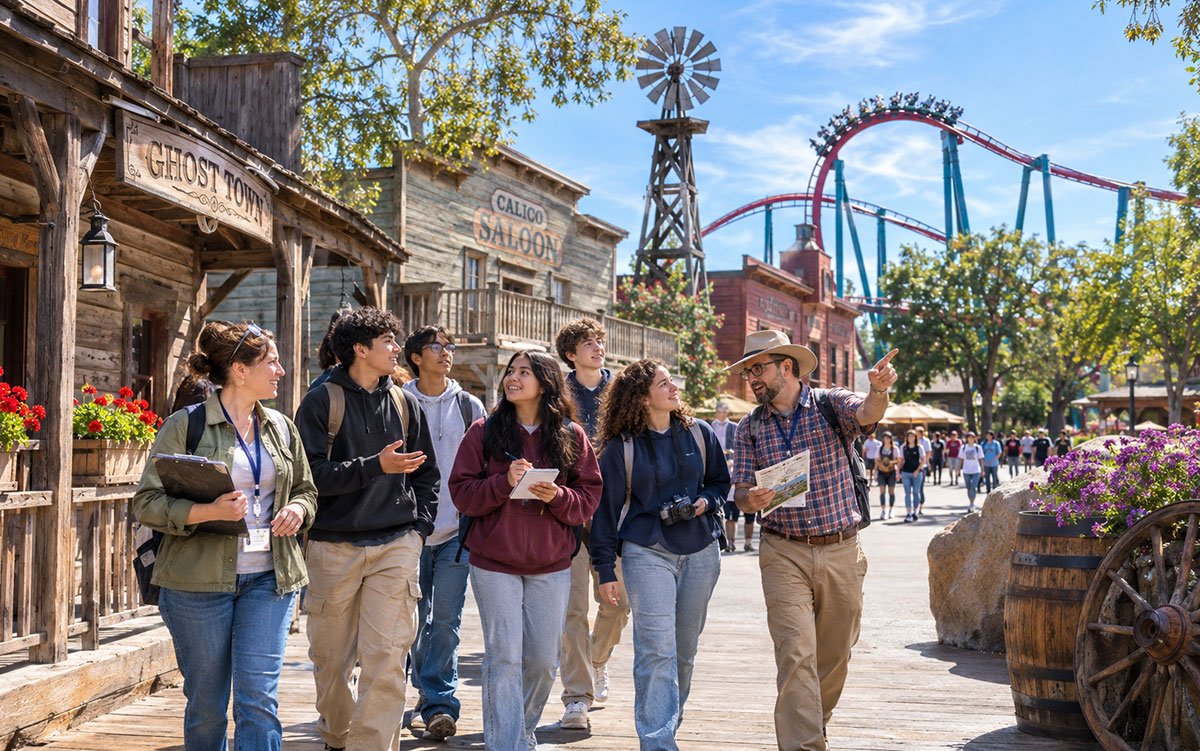
Knott’s Berry Farm in Buena Park, California, combines exciting roller coasters, historic Ghost Town attractions and educational experiences for school groups.
Knott’s Berry Farm in Buena Park is a popular Southern California theme park with a history rooted in a family farm and roadside food business.
Today, it features roller coasters, themed entertainment and historic attractions.
For schools, the park can provide both an enjoyable outing and opportunities to connect academic subjects with real-world experiences.
Educational Experiences at Knott’s Berry Farm
The park advertises student and youth programmes that can explore areas such as:
- Physics and motion
- Mathematics and engineering
- Early American history
- Performing arts and group activities
Its roller coasters and other rides can also inspire discussions about gravity, acceleration, energy and mechanical engineering.
Students interested in history may enjoy the park’s Old West-inspired Ghost Town area.
Knott’s also hosts seasonal events, although particular experiences may be separately ticketed or unsuitable for younger visitors.
School trip planning tip: Check the current student and youth group offerings, eligible group sizes and educational programme availability before making reservations.
Groups planning a full theme park day should build in meal breaks and appropriate supervision arrangements.
7. Original Farmers Market, Los Angeles: Food, Culture and Local History
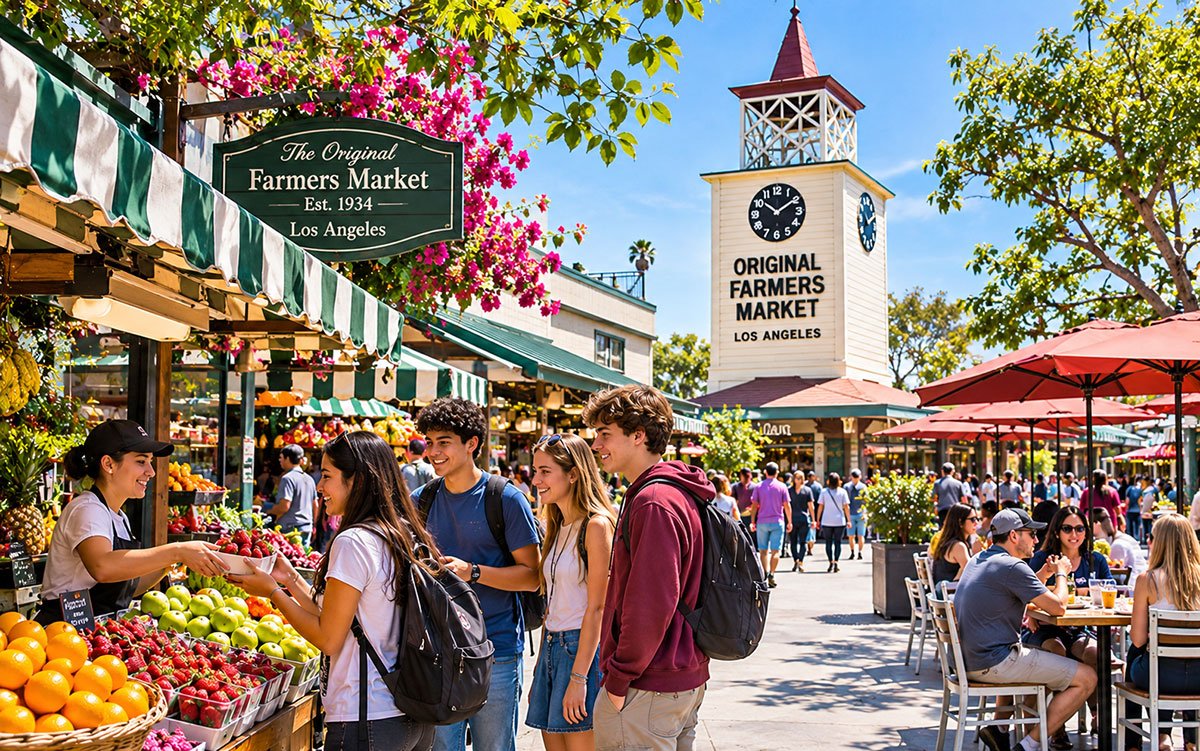
The Original Farmers Market in Los Angeles, established in 1934, offers visitors a lively combination of fresh produce, international cuisine, local history and California food culture.
The Original Farmers Market at Third Street and Fairfax Avenue offers a different kind of learning experience.
Established in 1934, the market began when farmers sold fresh produce from their vehicles. It gradually developed into a well-known Los Angeles shopping and dining destination.
Today, its food stalls, specialty grocers and independent businesses reflect the city’s diverse culinary traditions.
Why Visit With Students?
The market offers opportunities to explore:
- Los Angeles history and urban development
- Local agriculture and food distribution
- Cultural diversity through international cuisine
- Small businesses and entrepreneurship
- Food traditions and regional ingredients
A teacher might ask students to compare foods from different cultures or investigate how the market reflects changing communities in Los Angeles.
The visit can also provide a convenient lunch stop during a day exploring the city.
School trip planning tip: Give students a clear meeting point, spending guidelines and a defined exploration area.
For larger groups, consider staggering meal purchases to avoid congestion at individual vendors.
8. Golden Gate Bridge, San Francisco: Engineering and California History
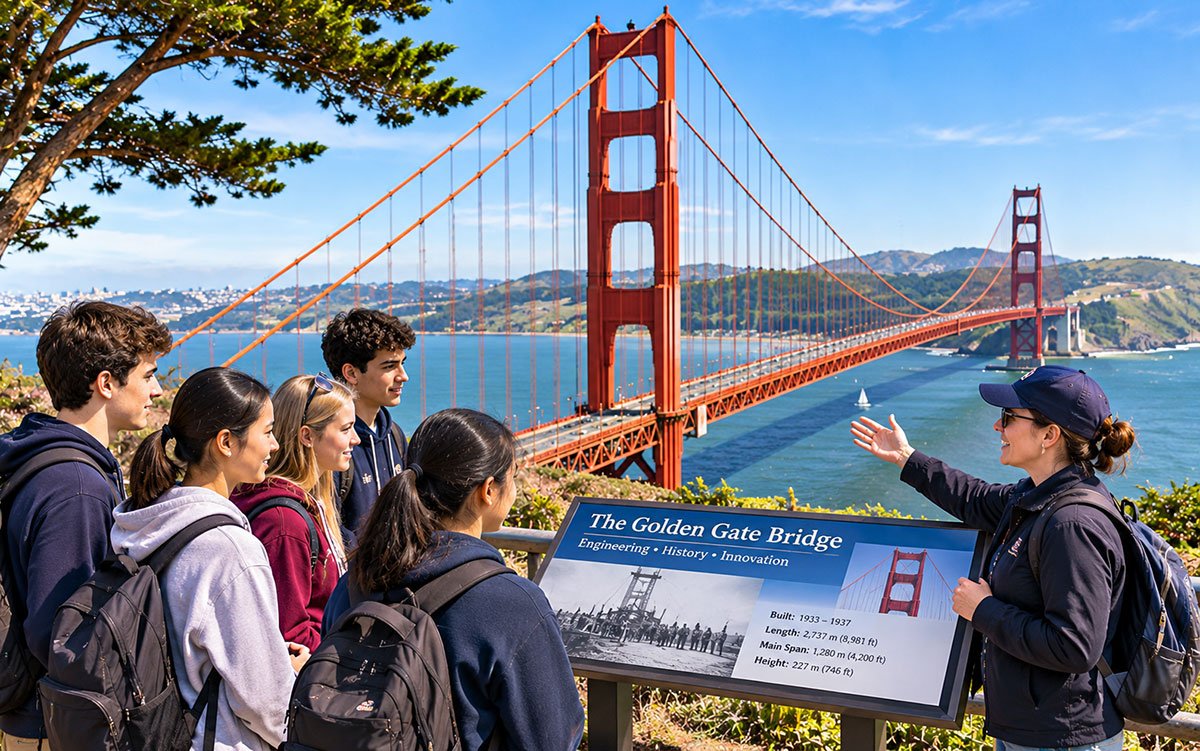
The iconic Golden Gate Bridge in San Francisco offers students an opportunity to explore suspension bridge engineering, California history and spectacular views of San Francisco Bay.
The Golden Gate Bridge is one of the most famous landmarks in the United States.
Opened in 1937, the suspension bridge connects San Francisco with Marin County across the Golden Gate strait.
For school groups, the bridge provides an opportunity to explore engineering, architecture, geography and the history of transportation.
What Can Students Learn?
A visit can introduce students to several important topics.
Engineering: Examine how suspension bridges distribute loads through cables, towers and anchorages.
History: Explore the challenges involved in constructing a major bridge across a busy waterway.
Geography: Study the relationship between San Francisco Bay, the Pacific Ocean and the surrounding coastline.
Environmental conditions: Observe how wind, fog and marine weather influence the region.
The bridge’s Welcome Center and surrounding exhibits provide additional historical and engineering information.
Walking Across the Bridge
Pedestrians can access the bridge’s designated east sidewalk during its published operating hours.
Teachers should check seasonal pedestrian access arrangements before planning a group walk.
Strong winds, cold temperatures and fog are possible, even when the weather elsewhere in California is warm.
School trip planning tip: Organise students into supervised groups, use designated pedestrian areas and keep pathways clear.
Parking around the bridge is limited, so coordinate coach arrangements or consider appropriate public transport options.
9. California Academy of Sciences: Explore the Natural World
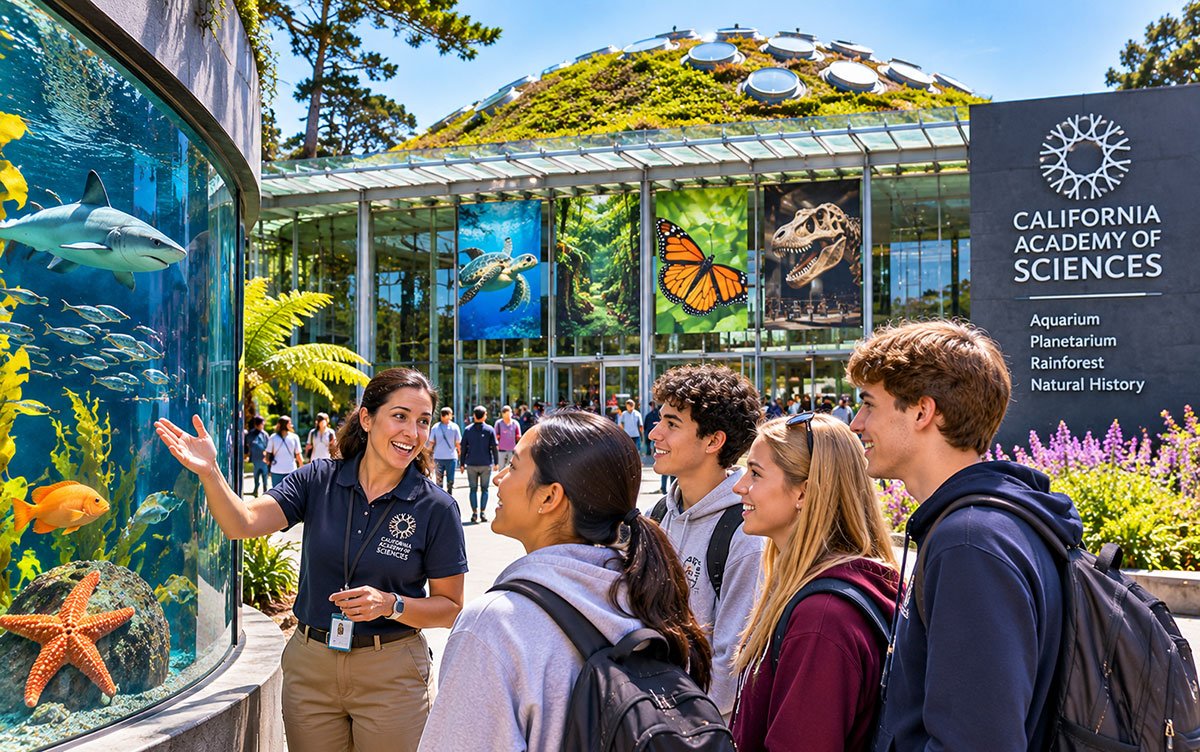
The California Academy of Sciences in San Francisco’s Golden Gate Park offers fascinating educational experiences in marine biology, rainforest ecosystems, astronomy and natural history.
Located in San Francisco’s Golden Gate Park, the California Academy of Sciences is an outstanding destination for educational travel.
The institution combines natural history, scientific research and immersive exhibitions.
Its attractions include an aquarium, rainforest environment, natural history displays and the Morrison Planetarium.
Students can explore different scientific disciplines during a single visit.
Educational Highlights
The Academy offers opportunities to investigate:
- Marine ecosystems and aquatic biodiversity
- Rainforest habitats and conservation
- Evolution and natural history
- Earth science and astronomy
- Human impacts on the environment
Teachers can use available educational resources to connect the museum visit with classroom topics.
School Group Arrangements
The Academy operates formal school field-trip programmes for eligible California school groups.
These visits require advance applications and have specific requirements concerning student numbers, supervising teachers and chaperones.
Schools outside California and other organised youth groups should enquire about the relevant general group admission options rather than assuming they qualify for subsidised school visits.
School trip planning tip: Reserve early if your group wants a planetarium presentation. School-group planetarium seating is limited and must be arranged in advance.
10. Monterey Bay Aquarium: Discover Marine Life and Ocean Conservation
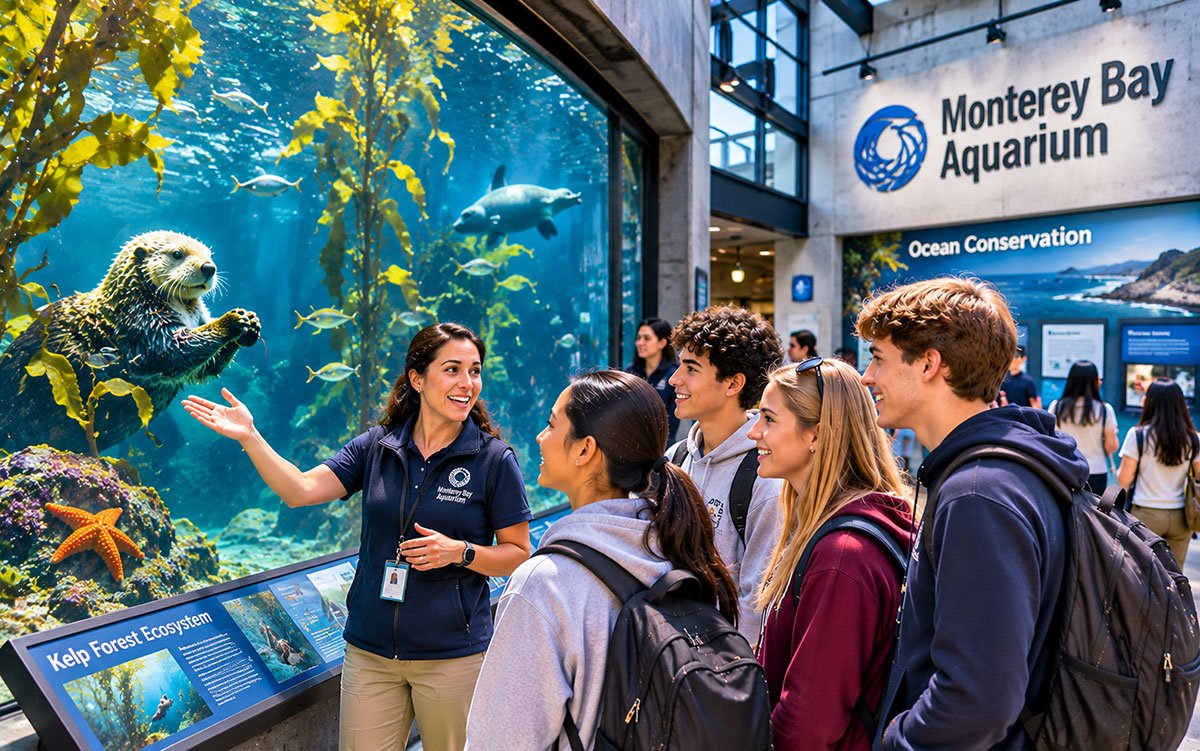
Monterey Bay Aquarium in California offers educational experiences that introduce students to marine biodiversity, kelp forest ecosystems and the importance of ocean conservation.
Monterey Bay Aquarium, located on Cannery Row in Monterey, is an exceptional destination for students interested in marine biology and environmental science.
The aquarium focuses on marine ecosystems, conservation and the relationships between ocean habitats and wildlife.
It is particularly valuable for students studying biology, geography and environmental sustainability.
What Can Students Explore?
A visit offers opportunities to learn about:
- Marine food webs and ecosystems
- Kelp forests and coastal habitats
- Ocean conservation
- Marine animal adaptations
- The effects of human activity on ocean environments
Students can observe marine species and explore how scientific research contributes to conservation.
The aquarium also provides educational resources that teachers can use before and after a visit.
Field Trips and Reservations
Monterey Bay Aquarium offers free organised field-trip programmes for qualifying school and college classes.
These programmes have eligibility rules, group-size requirements, advance booking procedures and designated visiting periods.
General visitors and groups that do not meet the education programme criteria should use the appropriate admission arrangements.
School trip planning tip: Allow enough time for students to engage with the exhibits rather than rushing through the galleries.
Monterey is outside the San Francisco metropolitan area, so a school trip from San Francisco should allow suitable travel time.
Which California Attractions Are Best for Different School Subjects?
The ideal destination depends on the group’s age and educational objectives.
| School Subject | Recommended Attractions |
|---|---|
| Science and physics | California Science Center, Knott’s Berry Farm, Disneyland workshops |
| Astronomy | Griffith Observatory, California Academy of Sciences |
| Biology and environmental science | Monterey Bay Aquarium, Heal the Bay, California Academy of Sciences |
| History and culture | Golden Gate Bridge, Original Farmers Market, Knott’s Berry Farm |
| Film and media studies | Universal Studios Hollywood |
| Art, design and storytelling | Disneyland Resort, Universal Studios Hollywood |
| Engineering | Golden Gate Bridge, California Science Center |
| Recreation and group bonding | Disneyland, Knott’s Berry Farm, Santa Monica Pier |
Choosing attractions that support particular subjects helps teachers develop meaningful learning objectives.
Suggested California School Trip Itineraries
California is a large state, and its popular attractions are spread across several regions.
Los Angeles and San Francisco are roughly 380 miles apart by road. Travelling between them can occupy much of a day, especially when accounting for group transport, stops and traffic.
For a short trip, concentrating on one region usually provides a better experience than trying to visit every attraction.
Three-Day Los Angeles Educational Trip
Day 1: Science and Local Culture
Visit the California Science Center, explore the Original Farmers Market and include Griffith Observatory if its opening arrangements and travel time permit.
Day 2: Hollywood and Film Production
Spend the day at Universal Studios Hollywood, including the Studio Tour and other suitable attractions.
Day 3: Santa Monica and Marine Education
Explore Santa Monica Pier and participate in a prearranged environmental education activity with Heal the Bay.
Students can also enjoy supervised time at the beach.
Four-Day Southern California Trip
For a longer visit, follow the three-day Los Angeles itinerary and add a day in Orange County.
Choose Disneyland Resort for themed entertainment and creative educational workshops, or Knott’s Berry Farm for amusement rides and relevant student programmes.
Visiting both major theme parks generally works better when each receives its own day.
Two-Day San Francisco Educational Trip
Day 1: Engineering and Landmarks
Visit the Golden Gate Bridge and explore its history, engineering and surrounding viewpoints.
Day 2: Natural Sciences
Spend the day at the California Academy of Sciences, exploring its aquarium, rainforest and scientific displays.
For groups with additional time, add a separate day trip or overnight visit to Monterey Bay Aquarium.
How to Plan a Successful School Trip to California
A successful educational excursion requires planning well before students arrive.
The following steps can help teachers, parents and travel organisers coordinate the experience.
1. Establish Educational Objectives
Identify what students should learn during the trip.
For example, a science group may benefit more from Griffith Observatory and Monterey Bay Aquarium than from an itinerary dominated by amusement parks.
Graduation groups may prefer a combination of theme parks, sightseeing and recreational activities.
A balanced itinerary can include both educational and leisure experiences.
2. Choose the Right Time to Visit
California is a year-round travel destination, but conditions vary considerably by region.
Spring and autumn can offer pleasant conditions for many outdoor activities, although rain and cool coastal weather remain possible.
Summer is popular for travel but can bring higher visitor numbers, warmer inland temperatures and longer queues at attractions.
Winter can be a practical option for city sightseeing, although some regions experience rain and cooler weather.
Always check the specific forecast before departure.
3. Book Group Admission in Advance
Some attractions offer special programmes for schools, while others provide ordinary group bookings or separately priced educational activities.
Before making reservations, confirm:
- Eligibility for school or student admission
- Minimum and maximum group sizes
- Available educational workshops
- Teacher and chaperone requirements
- Accessibility arrangements
- Payment and cancellation conditions
- Meal and lunch facilities
- Bus loading and parking restrictions
Avoid assuming that an educational group automatically qualifies for free or discounted admission.
4. Arrange Reliable Group Transportation
For larger groups, a chartered coach may simplify travel between attractions.
However, transport requirements depend on group size, location and school policy.
Choose a properly licensed transport provider and confirm vehicle capacity, seat belts, accessibility, baggage storage and driver arrangements.
Allow extra time for traffic, boarding and student headcounts.
5. Establish Clear Safety Procedures
School-trip organisers should develop a supervision and emergency plan appropriate to the students’ ages.
Essential preparations include:
- Written parent or guardian permission where required
- Emergency contact information
- Relevant medical and dietary information
- Appropriate adult-to-student supervision ratios
- A clear itinerary shared with staff and families
- Designated meeting points
- Procedures for separated or missing students
- Suitable travel and medical insurance
Check the host attraction’s chaperone rules as well as the school’s own safeguarding policies.
6. Budget for More Than Admission Tickets
A school-trip budget should account for:
- Flights or other long-distance transport
- Local coaches or public transport
- Accommodation
- Attraction admission and workshops
- Meals and drinking water
- Insurance and applicable travel documents
- Accessibility and special assistance needs
- Emergency expenses
Some museums and educational institutions offer free or subsidised experiences to eligible groups. These programmes may help reduce costs, but their availability must be confirmed before budgeting.
7. Check International Travel Requirements
School groups travelling from outside the United States should verify the entry requirements for every student and accompanying adult.
Depending on nationality and travel purpose, visitors may need a visa or may qualify for the Visa Waiver Program with ESTA authorisation.
A short sightseeing trip is different from enrolling in an academic programme in the United States, and immigration requirements may differ.
Groups travelling with minors should also check passport and parental consent documentation requirements with the relevant authorities.
8. Build Flexibility Into the Schedule
Avoid filling every day with back-to-back attractions.
Students need time for meals, rest, transport delays and unexpected changes.
Coastal fog, heavy rain, wildfire-related conditions and other disruptions can affect travel plans.
Keep an alternative indoor activity available where practical.
Frequently Asked Questions About California School Trips
What Is the Best Place to Visit in California With Students?
Disneyland Resort and Universal Studios Hollywood are popular for entertainment-focused student excursions. Griffith Observatory, the California Science Center and Monterey Bay Aquarium are particularly useful for educational visits.
The best choice depends on the students’ ages, interests and learning objectives.
Are There Free Educational Attractions in California?
Yes. Griffith Observatory offers free general admission to its building and grounds, although planetarium shows require tickets.
Some institutions, including Monterey Bay Aquarium and the California Academy of Sciences, also offer free or discounted school programmes to groups that meet specific eligibility requirements.
Is California Suitable for High-School Graduation Trips?
California offers numerous attractions for graduation groups, including major theme parks, beaches and famous city landmarks.
Schools can enquire about organised graduation events and student programmes directly with participating attractions.
How Many Days Are Needed for a California School Trip?
Three to four days can provide a worthwhile Southern California experience.
A two- or three-day visit can also work well for San Francisco and nearby attractions.
Groups visiting both Northern and Southern California should allocate additional travel days.
Which California Attractions Are Best for Science Students?
The California Science Center, Griffith Observatory, California Academy of Sciences and Monterey Bay Aquarium are excellent options.
Disneyland and Knott’s Berry Farm may also offer opportunities to explore scientific principles through organised educational activities.
Can International School Groups Visit California Attractions?
Yes. International educational groups can visit California’s public attractions, subject to normal admission arrangements and applicable U.S. entry requirements.
However, school-specific discounts and educational programmes may have eligibility restrictions. Contact each institution to confirm available group options.
Make Your California School Trip Educational and Memorable
California offers a rich variety of destinations for student travel, combining famous attractions with opportunities to learn about science, history, engineering, culture and the natural world.
A well-planned trip might introduce students to filmmaking at Universal Studios Hollywood, explore astronomy at Griffith Observatory, investigate marine life at Monterey Bay Aquarium or reveal the engineering behind the Golden Gate Bridge.
The key is to choose attractions that match your group’s interests and educational goals while allowing enough time for travel, supervision and meaningful exploration.
With thoughtful planning, a California school trip can provide students with lasting memories and learning experiences that extend far beyond the classroom.
