
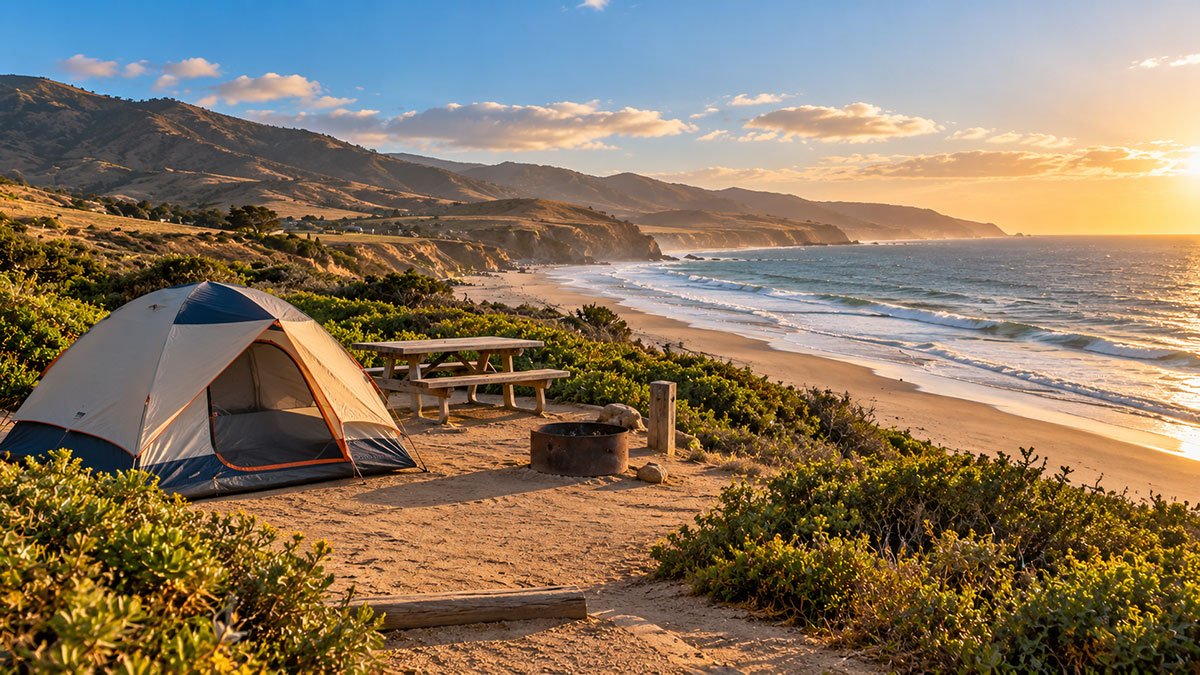
Enjoy a peaceful coastal camping experience with ocean views and golden sunsets along California’s Pacific shoreline.
4 Great Places for Beach Camping in the USA
Beach camping in the USA offers a memorable way to experience the country’s coastline. You can fall asleep to the sound of waves, watch the sun rise over the ocean and spend your days swimming, walking or exploring coastal landscapes.
However, camping beside the sea is not permitted on every beach. Some destinations provide established campgrounds near the shore, while others allow primitive camping directly on designated stretches of sand. Reservations, permits, facilities and seasonal restrictions vary by location.
These four destinations offer different ways to enjoy a coastal camping trip, from California’s Pacific shoreline to the remote beaches of Washington’s Olympic Peninsula. Choose the experience that suits your camping skills, equipment and preferred level of comfort.
1. California: Jalama Beach County Park
Jalama Beach County Park offers a peaceful coastal camping experience in Santa Barbara County, California. Away from the busiest parts of the Santa Barbara coastline, it appeals to travelers who want ocean views, fresh sea air and time outdoors.
The park has a mix of basic campsites, partial-hookup sites and cabins. Santa Barbara County Parks identifies a limited number of beachfront sites, while other campsites sit higher on a hill with views of the surrounding landscape.
This variety makes Jalama Beach appealing to both traditional tent campers and visitors who prefer additional facilities.
What to Expect at Jalama Beach
The beach is known for its exposed coastal setting, waves and rugged scenery. Visitors can walk along the shore, watch the surf and enjoy the changing colors of the Pacific at sunrise and sunset.
The campground provides a convenient base for relaxing beside the ocean without planning a demanding wilderness expedition. However, not every campsite sits directly on the sand. Check the campsite map carefully before reserving if beachfront access is your priority.
The coastal setting also means you should prepare for wind and changing weather. Bring tent stakes designed for sandy ground and secure your equipment properly.
Reservations and Planning
Jalama Beach is reached by a scenic access road, so plan your drive before setting out. Check the latest road conditions, especially after severe weather.
Review the official Santa Barbara County Parks reservation system for current campsite categories, availability, facilities and fees. Book early for popular travel dates, and verify the exact location of your selected site.
Best for: Couples, families and campers who want a developed campground with ocean access and a choice of accommodation.
2. Maryland: Assateague Island National Seashore
Assateague Island National Seashore offers a distinctive camping experience along Maryland’s Atlantic coast. This barrier island is known for its beaches, coastal habitats and free-roaming wild horses.
Camping here lets visitors experience the island beyond a typical day at the beach. You can spend time walking the shoreline, observing wildlife from a safe distance and enjoying the quieter atmosphere after daytime visitors leave.
What Makes Assateague Special?
The island’s natural landscape is a major attraction. Sandy beaches, dunes, marshes and coastal vegetation support a variety of wildlife.
The wild horses are particularly memorable, but they must be treated as wild animals rather than approached like domestic ponies. The National Park Service requires visitors to stay at least 40 feet away from horses. Touching or feeding them is illegal.
Campers can choose from designated oceanside and bayside campground areas in the Maryland district. These are established camping locations, not permission to pitch a tent anywhere along the shoreline.
Understand the Camping Rules
The National Park Service requires reservations for its Maryland district campgrounds from March 15 through November 15. Reservations can be made up to six months ahead, and popular weekend dates may fill quickly. Availability and arrangements can differ by campsite type and season.
The island can be windy, and sand can make pitching a tent more challenging. Bring long tent stakes, secure your shelter and pack appropriate protection against insects and sun exposure.
Store food and drinks in hard-sided containers, a vehicle or another approved secure location when not in use. This helps prevent horses and other wildlife from accessing your supplies.
Follow posted rules on campfires, waste disposal, pets and campground access. Do not assume that every beach area allows overnight stays.
Best for: Wildlife enthusiasts, families and coastal campers who enjoy natural landscapes but prefer designated camping facilities.
3. Texas: Padre Island National Seashore
Padre Island National Seashore, near Corpus Christi, offers one of the most distinctive options for primitive beach camping in the United States.
The national seashore protects an extensive stretch of barrier island along the Gulf of Mexico. Its long beaches, dunes and coastal habitats provide a more remote atmosphere than many developed seaside destinations.
Camping here can mean pitching a tent in an authorized beach-camping area and spending the evening listening to the Gulf’s waves.
Primitive Beach Camping and Coastal Activities
The National Park Service permits primitive beach camping in designated areas of North Beach and South Beach, as well as at certain other designated locations. Camping is not permitted on Malaquite Beach.
Unlike a conventional campground with prepared pitches and nearby facilities, primitive beach camping requires you to bring the supplies you need and manage your own waste responsibly.
During the day, you can enjoy shoreline walks, fishing where permitted, wildlife observation and the open coastal landscape. Conditions can change quickly, so check official beach notices before traveling.
What Campers Need to Know
Camping in the national seashore is first come, first served. Advance campground reservations are not accepted. Park entrance fees apply, and the National Park Service specifies the applicable entry pass requirements for overnight stays.
There are no water or electrical hookups at the park’s campsites. A freshwater filling station is available near Malaquite Campground, but you should arrange your drinking water and supplies before heading to a remote beach.
Vehicle access is another important consideration. Some sections of South Beach require four-wheel drive, particularly beyond the first five beach miles. Soft sand, changing tides and coastal flooding can make travel difficult.
Before setting out:
- Check the official beach conditions, weather forecast and tide predictions.
- Verify which stretches are open to camping and whether your vehicle can reach them.
- Carry sufficient drinking water, food, rubbish bags, lighting and first-aid supplies.
- Keep emergency communications in mind because mobile coverage is limited in parts of the park.
- Follow posted restrictions on fires, driving and wildlife protection.
Primitive beach camping rewards careful preparation. It is less suitable for visitors who need nearby shops, dependable mobile service or a fully equipped campsite.
Best for: Experienced campers who value solitude, expansive beaches and a self-sufficient outdoor experience.
4. Washington: Olympic National Park’s Wilderness Coast
For campers seeking a more remote coastal adventure, the Wilderness Coast of Olympic National Park in Washington offers dramatic Pacific scenery, forested trails and stretches of rugged shoreline.
Here, beach camping can involve backpacking to a permitted coastal campsite rather than driving directly to a campground. The experience is rewarding, but it requires more preparation than an established beachside campsite.
A More Rugged Coastal Experience
Olympic National Park protects an extensive wilderness coastline with ocean views, rocky headlands, sea stacks and forested sections.
Depending on the route, campers may reach sandy beaches by hiking through coastal forest or crossing areas that require careful tide planning. Some permitted locations allow camping directly on the beach above the high-tide line.
The scenery is a major attraction, but the coast is not uniformly accessible. Some areas have restrictions, and not every beach permits overnight camping.
Permits, Tides and Wilderness Rules
The National Park Service requires wilderness camping permits for overnight trips on Olympic’s wilderness coast. Some areas have limited permits and require advance reservations.
Check the route, trail conditions and current regulations before choosing a campsite. Camp only in designated areas, and when beach camping is permitted, pitch your tent safely above the high-tide line.
Tide planning is especially important. Some coastal routes become impassable at higher tides, potentially blocking access to campsites or sections of trail. Carry a tide table and a suitable map, and plan your travel around the predicted conditions.
Food, garbage and scented items must be stored in a park-approved bear canister along the wilderness coast. Bring a reliable water-treatment method, as untreated coastal water can contain harmful microorganisms.
Check current fire restrictions before your trip. Pets are prohibited on park trails and beaches in the wilderness areas.
Because facilities are limited and routes can be challenging, choose this destination if you have suitable backpacking equipment and experience navigating coastal terrain.
Best for: Experienced backpackers seeking wilderness beach camping, dramatic scenery and a genuine sense of remoteness.
How to Choose the Right Beach Camping Destination
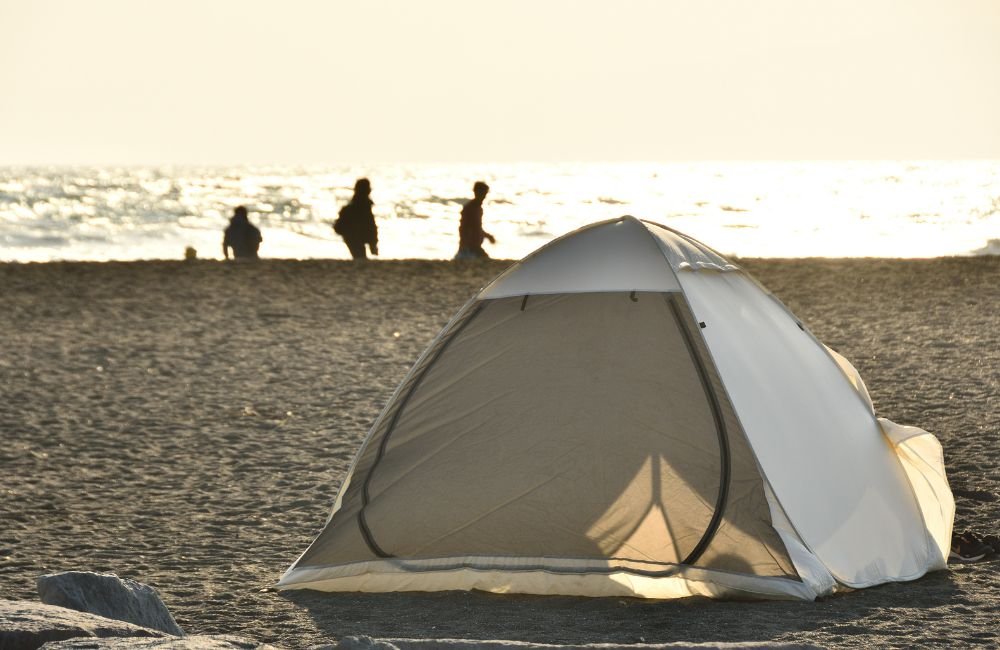
The best beach camping spot depends on how much comfort you want, how much equipment you can carry and whether you prefer a developed campground or a remote stretch of coast.
- For a developed beachfront campground: Choose Jalama Beach County Park, where designated sites and alternative accommodation provide more flexibility.
- For wildlife and established camping facilities: Consider Assateague Island National Seashore, while following wildlife-distance and food-storage rules.
- For primitive camping on a wide sandy beach: Padre Island National Seashore offers designated areas for campers who are comfortable being self-sufficient.
- For a remote backpacking experience: Olympic National Park’s Wilderness Coast is a stronger choice for experienced hikers who can manage permits, tides and backcountry equipment.
Compare the official campsite maps, access arrangements, reservation rules and facilities before deciding. A beach that looks perfect in photographs may not permit overnight camping in the spot you have in mind.
Essential Tips for a Safe Beach Camping Trip
Beach camping requires more preparation than many visitors expect. Wind, tides, damp conditions and limited facilities can affect your experience.
Check Local Rules Before Booking
Confirm that overnight camping is permitted in your chosen area. Use official park or campground websites for reservation details, seasonal closures, fire restrictions, vehicle access and current conditions.
Never assume that a public beach allows overnight stays simply because visitors can use it during the day.
Prepare for Sand and Wind
Use sturdy tent pegs designed for loose sand, and secure your shelter according to the manufacturer’s instructions. A windbreak or shelter may be useful where site rules permit it.
Keep bags and small equipment secured so that wind does not scatter them. Avoid pitching tents on fragile dunes or blocking access paths.
Understand Tide and Weather Conditions
Check local forecasts and tide predictions before your trip. Choose a safe campsite away from the high-tide zone, storm-surge exposure and areas that may flood.
At wilderness destinations, learn which routes depend on low tides and what to do if conditions change. Postpone your trip if official authorities warn of dangerous coastal conditions.
Bring Sufficient Supplies
Pack drinking water, food, a headlamp, suitable layers, insect repellent, sunscreen, a first-aid kit and rubbish bags.
Do not assume that every coastal campground has potable water, electricity, showers or a nearby store. Verify facilities before departure and carry what you need for the planned stay.
Protect Wildlife and the Coast
Keep food secured, maintain appropriate distances from wildlife and never feed wild animals. Follow local rules for campfires and dispose of rubbish properly.
Leave dunes, vegetation and other sensitive habitats undisturbed. Use established paths and designated campsites, and carry out your rubbish where required.
Book Early When Reservations Are Available
Beachfront campsites often fill up quickly, especially on weekends and during peak travel periods. Make reservations as soon as your travel dates and the official booking window allow.
For first-come, first-served camping, have a backup plan in case the area is full or closed. Always check the latest official notices before driving to a remote destination.
Plan Your Next Coastal Camping Adventure
Beach camping in the USA can range from a comfortable campsite near the Pacific to a demanding overnight hike along a remote wilderness coast. Each destination offers a different balance of scenery, facilities and adventure.
Jalama Beach is a practical choice for established coastal camping, Assateague combines beaches with wildlife, Padre Island offers primitive camping on designated stretches of sand, and Olympic National Park rewards prepared backpackers with an unforgettable wilderness setting.
Choose a destination that matches your experience, confirm the current rules and conditions, and prepare for the coast’s changing weather. With the right planning, an overnight beach trip can become one of the most rewarding ways to experience America’s diverse shorelines.
