
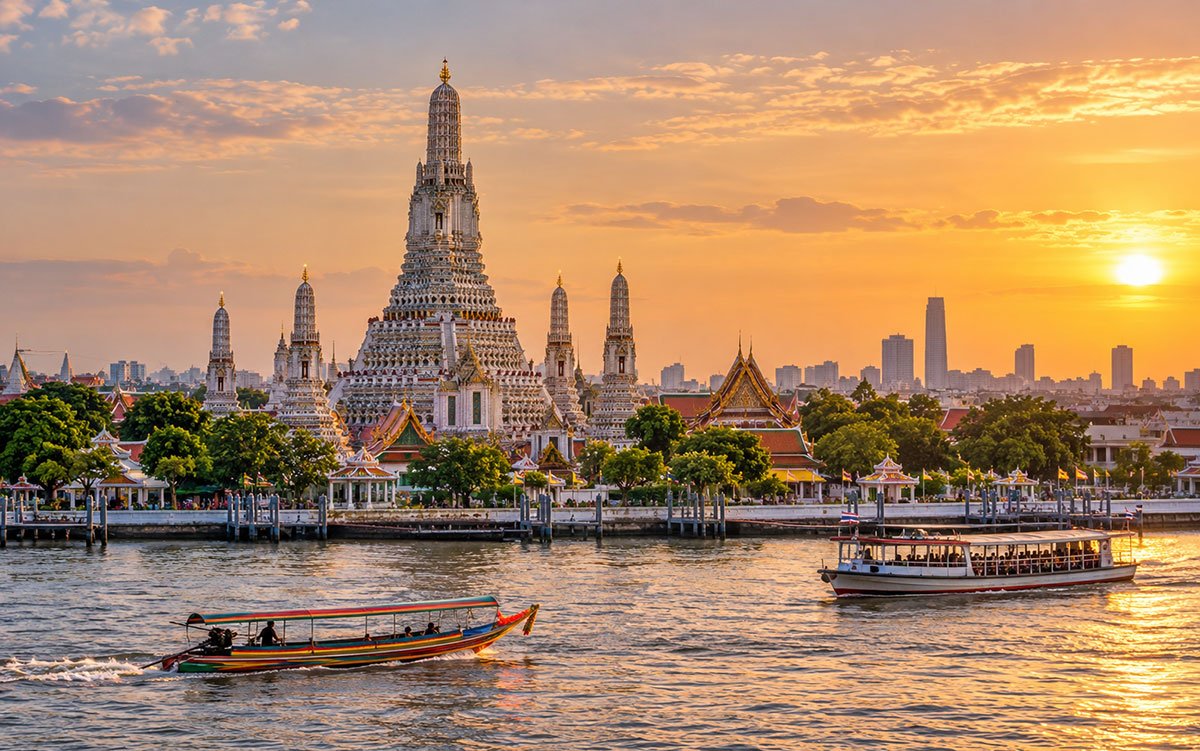
Wat Arun, the Temple of Dawn, rises above Bangkok’s Chao Phraya River, reflecting the city’s remarkable blend of history, culture and modern urban life.
Bangkok Travel Guide: Best Things to Do & Travel Tips
Bangkok is a city where magnificent Buddhist temples stand beside modern skyscrapers, traditional markets fill the streets with colour, and boats travel along the historic Chao Phraya River. Thailand’s capital offers an extraordinary combination of culture, food, shopping and everyday city life.
This Bangkok travel guide covers the best things to do, including visiting the Grand Palace, exploring Chinatown, discovering local street food and experiencing the famous flower market. You will also find practical advice on transport, accommodation, the best time to visit and planning your itinerary.
Whether you are visiting Bangkok for a short city break or beginning a longer holiday in Thailand, spending a few days in the capital gives you a fascinating introduction to the country’s traditions and contemporary culture.
Why Visit Bangkok, Thailand?
Bangkok, known in Thai as Krung Thep Maha Nakhon, is Thailand’s capital and principal urban centre.
The city has developed around the Chao Phraya River, which remains an important part of its identity. Historic neighbourhoods, royal architecture, Buddhist temples and commercial districts reflect different chapters of Bangkok’s history.
However, Bangkok is much more than its famous landmarks.
You can spend the morning exploring ornate temples, enjoy a traditional Thai lunch, browse colourful markets in the afternoon and finish your day beside the river.
Bangkok also provides excellent connections to other destinations in Thailand, including Chiang Mai, Ayutthaya, Phuket and Krabi.
For first-time visitors, three or four days offer a useful introduction without rushing between attractions.
Best Things to Do in Bangkok
1. Visit the Grand Palace and Wat Phra Kaew
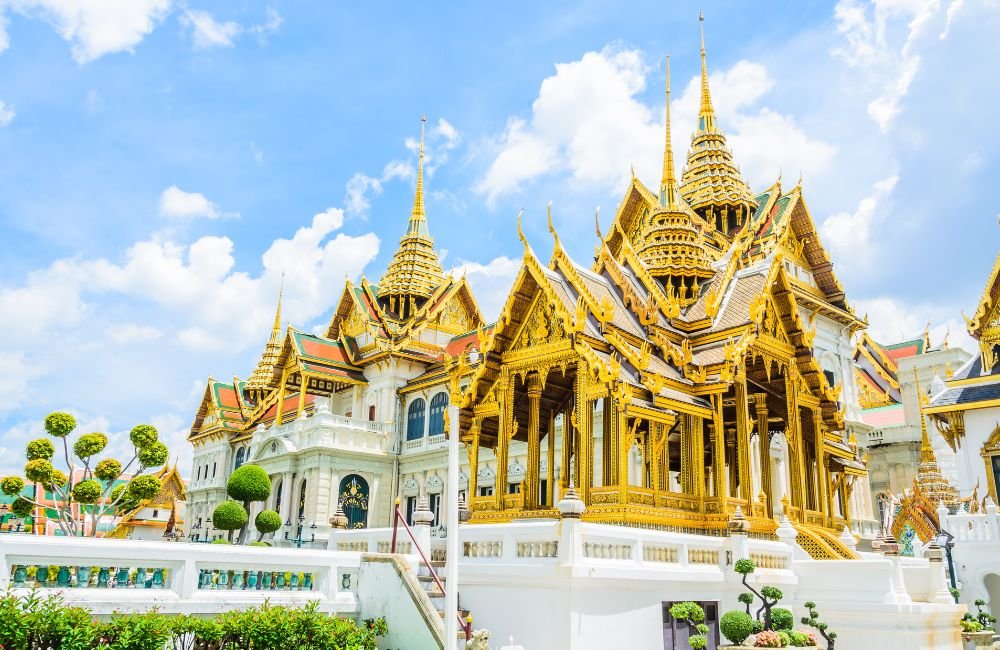
The Grand Palace in Bangkok showcases Thailand’s magnificent royal architecture, with intricate golden decorations, elegant spires and traditional Thai rooftops.
The Grand Palace is one of Bangkok’s most important cultural landmarks.
Established during the early Rattanakosin period, the palace complex reflects the artistic and architectural traditions associated with Thailand’s royal history.
Within the grounds stands Wat Phra Kaew, commonly known as the Temple of the Emerald Buddha. This is one of Thailand’s most revered Buddhist sites.
Visitors can admire elaborate rooflines, gilded decorations, colourful mosaics and beautifully maintained courtyards.
Tips for visiting the Grand Palace:
- Arrive early to allow time for sightseeing before the strongest afternoon heat.
- Wear clothing that covers your shoulders and knees, following the official dress code.
- Allow sufficient time to explore the palace complex and temple grounds.
- Purchase admission through official ticket channels.
- Check the official visitor calendar because royal ceremonies can affect access.
The Grand Palace sits within Bangkok’s historic Rattanakosin district, making it convenient to combine with nearby temples.
2. Discover Wat Pho and the Reclining Buddha
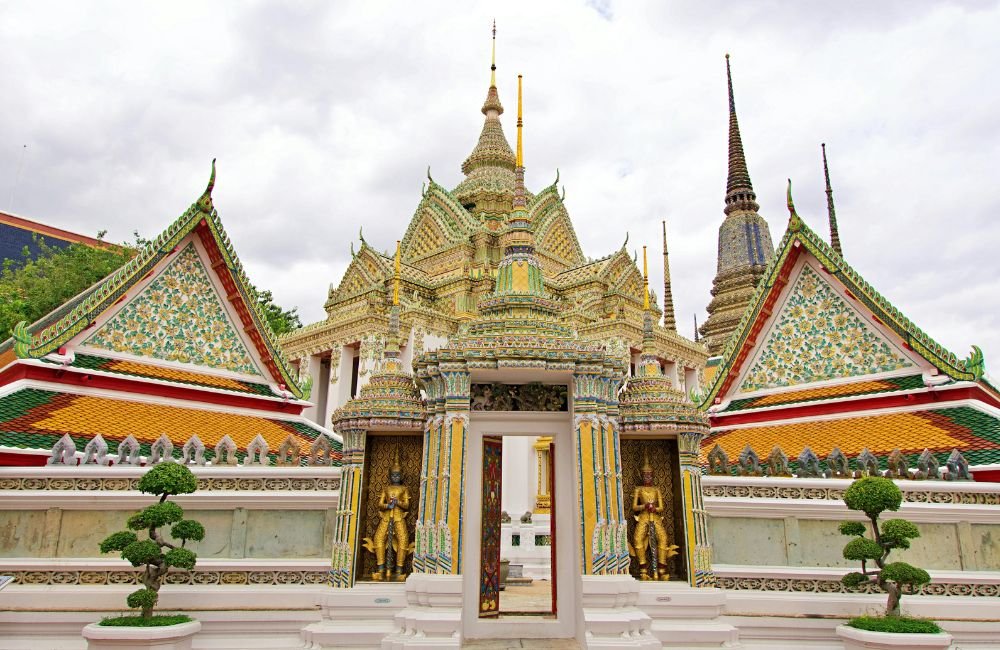
An intricately decorated entrance at Wat Pho in Bangkok, showcasing colourful ceramic mosaics, traditional Thai architecture and historic Buddhist temple structures.
A short distance from the Grand Palace, Wat Pho is famous for its enormous Reclining Buddha.
The gilded Buddha image measures approximately 46 metres long and features decorative mother-of-pearl inlays on the soles of its feet.
Beyond the principal attraction, the temple complex contains courtyards, stupas, religious buildings and traditional architectural details.
Wat Pho is also closely associated with traditional Thai medicine and massage.
Why visit Wat Pho?
- Admire one of Bangkok’s most recognisable Buddha images.
- Explore the temple’s decorative architecture.
- Learn about traditional Thai cultural practices.
- Combine the visit with the Grand Palace on the same sightseeing day.
Remember that Wat Pho remains an active religious site. Dress respectfully, speak quietly and remove your shoes where instructed.
3. Explore Wat Arun, the Temple of Dawn
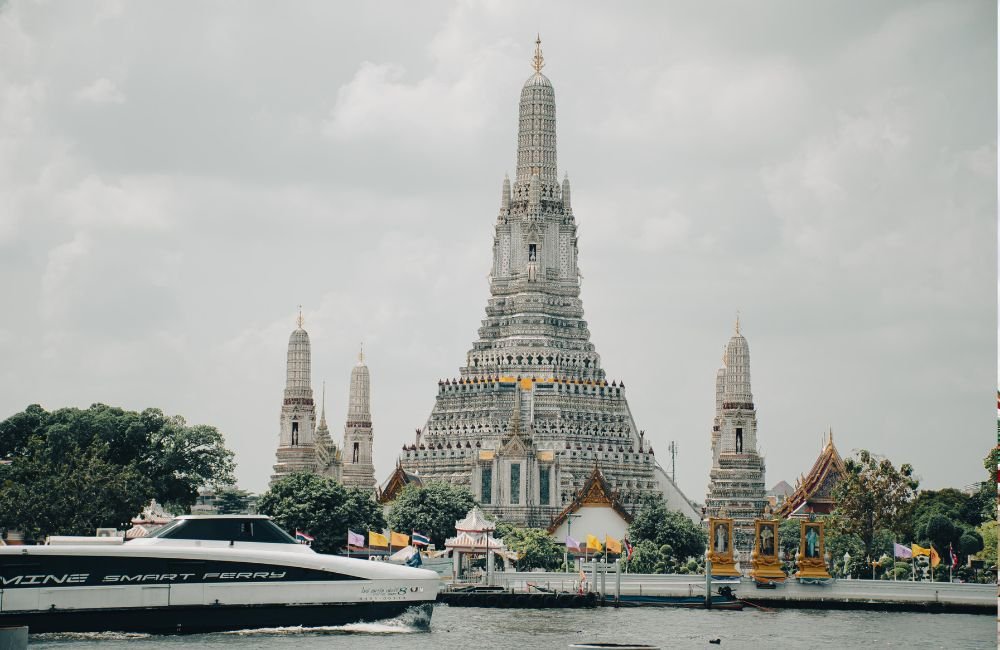
Wat Arun, the Temple of Dawn, rises above Bangkok’s Chao Phraya River, showcasing its distinctive porcelain-decorated spires and traditional Thai architecture.
Wat Arun stands on the western bank of the Chao Phraya River, directly across from the historic part of Bangkok.
Its distinctive central prang, decorated with intricate porcelain and ceramic details, makes it one of the city’s most recognisable landmarks.
The temple is especially beautiful when viewed from the opposite riverbank during the late afternoon.
Visitors can cross the river using local ferry services and explore the temple grounds, where ornamental structures and traditional architecture create excellent photographic opportunities.
The riverside setting also provides an opportunity to observe everyday boat traffic and experience Bangkok from a different perspective.
Travel tip: Visit the temple during the cooler part of the day, then enjoy views across the river as the afternoon light changes.
4. Explore Bangkok’s Chinatown and Yaowarat Road
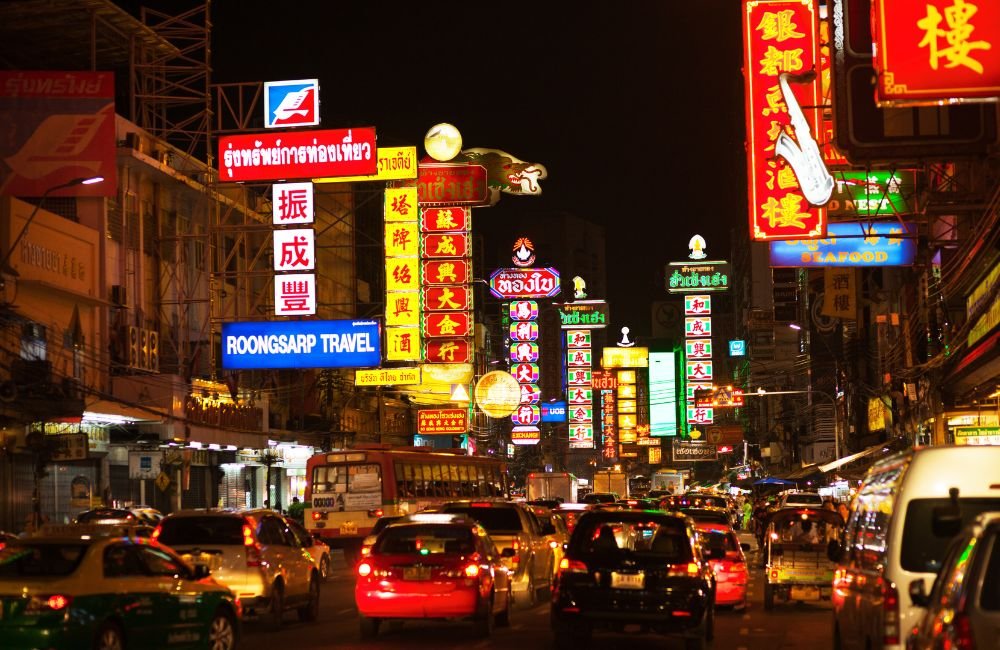
Bangkok’s Chinatown comes alive after dark, as colourful neon signs illuminate Yaowarat Road, one of the city’s most famous streets for food, shopping and Chinese-Thai culture.
Bangkok’s Chinatown is one of the city’s most atmospheric neighbourhoods.
Centred around Yaowarat Road, the area combines Chinese-Thai heritage, traditional shops, religious landmarks, markets and an exceptional street-food scene.
During the day, visitors can explore narrow shopping lanes, gold shops, herbal medicine stores and traditional food businesses.
In the evening, sections of Yaowarat become busy with diners visiting restaurants and street-food stalls.
You will find noodle soups, grilled seafood, roasted meats, traditional desserts and other Chinese-Thai specialities.
What to experience in Chinatown:
- Walk along Yaowarat Road and explore the surrounding lanes.
- Visit Wat Mangkon Kamalawat, an important Chinese Buddhist temple.
- Explore nearby Wat Traimit, famous for its Golden Buddha.
- Sample local dishes from established food businesses.
- Discover the architectural details of older shophouses.
Chinatown is particularly rewarding for travellers interested in food photography, traditional markets and urban heritage.
How to get there: Take the MRT Blue Line to Wat Mangkon station, which provides convenient access to the heart of Chinatown.
This is generally more practical than approaching Yaowarat through Bangkok’s busy road traffic.
5. Visit Pak Khlong Talat, Bangkok’s Famous Flower Market
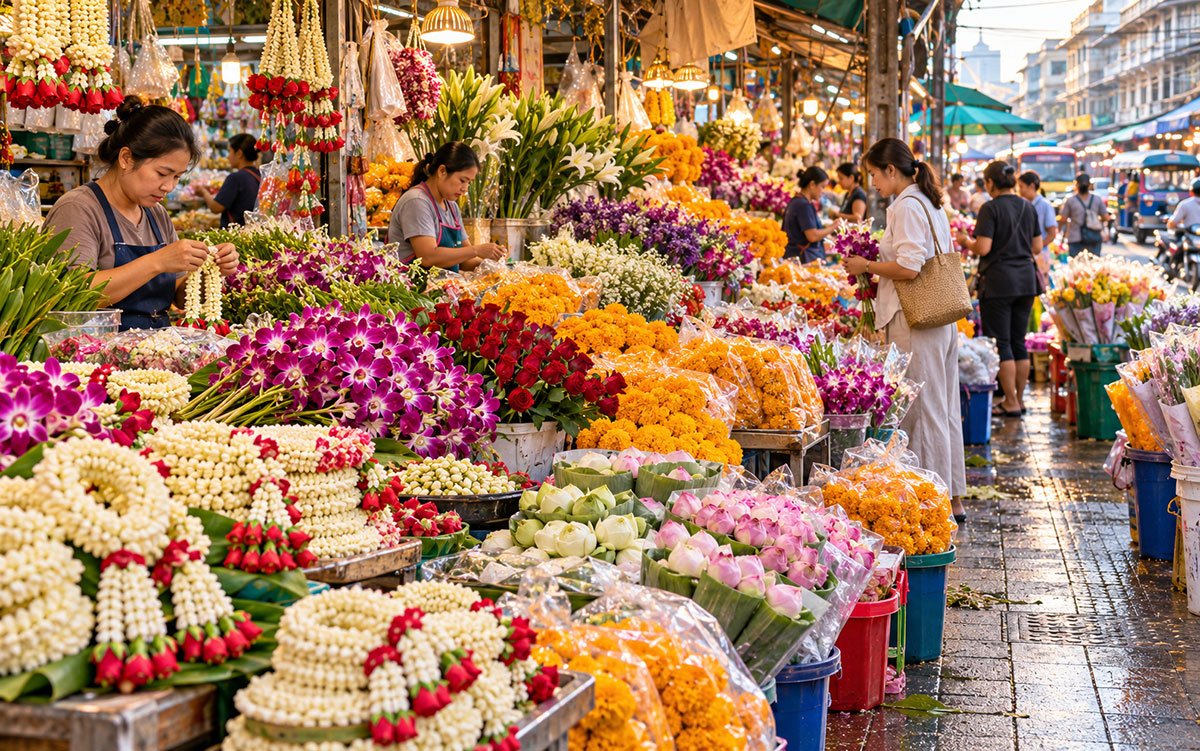
Pak Khlong Talat, Bangkok’s famous flower market, showcases colourful orchids, roses, marigolds and traditional Thai floral arrangements in a lively market setting.
Pak Khlong Talat is one of Bangkok’s most colourful traditional markets.
Located near the Chao Phraya River in the historic Phra Nakhon area, the market is known for fresh flowers, floral garlands and supplies used in religious ceremonies and celebrations.
Visitors can see beautiful displays of roses, orchids, lilies, marigolds and other flowers.
The market also provides an interesting glimpse into Bangkok’s commercial traditions.
Vendors prepare flower arrangements, traders move produce through narrow aisles, and customers purchase flowers for homes, temples, businesses and special occasions.
Although wholesale trading is important here, retail purchases are also possible at participating stalls and shops.
Best time to visit the flower market
The market operates across much of the day and night, but the early morning is particularly interesting.
Visitors may see freshly delivered flowers and vendors preparing arrangements for the day’s customers.
Remember that Pak Khlong Talat is a working market rather than a staged tourist attraction.
Avoid blocking deliveries, give vendors space to work and ask permission before taking close-up photographs of people.
How to get there: Take the MRT Blue Line to Sanam Chai station and walk towards the market along Chak Phet Road.
6. Experience the Chao Phraya River by Boat
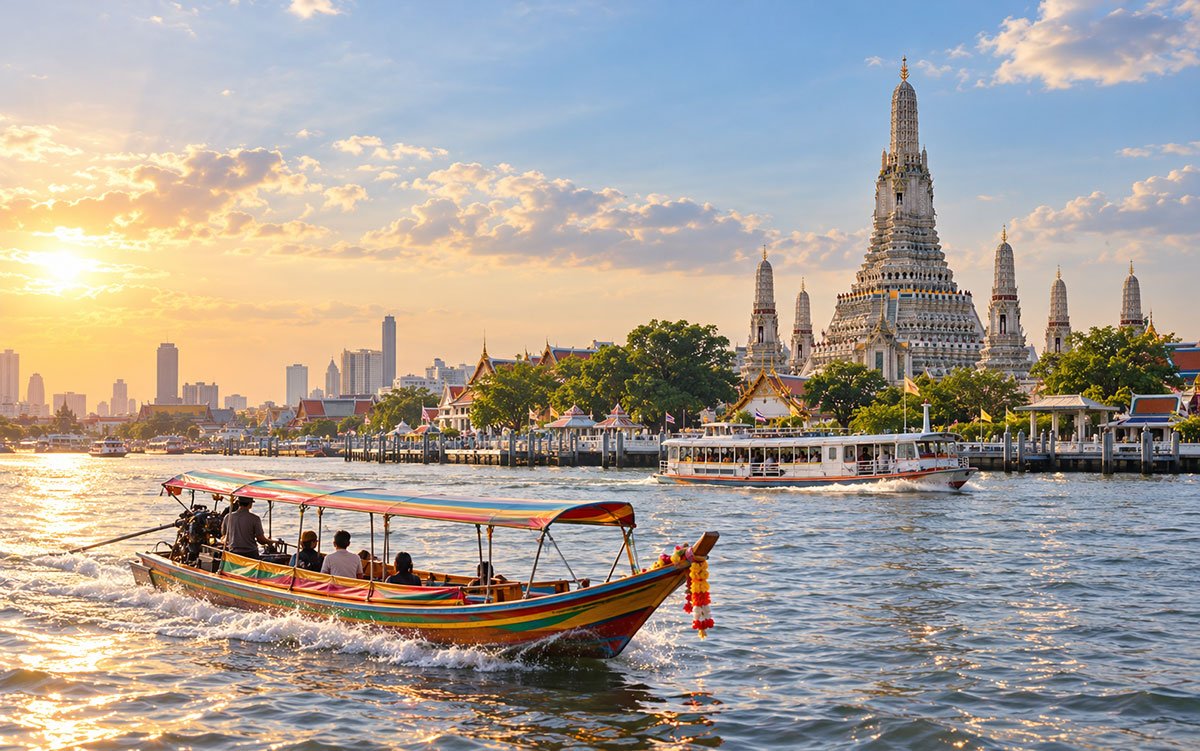
A traditional long-tail boat cruises along Bangkok’s Chao Phraya River, offering scenic views of Wat Arun, the Temple of Dawn, and the city’s historic waterfront.
The Chao Phraya River offers one of the most enjoyable ways to experience Bangkok.
While roads carry much of the city’s traffic, passenger boats provide another perspective on its historic riverside neighbourhoods.
Travelling by river allows visitors to see temples, traditional houses, hotels, working piers and modern developments along the waterfront.
Several types of boat services operate on the river, including public passenger boats, cross-river ferries and private sightseeing excursions.
Popular experiences include:
- Taking a public riverboat towards the historic temple district.
- Crossing the river to visit Wat Arun.
- Enjoying a guided sightseeing cruise.
- Watching the riverside skyline during the late afternoon.
Check the route, pier and fare before boarding because services operate differently.
For travellers interested in cultural sightseeing, a regular public boat can provide a useful alternative to a more expensive organised cruise.
7. Shop at Chatuchak Weekend Market
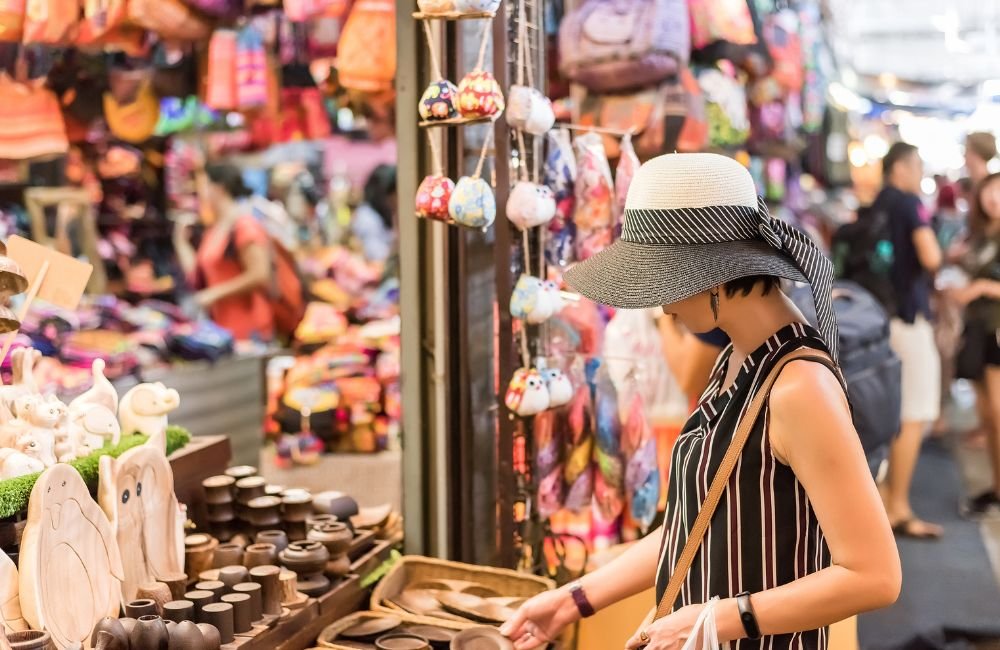
Chatuchak Weekend Market in Bangkok offers a lively shopping experience, with colourful clothing, traditional handicrafts, souvenirs and bustling market stalls.
Bangkok is famous for its markets, and Chatuchak is among the largest and best known.
Located in the northern part of the city, the market offers an enormous variety of products, including clothing, accessories, handicrafts, home decorations, ceramics and souvenirs.
Food stalls and small restaurants also provide opportunities to take a break from shopping.
Chatuchak is particularly appealing for travellers searching for locally produced items or gifts.
Tips for visiting Chatuchak:
- Visit during the cooler part of the day where possible.
- Wear comfortable footwear.
- Carry drinking water.
- Keep a small amount of cash for participating vendors.
- Check opening arrangements, as different sections operate on different days.
How to get there: Use MRT Kamphaeng Phet or Chatuchak Park, or BTS Mo Chit, depending on your route.
If your Bangkok itinerary does not include a weekend, consider exploring one of the city’s permanent shopping districts instead.
8. Discover Modern Bangkok Around Siam
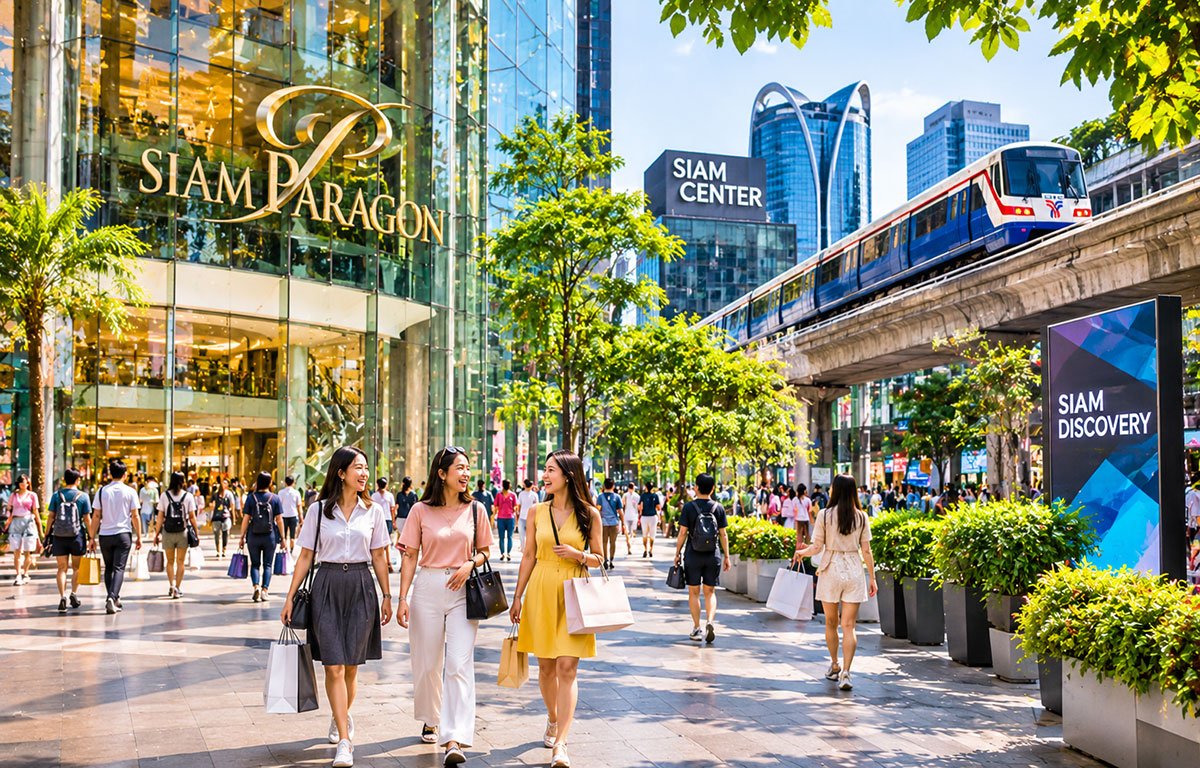
Bangkok’s vibrant Siam district brings together modern shopping centres, restaurants and entertainment venues, with convenient access via the BTS Skytrain.
Bangkok’s modern commercial character is particularly visible around Siam and Ratchaprasong.
Major shopping centres, restaurants, cafés, entertainment venues and contemporary architecture dominate this part of the capital.
Siam Paragon, Siam Center and the wider central shopping district attract residents and visitors throughout the year.
The Bangkok Art and Culture Centre provides a different experience, with contemporary exhibitions and cultural programming.
Shopping centres can also offer a welcome break from Bangkok’s heat or heavy rain.
Travel tip: Siam BTS station connects two major Skytrain routes, making the neighbourhood convenient for exploring different parts of the city.
9. Explore Talat Noi and Bangkok’s Historic Streets
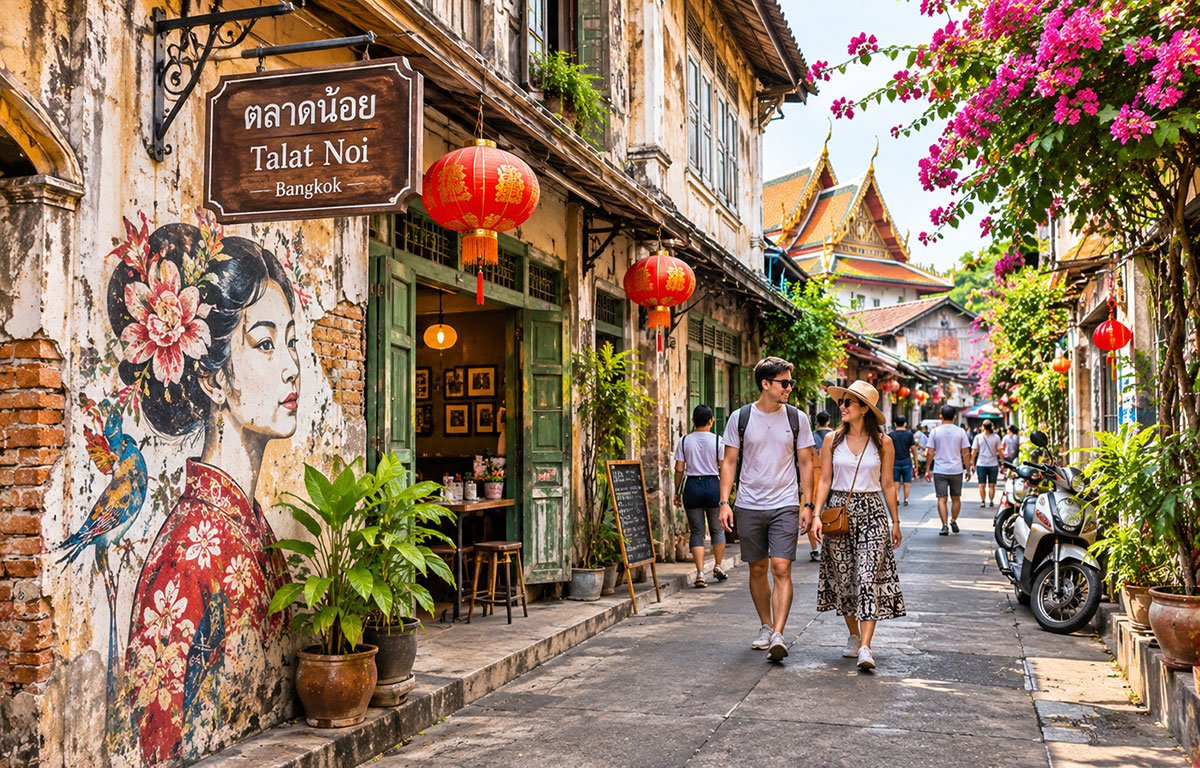
Talat Noi, one of Bangkok’s historic neighbourhoods, is known for its traditional shophouses, colourful street art, charming cafés and Chinese-Thai cultural heritage.
For visitors who enjoy walking through older neighbourhoods, Talat Noi offers another perspective on Bangkok.
Situated near Chinatown and the Chao Phraya River, the area is known for its traditional shophouses, narrow lanes, religious buildings and small businesses.
The neighbouring Song Wat area also contains historic commercial architecture alongside newer cafés and creative spaces.
Exploring these streets reveals aspects of everyday Bangkok beyond the most visited temples and shopping centres.
Walk respectfully through residential areas, avoid entering private property and support local businesses where appropriate.
For photographers, these neighbourhoods offer interesting architectural details and street scenes without requiring a formal guided tour.
10. Relax at Lumphini Park
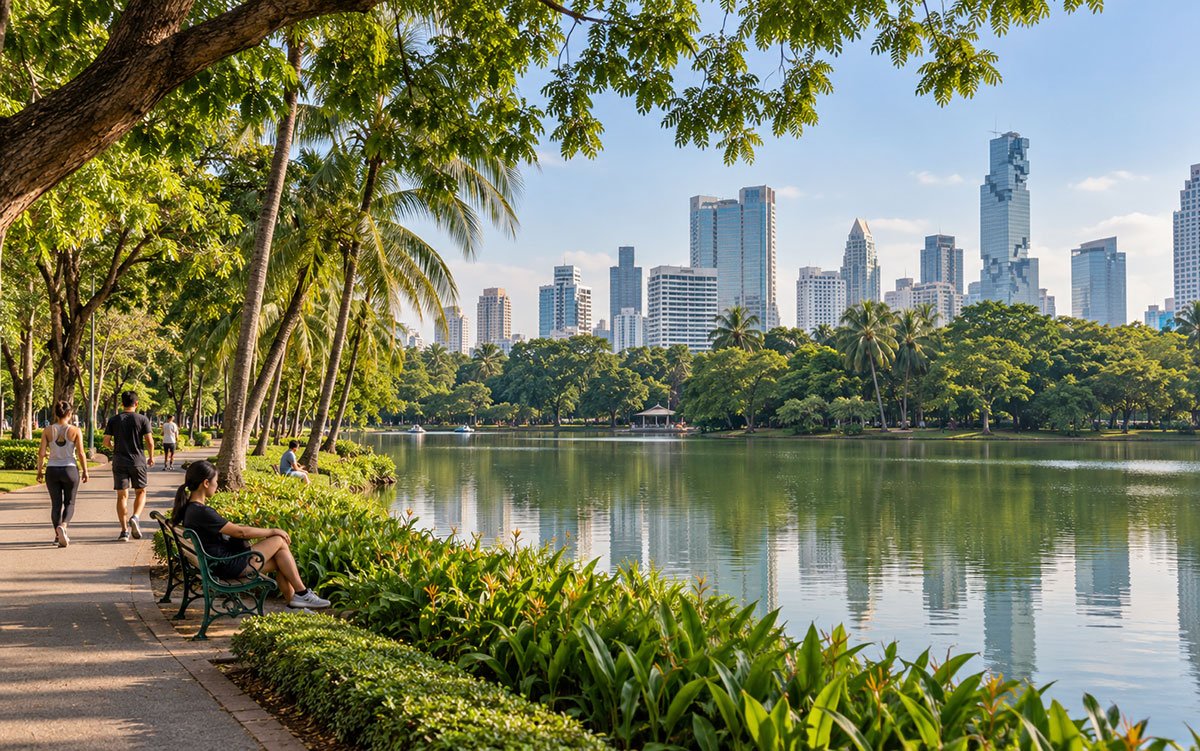
Lumphini Park offers a peaceful green escape in central Bangkok, with scenic lakes, shaded walking paths and beautiful views of the city’s modern skyline.
Bangkok’s busy streets can make a peaceful green space particularly appealing.
Lumphini Park, located close to the Silom business district, offers walking paths, lawns, trees and a lake.
The park provides a pleasant setting for an early-morning walk or a break between other sightseeing activities.
Visitors may encounter people exercising, jogging or enjoying the outdoor environment.
It is a useful reminder that Bangkok’s attractions extend beyond temples, markets and shopping centres.
Thai Food: What to Eat in Bangkok
Food is central to Bangkok’s travel experience.
Thai cuisine combines ingredients and techniques that create complex flavours, often balancing salty, sour, sweet, spicy and savoury elements.
Fresh herbs, chillies, lime, garlic, lemongrass, galangal and fish sauce appear in many traditional dishes.
However, Thai cooking varies considerably by region, and Bangkok’s food scene reflects influences from across Thailand and neighbouring cultures.
Popular Thai Dishes to Try
Pad Thai
A familiar Thai noodle dish prepared with stir-fried rice noodles and ingredients such as tamarind, egg, tofu, prawns or other proteins.
Tom Yum
A fragrant soup known for its sour and spicy flavours, commonly featuring lemongrass, lime and aromatic herbs.
Som Tam
A green papaya salad traditionally associated with northeastern Thai cuisine. It combines crisp vegetables with a tangy, spicy dressing.
Green Curry
A coconut-based curry made with green curry paste, herbs, vegetables and a choice of protein.
Khao Pad
Thai fried rice, a widely available dish that is convenient for visitors looking for a straightforward meal.
Mango Sticky Rice
A popular dessert combining ripe mango with sweet sticky rice and coconut milk.
Where to Enjoy Bangkok Street Food
Chinatown is an excellent starting point, but food experiences are available throughout Bangkok.
Neighbourhood markets, small restaurants, food courts and roadside stalls all offer different dining environments.
To make the most of Bangkok’s food culture:
- Choose vendors who prepare food freshly.
- Look for busy establishments with regular customer turnover.
- Ask about chillies if you prefer milder dishes.
- Explain dietary restrictions and food allergies before ordering.
- Carry cash, as not every small vendor accepts international payment cards.
Bangkok’s food scene is worth exploring beyond the most famous dishes. Regional noodles, grilled meats, traditional sweets and Chinese-Thai specialities add variety to the experience.
Where to Stay in Bangkok
Choosing the right neighbourhood can significantly improve your trip.
Bangkok covers a large area, and traffic congestion can make short distances surprisingly time-consuming.
For sightseeing, prioritise accommodation close to useful public transport connections.
| Neighbourhood | Best suited for |
|---|---|
| Siam | Shopping, families and central BTS connections |
| Sukhumvit | Restaurants, nightlife and a wide choice of accommodation |
| Silom and Sathorn | Business travel, dining and transport access |
| Rattanakosin | Historical attractions, temples and cultural sightseeing |
| Chinatown | Street food, heritage and local markets |
| Chao Phraya Riverside | River views, boat journeys and historic landmarks |
Siam and the central sections of Sukhumvit are often convenient choices for first-time visitors who want public transport and a wide range of services.
Rattanakosin offers proximity to major temples, while Chinatown appeals to travellers who want food and neighbourhood exploration.
Before booking, check the walking distance to the nearest BTS or MRT station. Hotel descriptions that simply mention a major district may not reflect the actual convenience of the location.
How to Get Around Bangkok
Bangkok has several transport systems, but travellers do not need to rely entirely on taxis.
Combining rail transport, riverboats and occasional road journeys is often an efficient way to explore the capital.
BTS Skytrain
The BTS Skytrain serves many important commercial and residential areas, including Siam, Silom and parts of Sukhumvit.
It is especially useful for avoiding road traffic when travelling between districts along the network.
MRT Metro
The MRT system connects several major neighbourhoods and tourist attractions.
The Blue Line is particularly useful for visiting Chinatown and the historic city.
Important stations include:
- Wat Mangkon: Chinatown and Yaowarat.
- Sanam Chai: Historic attractions and the flower market.
- Hua Lamphong: Railway station area and nearby heritage attractions.
- Chatuchak Park and Kamphaeng Phet: Access to the Chatuchak area.
Chao Phraya Riverboats
Riverboats are useful for reaching certain attractions along the river.
They also provide a scenic journey through Bangkok’s historic waterfront.
Check the operator’s current pier information, routes and ticketing arrangements before travelling.
Taxis and Tuk-Tuks
Metered taxis and authorised ride-hailing services can help you reach places that are not directly accessible by rail.
Tuk-tuks can be an enjoyable way to experience a short journey, but agree on the fare before departing.
Avoid unsolicited offers that attempt to redirect you towards shops or attractions you did not intend to visit.
Getting to Bangkok from the Airport
Bangkok is served by two major airports.
Suvarnabhumi Airport (BKK) is connected to the city through the Airport Rail Link, which connects with the BTS network at Phaya Thai and the MRT network via Makkasan and Phetchaburi.
Don Mueang International Airport (DMK) has transport options that include rail connections, road transfers and taxis.
Choose your airport transfer according to your arrival airport, luggage, accommodation location and time of arrival.
Always confirm current services before travelling.
Best Time to Visit Bangkok
Bangkok has a tropical climate, with warm conditions throughout the year.
However, rainfall and humidity vary by season.
November to February: Generally More Comfortable for Sightseeing
These months usually bring relatively drier conditions and somewhat more comfortable temperatures.
They are particularly suitable for walking around temples, markets and historical districts.
However, popular attractions may be busy during holiday periods.
March to May: Hot Weather
These months can bring intense daytime heat.
Plan outdoor activities early in the morning, take regular breaks and drink plenty of water.
Air-conditioned museums and shopping centres can provide relief during the hottest hours.
May to October: Rainy Season
Bangkok experiences substantial rainfall during the southwest monsoon season.
Rain does not necessarily continue throughout the day, and travellers can still enjoy the city.
However, heavy downpours may disrupt outdoor sightseeing, road transport and river activities.
Allow additional flexibility, particularly when travelling to airports or making time-sensitive connections.
A Practical 3-Day Bangkok Itinerary
Three days provide a useful introduction to Bangkok’s cultural landmarks, markets, neighbourhoods and food.
Instead of crossing the city repeatedly, group attractions by location.
Day 1: Temples and the Chao Phraya River
Morning: Begin at the Grand Palace and Wat Phra Kaew.
Late morning: Continue to Wat Pho and explore the Reclining Buddha complex.
Afternoon: Cross the Chao Phraya River to visit Wat Arun.
Evening: Enjoy dinner near the river or explore a nearby historic neighbourhood.
This itinerary keeps most of the day’s activities within the Rattanakosin and Thonburi areas.
Day 2: Flower Market, Chinatown and Local Food
Early morning: Visit Pak Khlong Talat to see the flower market’s trading activity.
Late morning: Explore the historic streets around Talat Noi and Song Wat.
Afternoon: Visit Wat Traimit or explore Chinatown’s markets and heritage sites.
Evening: Walk along Yaowarat Road and enjoy its restaurants and street-food scene.
This day is particularly suitable for travellers interested in photography, local culture and food.
Day 3: Shopping, Modern Bangkok and Green Spaces
Morning: Explore Chatuchak Weekend Market if your visit coincides with its principal trading days.
Afternoon: Visit Siam, the shopping district and the Bangkok Art and Culture Centre.
Late afternoon: Enjoy a relaxing walk in Lumphini Park.
Evening: Choose a riverside restaurant, shopping district or another neighbourhood that matches your interests.
If Chatuchak’s main market is not operating on your chosen day, replace it with additional sightseeing around Siam, Silom or a museum.
Essential Bangkok Travel Tips
Check Thailand’s Entry Requirements
Foreign travellers should confirm the immigration rules that apply to their passport before departure.
Thailand has nationality-dependent visa exemption arrangements, and permitted stays can change.
Most foreign visitors must also complete the Thailand Digital Arrival Card (TDAC) within the official three-day pre-arrival window.
The TDAC is free and does not replace any visa that may be required.
Use the official Thai Immigration Bureau website for the arrival card, and consult the Thai e-Visa portal or an embassy for visa information.
Carry Thai Baht
Thailand’s official currency is the Thai baht (THB).
While major hotels, shopping centres and established businesses commonly accept cards, cash remains useful for markets, small restaurants and local transport.
Do not assume that shops or street-food vendors will accept US dollars or other foreign currencies.
Currency exchange services and ATMs are available in Bangkok. Check fees and exchange rates before completing transactions.
When using an international card, paying in Thai baht rather than accepting an offered home-currency conversion may help avoid an unfavourable conversion rate.
Respect Thai Customs
Buddhist temples and royal sites are important cultural and religious spaces.
Visitors should dress appropriately, remove shoes where required and follow posted instructions.
Avoid touching religious objects without permission or posing disrespectfully beside Buddha images.
Speak politely and respect local customs when photographing residents, monks and ceremonies.
Prepare for Bangkok’s Weather
Bring lightweight, breathable clothing, comfortable footwear and protection from the sun.
During the rainy season, carry a compact umbrella or rain jacket.
Check weather conditions before long outdoor excursions, particularly during periods of heavy rainfall or local flooding.
Stay Alert Around Busy Tourist Areas
Bangkok’s markets and transport hubs can be crowded.
Keep valuables secure and remain alert when crossing busy roads.
Be cautious of people offering unsolicited sightseeing arrangements or claiming that major attractions are closed.
Verify such information with the attraction itself.
For assistance, Thailand’s Tourist Police can be contacted on 1155.
Frequently Asked Questions About Visiting Bangkok
Is Bangkok worth visiting for first-time travellers?
Yes. Bangkok combines historical landmarks, cultural experiences, food markets, shopping and river attractions. It also serves as a useful starting point for exploring other parts of Thailand.
How many days do you need in Bangkok?
Three days allow visitors to experience the main temples, Chinatown, the Chao Phraya River and selected shopping areas. Four or five days provide more time for museums, markets and slower neighbourhood exploration.
Is Bangkok expensive for tourists?
Bangkok offers accommodation, food and activities across a wide range of budgets. Street-food meals and public transport can help reduce costs, while luxury hotels, upscale restaurants and private tours can make a visit considerably more expensive.
Can you explore Bangkok without a tour guide?
Yes. Many major attractions are accessible by BTS, MRT, riverboat or taxi. Independent travellers can explore the city with digital maps and official transport information. Guides can provide additional historical and cultural context.
What is the best area to stay in Bangkok?
Siam and central Sukhumvit are convenient for public transport, shopping and restaurants. Rattanakosin suits travellers interested in temples and history, while the riverside offers scenic surroundings.
What should you not miss in Bangkok?
For a first visit, prioritise the Grand Palace, Wat Pho, Wat Arun, Chinatown and the Chao Phraya River. If your schedule allows, add Pak Khlong Talat and one of Bangkok’s major markets.
Discover Bangkok Beyond the Famous Landmarks
Bangkok rewards travellers who look beyond its most photographed attractions.
The Grand Palace and Wat Arun reveal the city’s architectural heritage, while Chinatown and the flower market offer a glimpse of its everyday traditions. Modern districts, neighbourhood restaurants and riverside journeys complete the experience.
Plan your days around nearby attractions, use public transport where practical and leave room for unexpected discoveries.
With its blend of history, culture, food and contemporary city life, Bangkok offers far more than a convenient stopover on a Thailand holiday.
