
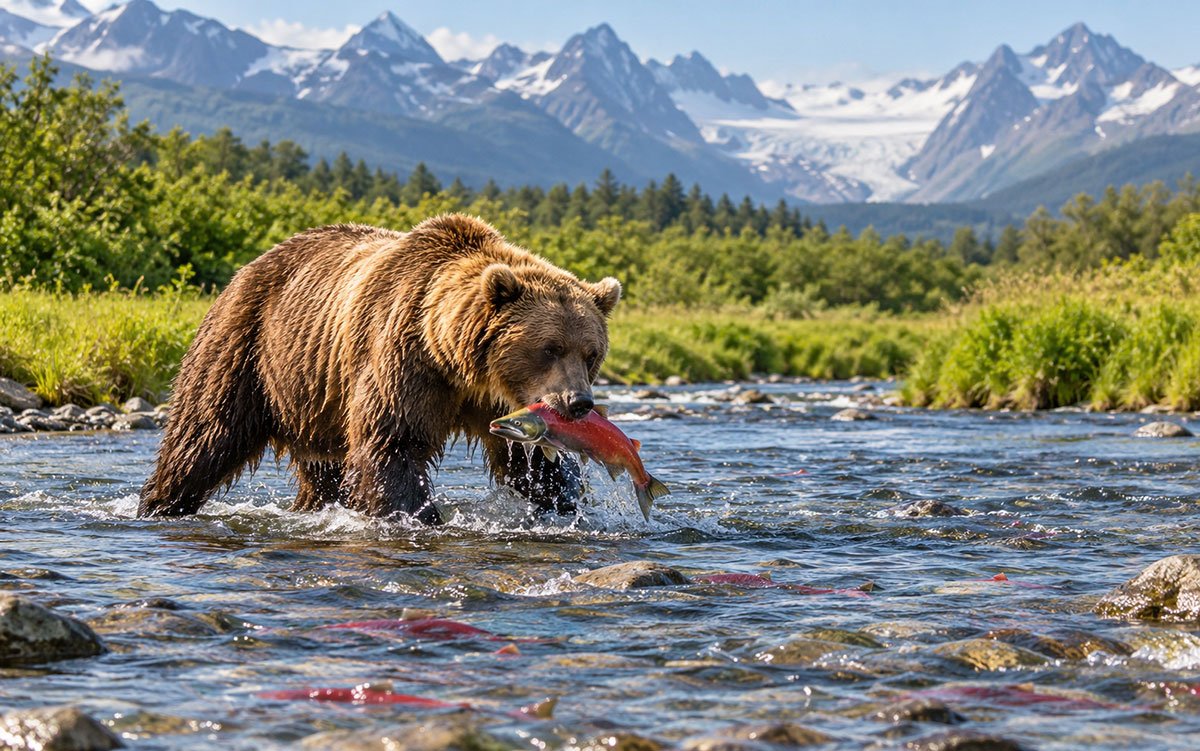
A brown bear catches salmon in Alaska’s Katmai National Park, one of the state’s renowned wildlife-viewing destinations.
Alaska Wildlife: 10 Amazing Animals and Where to See Them
Alaska wildlife is one of the biggest reasons nature lovers travel to America’s northernmost state. From enormous brown bears fishing in salmon-filled rivers to sea otters floating through sheltered coastal waters, Alaska offers remarkable opportunities to observe animals in their natural habitats.
The state’s landscapes range from temperate rainforests and rugged mountains to Arctic tundra, glaciers and remote coastal waters. Each environment supports different wildlife, making Alaska an exceptional destination for nature photography, wildlife watching and wilderness exploration.
However, knowing where and when to look makes a difference. Some animals, such as brown bears and sea otters, can be seen on organised wildlife excursions. Others, including wolverines, lynx and bearded seals, are much harder to encounter.
This guide introduces 10 remarkable animals found in Alaska, explains their habitats and highlights the locations and seasons that offer worthwhile wildlife-viewing opportunities.
10 Amazing Animals You Can Find in Alaska
1. Brown Bears – Alaska’s Powerful Wilderness Giants
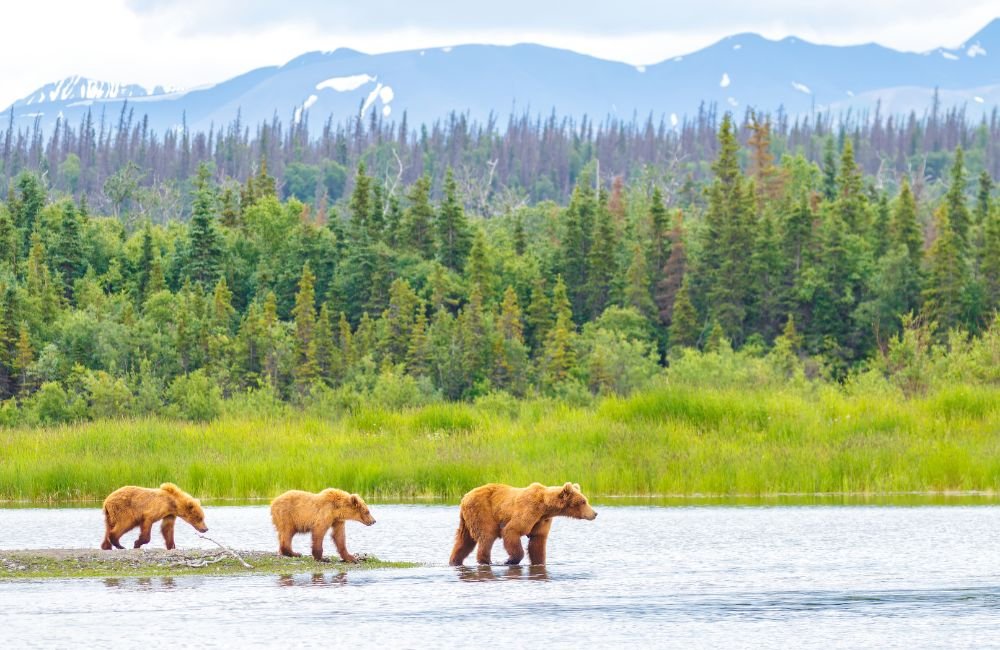
A mother brown bear leads her two cubs through shallow water against a backdrop of lush forests and snow-capped mountains in Alaska.
Brown bears are among Alaska’s most recognisable wild animals. Their size, strength and remarkable fishing skills make them a highlight of wildlife-watching trips.
Grizzly bears and coastal brown bears belong to the same species. The term grizzly commonly refers to brown bears living in inland environments, while coastal brown bears often grow larger because they have access to abundant salmon and other rich food sources.
During the salmon runs, bears gather near rivers and streams to catch migrating fish. Watching a brown bear snatch a salmon from rushing water is one of Alaska’s most memorable natural spectacles.
Where to see brown bears in Alaska
- Katmai National Park and Preserve: Brooks Falls is especially famous for bears fishing during the salmon run.
- Lake Clark National Park and Preserve: Coastal locations such as Chinitna Bay and Silver Salmon Creek provide outstanding bear-viewing opportunities.
- Kodiak Island: Home to the Kodiak brown bear, a distinctive subspecies found in the Kodiak Archipelago.
- Denali National Park: Offers opportunities to observe inland grizzlies in open tundra and mountain landscapes.
Best time to visit: Summer to early autumn. At Brooks Camp, July and September are particularly rewarding, although sightings vary with salmon movements.
Visitors should observe bears from designated viewing areas or with experienced guides. Never approach a bear to obtain a photograph.
2. Black Bears – Adaptable Forest Dwellers
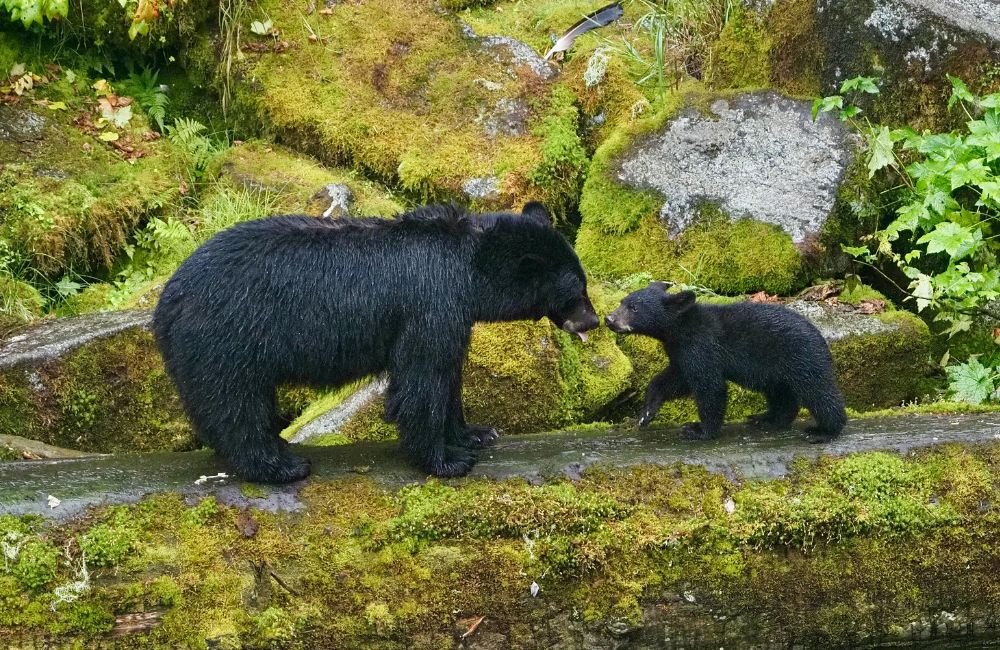
A mother black bear and her cub share a gentle moment on moss-covered rocks in a lush forest, illustrating the wildlife found in Alaska.
American black bears are widespread across Alaska’s forested regions. Despite their name, their fur can range from black to cinnamon-brown.
They are generally smaller than brown bears and feed on a varied diet that includes berries, vegetation, insects and fish.
Black bears are skilled climbers and often inhabit forests, river valleys and coastal areas. They may also appear near settlements where improperly stored food or rubbish attracts them.
Unlike a common misconception, black bears do not live exclusively on the Alaskan mainland. They also inhabit many islands in Southeast Alaska.
Where to see black bears in Alaska
- Anan Wildlife Observatory: Near Wrangell, this is an established location for watching black bears feeding on salmon.
- Southeast Alaska: Forested islands and coastal mainland habitats support black bear populations.
- Kenai Peninsula: Black bears inhabit wooded areas, although sightings remain unpredictable.
Best time to visit: Late spring through early autumn. July and August are particularly useful for viewing bears at Anan Creek.
Anan Wildlife Observatory requires visitor permits during its peak season. Arrange access through the official reservation system or an authorised tour operator.
Black bears are wild and potentially dangerous. Never feed them, approach cubs or leave food unsecured.
3. Alaska Marmots – Whistling Residents of the Mountains
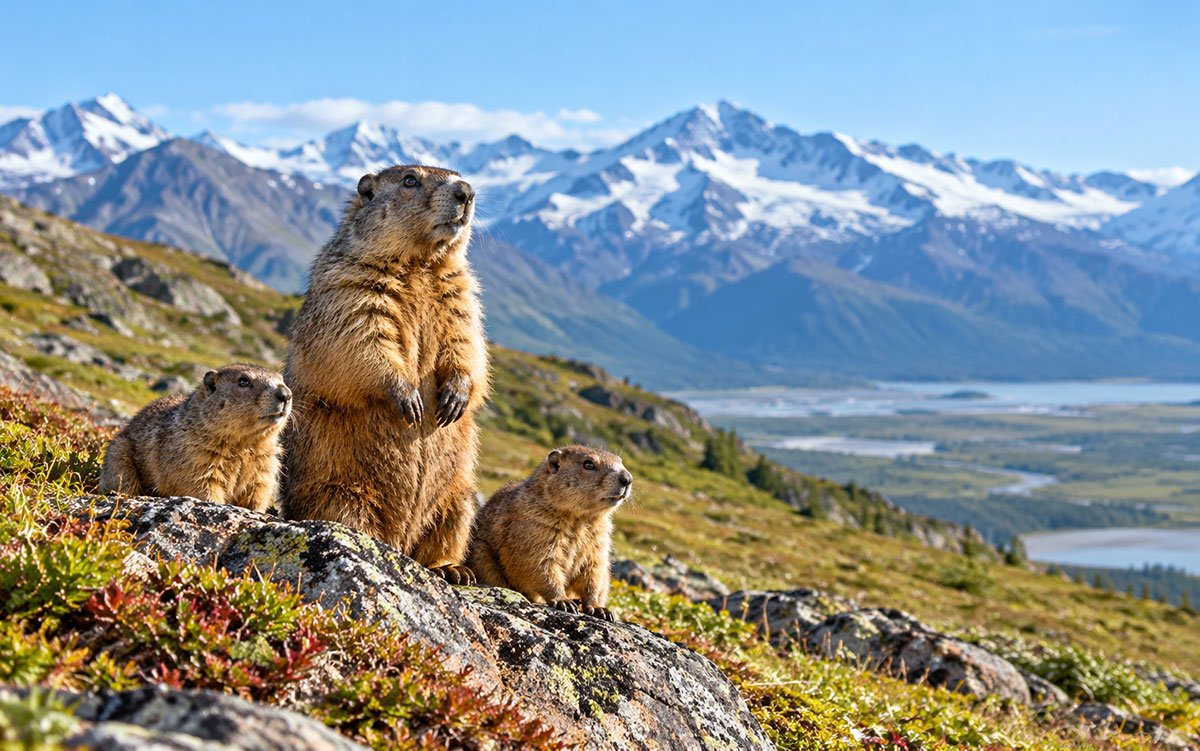
Alaska marmots inhabit rocky mountain slopes and alpine tundra, where their distinctive warning whistles help alert other marmots to potential danger.
The Alaska marmot is a large, ground-dwelling rodent adapted to the mountains of northern Alaska.
With a stocky body, short legs and thick fur, it survives in challenging environments where winters are long and temperatures can be extremely cold.
Alaska marmots live in colonies and construct burrows among rocky slopes. Their distinctive warning whistles help alert other marmots when predators approach.
These animals spend much of the year hibernating underground. During the brief Arctic summer, they emerge to feed on grasses, flowering plants, roots and other vegetation.
Where to see Alaska marmots
- Brooks Range: Their principal habitat is in northern Alaska’s mountainous regions.
- Northern alpine tundra: Rocky slopes and mountain valleys offer suitable marmot habitat.
Best time to visit: Summer, when the animals emerge from hibernation and vegetation becomes available.
Alaska marmots are not animals most visitors should expect to encounter on an ordinary sightseeing holiday. Their remote habitat makes sightings more challenging.
Travellers exploring more accessible mountain environments may encounter the related hoary marmot instead.
4. Wolverines – Elusive Predators of the Wilderness
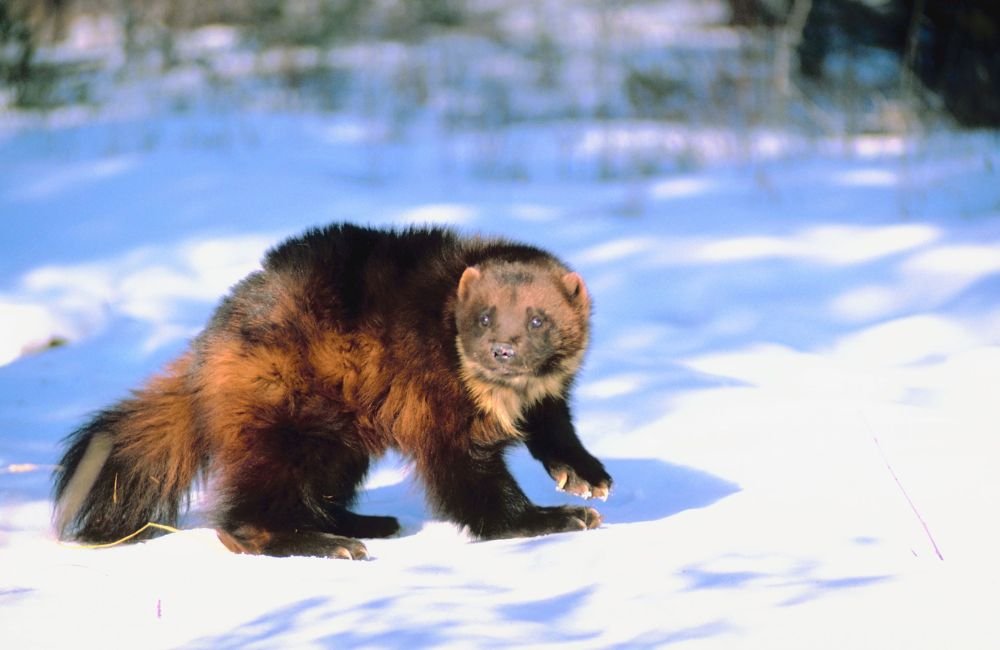
A wolverine explores a snow-covered mountain slope in Alaska’s wilderness, where these powerful and elusive mammals thrive in remote habitats.
Few Alaska animals have a reputation as fierce as the wolverine.
Despite its appearance, the wolverine is not a small bear. It belongs to the weasel family and is particularly well adapted to travelling through snow and rugged mountain terrain.
Its powerful jaws, strong claws and remarkable endurance help it survive in remote wilderness.
Wolverines eat small mammals, birds and carrion. They can also scavenge from the remains of much larger animals.
Although their reputation suggests aggressive behaviour, wolverines generally avoid people.
Where to see wolverines in Alaska
Wolverines occur across much of mainland Alaska, including mountainous and forested wilderness. They also inhabit some islands in Southeast Alaska.
Remote landscapes in the Alaska Range and other extensive wilderness areas provide suitable habitat.
Best time to visit: Wolverines remain active throughout the year, but no season reliably guarantees sightings.
Their naturally low population density and extensive home ranges make them exceptionally difficult to observe.
For most visitors, seeing a wolverine would be a rare and unexpected highlight rather than a realistic wildlife-tour objective.
5. Caribou – Travellers Across the Arctic Tundra
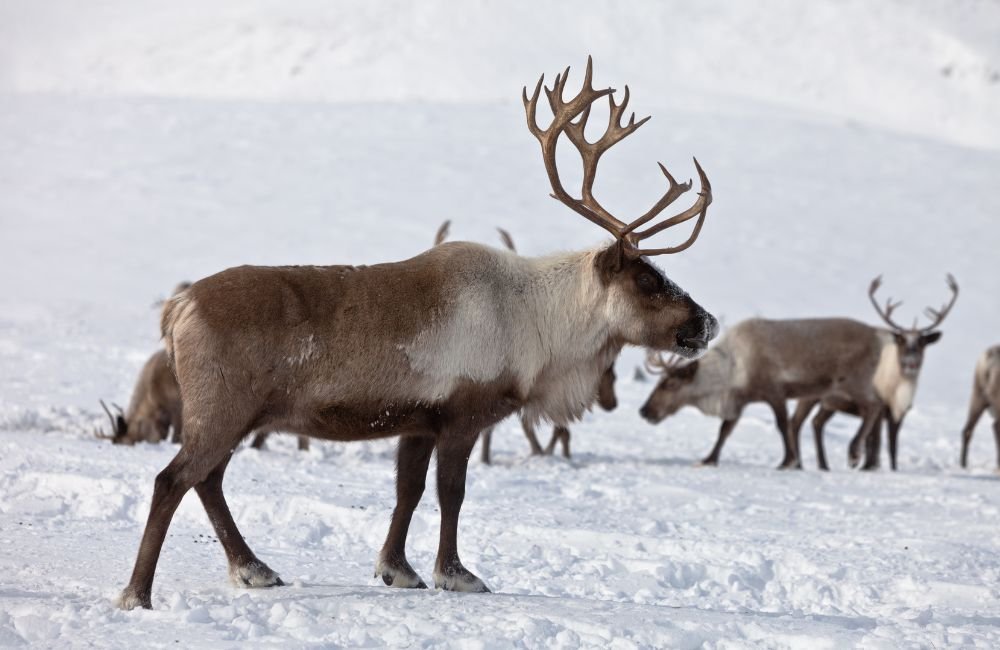
A herd of caribou travels across Alaska’s Arctic tundra, surrounded by colourful vegetation, mountain lakes and snow-capped peaks.
Caribou are among Alaska’s most impressive large mammals.
Related to reindeer, they have long legs, broad hooves and dense coats that help them survive cold northern environments.
Both male and female caribou can grow antlers, although antler development varies with age and sex.
Many caribou undertake seasonal movements between feeding, calving and wintering grounds. Their migrations are closely connected to changing weather, food availability and seasonal conditions.
Caribou feed on lichens, grasses, sedges and other tundra vegetation.
Where to see caribou in Alaska
- Denali National Park: One of the more practical locations for visitors hoping to observe caribou in natural tundra habitat.
- Arctic National Wildlife Refuge: Supports extensive caribou habitat, including areas associated with the Porcupine caribou herd.
- Northern Alaska: Open tundra landscapes provide important seasonal habitat for several caribou herds.
Best time to visit: Summer is generally convenient for wildlife-viewing trips, while seasonal migration patterns may create other opportunities.
In Denali, visitors sometimes observe caribou from park buses, especially in open country where animals are easier to spot.
However, caribou sightings are never guaranteed. Herd movements can vary considerably from one season to another.
6. Sea Otters – Playful Marine Mammals of Alaska’s Coast
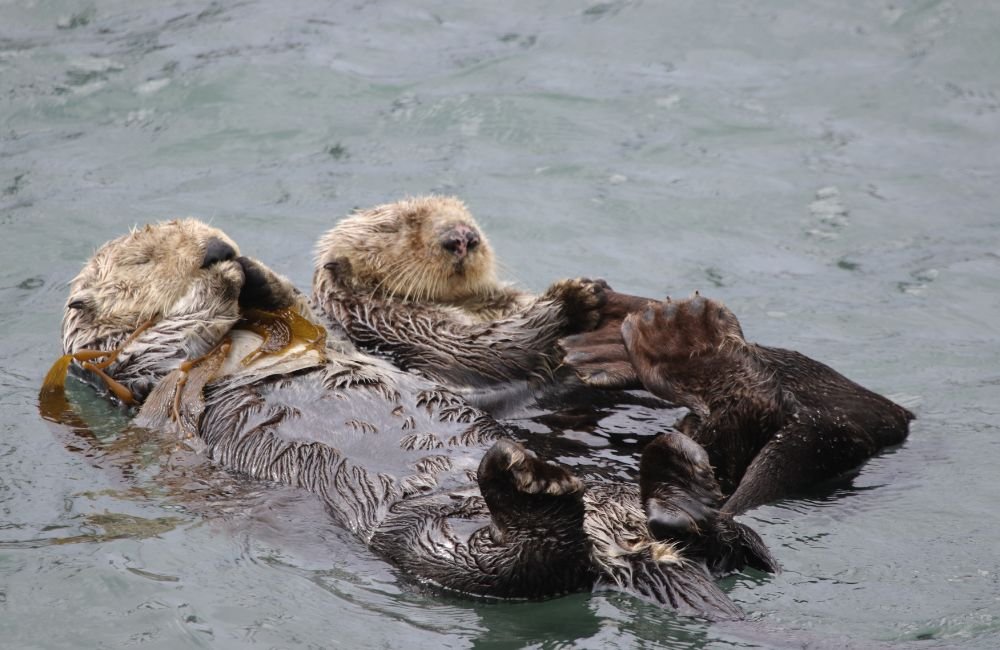
Two sea otters float on their backs in coastal waters, displaying the relaxed behaviour that makes these marine mammals a favourite among Alaska wildlife enthusiasts.
Sea otters are among the most engaging animals visitors can encounter in Alaska’s coastal waters.
They frequently float on their backs, sometimes using rocks to break open shellfish. Their exceptionally dense fur provides essential insulation against the cold sea.
Sea otters also play an important ecological role. By feeding on sea urchins, they can help protect kelp forests from excessive grazing.
Their populations suffered severely during the historical fur trade. Protection has helped populations recover in many areas, although some Alaskan populations have experienced significant declines.
Where to see sea otters in Alaska
- Kenai Fjords National Park: Wildlife cruises from Seward provide opportunities to observe sea otters.
- Prince William Sound: Sheltered coastal waters support sea otters and numerous other marine animals.
- Kachemak Bay: The coastal environment around Homer offers sea otter viewing opportunities.
- Southeast Alaska: Sea otters occur in suitable coastal habitats along the Inside Passage.
Best time to visit: Sea otters live in Alaskan coastal waters throughout the year. Summer offers more opportunities to join sightseeing cruises.
Use binoculars to observe their behaviour without disturbing them. Kayakers and boat operators should maintain appropriate distances and never pursue wildlife.
7. Canada Lynx – Secretive Hunters of Alaska’s Forests
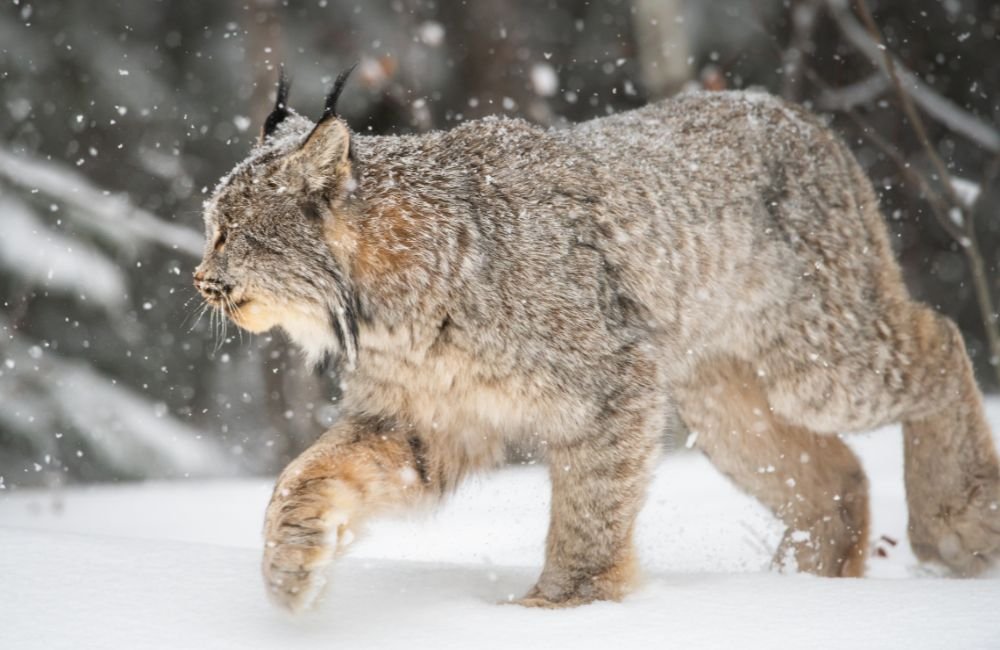
A Canada lynx moves through a snow-covered forest, using its thick fur and broad paws to navigate Alaska’s harsh winter conditions.
The Canada lynx is the only wild cat species native to Alaska.
Its thick fur, tufted ears, long legs and broad, furry paws make it particularly well adapted to snowy environments.
Lynx primarily hunt snowshoe hares, although they also eat rodents, birds and other available prey.
Their populations fluctuate in response to changes in snowshoe hare numbers. When hare populations increase, lynx populations may also rise.
Unlike popular portrayals of these animals as exclusively nocturnal, lynx may be active at different times of day.
Where to see lynx in Alaska
Canada lynx inhabit much of Alaska’s forested interior, including spruce forests, mixed woodlands and areas where regenerating vegetation supports snowshoe hares.
Forest habitats around Interior Alaska provide suitable conditions, but their secretive behaviour makes direct sightings uncommon.
Best time to visit: Lynx remain active year-round. Winter snow may make their tracks easier to identify, although observing an animal remains difficult.
Wildlife enthusiasts should watch from a distance and avoid attempting to follow an animal into dense forest.
For many visitors, discovering lynx tracks is more realistic than photographing the animal itself.
8. Arctic Foxes – Masters of Survival in the Frozen North
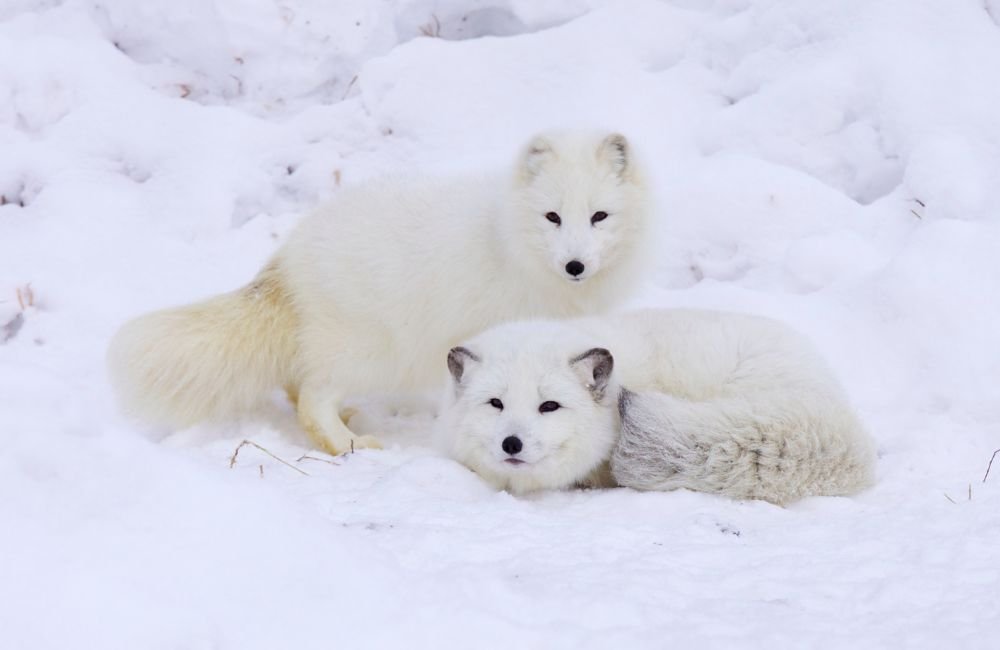
Two Arctic foxes rest together in a snowy landscape, displaying the thick white winter coats that help them survive and blend into Alaska’s Arctic environment.
Arctic foxes are remarkable examples of adaptation to extreme northern conditions.
Their compact bodies, thick fur and heavily insulated paws help them survive freezing temperatures.
Many Arctic foxes develop white winter coats that provide camouflage against snow. During summer, these foxes typically develop darker brown or grey coats that blend into the tundra.
However, not every Arctic fox turns white. Some have darker colour forms that persist through winter.
Arctic foxes feed on small mammals, birds, eggs, carrion and other available food.
Where to see Arctic foxes in Alaska
- Northern Arctic tundra: Treeless landscapes provide important fox habitat.
- Arctic coastal regions: Areas along Alaska’s northern coastline support Arctic fox populations.
- Remote northern wilderness: Foxes also occur around suitable denning habitats and coastal environments.
Best time to visit: Arctic foxes live in northern Alaska throughout the year. Summer generally offers more practical travel conditions, while winter reveals the white coat of many individuals.
Arctic wildlife excursions require careful planning because travel infrastructure is limited and weather conditions can change rapidly.
Visitors should never approach fox dens, feed the animals or encourage them to come closer.
9. Gray Wolves – Social Hunters of Alaska’s Wilderness
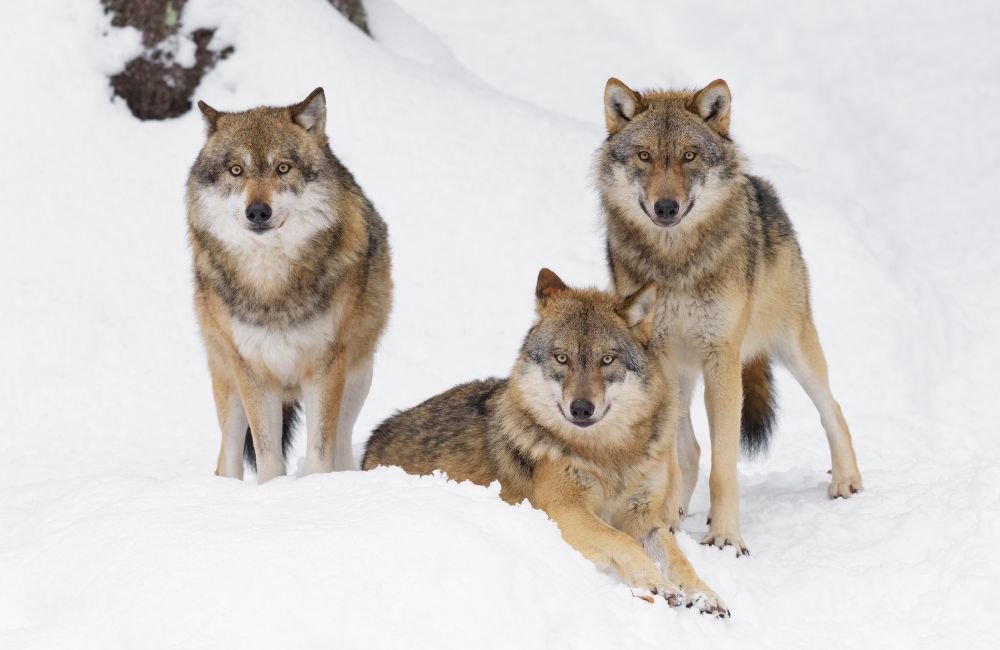
Three gray wolves gather in a snowy landscape, illustrating the social behaviour and winter adaptations of these remarkable predators found in Alaska.
Gray wolves play an important role in Alaska’s natural ecosystems.
They are highly adaptable animals that inhabit forests, mountains, tundra and other wilderness environments.
Wolves usually live in family groups and cooperate when hunting larger prey such as moose and caribou.
Their coats vary widely, from black and dark grey to lighter shades of grey, cream and nearly white.
Wolves generally avoid people, and sightings are considerably less predictable than encounters with more visible animals.
Where to see gray wolves in Alaska
- Denali National Park: One of Alaska’s recognised destinations where visitors may occasionally observe wolves in the wild.
- Interior Alaska: Forested and mountainous regions support wolf populations.
- Southeast Alaska: Wolves inhabit suitable coastal forests and several islands.
Best time to visit: Wolves remain active throughout the year. Summer park excursions may offer viewing opportunities, while winter conditions can make tracks more visible.
A wolf sighting should be considered an exceptional experience rather than an expected part of a tour.
Never attempt to attract wolves using food, calls or other methods.
10. Bearded Seals – Remarkable Animals of the Arctic Sea Ice
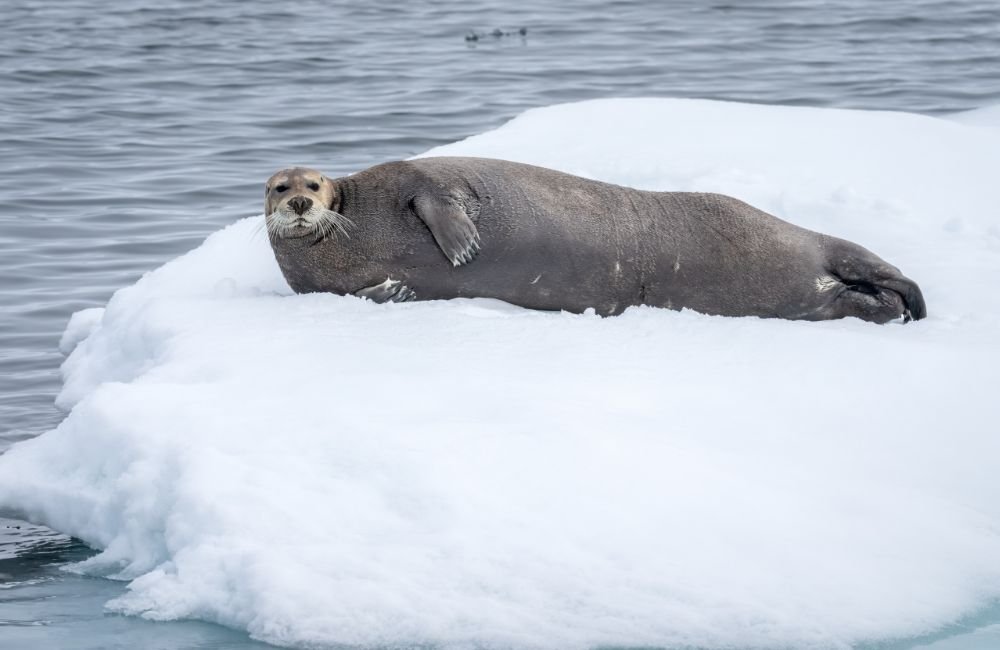
A bearded seal rests on Arctic sea ice, an essential habitat for these remarkable marine mammals found in Alaska’s northern waters.
The bearded seal is one of Alaska’s distinctive Arctic marine mammals.
Its most recognisable feature is its long, prominent whiskers, which help it locate food near the seafloor.
Bearded seals feed mainly on bottom-dwelling animals such as clams, crabs and other marine invertebrates.
Unlike sea otters, which visitors may observe along more accessible coastal routes, bearded seals are closely associated with Arctic sea ice.
They use the ice for resting, moulting and raising young.
Where to find bearded seals in Alaska
- Bering Sea: Important habitat during parts of the year.
- Chukchi Sea: Supports bearded seals as seasonal sea-ice conditions change.
- Beaufort Sea: Northern Arctic waters provide additional habitat.
Best time to visit: Spring offers opportunities to observe seals resting on sea ice during the moulting period, but access depends heavily on conditions.
Bearded seals are generally solitary rather than forming large shoreline colonies. Consequently, they are not a practical target for most conventional Alaska wildlife tours.
Travellers should never approach seals on sea ice, disturb resting animals or attempt independent excursions into dangerous ice conditions.
Best Places to See Wildlife in Alaska
Alaska is enormous, and its wildlife habitats are widely separated. Choosing the right destination matters more than attempting to visit every region.
For most travellers, the following destinations offer practical starting points.
| Destination | Wildlife highlights | Recommended experience |
|---|---|---|
| Katmai National Park | Brown bears | Bear viewing at Brooks Camp |
| Lake Clark National Park | Coastal brown bears | Guided coastal bear-viewing trip |
| Denali National Park | Caribou, brown bears, occasional wolves | Wildlife-viewing park bus |
| Kenai Fjords National Park | Sea otters, whales, seals and seabirds | Wildlife cruise from Seward |
| Prince William Sound | Sea otters and marine wildlife | Coastal sightseeing cruise |
| Anan Wildlife Observatory | Black bears and occasional brown bears | Permitted wildlife observatory visit |
| Northern Arctic Alaska | Arctic foxes and other tundra wildlife | Specialised guided Arctic travel |
Not every destination is accessible by ordinary roads. Some require flights, boats or specialised transport.
Check park regulations, seasonal access, permits and transportation arrangements before making reservations.
Best Time to See Alaska Wildlife
Although animals live in Alaska throughout the year, their behaviour changes with the seasons.
Spring: March to May
Spring brings longer daylight hours and the gradual return of migratory wildlife.
Bears begin emerging from their dens, and caribou move towards seasonal calving areas. Marine wildlife activity also changes as sea ice recedes.
Summer: June to August
Summer is generally the most convenient period for wildlife-watching holidays.
Long daylight hours, more visitor services and increased access to national parks make it easier to join guided tours.
This is also an important season for salmon runs, bear feeding activity and coastal wildlife cruises.
Autumn: September to October
Autumn brings spectacular tundra colours and continued wildlife activity.
Brown bears continue feeding before winter, while caribou and moose enter their mating seasons.
September is an especially useful period for bear viewing around Brooks River in Katmai.
Winter: November to February
Winter transforms Alaska’s wildlife-viewing experience.
Bears generally remain in their dens, while wolves, lynx, foxes and other active mammals leave tracks in the snow.
However, extreme weather, limited daylight and restricted road access require more careful planning.
Essential Safety Tips for Wildlife Watching in Alaska
Observing Alaska wildlife is rewarding, but visitors must respect the animals and the landscapes they inhabit.
Maintain a safe distance
Never approach or follow wild animals.
The National Park Service advises visitors in many Alaskan park areas to remain at least 300 yards from bears and at least 25 yards from other land animals, although specific park rules and circumstances may differ.
For marine mammals, follow NOAA’s regional viewing guidance, including its general recommendation to remain at least 100 yards away in Alaska.
Always follow stricter local regulations where applicable.
Make your presence known in bear country
Quiet observation is appropriate from designated wildlife-viewing areas. However, hiking silently through dense bear habitat can increase the chance of surprising an animal.
When travelling through bear country, make normal human noise, remain alert and avoid areas where visibility is poor.
Learn how to respond to bear encounters before entering remote areas. Carry bear spray where appropriate and know how to use it safely.
Never run from a bear.
Protect wildlife from human food
Do not feed wildlife or leave food and rubbish accessible.
Food-conditioned animals may begin approaching visitors, creating risks for both people and wildlife.
Use approved food-storage facilities and follow local camping regulations.
Prepare for remote conditions
Alaska’s weather can change quickly, particularly in mountain and Arctic environments.
Bring suitable waterproof clothing, sturdy footwear, binoculars and essential emergency supplies.
For remote trips, consider an experienced guide and review emergency communication arrangements.
Choose responsible wildlife tours
Select operators that follow national park rules, maintain appropriate viewing distances and avoid disturbing animals.
A responsible guide should prioritise animal welfare and visitor safety rather than promise close encounters or guaranteed photographs.
Frequently Asked Questions About Alaska Wildlife
What animals are most commonly seen by tourists in Alaska?
Depending on the destination, visitors may encounter brown bears, black bears, moose, caribou, sea otters, whales and various seabirds.
Wolverines, Canada lynx and wolves are more difficult to observe because they are elusive or occur at low densities.
Which national park is best for seeing bears in Alaska?
Katmai National Park is particularly well known for brown bears fishing at Brooks Falls.
Lake Clark National Park also offers excellent coastal brown bear viewing, while Denali provides opportunities to observe bears in inland wilderness.
What month is best for watching wildlife in Alaska?
June, July and August generally offer the broadest range of accessible wildlife-viewing activities.
However, the best month depends on the species. July and September are especially worthwhile for bear viewing at Brooks Camp in Katmai.
Can you see Alaska wildlife without taking a guided tour?
Yes. Visitors may observe wildlife from designated viewpoints, public trails, park buses and accessible coastal areas.
However, guided excursions can provide valuable local knowledge, particularly in remote bear country or challenging marine environments.
Some locations also require advance permits or specialised transportation.
Can you see all ten animals during one Alaska holiday?
It is highly unlikely.
Several species inhabit extremely remote regions, and animals such as wolverines and bearded seals are rarely encountered on conventional sightseeing trips.
A more rewarding approach is to focus on a small number of habitats and enjoy the wildlife encountered naturally.
Experience Alaska’s Wildlife Responsibly
Alaska offers extraordinary opportunities to observe wild animals against a backdrop of mountains, rivers, forests and Arctic coastlines.
Whether you watch brown bears fishing at Katmai, spot caribou in Denali or encounter sea otters during a coastal cruise, these experiences provide a deeper understanding of the state’s natural environment.
The best wildlife adventures begin with realistic expectations, careful planning and respect for the animals.
Choose destinations that match your interests, allow time for unpredictable sightings and follow local conservation guidelines.
Above all, remember that Alaska’s wildlife belongs in the wild. Observing these animals responsibly helps preserve the experiences that make the state such a remarkable destination.
