
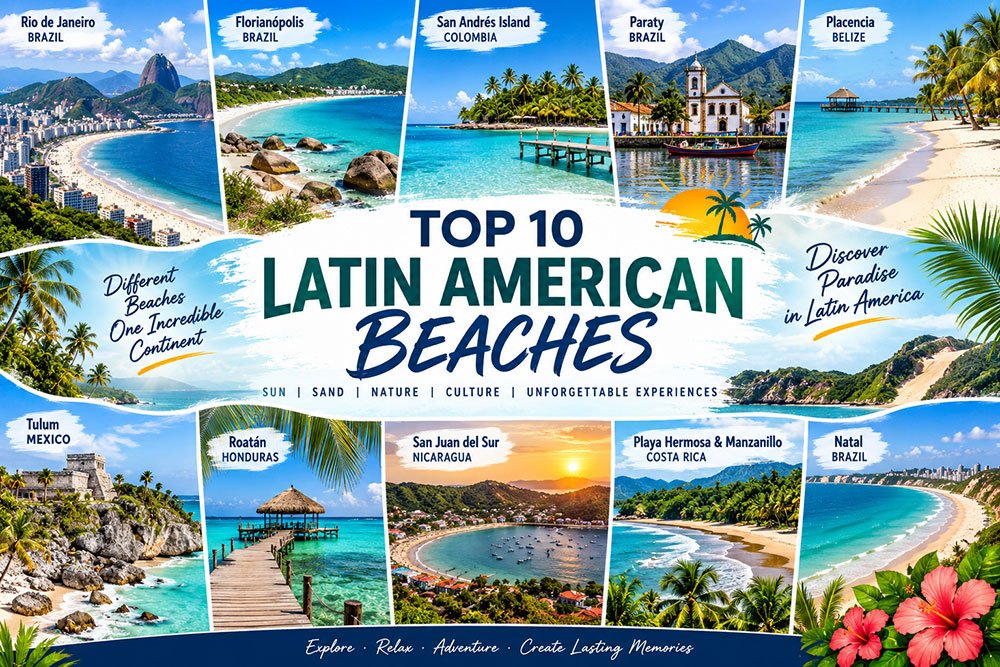
Best Beaches in Latin America: 10 Stunning Destinations
Latin America is home to an extraordinary variety of beaches, from Brazil’s famous Atlantic coastline to the Caribbean islands and the surf beaches of Central America. Travelers can find everything from lively city beaches and luxury resorts to quiet coves, coral reefs, wildlife reserves and world-class surfing destinations.
If you are planning a beach vacation in Latin America, these 10 destinations offer a combination of beautiful scenery, outdoor activities, local culture and memorable coastal experiences.
- Rio de Janeiro, Brazil

Rio de Janeiro remains one of Brazil’s most recognizable beach destinations. The city combines a spectacular coastline with mountains, forests, cultural attractions and a lively urban atmosphere.
The famous beaches of Copacabana, Ipanema, Leblon and Arpoador offer different ways to enjoy the city’s coastline. You can relax on the sand, walk along the beachfront, watch the sunset from Arpoador or combine a beach day with sightseeing in the city.
Rio is also more than a beach destination. Visitors can explore Tijuca National Park, viewpoints around the city and the cultural attractions that have helped Rio become one of Brazil’s most internationally recognized destinations.
Best for: City breaks, beach walks, nightlife, sightseeing and first-time visitors to Brazil.
-
Florianópolis, Santa Catarina, Brazil

Florianópolis is an excellent choice for travelers who want variety. The destination combines beaches, lagoons, dunes, hills and small islands, with 42 beaches highlighted by Brazil’s official tourism platform.
Joaquina and Praia Mole are popular choices for surfing and other water sports. Campeche offers beautiful coastal scenery and access to Campeche Island, while Daniela is known for calmer waters that can appeal to families.
Jurerê Internacional provides a more developed resort atmosphere, with restaurants and entertainment close to the beach.
Because the beaches have different landscapes and conditions, Florianópolis works particularly well for travelers who want to explore several coastal areas rather than stay at one beach.
Best for: Surfing, families, island exploration, water sports and beach-hopping.
-
San Andrés Island, Colombia

Located in the Colombian Caribbean, San Andrés is known for its strikingly colorful sea, white-sand beaches, coral reefs and water activities.
Spratt Bight is one of the island’s best-known beaches and sits close to restaurants, hotels, shops and the waterfront. For a quieter experience, travelers can explore beaches such as Sound Bay and Cocoplum.
The island also provides opportunities for snorkeling, diving and boat excursions. Johnny Cay is another popular excursion, reached by boat from San Andrés and known for its sandy beaches, palms and Caribbean atmosphere.
The surrounding archipelago forms part of the Seaflower Biosphere Reserve, making marine and coastal ecosystems an important part of the destination.
Best for: Snorkeling, diving, island excursions, families and Caribbean scenery.
-
Paraty, Rio de Janeiro, Brazil

Paraty offers something different from a conventional resort beach vacation. Located between mountains and the Atlantic Ocean, this historic Brazilian town combines coastal scenery, boat excursions, islands and preserved colonial architecture.
Boat trips are a popular way to explore the bays, beaches and smaller islands surrounding Paraty. Visitors can spend the day swimming and snorkeling before returning to the historic center.
Paraty is also part of the Paraty and Ilha Grande – Culture and Biodiversity UNESCO World Heritage property. The protected landscape includes the historic center as well as areas of Atlantic Forest, beaches, islands and other ecosystems.
This makes Paraty particularly appealing to travelers who want to combine beaches with history, nature and cultural experiences.
Best for: Boat trips, history, nature, photography and cultural travel.
- Placencia, Belize

Placencia Peninsula is a relaxed Caribbean destination in southern Belize. The peninsula stretches along approximately 16 miles of coastline and combines sandy beaches with a laid-back village atmosphere.
Visitors can spend their days swimming, relaxing on the beach, snorkeling or diving. The nearby marine environment is particularly important because Placencia provides access to parts of the wider Belize Barrier Reef ecosystem.
The Belize Barrier Reef Reserve System is a UNESCO World Heritage Site and represents the world’s second-largest reef system. It includes protected marine areas, offshore atolls, mangroves and numerous cayes.
Placencia also provides an opportunity to experience Belizean culture, local food and the atmosphere of a traditional coastal community.
Best for: Relaxation, snorkeling, diving, families and marine adventures.
-
Tulum, Quintana Roo, Mexico

Tulum combines Caribbean beaches with ancient Maya heritage and protected natural areas. Located on Mexico’s Riviera Maya, it has developed into one of the country’s best-known coastal destinations.
The archaeological zone overlooks the Caribbean Sea, creating a distinctive combination of history and beach scenery. Visitors can also explore cenotes and the nearby Sian Ka’an Biosphere Reserve, a UNESCO World Heritage Site.
Tulum has changed considerably since the original 2013 article was published. Improved transportation connections, including the Tulum International Airport and Tren Maya stations, have increased accessibility.
Travelers should also check current beach-access arrangements, conservation rules and entrance fees before visiting attractions.
Best for: Beaches, archaeology, cenotes, nature and cultural sightseeing.
-
Roatán, Honduras

Roatán is one of the Caribbean’s notable destinations for underwater experiences. The island’s beaches and nearby coral reef environments attract travelers interested in snorkeling and scuba diving.
West Bay is known for its white sand and water activities, while West End offers easy access to reef areas and a range of restaurants, accommodations and diving operators.
Visitors can also try kayaking, glass-bottom boat excursions and other water activities.
Roatán is particularly attractive to travelers who want to spend as much time in the water as on the beach.
Best for: Scuba diving, snorkeling, water sports and tropical beach vacations.
-
San Juan del Sur, Nicaragua

San Juan del Sur is a Pacific coastal destination in Nicaragua’s Rivas Department. Its horseshoe-shaped bay, surrounding hills and nearby beaches create a scenic setting for travelers interested in combining beach time with outdoor activities.
Surfing is one of the major attractions along Nicaragua’s Pacific coast. Fishing, sailing, diving, wildlife experiences and visits to nearby beaches can also be incorporated into a trip.
The destination has continued to feature prominently in Nicaragua’s official tourism promotion, including cultural and tourism activities in recent years.
For travelers looking for a Pacific rather than Caribbean beach experience, San Juan del Sur provides a different landscape and atmosphere.
Best for: Surfing, Pacific beaches, fishing, sailing and local culture.
-
Playa Hermosa and Manzanillo, Costa Rica

Costa Rica provides an impressive range of beach experiences on both its Pacific and Caribbean coasts.
Playa Hermosa on the Central Pacific coast is known for strong, consistent surf and is an established destination for surfers. The beach is better suited to travelers who understand ocean conditions than to visitors simply looking for calm swimming water.
Manzanillo, on Costa Rica’s Caribbean coast, offers a very different experience. Located within the Gandoca-Manzanillo Wildlife Refuge, it combines beach scenery with tropical vegetation, reefs and wildlife.
The protected area supports important marine and terrestrial ecosystems, while Manzanillo itself offers opportunities for swimming, hiking, horseback riding and diving.
Best for: Surfing, wildlife, nature, hiking and contrasting Pacific and Caribbean experiences.
10. Natal, Rio Grande do Norte, Brazil

Natal is a major beach destination in northeastern Brazil and is particularly well known for its combination of coastline and sand dunes.
Ponta Negra is one of the city’s best-known beaches, with the distinctive Morro do Careca dune forming a dramatic backdrop. Praia do Meio and Praia dos Artistas are other well-known coastal areas.
Beyond the city, travelers can explore the Genipabu Dunes, while nearby destinations such as Pipa provide additional beaches and outdoor activities.
Natal also offers a strong regional food culture, including seafood and northeastern Brazilian specialties.
Best for: Beaches, dunes, food, scenic landscapes and northeastern Brazil.
How to Choose the Best Latin American Beach Destination
The best destination depends on the type of vacation you want.
- For a city and beach combination: Rio de Janeiro
- For beach-hopping: Florianópolis
- For Caribbean snorkeling: San Andrés
- For history and coastal scenery: Paraty
- For reef adventures: Placencia
- For beaches and Maya heritage: Tulum
- For diving: Roatán
- For Pacific surfing: San Juan del Sur
- For surfing and wildlife: Costa Rica
- For dunes and northeastern Brazil: Natal
Best Time to Visit Latin American Beaches
There is no single best season for every destination because Latin America covers a huge geographical area.
Brazil’s summer generally falls between December and March, while Central American and Caribbean destinations have different wet and dry seasons. Surf conditions also vary considerably from one coastline to another.
Before booking, check the destination’s current weather, sea conditions, hurricane or storm information, local holidays and seasonal tourism patterns.
Sustainable Beach Travel
Beautiful beaches depend on healthy coastal ecosystems. Travelers can help protect these environments by following local regulations, avoiding single-use plastics, staying on designated paths and respecting wildlife.
When snorkeling or diving, avoid touching coral and marine animals. Choose responsible tour operators and follow local conservation guidelines, particularly when visiting protected reefs, wildlife refuges and national parks.
Latest Updates for Beach Travelers
Several destinations on this list have changed significantly since the original article was published in 2013.
Tulum now has expanded transportation connections, including Tulum International Airport and Tren Maya stations. In 2025 and 2026, Mexican authorities also introduced and expanded public beach-access arrangements in the Parque del Jaguar area. Travelers should check current access conditions and archaeological-site fees before visiting.
Paraty is now part of the UNESCO-listed Paraty and Ilha Grande – Culture and Biodiversity World Heritage property, an important development that was not reflected in the original article.
San Andrés continues to be promoted as a major Colombian Caribbean destination, with beaches, diving sites, coral environments and excursions to nearby cays.
In Belize, the Belize Barrier Reef remains a major conservation and tourism asset. Visitors should follow marine-protection rules and choose responsible reef activities.
Costa Rica continues to emphasize sustainable tourism, protected areas and responsible beach recreation. Conditions can vary significantly between surfing beaches and calmer swimming areas, so visitors should always check local guidance before entering the water.
Plan Your Latin American Beach Vacation
Latin America’s beaches offer far more than sun and sand. You can combine a beach vacation with surfing, diving, snorkeling, wildlife watching, hiking, history, local cuisine and cultural experiences.
From the famous coastline of Rio de Janeiro to the coral-rich waters of San Andrés and Roatán, the destinations on this list provide a wide range of experiences for different types of travelers.
Rather than choosing a destination based only on photographs, consider the activities you want, the season, accessibility, local conditions and conservation requirements. With the right planning, a Latin American beach vacation can become much more than a traditional seaside getaway.
